
Update Site (from NASA)
Explore NASA’s Image and Video Library.
Suggest one object per day for the Interstellar Minds collection. We review each suggestion before adding it.
Sign in to suggest a Marvel.
Find a NASA image ID. Open a NASA record and copy its ID from the end of the details URL.
NASA image records
JPL · 2023-08-02 · PIA25666
PIA25666
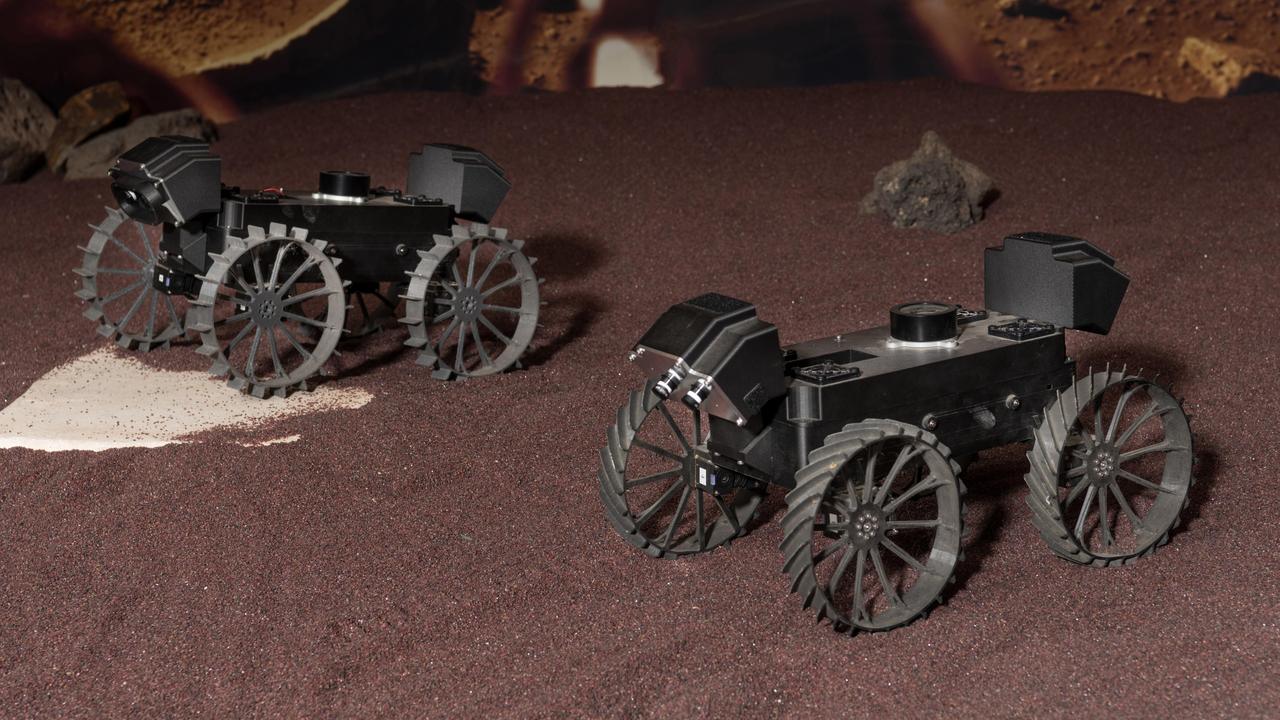
Prototypes of the rovers being built for NASA's CADRE (Cooperative Autonomous Distributed Robotic Exploration) technology demonstration were tested at the agency's Jet Propulsion Laboratory in Southern California in…
Inspect NASA record
Prototypes of the rovers being built for NASA's CADRE (Cooperative Autonomous Distributed Robotic Exploration) technology demonstration were tested at the agency's Jet Propulsion Laboratory in Southern California in August 2022. CADRE is a technology demonstration designed to show that multiple robots can cooperate and explore together autonomously – without direct input from human mission controllers. By taking simultaneous measurements from multiple locations, CADRE will also demonstrate how multirobot missions can record data impossible for a single robot to achieve – a tantalizing prospect for future missions. The CADRE team dubbed the seven plastic test prototypes the "Mercury 7" and named each after one of NASA's seven Project Mercury astronauts. John (for John Glenn) and Scott (for Scott Carpenter) are shown here in a sandbox during a test of the rovers' capability for driving in formation. The formation-driving algorithm will be used to help CADRE rovers map the lunar surface and subsurface with cameras and sensors. The prototypes are smaller than the three CADRE rovers slated to arrive at the Moon aboard a lander in spring 2024 as part of NASA's CLPS (Commercial Lunar Payload Services) initiative. Those flight models will be about the size of a carry-on suitcase. https://photojournal.jpl.nasa.gov/catalog/PIA25666
- Record ID
- PIA25666
- NASA center
- JPL
- Date
- 2023-08-02
- Credit
- NASA/JPL-Caltech
- Keywords
- Cooperative Autonomous Distributed Robotic Exploration (CADRE)
MAF · 2021-01-07 · MAF_20210107_ARTIII_EngineSectionPanel08
NASA Readies Artemis III
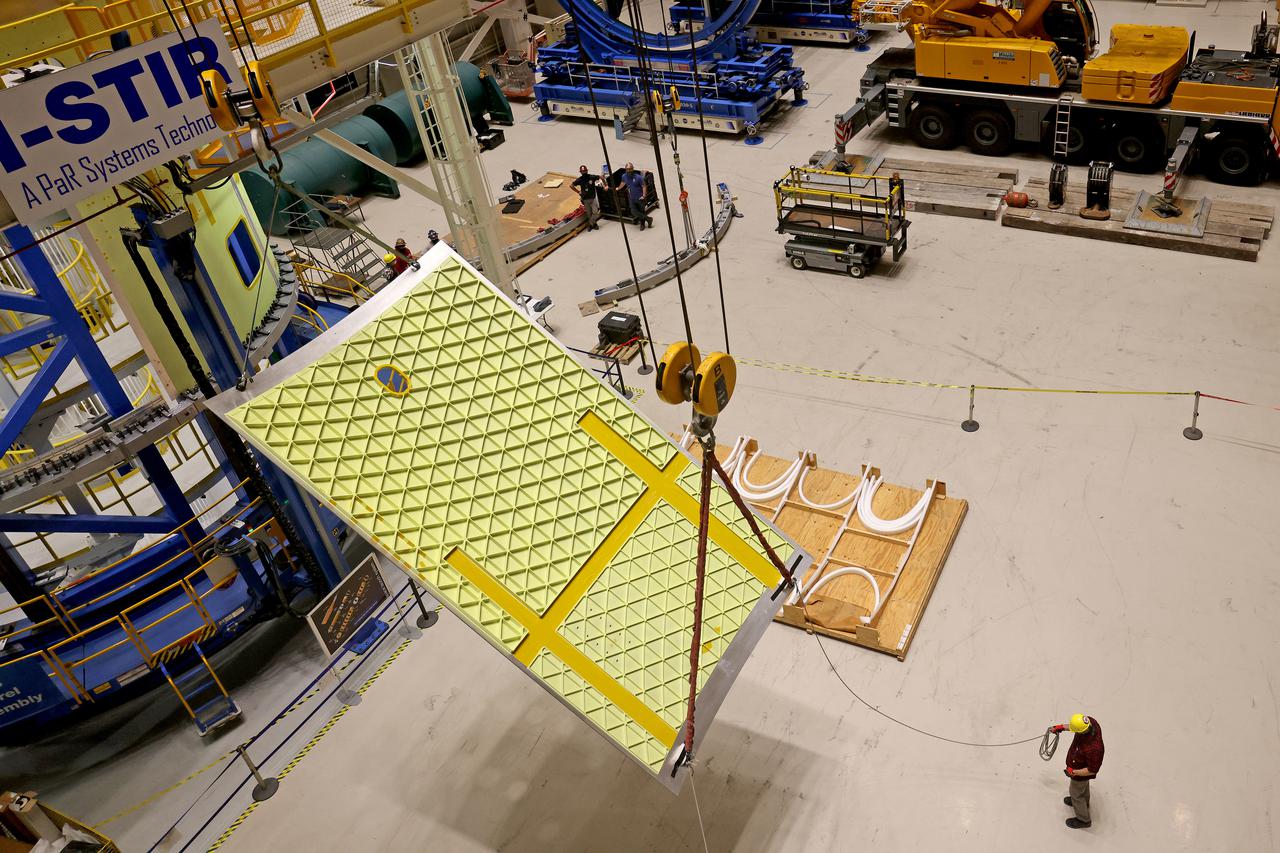
Technicians at NASA’s Michoud Assembly Facility move a piece of the engine section of NASA’s Space Launch System rocket for Artemis III in preparation for its next step…
Inspect NASA record
Technicians at NASA’s Michoud Assembly Facility move a piece of the engine section of NASA’s Space Launch System rocket for Artemis III in preparation for its next step in production. This hardware is the first large piece manufactured for the Artemis III mission and makes up the lowest portion of the 212-foot-tall core stage. When complete, the engine section will house the four RS-25 engines and include vital systems for mounting, controlling and delivering fuel from the propellant tanks to the rocket’s engines. Together with its four RS-25 engines and its twin solid rocket boosters, it will produce 8.8 million pounds of thrust to send NASA’s Orion spacecraft, astronauts, and supplies beyond Earth’s orbit to the Moon and, ultimately, Mars. Offering more payload mass, volume capability, and energy to speed missions through space, the SLS rocket, along with NASA’s Gateway in lunar orbit, the Human Landing System, and Orion spacecraft, is part of NASA’s backbone for deep space exploration and the Artemis lunar program. No other rocket is capable of carrying astronauts in Orion around the Moon in a single mission.
- Record ID
- MAF_20210107_ARTIII_EngineSectionPanel08
- NASA center
- MAF
- Date
- 2021-01-07
- Credit
- Michael DeMocker
- Keywords
- Space Launch System, SLS, Artemis, Artemis III, NASA, Marshall Space Flight Center, Michoud Assembly Facility, rocket science, rocket, launch vehicle, Moon, Boeing
MAF · 2021-06-09 · MAF_20210609_CS2_BoatTail2CellA09
NASA Readies Artemis II Boat-tail for Core Stage 2
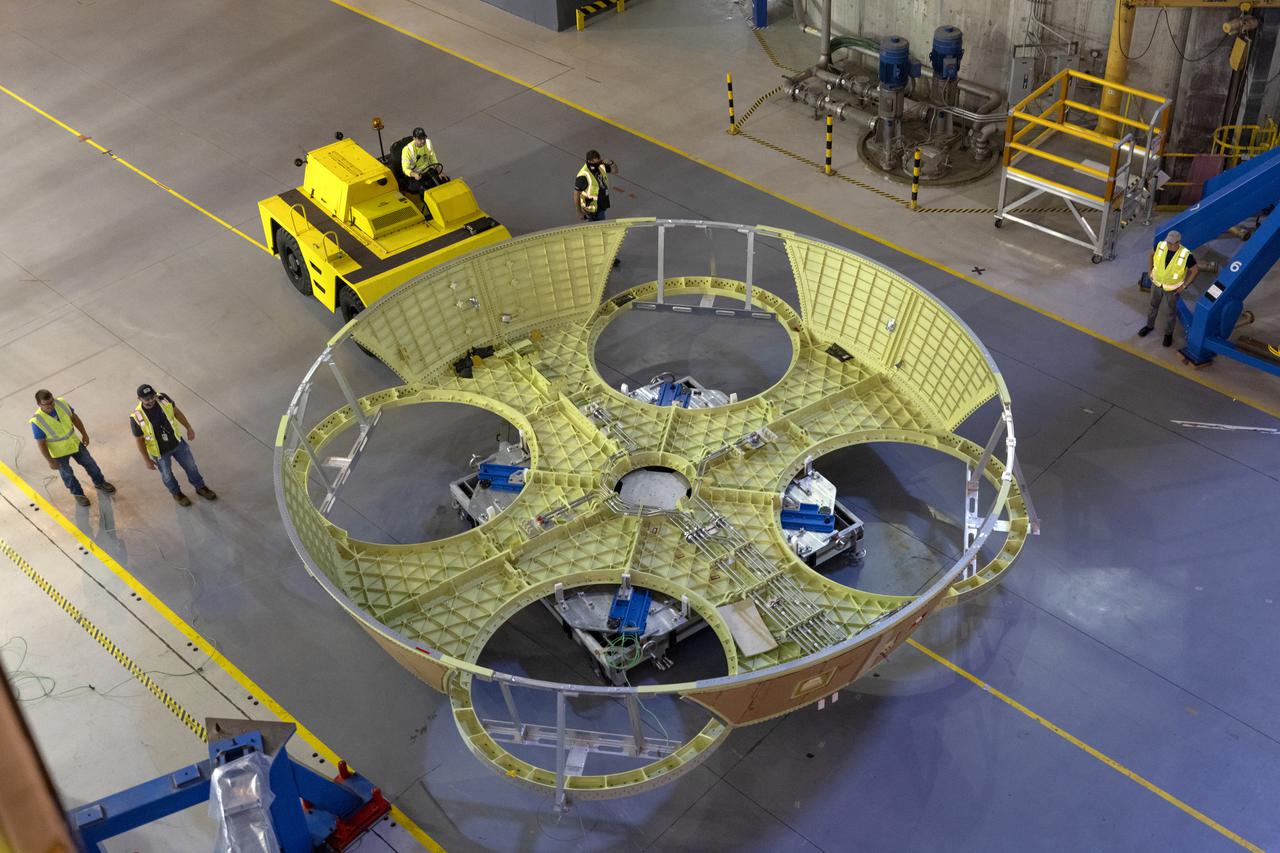
Technicians and engineers move the boat-tail structure for the core stage of NASA’s Space Launch System’s (SLS) rocket for Artemis II, the first crewed mission of NASA’s Artemis…
Inspect NASA record
Technicians and engineers move the boat-tail structure for the core stage of NASA’s Space Launch System’s (SLS) rocket for Artemis II, the first crewed mission of NASA’s Artemis program at NASA’s Michoud Assembly Facility. The boat-tail, a fairing-like cover that attaches to the engine section on the bottom of the core stage, protects and covers most of the four RS-25 engines’ critical systems. Together with its four RS-25 engines, the rocket’s massive 212-foot-tall core stage — the largest stage NASA has ever built — and its twin solid rocket boosters will produce 8.8 million pounds of thrust to send NASA’s Orion spacecraft, astronauts and supplies beyond Earth’s orbit to the Moon and, ultimately, Mars. Offering more payload mass, volume capability and energy to speed missions through space, the SLS rocket, along with NASA’s Gateway in lunar orbit, the Human Landing System, and Orion spacecraft, is part of NASA’s backbone for deep space exploration and the Artemis lunar program. No other rocket is capable of carrying astronauts in Orion around the Moon in a single mission. Photographed on Wednesday, June 9, 2021. Image credit: NASA/Michael DeMocker
- Record ID
- MAF_20210609_CS2_BoatTail2CellA09
- NASA center
- MAF
- Date
- 2021-06-09
- Credit
- Michael DeMocker
- Keywords
- Space Launch System, SLS, Artemis, NASA, Marshall Space Flight Center, Michoud Assembly Facility, rocket science, rocket, launch vehicle, Moon, liquid hydrogen, fusion weld

MAF · 2021-04-28 · MAF_20210428_CS2_LOX_fwdJoin_EPB_029
NASA Readies Artemis II with the Core Stage Forward Join
This image shows technicians and engineers move and connect the liquid oxygen tank (LOX) to the intertank as they continue the process of the forward join on the…
Inspect NASA record
This image shows technicians and engineers move and connect the liquid oxygen tank (LOX) to the intertank as they continue the process of the forward join on the core stage of NASA’s Space Launch System rocket for Artemis II, the first crewed mission of NASA’s Artemis program at NASA’s Michoud Assembly Facility. The forward join connects the forward skirt, the liquid oxygen tank (LOX) and the intertank structures to form the top part of the SLS rocket’s core stage. Now, NASA and Boeing, the SLS prime contractor, will continue to integrate various systems inside the forward part of the core stage and prepare for structural joining of the liquid hydrogen tank and engine section to form the bottom of the stage. Together with its four RS-25 engines, the rocket’s massive 212-foot-tall core stage — the largest stage NASA has ever built — and its twin solid rocket boosters will produce 8.8 million pounds of thrust to send NASA’s Orion spacecraft, astronauts and supplies beyond Earth’s orbit to the Moon and, ultimately, Mars. Offering more payload mass, volume capability and energy to speed missions through space, the SLS rocket, along with NASA’s Gateway in lunar orbit, the Human Landing System, and Orion spacecraft, is part of NASA’s backbone for deep space exploration and the Artemis lunar program. No other rocket is capable of carrying astronauts in Orion around the Moon in a single mission.
- Record ID
- MAF_20210428_CS2_LOX_fwdJoin_EPB_029
- NASA center
- MAF
- Date
- 2021-04-28
- Credit
- Eric Bordelon
- Keywords
- Artemis, MAF, MSFC, Michoud, NASA, New Orleans, SLS, exploration, louisiana, mars, moon
MAF · 2021-06-09 · MAF_20210609_CS2_BoatTail2CellA12
NASA Readies Artemis II Boat-tail for Core Stage 2
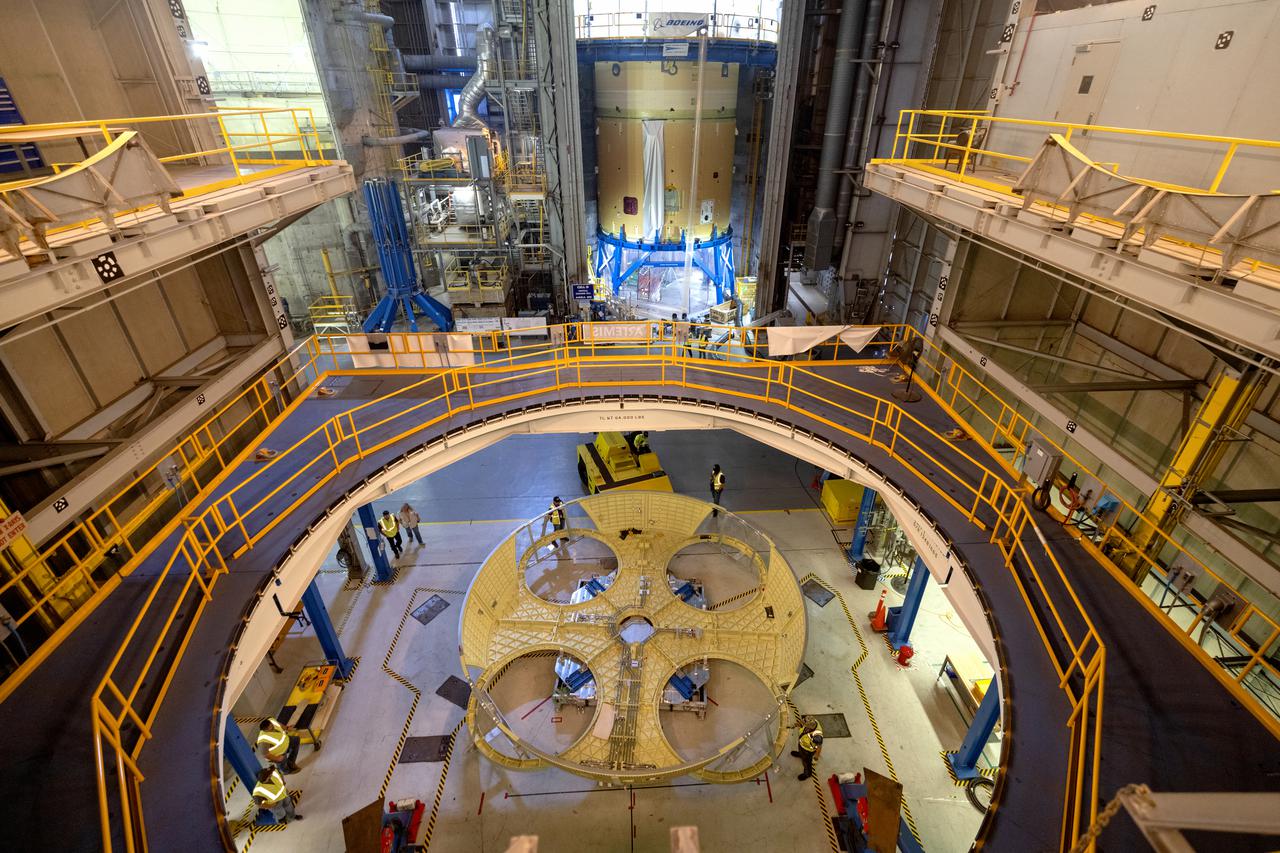
Technicians and engineers move the boat-tail structure for the core stage of NASA’s Space Launch System’s (SLS) rocket for Artemis II, the first crewed mission of NASA’s Artemis…
Inspect NASA record
Technicians and engineers move the boat-tail structure for the core stage of NASA’s Space Launch System’s (SLS) rocket for Artemis II, the first crewed mission of NASA’s Artemis program at NASA’s Michoud Assembly Facility. The boat-tail, a fairing-like cover that attaches to the engine section on the bottom of the core stage, protects and covers most of the four RS-25 engines’ critical systems. Together with its four RS-25 engines, the rocket’s massive 212-foot-tall core stage — the largest stage NASA has ever built — and its twin solid rocket boosters will produce 8.8 million pounds of thrust to send NASA’s Orion spacecraft, astronauts and supplies beyond Earth’s orbit to the Moon and, ultimately, Mars. Offering more payload mass, volume capability and energy to speed missions through space, the SLS rocket, along with NASA’s Gateway in lunar orbit, the Human Landing System, and Orion spacecraft, is part of NASA’s backbone for deep space exploration and the Artemis lunar program. No other rocket is capable of carrying astronauts in Orion around the Moon in a single mission. Photographed on Wednesday, June 9, 2021. Image credit: NASA/Michael DeMocker
- Record ID
- MAF_20210609_CS2_BoatTail2CellA12
- NASA center
- MAF
- Date
- 2021-06-09
- Credit
- Michael DeMocker
- Keywords
- Space Launch System, SLS, Artemis, NASA, Marshall Space Flight Center, Michoud Assembly Facility, rocket science, rocket, launch vehicle, Moon, liquid hydrogen, fusion weld

MAF · 2021-04-28 · MAF_20210428_CS2_LOX_fwdJoin_EPB_023
NASA Readies Artemis II with the Core Stage Forward Join
This image shows technicians and engineers move and connect the liquid oxygen tank (LOX) to the intertank as they continue the process of the forward join on the…
Inspect NASA record
This image shows technicians and engineers move and connect the liquid oxygen tank (LOX) to the intertank as they continue the process of the forward join on the core stage of NASA’s Space Launch System rocket for Artemis II, the first crewed mission of NASA’s Artemis program at NASA’s Michoud Assembly Facility. The forward join connects the forward skirt, the liquid oxygen tank (LOX) and the intertank structures to form the top part of the SLS rocket’s core stage. Now, NASA and Boeing, the SLS prime contractor, will continue to integrate various systems inside the forward part of the core stage and prepare for structural joining of the liquid hydrogen tank and engine section to form the bottom of the stage. Together with its four RS-25 engines, the rocket’s massive 212-foot-tall core stage — the largest stage NASA has ever built — and its twin solid rocket boosters will produce 8.8 million pounds of thrust to send NASA’s Orion spacecraft, astronauts and supplies beyond Earth’s orbit to the Moon and, ultimately, Mars. Offering more payload mass, volume capability and energy to speed missions through space, the SLS rocket, along with NASA’s Gateway in lunar orbit, the Human Landing System, and Orion spacecraft, is part of NASA’s backbone for deep space exploration and the Artemis lunar program. No other rocket is capable of carrying astronauts in Orion around the Moon in a single mission.
- Record ID
- MAF_20210428_CS2_LOX_fwdJoin_EPB_023
- NASA center
- MAF
- Date
- 2021-04-28
- Credit
- Eric Bordelon
- Keywords
- Artemis, MAF, MSFC, Michoud, NASA, New Orleans, SLS, exploration, louisiana, mars, moon
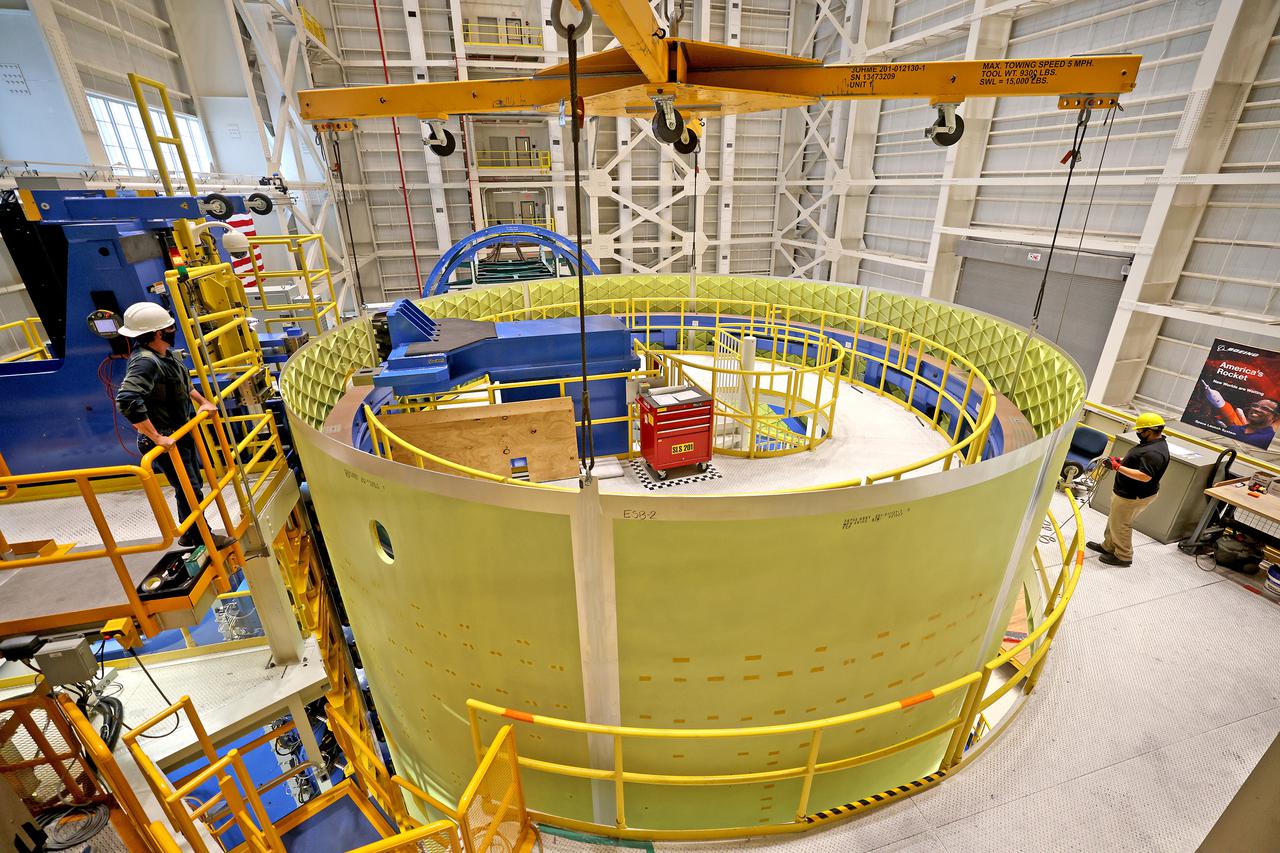
MAF · 2021-01-15 · MAF_20210115_ARTIII_EngSectionLift07
NASA Readies Artemis III
Technicians at NASA’s Michoud Assembly Facility move the engine section of NASA’s Space Launch System rocket for Artemis III in preparation for its next step in production. This…
Inspect NASA record
Technicians at NASA’s Michoud Assembly Facility move the engine section of NASA’s Space Launch System rocket for Artemis III in preparation for its next step in production. This hardware is the first large piece manufactured for the Artemis III mission and makes up the lowest portion of the 212-foot-tall core stage. When complete, the engine section will house the four RS-25 engines and include vital systems for mounting, controlling and delivering fuel from the propellant tanks to the rocket’s engines. Together with its four RS-25 engines and its twin solid rocket boosters, it will produce 8.8 million pounds of thrust to send NASA’s Orion spacecraft, astronauts, and supplies beyond Earth’s orbit to the Moon and, ultimately, Mars. Offering more payload mass, volume capability, and energy to speed missions through space, the SLS rocket, along with NASA’s Gateway in lunar orbit, the Human Landing System, and Orion spacecraft, is part of NASA’s backbone for deep space exploration and the Artemis lunar program. No other rocket is capable of carrying astronauts in Orion around the Moon in a single mission.
- Record ID
- MAF_20210115_ARTIII_EngSectionLift07
- NASA center
- MAF
- Date
- 2021-01-15
- Credit
- Michael DeMocker
- Keywords
- Space Launch System, SLS, Artemis, Artemis III, NASA, Marshall Space Flight Center, Michoud Assembly Facility, rocket science, rocket, launch vehicle, Moon, Boeing

JPL · 2023-08-02 · PIA25665
CADRE Rover Testing in JPL's Mars Yard
A development model rover that is part of NASA's CADRE (Cooperative Autonomous Distributed Robotic Exploration) technology demonstration took its first autonomous drive around the Mars Yard at the…
Inspect NASA record
A development model rover that is part of NASA's CADRE (Cooperative Autonomous Distributed Robotic Exploration) technology demonstration took its first autonomous drive around the Mars Yard at the agency's Jet Propulsion Laboratory in Southern California in June 2023. The CADRE team tested a new wheel design, surface navigation software, and mobility capabilities, among other aspects of the project. Engineer Kristopher Sherrill is shown recording video of the test. The rover being tested is similar in size and appearance to the flight models of the CADRE rovers, which are still being built. Slated to arrive at the Moon in spring 2024 as part of NASA's CLPS (Commercial Lunar Payload Services) initiative, CADRE is designed to demonstrate that multiple robots can cooperate and explore together autonomously – without direct input from human mission controllers. A trio of the miniature solar-powered rovers, each about the size of a carry-on suitcase, will explore the Moon as a team, communicating via radio with each other and a base station aboard a lunar lander. By taking simultaneous measurements from multiple locations, CADRE will also demonstrate how multirobot missions can record data impossible for a single robot to achieve – a tantalizing prospect for future missions. Movie available at https://photojournal.jpl.nasa.gov/catalog/PIA25665
- Record ID
- PIA25665
- NASA center
- JPL
- Date
- 2023-08-02
- Credit
- NASA/JPL-Caltech
- Keywords
- Cooperative Autonomous Distributed Robotic Exploration (CADRE)
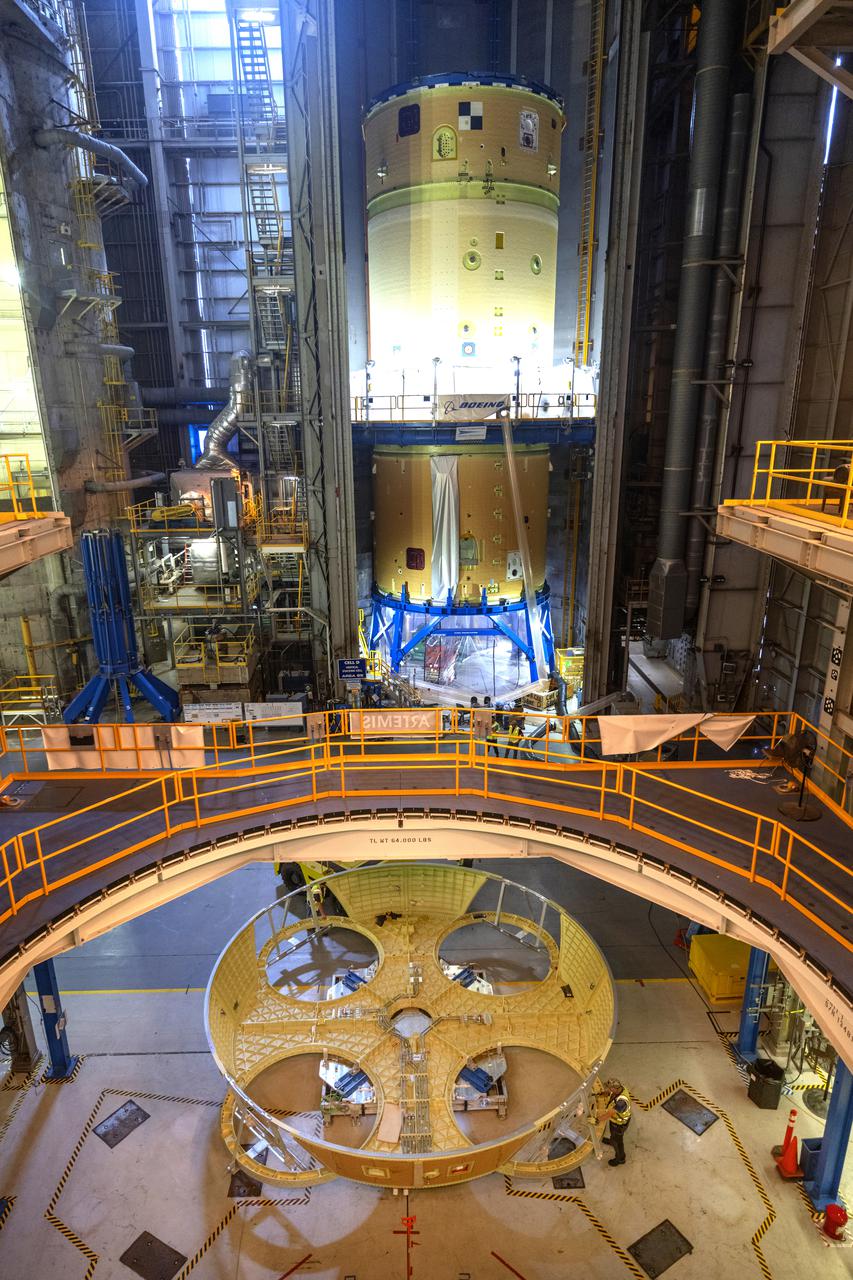
MAF · 2021-06-09 · MAF_20210609_CS2_BoatTail2CellA10
NASA Readies Artemis II Boat-tail for Core Stage 2
Technicians and engineers move the boat-tail structure for the core stage of NASA’s Space Launch System’s (SLS) rocket for Artemis II, the first crewed mission of NASA’s Artemis…
Inspect NASA record
Technicians and engineers move the boat-tail structure for the core stage of NASA’s Space Launch System’s (SLS) rocket for Artemis II, the first crewed mission of NASA’s Artemis program at NASA’s Michoud Assembly Facility. The boat-tail, a fairing-like cover that attaches to the engine section on the bottom of the core stage, protects and covers most of the four RS-25 engines’ critical systems. Together with its four RS-25 engines, the rocket’s massive 212-foot-tall core stage — the largest stage NASA has ever built — and its twin solid rocket boosters will produce 8.8 million pounds of thrust to send NASA’s Orion spacecraft, astronauts and supplies beyond Earth’s orbit to the Moon and, ultimately, Mars. Offering more payload mass, volume capability and energy to speed missions through space, the SLS rocket, along with NASA’s Gateway in lunar orbit, the Human Landing System, and Orion spacecraft, is part of NASA’s backbone for deep space exploration and the Artemis lunar program. No other rocket is capable of carrying astronauts in Orion around the Moon in a single mission. Photographed on Wednesday, June 9, 2021. Image credit: NASA/Michael DeMocker
- Record ID
- MAF_20210609_CS2_BoatTail2CellA10
- NASA center
- MAF
- Date
- 2021-06-09
- Credit
- Michael DeMocker
- Keywords
- Space Launch System, SLS, Artemis, NASA, Marshall Space Flight Center, Michoud Assembly Facility, rocket science, rocket, launch vehicle, Moon, liquid hydrogen, fusion weld
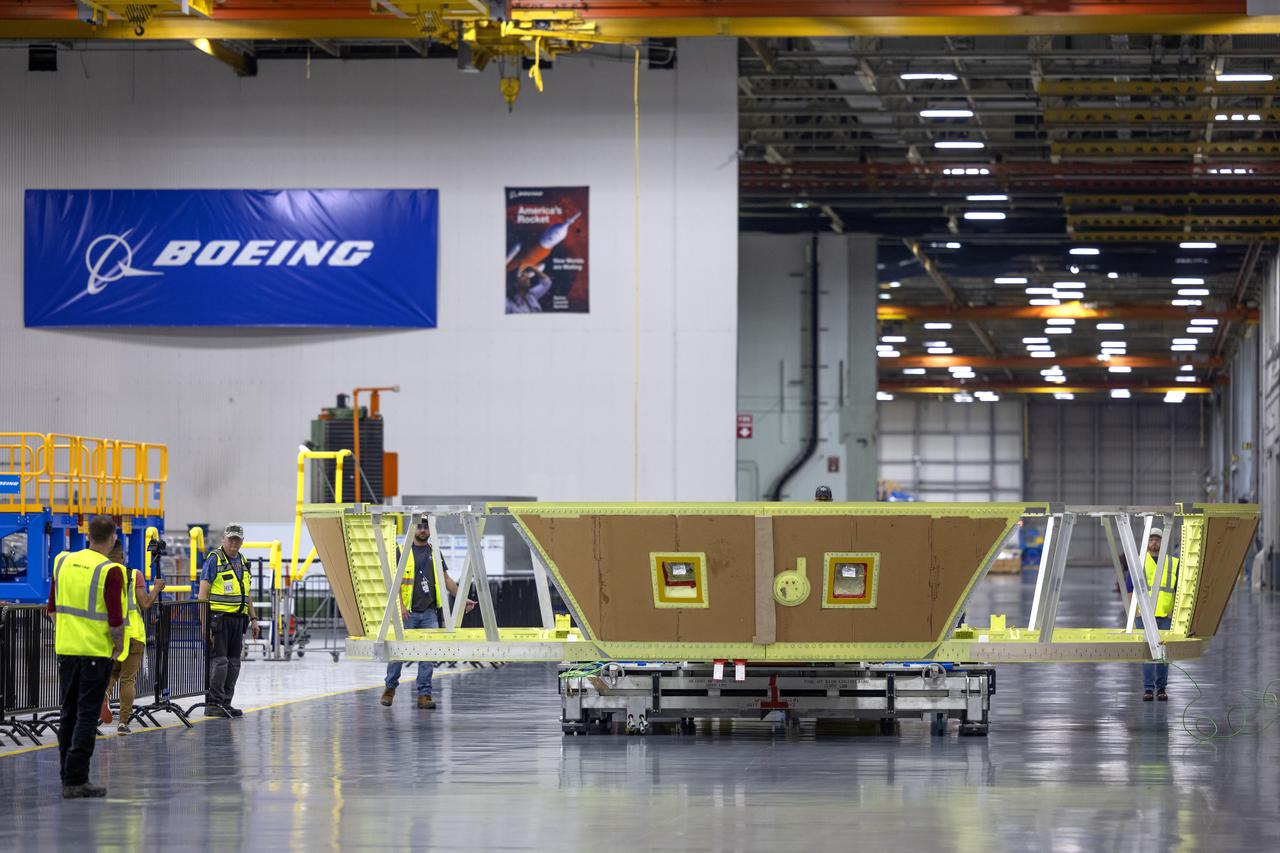
MAF · 2021-06-09 · MAF_20210609_CS2_BoatTail2CellA01
NASA Readies Artemis II Boat-tail for Core Stage 2
Technicians and engineers move the boat-tail structure for the core stage of NASA’s Space Launch System’s (SLS) rocket for Artemis II, the first crewed mission of NASA’s Artemis…
Inspect NASA record
Technicians and engineers move the boat-tail structure for the core stage of NASA’s Space Launch System’s (SLS) rocket for Artemis II, the first crewed mission of NASA’s Artemis program at NASA’s Michoud Assembly Facility. The boat-tail, a fairing-like cover that attaches to the engine section on the bottom of the core stage, protects and covers most of the four RS-25 engines’ critical systems. Together with its four RS-25 engines, the rocket’s massive 212-foot-tall core stage — the largest stage NASA has ever built — and its twin solid rocket boosters will produce 8.8 million pounds of thrust to send NASA’s Orion spacecraft, astronauts and supplies beyond Earth’s orbit to the Moon and, ultimately, Mars. Offering more payload mass, volume capability and energy to speed missions through space, the SLS rocket, along with NASA’s Gateway in lunar orbit, the Human Landing System, and Orion spacecraft, is part of NASA’s backbone for deep space exploration and the Artemis lunar program. No other rocket is capable of carrying astronauts in Orion around the Moon in a single mission. Photographed on Wednesday, June 9, 2021. Image credit: NASA/Michael DeMocker
- Record ID
- MAF_20210609_CS2_BoatTail2CellA01
- NASA center
- MAF
- Date
- 2021-06-09
- Credit
- Michael DeMocker
- Keywords
- Space Launch System, SLS, Artemis, NASA, Marshall Space Flight Center, Michoud Assembly Facility, rocket science, rocket, launch vehicle, Moon, liquid hydrogen, fusion weld
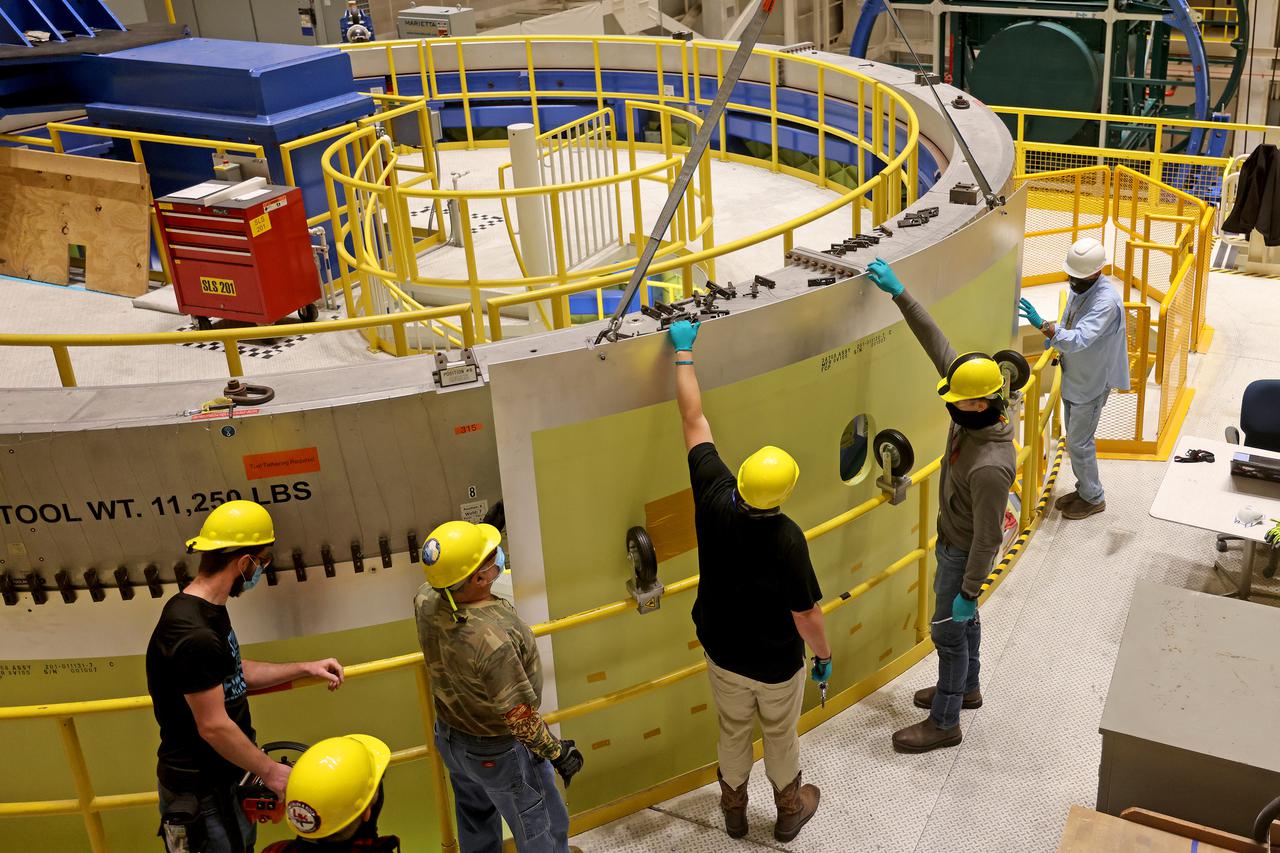
MAF · 2021-01-07 · MAF_20210107_ARTIII_EngineSectionPanel20
NASA Readies Artemis III
Technicians at NASA’s Michoud Assembly Facility move a piece of the engine section of NASA’s Space Launch System rocket for Artemis III in preparation for its next step…
Inspect NASA record
Technicians at NASA’s Michoud Assembly Facility move a piece of the engine section of NASA’s Space Launch System rocket for Artemis III in preparation for its next step in production. This hardware is the first large piece manufactured for the Artemis III mission and makes up the lowest portion of the 212-foot-tall core stage. When complete, the engine section will house the four RS-25 engines and include vital systems for mounting, controlling and delivering fuel from the propellant tanks to the rocket’s engines. Together with its four RS-25 engines and its twin solid rocket boosters, it will produce 8.8 million pounds of thrust to send NASA’s Orion spacecraft, astronauts, and supplies beyond Earth’s orbit to the Moon and, ultimately, Mars. Offering more payload mass, volume capability, and energy to speed missions through space, the SLS rocket, along with NASA’s Gateway in lunar orbit, the Human Landing System, and Orion spacecraft, is part of NASA’s backbone for deep space exploration and the Artemis lunar program. No other rocket is capable of carrying astronauts in Orion around the Moon in a single mission.
- Record ID
- MAF_20210107_ARTIII_EngineSectionPanel20
- NASA center
- MAF
- Date
- 2021-01-07
- Credit
- Michael DeMocker
- Keywords
- Space Launch System, SLS, Artemis, Artemis III, NASA, Marshall Space Flight Center, Michoud Assembly Facility, rocket science, rocket, launch vehicle, Moon, Boeing
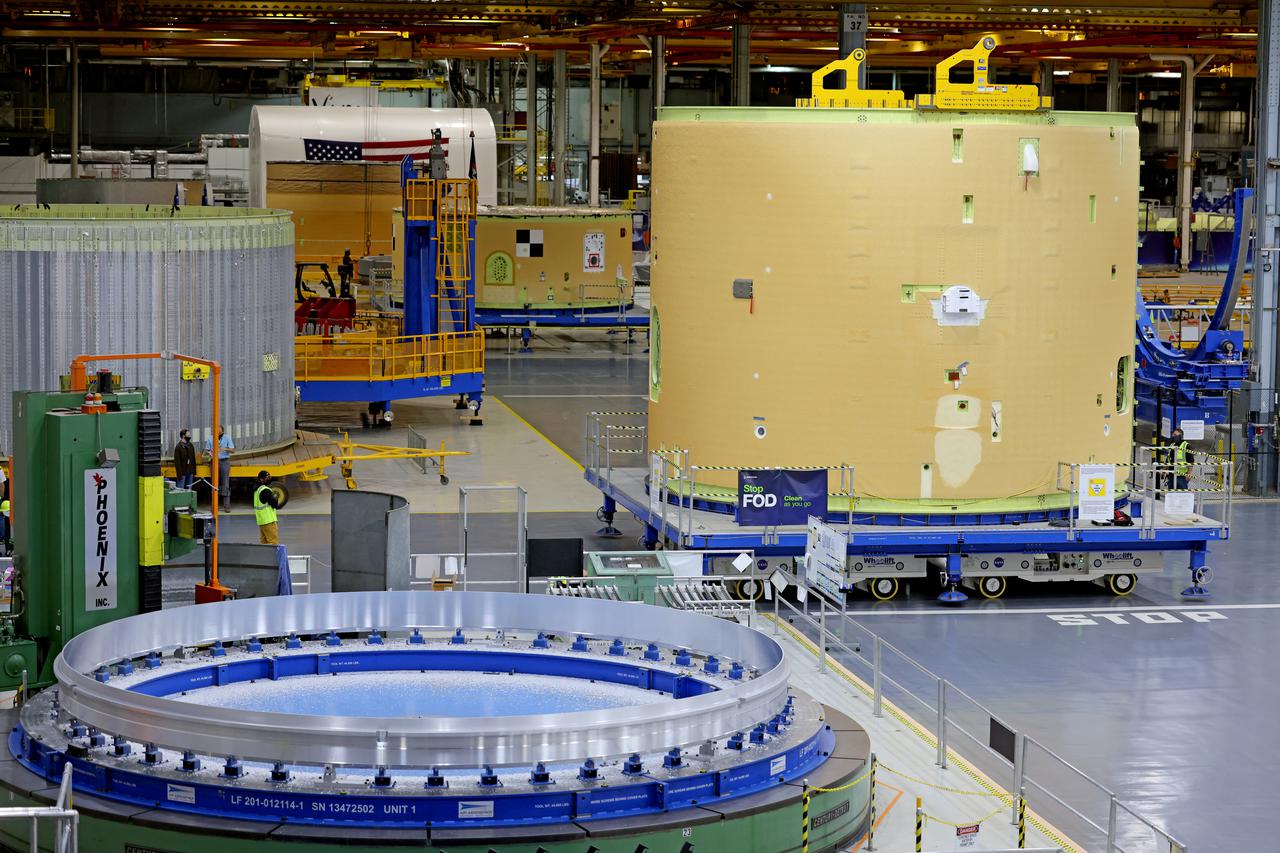
MAF · 2021-03-19 · MAF_20210319_ArtII_Intertank03
NASA Readies Artemis II with Completion of the Core Stage Forward Join
This image shows technicians and engineers beginning the process of the forward join on the core stage of NASA’s Space Launch System rocket for Artemis II, the first…
Inspect NASA record
This image shows technicians and engineers beginning the process of the forward join on the core stage of NASA’s Space Launch System rocket for Artemis II, the first crewed mission of NASA’s Artemis program at NASA’s Michoud Assembly Facility. The forward join connects the forward skirt, the liquid oxygen tank (LOX) and the intertank structures to form the top part of the SLS rocket’s core stage. Now, NASA and Boeing, the SLS prime contractor, will continue to integrate various systems inside the forward part of the core stage and prepare for structural joining of the liquid hydrogen tank and engine section to form the bottom of the stage. Together with its four RS-25 engines, the rocket’s massive 212-foot-tall core stage — the largest stage NASA has ever built — and its twin solid rocket boosters will produce 8.8 million pounds of thrust to send NASA’s Orion spacecraft, astronauts and supplies beyond Earth’s orbit to the Moon and, ultimately, Mars. Offering more payload mass, volume capability and energy to speed missions through space, the SLS rocket, along with NASA’s Gateway in lunar orbit, the Human Landing System, and Orion spacecraft, is part of NASA’s backbone for deep space exploration and the Artemis lunar program. No other rocket is capable of carrying astronauts in Orion around the Moon in a single mission. Image credit: NASA/Michael DeMocker
- Record ID
- MAF_20210319_ArtII_Intertank03
- NASA center
- MAF
- Date
- 2021-03-19
- Credit
- Michael DeMocker
- Keywords
- Space Launch System, SLS, Artemis, NASA, Marshall Space Flight Center, Michoud Assembly Facility, rocket science, rocket, launch vehicle, Moon, Boeing, forward join