
Update Site (from NASA)
Explore NASA’s Image and Video Library.
Suggest one object per day for the Interstellar Minds collection. We review each suggestion before adding it.
Sign in to suggest a Marvel.
Find a NASA image ID. Open a NASA record and copy its ID from the end of the details URL.
NASA image records
GSFC · 2017-12-08 · GSFC_20171208_Archive_e001394
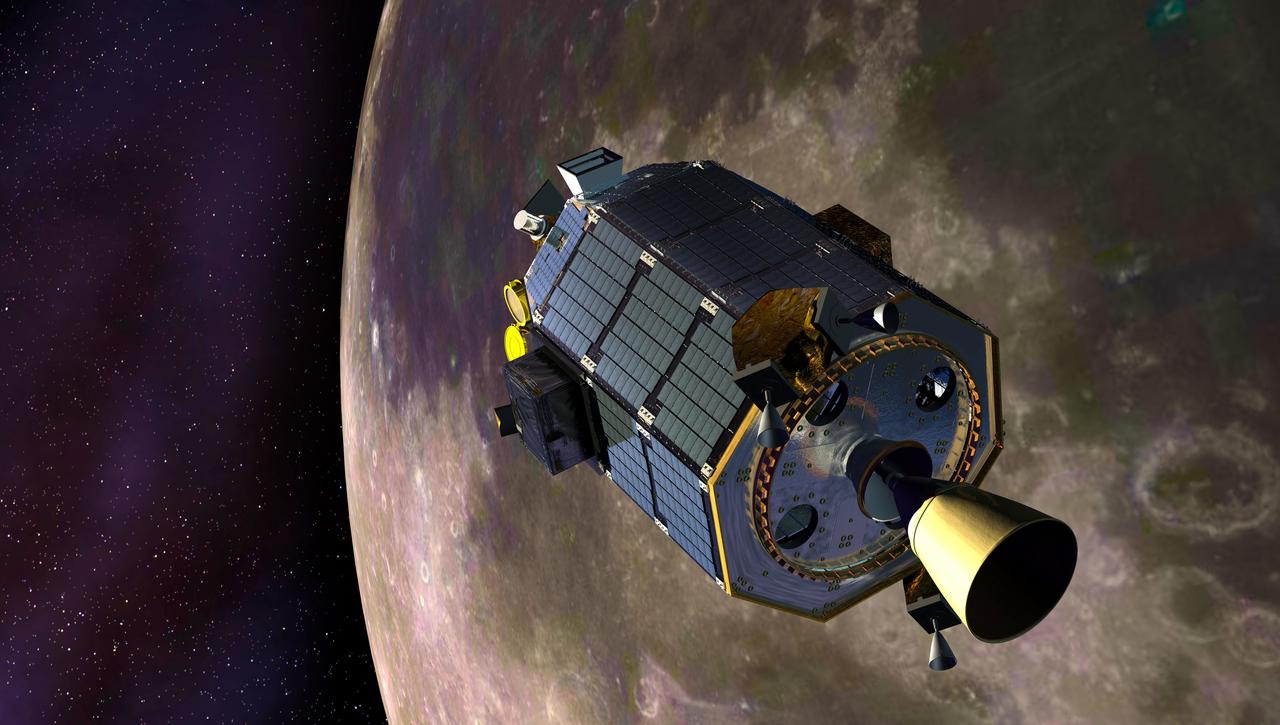
LADEE in Lunar Orbit
An artist's concept showing the Lunar Atmosphere and Dust Environment Explorer (LADEE) spacecraft is seen orbiting the moon as it prepares to fire its maneuvering thrusters to maintain…
Inspect NASA record
An artist's concept showing the Lunar Atmosphere and Dust Environment Explorer (LADEE) spacecraft is seen orbiting the moon as it prepares to fire its maneuvering thrusters to maintain a safe orbital altitude. Credit: NASA Ames / Dana Berry ----- What is LADEE? The Lunar Atmosphere and Dust Environment Explorer (LADEE) is designed to study the Moon's thin exosphere and the lunar dust environment. An "exosphere" is an atmosphere that is so thin and tenuous that molecules don't collide with each other. Studying the Moon's exosphere will help scientists understand other planetary bodies with exospheres too, like Mercury and some of Jupiter's bigger moons. The orbiter will determine the density, composition and temporal and spatial variability of the Moon's exosphere to help us understand where the species in the exosphere come from and the role of the solar wind, lunar surface and interior, and meteoric infall as sources. The mission will also examine the density and temporal and spatial variability of dust particles that may get lofted into the atmosphere. The mission also will test several new technologies, including a modular spacecraft bus that may reduce the cost of future deep space missions and demonstrate two-way high rate laser communication for the first time from the Moon. LADEE now is ready to launch when the window opens on Sept. 6, 2013. Read more: www.nasa.gov/ladee NASA image use policy. NASA Goddard Space Flight Center enables NASA’s mission through four scientific endeavors: Earth Science, Heliophysics, Solar System Exploration, and Astrophysics. Goddard plays a leading role in NASA’s accomplishments by contributing compelling scientific knowledge to advance the Agency’s mission. Follow us on Twitter Like us on Facebook Find us on Instagram
- Record ID
- GSFC_20171208_Archive_e001394
- NASA center
- GSFC
- Date
- 2017-12-08
- Keywords
- LADEE in Lunar Orbit, moon, nasa, rocket, launch, goddard, ladee

HQ · 2026-03-24 · NHQ202603240057
NASA Update on Implementation of National Space Policy
NASA Press Secretary Bethany Stevens, left, moderates a press conference with, NASA Administrator Jared Isaacman, NASA Associate Administrator Amit Kshatriya, acting Associate Administrator for NASA's Exploration Systems Development…
Inspect NASA record
NASA Press Secretary Bethany Stevens, left, moderates a press conference with, NASA Administrator Jared Isaacman, NASA Associate Administrator Amit Kshatriya, acting Associate Administrator for NASA's Exploration Systems Development Mission Directorate Lori Glaze, NASA Moon Base Program Executive Carlos Garcia-Galan, NASA International Space Station Program Manager Dana Weigel, Associate Administrator for NASA's Science Mission Directorate Nicola Fox, and NASA Space Reactor Office Program Executive Steve Sinacore, right, following an event where NASA outlined how the agency is executing President Donald J. Trump’s National Space Policy and accelerating preparations for America’s return to the surface of the Moon by 2028, Tuesday, March 24, 2026, at the Mary W. Jackson NASA Headquarters building in Washington. During the event NASA leadership provided updates on mission priorities, including sending the first astronauts to the lunar surface in more than 50 years, establishing the initial elements of a permanent lunar base, getting America underway in space on nuclear propulsion, and other objectives. Photo Credit: (NASA/Bill Ingalls)
- Record ID
- NHQ202603240057
- NASA center
- HQ
- Date
- 2026-03-24
- Credit
- NASA/Bill Ingalls
- Keywords
- Amit Kshatriya, Bethany Stevens, Carlos Garcia-Galan, DC, Dana Weigel, Jared Isaacman, Lori Glaze, Mary W. Jackson NASA Headquarters, NASA Administrator, Nicola Fox, Steve Sinacore, Washington
MAF · 2021-03-19 · MAF_20210319_ArtII_Intertank04
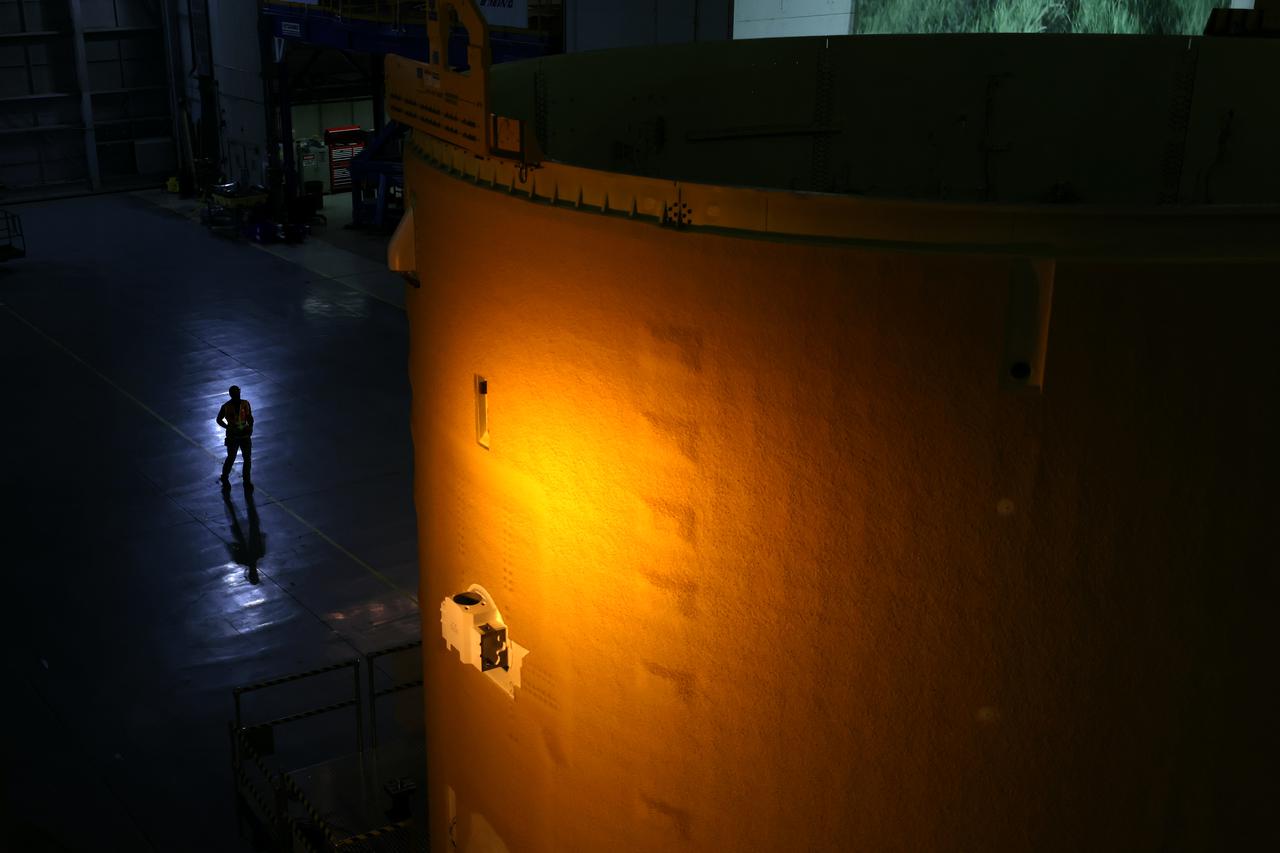
NASA Readies Artemis II Hardware for Core Stage Forward Join
This image shows technicians and engineers beginning the process of the forward join on the core stage of NASA’s Space Launch System rocket for Artemis II, the first…
Inspect NASA record
This image shows technicians and engineers beginning the process of the forward join on the core stage of NASA’s Space Launch System rocket for Artemis II, the first crewed mission of NASA’s Artemis program at NASA’s Michoud Assembly Facility. The forward join connects the forward skirt, the liquid oxygen tank (LOX) and the intertank structures to form the top part of the SLS rocket’s core stage. Now, NASA and Boeing, the SLS prime contractor, will continue to integrate various systems inside the forward part of the core stage and prepare for structural joining of the liquid hydrogen tank and engine section to form the bottom of the stage. Together with its four RS-25 engines, the rocket’s massive 212-foot-tall core stage — the largest stage NASA has ever built — and its twin solid rocket boosters will produce 8.8 million pounds of thrust to send NASA’s Orion spacecraft, astronauts and supplies beyond Earth’s orbit to the Moon and, ultimately, Mars. Offering more payload mass, volume capability and energy to speed missions through space, the SLS rocket, along with NASA’s Gateway in lunar orbit, the Human Landing System, and Orion spacecraft, is part of NASA’s backbone for deep space exploration and the Artemis lunar program. No other rocket is capable of carrying astronauts in Orion around the Moon in a single mission. Image credit: NASA/Michael DeMocker
- Record ID
- MAF_20210319_ArtII_Intertank04
- NASA center
- MAF
- Date
- 2021-03-19
- Credit
- Michael DeMocker
- Keywords
- Space Launch System, SLS, Artemis, NASA, Marshall Space Flight Center, Michoud Assembly Facility, rocket science, rocket, launch vehicle, Moon, Boeing, forward join
JPL · 2023-08-02 · PIA25668
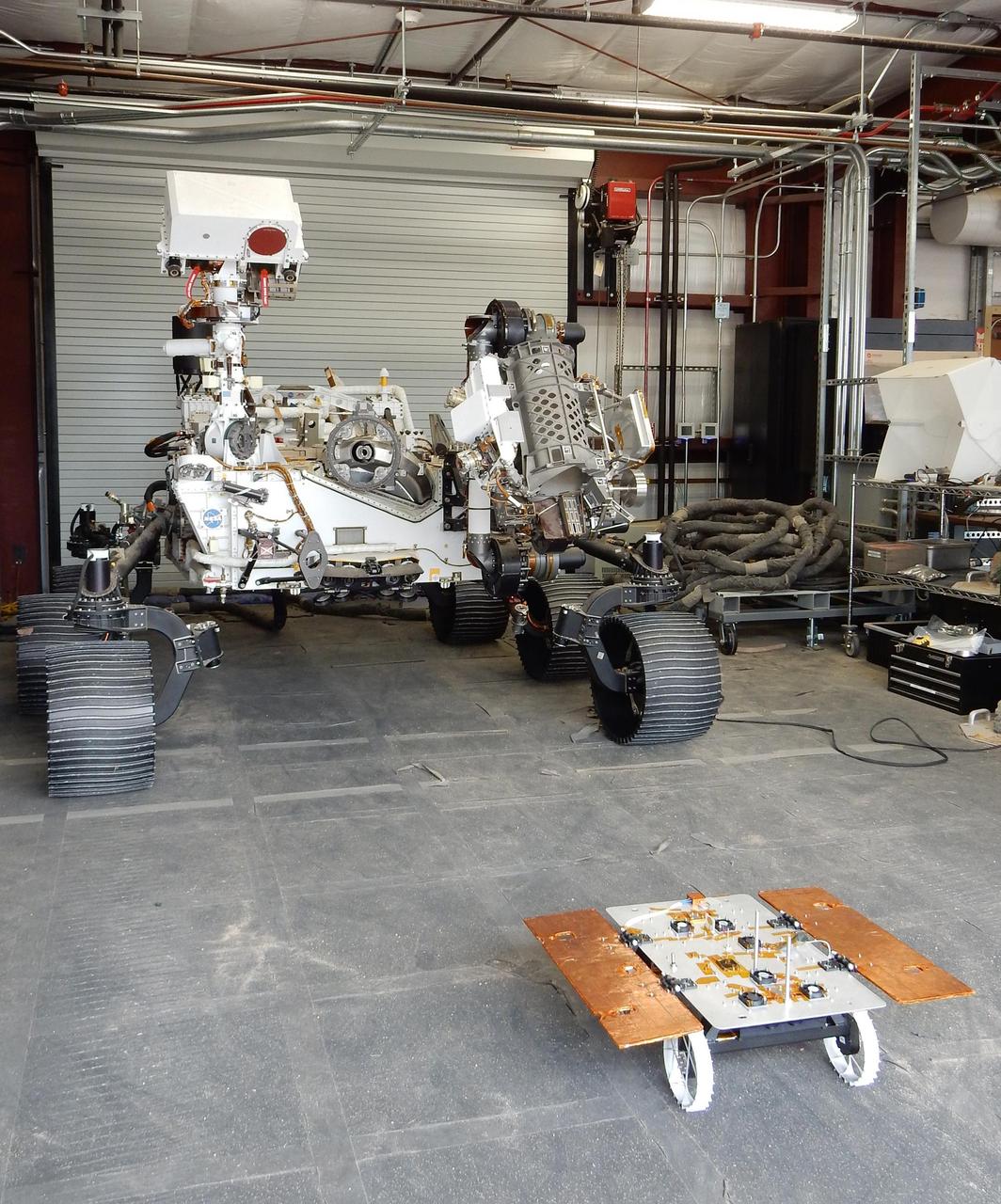
PIA25668
The Earth-bound full-scale engineering model of NASA's Perseverance rover, called OPTIMISM, seems to peer down at a much smaller CADRE rover in a building in the Mars Yard…
Inspect NASA record
The Earth-bound full-scale engineering model of NASA's Perseverance rover, called OPTIMISM, seems to peer down at a much smaller CADRE rover in a building in the Mars Yard at NASA's Jet Propulsion Laboratory in Southern California in June 2023. Short for Cooperative Autonomous Distributed Robotic Exploration, NASA's CADRE technology demonstration is slated to arrive at the Moon in spring 2024 as part of the agency's CLPS (Commercial Lunar Payload Services) initiative. CADRE is designed to demonstrate that multiple robots can cooperate and explore together autonomously – without direct input from human mission controllers. The development rover being tested is similar in size and appearance to the flight models of the CADRE rovers, which are still being built. A trio of the miniature solar-powered rovers, each about the size of a carry-on suitcase, will explore the Moon as a team, communicating via radio with each other and a base station aboard a lunar lander. By taking simultaneous measurements from multiple locations, CADRE will also demonstrate how multirobot missions can record data impossible for a single robot to achieve – a tantalizing prospect for future missions. https://photojournal.jpl.nasa.gov/catalog/PIA25668
- Record ID
- PIA25668
- NASA center
- JPL
- Date
- 2023-08-02
- Credit
- NASA/JPL-Caltech
- Keywords
- Cooperative Autonomous Distributed Robotic Exploration (CADRE)
MAF · 2021-06-09 · MAF_20210609_CS2_BoatTail2CellA13
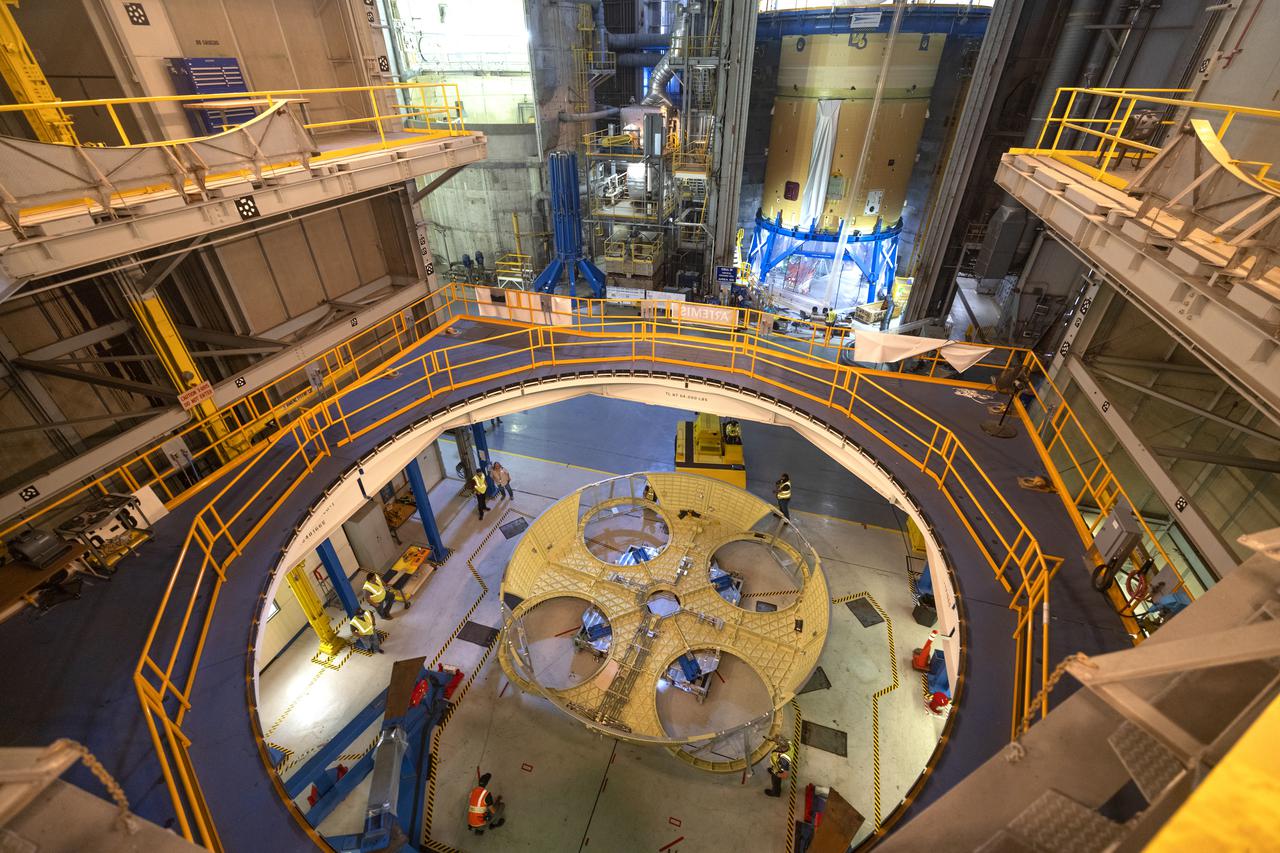
NASA Readies Artemis II Boat-tail for Core Stage 2
Technicians and engineers move the boat-tail structure for the core stage of NASA’s Space Launch System’s (SLS) rocket for Artemis II, the first crewed mission of NASA’s Artemis…
Inspect NASA record
Technicians and engineers move the boat-tail structure for the core stage of NASA’s Space Launch System’s (SLS) rocket for Artemis II, the first crewed mission of NASA’s Artemis program at NASA’s Michoud Assembly Facility. The boat-tail, a fairing-like cover that attaches to the engine section on the bottom of the core stage, protects and covers most of the four RS-25 engines’ critical systems. Together with its four RS-25 engines, the rocket’s massive 212-foot-tall core stage — the largest stage NASA has ever built — and its twin solid rocket boosters will produce 8.8 million pounds of thrust to send NASA’s Orion spacecraft, astronauts and supplies beyond Earth’s orbit to the Moon and, ultimately, Mars. Offering more payload mass, volume capability and energy to speed missions through space, the SLS rocket, along with NASA’s Gateway in lunar orbit, the Human Landing System, and Orion spacecraft, is part of NASA’s backbone for deep space exploration and the Artemis lunar program. No other rocket is capable of carrying astronauts in Orion around the Moon in a single mission. Photographed on Wednesday, June 9, 2021. Image credit: NASA/Michael DeMocker
- Record ID
- MAF_20210609_CS2_BoatTail2CellA13
- NASA center
- MAF
- Date
- 2021-06-09
- Credit
- Michael DeMocker
- Keywords
- Space Launch System, SLS, Artemis, NASA, Marshall Space Flight Center, Michoud Assembly Facility, rocket science, rocket, launch vehicle, Moon, liquid hydrogen, fusion weld
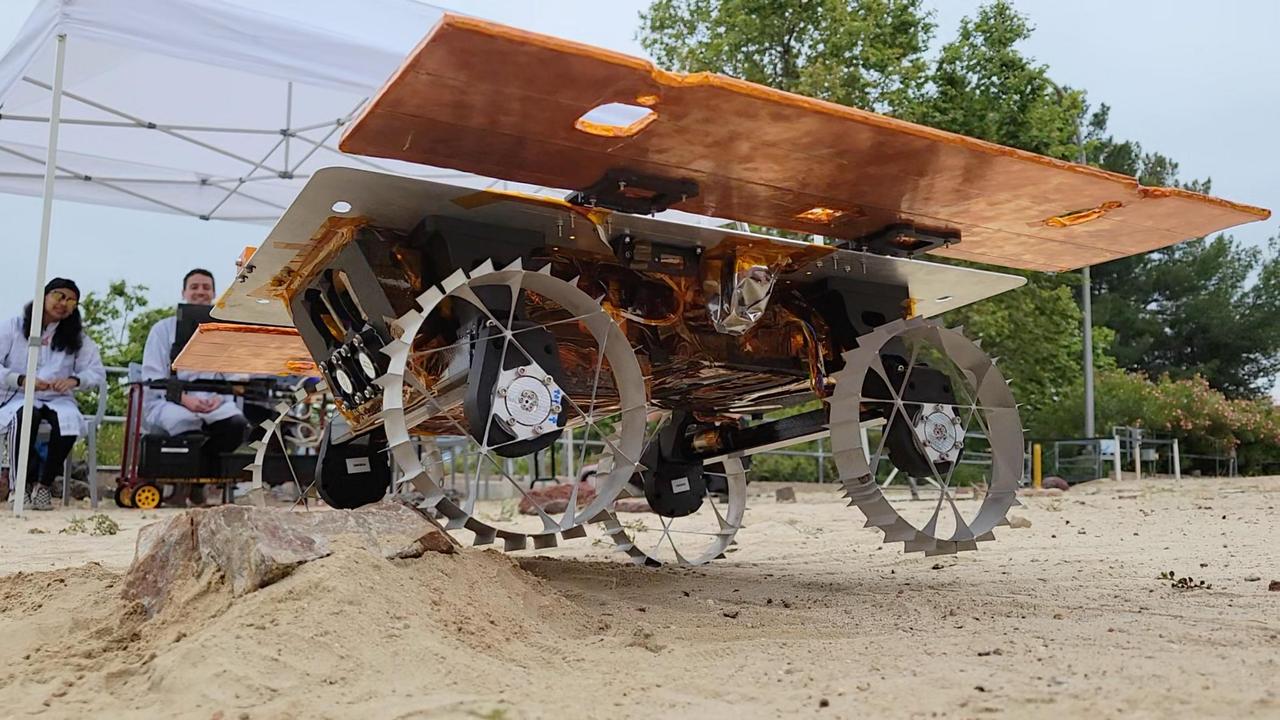
JPL · 2023-08-02 · PIA25667
CADRE Mini Rover Drives Over a Rock
A development rover that is part of NASA's CADRE (Cooperative Autonomous Distributed Robotic Exploration) technology demonstration drives over a rock during its first autonomous drive around the Mars…
Inspect NASA record
A development rover that is part of NASA's CADRE (Cooperative Autonomous Distributed Robotic Exploration) technology demonstration drives over a rock during its first autonomous drive around the Mars Yard at the agency's Jet Propulsion Laboratory in Southern California in June 2023. Under a canopy behind the rover are, from left, graduate student intern Natalie Deo and CADRE verification and validation lead Sawyer Brooks of JPL. The CADRE team successfully tested a new wheel design, surface navigation software, and mobility capabilities, among other aspects of the project. The rover being tested is similar in size and appearance to the flight models of the CADRE rovers, which are still being built. Slated to arrive at the Moon in spring 2024 as part of NASA's CLPS (Commercial Lunar Payload Services) initiative, CADRE is designed to demonstrate that multiple robots can cooperate and explore together autonomously – without direct input from human mission controllers. A trio of the miniature solar-powered rovers, each about the size of a carry-on suitcase, will explore the Moon as a team, communicating via radio with each other and a base station aboard a lunar lander. By taking simultaneous measurements from multiple locations, CADRE will also demonstrate how multirobot missions can record data impossible for a single robot to achieve – a tantalizing prospect for future missions. Movie available at https://photojournal.jpl.nasa.gov/catalog/PIA25667
- Record ID
- PIA25667
- NASA center
- JPL
- Date
- 2023-08-02
- Credit
- NASA/JPL-Caltech
- Keywords
- Cooperative Autonomous Distributed Robotic Exploration (CADRE)
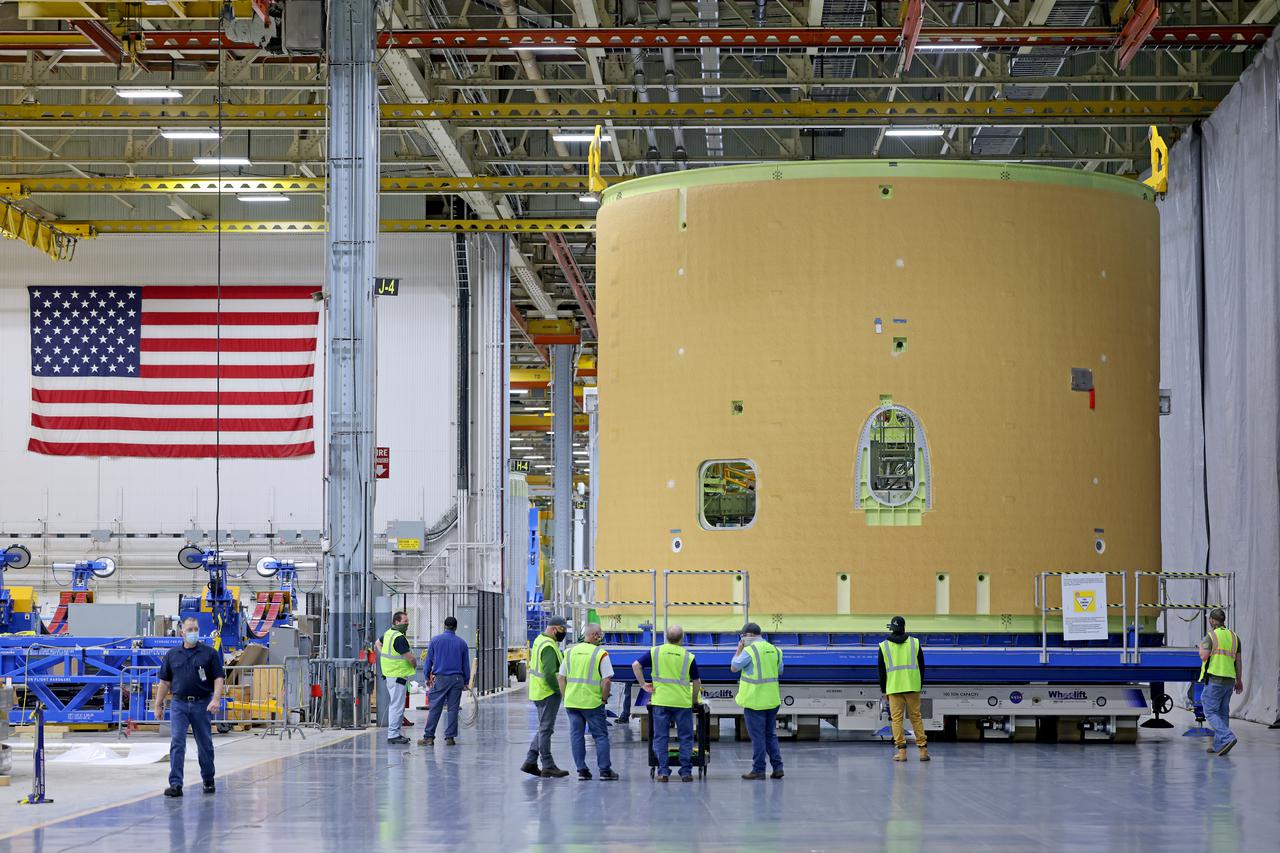
MAF · 2021-03-19 · MAF_20210319_ArtII_Intertank02
NASA Readies Artemis II Hardware for Core Stage Forward Join
This image shows technicians and engineers beginning the process of the forward join on the core stage of NASA’s Space Launch System rocket for Artemis II, the first…
Inspect NASA record
This image shows technicians and engineers beginning the process of the forward join on the core stage of NASA’s Space Launch System rocket for Artemis II, the first crewed mission of NASA’s Artemis program at NASA’s Michoud Assembly Facility. The forward join connects the forward skirt, the liquid oxygen tank (LOX) and the intertank structures to form the top part of the SLS rocket’s core stage. Now, NASA and Boeing, the SLS prime contractor, will continue to integrate various systems inside the forward part of the core stage and prepare for structural joining of the liquid hydrogen tank and engine section to form the bottom of the stage. Together with its four RS-25 engines, the rocket’s massive 212-foot-tall core stage — the largest stage NASA has ever built — and its twin solid rocket boosters will produce 8.8 million pounds of thrust to send NASA’s Orion spacecraft, astronauts and supplies beyond Earth’s orbit to the Moon and, ultimately, Mars. Offering more payload mass, volume capability and energy to speed missions through space, the SLS rocket, along with NASA’s Gateway in lunar orbit, the Human Landing System, and Orion spacecraft, is part of NASA’s backbone for deep space exploration and the Artemis lunar program. No other rocket is capable of carrying astronauts in Orion around the Moon in a single mission. Image credit: NASA/Michael DeMocker
- Record ID
- MAF_20210319_ArtII_Intertank02
- NASA center
- MAF
- Date
- 2021-03-19
- Credit
- Michael DeMocker
- Keywords
- Space Launch System, SLS, Artemis, NASA, Marshall Space Flight Center, Michoud Assembly Facility, rocket science, rocket, launch vehicle, Moon, Boeing, forward join
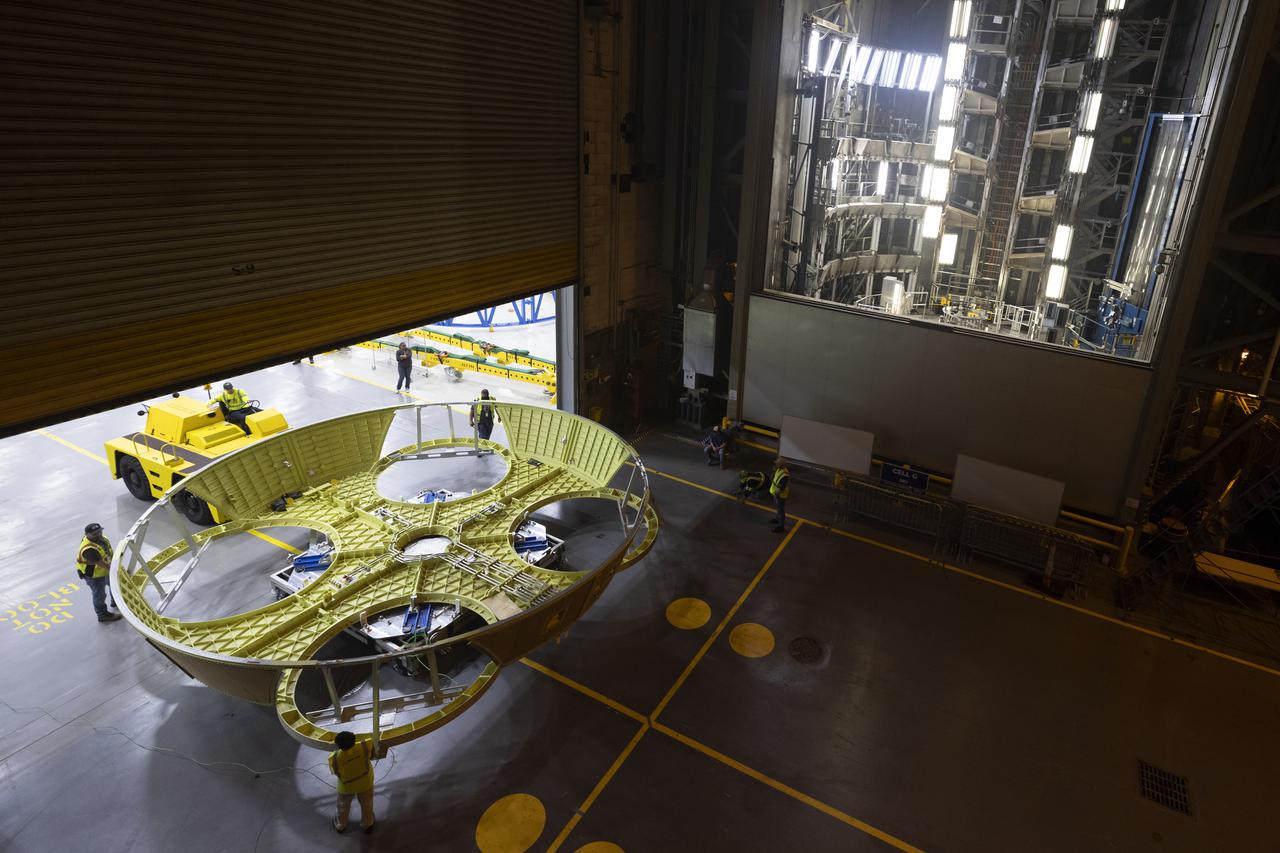
MAF · 2021-06-09 · MAF_20210609_CS2_BoatTail2CellA04
NASA Readies Artemis II Boat-tail for Core Stage 2
Technicians and engineers move the boat-tail structure for the core stage of NASA’s Space Launch System’s (SLS) rocket for Artemis II, the first crewed mission of NASA’s Artemis…
Inspect NASA record
Technicians and engineers move the boat-tail structure for the core stage of NASA’s Space Launch System’s (SLS) rocket for Artemis II, the first crewed mission of NASA’s Artemis program at NASA’s Michoud Assembly Facility. The boat-tail, a fairing-like cover that attaches to the engine section on the bottom of the core stage, protects and covers most of the four RS-25 engines’ critical systems. Together with its four RS-25 engines, the rocket’s massive 212-foot-tall core stage — the largest stage NASA has ever built — and its twin solid rocket boosters will produce 8.8 million pounds of thrust to send NASA’s Orion spacecraft, astronauts and supplies beyond Earth’s orbit to the Moon and, ultimately, Mars. Offering more payload mass, volume capability and energy to speed missions through space, the SLS rocket, along with NASA’s Gateway in lunar orbit, the Human Landing System, and Orion spacecraft, is part of NASA’s backbone for deep space exploration and the Artemis lunar program. No other rocket is capable of carrying astronauts in Orion around the Moon in a single mission. Photographed on Wednesday, June 9, 2021. Image credit: NASA/Michael DeMocker
- Record ID
- MAF_20210609_CS2_BoatTail2CellA04
- NASA center
- MAF
- Date
- 2021-06-09
- Credit
- Michael DeMocker
- Keywords
- Space Launch System, SLS, Artemis, NASA, Marshall Space Flight Center, Michoud Assembly Facility, rocket science, rocket, launch vehicle, Moon, liquid hydrogen, fusion weld
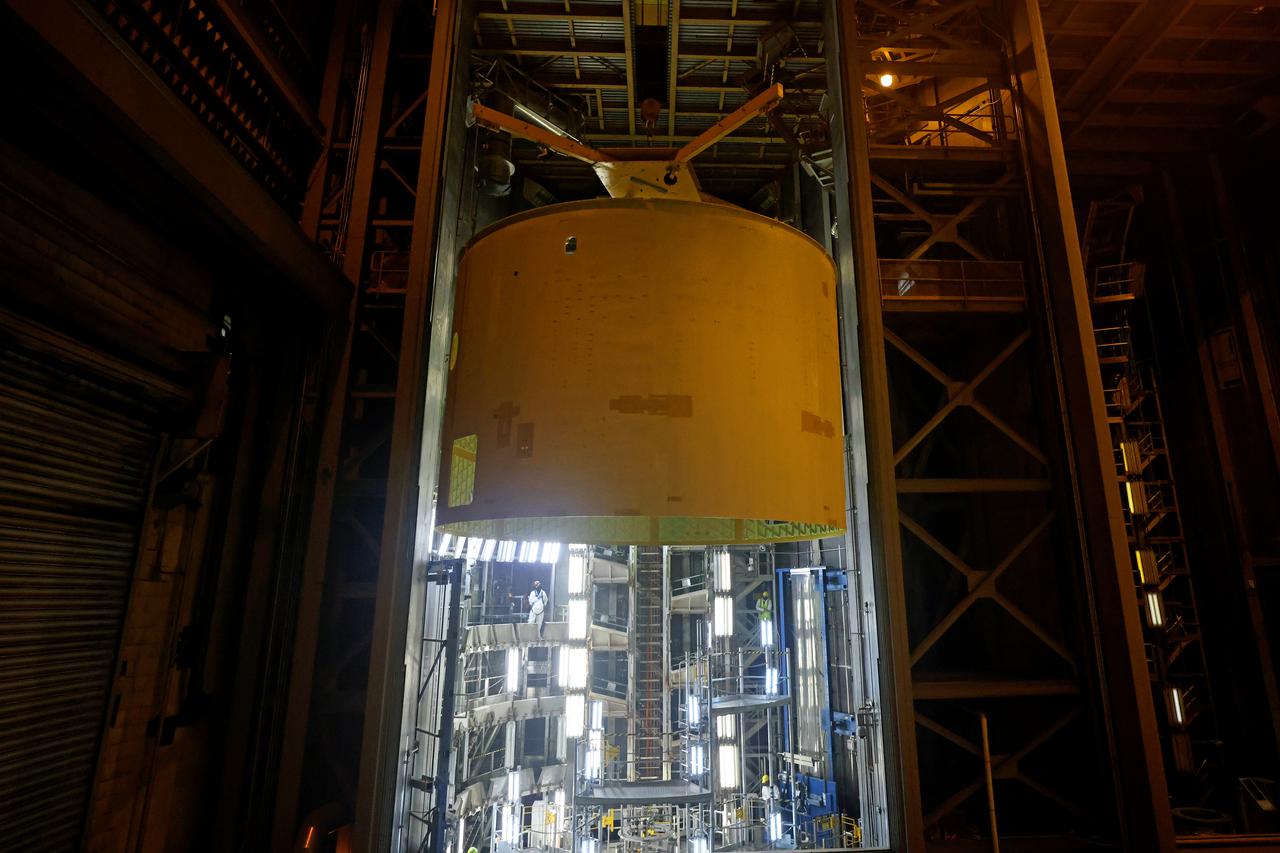
MAF · 2021-04-01 · MAF_20210401_ARTIII_ESLift12
NASA Readies Artemis III
Technicians at NASA’s Michoud Assembly Facility prime and move the engine section of NASA’s Space Launch System rocket for Artemis III in preparation for its next step in…
Inspect NASA record
Technicians at NASA’s Michoud Assembly Facility prime and move the engine section of NASA’s Space Launch System rocket for Artemis III in preparation for its next step in production. This hardware is the first large piece manufactured for the Artemis III mission and makes up the lowest portion of the 212-foot-tall core stage. When complete, the engine section will house the four RS-25 engines and include vital systems for mounting, controlling and delivering fuel from the propellant tanks to the rocket’s engines. Together with its four RS-25 engines and its twin solid rocket boosters, it will produce 8.8 million pounds of thrust to send NASA’s Orion spacecraft, astronauts, and supplies beyond Earth’s orbit to the Moon and, ultimately, Mars. Offering more payload mass, volume capability, and energy to speed missions through space, the SLS rocket, along with NASA’s Gateway in lunar orbit, the Human Landing System, and Orion spacecraft, is part of NASA’s backbone for deep space exploration and the Artemis lunar program. No other rocket is capable of carrying astronauts in Orion around the Moon in a single mission.
- Record ID
- MAF_20210401_ARTIII_ESLift12
- NASA center
- MAF
- Date
- 2021-04-01
- Credit
- Michael DeMocker
- Keywords
- Space Launch System, SLS, Artemis, Artemis III, NASA, Marshall Space Flight Center, Michoud Assembly Facility, rocket science, rocket, launch vehicle, Moon, Boeing
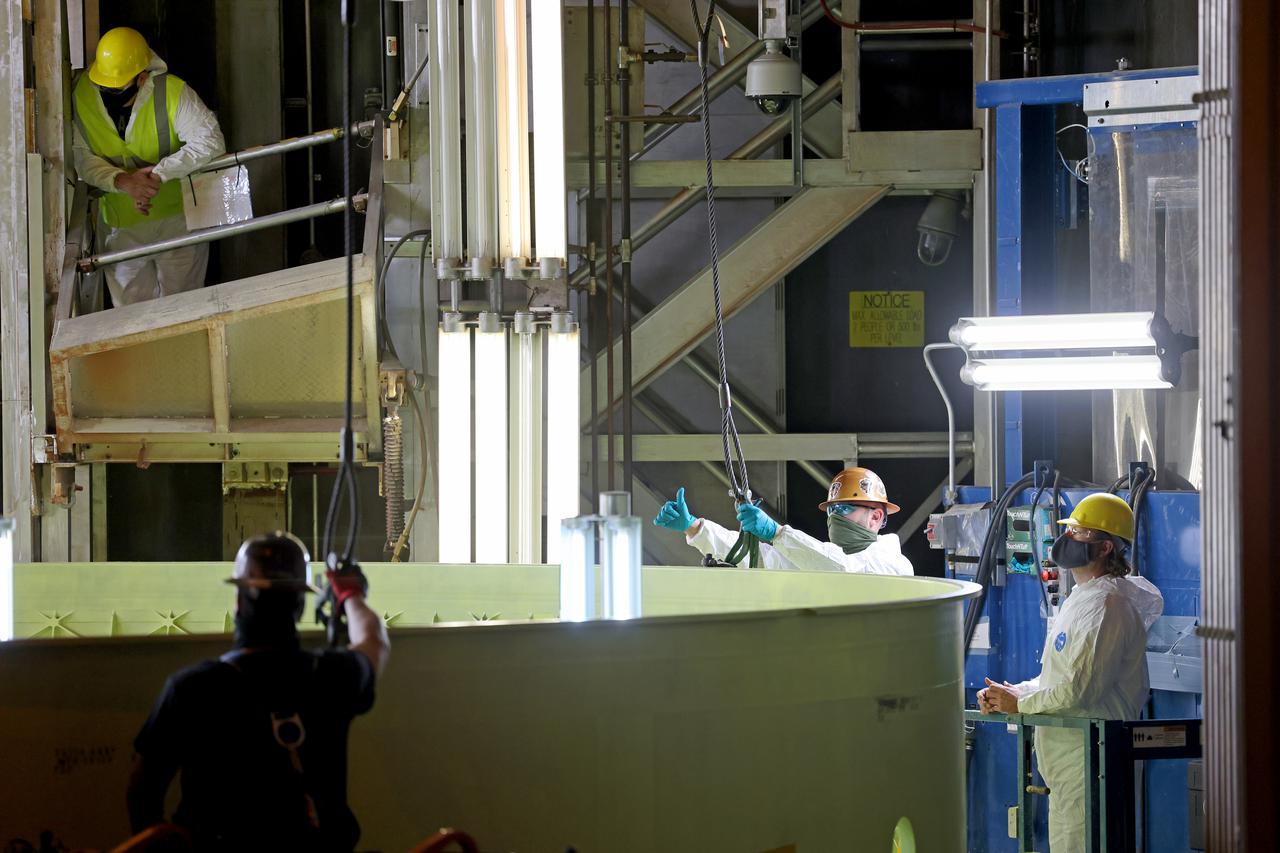
MAF · 2021-04-01 · MAF_20210401_ARTIII_ESLift09
NASA Readies Artemis III
Technicians at NASA’s Michoud Assembly Facility prime and move the engine section of NASA’s Space Launch System rocket for Artemis III in preparation for its next step in…
Inspect NASA record
Technicians at NASA’s Michoud Assembly Facility prime and move the engine section of NASA’s Space Launch System rocket for Artemis III in preparation for its next step in production. This hardware is the first large piece manufactured for the Artemis III mission and makes up the lowest portion of the 212-foot-tall core stage. When complete, the engine section will house the four RS-25 engines and include vital systems for mounting, controlling and delivering fuel from the propellant tanks to the rocket’s engines. Together with its four RS-25 engines and its twin solid rocket boosters, it will produce 8.8 million pounds of thrust to send NASA’s Orion spacecraft, astronauts, and supplies beyond Earth’s orbit to the Moon and, ultimately, Mars. Offering more payload mass, volume capability, and energy to speed missions through space, the SLS rocket, along with NASA’s Gateway in lunar orbit, the Human Landing System, and Orion spacecraft, is part of NASA’s backbone for deep space exploration and the Artemis lunar program. No other rocket is capable of carrying astronauts in Orion around the Moon in a single mission.
- Record ID
- MAF_20210401_ARTIII_ESLift09
- NASA center
- MAF
- Date
- 2021-04-01
- Credit
- Michael DeMocker
- Keywords
- Space Launch System, SLS, Artemis, Artemis III, NASA, Marshall Space Flight Center, Michoud Assembly Facility, rocket science, rocket, launch vehicle, Moon, Boeing

MAF · 2021-01-07 · MAF_20210107_ARTIII_EngineSectionPanel16
NASA Readies Artemis III
Technicians at NASA’s Michoud Assembly Facility move a piece of the engine section of NASA’s Space Launch System rocket for Artemis III in preparation for its next step…
Inspect NASA record
Technicians at NASA’s Michoud Assembly Facility move a piece of the engine section of NASA’s Space Launch System rocket for Artemis III in preparation for its next step in production. This hardware is the first large piece manufactured for the Artemis III mission and makes up the lowest portion of the 212-foot-tall core stage. When complete, the engine section will house the four RS-25 engines and include vital systems for mounting, controlling and delivering fuel from the propellant tanks to the rocket’s engines. Together with its four RS-25 engines and its twin solid rocket boosters, it will produce 8.8 million pounds of thrust to send NASA’s Orion spacecraft, astronauts, and supplies beyond Earth’s orbit to the Moon and, ultimately, Mars. Offering more payload mass, volume capability, and energy to speed missions through space, the SLS rocket, along with NASA’s Gateway in lunar orbit, the Human Landing System, and Orion spacecraft, is part of NASA’s backbone for deep space exploration and the Artemis lunar program. No other rocket is capable of carrying astronauts in Orion around the Moon in a single mission.
- Record ID
- MAF_20210107_ARTIII_EngineSectionPanel16
- NASA center
- MAF
- Date
- 2021-01-07
- Credit
- Michael DeMocker
- Keywords
- Space Launch System, SLS, Artemis, Artemis III, NASA, Marshall Space Flight Center, Michoud Assembly Facility, rocket science, rocket, launch vehicle, Moon, Boeing
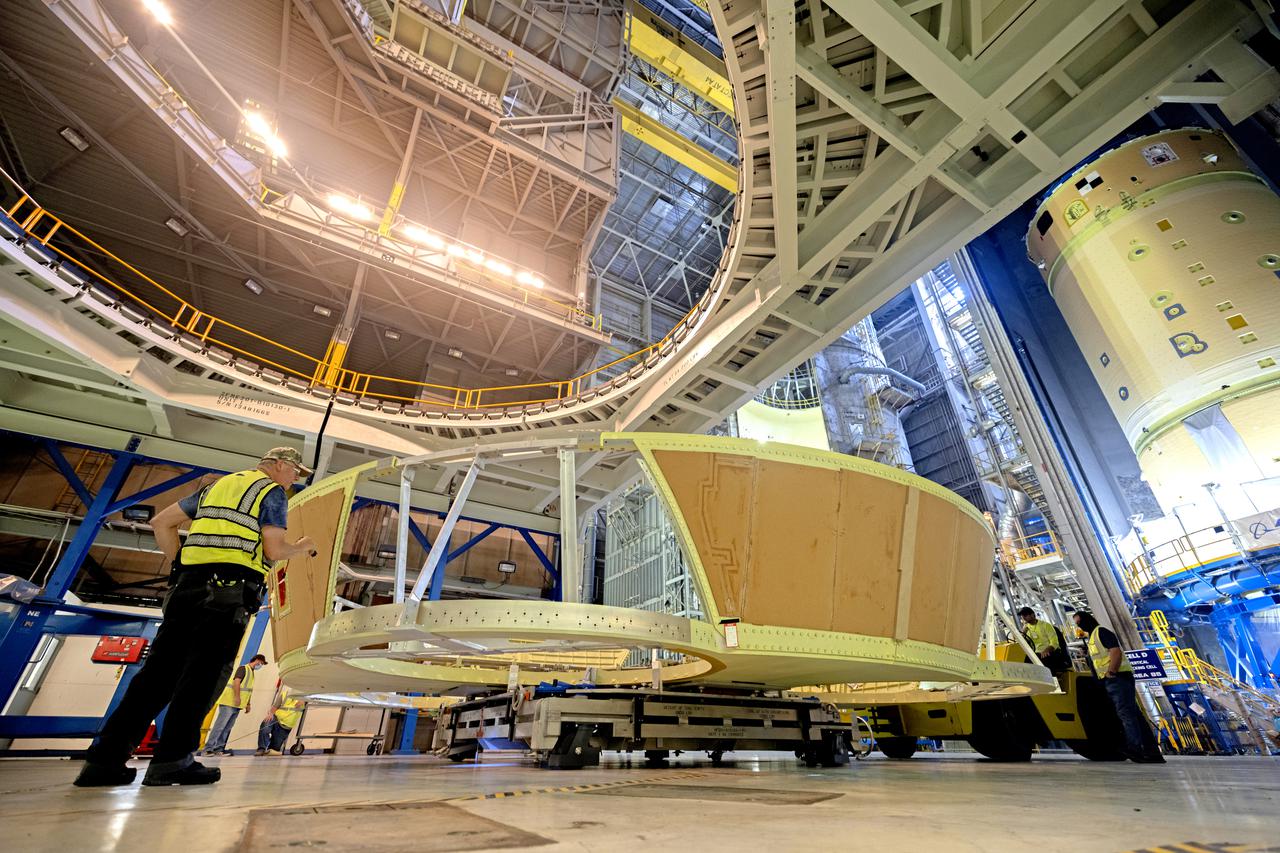
MAF · 2021-06-09 · MAF_20210609_CS2_BoatTail2CellA14
NASA Readies Artemis II Boat-tail for Core Stage 2
Technicians and engineers move the boat-tail structure for the core stage of NASA’s Space Launch System’s (SLS) rocket for Artemis II, the first crewed mission of NASA’s Artemis…
Inspect NASA record
Technicians and engineers move the boat-tail structure for the core stage of NASA’s Space Launch System’s (SLS) rocket for Artemis II, the first crewed mission of NASA’s Artemis program at NASA’s Michoud Assembly Facility. The boat-tail, a fairing-like cover that attaches to the engine section on the bottom of the core stage, protects and covers most of the four RS-25 engines’ critical systems. Together with its four RS-25 engines, the rocket’s massive 212-foot-tall core stage — the largest stage NASA has ever built — and its twin solid rocket boosters will produce 8.8 million pounds of thrust to send NASA’s Orion spacecraft, astronauts and supplies beyond Earth’s orbit to the Moon and, ultimately, Mars. Offering more payload mass, volume capability and energy to speed missions through space, the SLS rocket, along with NASA’s Gateway in lunar orbit, the Human Landing System, and Orion spacecraft, is part of NASA’s backbone for deep space exploration and the Artemis lunar program. No other rocket is capable of carrying astronauts in Orion around the Moon in a single mission. Photographed on Wednesday, June 9, 2021. Image credit: NASA/Michael DeMocker
- Record ID
- MAF_20210609_CS2_BoatTail2CellA14
- NASA center
- MAF
- Date
- 2021-06-09
- Credit
- Michael DeMocker
- Keywords
- Space Launch System, SLS, Artemis, NASA, Marshall Space Flight Center, Michoud Assembly Facility, rocket science, rocket, launch vehicle, Moon, liquid hydrogen, fusion weld