
Update Site (from NASA)
Explore NASA’s Image and Video Library.
Suggest one object per day for the Interstellar Minds collection. We review each suggestion before adding it.
Sign in to suggest a Marvel.
Find a NASA image ID. Open a NASA record and copy its ID from the end of the details URL.
NASA image records
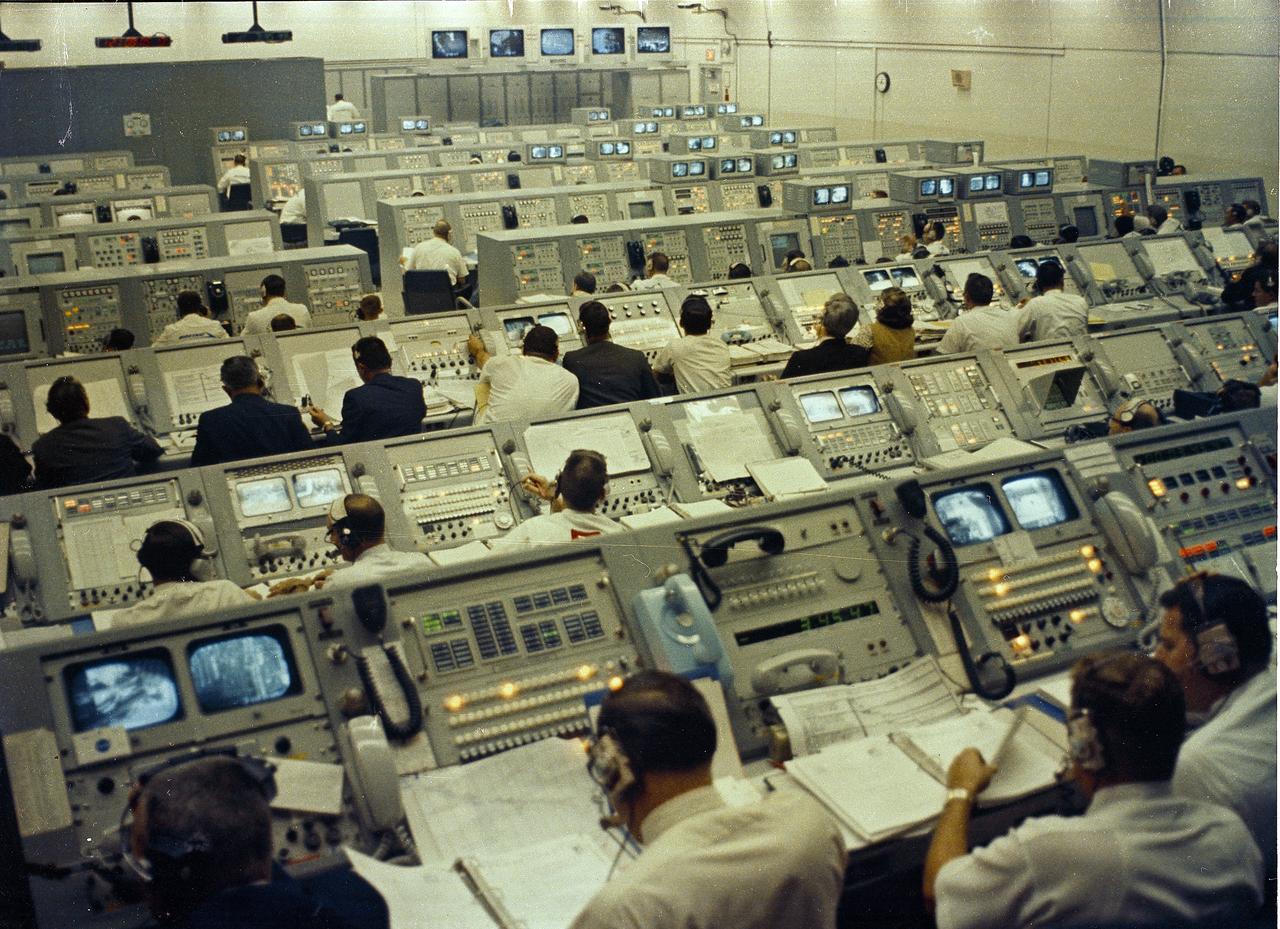
MSFC · 1968-12-21 · 6972887
Saturn Apollo Program
This photograph depicts a busy Launch Control Center at Kennedy Space Center during the Apollo 8 mission launch activities. Apollo 8 served as the first manned lunar orbit…
Inspect NASA record
This photograph depicts a busy Launch Control Center at Kennedy Space Center during the Apollo 8 mission launch activities. Apollo 8 served as the first manned lunar orbit mission. Liftoff occurred on December 21, 1968 with a three man crew consiting of astronauts Frank Borman, commander; William Anders, Lunar Module (LM) Pilot; and James Lovell, Command Module (CM) pilot. The three safely returned to Earth on December 27, 1968. The mission achieved operational experience and tested the Apollo command module systems, including communications, tracking, and life-support, in cis-lunar space and lunar orbit, and allowed evaluation of crew performance on a lunar orbiting mission. The crew photographed the lunar surface, both far side and near side, obtaining information on topography and landmarks as well as other scientific information necessary for future Apollo landings. All systems operated within allowable parameters and all objectives of the mission were achieved.
- Record ID
- 6972887
- NASA center
- MSFC
- Date
- 1968-12-21
- Keywords
- Apollo 8, Kennedy Space Center, Launch Control Center, Launch Activities
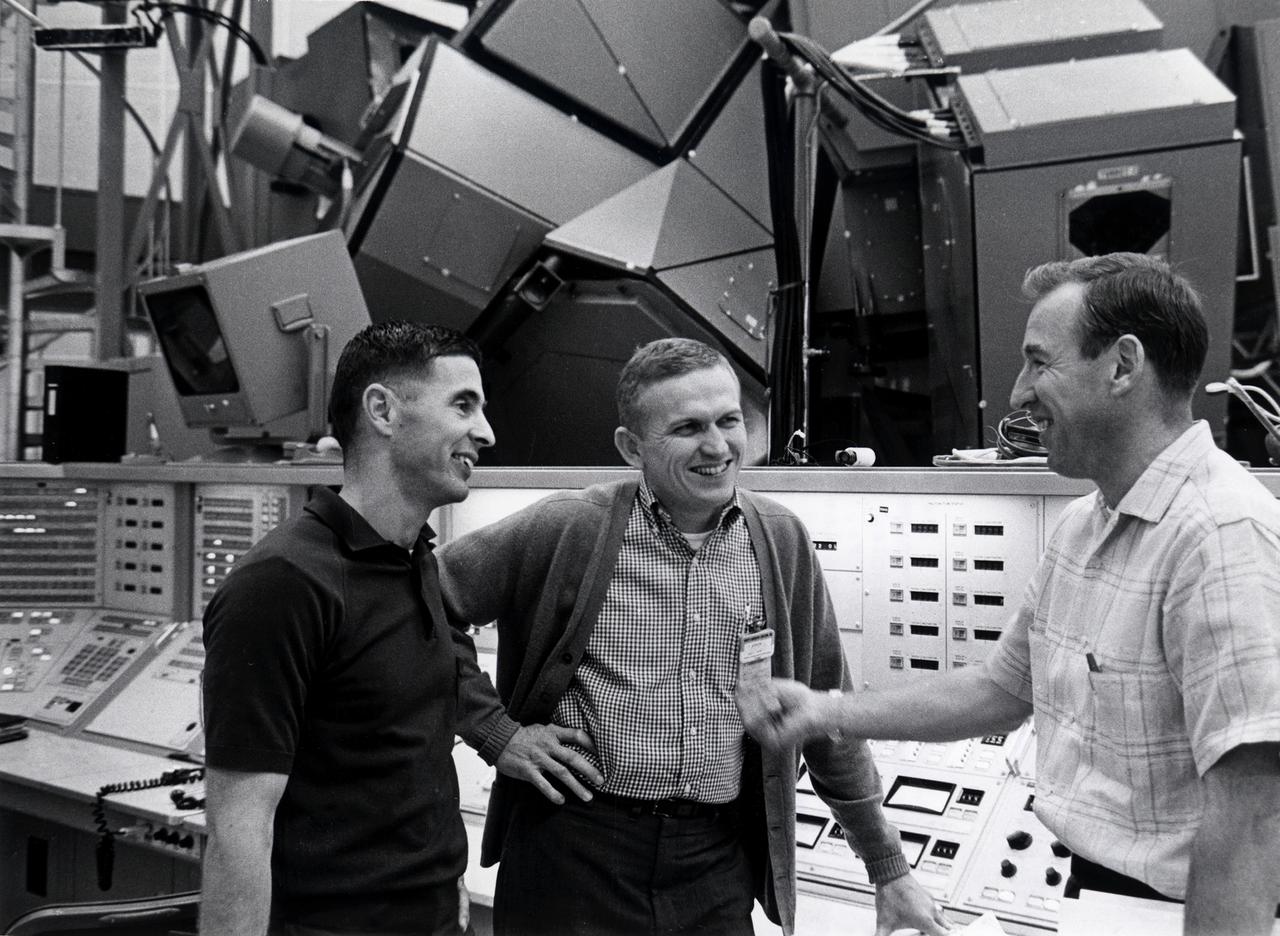
MSFC · 1968-12-17 · 6872203
Saturn Apollo Program
Apollo 8 crew members paused before the mission simulator during training for the first manned lunar orbital mission. Frank Borman, commander; James Lovell, Command Module (CM) pilot; and…
Inspect NASA record
Apollo 8 crew members paused before the mission simulator during training for the first manned lunar orbital mission. Frank Borman, commander; James Lovell, Command Module (CM) pilot; and William Anders, Lunar Module (LM) pilot , were also the first humans to launch aboard the massive Saturn V space vehicle. Lift off occurred on December 21, 1968 and returned safely to Earth on December 27, 1968. The mission achieved operational experience and tested the Apollo command module systems, including communications, tracking, and life-support, in cis-lunar space and lunar orbit, and allowed evaluation of crew performance on a lunar orbiting mission. The crew photographed the lunar surface, both far side and near side, obtaining information on topography and landmarks as well as other scientific information necessary for future Apollo landings. All systems operated within allowable parameters and all objectives of the mission were achieved.
- Record ID
- 6872203
- NASA center
- MSFC
- Date
- 1968-12-17
- Keywords
- Apollo 8, Crew, Pause, Mission Simulator
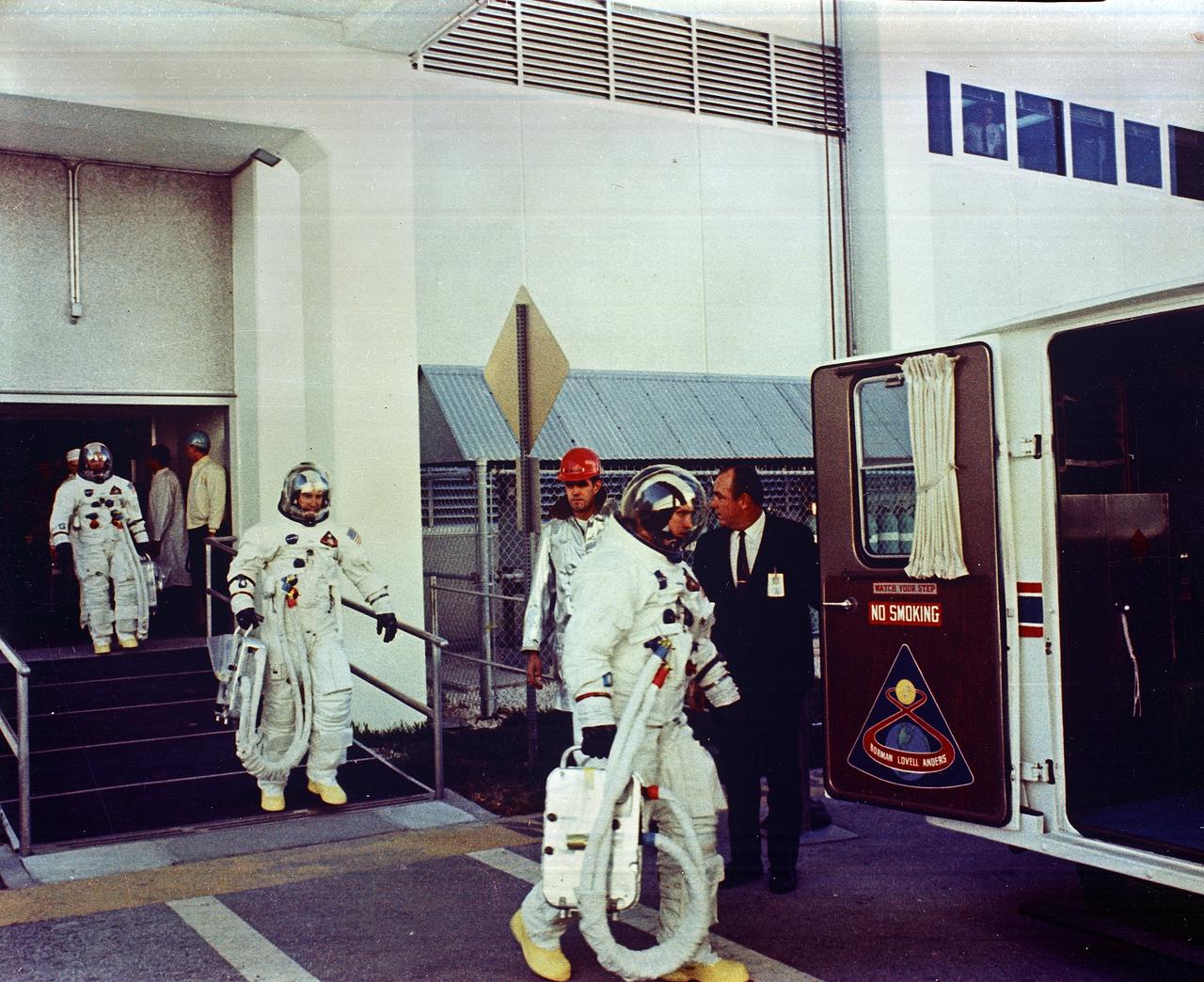
MSFC · 1968-12-21 · 6971886
Saturn Apollo Program
Apollo 8 Astronauts William Anders, Lunar Module (LM) Pilot; James Lovell, Command Module (CM) pilot; and Frank Borman, commander, transfer to the astronaut van for the trip to…
Inspect NASA record
Apollo 8 Astronauts William Anders, Lunar Module (LM) Pilot; James Lovell, Command Module (CM) pilot; and Frank Borman, commander, transfer to the astronaut van for the trip to the launch pad. The first manned Apollo mission launched aboard the Saturn V and first manned Apollo craft to enter lunar orbit, the SA-503, Apollo 8 mission liftoff occurred on December 21, 1968 and returned safely to Earth on December 27, 1968. The mission achieved operational experience and tested the Apollo command module systems, including communications, tracking, and life-support, in cis-lunar space and lunar orbit, and allowed evaluation of crew performance on a lunar orbiting mission. The crew photographed the lunar surface, both far side and near side, obtaining information on topography and landmarks as well as other scientific information necessary for future Apollo landings. All systems operated within allowable parameters and all objectives of the mission were achieved.
- Record ID
- 6971886
- NASA center
- MSFC
- Date
- 1968-12-21
- Keywords
- Apollo 8, Anders, Lovell, Borman, Transfer Van, Launch pad
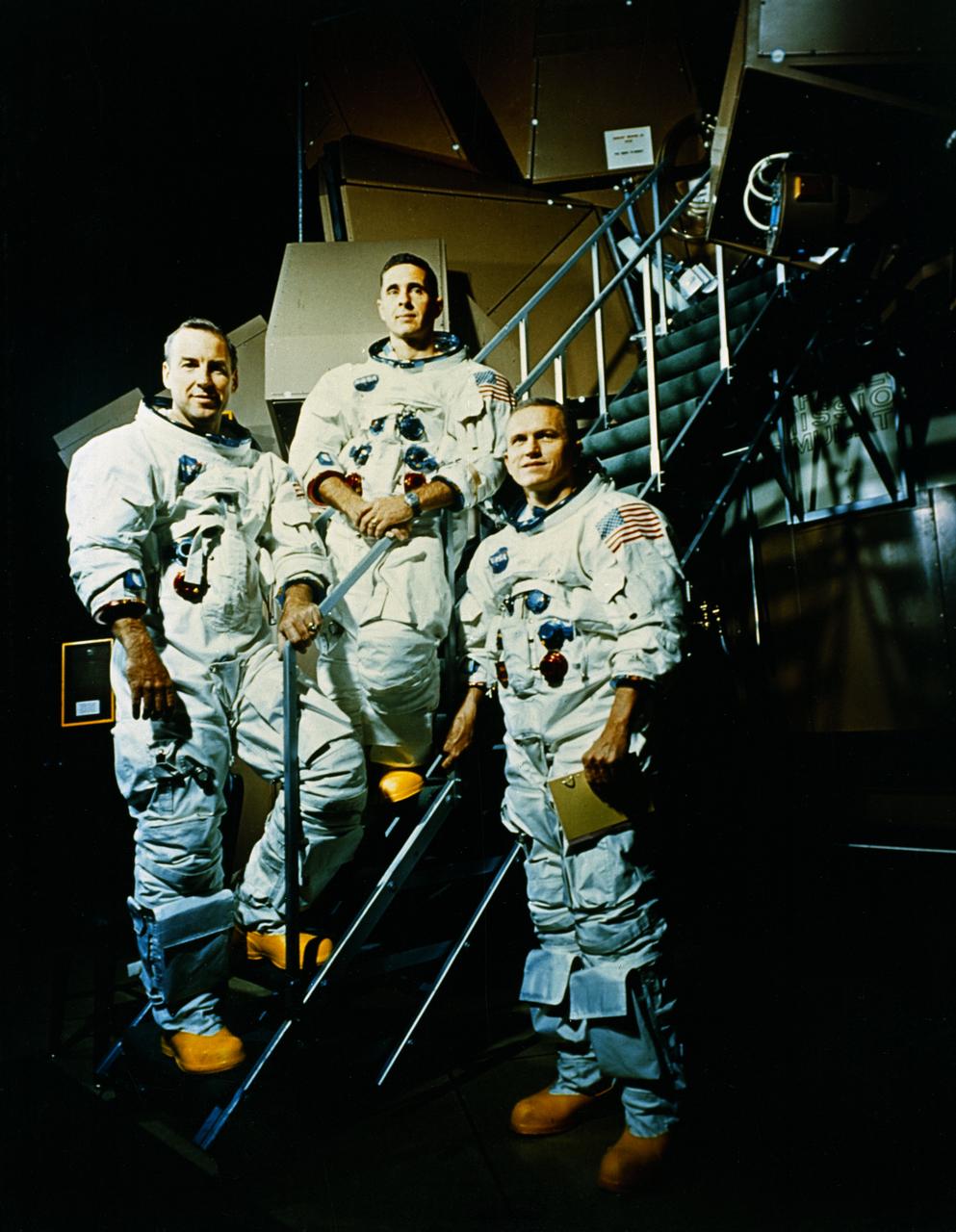
MSFC · 1968-09-09 · 6972224
Saturn Apollo Program
The Apollo 8 Crew included (L to R) James Lovell, Command Module (CM) pilot; William Anders, Lunar Module (LM) Pilot; and Frank Borman, Commander. The first manned Apollo…
Inspect NASA record
The Apollo 8 Crew included (L to R) James Lovell, Command Module (CM) pilot; William Anders, Lunar Module (LM) Pilot; and Frank Borman, Commander. The first manned Apollo mission launched aboard the Saturn V and first manned Apollo craft to enter lunar orbit, the SA-503, Apollo 8 mission liftoff occurred on December 21, 1968 and returned safely to Earth on December 27, 1968. The mission achieved operational experience and tested the Apollo command module systems, including communications, tracking, and life-support, in cis-lunar space and lunar orbit, and allowed evaluation of crew performance on a lunar orbiting mission. The crew photographed the lunar surface, both far side and near side, obtaining information on topography and landmarks as well as other scientific information necessary for future Apollo landings. All systems operated within allowable parameters and all objectives of the mission were achieved.
- Record ID
- 6972224
- NASA center
- MSFC
- Date
- 1968-09-09
- Keywords
- Apollo 8 Crew, Lovell, Anders, Borman
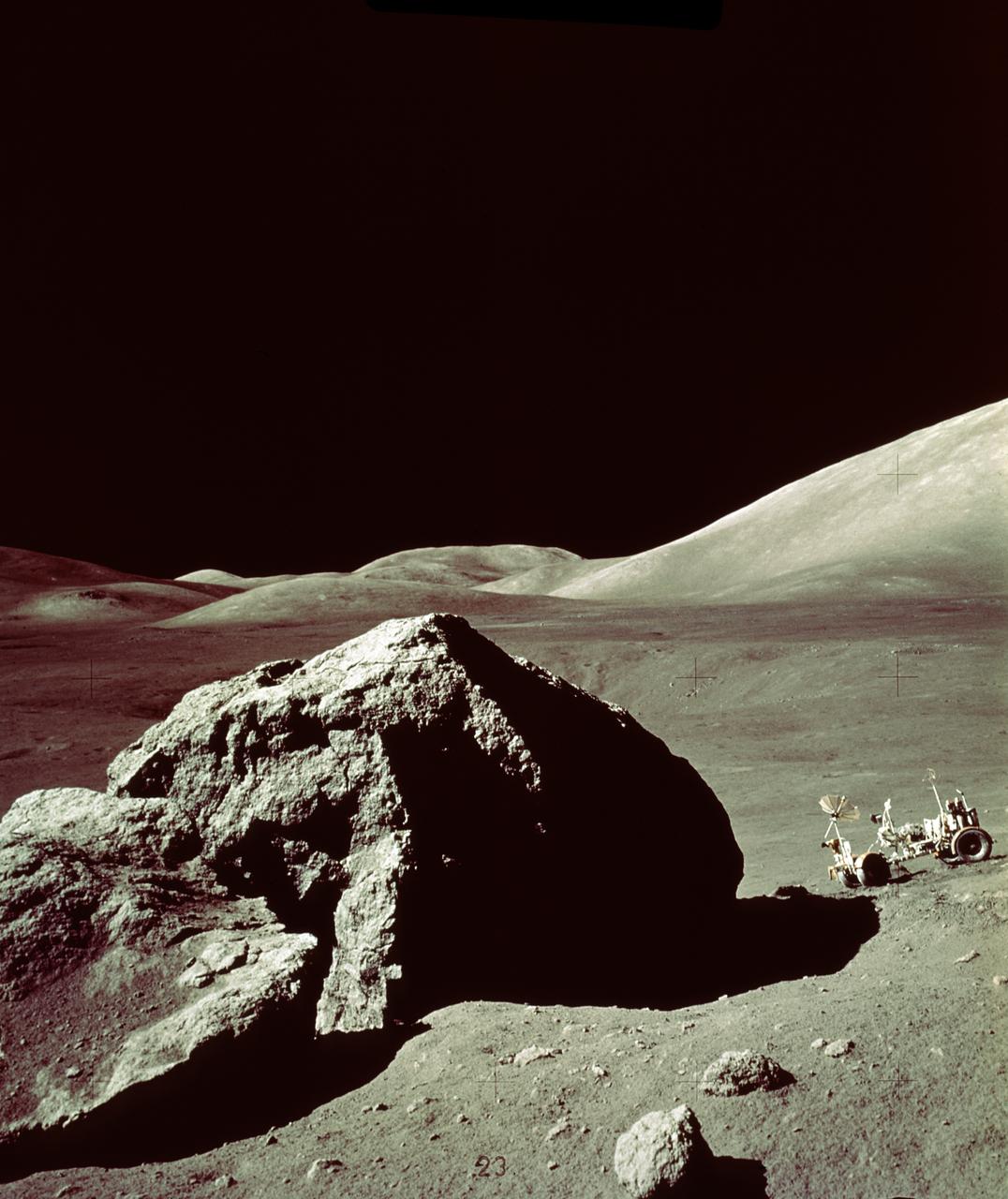
MSFC · 1972-12-13 · 7036668
Saturn Apollo Program
In this Apollo 17 onboard photo, a Lunar Roving Vehicle (LRV) is parked beside a huge boulder near the Valley of Tourus-Litttrow on the lunar surface. The seventh…
Inspect NASA record
In this Apollo 17 onboard photo, a Lunar Roving Vehicle (LRV) is parked beside a huge boulder near the Valley of Tourus-Litttrow on the lunar surface. The seventh and last manned lunar landing and return to Earth mission, the Apollo 17, carrying a crew of three astronauts: Mission Commander Eugene A. Cernan; Lunar Module pilot Harrison H. Schmitt; and Command Module pilot Ronald E. Evans, lifted off on December 7, 1972 from the Kennedy Space Flight Center (KSC). Scientific objectives of the Apollo 17 mission included geological surveying and sampling of materials and surface features in a preselected area of the Taurus-Littrow region, deploying and activating surface experiments, and conducting in-flight experiments and photographic tasks during lunar orbit and transearth coast (TEC). These objectives included: Deployed experiments such as the Apollo lunar surface experiment package (ALSEP) with a Heat Flow experiment, Lunar seismic profiling (LSP), Lunar surface gravimeter (LSG), Lunar atmospheric composition experiment (LACE) and Lunar ejecta and meteorites (LEAM). The mission also included Lunar Sampling and Lunar orbital experiments. Biomedical experiments included the Biostack II Experiment and the BIOCORE experiment. The mission marked the longest Apollo mission, 504 hours, and the longest lunar surface stay time, 75 hours, which allowed the astronauts to conduct an extensive geological investigation. They collected 257 pounds (117 kilograms) of lunar samples with the use of the Marshall Space Flight Center developed LRV. The mission ended on December 19, 1972
- Record ID
- 7036668
- NASA center
- MSFC
- Date
- 1972-12-13
- Keywords
- Apollo 17, Valley of Tourus-Litttrow, LRV
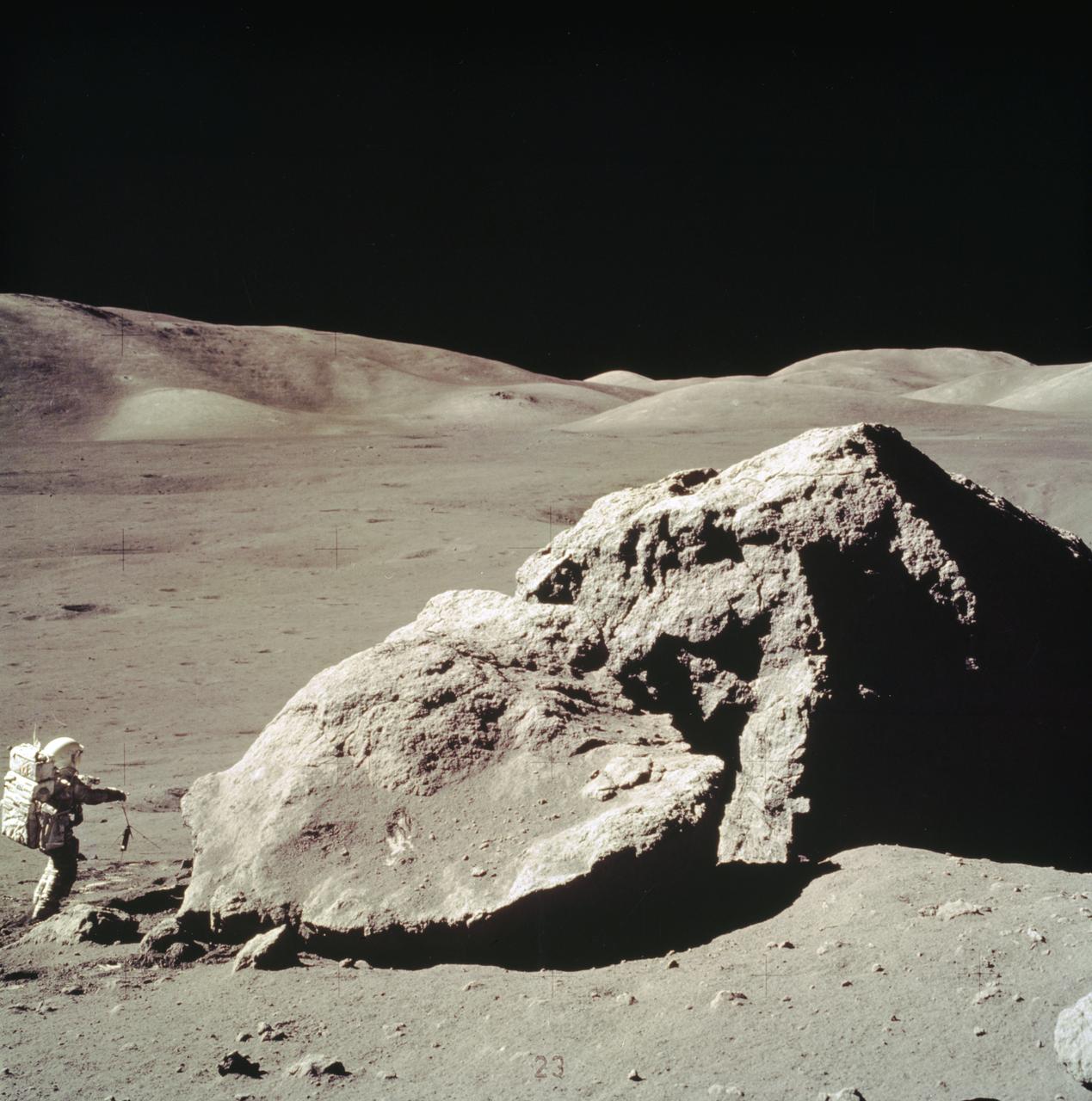
MSFC · 1972-12-13 · 7035876
Saturn Apollo Program
In this Apollo 17 onboard photo, Lunar Module pilot Harrison H. Schmitt collects rock samples from a huge boulder near the Valley of Tourus-Littrow on the lunar surface.…
Inspect NASA record
In this Apollo 17 onboard photo, Lunar Module pilot Harrison H. Schmitt collects rock samples from a huge boulder near the Valley of Tourus-Littrow on the lunar surface. The seventh and last manned lunar landing and return to Earth mission, the Apollo 17, carrying a crew of three astronauts: Schmitt; Mission Commander Eugene A. Cernan; and Command Module pilot Ronald E. Evans, lifted off on December 7, 1972 from the Kennedy Space Flight Center (KSC). Scientific objectives of the Apollo 17 mission included geological surveying and sampling of materials and surface features in a preselected area of the Taurus-Littrow region, deploying and activating surface experiments, and conducting in-flight experiments and photographic tasks during lunar orbit and transearth coast (TEC). These objectives included: Deployed experiments such as the Apollo lunar surface experiment package (ALSEP) with a Heat Flow experiment, Lunar seismic profiling (LSP), Lunar surface gravimeter (LSG), Lunar atmospheric composition experiment (LACE) and Lunar ejecta and meteorites (LEAM). The mission also included Lunar Sampling and Lunar orbital experiments. Biomedical experiments included the Biostack II Experiment and the BIOCORE experiment. The mission marked the longest Apollo mission, 504 hours, and the longest lunar surface stay time, 75 hours, which allowed the astronauts to conduct an extensive geological investigation. They collected 257 pounds (117 kilograms) of lunar samples with the use of the Marshall Space Flight Center designed Lunar Roving Vehicle (LRV). The mission ended on December 19, 1972
- Record ID
- 7035876
- NASA center
- MSFC
- Date
- 1972-12-13
- Keywords
- Apollo 17, Schmitt, Lunar Surface
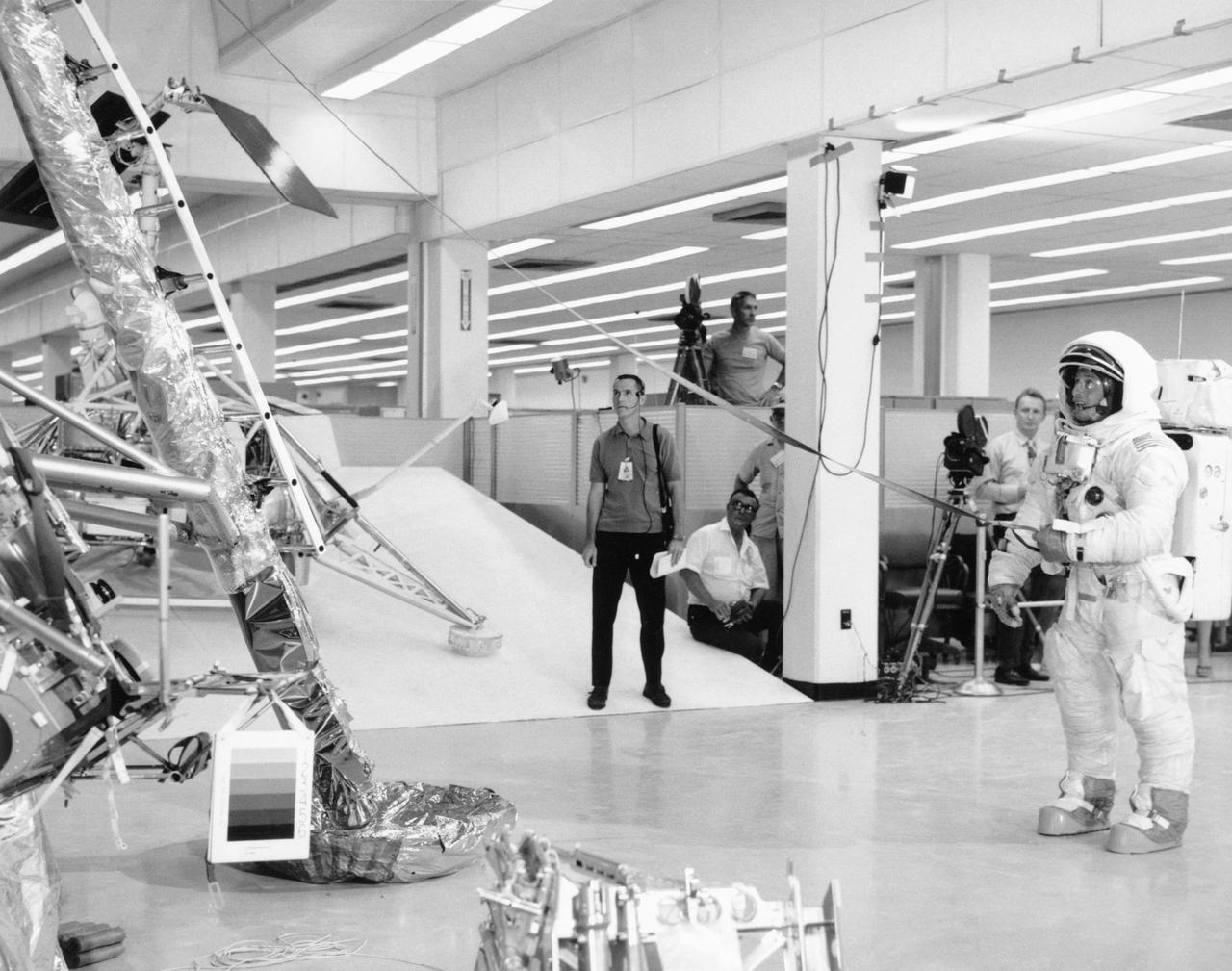
JSC · 1969-10-09 · S69-54147
Apollo XII - EVA CREW TRAINING SIMULATIONS - KSC
S69-54147 (October 1969) --- Two members of the Apollo 12 lunar landing mission participates in lunar surface extravehicular activity (EVA) simulations in the Kennedy Space Center's (KSC) Flight…
Inspect NASA record
S69-54147 (October 1969) --- Two members of the Apollo 12 lunar landing mission participates in lunar surface extravehicular activity (EVA) simulations in the Kennedy Space Center's (KSC) Flight Crew Training Building. Here, astronauts Charles Conrad Jr., commander, is holding the bottom end of the lunar equipment conveyor. Inside the Lunar Module (LM) and out of view is astronaut Alan L. Bean, lunar module pilot. The simulations were part of a run-through of the Apollo 12 lunar surface "timeline".
- Record ID
- S69-54147
- NASA center
- JSC
- Date
- 1969-10-09
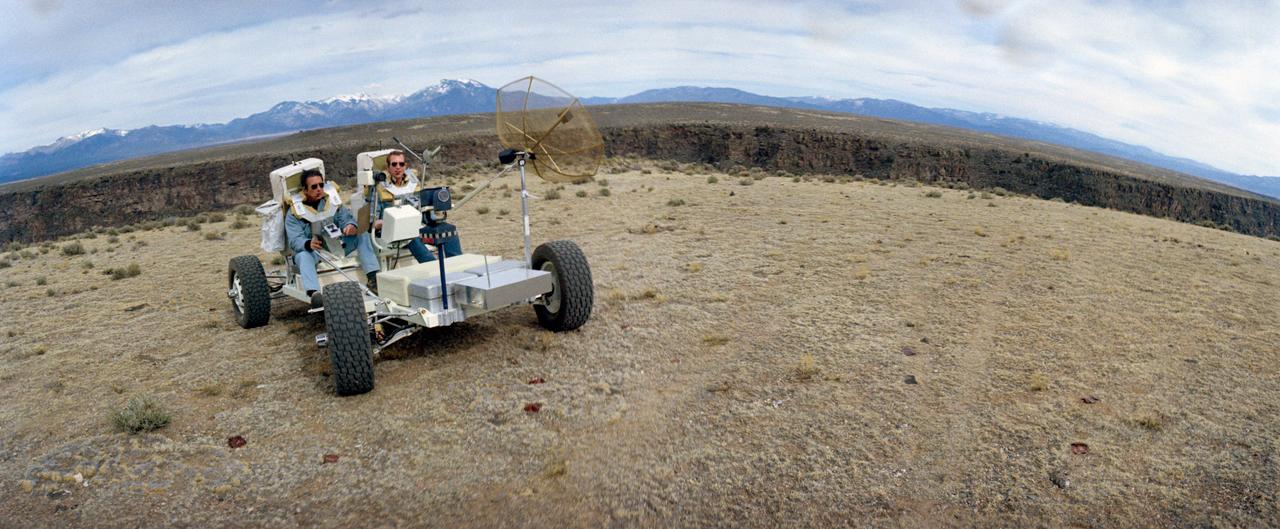
JSC · 1971-01-01 · S71-23774
Apollo 15 Crew - Lunar Roving Vehicle (LRV) - Simulated Extravehicular Activity (EVA) - NM
S71-23774 (11-12 March 1971) --- A wide-angle view showing two members of the prime crew of the Apollo 15 lunar landing mission riding in a Lunar Roving Vehicle…
Inspect NASA record
S71-23774 (11-12 March 1971) --- A wide-angle view showing two members of the prime crew of the Apollo 15 lunar landing mission riding in a Lunar Roving Vehicle trainer called "Grover" during a simulation of lunar surface extravehicular activity in the Taos, New Mexico area. They are astronauts David R. Scott (riding in left side seat), commander; and James B. Irwin, lunar module pilot. Apollo 15 will be the first mission to the moon to carry a Lunar Roving Vehicle, which will permit the astronauts to cover a larger area for exploration and sample collecting than on previous missions.
- Record ID
- S71-23774
- NASA center
- JSC
- Date
- 1971-01-01
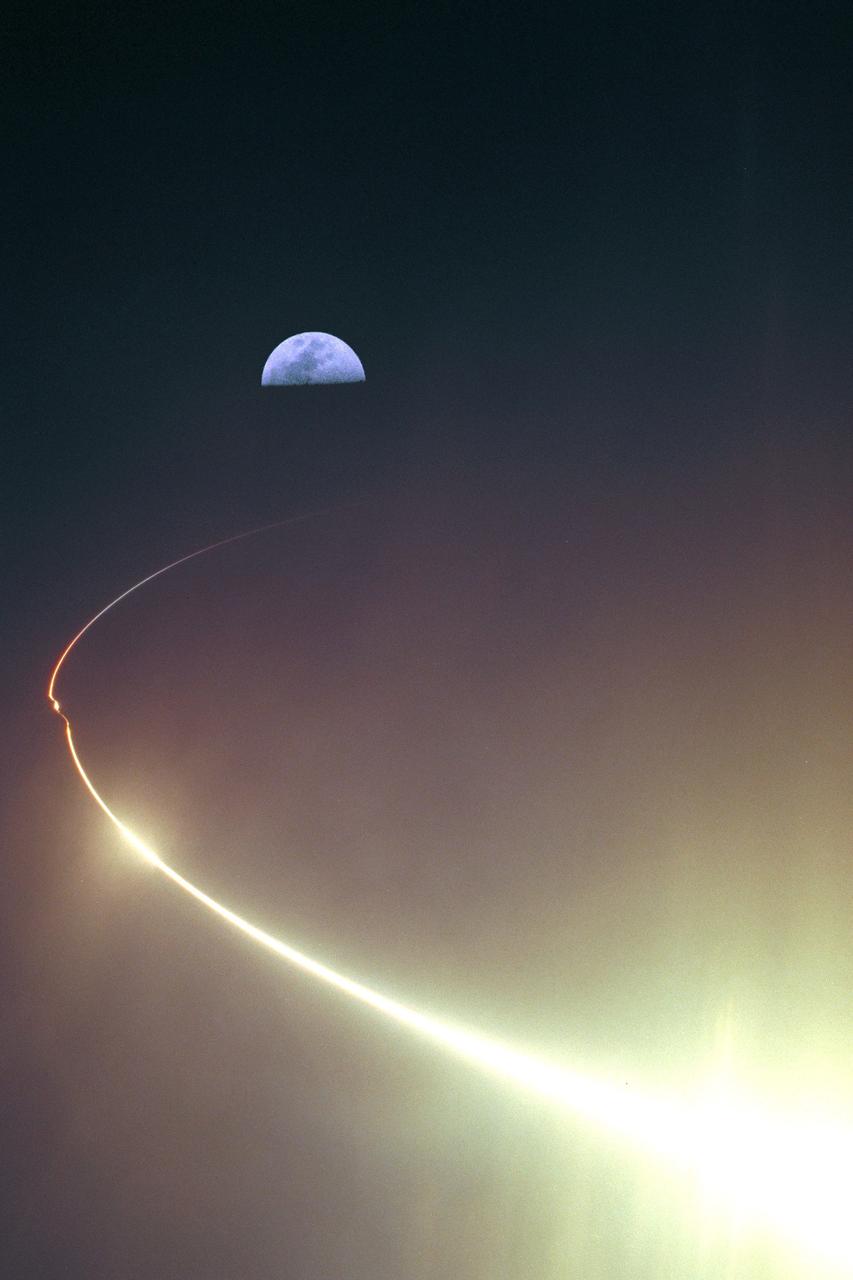
KSC · 1998-01-06 · KSC-98PC107
KENNEDY SPACE CENTER, FLA. - NASA's Lunar Prospector spacecraft launched successfully on its way to the Moon from Launch Complex 46 (LC46) at Cape Canaveral Air Station on Jan. 6 at 9:38 p.m. EST. It was the inaugural launch of Lockheed Martin's Athena II launch vehicle and the first launch from LC46, operated by Spaceport Florida Authority. Lunar Prospector, built for the NASA Ames Research Center by Lockheed Martin, is a spin-stabilized spacecraft designed to provide NASA with the first global maps of the Moon's surface and its gravitational magnetic fields, as well as look for the possible presence of ice near the lunar poles. It will orbit the Moon at an altitude of approximately 63 miles during a one-year mission.
KENNEDY SPACE CENTER, FLA. - NASA's Lunar Prospector spacecraft launched successfully on its way to the Moon from Launch Complex 46 (LC46) at Cape Canaveral Air Station on…
Inspect NASA record
KENNEDY SPACE CENTER, FLA. - NASA's Lunar Prospector spacecraft launched successfully on its way to the Moon from Launch Complex 46 (LC46) at Cape Canaveral Air Station on Jan. 6 at 9:38 p.m. EST. It was the inaugural launch of Lockheed Martin's Athena II launch vehicle and the first launch from LC46, operated by Spaceport Florida Authority. Lunar Prospector, built for the NASA Ames Research Center by Lockheed Martin, is a spin-stabilized spacecraft designed to provide NASA with the first global maps of the Moon's surface and its gravitational magnetic fields, as well as look for the possible presence of ice near the lunar poles. It will orbit the Moon at an altitude of approximately 63 miles during a one-year mission.
- Record ID
- KSC-98PC107
- NASA center
- KSC
- Date
- 1998-01-06
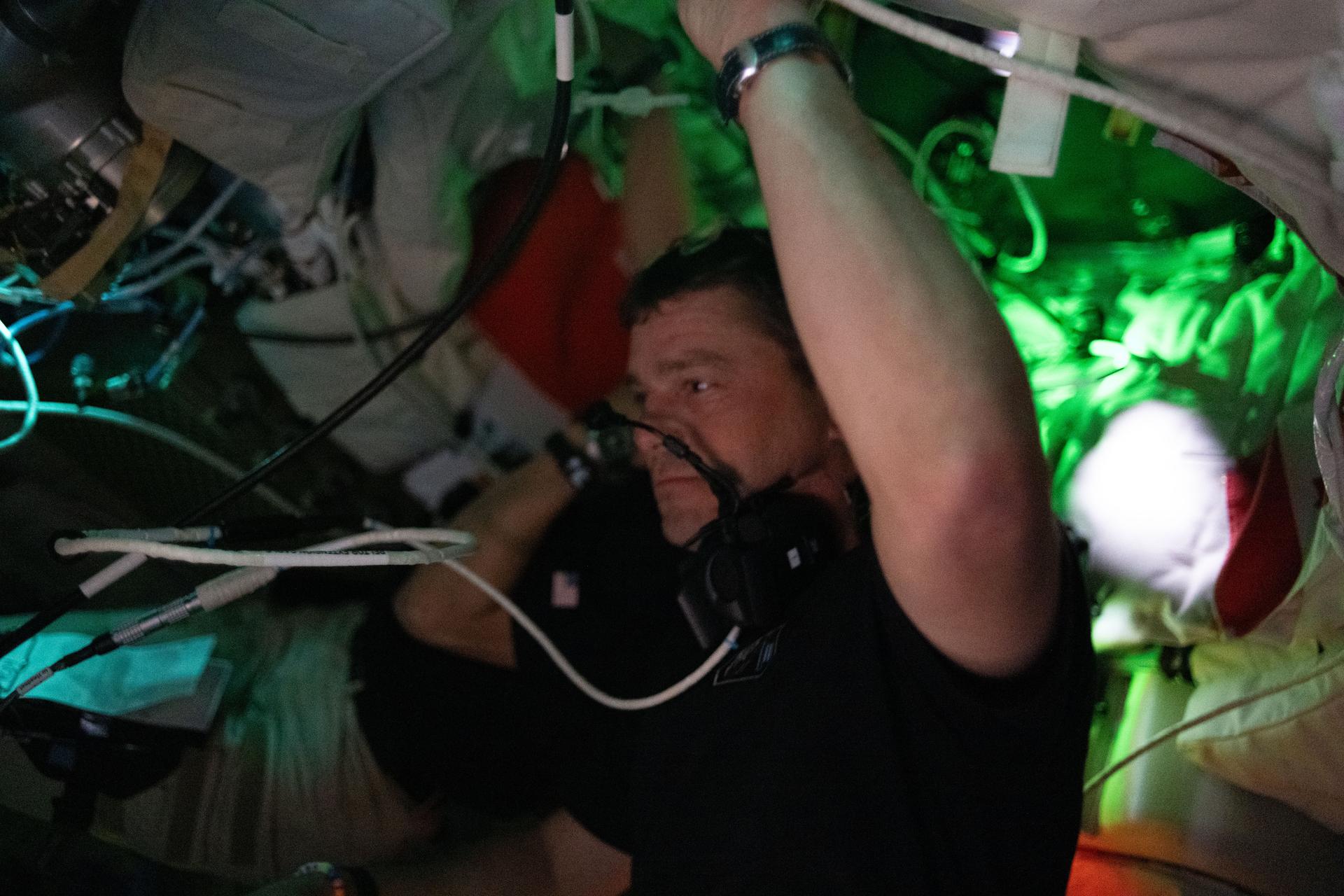
JSC · 2026-04-06 · art002e016165
art002e016165
art002e016165 (April 6, 2026) – NASA astronaut and Artemis II Commander Reid Wiseman pictured here in the Orion spacecraft during the Artemis II lunar flyby. Wiseman and his…
Inspect NASA record
art002e016165 (April 6, 2026) – NASA astronaut and Artemis II Commander Reid Wiseman pictured here in the Orion spacecraft during the Artemis II lunar flyby. Wiseman and his fellow crewmates spent approximately seven hours taking turns at the Orion windows capturing science data to share with their team back on Earth. At closest approach, they came within 4,067 miles of the Moon’s surface.
- Record ID
- art002e016165
- NASA center
- JSC
- Date
- 2026-04-06
- Credit
- NASA
- Keywords
- Artemis II, Artemis II Mission, Artemis 2 mission, Lunar flyby, Reid Wiseman
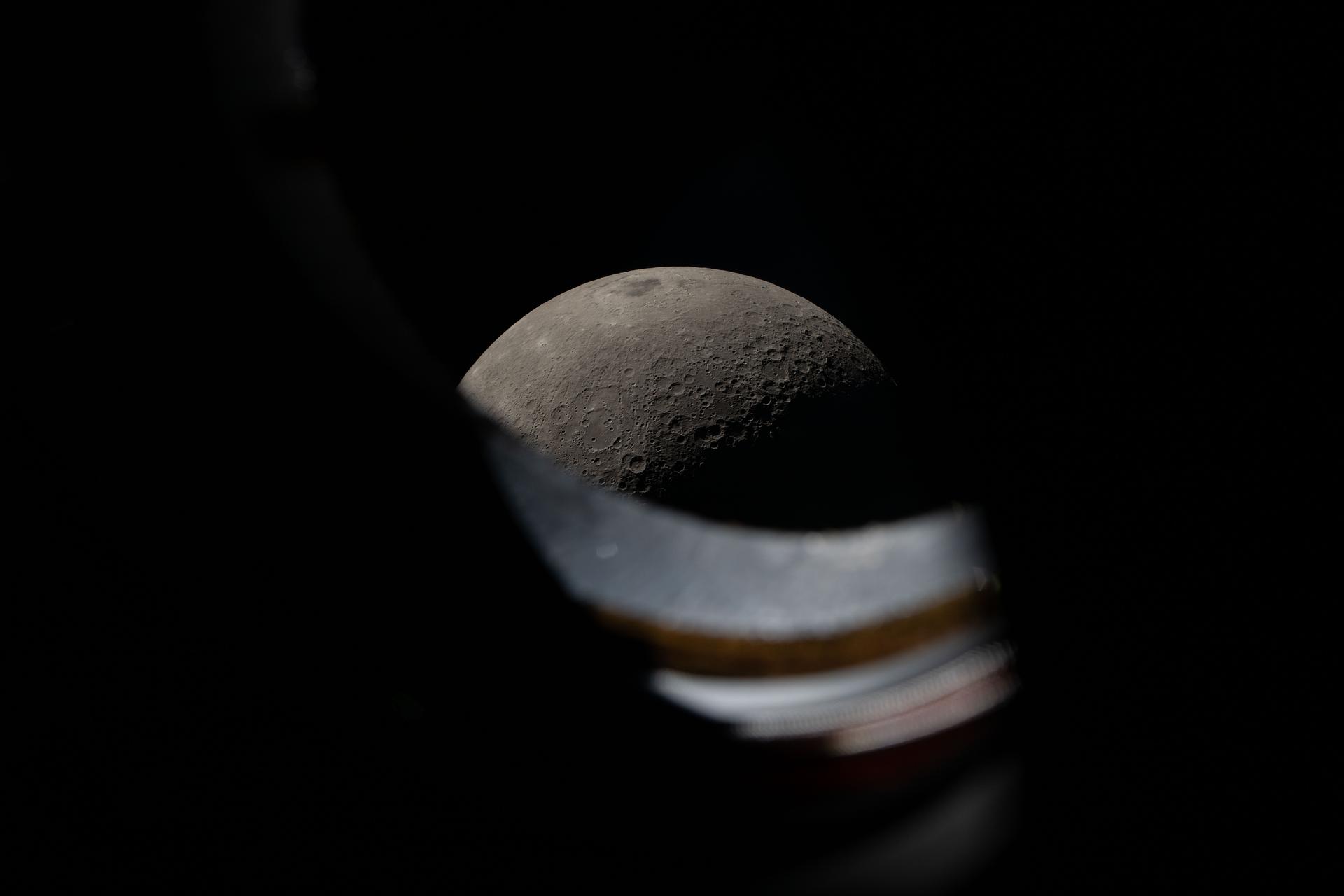
JSC · 2026-04-06 · art002e012278
Sill Life
art002e012278 (April 6, 2026) - The Moon seen peeking above the window sill of the Orion spacecraft during the Artemis II lunar flyby on April 6, 2026. The…
Inspect NASA record
art002e012278 (April 6, 2026) - The Moon seen peeking above the window sill of the Orion spacecraft during the Artemis II lunar flyby on April 6, 2026. The Artemis II crew spent about 7 hours at the Orion windows during the flyby, taking photos and recording observations on the Moon to share with scientists on the ground.
- Record ID
- art002e012278
- NASA center
- JSC
- Date
- 2026-04-06
- Credit
- NASA
- Keywords
- Artemis II, Artemis II mission, Artemis 2 mission, Lunar Flyby, Moon
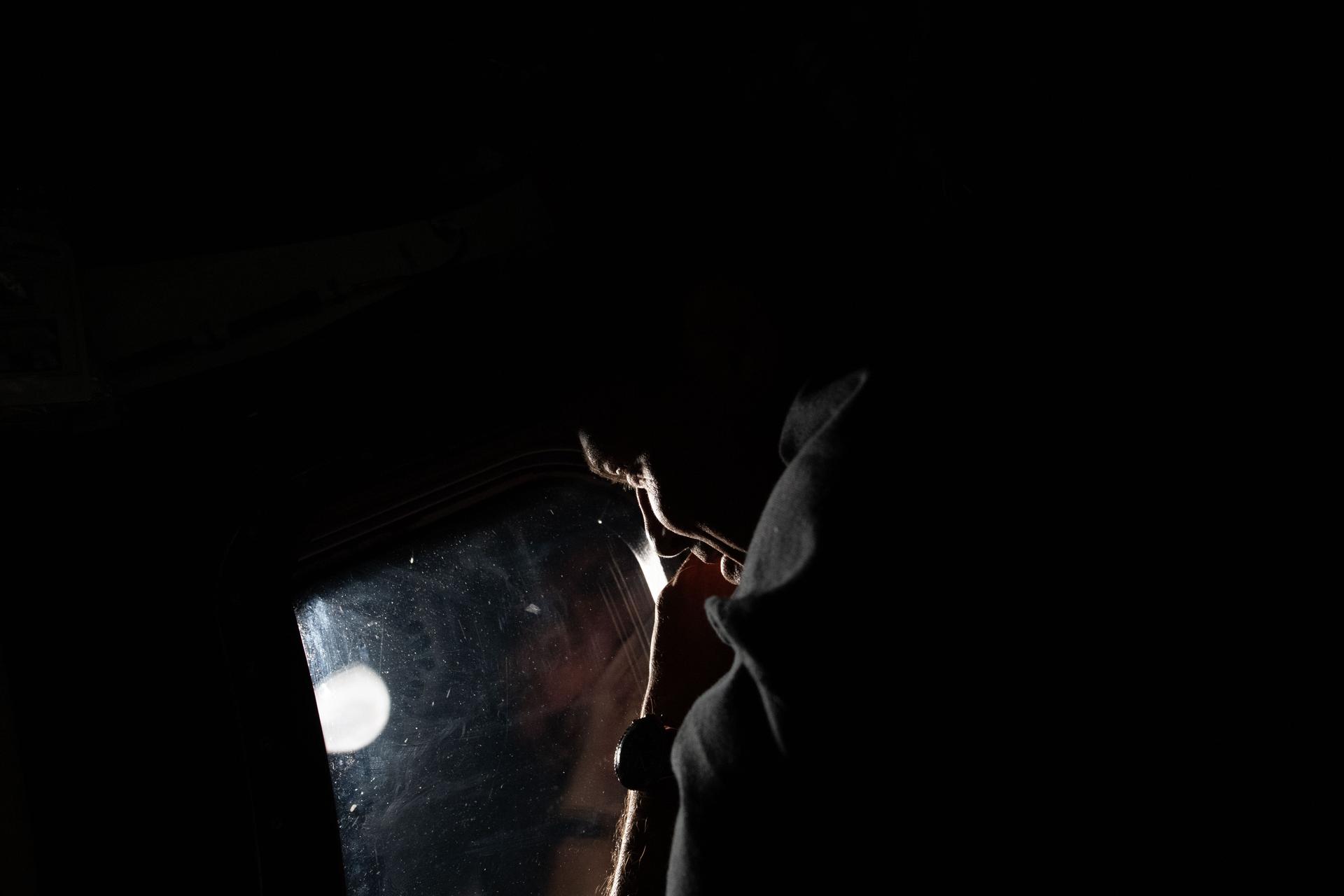
JSC · 2026-04-06 · art002e014195
A Mesmerizing Moon
art002e014195 (April 6, 2026) – NASA astronaut and Artemis II Commander Reid Wiseman pictured here in the Orion spacecraft during the Artemis II lunar flyby. Wiseman and his…
Inspect NASA record
art002e014195 (April 6, 2026) – NASA astronaut and Artemis II Commander Reid Wiseman pictured here in the Orion spacecraft during the Artemis II lunar flyby. Wiseman and his fellow crewmates spent approximately seven hours taking turns at the Orion windows capturing science data to share with their team back on Earth. At closest approach, they came within 4,067 miles of the Moon’s surface.
- Record ID
- art002e014195
- NASA center
- JSC
- Date
- 2026-04-06
- Credit
- NASA
- Keywords
- Artemis II, Artemis II Mission, Artemis 2 Mission, Lunar Flyby, Reid Wiseman