
Add from NASA
Explore NASA’s Image and Video Library and suggest an object for Interstellar Minds.
New Marvel suggestions are paused.
NASA image records
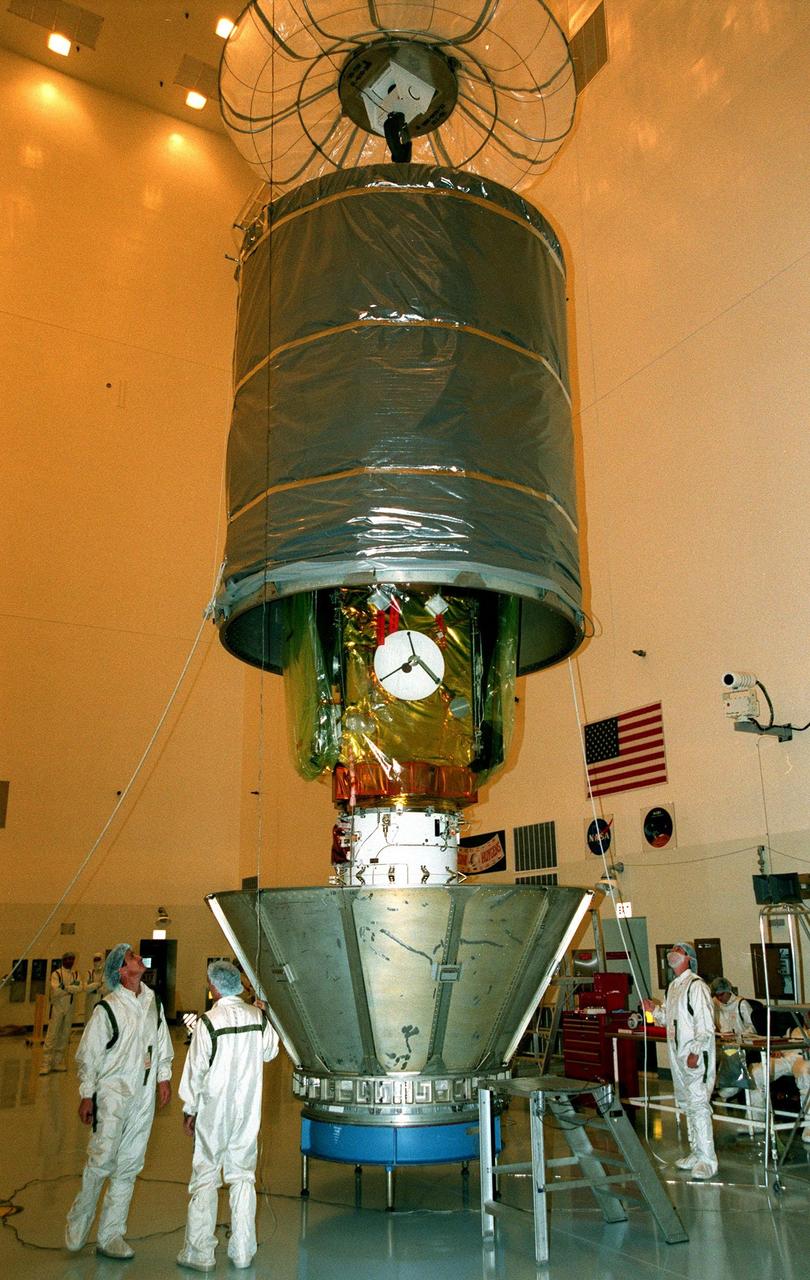
KSC · 1999-01-27 · KSC-99pc0122
KSC-99pc0122
In the Payload Hazardous Servicing Facility, workers guide a protective canister as it is lowered over the Stardust spacecraft. Once it is enclosed, Stardust will be moved to…
Inspect NASA record
In the Payload Hazardous Servicing Facility, workers guide a protective canister as it is lowered over the Stardust spacecraft. Once it is enclosed, Stardust will be moved to Launch Pad 17-A, Cape Canaveral Air Station, for launch preparations. Stardust is targeted for liftoff on Feb. 6 aboard a Boeing Delta II rocket for a close encounter with the comet Wild 2 in January 2004. Using a silicon-based substance called aerogel, Stardust will capture comet particles flying off the nucleus of the comet. The spacecraft also will bring back samples of interstellar dust. These materials consist of ancient pre-solar interstellar grains and other remnants left over from the formation of the solar system. Scientists expect their analysis to provide important insights into the evolution of the sun and planets and possibly into the origin of life itself. The collected samples will return to Earth in a sample return capsule to be jettisoned as Stardust swings by Earth in January 2006
- Record ID
- KSC-99pc0122
- NASA center
- KSC
- Date
- 1999-01-27
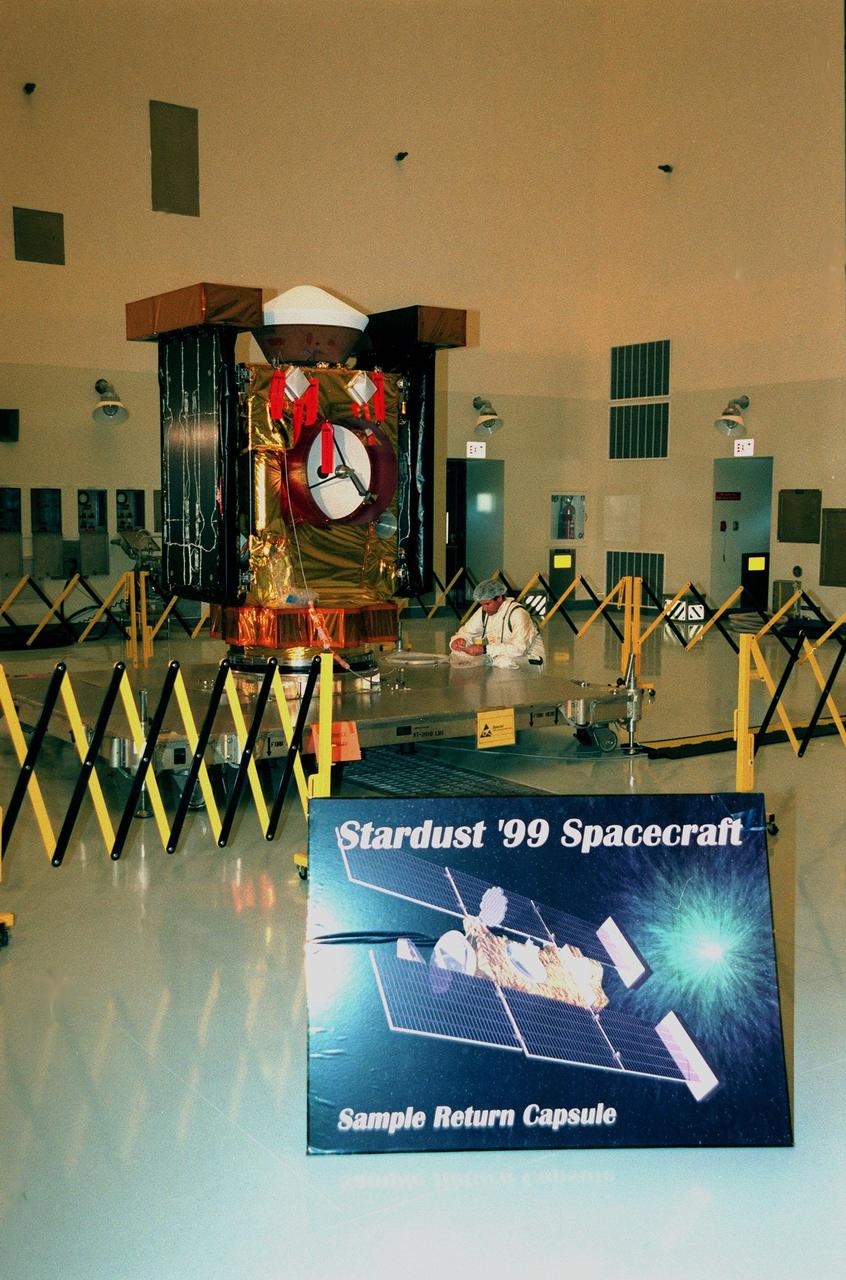
KSC · 1999-01-22 · KSC-99pc0094
KSC-99pc0094
In the Payload Hazardous Servicing Facility, the spacecraft Stardust is on display for a media presentation. Stardust is targeted for launch on Feb. 6 aboard a Boeing Delta…
Inspect NASA record
In the Payload Hazardous Servicing Facility, the spacecraft Stardust is on display for a media presentation. Stardust is targeted for launch on Feb. 6 aboard a Boeing Delta II rocket from Launch Pad 17-A, Cape Canaveral Air Station. The spacecraft is destined for a close encounter with the comet Wild 2 in January 2004. Using a silicon-based substance called aerogel, Stardust will capture comet particles flying off the nucleus of the comet. The spacecraft also will bring back samples of interstellar dust. These materials consist of ancient pre-solar interstellar grains and other remnants left over from the formation of the solar system. Scientists expect their analysis to provide important insights into the evolution of the sun and planets and possibly into the origin of life itself. The collected samples will return to Earth in a sample return capsule (the white-topped, blunt-nosed cone seen on the top of the spacecraft) to be jettisoned as Stardust swings by Earth in January 2006
- Record ID
- KSC-99pc0094
- NASA center
- KSC
- Date
- 1999-01-22
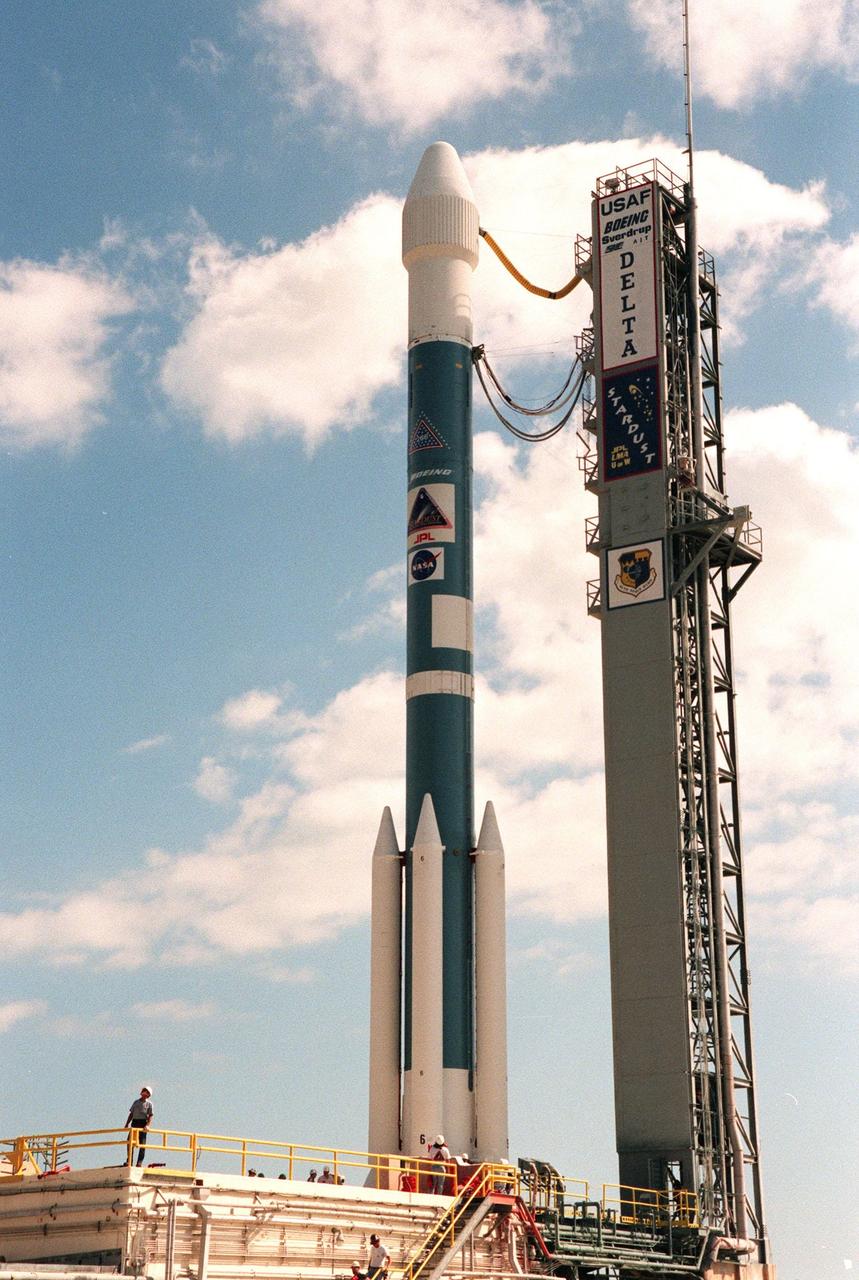
KSC · 1999-02-06 · KSC-99pc0154
KSC-99pc0154
The Boeing Delta II rocket carrying the Stardust spacecraft waits for launch at Launch Pad 17-A, Cape Canaveral Air Station. The targeted launch time is 4:06 p.m. EST.…
Inspect NASA record
The Boeing Delta II rocket carrying the Stardust spacecraft waits for launch at Launch Pad 17-A, Cape Canaveral Air Station. The targeted launch time is 4:06 p.m. EST. Stardust is destined for a close encounter with the comet Wild 2 in January 2004. Using a silicon-based substance called aerogel, Stardust will capture comet particles flying off the nucleus of the comet. The spacecraft also will bring back samples of interstellar dust. These materials consist of ancient pre-solar interstellar grains and other remnants left over from the formation of the solar system. Scientists expect their analysis to provide important insights into the evolution of the sun and planets and possibly into the origin of life itself. The collected samples will return to Earth in a sample return capsule to be jettisoned as Stardust swings by Earth in January 2006
- Record ID
- KSC-99pc0154
- NASA center
- KSC
- Date
- 1999-02-06

KSC · 1999-01-28 · KSC-99pc0136
KSC-99pc0136
At Launch Pad 17-A, Cape Canaveral Air Station, the Stardust spacecraft is revealed after removal of a protective canister. Stardust is targeted for launch on Feb. 6 aboard…
Inspect NASA record
At Launch Pad 17-A, Cape Canaveral Air Station, the Stardust spacecraft is revealed after removal of a protective canister. Stardust is targeted for launch on Feb. 6 aboard a Boeing Delta II rocket. The spacecraft is destined for a close encounter with the comet Wild 2 in January 2004. Using a silicon-based substance called aerogel, Stardust will capture comet particles flying off the nucleus of the comet. The spacecraft also will bring back samples of interstellar dust. These materials consist of ancient pre-solar interstellar grains and other remnants left over from the formation of the solar system. Scientists expect their analysis to provide important insights into the evolution of the sun and planets and possibly into the origin of life itself. The collected samples will return to Earth in a sample return capsule to be jettisoned as Stardust swings by Earth in January 2006
- Record ID
- KSC-99pc0136
- NASA center
- KSC
- Date
- 1999-01-28
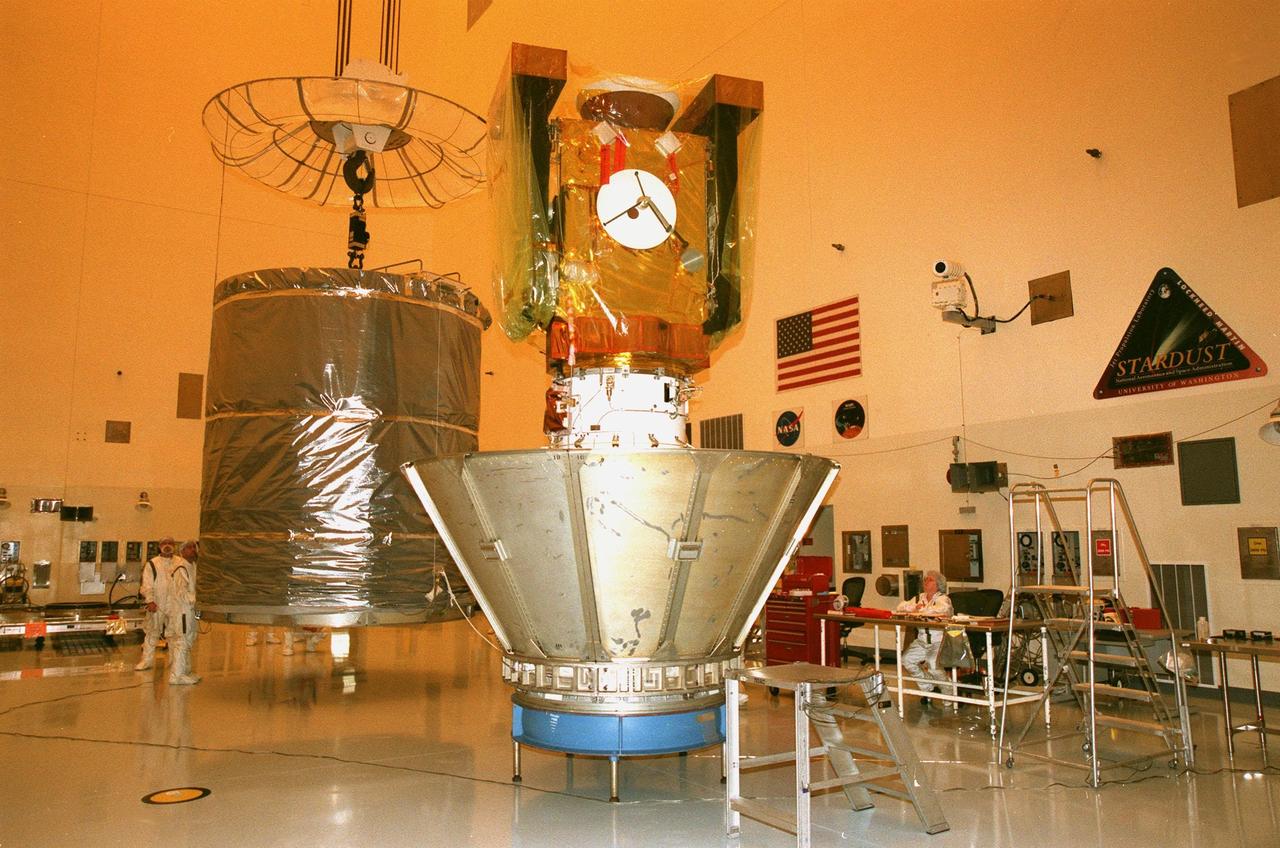
KSC · 1999-01-27 · KSC-99pc0121
KSC-99pc0121
In the Payload Hazardous Servicing Facility, a canister (left) is moved toward the Stardust spacecraft (right). The protective canister will enclose Stardust before the spacecraft is moved to…
Inspect NASA record
In the Payload Hazardous Servicing Facility, a canister (left) is moved toward the Stardust spacecraft (right). The protective canister will enclose Stardust before the spacecraft is moved to Launch Pad 17-A, Cape Canaveral Air Station, for launch preparations. Stardust is targeted for liftoff on Feb. 6 aboard a Boeing Delta II rocket for a close encounter with the comet Wild 2 in January 2004. Using a silicon-based substance called aerogel, Stardust will capture comet particles flying off the nucleus of the comet. The spacecraft also will bring back samples of interstellar dust. These materials consist of ancient pre-solar interstellar grains and other remnants left over from the formation of the solar system. Scientists expect their analysis to provide important insights into the evolution of the sun and planets and possibly into the origin of life itself. The collected samples will return to Earth in a sample return capsule to be jettisoned as Stardust swings by Earth in January 2006
- Record ID
- KSC-99pc0121
- NASA center
- KSC
- Date
- 1999-01-27
KSC · 1999-01-27 · KSC-99pc0120
KSC-99pc0120
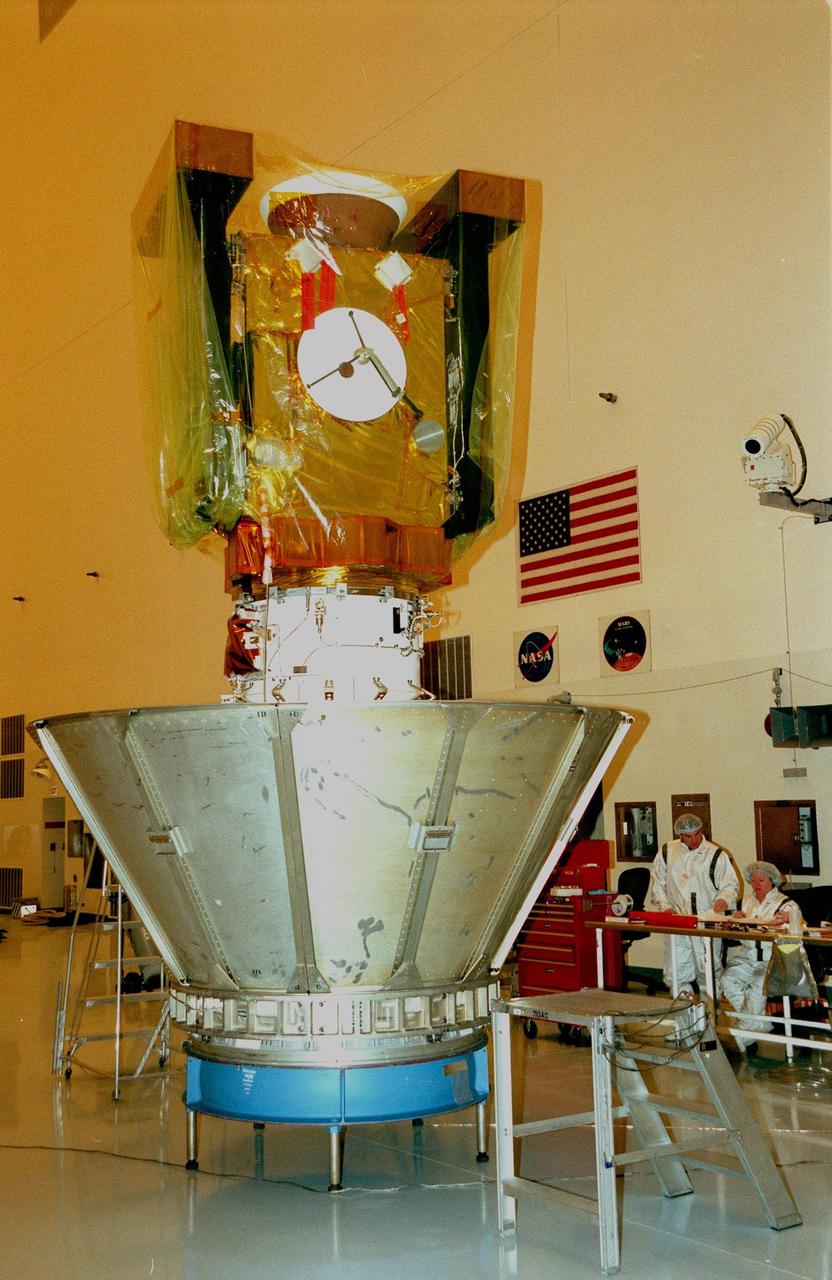
In the Payload Hazardous Servicing Facility, the Stardust spacecraft waits to be encased in a protective canister for its move to Launch Pad 17-A, Cape Canaveral Air Station,…
Inspect NASA record
In the Payload Hazardous Servicing Facility, the Stardust spacecraft waits to be encased in a protective canister for its move to Launch Pad 17-A, Cape Canaveral Air Station, for launch preparations. Stardust is targeted for liftoff on Feb. 6 aboard a Boeing Delta II rocket for a close encounter with the comet Wild 2 in January 2004. Using a silicon-based substance called aerogel, Stardust will capture comet particles flying off the nucleus of the comet. The spacecraft also will bring back samples of interstellar dust. These materials consist of ancient pre-solar interstellar grains and other remnants left over from the formation of the solar system. Scientists expect their analysis to provide important insights into the evolution of the sun and planets and possibly into the origin of life itself. The collected samples will return to Earth in a sample return capsule to be jettisoned as Stardust swings by Earth in January 2006
- Record ID
- KSC-99pc0120
- NASA center
- KSC
- Date
- 1999-01-27
KSC · 1999-01-26 · KSC-99pc0119
KSC-99pc0119
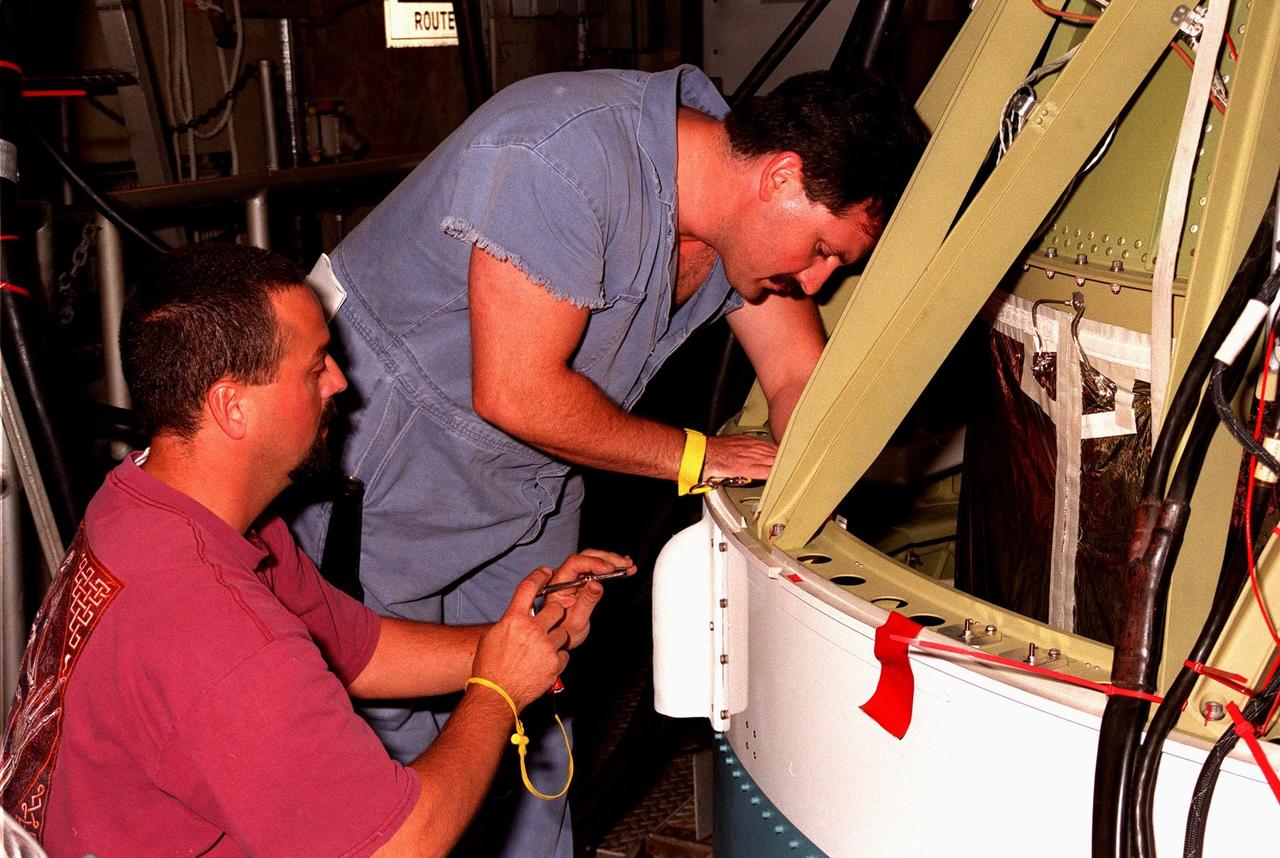
At Launch Pad 17-A, Cape Canaveral Air Station, workers check the mounting on a video camera on the second stage of a Boeing Delta II rocket that will…
Inspect NASA record
At Launch Pad 17-A, Cape Canaveral Air Station, workers check the mounting on a video camera on the second stage of a Boeing Delta II rocket that will launch the Stardust spacecraft on Feb. 6. Looking toward Earth, the camera will record the liftoff and separation of the first stage. Stardust is destined for a close encounter with the comet Wild 2 in January 2004. Using a silicon-based substance called aerogel, Stardust will capture comet particles flying off the nucleus of the comet. The spacecraft also will bring back samples of interstellar dust. These materials consist of ancient pre-solar interstellar grains and other remnants left over from the formation of the solar system. Scientists expect their analysis to provide important insights into the evolution of the sun and planets and possibly into the origin of life itself. The collected samples will return to Earth in a sample return capsule to be jettisoned as Stardust swings by Earth in January 2006
- Record ID
- KSC-99pc0119
- NASA center
- KSC
- Date
- 1999-01-26
KSC · 1999-01-28 · KSC-99pc0126
KSC-99pc0126
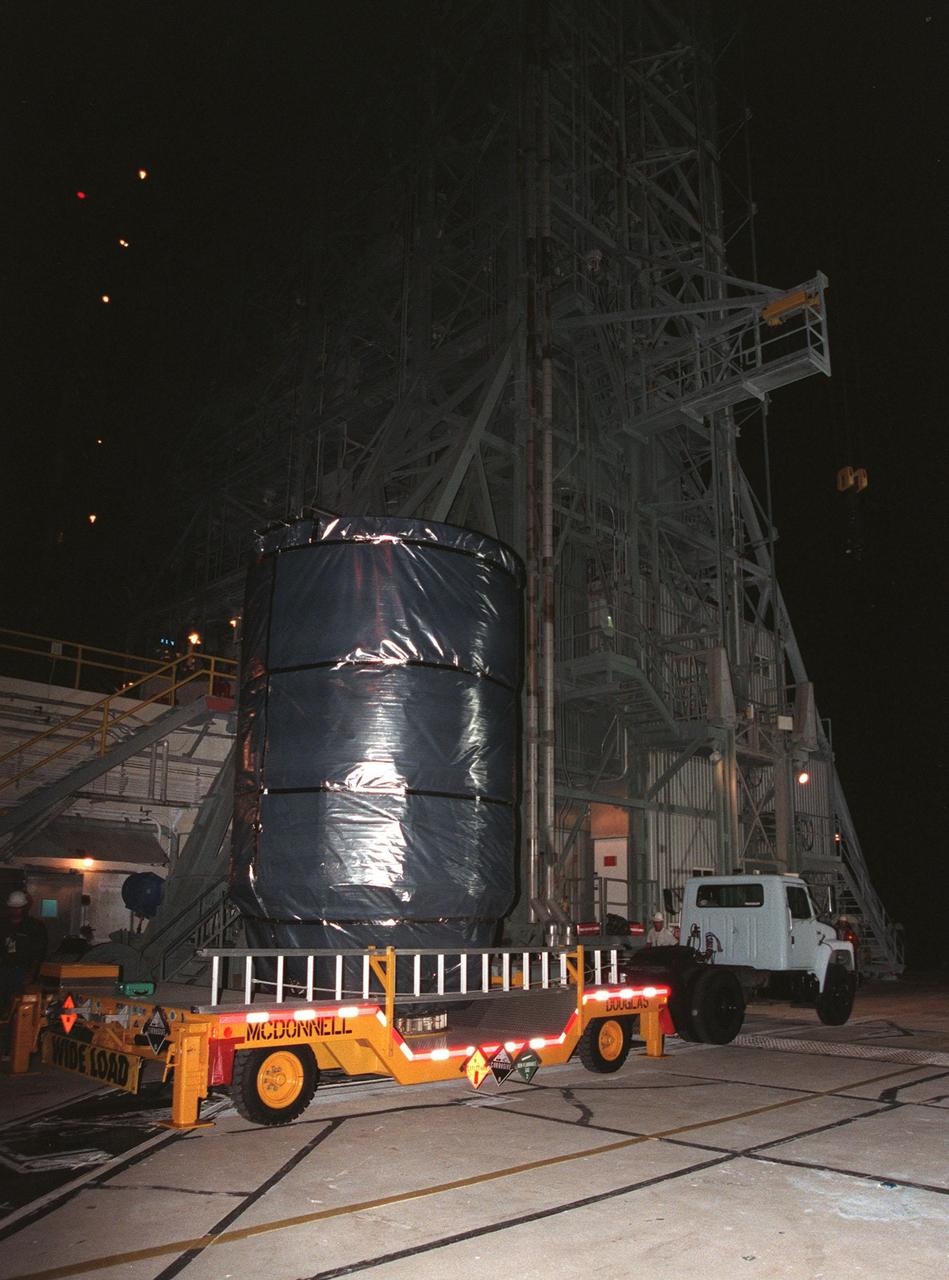
In the early morning, the Stardust spacecraft, with the third stage of a Boeing Delta II rocket attached, arrives atop a transporter at Launch Pad 17-A, Cape Canaveral…
Inspect NASA record
In the early morning, the Stardust spacecraft, with the third stage of a Boeing Delta II rocket attached, arrives atop a transporter at Launch Pad 17-A, Cape Canaveral Air Station. The second and third stages of the rocket will be mated and prepared for liftoff on Feb. 6. Stardust is destined for a close encounter with the comet Wild 2 in January 2004. Using a silicon-based substance called aerogel, Stardust will capture comet particles flying off the nucleus of the comet. The spacecraft also will bring back samples of interstellar dust. These materials consist of ancient pre-solar interstellar grains and other remnants left over from the formation of the solar system. Scientists expect their analysis to provide important insights into the evolution of the sun and planets and possibly into the origin of life itself. The collected samples will return to Earth in a sample return capsule to be jettisoned as Stardust swings by Earth in January 2006
- Record ID
- KSC-99pc0126
- NASA center
- KSC
- Date
- 1999-01-28

KSC · 1999-01-28 · KSC-99pc0131
KSC-99pc0131
Workers at Launch Pad 17-A, Cape Canaveral Air Station, connect the third stage of a Boeing Delta II rocket (above), which is already attached to the Stardust spacecraft,…
Inspect NASA record
Workers at Launch Pad 17-A, Cape Canaveral Air Station, connect the third stage of a Boeing Delta II rocket (above), which is already attached to the Stardust spacecraft, with the second stage (below). Stardust, targeted for liftoff on Feb. 6, is destined for a close encounter with the comet Wild 2 in January 2004. Using a silicon-based substance called aerogel, Stardust will capture comet particles flying off the nucleus of the comet. The spacecraft also will bring back samples of interstellar dust. These materials consist of ancient pre-solar interstellar grains and other remnants left over from the formation of the solar system. Scientists expect their analysis to provide important insights into the evolution of the sun and planets and possibly into the origin of life itself. The collected samples will return to Earth in a sample return capsule to be jettisoned as Stardust swings by Earth in January 2006
- Record ID
- KSC-99pc0131
- NASA center
- KSC
- Date
- 1999-01-28
KSC · 1999-01-28 · KSC-99pc0133
KSC-99pc0133
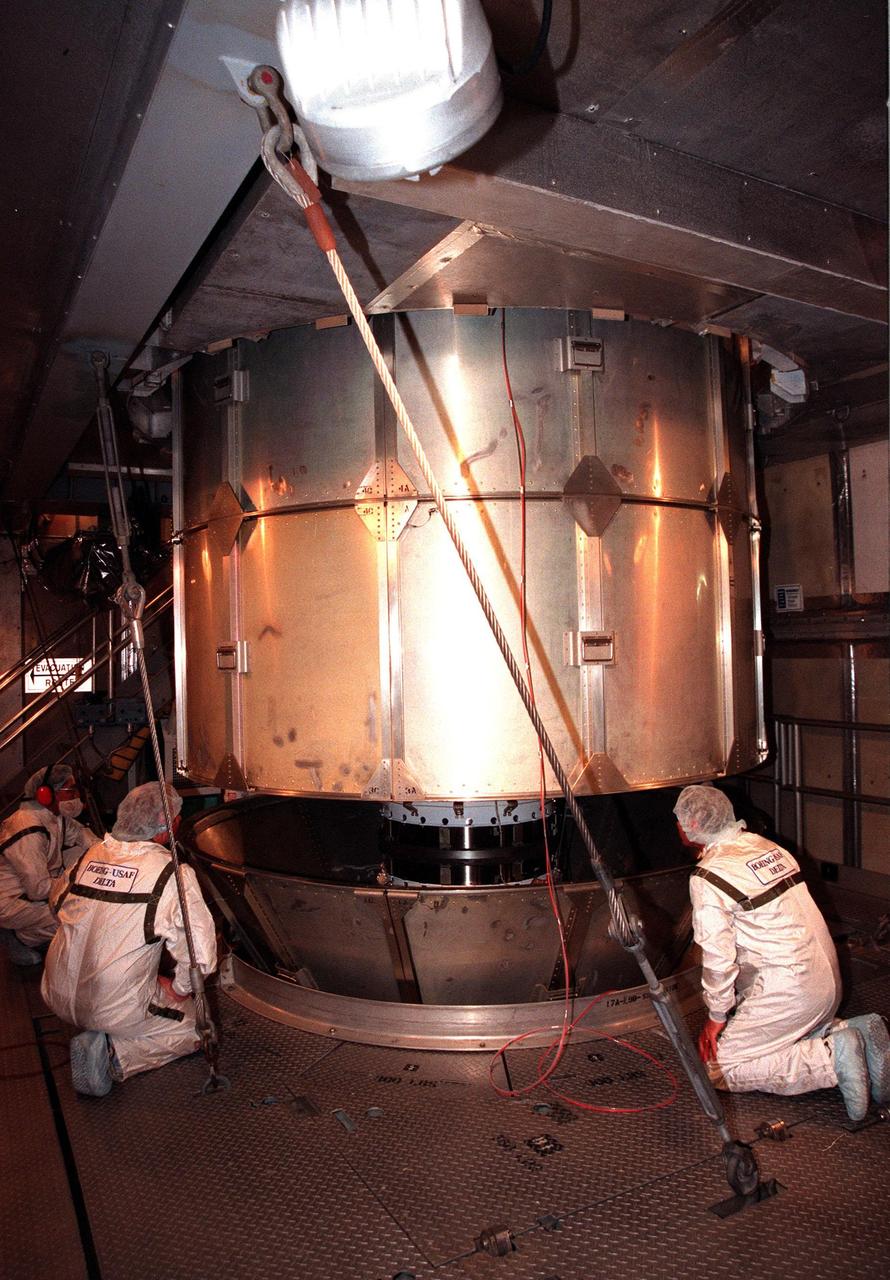
At Launch Pad 17-A, Cape Canaveral Air Station, workers watch as the protective canister is lifted from the Stardust spacecraft. Preparations continue for liftoff of the Boeing Delta…
Inspect NASA record
At Launch Pad 17-A, Cape Canaveral Air Station, workers watch as the protective canister is lifted from the Stardust spacecraft. Preparations continue for liftoff of the Boeing Delta II rocket carrying Stardust on Feb. 6. Stardust is destined for a close encounter with the comet Wild 2 in January 2004. Using a silicon-based substance called aerogel, Stardust will capture comet particles flying off the nucleus of the comet. The spacecraft also will bring back samples of interstellar dust. These materials consist of ancient pre-solar interstellar grains and other remnants left over from the formation of the solar system. Scientists expect their analysis to provide important insights into the evolution of the sun and planets and possibly into the origin of life itself. The collected samples will return to Earth in a sample return capsule to be jettisoned as Stardust swings by Earth in January 2006
- Record ID
- KSC-99pc0133
- NASA center
- KSC
- Date
- 1999-01-28
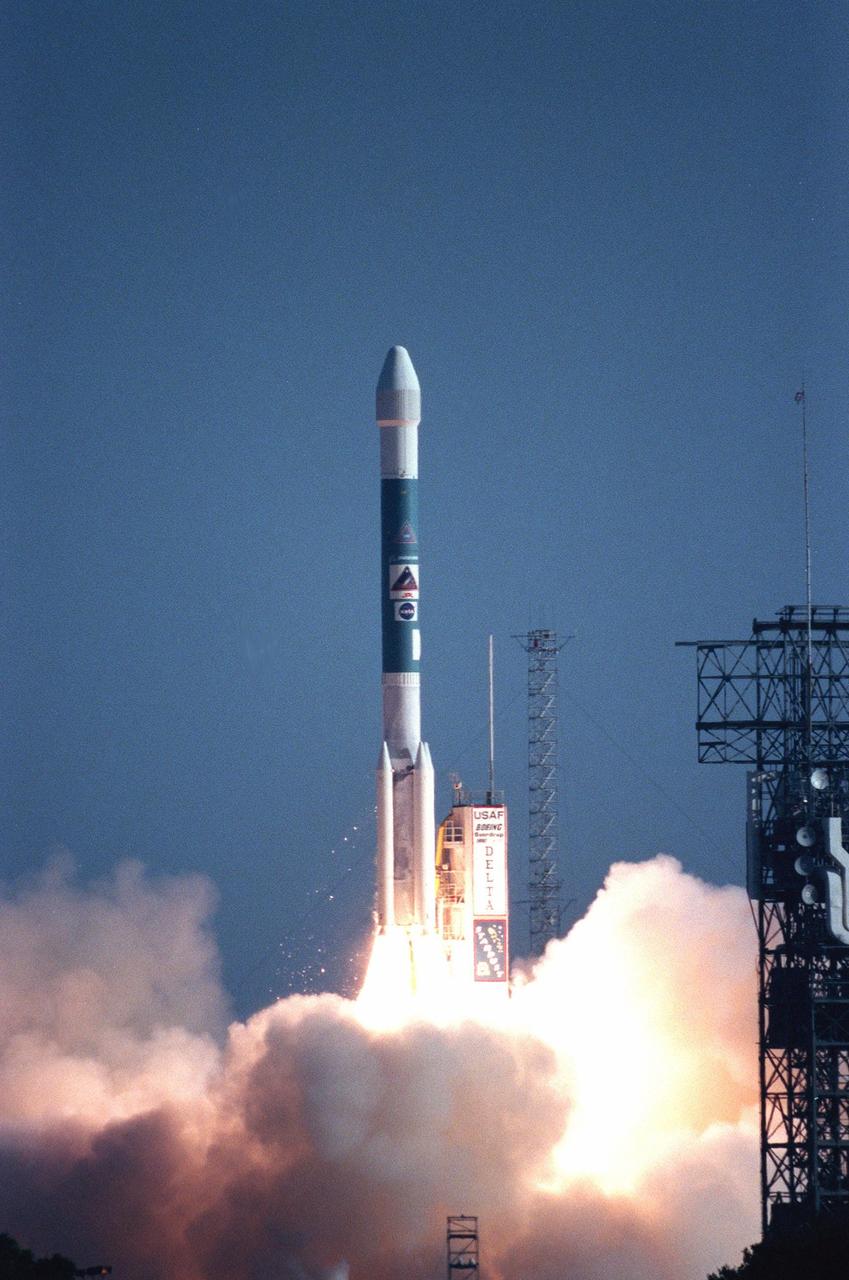
KSC · 1999-02-07 · KSC-99pc0158
KSC-99pc0158
Into a pristine blue sky, the Boeing Delta II rocket carrying the Stardust spacecraft leaves clouds of exhaust behind as it lifts off at 4:04:15 p.m. EST from…
Inspect NASA record
Into a pristine blue sky, the Boeing Delta II rocket carrying the Stardust spacecraft leaves clouds of exhaust behind as it lifts off at 4:04:15 p.m. EST from Launch Pad 17-A, Cape Canaveral Air Station. Stardust is destined for a close encounter with the comet Wild 2 in January 2004. Using a silicon-based substance called aerogel, Stardust will capture comet particles flying off the nucleus of the comet. The spacecraft also will bring back samples of interstellar dust. These materials consist of ancient pre-solar interstellar grains and other remnants left over from the formation of the solar system. Scientists expect their analysis to provide important insights into the evolution of the sun and planets and possibly into the origin of life itself. The collected samples will return to Earth in a sample return capsule to be jettisoned as Stardust swings by Earth in January 2006
- Record ID
- KSC-99pc0158
- NASA center
- KSC
- Date
- 1999-02-07

KSC · 1999-01-26 · KSC-99pc0118
KSC-99pc0118
At Launch Pad 17-A, Cape Canaveral Air Station, workers finish mounting a video camera on the second stage of a Boeing Delta II rocket that will launch the…
Inspect NASA record
At Launch Pad 17-A, Cape Canaveral Air Station, workers finish mounting a video camera on the second stage of a Boeing Delta II rocket that will launch the Stardust spacecraft on Feb. 6. Looking toward Earth, the camera will record the liftoff and separation of the first stage. Stardust is destined for a close encounter with the comet Wild 2 in January 2004. Using a silicon-based substance called aerogel, Stardust will capture comet particles flying off the nucleus of the comet. The spacecraft also will bring back samples of interstellar dust. These materials consist of ancient pre-solar interstellar grains and other remnants left over from the formation of the solar system. Scientists expect their analysis to provide important insights into the evolution of the sun and planets and possibly into the origin of life itself. The collected samples will return to Earth in a sample return capsule to be jettisoned as Stardust swings by Earth in January 2006
- Record ID
- KSC-99pc0118
- NASA center
- KSC
- Date
- 1999-01-26