
Update Site (from NASA)
Explore NASA’s Image and Video Library.
Suggest one object per day for the Interstellar Minds collection. We review each suggestion before adding it.
Sign in to suggest a Marvel.
Find a NASA image ID. Open a NASA record and copy its ID from the end of the details URL.
NASA image records
KSC · 2025-05-01 · KSC-20250501-PH-FMX01_0037
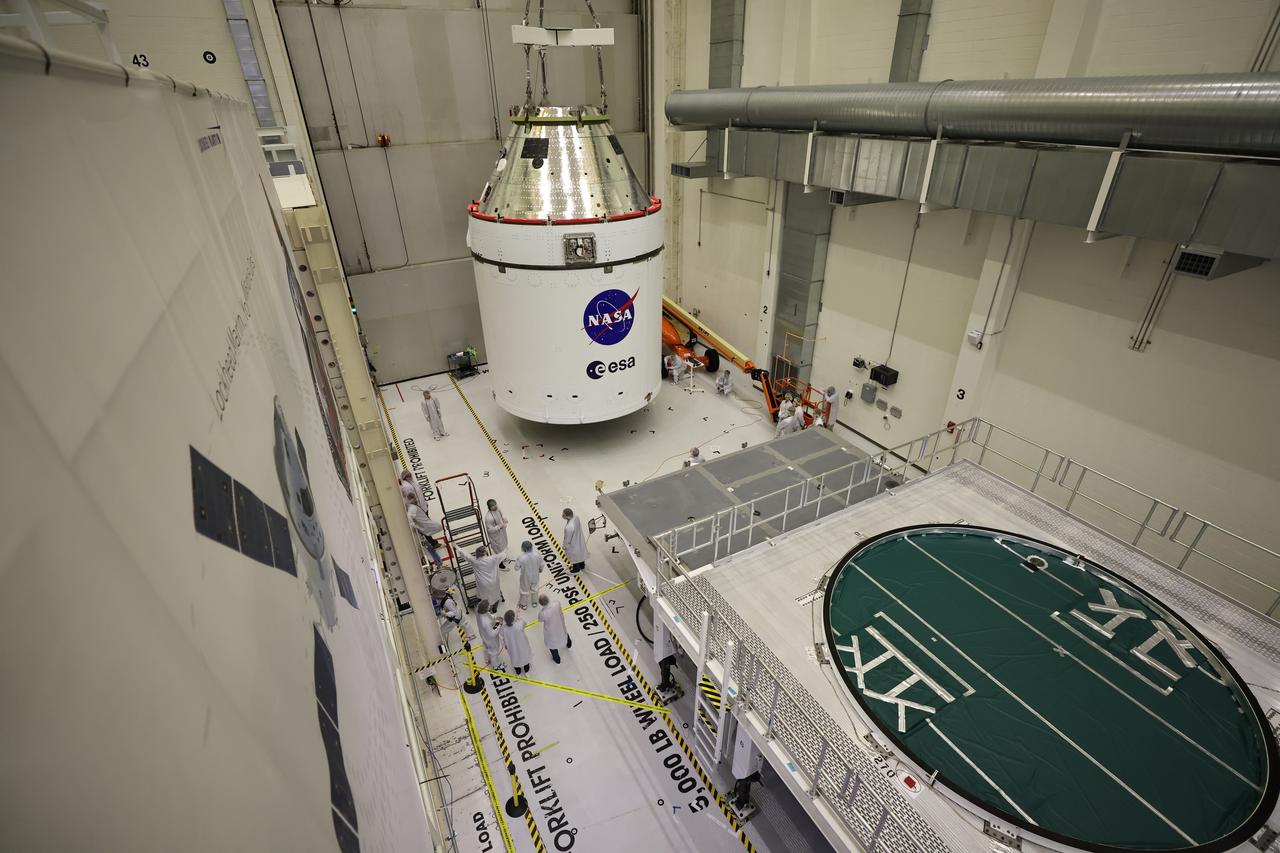
Artemis II Orion DD250-Lift Op inside IOZ
Crews use a massive crane to lift NASA’s Artemis II Orion spacecraft onto the agency’s KAMAG transporter inside the Neil A. Armstrong Operations and Checkout Building at Kennedy…
Inspect NASA record
Crews use a massive crane to lift NASA’s Artemis II Orion spacecraft onto the agency’s KAMAG transporter inside the Neil A. Armstrong Operations and Checkout Building at Kennedy Space Center in Florida on Thursday, May 1, 2025. The spacecraft will be transported to the Multi-Payload Processing Facility to undergo fueling and processing for prelaunch operations. The Artemis II test flight is the first crewed flight under NASA’s Artemis campaign and is another step toward missions on the lunar surface and helping the agency prepare for future human missions to Mars.
- Record ID
- KSC-20250501-PH-FMX01_0037
- NASA center
- KSC
- Date
- 2025-05-01
- Credit
- NASA/Frank Michaux
- Keywords
- John. F. Kennedy Space Center, Kennedy, Kennedy Space Center, KSC, Spaceport, Cape Canaveral, NASA, rocket ranch, Florida, multi-user spaceport, premier spaceport, space coast

KSC · 2025-05-03 · KSC-20250503-PH-KLS02_0019
Artemis II Orion DD250 Roll to MPPF
NASA’s Artemis II Orion spacecraft arrives at the Multi-Payload Processing Facility at Kennedy Space Center in Florida on Saturday, May 3, 2025, to undergo fueling and processing operations…
Inspect NASA record
NASA’s Artemis II Orion spacecraft arrives at the Multi-Payload Processing Facility at Kennedy Space Center in Florida on Saturday, May 3, 2025, to undergo fueling and processing operations for prelaunch operations. The Artemis II test flight is the first crewed flight under NASA’s Artemis campaign and is another step toward missions on the lunar surface and helping the agency prepare for future human missions to Mars.
- Record ID
- KSC-20250503-PH-KLS02_0019
- NASA center
- KSC
- Date
- 2025-05-03
- Credit
- NASA/Kim Shiflett
- Keywords
- John. F. Kennedy Space Center, Kennedy, Kennedy Space Center, KSC, Spaceport, Cape Canaveral, NASA, rocket ranch, Florida, multi-user spaceport, premier spaceport, space coast
KSC · 2025-05-01 · KSC-20250501-PH-FMX01_0054
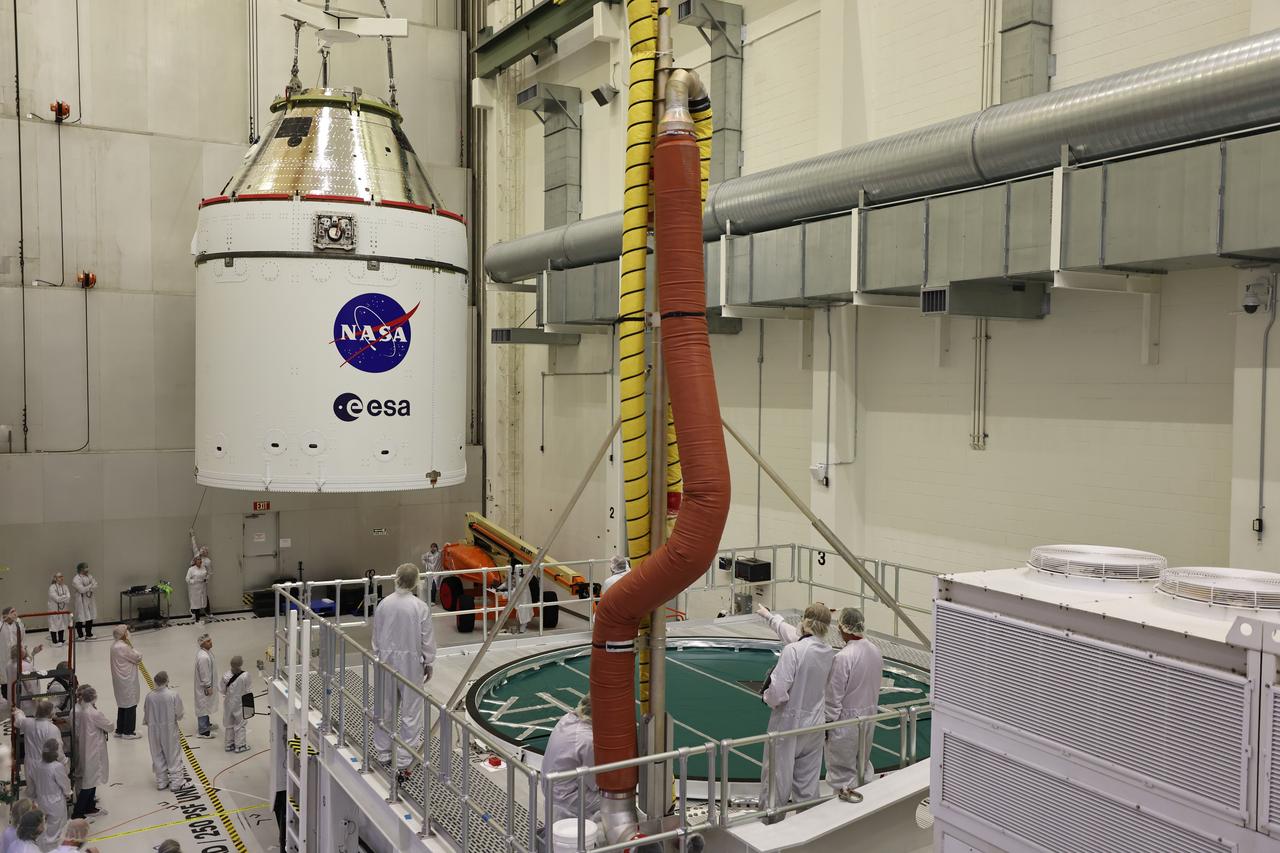
Artemis II Orion DD250-Lift Op inside IOZ
Crews use a massive crane to lift NASA’s Artemis II Orion spacecraft onto the agency’s KAMAG transporter inside the Neil A. Armstrong Operations and Checkout Building at Kennedy…
Inspect NASA record
Crews use a massive crane to lift NASA’s Artemis II Orion spacecraft onto the agency’s KAMAG transporter inside the Neil A. Armstrong Operations and Checkout Building at Kennedy Space Center in Florida on Thursday, May 1, 2025. The spacecraft will be transported to the Multi-Payload Processing Facility to undergo fueling and processing for prelaunch operations. The Artemis II test flight is the first crewed flight under NASA’s Artemis campaign and is another step toward missions on the lunar surface and helping the agency prepare for future human missions to Mars.
- Record ID
- KSC-20250501-PH-FMX01_0054
- NASA center
- KSC
- Date
- 2025-05-01
- Credit
- NASA/Frank Michaux
- Keywords
- John. F. Kennedy Space Center, Kennedy, Kennedy Space Center, KSC, Spaceport, Cape Canaveral, NASA, rocket ranch, Florida, multi-user spaceport, premier spaceport, space coast
HQ · 2005-09-18 · 20050919_nxtgn_06
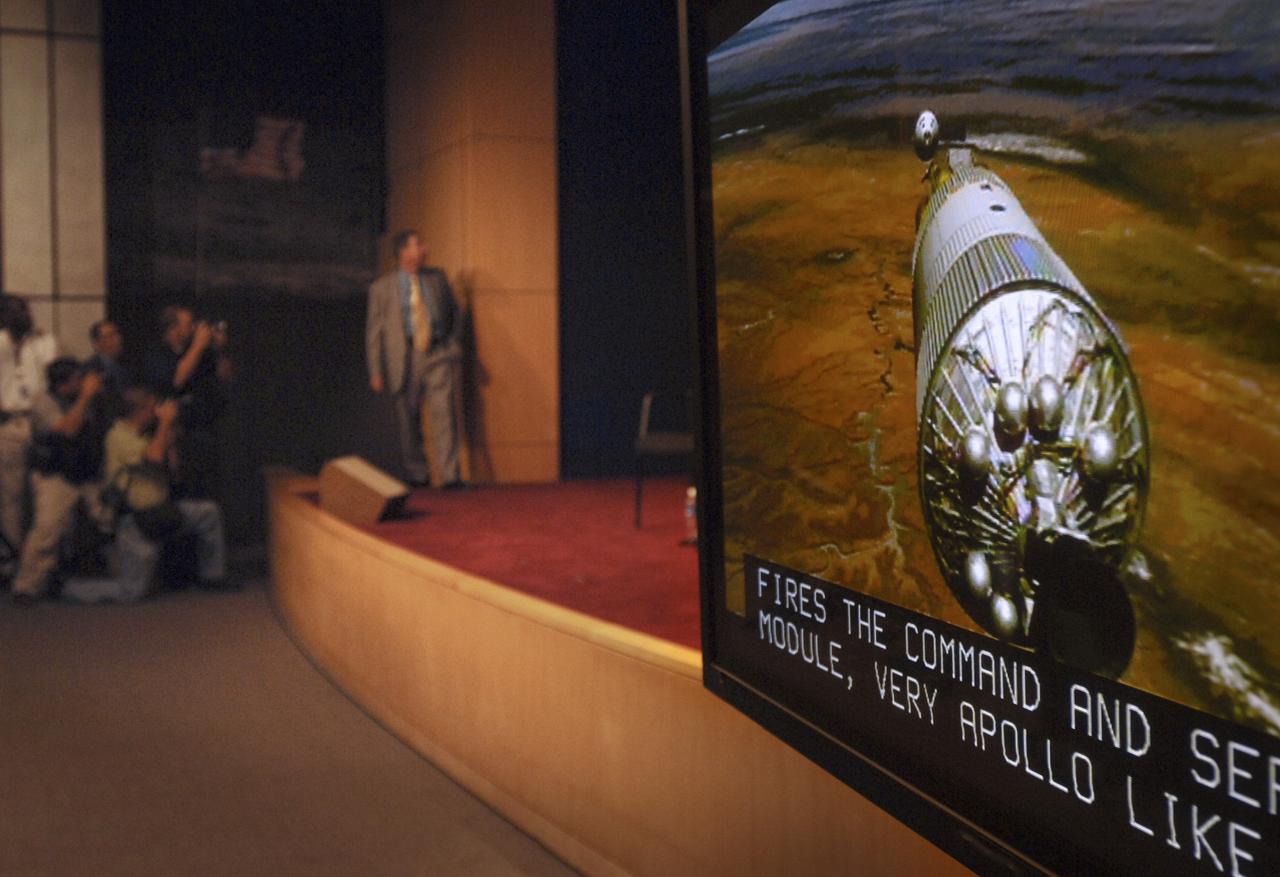
Michael Griffin Discusses Exploration Architecture Study
NASA Administrator Michael Griffin discusses the results of the agency's exploration architecture study on Monday, Sept. 19, 2005, at NASA Headquarters in Washington. The study made specific design…
Inspect NASA record
NASA Administrator Michael Griffin discusses the results of the agency's exploration architecture study on Monday, Sept. 19, 2005, at NASA Headquarters in Washington. The study made specific design recommendations for a vehicle to carry crews into space, a family of launch vehicles to take missions to the moon and beyond, and a "lunar mission architecture" for landing on the moon. Photo Credit: (NASA/Bill Ingalls)
- Record ID
- 20050919_nxtgn_06
- NASA center
- HQ
- Date
- 2005-09-18
- Credit
- NASA/Bill Ingalls
- Keywords
- Michael Griffin, NASA Headquarters, Washington, DC, Next Generation Spacecraft, Constellation, 20050919_bi_nxtgn, Exploration Architecture Study
KSC · 2019-05-23 · KSC-20190523-PH_KLS01_0027
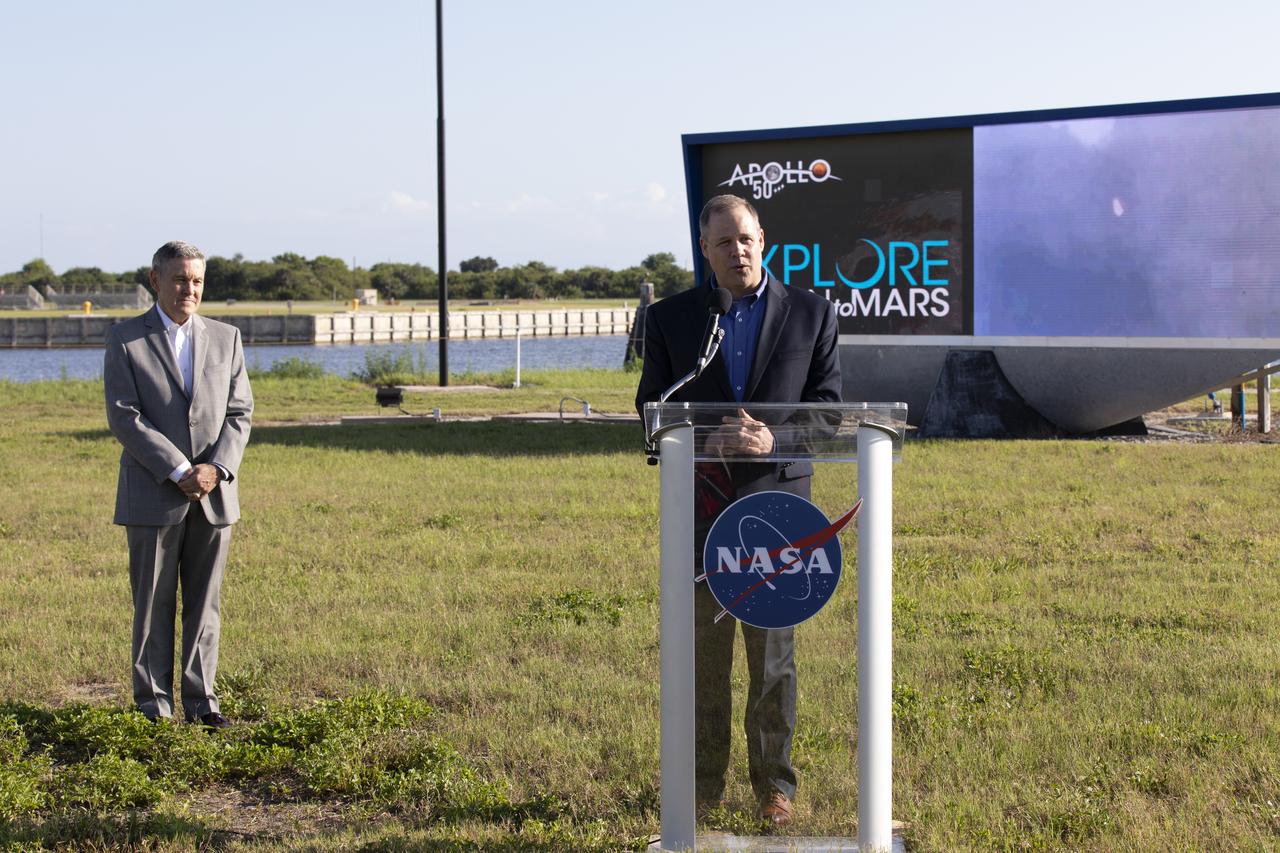
Apollo 11 Media Day
NASA Administrator Jim Bridenstine speaks to members of the news media at the NASA News Center on May 23, 2019. At left is Kennedy Space Center Director Bob…
Inspect NASA record
NASA Administrator Jim Bridenstine speaks to members of the news media at the NASA News Center on May 23, 2019. At left is Kennedy Space Center Director Bob Cabana. News media were at the center for an Apollo 11 Media Day. They toured several facilities, including the Vehicle Assembly and Launch Complex 39B for a look back at the Apollo missions and a look ahead to NASA’s new Moon 2024 initiative, the Artemis 1 mission and the Gateway lunar outpost.
- Record ID
- KSC-20190523-PH_KLS01_0027
- NASA center
- KSC
- Date
- 2019-05-23
- Credit
- NASA/Kim Shiflett
- Keywords
- KSC Events, Apollo 11 Media Day, NASA Administrator, Jim Bridenstine, Kennedy Space Center, Moon 2024, NASA News Center, Launch Complex 39 area, Bob Cabana
KSC · 2026-02-10 · KSC-20260210-PH-KLS01_0055
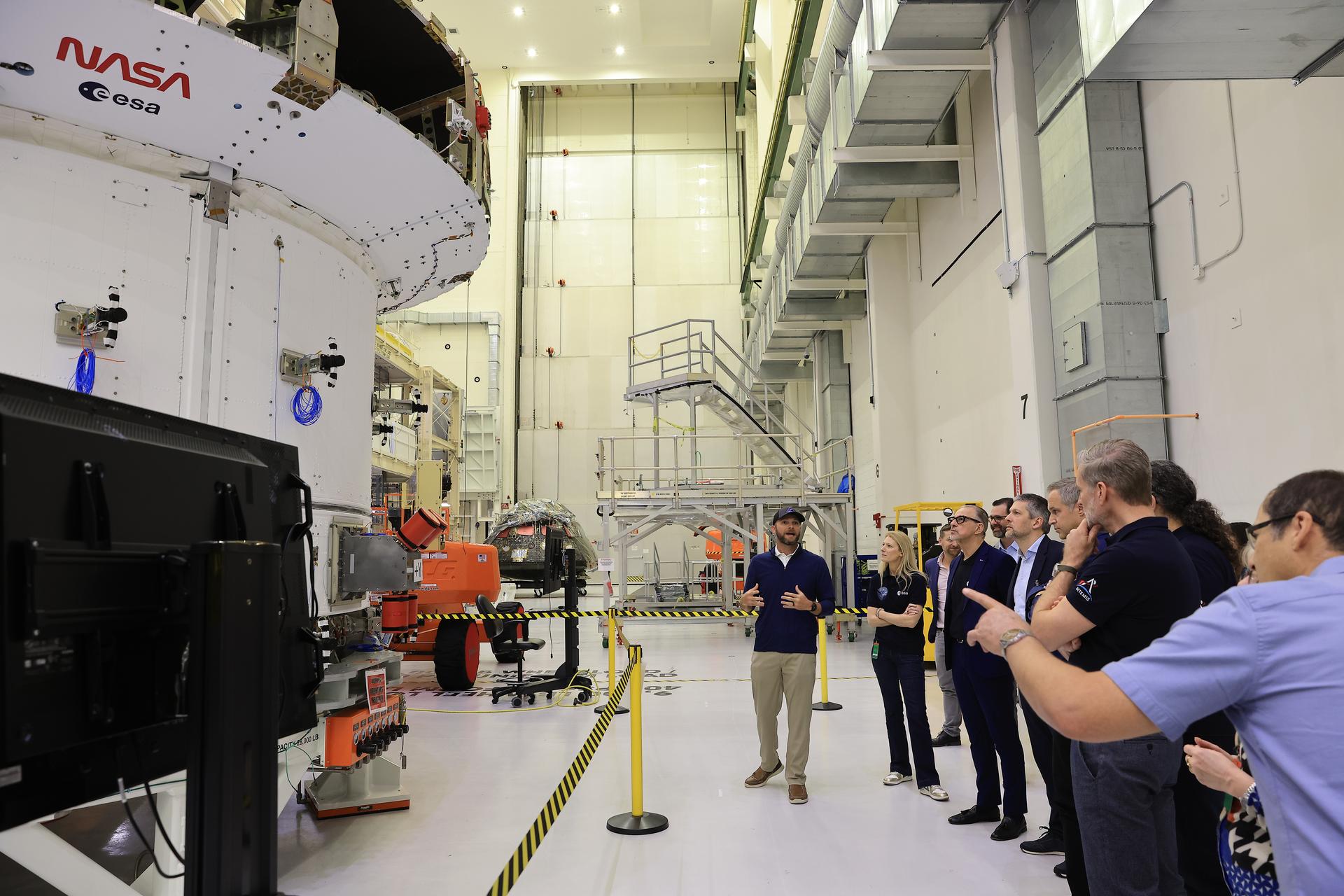
ESA IOZ Tour O&C High Bay
Members of the ESA (European Space Agency) leadership team and NASA Orion program team stand by European Service Module with the Orion spacecraft in the background for NASA’s…
Inspect NASA record
Members of the ESA (European Space Agency) leadership team and NASA Orion program team stand by European Service Module with the Orion spacecraft in the background for NASA’s Artemis III mission on Tuesday, Feb. 10, 2026, inside the high bay of the Neil A. Armstrong Operations and Checkout Building at NASA’s Kennedy Space Center in Florida. The service module provides the Orion spacecraft’s propulsion, thermal control, electrical power, and life support systems during the Artemis III mission to send humans to explore the lunar South Pole region.
- Record ID
- KSC-20260210-PH-KLS01_0055
- NASA center
- KSC
- Date
- 2026-02-10
- Credit
- NASA/Kim Shiflett
- Keywords
- John. F. Kennedy Space Center, Kennedy, Kennedy Space Center, KSC, Spaceport, Cape Canaveral, NASA, rocket ranch, Florida, multi-user spaceport, premier spaceport, space coast
JSC · 1966-07-18 · s66-46025
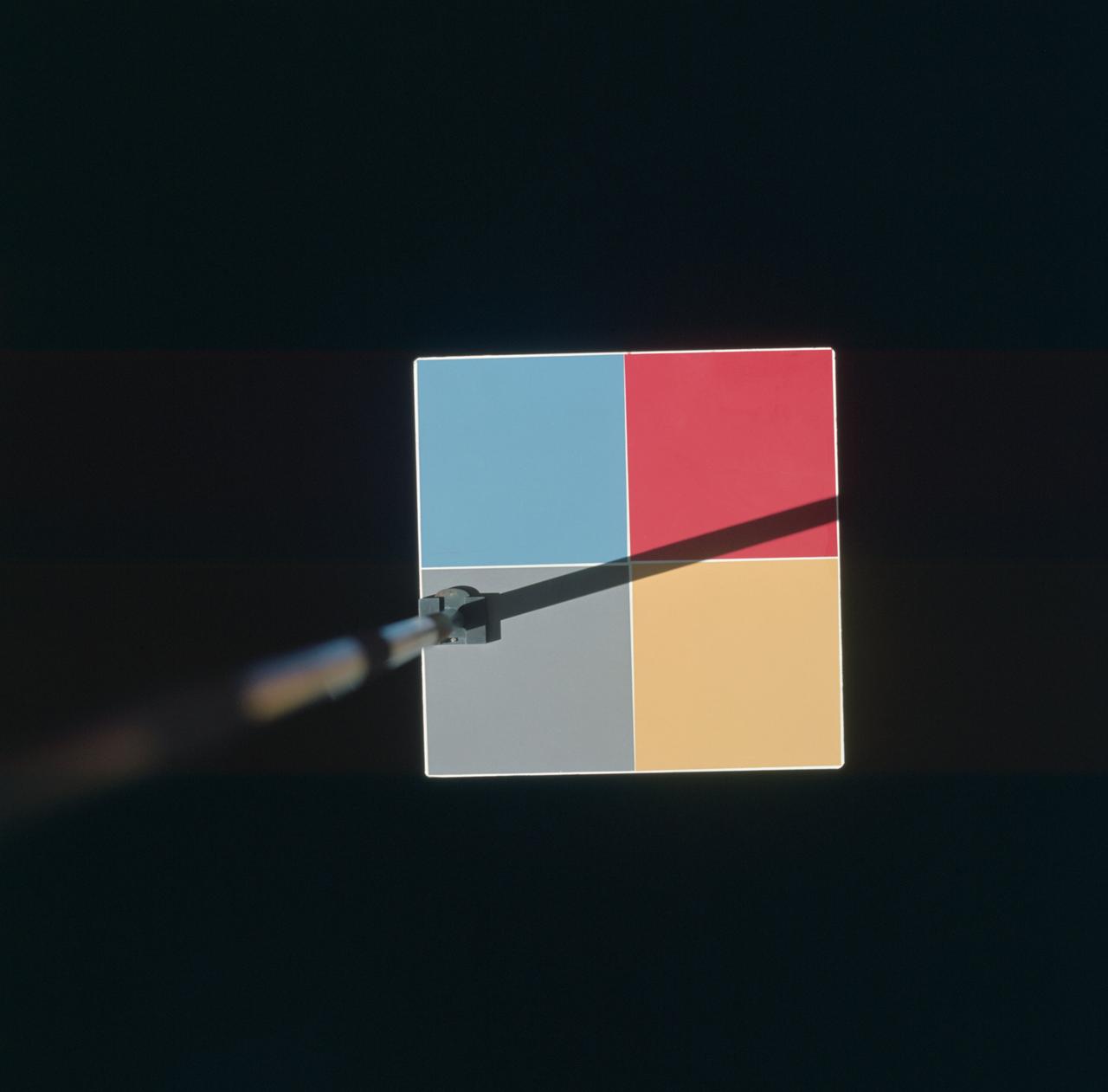
Photograph of MSC-8 color patch outside spacecraft during docking
S66-46025 (18 July 1966) --- Astronaut Michael Collins, Gemini-10 pilot, photographed this MSC-8 color patch outside the spacecraft during the Gemini-10/Agena docking mission. The experiment was for the…
Inspect NASA record
S66-46025 (18 July 1966) --- Astronaut Michael Collins, Gemini-10 pilot, photographed this MSC-8 color patch outside the spacecraft during the Gemini-10/Agena docking mission. The experiment was for the purpose of showing what effect the environment of space will have upon the color photography taken in cislunar space and on the lunar surface during an Apollo mission. Photo credit: NASA
- Record ID
- s66-46025
- NASA center
- JSC
- Date
- 1966-07-18
- Keywords
- GEMINI 10 FLIGHT, GEMINI PROJECT, LOGO, ONBOARD ACTIVITIES, PHOTOGRAPHY, SPACECRAFT DOCKING, TESTS
KSC · 2025-05-03 · KSC-20250503-PH-KLS01_0026
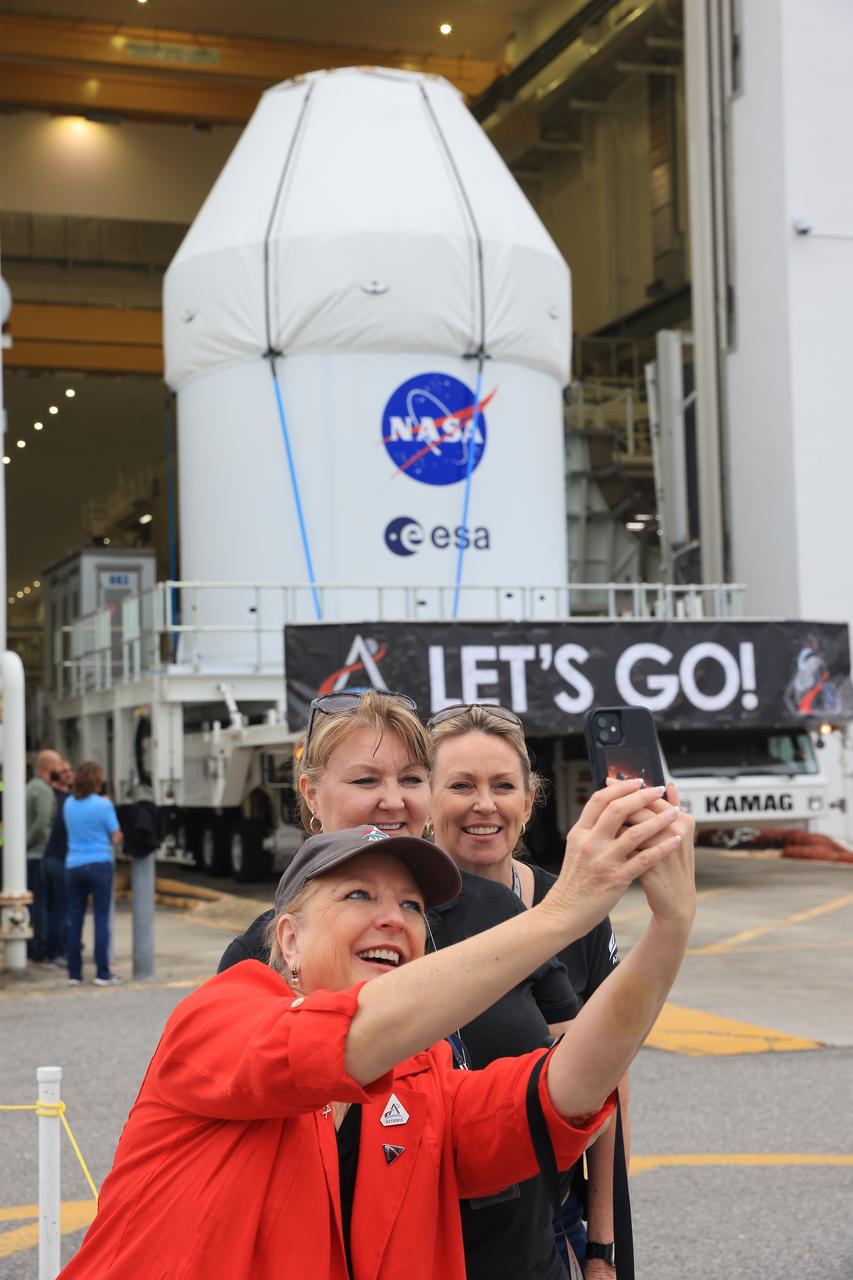
Artemis II Orion DD250 leaving the O&C
NASA’s KAMAG transporter carries the agency’s Artemis II Orion spacecraft from the Neil A. Armstrong Operations and Checkout Building to the Multi-Payload Processing Facility at Kennedy Space Center…
Inspect NASA record
NASA’s KAMAG transporter carries the agency’s Artemis II Orion spacecraft from the Neil A. Armstrong Operations and Checkout Building to the Multi-Payload Processing Facility at Kennedy Space Center in Florida on Saturday, May 3, 2025. The Orion spacecraft will undergo fueling and processing operations at the Multi-Function Facility. The Artemis II test flight is the first crewed flight under NASA’s Artemis campaign and is another step toward missions on the lunar surface and helping the agency prepare for future human missions to Mars.
- Record ID
- KSC-20250503-PH-KLS01_0026
- NASA center
- KSC
- Date
- 2025-05-03
- Credit
- NASA/Kim Shiflett
- Keywords
- John. F. Kennedy Space Center, Kennedy, Kennedy Space Center, KSC, Spaceport, Cape Canaveral, NASA, rocket ranch, Florida, multi-user spaceport, premier spaceport, space coast
MSFC · 1969-07-25 · 6901510
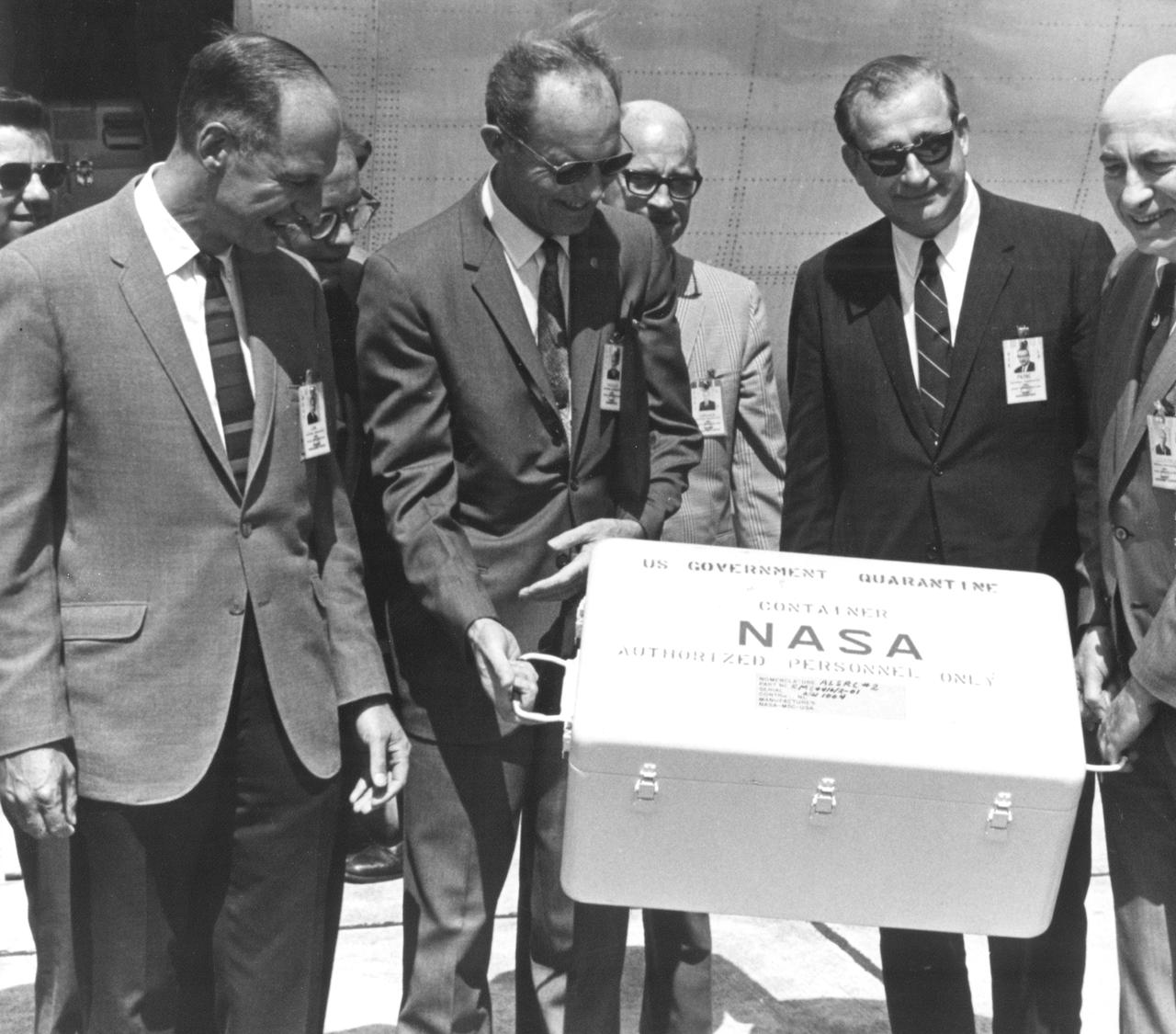
Saturn Apollo Program
The Apollo 11 mission, the first manned lunar mission, launched from the Kennedy Space Center, Florida via the Marshall Space Flight Center (MSFC) developed Saturn V launch vehicle…
Inspect NASA record
The Apollo 11 mission, the first manned lunar mission, launched from the Kennedy Space Center, Florida via the Marshall Space Flight Center (MSFC) developed Saturn V launch vehicle on July 16, 1969 and safely returned to Earth on July 24, 1969. Aboard the space craft were astronauts Neil A. Armstrong, commander; Michael Collins, Command Module (CM) pilot; and Edwin E. Aldrin Jr., Lunar Module (LM) pilot. The CM, piloted by Michael Collins remained in a parking orbit around the Moon while the LM, named “Eagle’’, carrying astronauts Neil Armstrong and Edwin Aldrin, landed on the Moon. During 2½ hours of surface exploration, the crew collected 47 pounds of lunar surface material for analysis back on Earth. This photograph was taken as the mission’s first loaded sample return container arrived at Ellington Air Force Base by air from the Pacific recovery area. The rock box was immediately taken to the Lunar Receiving Laboratory at the Manned Spacecraft Center (MSC) in Houston, Texas. Happily posing for the photograph with the rock container are (L-R) Richard S. Johnston (back), special assistant to the MSC Director; George M. Low, MSC Apollo Spacecraft Program manager; George S. Trimble (back), MSC Deputy Director; Lt. General Samuel C. Phillips, Apollo Program Director, Office of Manned Spaceflight at NASA headquarters; Eugene G. Edmonds, MSC Photographic Technology Laboratory; Dr. Thomas O. Paine, NASA Administrator; and Dr. Robert R. Gilruth, MSC Director.
- Record ID
- 6901510
- NASA center
- MSFC
- Date
- 1969-07-25
- Keywords
- Apollo 11, Moon, Lunar, Samples, Manned Spacecraft Center, MSC, Johnston, Low, Trimble, Phillips, Edmonds, Paine

MSFC · 1969-07-09 · 6900613
Saturn Apollo Program
In preparation of the nation’s first lunar landing mission, Apollo 11 crew members underwent training to practice activities they would be performing during the mission. In this photograph,…
Inspect NASA record
In preparation of the nation’s first lunar landing mission, Apollo 11 crew members underwent training to practice activities they would be performing during the mission. In this photograph, astronaut Collins (left) and chief astronaut and director of flight crew operations, Donald K. Slayton, walk away from a T-38 jet plane at Patrick Air Force Base. The two had been flying arcs to give Collins more time under weightless conditions. The Apollo 11 mission launched from the Kennedy Space Center (KSC) in Florida via the Marshall Space Flight Center (MSFC) developed Saturn V launch vehicle on July 16, 1969 and safely returned to Earth on July 24, 1969. Aboard the space craft were astronauts Neil A. Armstrong, commander; Michael Collins, Command Module (CM) pilot; and Edwin E. (Buzz) Aldrin Jr., Lunar Module (LM) pilot. The CM, “Columbia”, piloted by Collins, remained in a parking orbit around the Moon while the LM, “Eagle’’, carrying astronauts Armstrong and Aldrin, landed on the Moon. On July 20, 1969, Armstrong was the first human to ever stand on the lunar surface, followed by Aldrin. During 2½ hours of surface exploration, the crew collected 47 pounds of lunar surface material for analysis back on Earth. With the success of Apollo 11, the national objective to land men on the Moon and return them safely to Earth had been accomplished
- Record ID
- 6900613
- NASA center
- MSFC
- Date
- 1969-07-09
- Keywords
- Apollo 11, Moon, Collins, Training; Weightlessness
GSFC · 2017-12-08 · GSFC_20171208_Archive_e000954
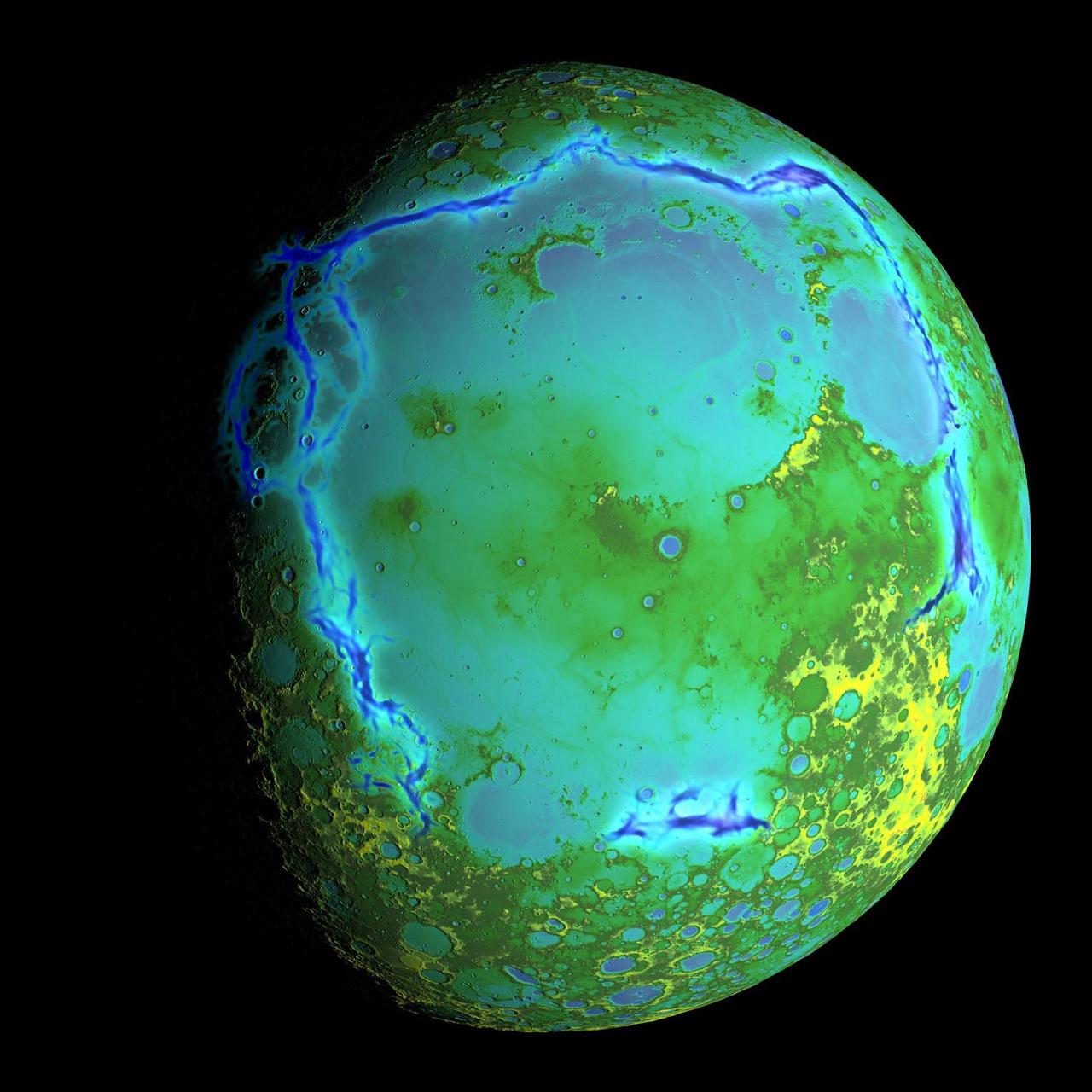
Topography of Earth's moon
Topography of Earth's moon generated from data collected by the Lunar Orbiter Laser Altimeter, aboard NASA's Lunar Reconnaissance Orbiter, with the gravity anomalies bordering the Procellarum region superimposed…
Inspect NASA record
Topography of Earth's moon generated from data collected by the Lunar Orbiter Laser Altimeter, aboard NASA's Lunar Reconnaissance Orbiter, with the gravity anomalies bordering the Procellarum region superimposed in blue. The border structures are shown using gravity gradients calculated with data from NASA's Gravity Recovery and Interior Laboratory (GRAIL) mission. These gravity anomalies are interpreted as ancient lava-flooded rift zones buried beneath the volcanic plains (or maria) on the nearside of the Moon. Launched as GRAIL A and GRAIL B in September 2011, the probes, renamed Ebb and Flow, operated in a nearly circular orbit near the poles of the moon at an altitude of about 34 miles (55 kilometers) until their mission ended in December 2012. The distance between the twin probes changed slightly as they flew over areas of greater and lesser gravity caused by visible features, such as mountains and craters, and by masses hidden beneath the lunar surface. The twin spacecraft flew in a nearly circular orbit until the end of the mission on Dec. 17, 2012, when the probes intentionally were sent into the moon's surface. NASA later named the impact site in honor of late astronaut Sally K. Ride, who was America's first woman in space and a member of the GRAIL mission team. GRAIL's prime and extended science missions generated the highest-resolution gravity field map of any celestial body. The map will provide a better understanding of how Earth and other rocky planets in the solar system formed and evolved. The GRAIL mission was managed by NASA's Jet Propulsion Laboratory (JPL) in Pasadena, California, for NASA's Science Mission Directorate in Washington. The mission was part of the Discovery Program managed at NASA's Marshall Space Flight Center in Huntsville, Alabama. GRAIL was built by Lockheed Martin Space Systems in Denver. For more information about GRAIL, please visit grail.nasa.gov. Credit: NASA/Colorado School of Mines/MIT/GSFC/Scientific Visualization Studio
- Record ID
- GSFC_20171208_Archive_e000954
- NASA center
- GSFC
- Date
- 2017-12-08
- Keywords
- Topography of Earth's moon, moon, map, nasa, lro, nasagoddard, mapofmoon
KSC · 2023-08-08 · KSC-20230808-PH-KLS04_0115
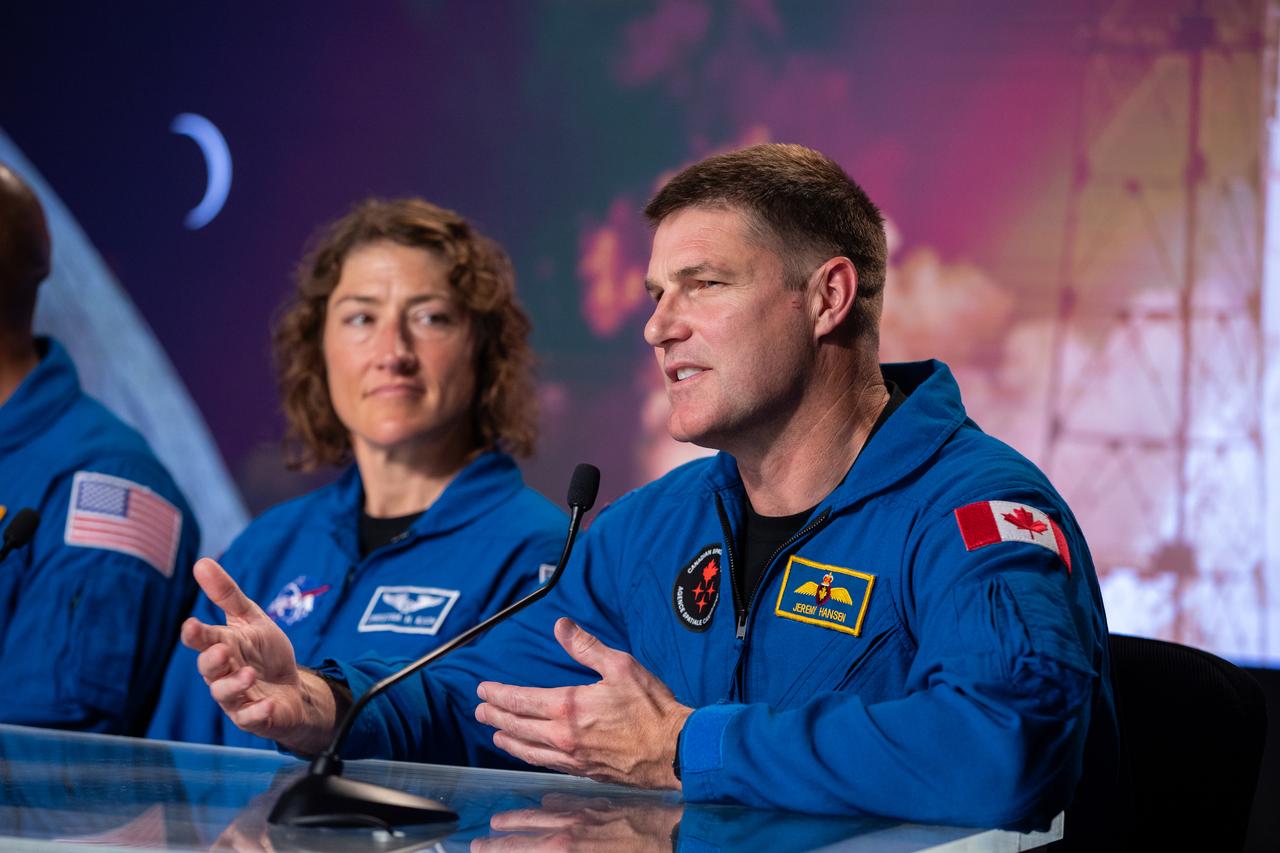
NASA Briefing with Artemis II Crew
NASA astronaut Christina Hammock Koch, Artemis II mission specialist, and CSA (Canadian Space Agency) astronaut Jeremy Hansen, Artemis II mission specialist, participate in a NASA news conference on…
Inspect NASA record
NASA astronaut Christina Hammock Koch, Artemis II mission specialist, and CSA (Canadian Space Agency) astronaut Jeremy Hansen, Artemis II mission specialist, participate in a NASA news conference on Aug. 8, 2023, at the agency’s Kennedy Space Center in Florida. NASA senior leadership and the Artemis II crew discussed the mission – the first with astronauts under Artemis, which will send NASA astronauts Wiseman, Victor Glover, and Christina Koch, as well as Canadian Space Agency astronaut Jeremy Hansen around the Moon and back. Artemis II is the first crewed mission on NASA’s path to establishing a long-term lunar presence for science and exploration under Artemis and is the first mission with astronauts to the Moon.
- Record ID
- KSC-20230808-PH-KLS04_0115
- NASA center
- KSC
- Date
- 2023-08-08
- Credit
- NASA/Kim Shiflett
- Keywords
- Artemis, Artemis II, Cape Canaveral, Christina Hammock Koch, Florida, Jeremy Hansen, John. F. Kennedy Space Center, KSC, Kennedy, Kennedy Space Center, NASA, Reid Wiseman