
Update Site (from NASA)
Explore NASA’s Image and Video Library.
Suggest one object per day for the Interstellar Minds collection. We review each suggestion before adding it.
Sign in to suggest a Marvel.
Find a NASA image ID. Open a NASA record and copy its ID from the end of the details URL.
NASA image records
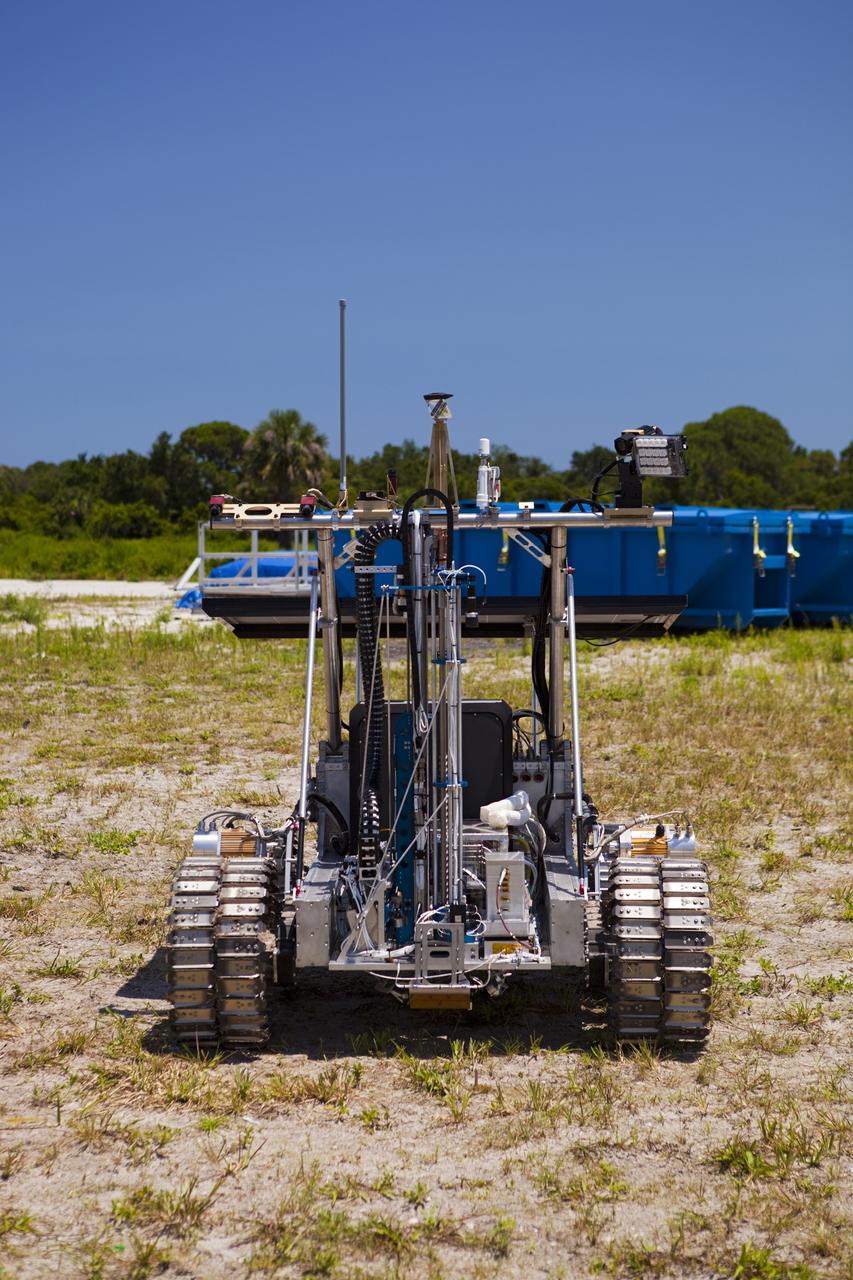
KSC · 2012-06-12 · KSC-2012-3320
KSC-2012-3320
CAPE CANAVERAL, Fla. – A demonstration of the prototype rover Artemis Jr. for NASA’s Regolith and Environment Science and Oxygen and Lunar Volatile Extraction, or RESOLVE, project is…
Inspect NASA record
CAPE CANAVERAL, Fla. – A demonstration of the prototype rover Artemis Jr. for NASA’s Regolith and Environment Science and Oxygen and Lunar Volatile Extraction, or RESOLVE, project is conducted in a field beside the Operations and Checkout Building at NASA’s Kennedy Space Center in Florida. The rover and its drill are provided by the Canadian Space Agency and work in concert with NASA science instruments to prospect for water, ice and other lunar resources. RESOLVE also will demonstrate how future explorers can take advantage of resources at potential landing sites by manufacturing oxygen from soil. NASA will conduct field tests in July outside of Hilo, Hawaii, with equipment and concept vehicles that demonstrate how explorers might prospect for resources and make their own oxygen for survival while on other planetary bodies. For more information, visit http://www.nasa.gov/exploration/analogs/index.html. Photo credit: NASA/Dimitri Gerondidakis
- Record ID
- KSC-2012-3320
- NASA center
- KSC
- Date
- 2012-06-12
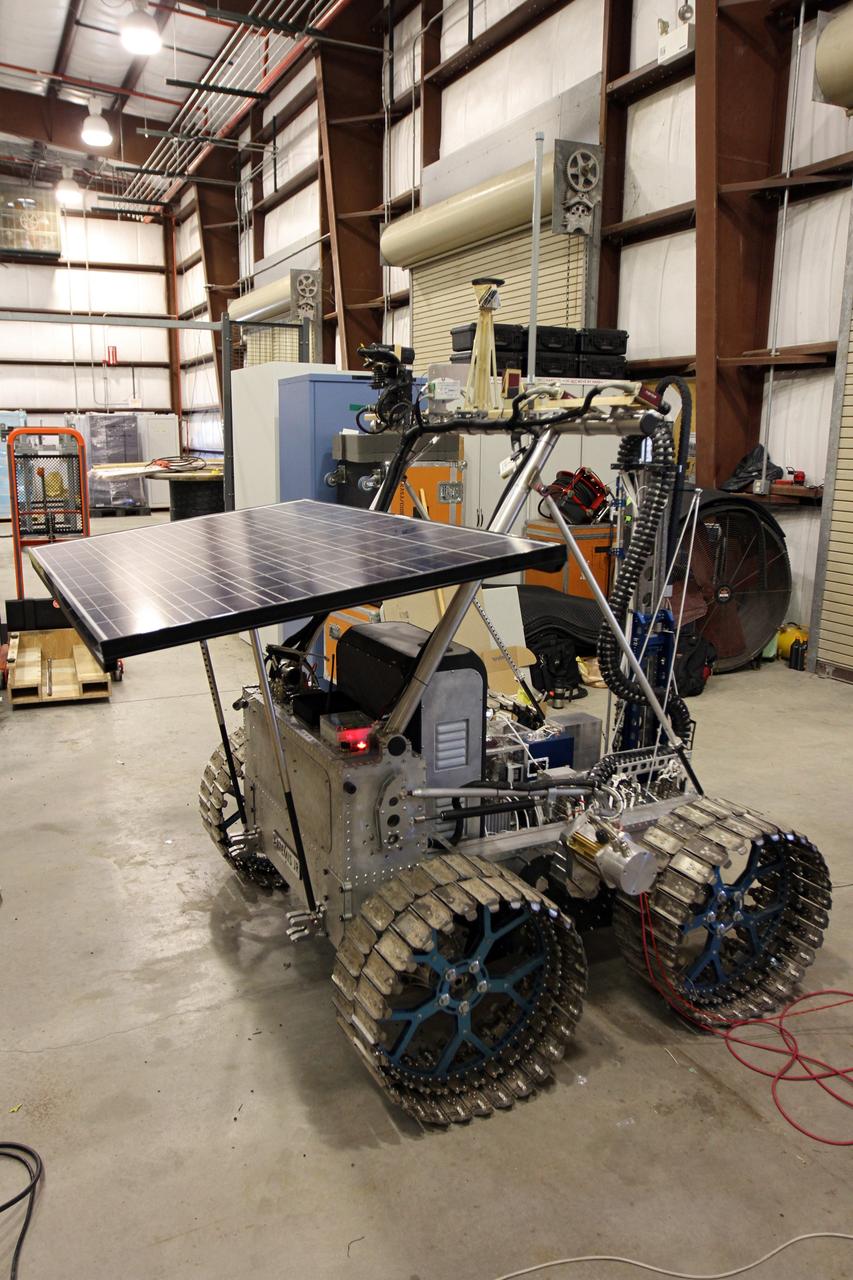
KSC · 2012-06-11 · KSC-2012-3287
KSC-2012-3287
CAPE CANAVERAL, Fla. – The NASA payload is installed on the prototype rover Artemis Jr. for NASA’s Regolith and Environment Science and Oxygen and Lunar Volatile Extraction, or…
Inspect NASA record
CAPE CANAVERAL, Fla. – The NASA payload is installed on the prototype rover Artemis Jr. for NASA’s Regolith and Environment Science and Oxygen and Lunar Volatile Extraction, or RESOLVE, project in a test facility behind the Operations and Checkout Building at NASA’s Kennedy Space Center in Florida. The cylindrical structure at right is the drill the tabletop surface at left is the rover’s solar array. The drill and rover were provided to NASA by the Canadian Space Agency. The NASA payload is designed to prospect for water, ice and other lunar resources. RESOLVE also will demonstrate how future explorers can take advantage of resources at potential landing sites by manufacturing oxygen from soil. NASA will conduct field tests in July outside of Hilo, Hawaii, with equipment and concept vehicles that demonstrate how explorers might prospect for resources and make their own oxygen for survival while on other planetary bodies. For more information, visit http://www.nasa.gov/exploration/analogs/index.html. Photo credit: NASA/Cory Huston
- Record ID
- KSC-2012-3287
- NASA center
- KSC
- Date
- 2012-06-11
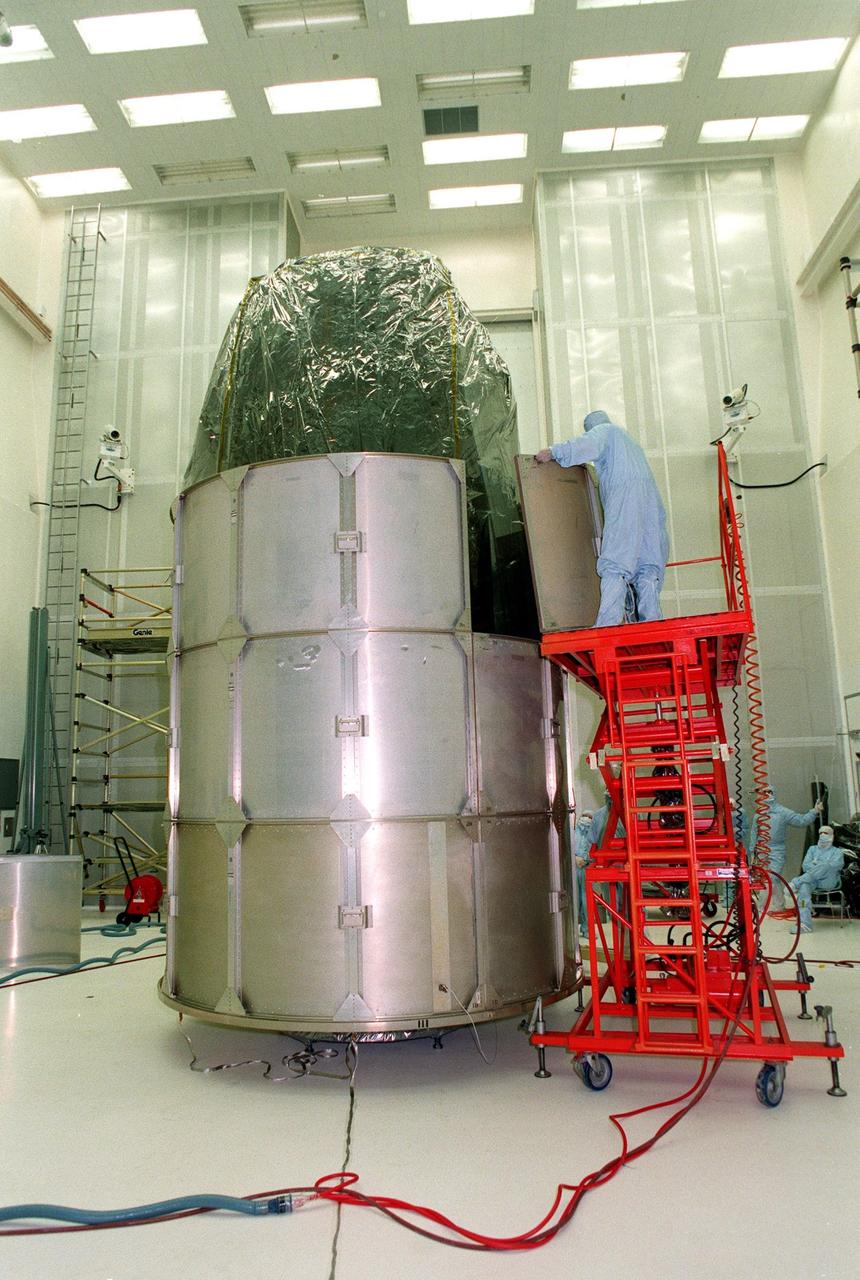
KSC · 1999-06-14 · KSC-99pp0690
KSC-99pp0690
NASA's Far Ultraviolet Spectroscopic Explorer (FUSE) satellite is fitted with another row of canister segments before being moved to Launch Pad 17A, CCAS. FUSE was developed by The…
Inspect NASA record
NASA's Far Ultraviolet Spectroscopic Explorer (FUSE) satellite is fitted with another row of canister segments before being moved to Launch Pad 17A, CCAS. FUSE was developed by The Johns Hopkins University under contract to Goddard Space Flight Center, Greenbelt, Md., to investigate the origin and evolution of the lightest elements in the universe hydrogen and deuterium. In addition, the FUSE satellite will examine the forces and process involved in the evolution of the galaxies, stars and planetary systems by investigating light in the far ultraviolet portion of the electromagnetic spectrum. FUSE is scheduled to be launched June 23 aboard a Boeing Delta II rocket
- Record ID
- KSC-99pp0690
- NASA center
- KSC
- Date
- 1999-06-14

HQ · 2021-02-16 · NHQ202102160022
Mars 2020 Science Overview
Director of NASA's Science Mission Directorate’s Planetary Science Division, Lori Glaze, gives remarks during a NASA Perseverance rover mission science overview, Tuesday, Feb. 16, 2021, at NASA's Jet…
Inspect NASA record
Director of NASA's Science Mission Directorate’s Planetary Science Division, Lori Glaze, gives remarks during a NASA Perseverance rover mission science overview, Tuesday, Feb. 16, 2021, at NASA's Jet Propulsion Laboratory in Pasadena, California. The Perseverance Mars rover is due to land on Mars Thursday, Feb. 18, 2021. A key objective for Perseverance’s mission on Mars is astrobiology, including the search for signs of ancient microbial life. The rover will characterize the planet’s geology and past climate, pave the way for human exploration of the Red Planet, and be the first mission to collect and cache Martian rock and regolith. Photo Credit: (NASA/Bill Ingalls)
- Record ID
- NHQ202102160022
- NASA center
- HQ
- Date
- 2021-02-16
- Credit
- NASA/Bill Ingalls
- Keywords
- California, Jet Propulsion Laboratory (JPL), Lori Glaze, Mars 2020, Pasadena, Perseverance
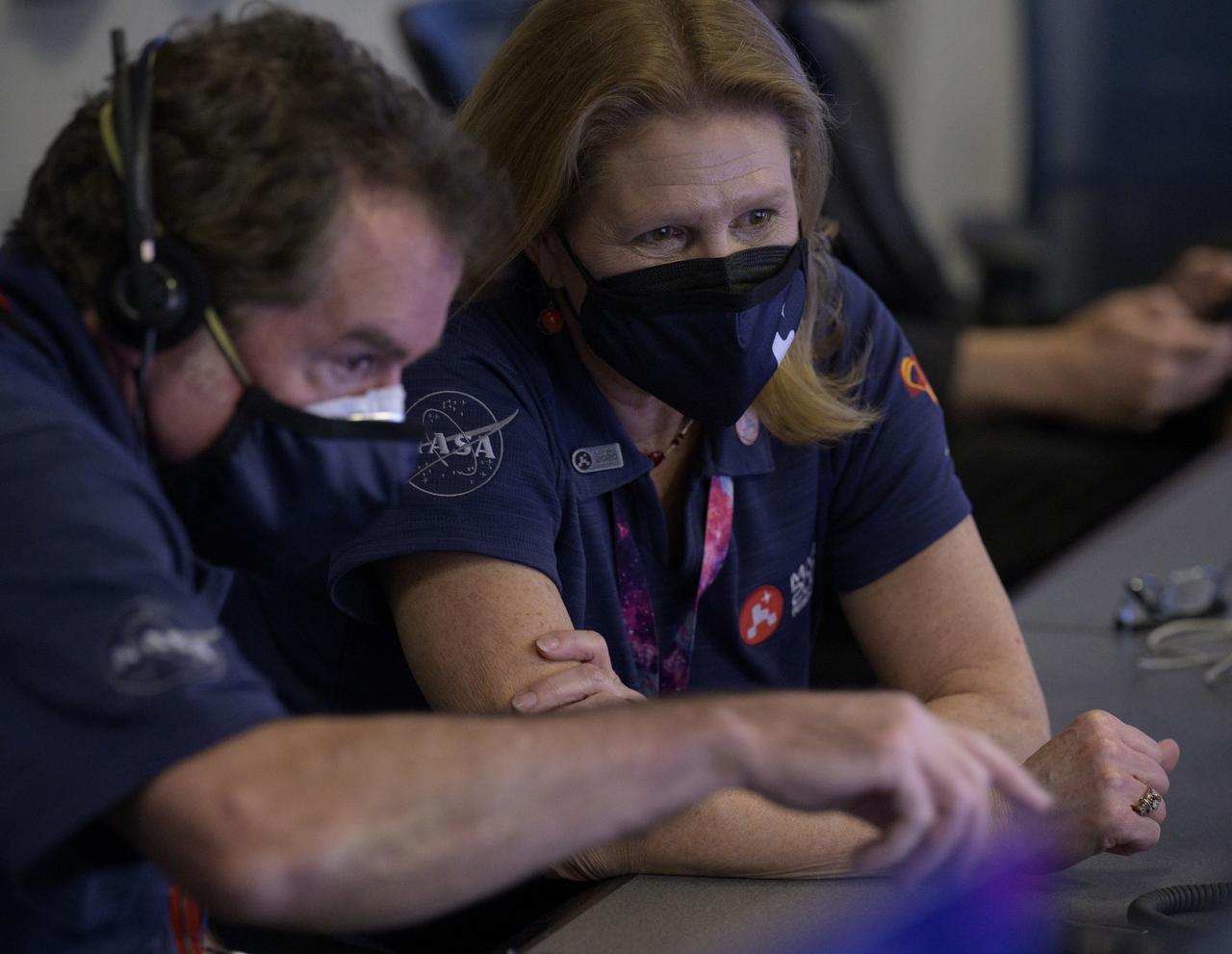
HQ · 2021-02-18 · NHQ202102180052
NASA Perseverance Rover Lands on Mars
JPL Director Michael Watkins, left, talks with Director of NASA's Science Mission Directorate’s Planetary Science Division, Lori Glaze, as they and the NASA Perseverance Mars rover team await…
Inspect NASA record
JPL Director Michael Watkins, left, talks with Director of NASA's Science Mission Directorate’s Planetary Science Division, Lori Glaze, as they and the NASA Perseverance Mars rover team await the landing of the spacecraft in mission control, Thursday, Feb. 18, 2021, at NASA's Jet Propulsion Laboratory in Pasadena, California. A key objective for Perseverance’s mission on Mars is astrobiology, including the search for signs of ancient microbial life. The rover will characterize the planet’s geology and past climate, pave the way for human exploration of the Red Planet, and be the first mission to collect and cache Martian rock and regolith. Photo Credit: (NASA/Bill Ingalls)
- Record ID
- NHQ202102180052
- NASA center
- HQ
- Date
- 2021-02-18
- Credit
- NASA/Bill Ingalls
- Keywords
- California, Jet Propulsion Laboratory (JPL), Lori Glaze, Mars 2020, Michael Watkins, Mission Support Area (MSA), Pasadena, Perseverance, Space Flight Operations Facility (SFOF)
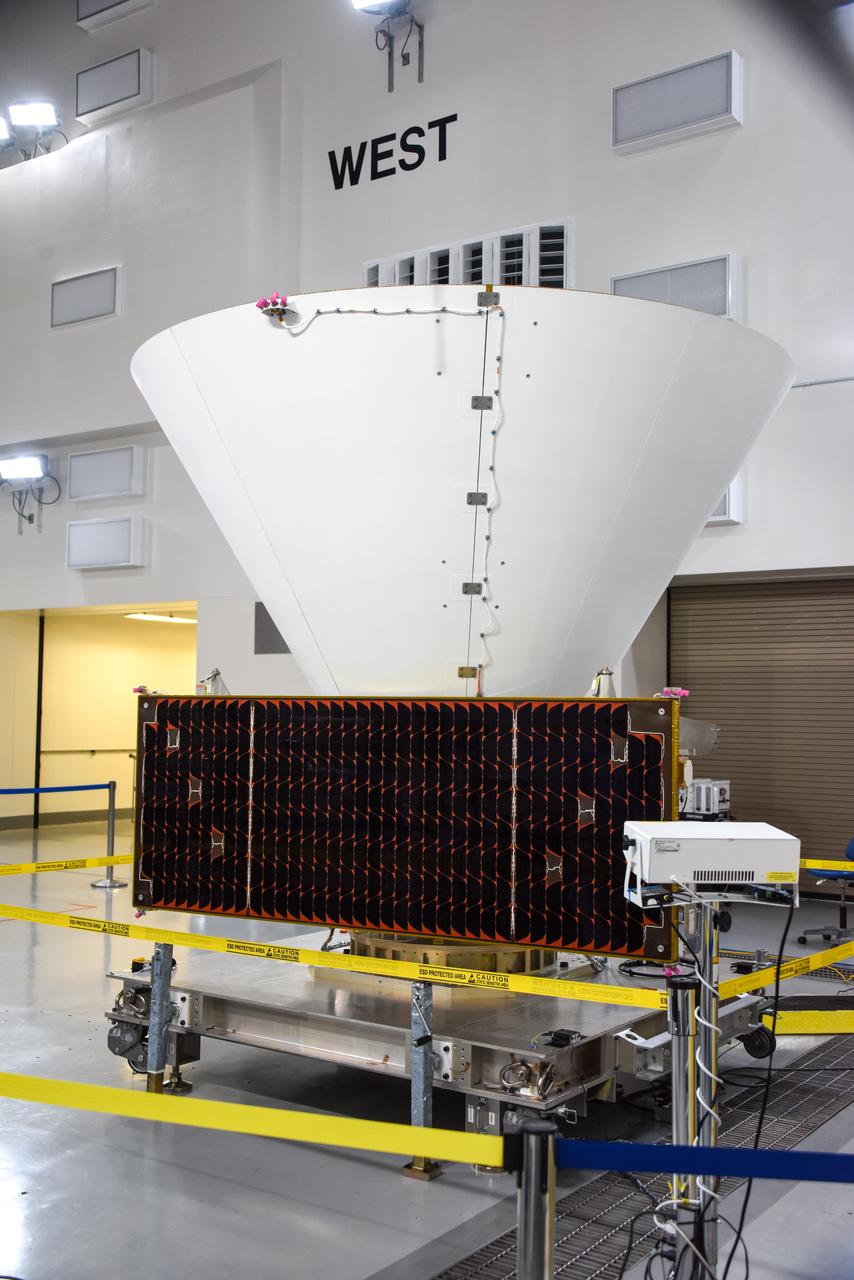
KSC · 2025-01-17 · KSC-20250117-PH-CAO01_0018
SPHEREx Spacecraft on Work Stand in Astrotech
NASA’s SPHEREx (Spectro-Photometer for the History of the Universe, Epoch of Reionization and Ices Explorer), a space telescope, is situated on a work stand ahead of prelaunch operations…
Inspect NASA record
NASA’s SPHEREx (Spectro-Photometer for the History of the Universe, Epoch of Reionization and Ices Explorer), a space telescope, is situated on a work stand ahead of prelaunch operations at the Astrotech Processing Facility at Vandenberg Space Force Base in California on Friday, Jan. 17, 2025. SPHEREx will enter a polar orbit around Earth and create a 3D map of the entire sky, gathering information about millions of galaxies for scientists to study what happened after the big bang, the history of galaxy evolution, and the origins of water in planetary systems in our galaxy. SPHEREx will launch aboard a SpaceX Falcon 9 rocket in late February 2025.
- Record ID
- KSC-20250117-PH-CAO01_0018
- NASA center
- KSC
- Date
- 2025-01-17
- Credit
- USSF 30th Space Wing/Christopher
- Keywords
- Astrotech Space Operations, Epoch of Reionization and Ices Explorer, KSC, Kennedy Space Center, LSP, Launch Services Program, NASA, National Aeronautical and Space Administration, PUNCH, Polarimeter to Unify the Corona and Heliosphere, SPHEREx, SpaceX Falcon 9
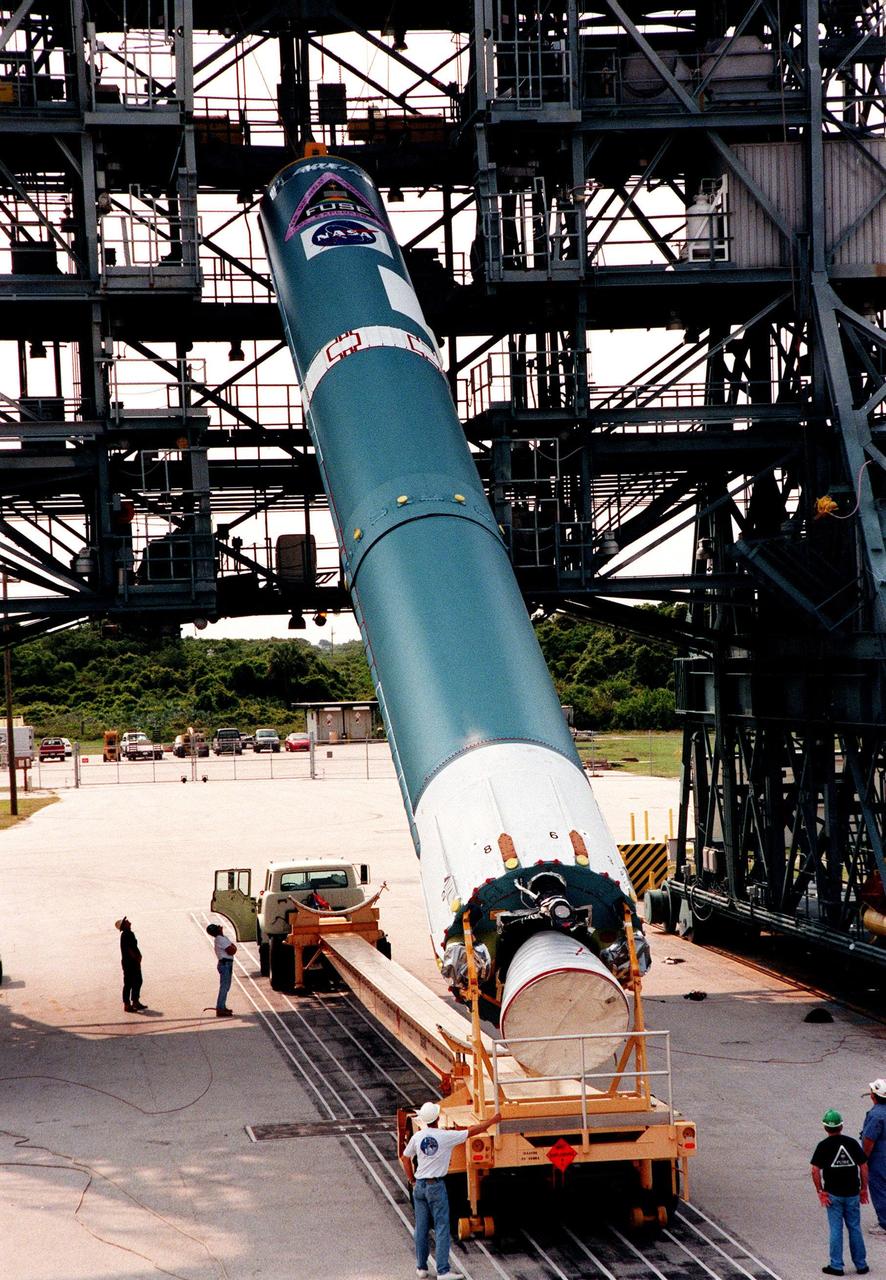
KSC · 1999-06-03 · KSC-99pp0646
KSC-99pp0646
At Launch Pad 17A, Cape Canaveral Air Station (CCAS), the first stage of a Boeing Delta II rocket is raised for its journey up the launch tower. The…
Inspect NASA record
At Launch Pad 17A, Cape Canaveral Air Station (CCAS), the first stage of a Boeing Delta II rocket is raised for its journey up the launch tower. The rocket is targeted to launch NASA's Far Ultraviolet Spectroscopic Explorer (FUSE), developed by The Johns Hopkins University under contract to Goddard Space Flight Center, Greenbelt, Md. FUSE will investigate the origin and evolution of the lightest elements in the universe ¾ hydrogen and deuterium. In addition, the FUSE satellite will examine the forces and process involved in the evolution of the galaxies, stars and planetary systems by investigating light in the far ultraviolet portion of the electromagnetic spectrum. FUSE is scheduled to be launched June 23 at CCAS
- Record ID
- KSC-99pp0646
- NASA center
- KSC
- Date
- 1999-06-03
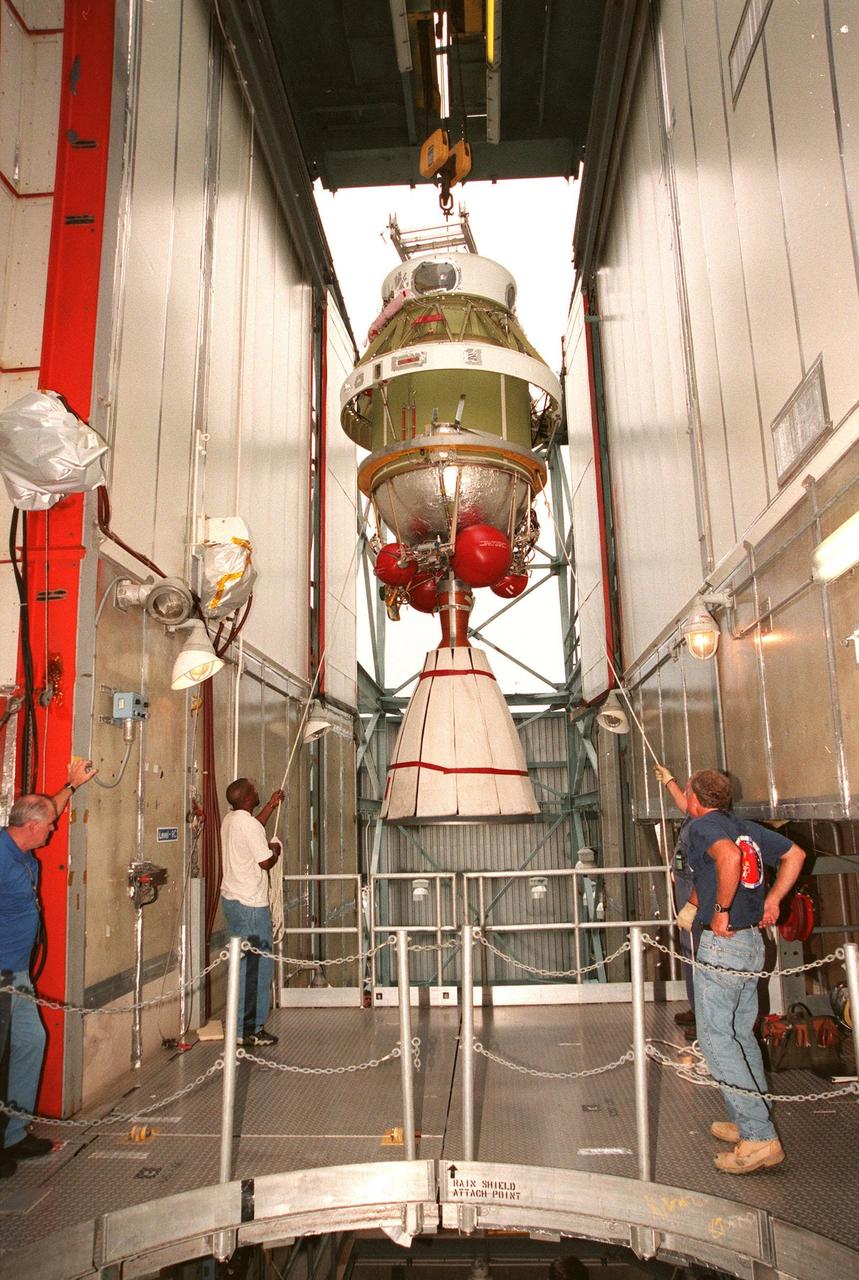
KSC · 1999-06-07 · KSC-99pp0655
KSC-99pp0655
The second stage of a Boeing Delta II rocket is moved inside the launch tower at Launch Pad 17A, Cape Canaveral Air Station (CCAS). The first and second…
Inspect NASA record
The second stage of a Boeing Delta II rocket is moved inside the launch tower at Launch Pad 17A, Cape Canaveral Air Station (CCAS). The first and second stages will be mated for the launch, targeted on June 23 at CCAS, of NASA's Far Ultraviolet Spectroscopic Explorer (FUSE) satellite. FUSE was developed by The Johns Hopkins University under contract to Goddard Space Flight Center, Greenbelt, Md., to investigate the origin and evolution of the lightest elements in the universe hydrogen and deuterium. In addition, the FUSE satellite will examine the forces and process involved in the evolution of the galaxies, stars and planetary systems by investigating light in the far ultraviolet portion of the electromagnetic spectrum
- Record ID
- KSC-99pp0655
- NASA center
- KSC
- Date
- 1999-06-07

HQ · 2012-06-16 · 201206160010HQ
Sample Return Robot Centennial Challenge
NASA Chief Technologist Mason Peck, left, NASA Deputy Administrator Lori Garver, and Worcester Polytechnic Institute (WPI) President Dennis Berkey, third from left, talk with WPI Robotics Resource Center…
Inspect NASA record
NASA Chief Technologist Mason Peck, left, NASA Deputy Administrator Lori Garver, and Worcester Polytechnic Institute (WPI) President Dennis Berkey, third from left, talk with WPI Robotics Resource Center Director and NASA-WPI Sample Return Robot Centennial Challenge Judge Ken Stafford at the edge of the playing field during the robotic challenge on Saturday, June 16, 2012 in Worcester, Mass. Teams in the NASA-WPI Sample Return Robot Centennial Challenge were tasked with building autonomous robots that can identify, collect and return samples. NASA needs autonomous robotic capability for future planetary exploration. Photo Credit: (NASA/Bill Ingalls)
- Record ID
- 201206160010HQ
- NASA center
- HQ
- Date
- 2012-06-16
- Credit
- NASA/Bill Ingalls
- Keywords
- Dennis Berkey, Ken Stafford, Lori Garver, Mason Peck, Massachusetts, Sample Return Robot Challenge, Worcester, Worcester Polytechnic Institute (WPI)
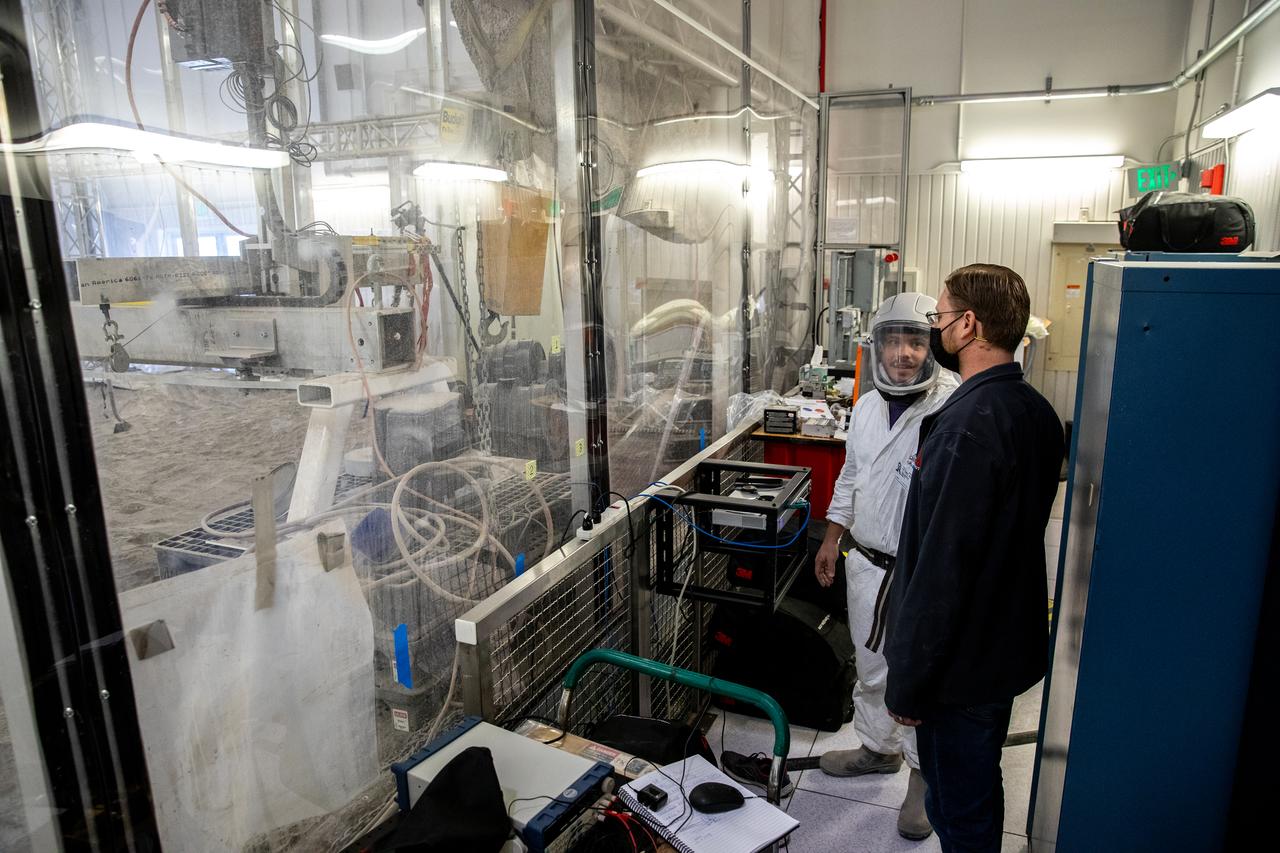
KSC · 2020-12-10 · KSC-20201210-PH-KLS01_0121
Astrobotic CubeRover Testing
Astrobotic employee Troy Arbuckle, at right, Planetary Mobility lead mechanical engineer, and NASA employee A.J. Nick, with Kennedy Space Center’s Exploration and Research and Technology programs, observe the…
Inspect NASA record
Astrobotic employee Troy Arbuckle, at right, Planetary Mobility lead mechanical engineer, and NASA employee A.J. Nick, with Kennedy Space Center’s Exploration and Research and Technology programs, observe the Astrobotic CubeRover during its test run in the Granular Mechanics and Regolith Operations Lab regolith bin at NASA’s Kennedy Space Center in Florida on Dec. 10, 2020. The regolith bin simulates the mechanical properties of the Moon’s surface. NASA and Astrobotic employees put the CubeRover through a series of more than 150 mobility tests over several days to evaluate and improve wheel design.
- Record ID
- KSC-20201210-PH-KLS01_0121
- NASA center
- KSC
- Date
- 2020-12-10
- Credit
- NASA/Kim Shiflett
- Keywords
- Astrobotic, CubeRover, KSC, Kennedy Space Center, Moon, NASA, SBIR, Small Business Innovation Research, lunar payload, mobility testing, regolith, robots
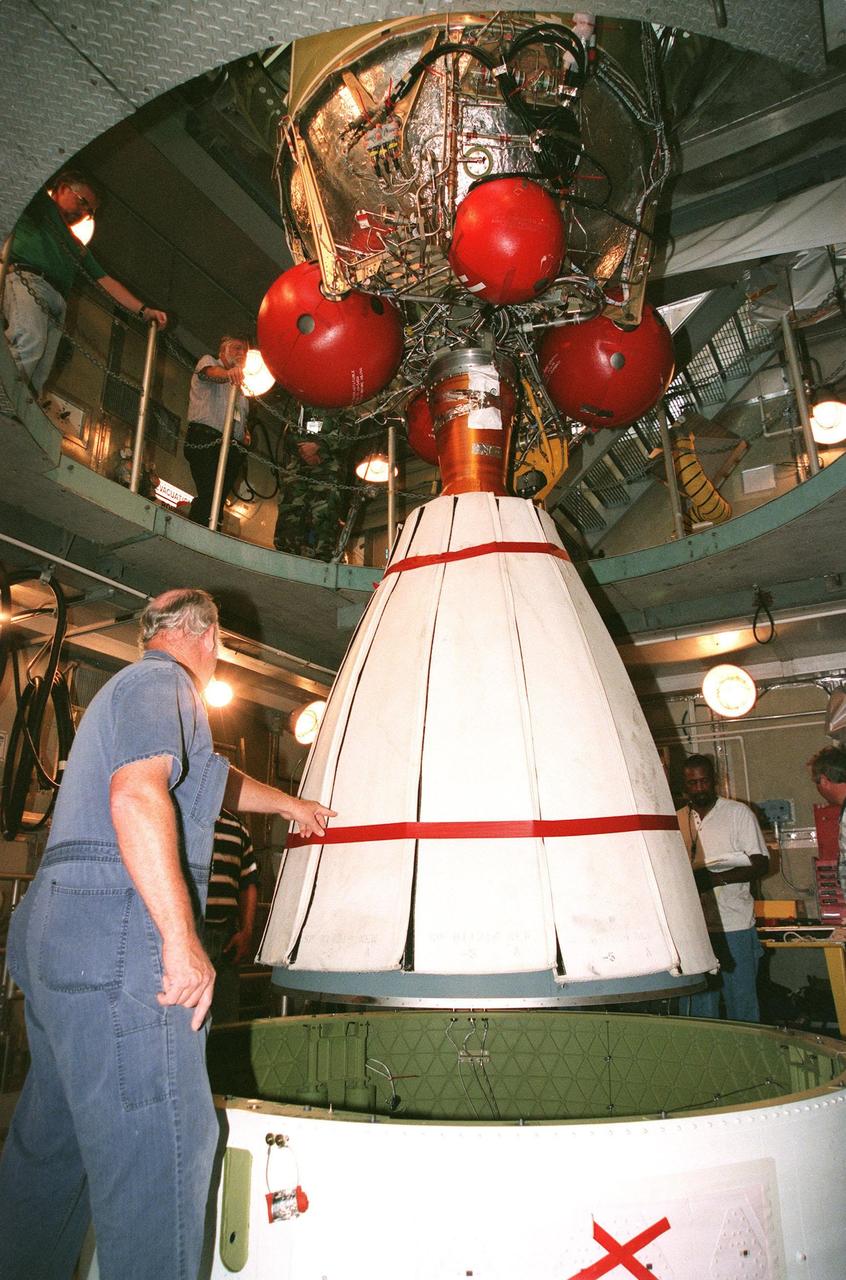
KSC · 1999-06-07 · KSC-99pp0656
KSC-99pp0656
Under the watchful eyes of workers at Launch Pad 17A, Cape Canaveral Air Station (CCAS), the second stage of a Boeing Delta II rocket is lowered toward the…
Inspect NASA record
Under the watchful eyes of workers at Launch Pad 17A, Cape Canaveral Air Station (CCAS), the second stage of a Boeing Delta II rocket is lowered toward the first stage below. The first and second stages will be mated for the launch, targeted on June 23 at CCAS, , of NASA's Far Ultraviolet Spectroscopic Explorer (FUSE) satellite. FUSE was developed by The Johns Hopkins University under contract to Goddard Space Flight Center, Greenbelt, Md., to investigate the origin and evolution of the lightest elements in the universe hydrogen and deuterium. In addition, the FUSE satellite will examine the forces and process involved in the evolution of the galaxies, stars and planetary systems by investigating light in the far ultraviolet portion of the electromagnetic spectrum
- Record ID
- KSC-99pp0656
- NASA center
- KSC
- Date
- 1999-06-07
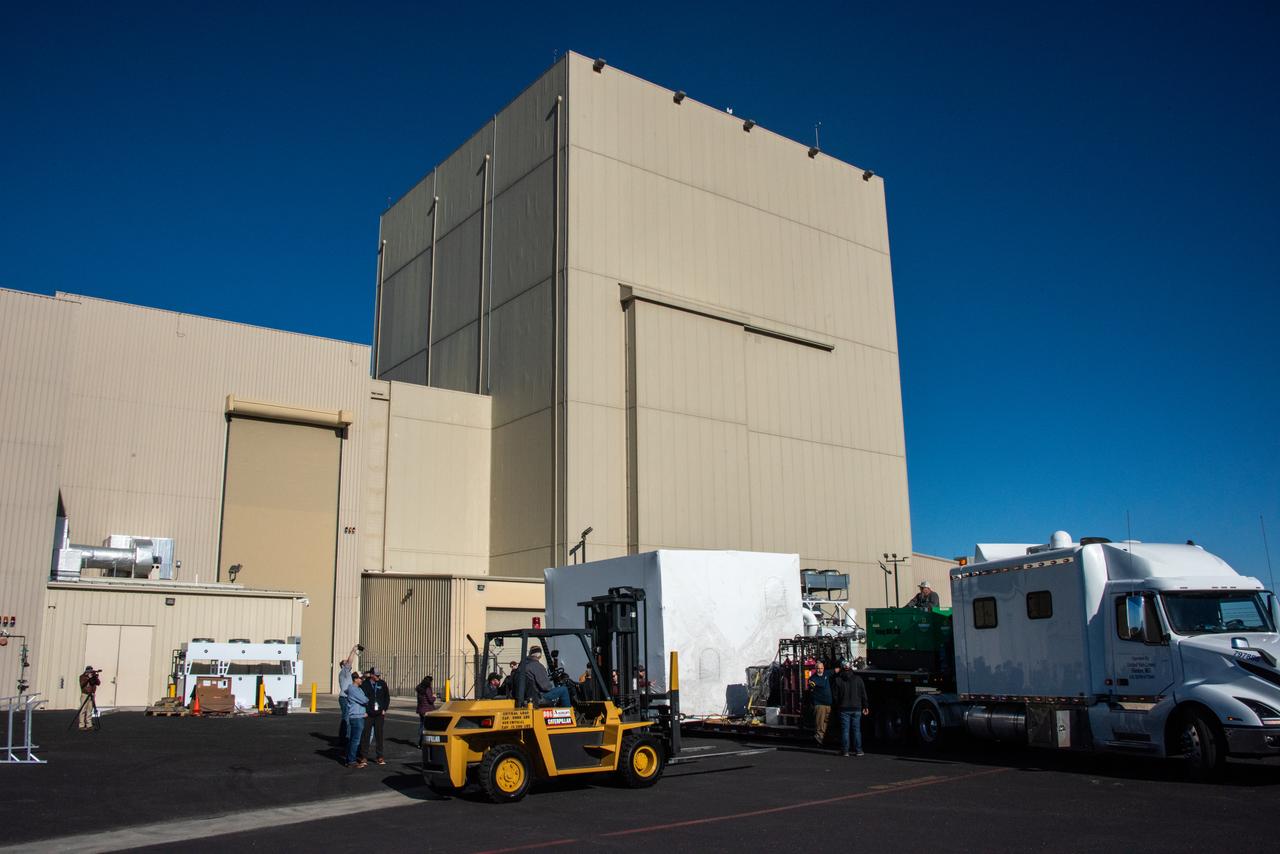
KSC · 2025-01-14 · KSC-20250114-PH-CNV01_0089
SPHEREx Spacecraft Arrival at Astrotech VSFB
A transport truck carrying NASA’s SPHEREx (Spectro-Photometer for the History of the Universe, Epoch of Reionization and Ices Explorer), a space telescope, arrives at Vandenberg Space Force Base…
Inspect NASA record
A transport truck carrying NASA’s SPHEREx (Spectro-Photometer for the History of the Universe, Epoch of Reionization and Ices Explorer), a space telescope, arrives at Vandenberg Space Force Base in California on Tuesday, Jan. 14, 2025. SPHEREx will enter a polar orbit around Earth and create a 3D map of the entire sky, gathering information about millions of galaxies for scientists to study what happened after the big bang, the history of galaxy evolution, and the origins of water in planetary systems in our galaxy. SPHEREx will launch aboard a SpaceX Falcon 9 rocket in late February 2025.
- Record ID
- KSC-20250114-PH-CNV01_0089
- NASA center
- KSC
- Date
- 2025-01-14
- Credit
- USSF 30th Space Wing/Carlos Vela
- Keywords
- Astrotech Space Operations, Epoch of, KSC, Kennedy Space Center, LSP, Launch Services Program, NASA, National Aeronautical and Space Administration, SPHEREx, SpaceX Falcon 9, Spectro-Photometer for the History of the Universe, Vandenberg Space Force Base