
Update Site (from NASA)
Explore NASA’s Image and Video Library.
Suggest one object per day for the Interstellar Minds collection. We review each suggestion before adding it.
Sign in to suggest a Marvel.
Find a NASA image ID. Open a NASA record and copy its ID from the end of the details URL.
NASA image records
JSC · 2026-04-06 · jsc2026e020490
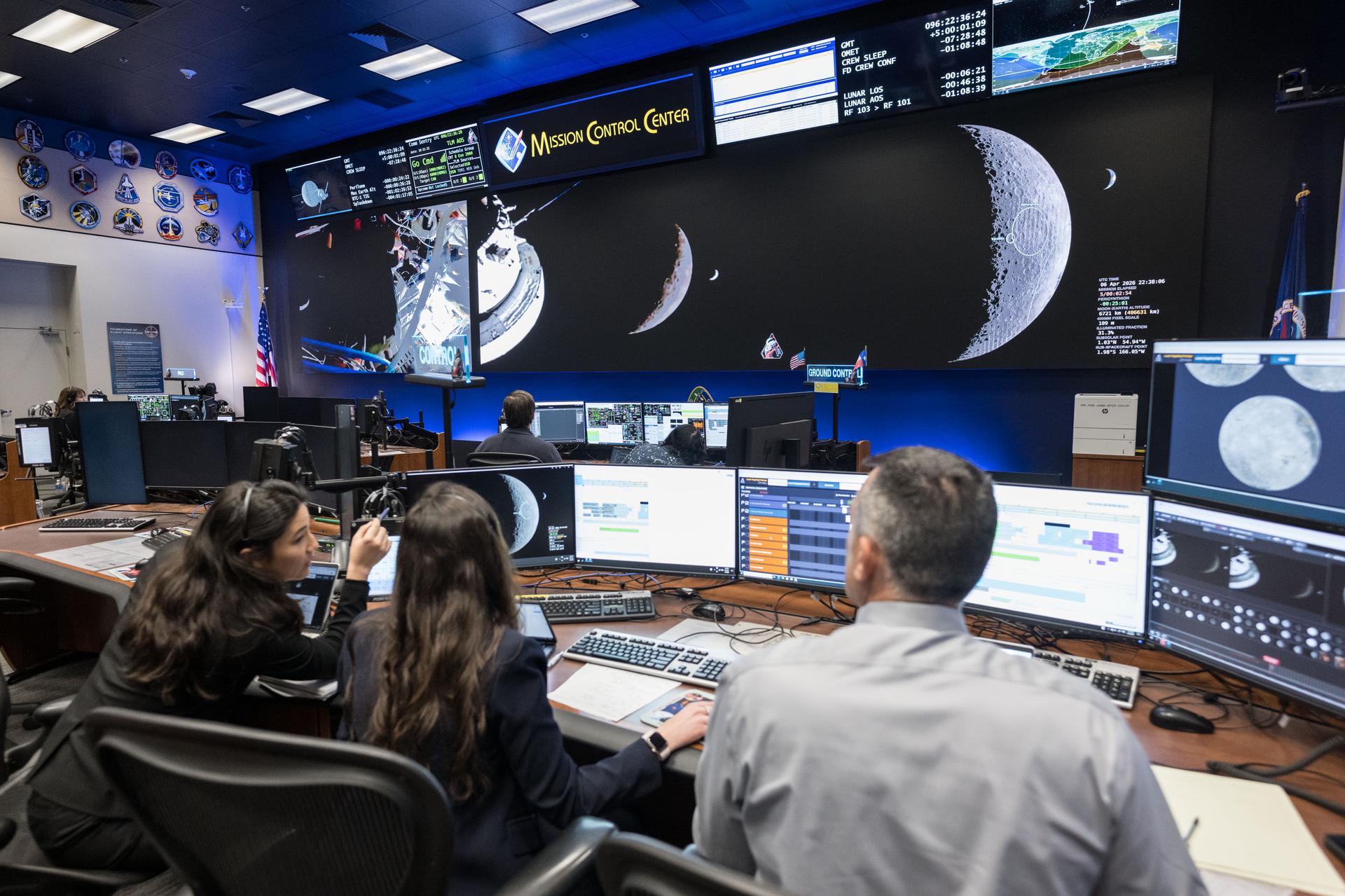
Science Officers in Mission Control
jsc2026e020490 (April 6, 2026) - Pictured from left to right, Angela Garcia, Dr. Kelsey Young, and Dr. Trevor Graff, the first science officers of the Artemis program in…
Inspect NASA record
jsc2026e020490 (April 6, 2026) - Pictured from left to right, Angela Garcia, Dr. Kelsey Young, and Dr. Trevor Graff, the first science officers of the Artemis program in the White Flight Control Room in the Christopher C. Kraft Jr. Mission Control Center at NASA’s Johnson Space Center. Seen here about ten minutes before Earthset during Artemis II, these science officers are seen monitoring mission data in real-time from the Science console. They support flight controllers by analyzing scientific measurements and system performance. Their work helps ensure mission objectives are achieved safely and efficiently. Credit: NASA
- Record ID
- jsc2026e020490
- NASA center
- JSC
- Date
- 2026-04-06
- Credit
- ROBERT MARKOWITZ NASA-JSC
- Keywords
- Artemis, Artemis II, Mission Control Center, Johnson Space Center, JSC, Lunar Flyby, Science
AFRC · 2018-01-31 · AFRC2018-0020-02
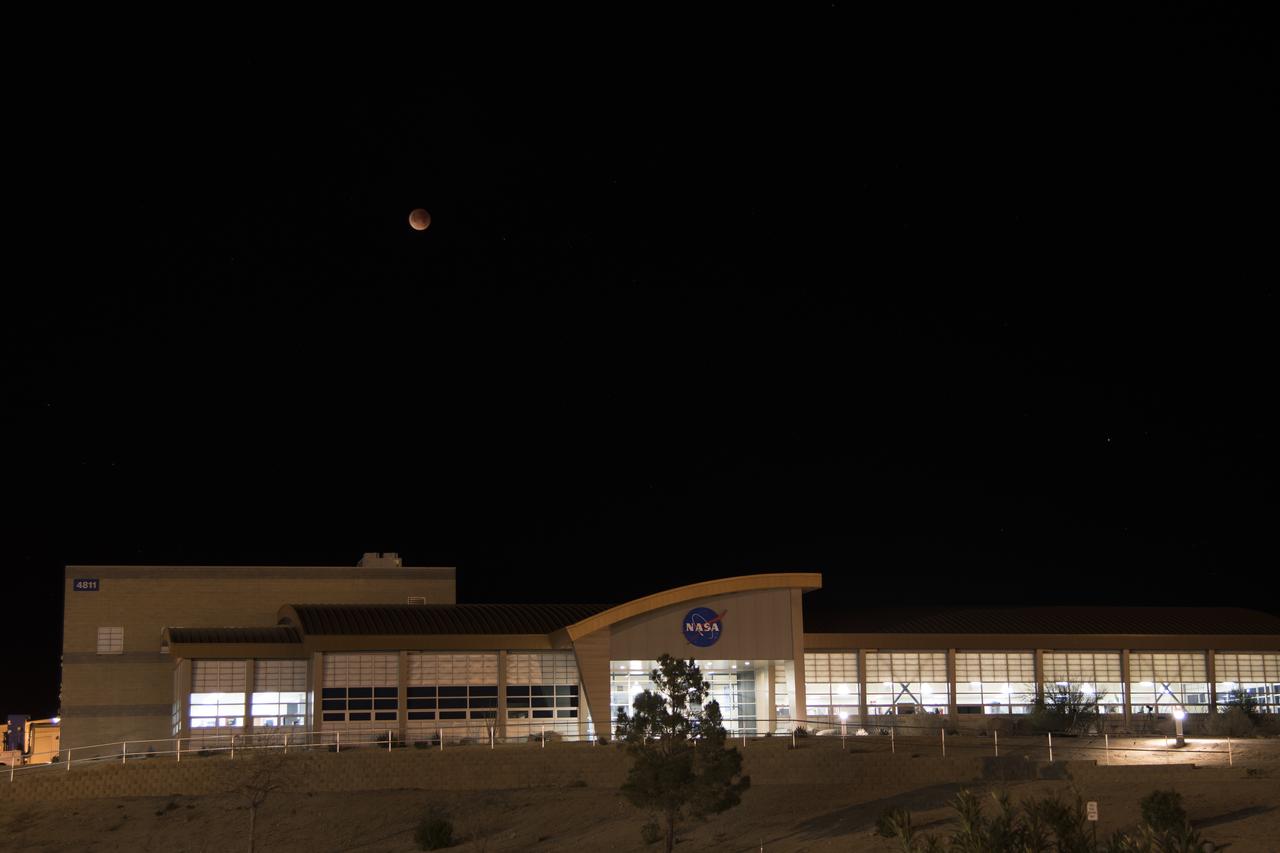
Image shows January 31 Super Blue Blood Moon starting the lunar eclipse over NASA Armstrong Flight Research Center's mission support building located in California.
California's NASA Armstrong Flight Research Center photographer Carla Thomas takes photos on January 31 of the rare opportunity to capture a supermoon, a blue moon and a lunar…
Inspect NASA record
California's NASA Armstrong Flight Research Center photographer Carla Thomas takes photos on January 31 of the rare opportunity to capture a supermoon, a blue moon and a lunar eclipse at the same time. A supermoon occurs when the Moon is closer to Earth in its orbit and appearing 14 percent brighter than usual. As the second full moon of the month, this moon is also commonly known as a blue moon, though it will not be blue in appearance. The super blue moon passed through Earth's shadow and took on a reddish tint, known as a blood moon. This total lunar eclipse occurs when the Sun, Earth, and a full moon form a near-perfect lineup in space. The Moon passes directly behind the Earth into its umbra (shadow).
- Record ID
- AFRC2018-0020-02
- NASA center
- AFRC
- Date
- 2018-01-31
- Credit
- NASA/Carla Thomas
- Keywords
- AFRC, Armstrong Flight Research Center, photographer, photos, rare opportunity, supermoon, blue moon, Earth’s shadows, reddish tint, blood moon, eclipse, total lunar eclipse
JSC · 1971-01-29 · S71-16722
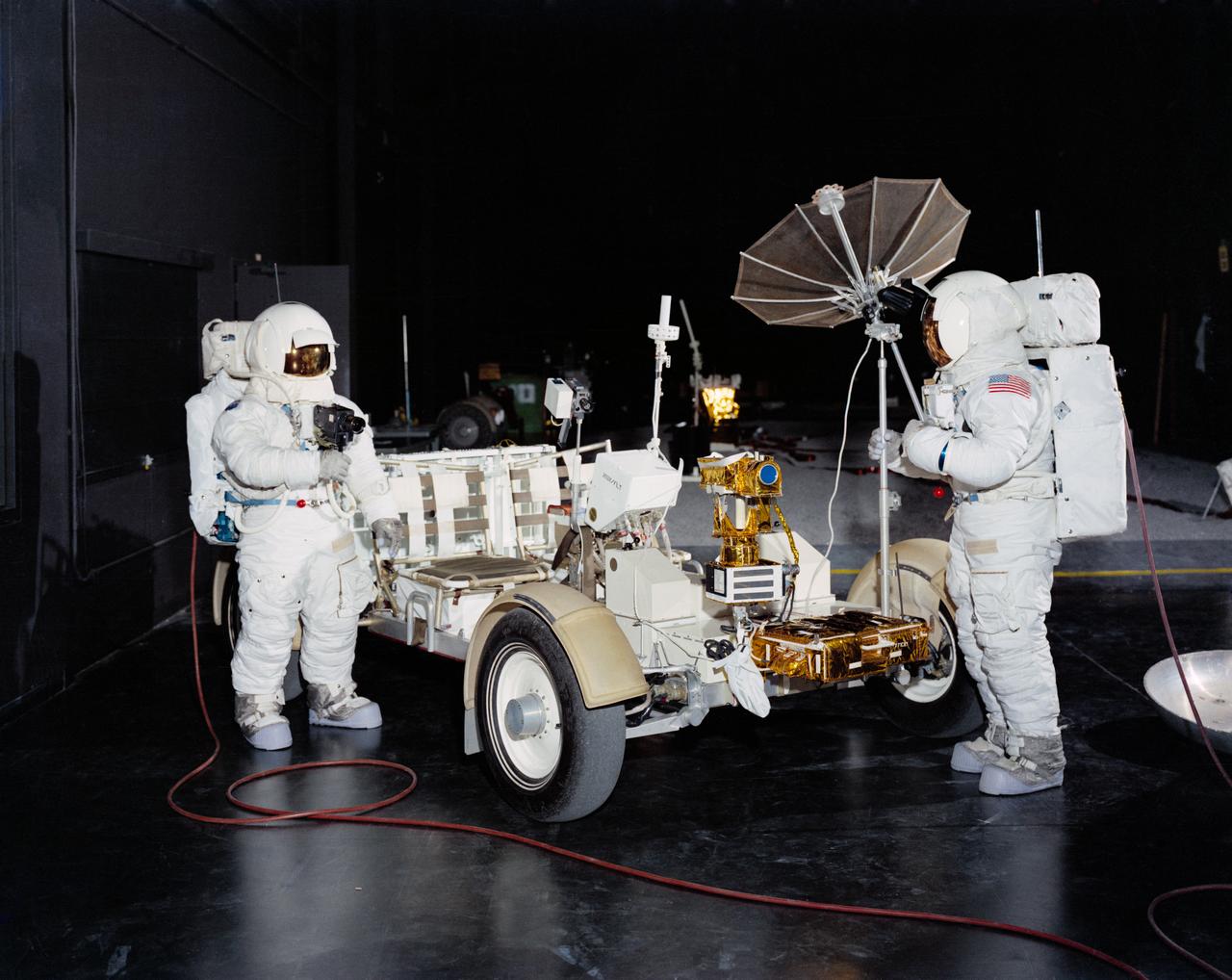
Members of Apollo 15 crew shown with Lunar Roving Vehicle One-G trainer
S71-16722 (January 1971) --- Two members of the prime crew of the Apollo 15 lunar landing mission are shown with the Lunar Roving Vehicle "one G" trainer in…
Inspect NASA record
S71-16722 (January 1971) --- Two members of the prime crew of the Apollo 15 lunar landing mission are shown with the Lunar Roving Vehicle "one G" trainer in Building 5, Mission Simulation and Training Facility, Manned Spacecraft Center. Astronaut David R. Scott (on right) is the Apollo 15 commander; and astronaut James B. Irwin is the lunar module pilot. A Lunar Roving Vehicle similar to this trainer will be used by Scott and Irwin during their Apollo 15 lunar surface extravehicular activity.
- Record ID
- S71-16722
- NASA center
- JSC
- Date
- 1971-01-29
- Keywords
- APOLLO 15 FLIGHT, APOLLO PROJECT, ASTRONAUT TRAINING, ASTRONAUTS, FACILITIES EXTRAVEHICULAR ACTIVITY, JOHNSON SPACE CENTER, LUNAR ROVING VEHICLES, TEXAS SIMULATORS, TRAINERS

JSC · 1971-02-19 · S71-20374
Apollo 14 crewmen show off lunar rocks during meeting with newsmen
The two moon-exploring crewmen of the Apollo 14 lunar landing mission show off some of the largest of the lunar rocks they collected on their mission, during a…
Inspect NASA record
The two moon-exploring crewmen of the Apollo 14 lunar landing mission show off some of the largest of the lunar rocks they collected on their mission, during a through-the-glass meeting with newsmen in the Crew Reception Area of the Lunar Receiving Laboratory (LRL) at the Manned Spacecraft Center (MSC). Astronaut Edgar D. Mitchell (left), lunar module pilot, holds up a tote bag in which some of the lunar samples were stowed, while astronaut Alan B. Shepard Jr., commander, looks on. The largest sample brought back on the mission, a basketball-size rock (nicknamed "Big Bertha"), is said to be the largest lunar rock collected in three lunar landing missions for the National Aeronautics and Space Administration (NASA).
- Record ID
- S71-20374
- NASA center
- JSC
- Date
- 1971-02-19
- Keywords
- APOLLO 14, APOLLO PROJECT, ASTRONAUTS, CONFERENCES, JOHNSON SPACE CENTER, LABORATORIES, LUNAR ROCKS, NEWS MEDIA, SAMPLES, TEXAS