
Update Site (from NASA)
Explore NASA’s Image and Video Library.
Suggest one object per day for the Interstellar Minds collection. We review each suggestion before adding it.
Sign in to suggest a Marvel.
Find a NASA image ID. Open a NASA record and copy its ID from the end of the details URL.
NASA image records
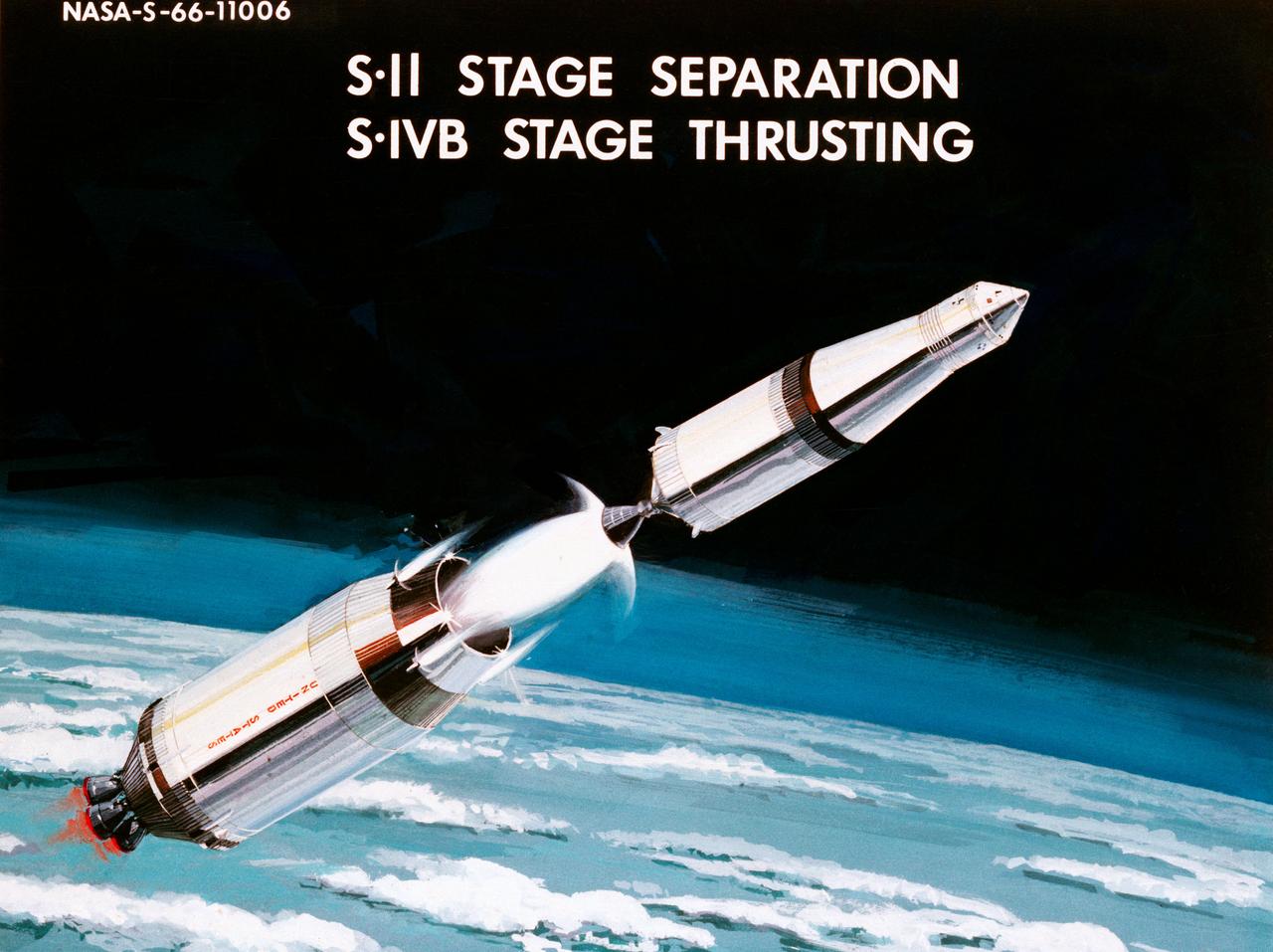
JSC · 1965-12-01 · s66-11006
Artist Concepts - Apollo - MSC
Artist Concepts, Apollo Mission: S66-10983: Ascent Stage Liftoff (S66-05094) S66-10984: Orientation During Ascent Phase (S66-05098) S66-10985: Midcourse Coast (S66-05113) S66-10986: Survey of Landing Site (S66-05117) S66-10987: Lunar Module…
Inspect NASA record
Artist Concepts, Apollo Mission: S66-10983: Ascent Stage Liftoff (S66-05094) S66-10984: Orientation During Ascent Phase (S66-05098) S66-10985: Midcourse Coast (S66-05113) S66-10986: Survey of Landing Site (S66-05117) S66-10987: Lunar Module (LM) Jettison (S66-05089) S66-10988: Trans-Earth Injection (S66-05090) S66-10989: Exploration on Lunar Surface Apollo Surface Lunar Exploration Experiment (ASLEP) S66-10990: Liftoff (S66-05125) S66-10991: Command Module (CM)-Service Module (SM) Separation (S66-05101 N/F) S66-10992: Touchdown on Lunar Surface (S66-05115) S66-10993: Transfer Orbit Insertion (S66-05111) S66-10994: Drogue Parachute Deployment S66-10995: S-IC Stage Separation S-II Stage Thrusting (S66-05099) S66-10996: Jettison Launch Escape System (S66-05114) S66-10997: Main Parachute Deployment (S66-05091) S66-10998: Mid-course correction (S66-05088) S66-10999: Lunar Orbit Insertion (S66-05086) S66-11000: Command Service Module (CSM)-LM Docked in LM Adapter-S-IVB (S66-06526) S66-11001: Docking and Separation of spacecraft from S-IVB (S66-05107) S66-11002: Final Descent (S66-05096) S66-11003: Entry into Earth Atmosphere (S66-05096) S66-11004: Deploy S/C LM Adapter-Separate CSM from LM-S-IVB (S66-06525 & 05105) S66-11005: Turnaround of CSM (S66-05104) S66-11006: S-II Stage Separation S-IVB Stage Thrusting (S66-05102) S66-11007: LM Ascent CSM Docked (S66-05100) S66-11008: Midcourse Correction SPS Mode (S66-05106) S66-11009: Earth Orbit Insertion of S-IVB & S/C (S66-05092) S66-11010: Trans-lunar Injection (S66-05116) S66-11011: LM Descent (S66-05110) S66-11012: S-IVB Stage Operations (S66-05112 N/F) S66-11013: Spacecraft Recovery (S66-05126) S66-11014: Lunar Orbit (S66-05103) S66-11015: CSM-LM Docking (S66-05095) S66-11016: Entry CM (S66-5109) S66-11017: Midcourse Corrections to Lunar Landing (S66-08486) S66-11018: Midcourse Corrections to Lunar Landing w/Overlay (S66-05083) S66-11019: Earth Launch Phase w/Overlay (S66-08485 & 05119) S66-11020: Earth Launch Phase (S66-08487 & S66-05084) S66-11022: Apollo Vehicles (S66-05127) S66-11024: Transfer to LM (S66-05082) S66-11025: Lunar Launch Phase S66-11027: Trans-earth Separation of C/M from S/M-C/M return to Earth (S66-05097) S66-11028: CSM-LM Separation, LM Descent to Moon (S66-05108) MSC, Houston, TX Also available in B&W 12/1965 - 06/1966
- Record ID
- s66-11006
- NASA center
- JSC
- Date
- 1965-12-01
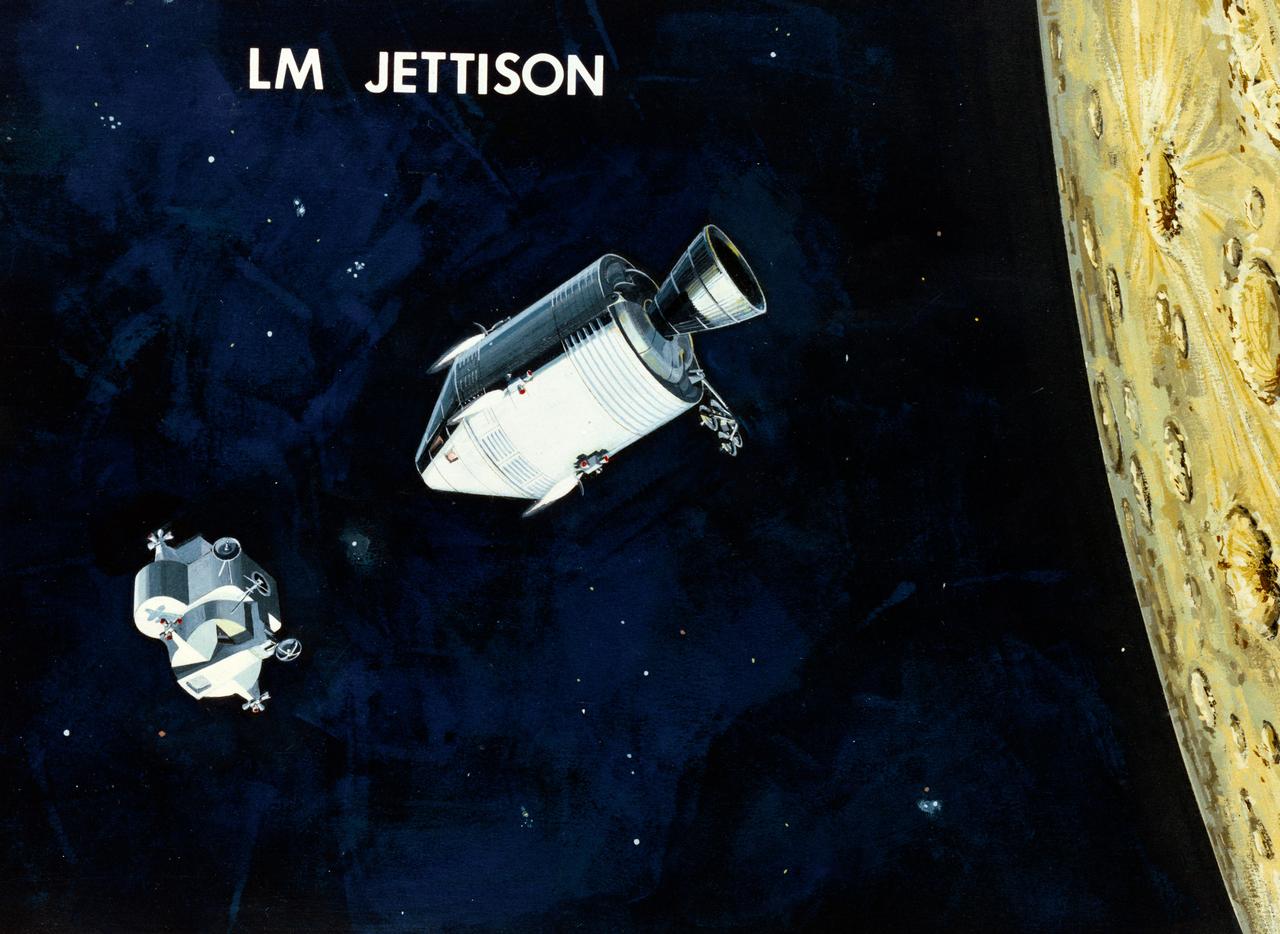
JSC · 1965-12-01 · s66-10987
Artist Concepts - Apollo - MSC
Artist Concepts, Apollo Mission: S66-10983: Ascent Stage Liftoff (S66-05094) S66-10984: Orientation During Ascent Phase (S66-05098) S66-10985: Midcourse Coast (S66-05113) S66-10986: Survey of Landing Site (S66-05117) S66-10987: Lunar Module…
Inspect NASA record
Artist Concepts, Apollo Mission: S66-10983: Ascent Stage Liftoff (S66-05094) S66-10984: Orientation During Ascent Phase (S66-05098) S66-10985: Midcourse Coast (S66-05113) S66-10986: Survey of Landing Site (S66-05117) S66-10987: Lunar Module (LM) Jettison (S66-05089) S66-10988: Trans-Earth Injection (S66-05090) S66-10989: Exploration on Lunar Surface Apollo Surface Lunar Exploration Experiment (ASLEP) S66-10990: Liftoff (S66-05125) S66-10991: Command Module (CM)-Service Module (SM) Separation (S66-05101 N/F) S66-10992: Touchdown on Lunar Surface (S66-05115) S66-10993: Transfer Orbit Insertion (S66-05111) S66-10994: Drogue Parachute Deployment S66-10995: S-IC Stage Separation S-II Stage Thrusting (S66-05099) S66-10996: Jettison Launch Escape System (S66-05114) S66-10997: Main Parachute Deployment (S66-05091) S66-10998: Mid-course correction (S66-05088) S66-10999: Lunar Orbit Insertion (S66-05086) S66-11000: Command Service Module (CSM)-LM Docked in LM Adapter-S-IVB (S66-06526) S66-11001: Docking and Separation of spacecraft from S-IVB (S66-05107) S66-11002: Final Descent (S66-05096) S66-11003: Entry into Earth Atmosphere (S66-05096) S66-11004: Deploy S/C LM Adapter-Separate CSM from LM-S-IVB (S66-06525 & 05105) S66-11005: Turnaround of CSM (S66-05104) S66-11006: S-II Stage Separation S-IVB Stage Thrusting (S66-05102) S66-11007: LM Ascent CSM Docked (S66-05100) S66-11008: Midcourse Correction SPS Mode (S66-05106) S66-11009: Earth Orbit Insertion of S-IVB & S/C (S66-05092) S66-11010: Trans-lunar Injection (S66-05116) S66-11011: LM Descent (S66-05110) S66-11012: S-IVB Stage Operations (S66-05112 N/F) S66-11013: Spacecraft Recovery (S66-05126) S66-11014: Lunar Orbit (S66-05103) S66-11015: CSM-LM Docking (S66-05095) S66-11016: Entry CM (S66-5109) S66-11017: Midcourse Corrections to Lunar Landing (S66-08486) S66-11018: Midcourse Corrections to Lunar Landing w/Overlay (S66-05083) S66-11019: Earth Launch Phase w/Overlay (S66-08485 & 05119) S66-11020: Earth Launch Phase (S66-08487 & S66-05084) S66-11022: Apollo Vehicles (S66-05127) S66-11024: Transfer to LM (S66-05082) S66-11025: Lunar Launch Phase S66-11027: Trans-earth Separation of C/M from S/M-C/M return to Earth (S66-05097) S66-11028: CSM-LM Separation, LM Descent to Moon (S66-05108) MSC, Houston, TX Also available in B&W 12/1965 - 06/1966
- Record ID
- s66-10987
- NASA center
- JSC
- Date
- 1965-12-01
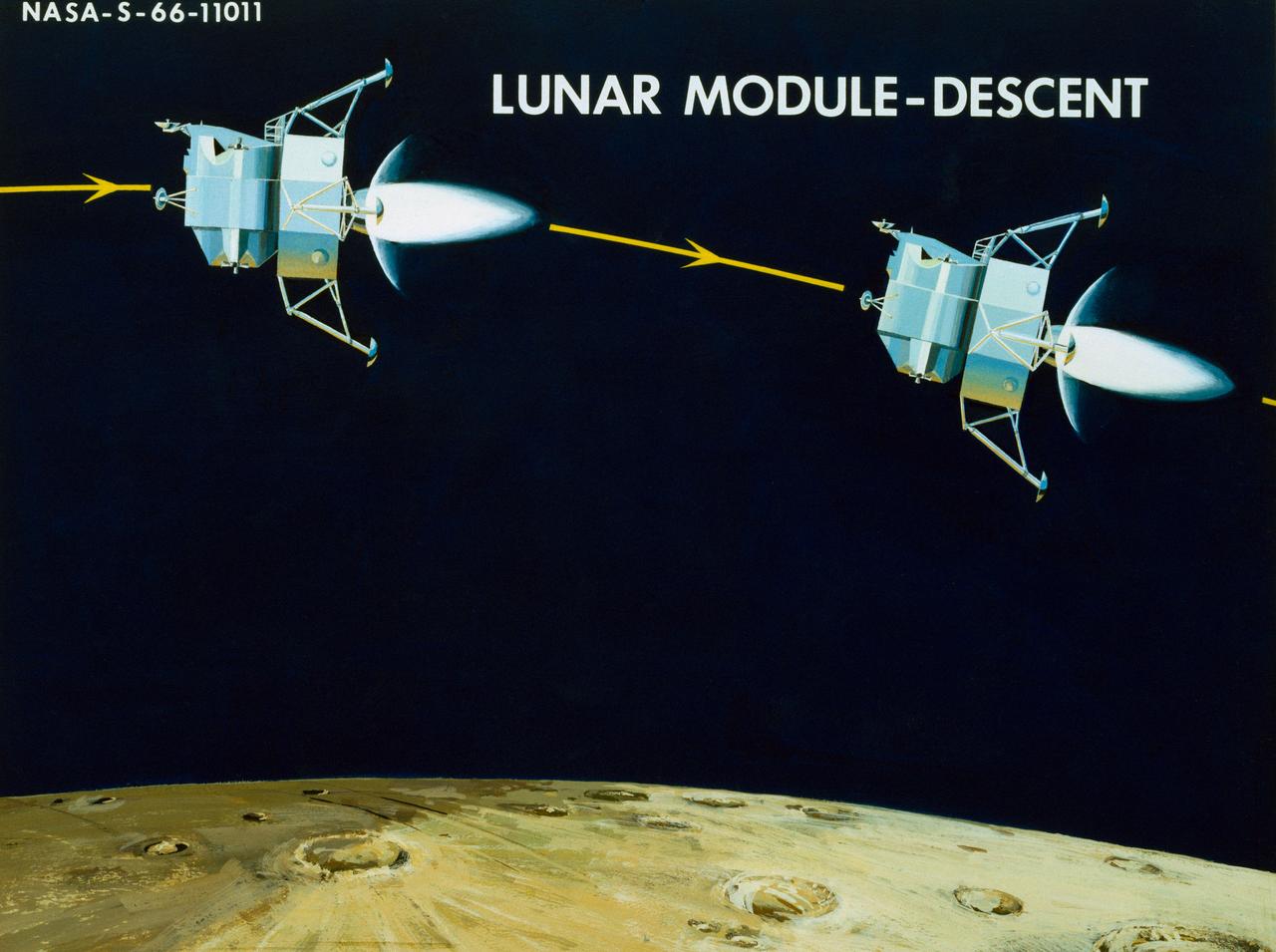
JSC · 1965-12-01 · s66-11011
Artist Concepts - Apollo - MSC
Artist Concepts, Apollo Mission: S66-10983: Ascent Stage Liftoff (S66-05094) S66-10984: Orientation During Ascent Phase (S66-05098) S66-10985: Midcourse Coast (S66-05113) S66-10986: Survey of Landing Site (S66-05117) S66-10987: Lunar Module…
Inspect NASA record
Artist Concepts, Apollo Mission: S66-10983: Ascent Stage Liftoff (S66-05094) S66-10984: Orientation During Ascent Phase (S66-05098) S66-10985: Midcourse Coast (S66-05113) S66-10986: Survey of Landing Site (S66-05117) S66-10987: Lunar Module (LM) Jettison (S66-05089) S66-10988: Trans-Earth Injection (S66-05090) S66-10989: Exploration on Lunar Surface Apollo Surface Lunar Exploration Experiment (ASLEP) S66-10990: Liftoff (S66-05125) S66-10991: Command Module (CM)-Service Module (SM) Separation (S66-05101 N/F) S66-10992: Touchdown on Lunar Surface (S66-05115) S66-10993: Transfer Orbit Insertion (S66-05111) S66-10994: Drogue Parachute Deployment S66-10995: S-IC Stage Separation S-II Stage Thrusting (S66-05099) S66-10996: Jettison Launch Escape System (S66-05114) S66-10997: Main Parachute Deployment (S66-05091) S66-10998: Mid-course correction (S66-05088) S66-10999: Lunar Orbit Insertion (S66-05086) S66-11000: Command Service Module (CSM)-LM Docked in LM Adapter-S-IVB (S66-06526) S66-11001: Docking and Separation of spacecraft from S-IVB (S66-05107) S66-11002: Final Descent (S66-05096) S66-11003: Entry into Earth Atmosphere (S66-05096) S66-11004: Deploy S/C LM Adapter-Separate CSM from LM-S-IVB (S66-06525 & 05105) S66-11005: Turnaround of CSM (S66-05104) S66-11006: S-II Stage Separation S-IVB Stage Thrusting (S66-05102) S66-11007: LM Ascent CSM Docked (S66-05100) S66-11008: Midcourse Correction SPS Mode (S66-05106) S66-11009: Earth Orbit Insertion of S-IVB & S/C (S66-05092) S66-11010: Trans-lunar Injection (S66-05116) S66-11011: LM Descent (S66-05110) S66-11012: S-IVB Stage Operations (S66-05112 N/F) S66-11013: Spacecraft Recovery (S66-05126) S66-11014: Lunar Orbit (S66-05103) S66-11015: CSM-LM Docking (S66-05095) S66-11016: Entry CM (S66-5109) S66-11017: Midcourse Corrections to Lunar Landing (S66-08486) S66-11018: Midcourse Corrections to Lunar Landing w/Overlay (S66-05083) S66-11019: Earth Launch Phase w/Overlay (S66-08485 & 05119) S66-11020: Earth Launch Phase (S66-08487 & S66-05084) S66-11022: Apollo Vehicles (S66-05127) S66-11024: Transfer to LM (S66-05082) S66-11025: Lunar Launch Phase S66-11027: Trans-earth Separation of C/M from S/M-C/M return to Earth (S66-05097) S66-11028: CSM-LM Separation, LM Descent to Moon (S66-05108) MSC, Houston, TX Also available in B&W 12/1965 - 06/1966
- Record ID
- s66-11011
- NASA center
- JSC
- Date
- 1965-12-01
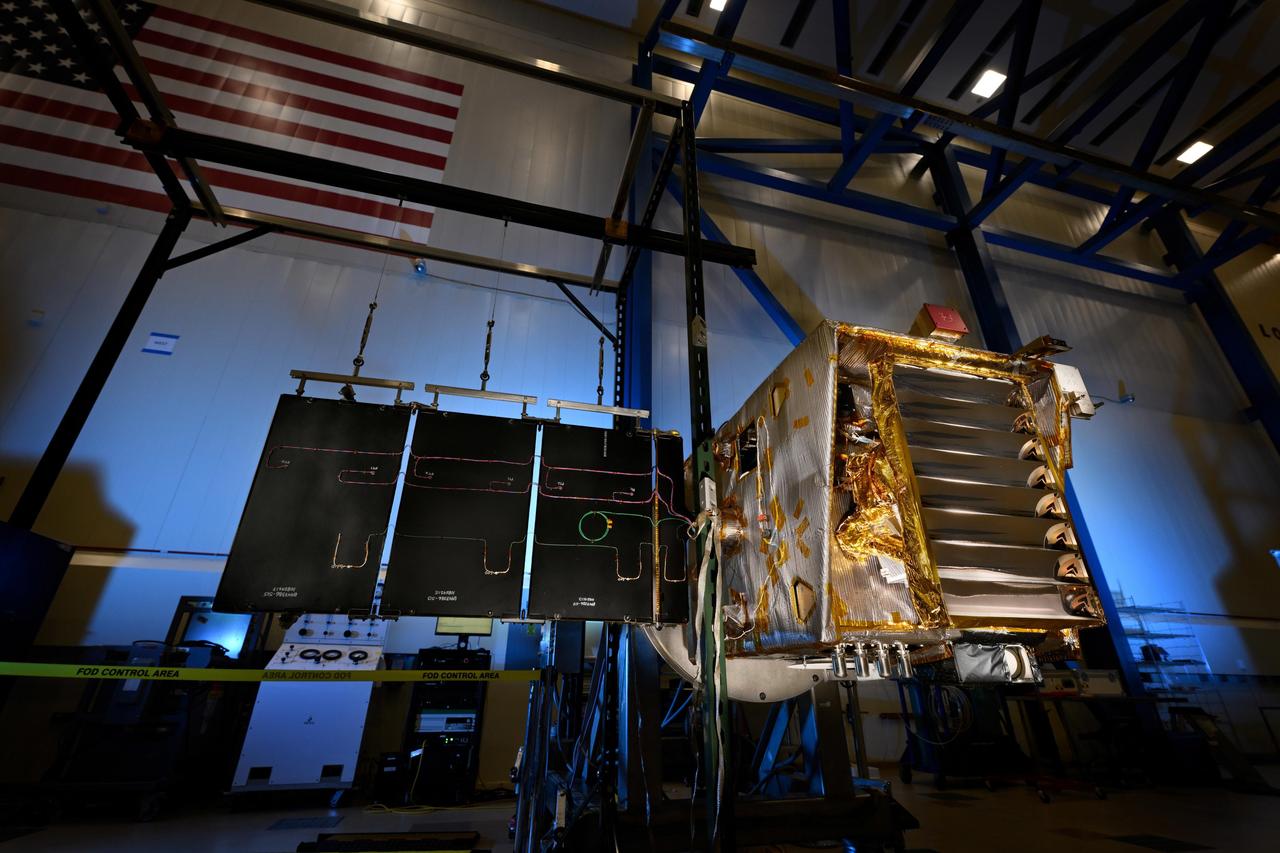
JPL · 2024-09-11 · PIA26390
NASA's Lunar Trailblazer Deploys Its Solar Arrays After Testing
NASA's Lunar Trailblazer spacecraft sits in a clean room in August 2024 after undergoing environmental testing at Lockheed Martin Space in Littleton, Colorado. Now that those tests are…
Inspect NASA record
NASA's Lunar Trailblazer spacecraft sits in a clean room in August 2024 after undergoing environmental testing at Lockheed Martin Space in Littleton, Colorado. Now that those tests are done, the orbiter and its science instruments will go through flight system software tests that simulate key aspects of launch, maneuvers, and the science mission while in orbit around the Moon. This photo shows Lunar Trailblazer with a solar array deployed. The large silver grate attached to the spacecraft is the radiator for the High-resolution Volatiles and Minerals Moon Mapper (HVM³) instrument. HVM³ is one of two instruments that will be used by the mission to detect and map water on the Moon's surface to determine its abundance, location, form, and how it changes over time. This data will be key to our understanding of this crucial resource on the Moon for future exploration. The spacecraft is just 440 pounds (200 kilograms) and 11.5 feet (3.5 meters) wide with its solar panels fully deployed. The project is led by Principal Investigator Bethany Ehlmann of Caltech and managed by NASA's Jet Propulsion Laboratory in Southern California, which is also providing systems engineering, navigation, and mission assurance. Caltech manages JPL for the agency. Lunar Trailblazer is part of NASA's Small Innovative Missions for Planetary Exploration (SIMPLEx) program, which provides opportunities for low-cost, high-risk science missions that are responsive to requirements for flexibility. These lower-cost missions serve as an ideal platform for technical and architecture innovation, contributing to NASA's science research and technology development objectives. SIMPLEx mission investigations are managed by the Planetary Missions Program Office at NASA's Marshall Space Flight Center in Huntsville, Alabama, as part of the Discovery Program at NASA Headquarters in Washington. IPAC leads mission operations, including planning, scheduling, and sequencing all science and spacecraft activities. https://photojournal.jpl.nasa.gov/catalog/PIA26390
- Record ID
- PIA26390
- NASA center
- JPL
- Date
- 2024-09-11
- Credit
- Lockheed Martin Space
- Keywords
- Lunar Trailblazer

LRC · 1961-12-05 · LRC-1961-B701_P-08035
Apollo - LOLA Project
Project LOLA. Test subject sitting at the controls: Project LOLA or Lunar Orbit and Landing Approach was a simulator built at Langley to study problems related to landing…
Inspect NASA record
Project LOLA. Test subject sitting at the controls: Project LOLA or Lunar Orbit and Landing Approach was a simulator built at Langley to study problems related to landing on the lunar surface. It was a complex project that cost nearly 2 million dollars. James Hansen wrote: This simulator was designed to provide a pilot with a detailed visual encounter with the lunar surface the machine consisted primarily of a cockpit, a closed-circuit TV system, and four large murals or scale models representing portions of the lunar surface as seen from various altitudes. The pilot in the cockpit moved along a track past these murals which would accustom him to the visual cues for controlling a spacecraft in the vicinity of the moon. Unfortunately, such a simulation--although great fun and quite aesthetic--was not helpful because flight in lunar orbit posed no special problems other than the rendezvous with the LEM, which the device did not simulate. Not long after the end of Apollo, the expensive machine was dismantled. (p. 379) Ellis J. White wrote in his paper, Discussion of Three Typical Langley Research Center Simulation Programs : A typical mission would start with the first cart positioned on model 1 for the translunar approach and orbit establishment. After starting the descent, the second cart is readied on model 2 and, at the proper time, when superposition occurs, the pilot s scene is switched from model 1 to model 2. then cart 1 is moved to and readied on model 3. The procedure continues until an altitude of 150 feet is obtained. The cabin of the LM vehicle has four windows which represent a 45 degree field of view. The projection screens in front of each window represent 65 degrees which allows limited head motion before the edges of the display can be seen. The lunar scene is presented to the pilot by rear projection on the screens with four Schmidt television projectors. The attitude orientation of the vehicle is represented by changing the lunar scene through the portholes determined by the scan pattern of four orthicons. The stars are front projected onto the upper three screens with a four-axis starfield generation (starball) mounted over the cabin and there is a separate starball for the low window. -- Published in James R. Hansen, Spaceflight Revolution: NASA Langley Research Center From Sputnik to Apollo, (Washington: NASA, 1995), p. 379 Ellis J. White, Discussion of Three Typical Langley Research Center Simulation Programs, Paper presented at the Eastern Simulation Council (EAI s Princeton Computation Center), Princeton, NJ, October 20, 1966.
- Record ID
- LRC-1961-B701_P-08035
- NASA center
- LRC
- Date
- 1961-12-05
- Credit
- Bob Nye
- Keywords
- LaRC, NASA Langley, LRC-1961-B701_P-08035, lola, project, luna, lunar, moon, orbit, landing, approach, simulator
LRC · 1961-07-23 · LRC-1961-B701_P-05040
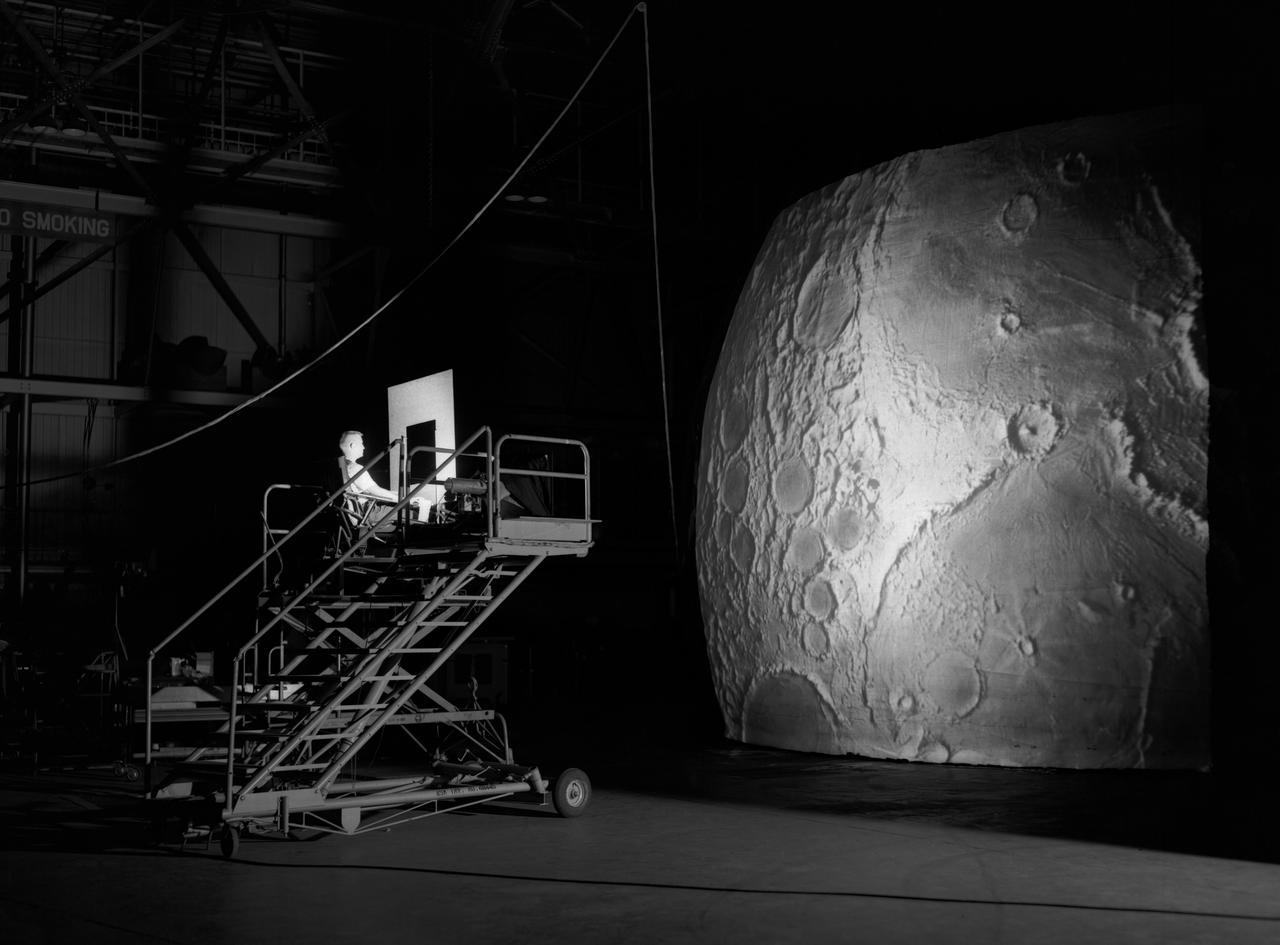
Project LOLA or Lunar Orbit and Landing Approach was a simulator built at Langley
Test subject sitting at the controls: Project LOLA or Lunar Orbit and Landing Approach was a simulator built at Langley to study problems related to landing on the…
Inspect NASA record
Test subject sitting at the controls: Project LOLA or Lunar Orbit and Landing Approach was a simulator built at Langley to study problems related to landing on the lunar surface. It was a complex project that cost nearly $2 million dollars. James Hansen wrote: "This simulator was designed to provide a pilot with a detailed visual encounter with the lunar surface; the machine consisted primarily of a cockpit, a closed-circuit TV system, and four large murals or scale models representing portions of the lunar surface as seen from various altitudes. The pilot in the cockpit moved along a track past these murals which would accustom him to the visual cues for controlling a spacecraft in the vicinity of the moon. Unfortunately, such a simulation--although great fun and quite aesthetic--was not helpful because flight in lunar orbit posed no special problems other than the rendezvous with the LEM, which the device did not simulate. Not long after the end of Apollo, the expensive machine was dismantled." (p. 379) Ellis J. White further described this simulator in his paper , "Discussion of Three Typical Langley Research Center Simulation Programs," (Paper presented at the Eastern Simulation Council (EAI's Princeton Computation Center), Princeton, NJ, October 20, 1966.) "A typical mission would start with the first cart positioned on model 1 for the translunar approach and orbit establishment. After starting the descent, the second cart is readied on model 2 and, at the proper time, when superposition occurs, the pilot's scene is switched from model 1 to model 2. then cart 1 is moved to and readied on model 3. The procedure continues until an altitude of 150 feet is obtained. The cabin of the LM vehicle has four windows which represent a 45 degree field of view. The projection screens in front of each window represent 65 degrees which allows limited head motion before the edges of the display can be seen. The lunar scene is presented to the pilot by rear projection on the screens with four Schmidt television projectors. The attitude orientation of the vehicle is represented by changing the lunar scene through the portholes determined by the scan pattern of four orthicons. The stars are front projected onto the upper three screens with a four-axis starfield generation (starball) mounted over the cabin and there is a separate starball for the low window." -- Published in James R. Hansen, Spaceflight Revolution: NASA Langley Research Center From Sputnik to Apollo, (Washington: NASA, 1995), p. 379.
- Record ID
- LRC-1961-B701_P-05040
- NASA center
- LRC
- Date
- 1961-07-23
- Credit
- NASA
- Keywords
- LRC, LaRC, NASA Langley, LRC-1961-B701_P-05040, Project Apollo, EL-2002-00337, 1961-L-05040
KSC · 2019-05-23 · KSC-20190523-PH_KLS01_0045
Apollo 11 Media Day
NASA Administrator Jim Bridenstine, at the podium, speaks to members of the news media at the NASA News Center on May 23, 2019. At left is Kennedy Space…
Inspect NASA record
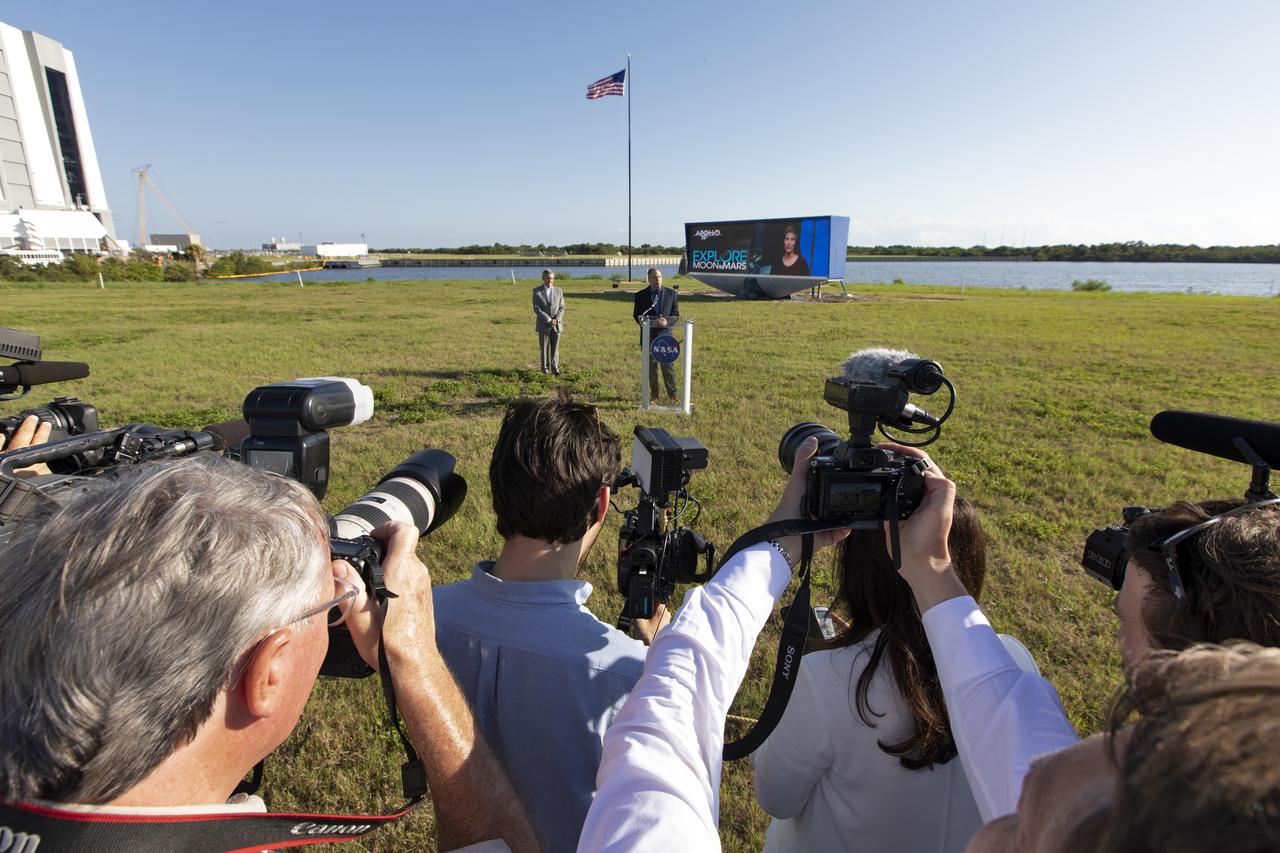
NASA Administrator Jim Bridenstine, at the podium, speaks to members of the news media at the NASA News Center on May 23, 2019. At left is Kennedy Space Center Director Bob Cabana. News media were at the center for an Apollo 11 Media Day. They toured several facilities, including the Vehicle Assembly and Launch Complex 39B for a look back at the Apollo missions and a look ahead to NASA’s new Moon 2024 initiative, the Artemis 1 mission and the Gateway lunar outpost.
- Record ID
- KSC-20190523-PH_KLS01_0045
- NASA center
- KSC
- Date
- 2019-05-23
- Credit
- NASA/Kim Shiflett
- Keywords
- KSC Events, Apollo 11 Media Day, NASA Administrator, Jim Bridenstine, Kennedy Space Center, Moon 2024, NASA News Center, Launch Complex 39 area, Bob Cabana
HQ · 2005-09-18 · 20050919_nxtgn_05
Michael Griffin Discusses Exploration Architecture Study
NASA Administrator Michael Griffin discusses the results of the agency's exploration architecture study on Monday, Sept. 19, 2005, at NASA Headquarters in Washington. The study made specific design…
Inspect NASA record
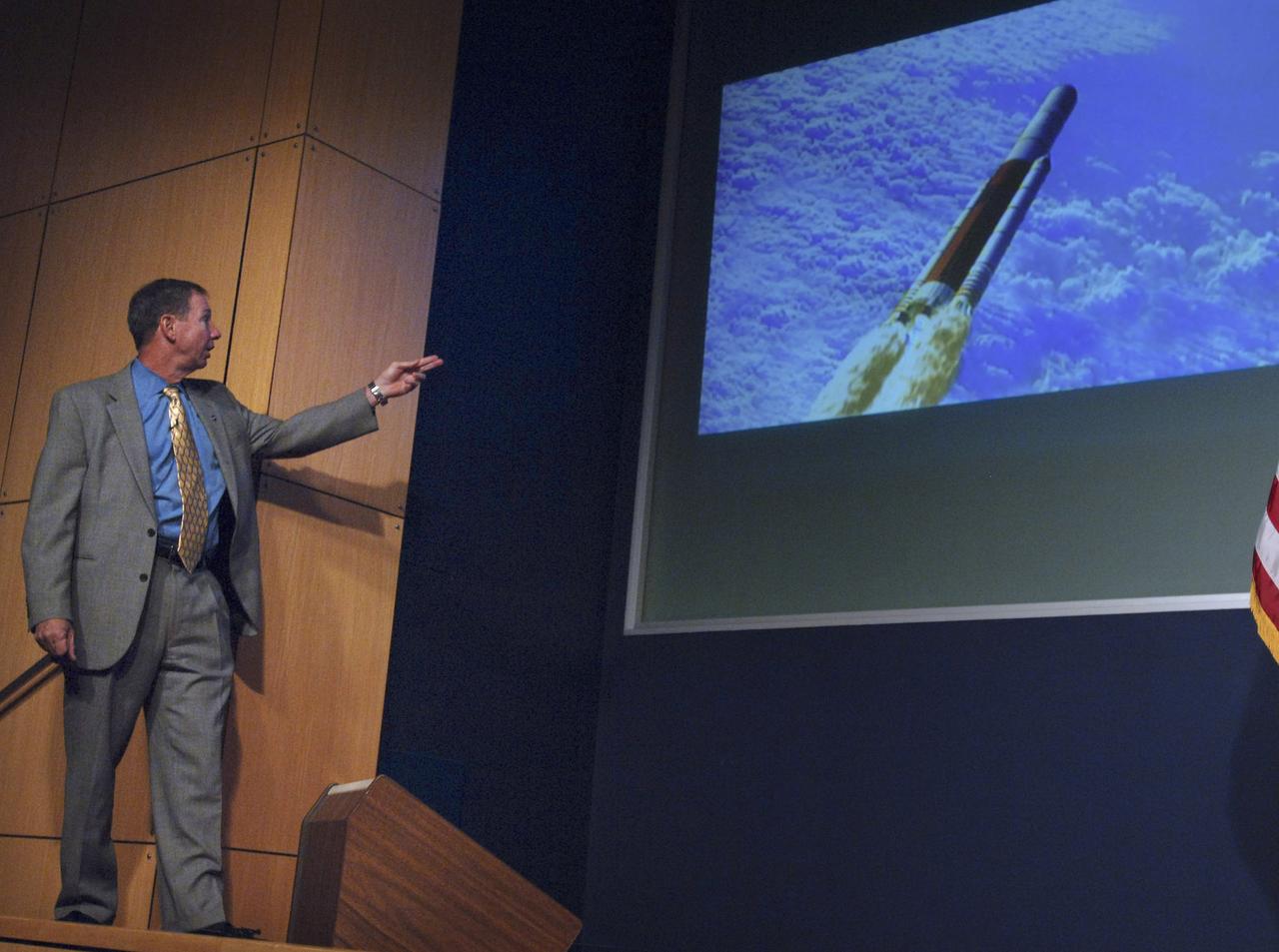
NASA Administrator Michael Griffin discusses the results of the agency's exploration architecture study on Monday, Sept. 19, 2005, at NASA Headquarters in Washington. The study made specific design recommendations for a vehicle to carry crews into space, a family of launch vehicles to take missions to the moon and beyond, and a "lunar mission architecture" for landing on the moon. Photo Credit: (NASA/Bill Ingalls)
- Record ID
- 20050919_nxtgn_05
- NASA center
- HQ
- Date
- 2005-09-18
- Credit
- NASA/Bill Ingalls
- Keywords
- Michael Griffin, NASA Headquarters, Washington, DC, Next Generation Spacecraft, Constellation, 20050919_bi_nxtgn, Exploration Architecture Study
KSC · 2025-05-03 · KSC-20250503-PH-KLS01_0104
Artemis II Orion DD250 leaving the O&C
NASA’s KAMAG transporter carries the agency’s Artemis II Orion spacecraft from the Neil A. Armstrong Operations and Checkout Building to the Multi-Payload Processing Facility at Kennedy Space Center…
Inspect NASA record
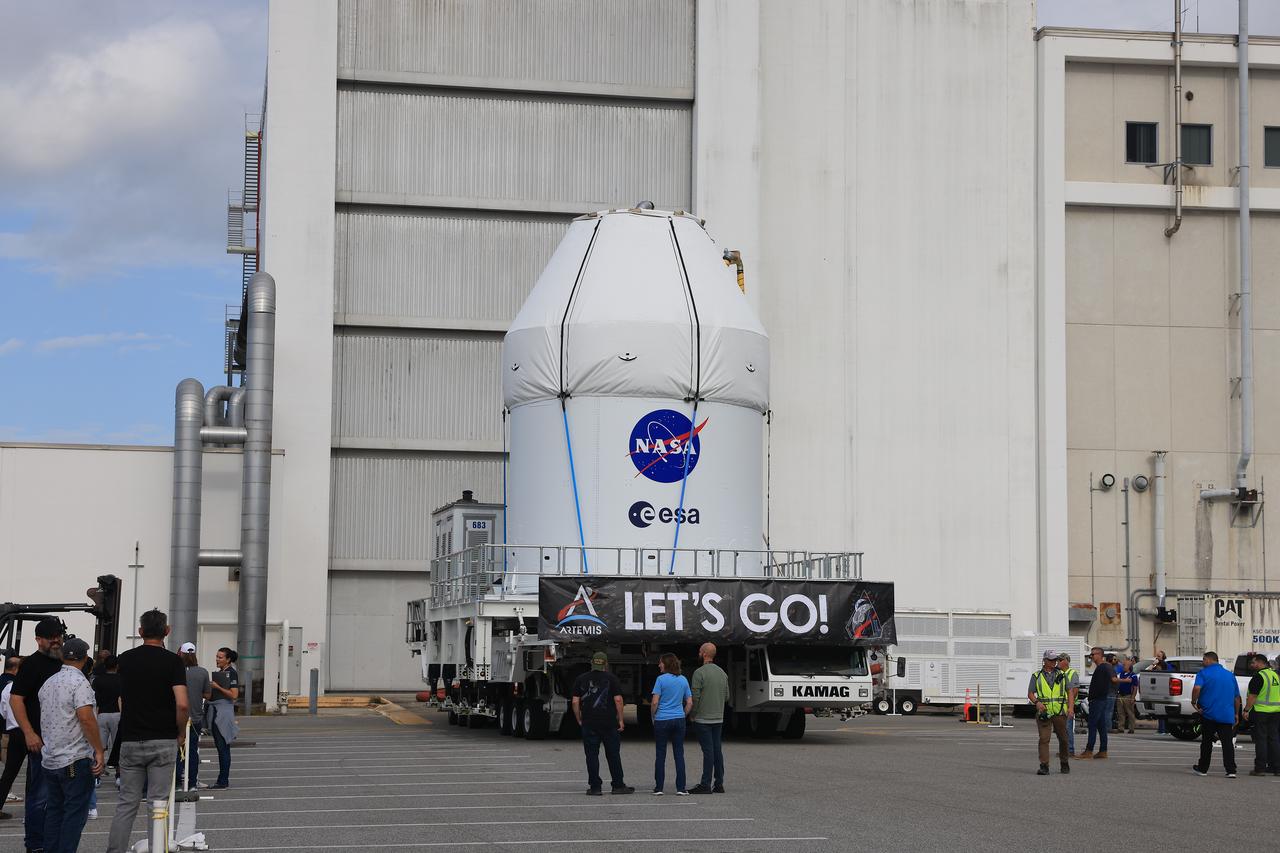
NASA’s KAMAG transporter carries the agency’s Artemis II Orion spacecraft from the Neil A. Armstrong Operations and Checkout Building to the Multi-Payload Processing Facility at Kennedy Space Center in Florida on Saturday, May 3, 2025. The Orion spacecraft will undergo fueling and processing operations at the Multi-Function Facility. The Artemis II test flight is the first crewed flight under NASA’s Artemis campaign and is another step toward missions on the lunar surface and helping the agency prepare for future human missions to Mars.
- Record ID
- KSC-20250503-PH-KLS01_0104
- NASA center
- KSC
- Date
- 2025-05-03
- Credit
- NASA/Kim Shiflett
- Keywords
- John. F. Kennedy Space Center, Kennedy, Kennedy Space Center, KSC, Spaceport, Cape Canaveral, NASA, rocket ranch, Florida, multi-user spaceport, premier spaceport, space coast
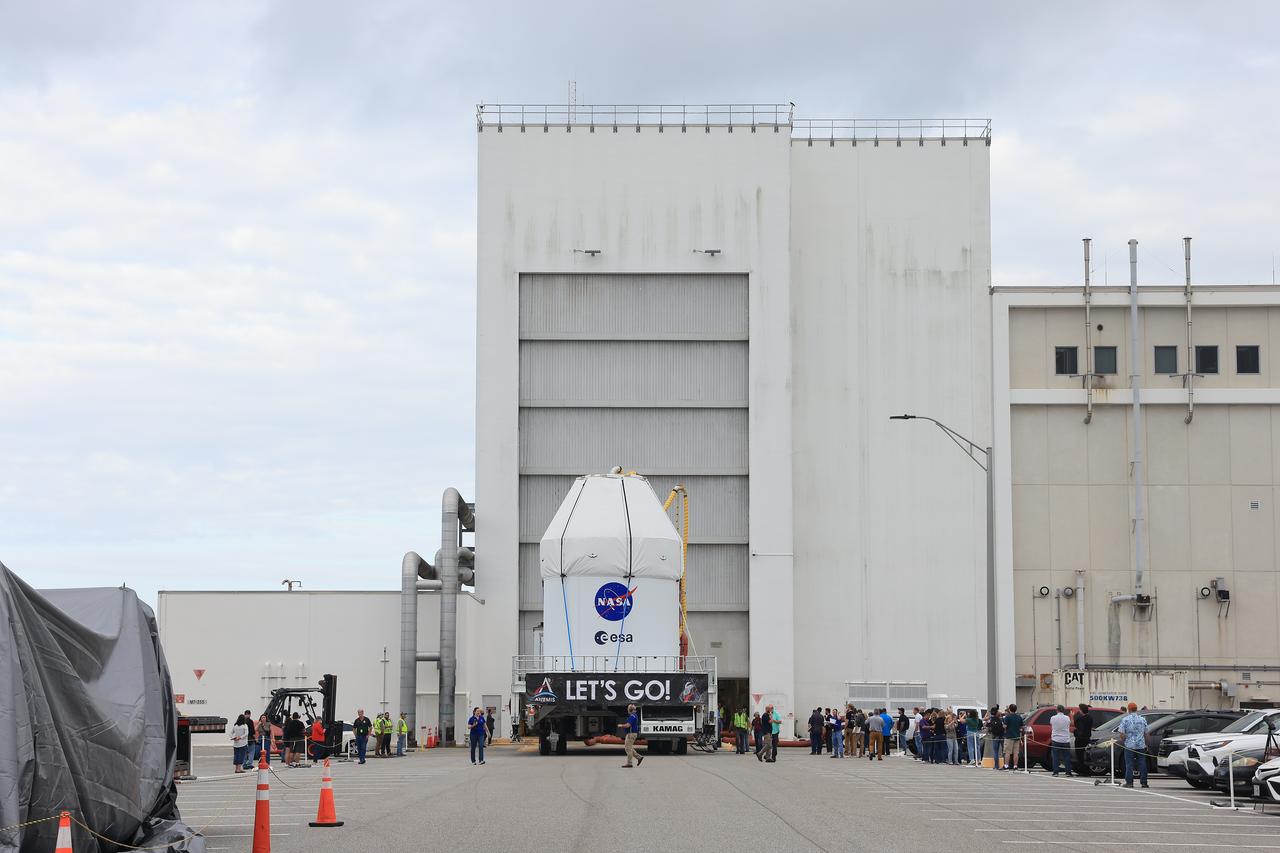
KSC · 2025-05-03 · KSC-20250503-PH-KLS01_0077
Artemis II Orion DD250 leaving the O&C
NASA’s KAMAG transporter carries the agency’s Artemis II Orion spacecraft from the Neil A. Armstrong Operations and Checkout Building to the Multi-Payload Processing Facility at Kennedy Space Center…
Inspect NASA record
NASA’s KAMAG transporter carries the agency’s Artemis II Orion spacecraft from the Neil A. Armstrong Operations and Checkout Building to the Multi-Payload Processing Facility at Kennedy Space Center in Florida on Saturday, May 3, 2025. The Orion spacecraft will undergo fueling and processing operations at the Multi-Function Facility. The Artemis II test flight is the first crewed flight under NASA’s Artemis campaign and is another step toward missions on the lunar surface and helping the agency prepare for future human missions to Mars.
- Record ID
- KSC-20250503-PH-KLS01_0077
- NASA center
- KSC
- Date
- 2025-05-03
- Credit
- NASA/Kim Shiflett
- Keywords
- John. F. Kennedy Space Center, Kennedy, Kennedy Space Center, KSC, Spaceport, Cape Canaveral, NASA, rocket ranch, Florida, multi-user spaceport, premier spaceport, space coast
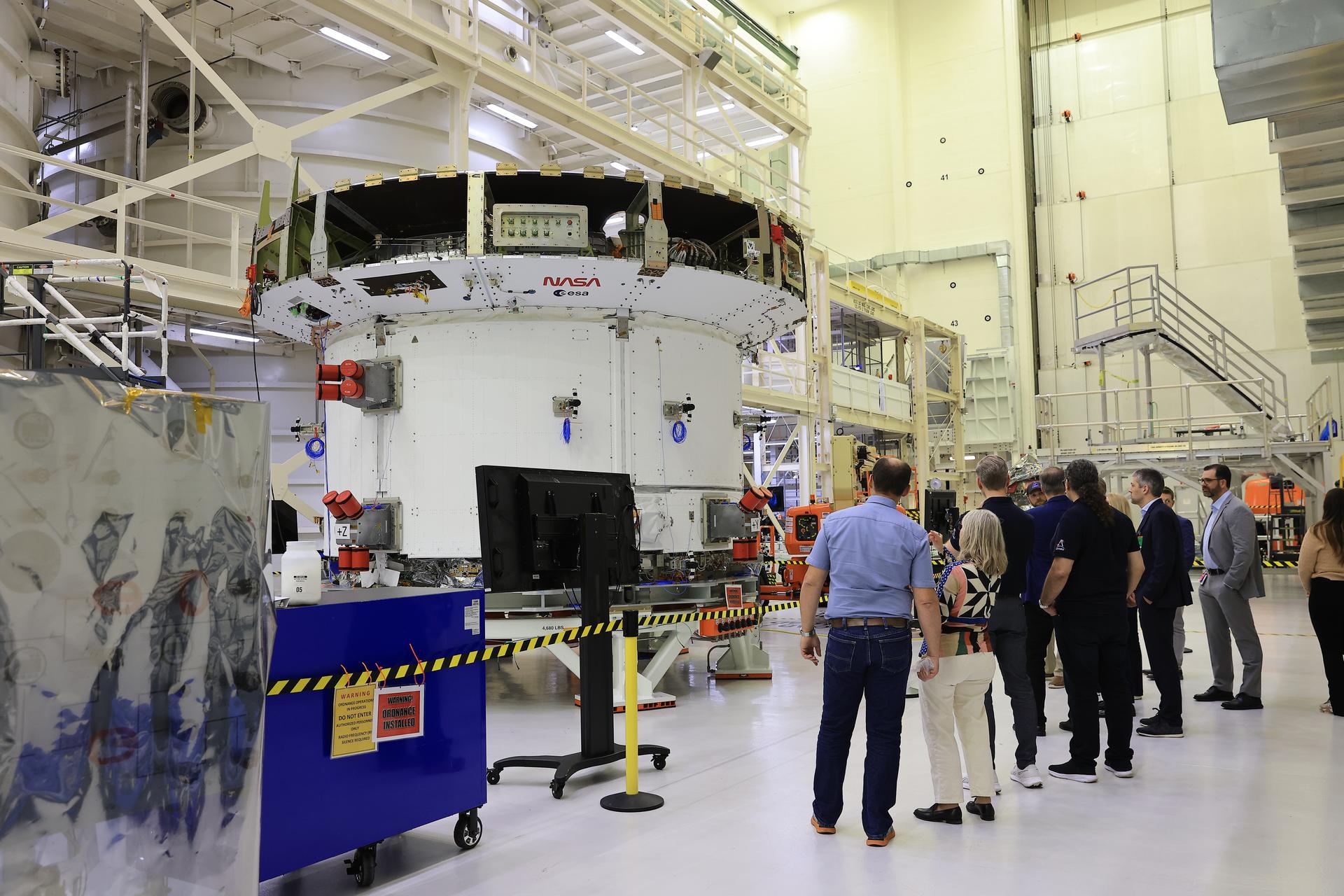
KSC · 2026-02-10 · KSC-20260210-PH-KLS01_0053
ESA IOZ Tour O&C High Bay
Members of the ESA (European Space Agency) leadership team and NASA Orion program team stand by European Service Module for NASA’s Artemis III mission on Tuesday, Feb. 10,…
Inspect NASA record
Members of the ESA (European Space Agency) leadership team and NASA Orion program team stand by European Service Module for NASA’s Artemis III mission on Tuesday, Feb. 10, 2026, inside the high bay of the Neil A. Armstrong Operations and Checkout Building at NASA’s Kennedy Space Center in Florida. The service module provides the Orion spacecraft’s propulsion, thermal control, electrical power, and life support systems during the Artemis III mission to send humans to explore the lunar South Pole region.
- Record ID
- KSC-20260210-PH-KLS01_0053
- NASA center
- KSC
- Date
- 2026-02-10
- Credit
- NASA/Kim Shiflett
- Keywords
- John. F. Kennedy Space Center, Kennedy, Kennedy Space Center, KSC, Spaceport, Cape Canaveral, NASA, rocket ranch, Florida, multi-user spaceport, premier spaceport, space coast
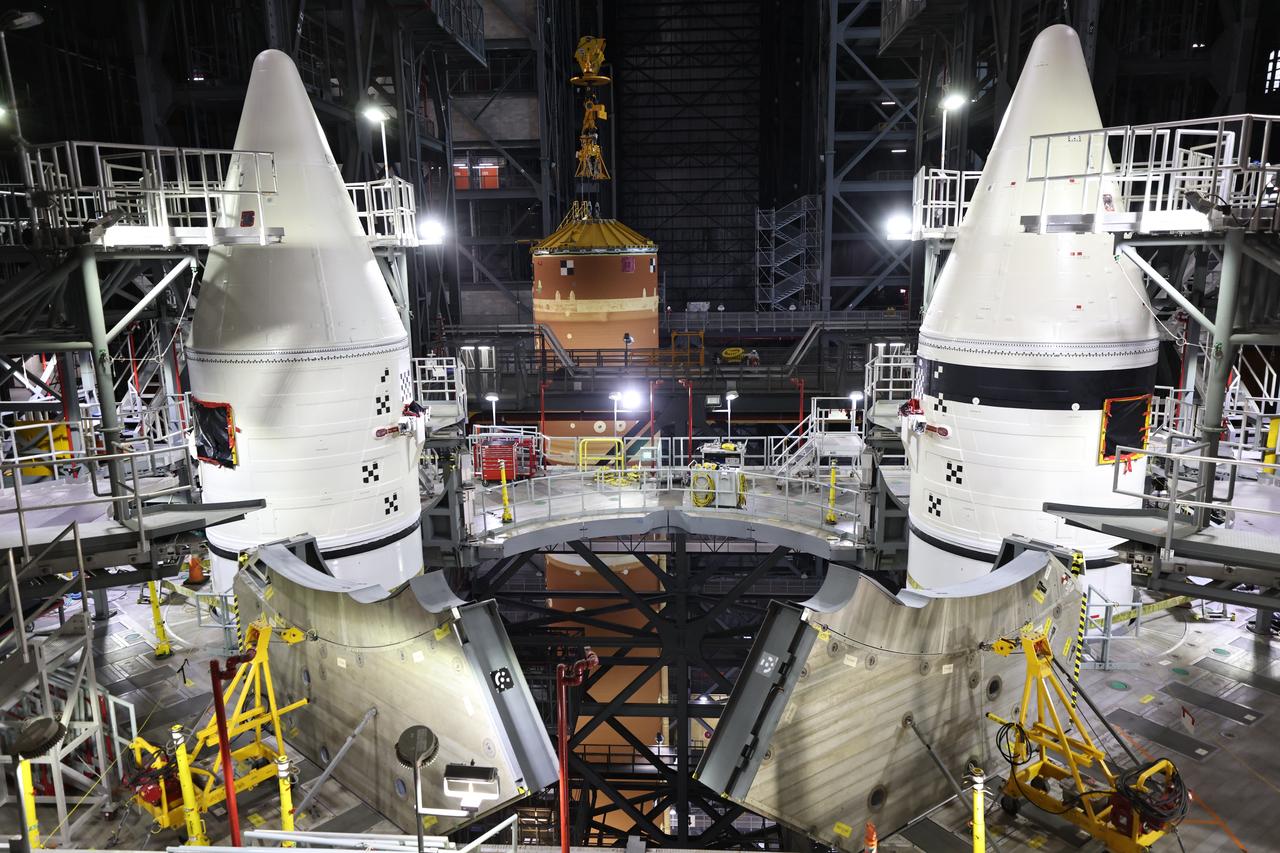
KSC · 2025-03-22 · KSC-20250323-PH-FMX01_0086
Core Stage Lift to Vertical for Move to High Bay 3
Teams with NASA’s Exploration Ground Systems and primary contractor Amentum, integrate the SLS (Space Launch System) Moon rocket with the solid rocket boosters onto mobile launcher 1 inside…
Inspect NASA record
Teams with NASA’s Exploration Ground Systems and primary contractor Amentum, integrate the SLS (Space Launch System) Moon rocket with the solid rocket boosters onto mobile launcher 1 inside High Bay 3 of the Vehicle Assembly Building at NASA’s Kennedy Space Center on Sunday, March 23, 2025. Artemis II is the first crewed test flight under NASA’s Artemis campaign and is another step toward missions on the lunar surface and helping the agency prepare for future human missions to Mars.
- Record ID
- KSC-20250323-PH-FMX01_0086
- NASA center
- KSC
- Date
- 2025-03-22
- Credit
- NASA/Frank Michaux
- Keywords
- John. F. Kennedy Space Center, Kennedy, Kennedy Space Center, KSC, Spaceport, Cape Canaveral, NASA, rocket ranch, Florida, multi-user spaceport, premier spaceport, space coast