
Update Site (from NASA)
Explore NASA’s Image and Video Library.
Suggest one object per day for the Interstellar Minds collection. We review each suggestion before adding it.
Sign in to suggest a Marvel.
Find a NASA image ID. Open a NASA record and copy its ID from the end of the details URL.
NASA image records
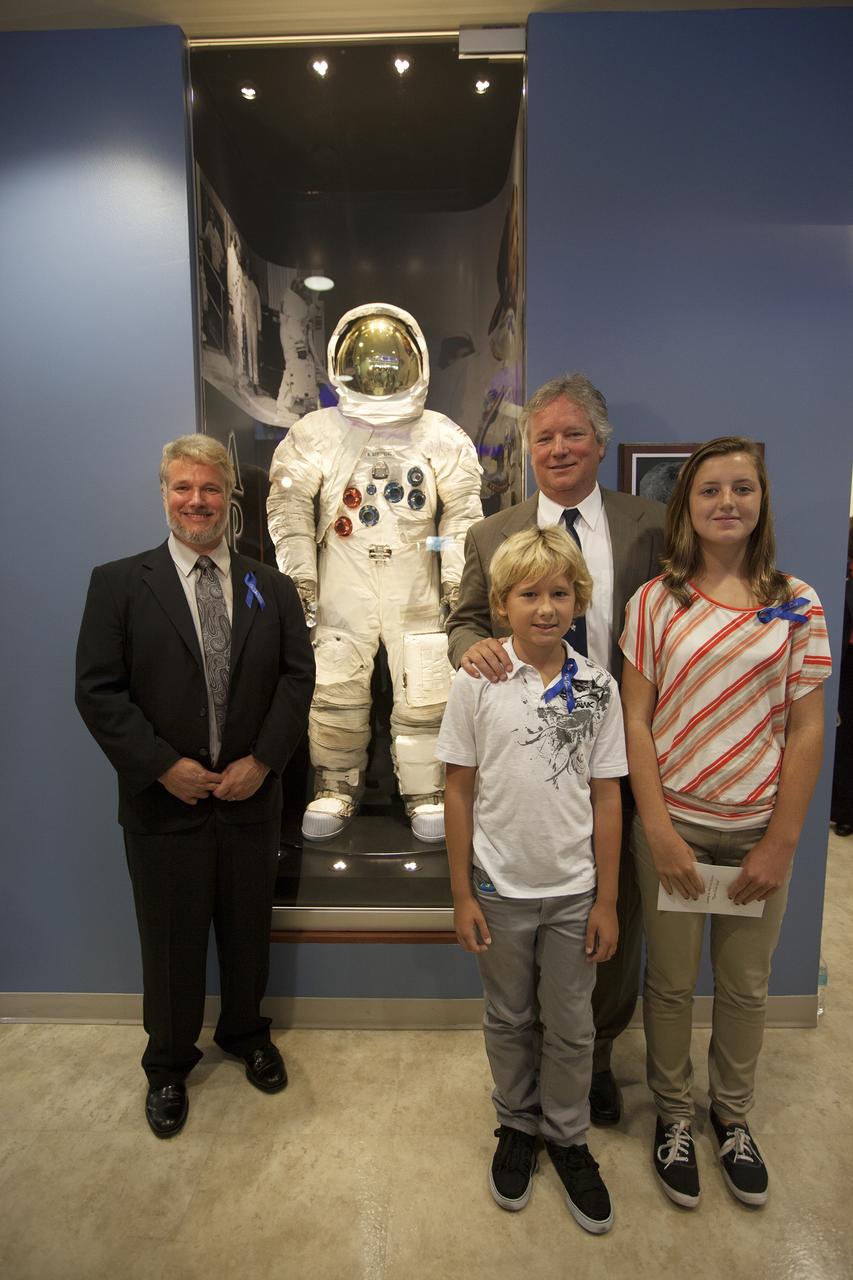
KSC · 2014-07-21 · KSC-2014-3224
KSC-2014-3224
CAPE CANAVERAL, Fla. -- At the Kennedy Space Center in Florida, members of the Armstrong family pose for a portrait with an Apollo-era spacesuit following its unveiling in…
Inspect NASA record
CAPE CANAVERAL, Fla. -- At the Kennedy Space Center in Florida, members of the Armstrong family pose for a portrait with an Apollo-era spacesuit following its unveiling in the lobby of the newly named Neil Armstrong Operations and Checkout Building. The facility has been renamed for Apollo 11 astronaut Neil Armstrong, the first person to set foot on the moon. From left are Armstrong's son Mark, his grandson Bryce, his son Rick and his granddaughter Lily. The building's high bay is being used to support the agency's new Orion spacecraft and is the same spaceport facility where the Apollo 11 command/service module and lunar module were prepped for the first lunar landing mission in 1969. Orion is designed to take humans farther than they’ve ever gone before, serving as the exploration vehicle that will carry astronauts to deep space and sustain the crew during travel to destinations such as an asteroid or Mars. The unveiling was part of NASA's 45th anniversary celebration of the Apollo 11 moon landing. As the world watched, Apollo 11 astronauts landed in the moon's Sea of Tranquility aboard the lunar module, Eagle, on July 20, 1969, as the command module, Columbia, orbited overhead. For more: http://www.nasa.gov/press/2014/july/nasa-honors-historic-first-moon-landing-eyes-first-mars-mission/ Photo credit: NASA/Kim Shiflett
- Record ID
- KSC-2014-3224
- NASA center
- KSC
- Date
- 2014-07-21
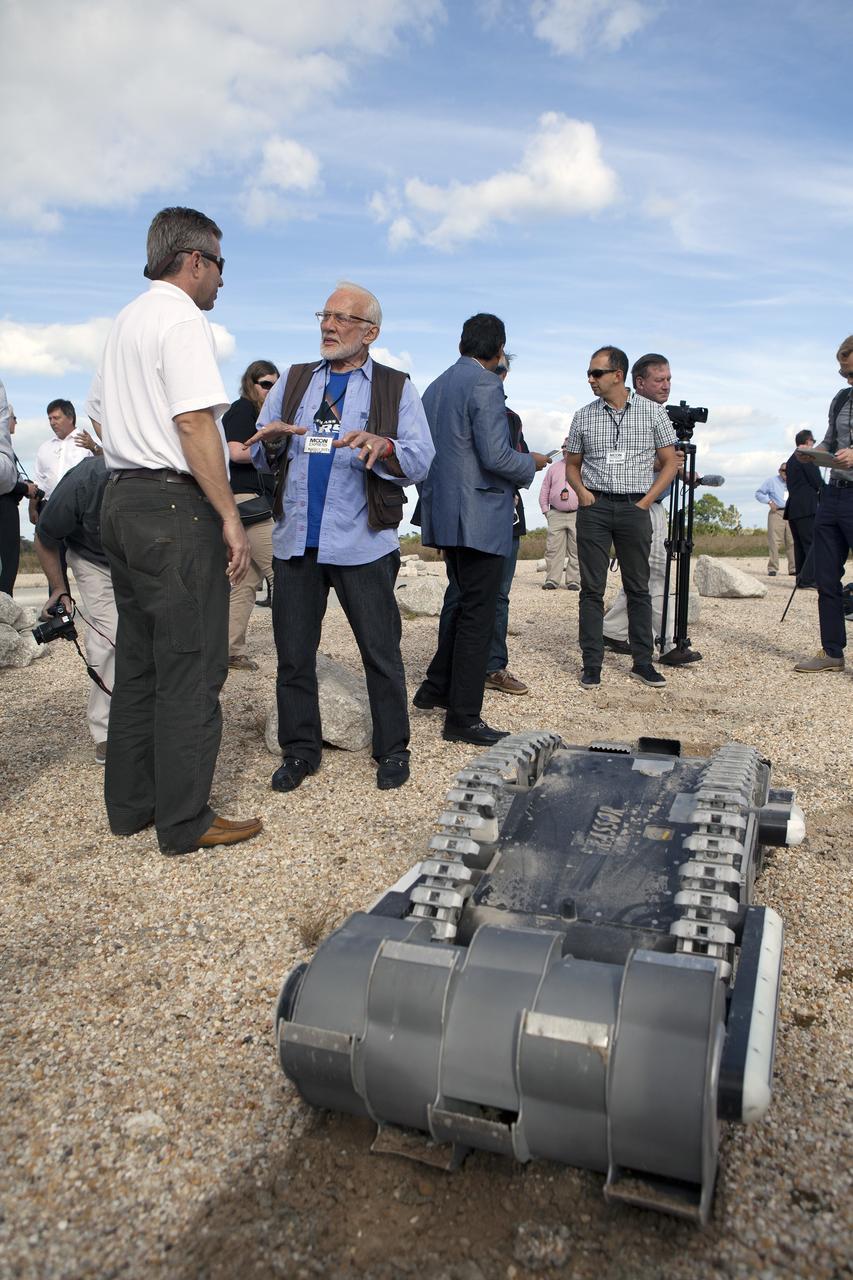
KSC · 2014-11-03 · KSC-2014-4377
KSC-2014-4377
CAPE CANAVERAL, Fla. - Rob Mueller, left, NASA senior technologist in the Surface Systems Office in Kennedy Space Center's Engineering and Technology Directorate, talks with former NASA Apollo…
Inspect NASA record
CAPE CANAVERAL, Fla. - Rob Mueller, left, NASA senior technologist in the Surface Systems Office in Kennedy Space Center's Engineering and Technology Directorate, talks with former NASA Apollo astronaut Buzz Aldrin during a demonstration of the Regolith Advanced Surface System Operations Robot, or RASSOR, at the automated landing and hazard avoidance technology, or ALHAT, hazard field at the north end of the Shuttle Landing Facility at NASA's Kennedy Space Center in Florida. The event was held to announce Moon Express Inc., of Moffett Field, California is selected to utilize Kennedy facilities for NASA's Lunar Cargo Transportation and Landing by Soft Touchdown, or Lunar CATALYST, initiative. Moon Express is developing a lander with capabilities that will enable delivery of payloads to the surface of the moon, as well as new science and exploration missions of interest to NASA and scientific and academic communities. Moon Express will base its activities at Kennedy and utilize the Morpheus ALHAT field and a hangar nearby for CATALYST testing. The Advanced Exploration Systems Division of NASA's Human Exploration and Operations Mission Directorate manages Lunar CATALYST. Photo credit: NASA/Ben Smegelsky
- Record ID
- KSC-2014-4377
- NASA center
- KSC
- Date
- 2014-11-03
- Keywords
- Moon Express, ALHAT, CATALYST
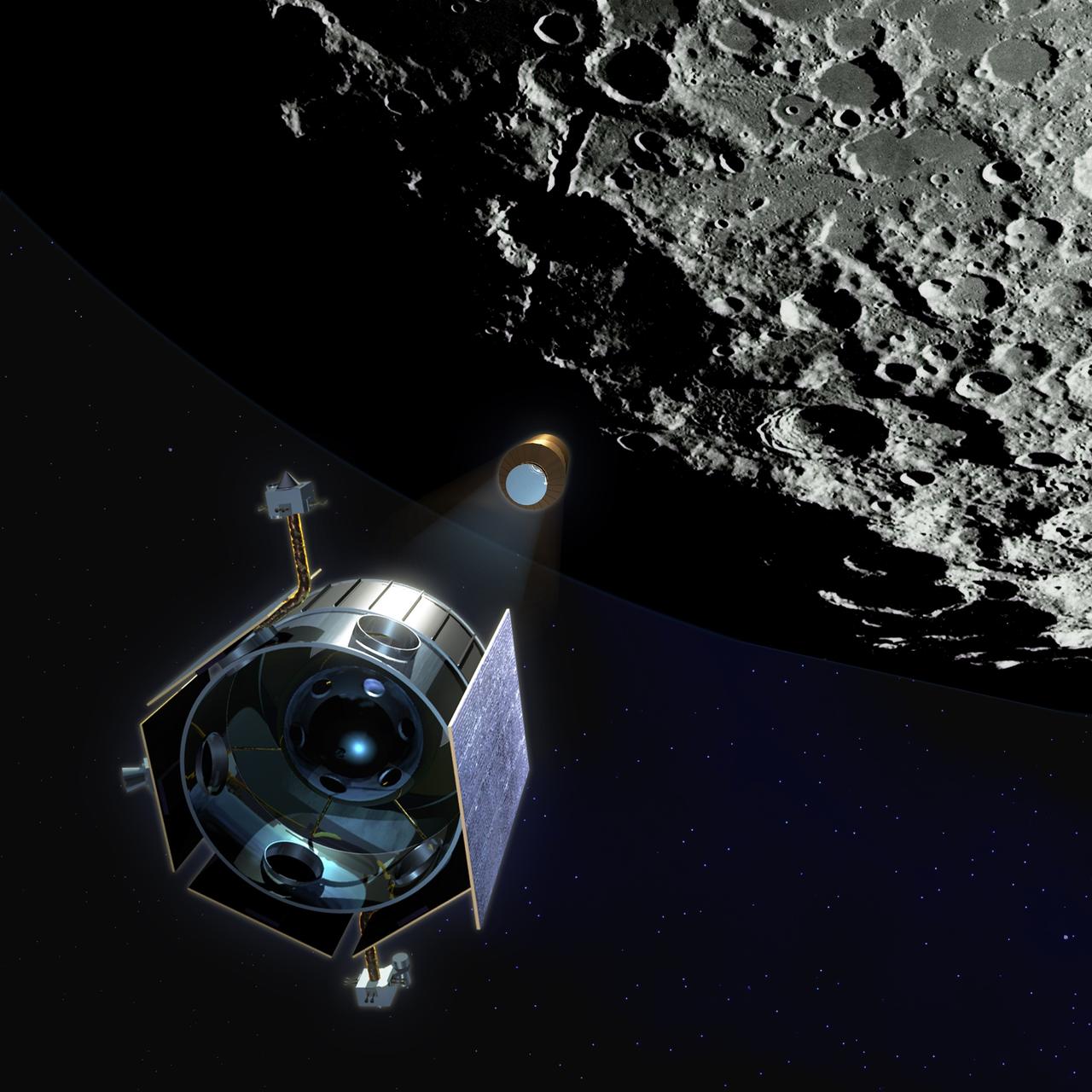
ARC · 2006-04-10 · ARC-2006-ACD06-0232-003
ARC-2006-ACD06-0232-003
LCROSS (Lunar CRater Observation and Sensing Satellite) Mission Art IMAGES COURTESY OF NORTHROP GRUMMAN, WILLIAM FURLONG, ARTIST This NASA Ames spacecraft is a small 'secondary payload' spacecraft that…
Inspect NASA record
LCROSS (Lunar CRater Observation and Sensing Satellite) Mission Art IMAGES COURTESY OF NORTHROP GRUMMAN, WILLIAM FURLONG, ARTIST This NASA Ames spacecraft is a small 'secondary payload' spacecraft that will travel with Lunar Reconnaissance Obriter (LRO) satellite to the moon on the same rocket, the Evolved Expendable Launch Vehicle (EELV) to be launched from Kennedy Space Center, Florida in a search for water ice on the moon's south polar region. As the spacecraft approaches the moon's south pole, the upper stge will separate, and then will impact a crater in the south pole area. A plume from the upper stage crash will develope as the Shepherding Spacecraft heads in toward the moon. The Shepherding Spacecrat will fly through the plume, and instruments on the spacecraft wil analyze the cloud to look for signs of water and other compounds. Additional space and Earth-based instruments will study the 2.2-millon-pound (1000-metric-ton) plume. 'The LCROSS mission will help us to determine if there is water hidden in the permanently dark craters on the moon's south pole.' said Marvin( (Chris) Christensen, Robotic Lunar Exploration Program (RLEP) manager, and Deputy Director of NASA Ames.
- Record ID
- ARC-2006-ACD06-0232-003
- NASA center
- ARC
- Date
- 2006-04-10
- Keywords
- LCROSS

KSC · 2023-11-02 · KSC-20231102-PH-FMX01_0020
MSOLO PRIME-1 Simulation
A team of engineers participates in simulation training for the Polar Resources Ice Mining Experiment-1 (PRIME-1) on Thursday, Nov. 2, 2023, inside the Neil Armstrong Operations and Checkout…
Inspect NASA record
A team of engineers participates in simulation training for the Polar Resources Ice Mining Experiment-1 (PRIME-1) on Thursday, Nov. 2, 2023, inside the Neil Armstrong Operations and Checkout Building at NASA’s Kennedy Space Center in Florida. The purpose of the training is to get the integrated PRIME-1 team – engineers with PRIME-1’s MSOLO (Mass Spectrometer Observing Lunar Operations) and Honeybee Robotics’ TRIDENT (The Regolith and Ice Drill for Exploring New Terrain) drill – prepared to operate the instrument on the lunar surface. The team commanded the PRIME-1 hardware, located at Intuitive Machines in Houston, to operate MSOLO and TRIDENT. PRIME-1 is scheduled to launch through NASA’s CLPS (Commercial Lunar Payload Delivery Service) initiative and will be the first in-situ resource utilization demonstration on the Moon, with MSOLO and TRIDENT making up its two primary components. Through Artemis missions, CLPS deliveries will be used to perform science experiments, test technologies, and demonstrate capabilities to help NASA explore the Moon and prepare for human deep space exploration missions.
- Record ID
- KSC-20231102-PH-FMX01_0020
- NASA center
- KSC
- Date
- 2023-11-02
- Credit
- NASA/Frank Michaux
- Keywords
- CLPS, Cape Canaveral, Florida, IM-2, John. F. Kennedy Space Center, KSC, Kennedy Space Center, MLI, MSOLO, Moon to Mars, NASA, NASA Tech
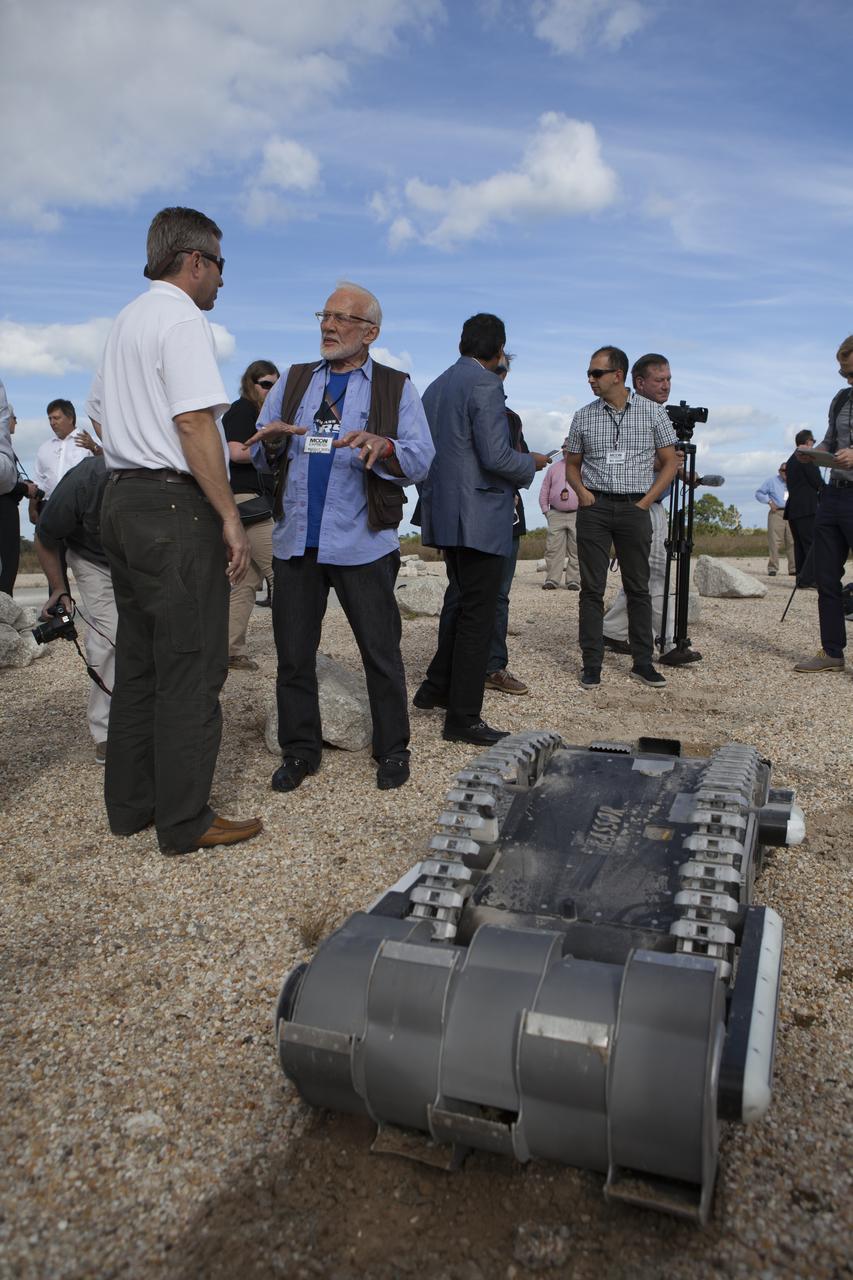
KSC · 2014-11-03 · KSC-314D-0485_0109
Moon Express Media Event
Rob Mueller, left, NASA senior technologist in the Surface Systems Office in Kennedy Space Center's Engineering and Technology Directorate, talks with former NASA Apollo astronaut Buzz Aldrin during…
Inspect NASA record
Rob Mueller, left, NASA senior technologist in the Surface Systems Office in Kennedy Space Center's Engineering and Technology Directorate, talks with former NASA Apollo astronaut Buzz Aldrin during a demonstration of the Regolith Advanced Surface System Operations Robot, or RASSOR, at the automated landing and hazard avoidance technology, or ALHAT, hazard field at the north end of the Shuttle Landing Facility at NASA's Kennedy Space Center in Florida. The event was held to announce Moon Express Inc., of Moffett Field, California is selected to utilize Kennedy facilities for NASA's Lunar Cargo Transportation and Landing by Soft Touchdown, or Lunar CATALYST, initiative. Moon Express is developing a lander with capabilities that will enable delivery of payloads to the surface of the moon, as well as new science and exploration missions of interest to NASA and scientific and academic communities. Moon Express will base its activities at Kennedy and utilize the Morpheus ALHAT field and a hangar nearby for CATALYST testing. The Advanced Exploration Systems Division of NASA's Human Exploration and Operations Mission Directorate manages Lunar CATALYST.
- Record ID
- KSC-314D-0485_0109
- NASA center
- KSC
- Date
- 2014-11-03
- Keywords
- KSC-2014-4377
KSC · 2014-07-21 · 2014-3203
KSC-2014-3203
CAPE CANAVERAL, Fla. -- At the Kennedy Space Center in Florida, Apollo astronaut Jim Lovell participates in a ceremony renaming the refurbished Operations and Checkout Building for Apollo…
Inspect NASA record
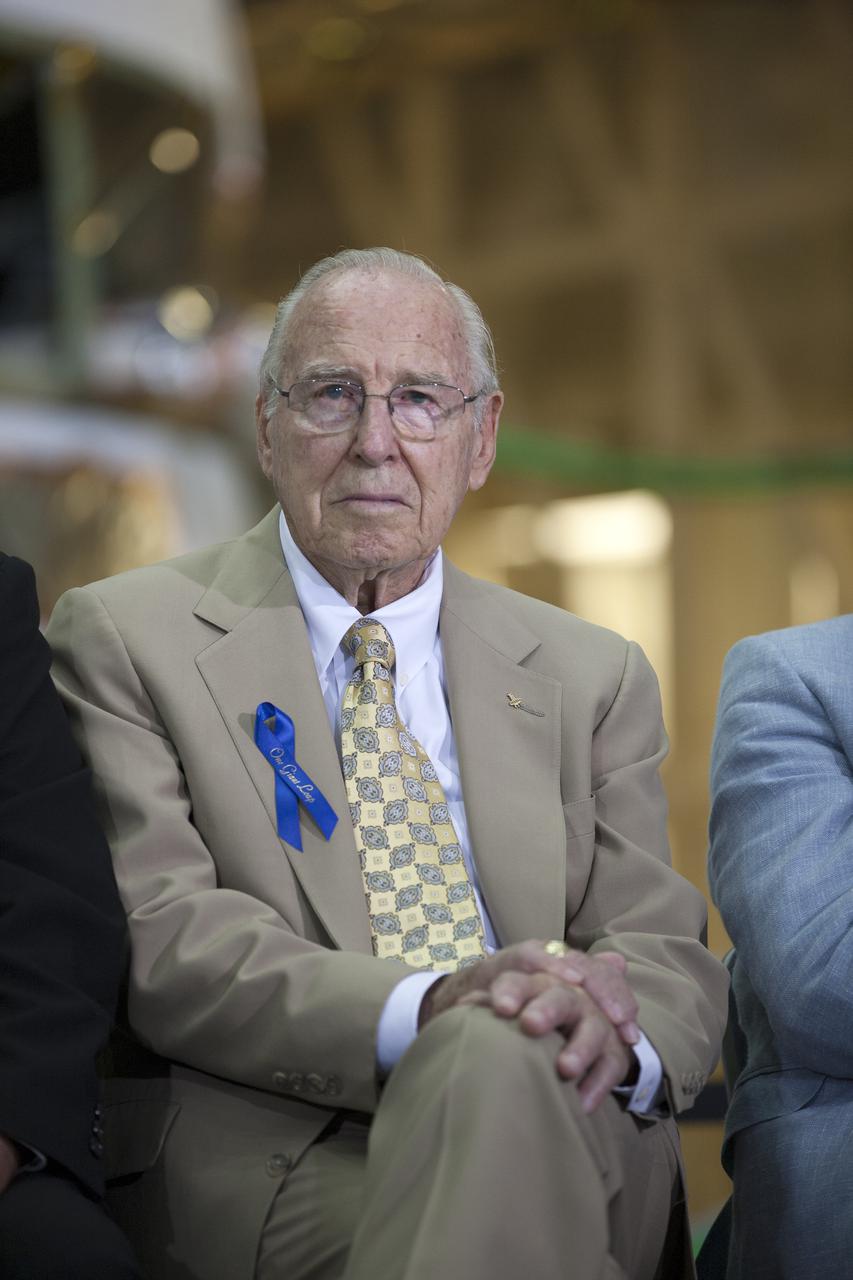
CAPE CANAVERAL, Fla. -- At the Kennedy Space Center in Florida, Apollo astronaut Jim Lovell participates in a ceremony renaming the refurbished Operations and Checkout Building for Apollo 11 astronaut Neil Armstrong, the first person to set foot on the moon. Lovell served on the crews of Apollo 8 and Apollo 13. The building's high bay is being used to support the agency's new Orion spacecraft and is the same spaceport facility where the Apollo 11 command_service module and lunar module were prepped for the first lunar landing mission in 1969. Orion is designed to take humans farther than they’ve ever gone before, serving as the exploration vehicle that will carry astronauts to deep space and sustain the crew during travel to destinations such as an asteroid or Mars. The ceremony was part of NASA's 45th anniversary celebration of the Apollo 11 moon landing. As the world watched, Neil Armstrong and Buzz Aldrin landed in the moon's Sea of Tranquility on July 20, 1969, aboard the lunar module Eagle. Meanwhile, crewmate Michael Collins orbited above in the command module Columbia. For more, visit http:__www.nasa.gov_press_2014_july_nasa-honors-historic-first-moon-landing-eyes-first-mars-mission. Photo credit: NASA_Kim Shiflett
- Record ID
- 2014-3203
- NASA center
- KSC
- Date
- 2014-07-21
- Credit
- NASA_Kim Shiflett
- Keywords
- OandC
MSFC · 1969-07-24 · 6900599
Saturn Apollo Program
The Apollo 11 mission, the first manned lunar mission, launched from the Kennedy Space Center, Florida via the Saturn V launch vehicle on July 16, 1969 and safely…
Inspect NASA record
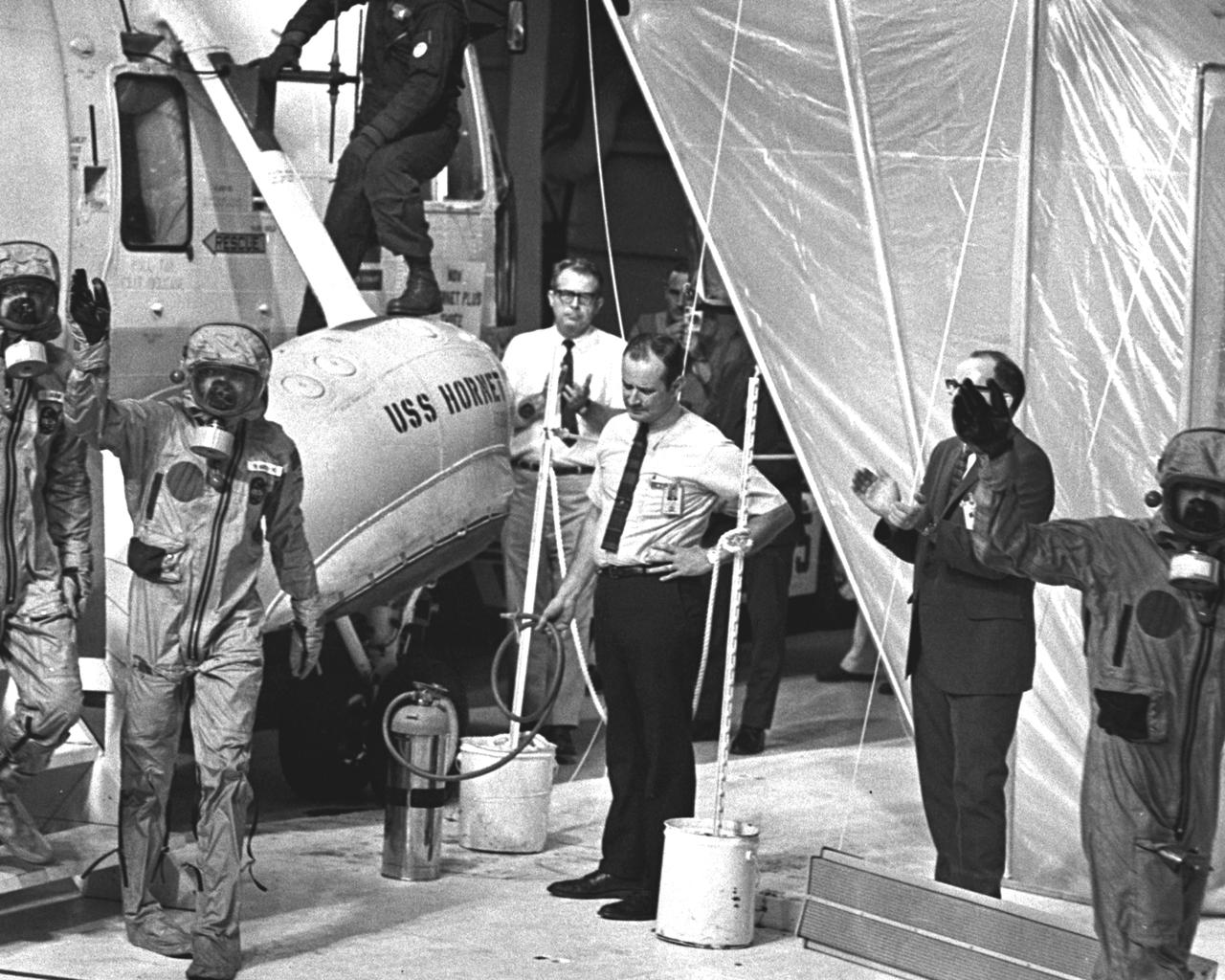
The Apollo 11 mission, the first manned lunar mission, launched from the Kennedy Space Center, Florida via the Saturn V launch vehicle on July 16, 1969 and safely returned to Earth on July 24, 1969. The Saturn V vehicle was developed by the Marshall Space Flight Center (MSFC) under the direction of Dr. Wernher von Braun. Aboard were Neil A. Armstrong, commander; Michael Collins, Command Module (CM) pilot; and Edwin E. Aldrin Jr., Lunar Module (LM) pilot. The CM, piloted by Michael Collins remained in a parking orbit around the Moon while the LM, named “Eagle’’, carrying astronauts Neil Armstrong and Edwin Aldrin, landed on the Moon. Armstrong was the first human to ever stand on the lunar surface, Aldrin. During 2½ hours of surface exploration, the crew collected 47 pounds of lunar surface material for analysis back on Earth. The recovery operation took place in the Pacific Ocean where Navy para-rescue men recovered the capsule housing the 3-man Apollo 11 crew. The crew was airlifted to safety aboard the U.S.S. Hornet, where they were quartered in a Mobile Quarantine Facility (MQF). Donned in biological isolation garments, the Apollo 11 crew members wave to well wishers as they leave the pick up helicopter making their way to the MQF. This portable facility served as their home until they reached the NASA Manned Spacecraft Center (MSC) Lunar Receiving Laboratory in Houston, Texas. With the success of Apollo 11, the national objective to land men on the Moon and return them safely to Earth had been accomplished.
- Record ID
- 6900599
- NASA center
- MSFC
- Date
- 1969-07-24
- Keywords
- Apollo 11, Moon, Crew, Mobile Quarantine Facility, MQF
MSFC · 1969-07-24 · 6900595
Saturn Apollo Program
Donned in biological isolation garments, the Apollo 11 crew members, (L-R) Edwin Aldrin, Neil Armstrong (waving), and Michael Collins exit the recovery pick up helicopter to board the…
Inspect NASA record
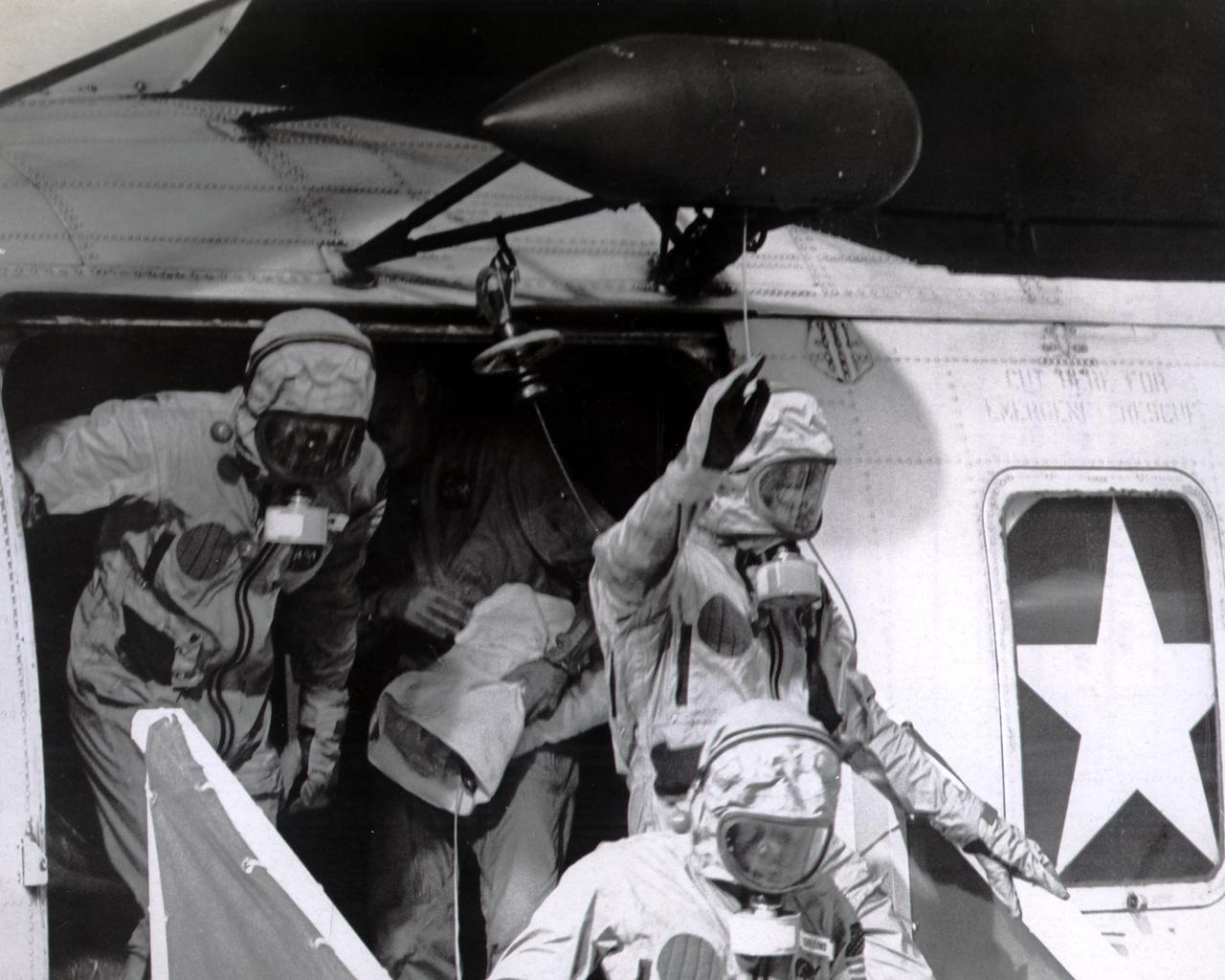
Donned in biological isolation garments, the Apollo 11 crew members, (L-R) Edwin Aldrin, Neil Armstrong (waving), and Michael Collins exit the recovery pick up helicopter to board the U.S.S. Hornet aircraft carrier after splashdown. The recovery operation took place in the Pacific Ocean where Navy para-rescue men recovered the capsule housing the 3-man Apollo 11 crew. The crew was airlifted to safety aboard the U.S.S. Hornet, where they were quartered in a Mobile Quarantine Facility (MQF). This portable facility served as their home until they reached the NASA Manned Spacecraft Center (MSC) Lunar Receiving Laboratory in Houston, Texas. The Apollo 11 mission, the first manned lunar mission, launched from the Kennedy Space Center (KSC), Florida via the Saturn V launch vehicle on July 16, 1969 and safely returned to Earth on July 24, 1969. Aboard were Neil A. Armstrong, commander; Michael Collins, Command Module (CM) pilot; and Edwin E. Aldrin Jr., Lunar Module (LM) pilot. The CM, piloted by Michael Collins remained in a parking orbit around the Moon while the LM, named “Eagle’’, carrying astronauts Neil Armstrong and Edwin Aldrin, landed on the Moon. Armstrong was the first human to ever stand on the lunar surface, followed by Aldrin. During 2½ hours of surface exploration, the crew collected 47 pounds of lunar surface material for analysis back on Earth. With the success of Apollo 11, the national objective to land men on the Moon and return them safely to Earth had been accomplished. The Saturn V vehicle was developed by the Marshall Space Flight Center (MSFC) under the direction of Dr. Werher von Braun.
- Record ID
- 6900595
- NASA center
- MSFC
- Date
- 1969-07-24
- Keywords
- Apollo 11, Moon, Crew, Recovery, Mobile Quarantine Facility, MQF
LRC · 1969-07-28 · LRC-1969-B701_P-05789
Astronauts Conrad and Bean at Lunar Landing Research Facility
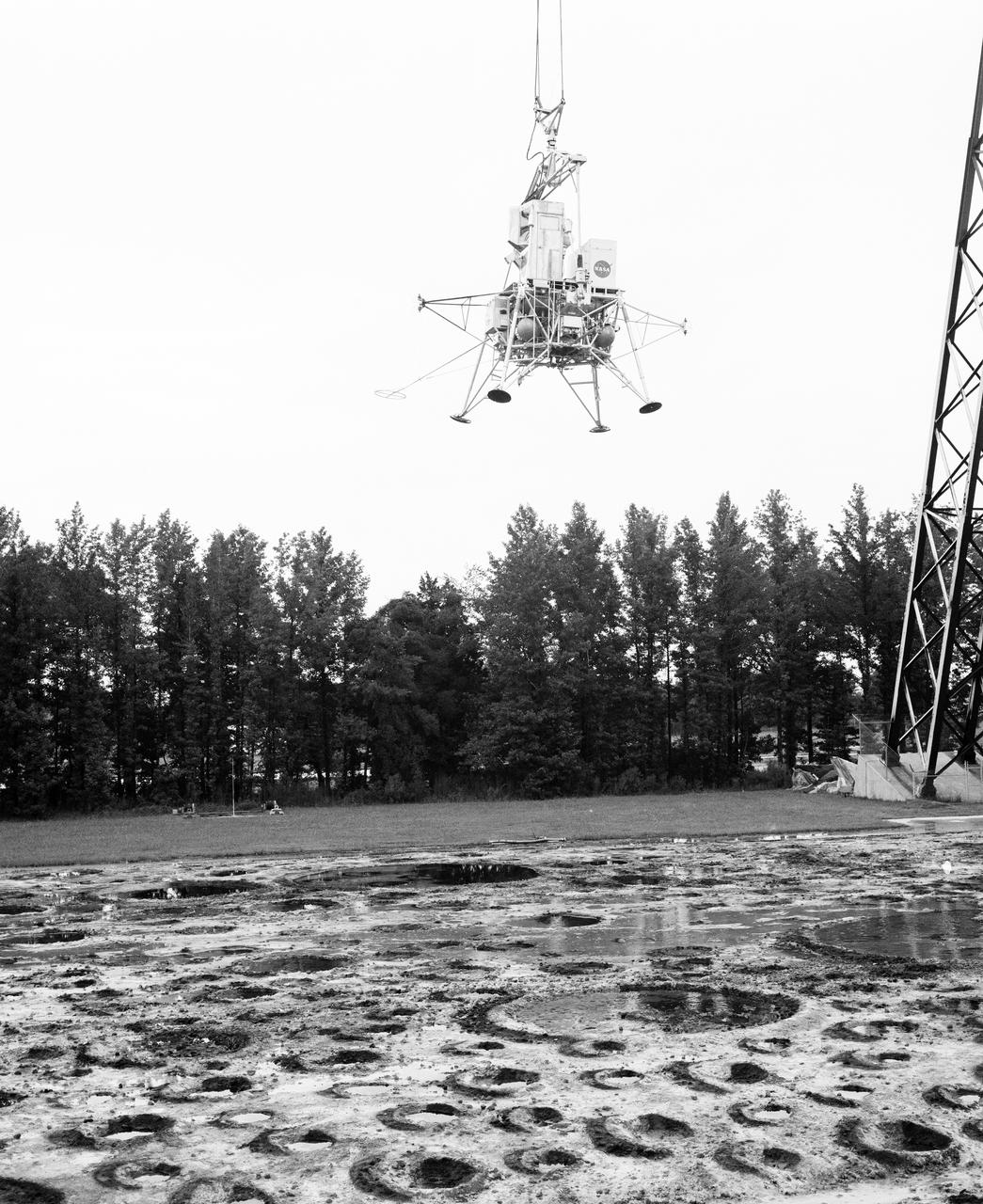
Astronauts Conrad and Bean at Lunar Landing Research Facility. Alan Bean was one of the third group of astronauts named by NASA in October 1963. He served as…
Inspect NASA record
Astronauts Conrad and Bean at Lunar Landing Research Facility. Alan Bean was one of the third group of astronauts named by NASA in October 1963. He served as backup astronaut for the Gemini 10 and Apollo 9 missions. In September of 1962, Mr. Conrad was selected as an astronaut by NASA. His first flight was Gemini V, which established the space endurance record and placed the United States in the lead for man-hours in space. As commander of Gemini XI, Mr. Conrad helped to set a world's altitude record. He then served as commander of Apollo XII, the second lunar landing. On Mr. Conrad's final mission, he served as commander of Skylab II, the first United States Space Station. https://www.nasa.gov/astronauts/biographies/former for more information.
- Record ID
- LRC-1969-B701_P-05789
- NASA center
- LRC
- Date
- 1969-07-28
- Credit
- NASA Bob Nye
- Keywords
- LRC, LARC, NASA LANGLEY, R-1969-L-05789, GANTRY, LLRF, LUNAR LANDING RESEARCH FACILITY, ASTRONAUT, APOLLO, center, 50th, anniversary
JSC · 2021-11-05 · jsc2022e046255
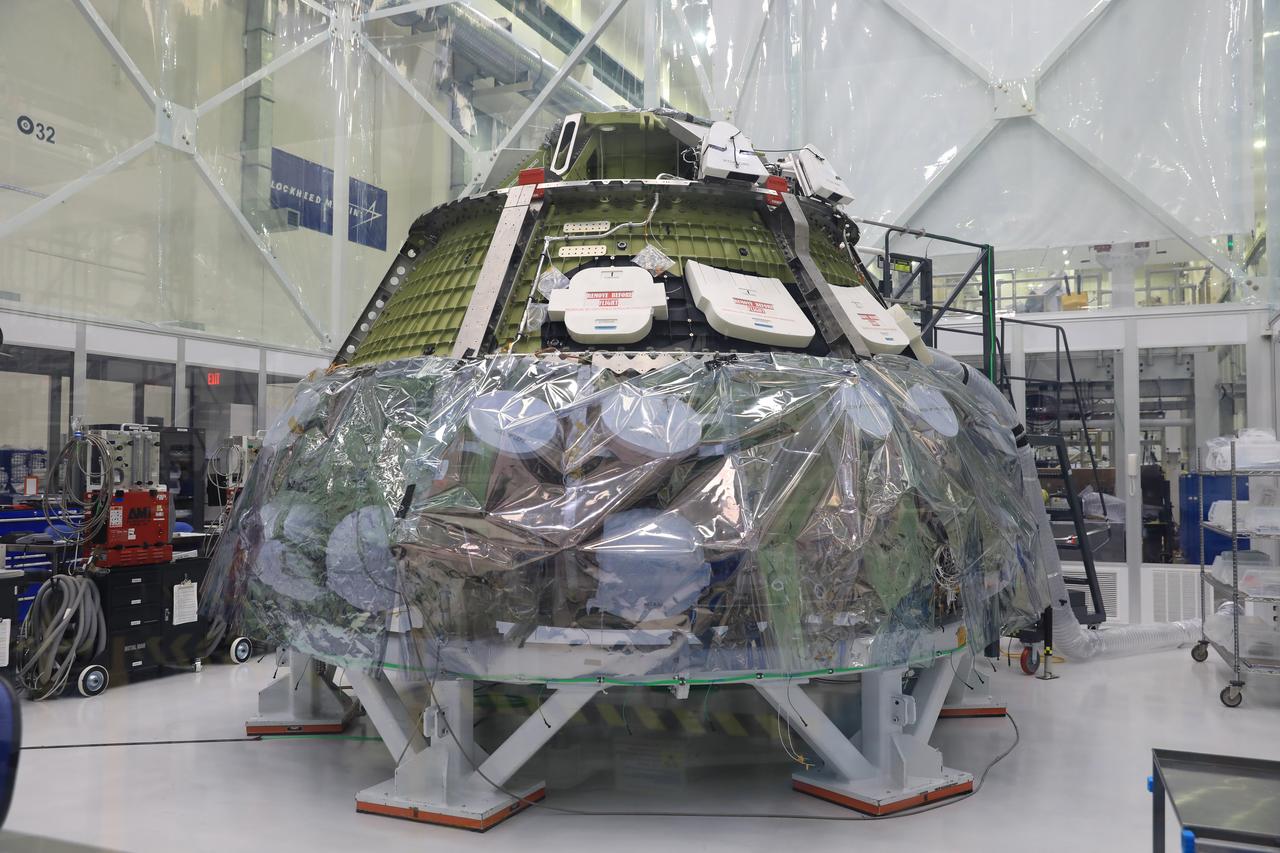
Artemis II Orion Crew Module at KSC
Assembly on the Artemis II Orion spacecraft that will carry the first Artemis crew on its lunar-bound mission continues at NASA’s Kennedy Space Center in Florida on Nov.…
Inspect NASA record
Assembly on the Artemis II Orion spacecraft that will carry the first Artemis crew on its lunar-bound mission continues at NASA’s Kennedy Space Center in Florida on Nov. 5, 2021. Located in the clean room inside the high bay of the Neil Armstrong Operations and Checkout Building, teams have been working on the closeout welding for the propulsion and Environmental Control and Life Support System. Once complete, the crew module will move out of the clean room and into its workstation to continue with subsystem installations. With Artemis missions, NASA will land the first woman and the first person of color on the lunar surface. Artemis II will be the first crewed flight test of NASA’s Space Launch System and Orion, paving the way for human exploration to the Moon and Mars.
- Record ID
- jsc2022e046255
- NASA center
- JSC
- Date
- 2021-11-05
- Credit
- NASA/Kim Shiflett
KSC · 2026-07-10 · KSC-20260710-PH-KLS02_0093
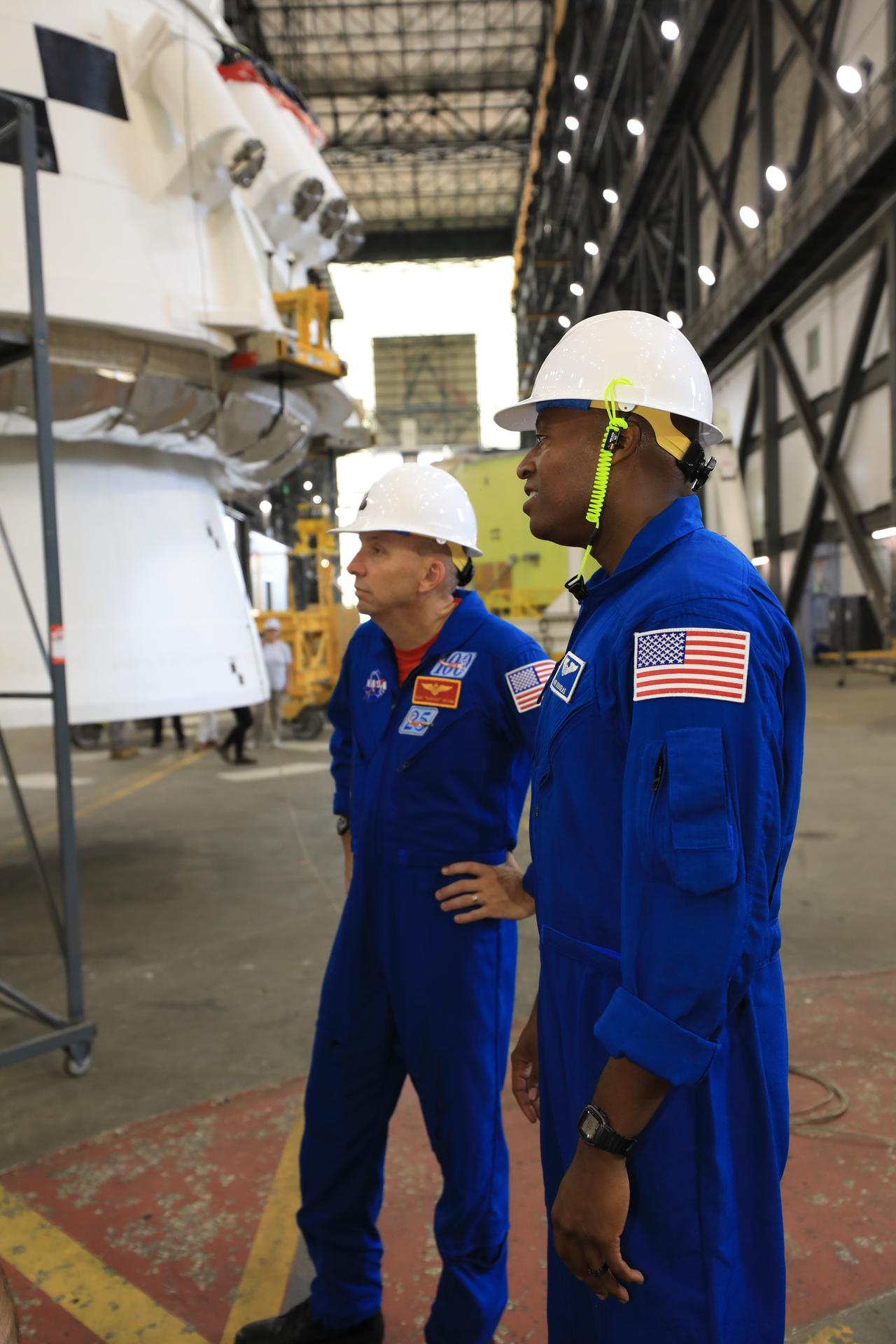
Artemis III Crew Visit VAB
Artemis III crew members, NASA astronauts Randy Bresnik (left) and Andre Douglas, view the right-hand aft assembly solid rocket booster segment of the Artemis III SLS (Space Launch System)…
Inspect NASA record
Artemis III crew members, NASA astronauts Randy Bresnik (left) and Andre Douglas, view the right-hand aft assembly solid rocket booster segment of the Artemis III SLS (Space Launch System) rocket inside the Vehicle Assembly Building at NASA’s Kennedy Space Center in Florida on Friday, July 10, 2026. The astronauts met with NASA’s Exploration Ground Systems teams and got a close look at the work underway for their upcoming mission. Bresnik, Douglas, NASA astronaut Frank Rubio, and ESA (European Space Agency) astronaut Luca Parmitano will launch on the Artemis III mission to conduct critical rendezvous and docking tests with lunar lander systems in low Earth orbit, advancing the capabilities needed before astronauts return to the lunar surface on Artemis IV.
- Record ID
- KSC-20260710-PH-KLS02_0093
- NASA center
- KSC
- Date
- 2026-07-10
- Credit
- NASA/Kim Shiflett
- Keywords
- John. F. Kennedy Space Center, Kennedy, Kennedy Space Center, KSC, Spaceport, Cape Canaveral, NASA, rocket ranch, Florida, multi-user spaceport, premier spaceport, space coast
KSC · 2012-11-03 · KSC-2012-6155
KSC-2012-6155
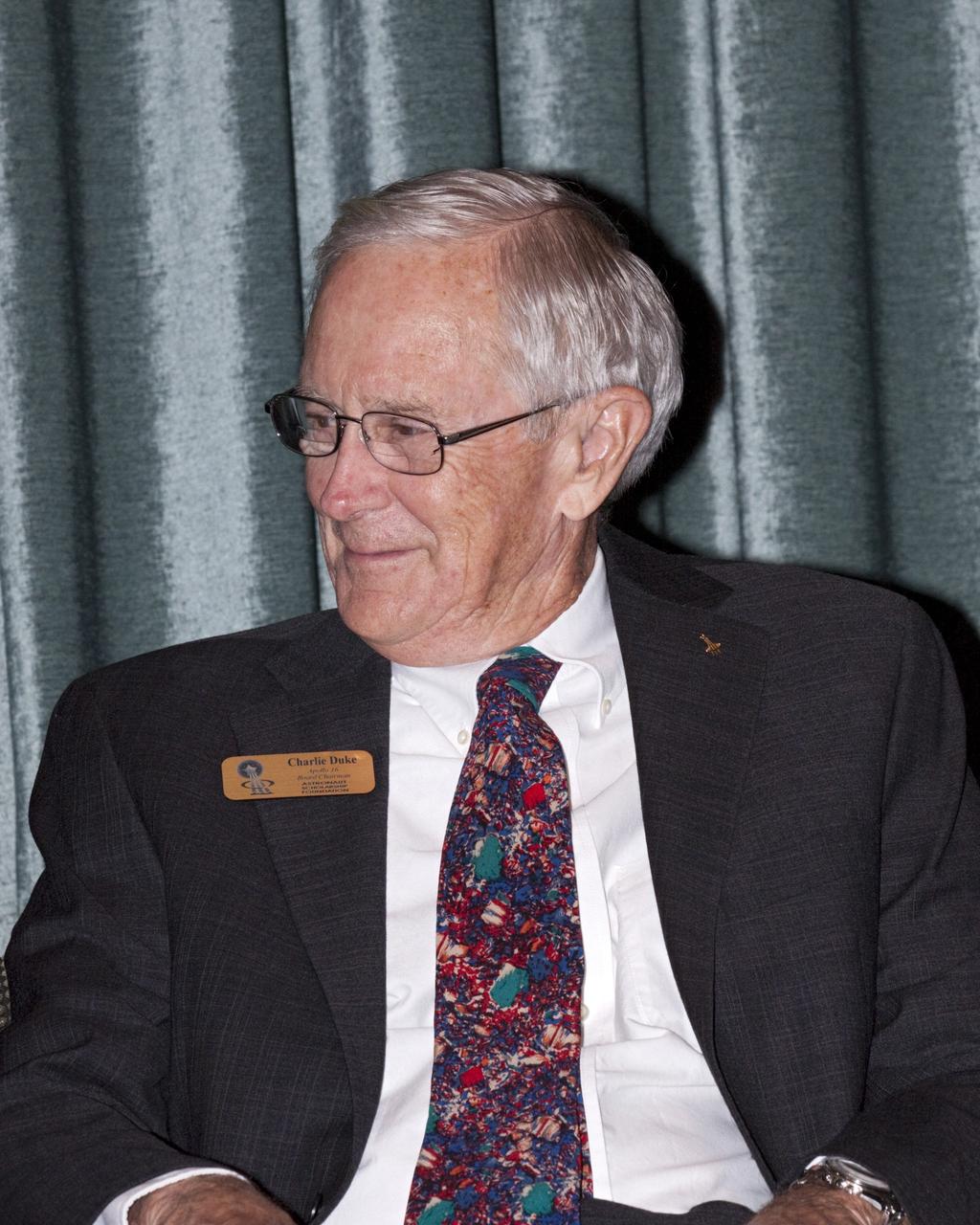
CAPE CANAVERAL, Fla. – Apollo 16 astronaut Charles Duke participates in a presentation to guests gathered for the Astronaut Scholarship Foundation's dinner at the Radisson Resort at the…
Inspect NASA record
CAPE CANAVERAL, Fla. – Apollo 16 astronaut Charles Duke participates in a presentation to guests gathered for the Astronaut Scholarship Foundation's dinner at the Radisson Resort at the Port in Cape Canaveral celebrating the 40th anniversary of Apollo 17. The gala commemorating the anniversary of Apollo 17 included mission commander Eugene Cernan and other astronauts who flew Apollo missions. Launched Dec. 7, 1972, Cernan and lunar module pilot Harrison Schmitt landed in the moon's Taurus-Littrow highlands while command module pilot Ronald Evans remained in lunar orbit operating a scientific instrument module. For more information, visit http://www-pao.ksc.nasa.gov/history/apollo/apollo-17/apollo-17.htm Photo credit: NASA/Kim Shiflett
- Record ID
- KSC-2012-6155
- NASA center
- KSC
- Date
- 2012-11-03
- Keywords
- Kennedy History, Apollo, KSC Events