
Update Site (from NASA)
Explore NASA’s Image and Video Library.
Suggest one object per day for the Interstellar Minds collection. We review each suggestion before adding it.
Sign in to suggest a Marvel.
Find a NASA image ID. Open a NASA record and copy its ID from the end of the details URL.
NASA image records

KSC · 2023-11-02 · KSC-20231102-PH-FMX01_0023
MSOLO PRIME-1 Simulation
A team from Honeybee Robotics in Altadena, California participates in simulation training for the Polar Resources Ice Mining Experiment-1 (PRIME-1) on Thursday, Nov. 2, 2023, inside the Neil…
Inspect NASA record
A team from Honeybee Robotics in Altadena, California participates in simulation training for the Polar Resources Ice Mining Experiment-1 (PRIME-1) on Thursday, Nov. 2, 2023, inside the Neil Armstrong Operations and Checkout Building at NASA’s Kennedy Space Center in Florida. The purpose of the training is to get the integrated PRIME-1 team – engineers with PRIME-1’s MSOLO (Mass Spectrometer Observing Lunar Operations) and Honeybee Robotics’ TRIDENT (The Regolith and Ice Drill for Exploring New Terrain) drill – prepared to operate the instrument on the lunar surface. The team commanded the PRIME-1 hardware, located at Intuitive Machines in Houston, to operate MSOLO and TRIDENT. PRIME-1 is scheduled to launch through NASA’s CLPS (Commercial Lunar Payload Delivery Service) initiative and will be the first in-situ resource utilization demonstration on the Moon, with MSOLO and TRIDENT making up its two primary components. Through Artemis missions, CLPS deliveries will be used to perform science experiments, test technologies, and demonstrate capabilities to help NASA explore the Moon and prepare for human deep space exploration missions.
- Record ID
- KSC-20231102-PH-FMX01_0023
- NASA center
- KSC
- Date
- 2023-11-02
- Credit
- NASA/Frank Michaux
- Keywords
- CLPS, Cape Canaveral, Florida, IM-2, John. F. Kennedy Space Center, KSC, Kennedy Space Center, MLI, MSOLO, Moon to Mars, NASA, NASA Tech
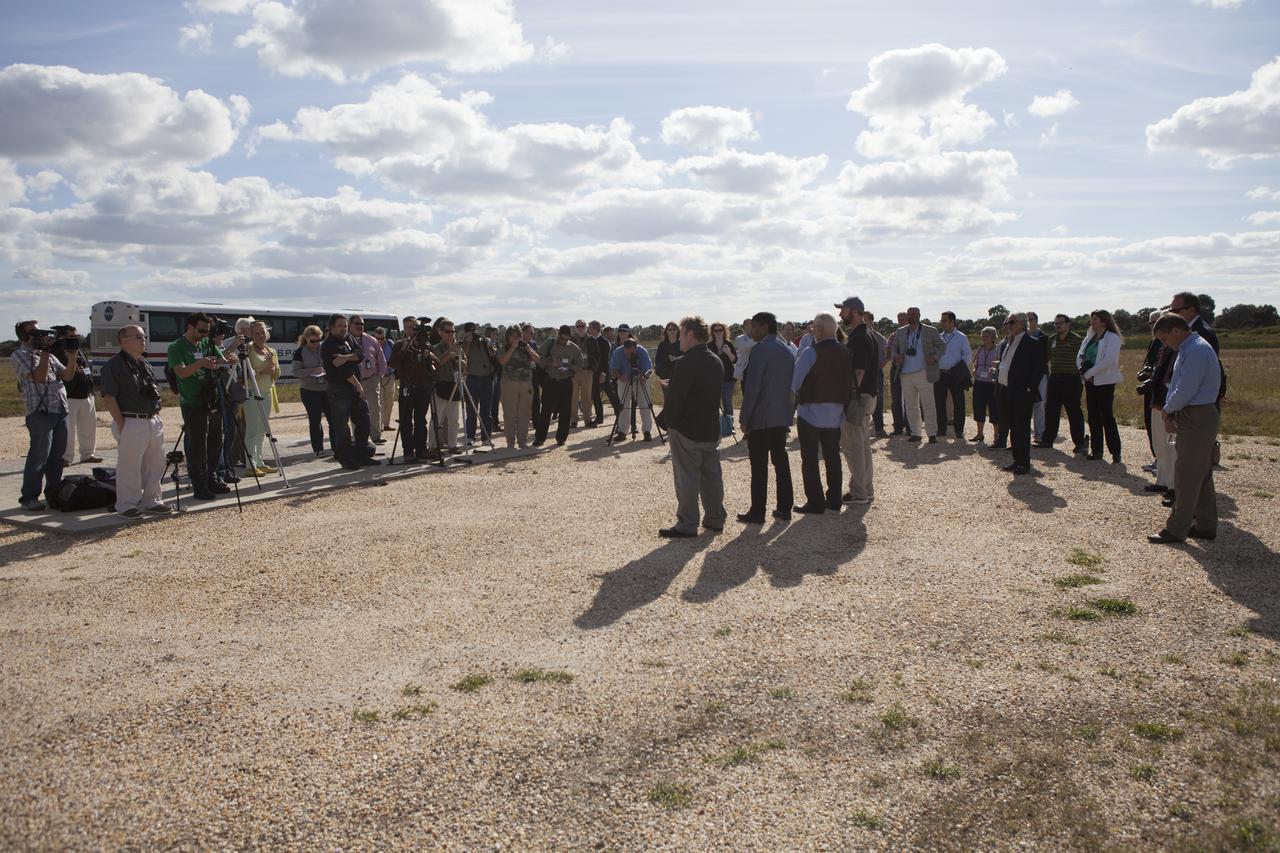
KSC · 2014-11-03 · KSC-314D-0485_0053
Moon Express Media Event
Bob Richards, standing at left in front of the cameras, co-founder and chief executive officer of Moon Express Inc., of Moffett Field, California, speaks to the media during…
Inspect NASA record
Bob Richards, standing at left in front of the cameras, co-founder and chief executive officer of Moon Express Inc., of Moffett Field, California, speaks to the media during an event to announce the company's selection to utilize Kennedy Space Center facilities as part of NASA's Lunar Cargo Transportation and Landing by Soft Touchdown, or Lunar CATALYST, initiative. Third from left in the group is former NASA Apollo astronaut Buzz Aldrin. The event took place at Kennedy's automated landing and hazard avoidance technology, or ALHAT, hazard field at the north end of the Shuttle Landing Facility. Moon Express is developing a lander with capabilities that will enable delivery of payloads to the surface of the moon, as well as new science and exploration missions of interest to NASA and scientific and academic communities. Moon Express will base its activities at Kennedy and utilize the Morpheus ALHAT field and a hangar nearby for CATALYST testing. The Advanced Exploration Systems Division of NASA's Human Exploration and Operations Mission Directorate manages Lunar CATALYST.
- Record ID
- KSC-314D-0485_0053
- NASA center
- KSC
- Date
- 2014-11-03
- Keywords
- KSC-2014-4374
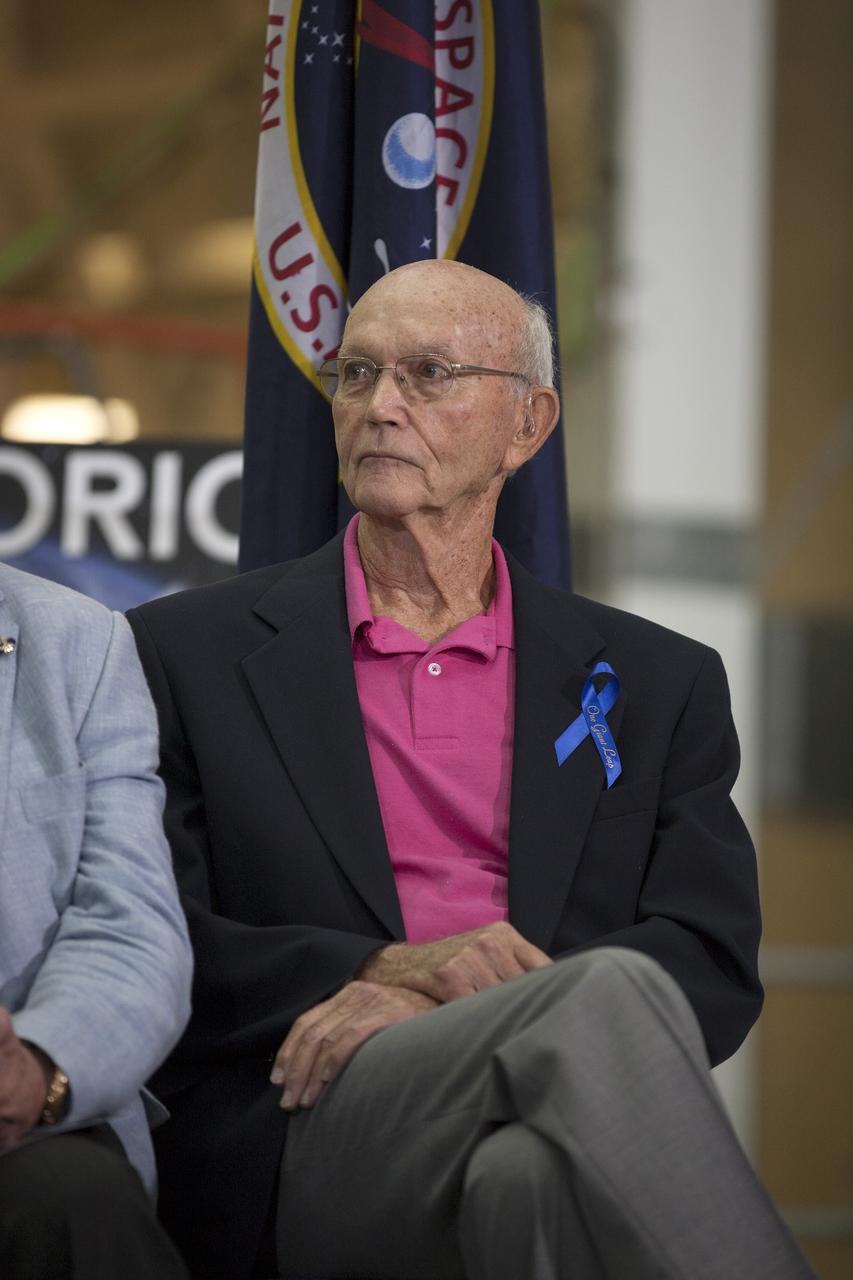
KSC · 2014-07-21 · KSC-2014-3205
KSC-2014-3205
CAPE CANAVERAL, Fla. -- At the Kennedy Space Center in Florida, Apollo 11 astronaut Michael Collins participates in a ceremony renaming the refurbished Operations and Checkout Building for…
Inspect NASA record
CAPE CANAVERAL, Fla. -- At the Kennedy Space Center in Florida, Apollo 11 astronaut Michael Collins participates in a ceremony renaming the refurbished Operations and Checkout Building for Apollo 11 astronaut Neil Armstrong, the first person to set foot on the moon. The building's high bay is being used to support the agency's new Orion spacecraft and is the same spaceport facility where the Apollo 11 command/service module and lunar module were prepped for the first lunar landing mission in 1969. Orion is designed to take humans farther than they’ve ever gone before, serving as the exploration vehicle that will carry astronauts to deep space and sustain the crew during travel to destinations such as an asteroid or Mars. The ceremony was part of NASA's 45th anniversary celebration of the Apollo 11 moon landing. As the world watched, Neil Armstrong and Buzz Aldrin landed in the moon's Sea of Tranquility on July 20, 1969, aboard the lunar module Eagle. Meanwhile, crewmate Michael Collins orbited above in the command module Columbia. For more, visit http://www.nasa.gov/press/2014/july/nasa-honors-historic-first-moon-landing-eyes-first-mars-mission. Photo credit: NASA/Kim Shiflett
- Record ID
- KSC-2014-3205
- NASA center
- KSC
- Date
- 2014-07-21
- Keywords
- O&C
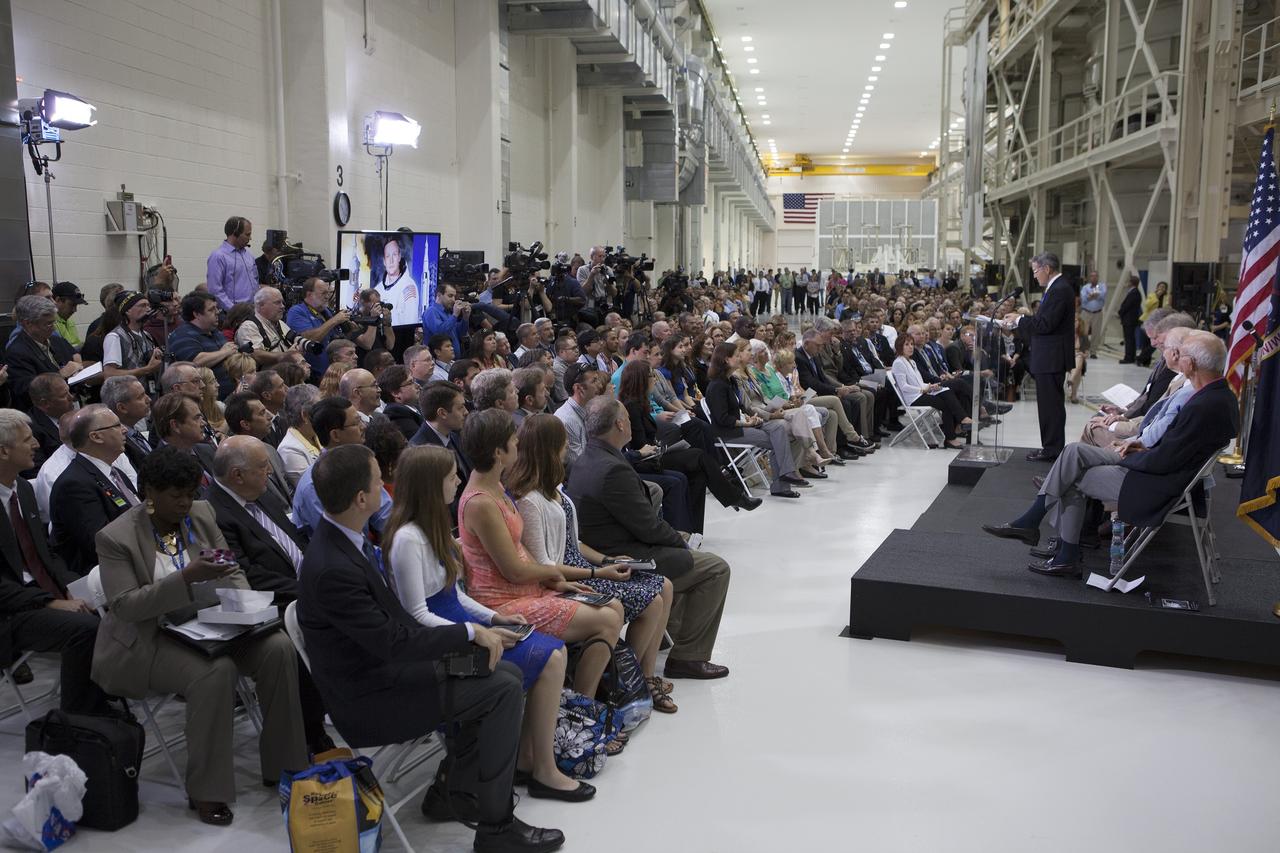
KSC · 2014-07-21 · KSC-2014-3213
KSC-2014-3213
CAPE CANAVERAL, Fla. -- At the Kennedy Space Center in Florida, Center Director Robert Cabana addresses the audience at a ceremony renaming the refurbished Operations and Checkout Building…
Inspect NASA record
CAPE CANAVERAL, Fla. -- At the Kennedy Space Center in Florida, Center Director Robert Cabana addresses the audience at a ceremony renaming the refurbished Operations and Checkout Building for Apollo 11 astronaut Neil Armstrong, the first person to set foot on the moon. The building's high bay is being used to support the agency's new Orion spacecraft and is the same spaceport facility where the Apollo 11 command/service module and lunar module were prepped for the first lunar landing mission in 1969. Orion is designed to take humans farther than they’ve ever gone before, serving as the exploration vehicle that will carry astronauts to deep space and sustain the crew during travel to destinations such as an asteroid or Mars. The ceremony was part of NASA's 45th anniversary celebration of the Apollo 11 moon landing. As the world watched, Neil Armstrong and Buzz Aldrin landed in the moon's Sea of Tranquility on July 20, 1969, aboard the lunar module Eagle. Meanwhile, crewmate Michael Collins orbited above in the command module Columbia. For more, visit http://www.nasa.gov/press/2014/july/nasa-honors-historic-first-moon-landing-eyes-first-mars-mission. Photo credit: NASA/Kim Shiflett
- Record ID
- KSC-2014-3213
- NASA center
- KSC
- Date
- 2014-07-21
- Keywords
- O&C

KSC · 2014-07-21 · KSC-2014-3219
KSC-2014-3219
CAPE CANAVERAL, Fla. -- At the Kennedy Space Center in Florida, media representatives turn out for a ceremony renaming the refurbished Operations and Checkout Building for Apollo 11…
Inspect NASA record
CAPE CANAVERAL, Fla. -- At the Kennedy Space Center in Florida, media representatives turn out for a ceremony renaming the refurbished Operations and Checkout Building for Apollo 11 astronaut Neil Armstrong, the first person to set foot on the moon. The building's high bay, in which the ceremony was held, is being used to support the agency's new Orion spacecraft and is the same spaceport facility where the Apollo 11 command/service module and lunar module were prepped for the first lunar landing mission in 1969. Orion is designed to take humans farther than they’ve ever gone before, serving as the exploration vehicle that will carry astronauts to deep space and sustain the crew during travel to destinations such as an asteroid or Mars. The ceremony was part of NASA's 45th anniversary celebration of the Apollo 11 moon landing. As the world watched, Neil Armstrong and Buzz Aldrin landed in the moon's Sea of Tranquility on July 20, 1969, aboard the lunar module Eagle. Meanwhile, crewmate Michael Collins orbited above in the command module Columbia. For more, visit http://www.nasa.gov/press/2014/july/nasa-honors-historic-first-moon-landing-eyes-first-mars-mission. Photo credit: NASA/Kim Shiflett
- Record ID
- KSC-2014-3219
- NASA center
- KSC
- Date
- 2014-07-21
- Keywords
- O&C
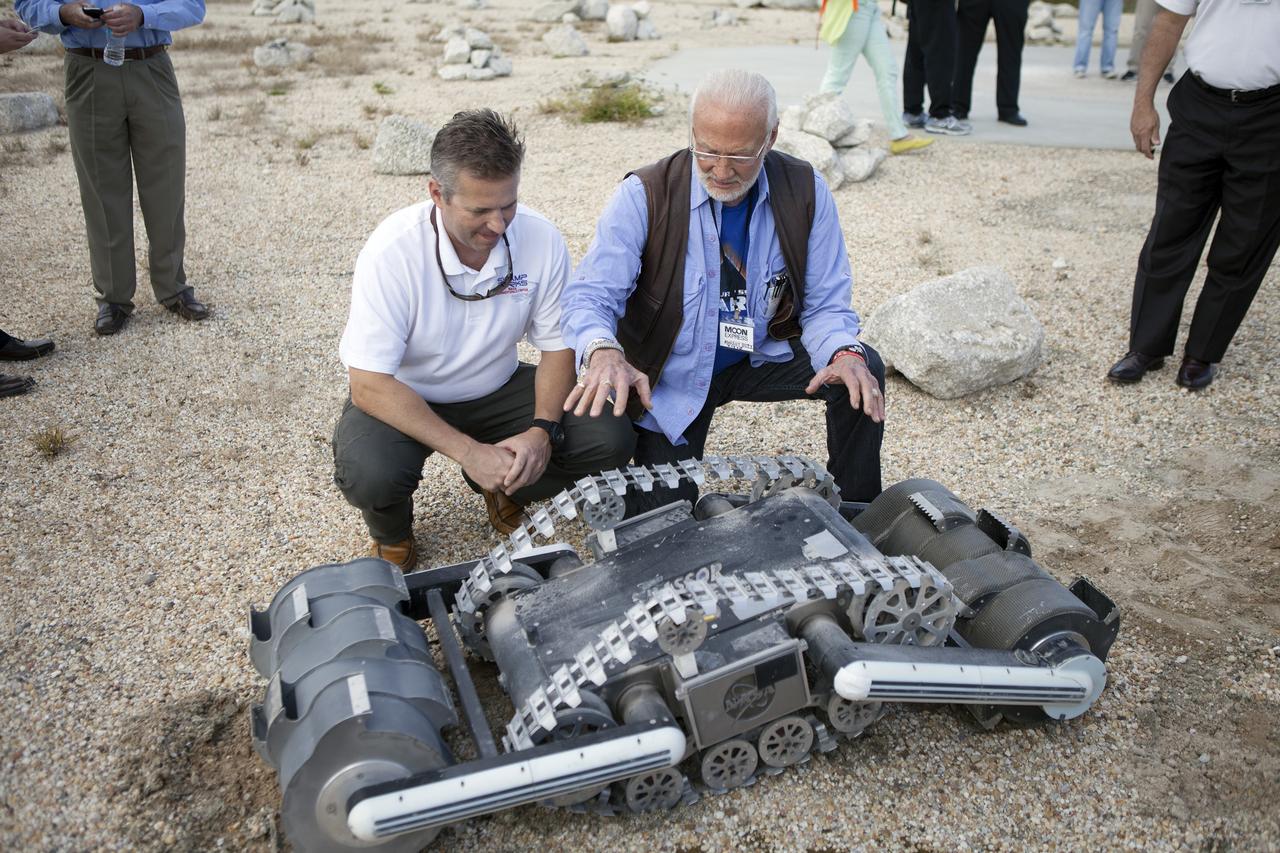
KSC · 2014-11-03 · KSC-2014-4378
KSC-2014-4378
CAPE CANAVERAL, Fla. - Rob Mueller, left, NASA senior technologist in the Surface Systems Office in Kennedy Space Center's Engineering and Technology Directorate, talks with former NASA Apollo…
Inspect NASA record
CAPE CANAVERAL, Fla. - Rob Mueller, left, NASA senior technologist in the Surface Systems Office in Kennedy Space Center's Engineering and Technology Directorate, talks with former NASA Apollo astronaut Buzz Aldrin during a demonstration of the Regolith Advanced Surface Systems Operations Robot, or RASSOR, at the automated landing and hazard avoidance technology, or ALHAT, hazard field at the north end of the Shuttle Landing Facility at NASA's Kennedy Space Center in Florida. The event was held to announce Moon Express Inc., of Moffett Field, California is selected to utilize Kennedy facilities for NASA's Lunar Cargo Transportation and Landing by Soft Touchdown, or Lunar CATALYST, initiative. Moon Express is developing a lander with capabilities that will enable delivery of payloads to the surface of the moon, as well as new science and exploration missions of interest to NASA and scientific and academic communities. Moon Express will base its activities at Kennedy and utilize the Morpheus ALHAT field and a hangar nearby for CATALYST testing. The Advanced Exploration Systems Division of NASA's Human Exploration and Operations Mission Directorate manages Lunar CATALYST. Photo credit: NASA/Ben Smegelsky
- Record ID
- KSC-2014-4378
- NASA center
- KSC
- Date
- 2014-11-03
- Keywords
- Moon Express, ALHAT, CATALYST
KSC · 2014-11-03 · KSC-2014-4375
KSC-2014-4375
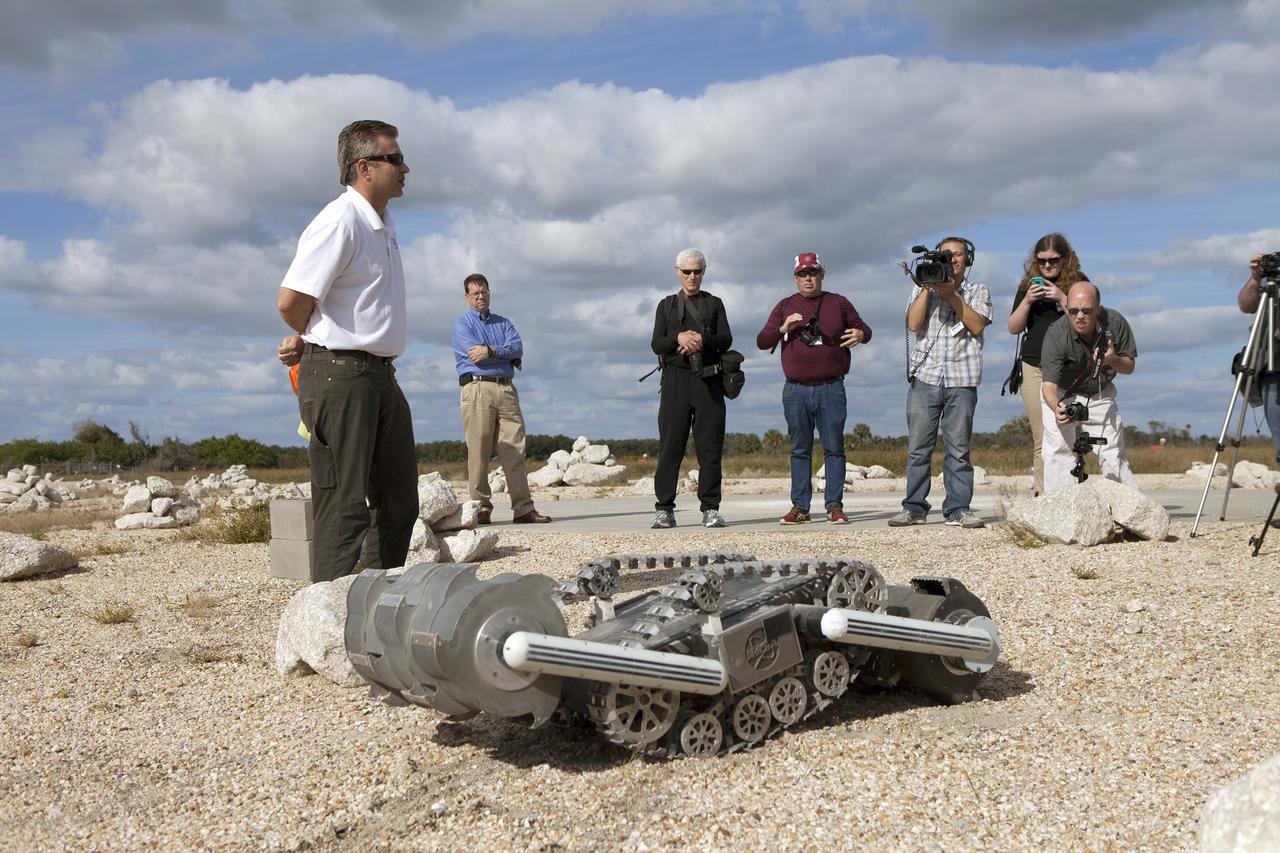
CAPE CANAVERAL, Fla. - Rob Mueller, NASA senior technologist in the Surface Systems Office in Kennedy Space Center's Engineering and Technology Directorate, demonstrates the Regolith Advanced Surface System…
Inspect NASA record
CAPE CANAVERAL, Fla. - Rob Mueller, NASA senior technologist in the Surface Systems Office in Kennedy Space Center's Engineering and Technology Directorate, demonstrates the Regolith Advanced Surface System Operations Robot, or RASSOR, during a media event at Kennedy's automated landing and hazard avoidance technology, or ALHAT, hazard field at the north end of the Shuttle Landing Facility. The event was held to announce Moon Express Inc., of Moffett Field, California is selected to utilize Kennedy facilities for NASA's Lunar Cargo Transportation and Landing by Soft Touchdown, or Lunar CATALYST, initiative. Moon Express is developing a lander with capabilities that will enable delivery of payloads to the surface of the moon, as well as new science and exploration missions of interest to NASA and scientific and academic communities. Moon Express will base its activities at Kennedy and utilize the Morpheus ALHAT field and a hangar nearby for CATALYST testing. The Advanced Exploration Systems Division of NASA's Human Exploration and Operations Mission Directorate manages Lunar CATALYST. Photo credit: NASA/Ben Smegelsky
- Record ID
- KSC-2014-4375
- NASA center
- KSC
- Date
- 2014-11-03
- Keywords
- Moon Express, ALHAT, CATALYST
ARC · 2006-04-10 · ARC-2006-ACD06-0232-005
ARC-2006-ACD06-0232-005
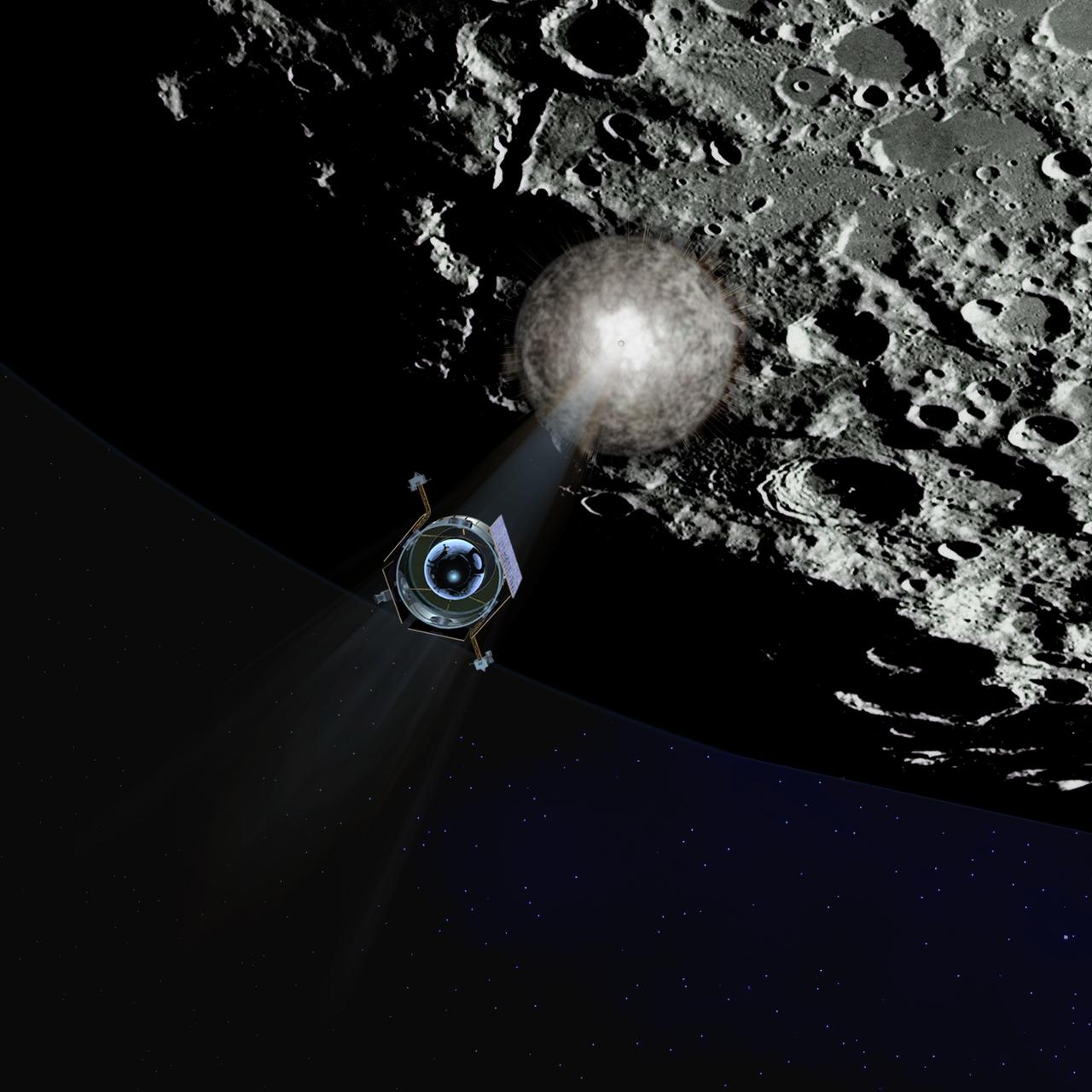
LCROSS (Lunar CRater Observation and Sensing Satellite) Mission Art IMAGES COURTESY OF NORTHROP GRUMMAN, WILLIAM FURLONG, ARTIST This NASA Ames spacecraft is a small 'secondary payload' spacecraft that…
Inspect NASA record
LCROSS (Lunar CRater Observation and Sensing Satellite) Mission Art IMAGES COURTESY OF NORTHROP GRUMMAN, WILLIAM FURLONG, ARTIST This NASA Ames spacecraft is a small 'secondary payload' spacecraft that will travel with Lunar Reconnaissance Obriter (LRO) satellite to the moon on the same rocket, the Evolved Expendable Launch Vehicle (EELV) to be launched from Kennedy Space Center, Florida in a search for water ice on the moon's south polar region. As the spacecraft approaches the moon's south pole, the upper stge will separate, and then will impact a crater in the south pole area. A plume from the upper stage crash will develope as the Shepherding Spacecraft heads in toward the moon. The Shepherding Spacecrat will fly through the plume, and instruments on the spacecraft wil analyze the cloud to look for signs of water and other compounds. Additional space and Earth-based instruments will study the 2.2-millon-pound (1000-metric-ton) plume. 'The LCROSS mission will help us to determine if there is water hidden in the permanently dark craters on the moon's south pole.' said Marvin( (Chris) Christensen, Robotic Lunar Exploration Program (RLEP) manager, and Deputy Director of NASA Ames.
- Record ID
- ARC-2006-ACD06-0232-005
- NASA center
- ARC
- Date
- 2006-04-10
- Keywords
- LCROSS
KSC · 2014-07-21 · KSC-2014-3221
KSC-2014-3221
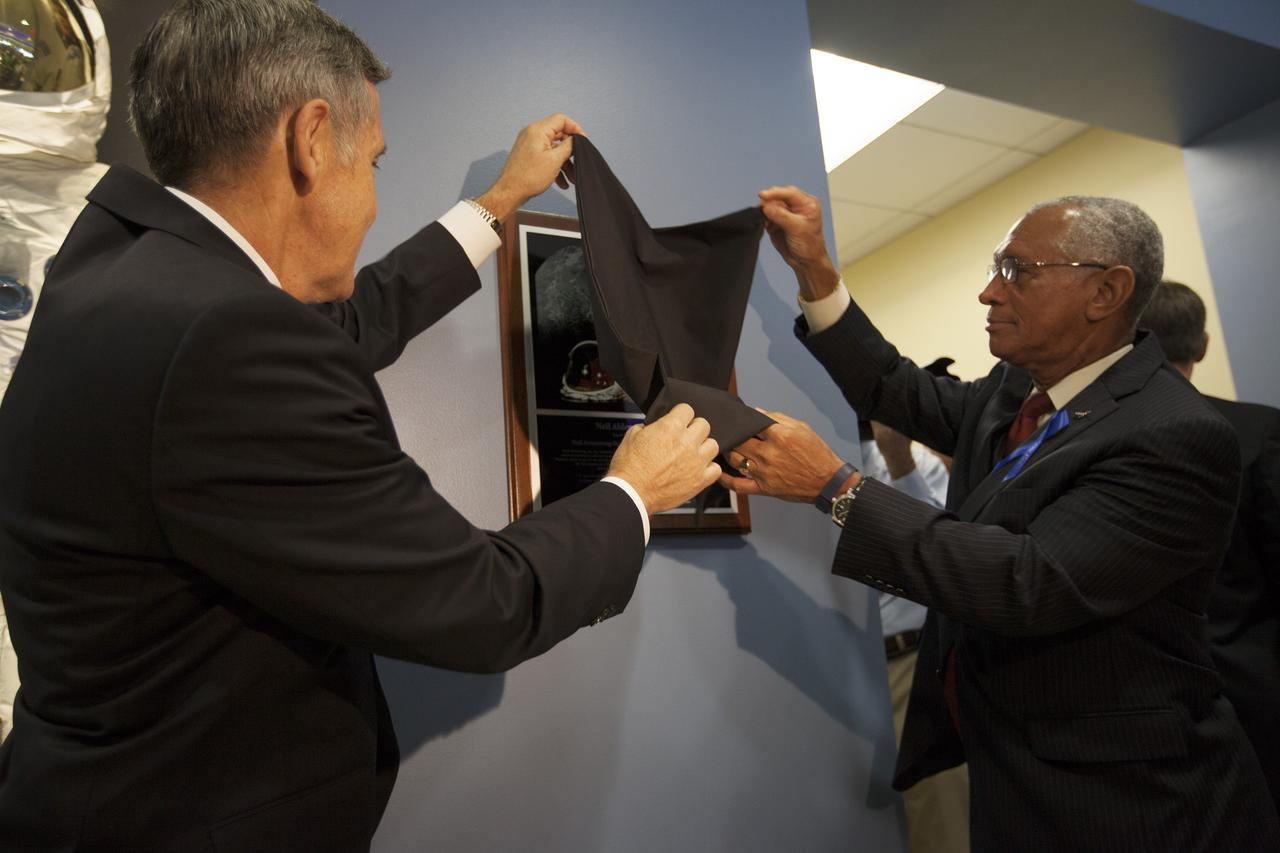
CAPE CANAVERAL, Fla. -- At the Kennedy Space Center in Florida, Center Director Robert Cabana, left, and NASA Administrator Charles Bolden unveil a plaque on display in the…
Inspect NASA record
CAPE CANAVERAL, Fla. -- At the Kennedy Space Center in Florida, Center Director Robert Cabana, left, and NASA Administrator Charles Bolden unveil a plaque on display in the lobby of the newly named Neil Armstrong Operations and Checkout Building. The facility has been renamed for Apollo 11 astronaut Neil Armstrong, the first person to set foot on the moon. The building's high bay is being used to support the agency's new Orion spacecraft and is the same spaceport facility where the Apollo 11 command/service module and lunar module were prepped for the first lunar landing mission in 1969. Orion is designed to take humans farther than they’ve ever gone before, serving as the exploration vehicle that will carry astronauts to deep space and sustain the crew during travel to destinations such as an asteroid or Mars. The unveiling was part of NASA's 45th anniversary celebration of the Apollo 11 moon landing. As the world watched, Apollo 11 astronauts landed in the moon's Sea of Tranquility aboard the lunar module, Eagle, on July 20, 1969, as the command module, Columbia, orbited overhead. For more: http://www.nasa.gov/press/2014/july/nasa-honors-historic-first-moon-landing-eyes-first-mars-mission/ Photo credit: NASA/Kim Shiflett
- Record ID
- KSC-2014-3221
- NASA center
- KSC
- Date
- 2014-07-21

KSC · 2023-11-02 · KSC-20231102-PH-FMX01_0012
MSOLO PRIME-1 Simulation
A team of engineers participates in simulation training for the Polar Resources Ice Mining Experiment-1 (PRIME-1) on Thursday, Nov. 2, 2023, inside the Neil Armstrong Operations and Checkout…
Inspect NASA record
A team of engineers participates in simulation training for the Polar Resources Ice Mining Experiment-1 (PRIME-1) on Thursday, Nov. 2, 2023, inside the Neil Armstrong Operations and Checkout Building at NASA’s Kennedy Space Center in Florida. The purpose of the training is to get the integrated PRIME-1 team – engineers with PRIME-1’s MSOLO (Mass Spectrometer Observing Lunar Operations) and Honeybee Robotics’ TRIDENT (The Regolith and Ice Drill for Exploring New Terrain) drill – prepared to operate the instrument on the lunar surface. The team commanded the PRIME-1 hardware, located at Intuitive Machines in Houston, to operate MSOLO and TRIDENT. PRIME-1 is scheduled to launch through NASA’s CLPS (Commercial Lunar Payload Delivery Service) initiative and will be the first in-situ resource utilization demonstration on the Moon, with MSOLO and TRIDENT making up its two primary components. Through Artemis missions, CLPS deliveries will be used to perform science experiments, test technologies, and demonstrate capabilities to help NASA explore the Moon and prepare for human deep space exploration missions.
- Record ID
- KSC-20231102-PH-FMX01_0012
- NASA center
- KSC
- Date
- 2023-11-02
- Credit
- NASA/Frank Michaux
- Keywords
- CLPS, Cape Canaveral, Florida, IM-2, John. F. Kennedy Space Center, KSC, Kennedy Space Center, MLI, MSOLO, Moon to Mars, NASA, NASA Tech
KSC · 2023-11-02 · KSC-20231102-PH-FMX01_0056
MSOLO PRIME-1 Simulation
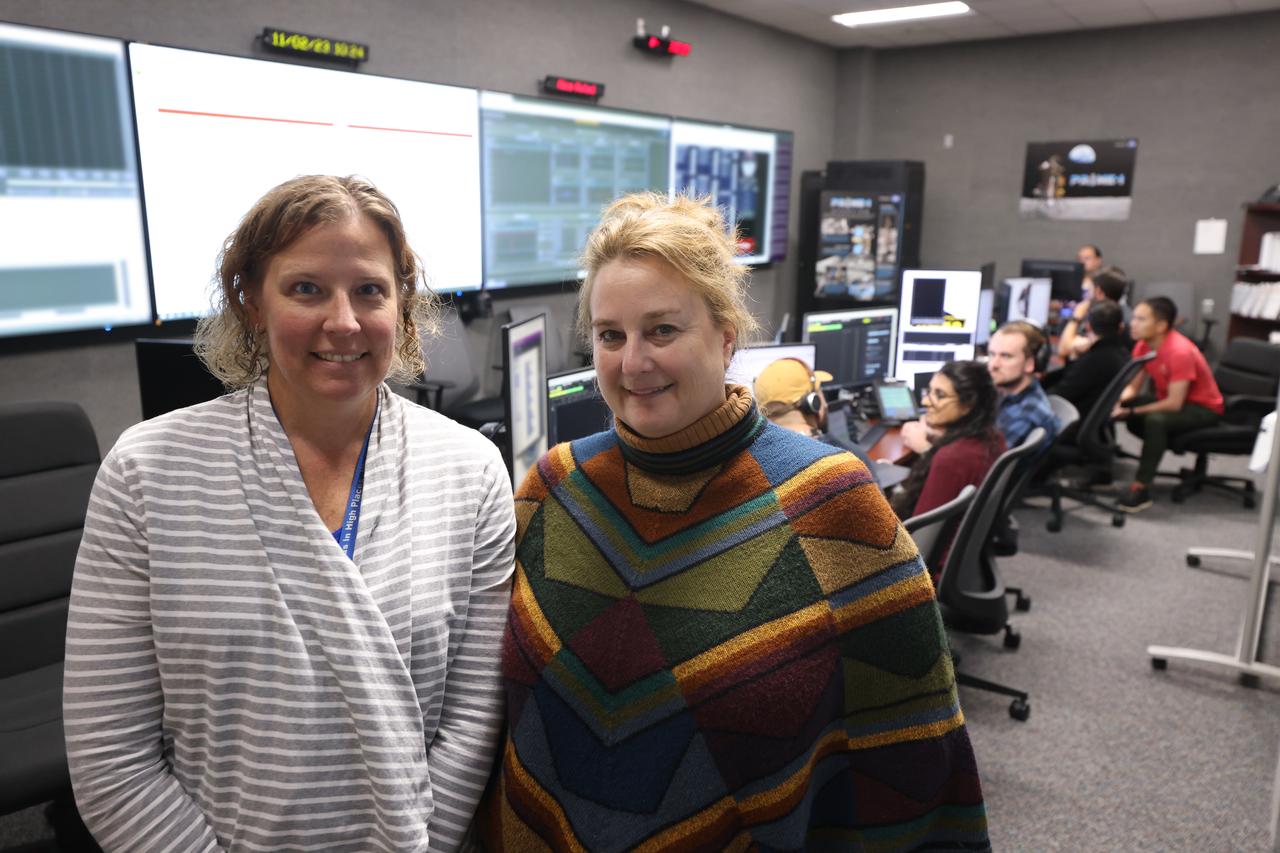
Janine Captain, left, and Jackie Quinn participate in simulation training for the Polar Resources Ice Mining Experiment-1 (PRIME-1) on Thursday, Nov. 2, 2023, inside the Neil Armstrong Operations…
Inspect NASA record
Janine Captain, left, and Jackie Quinn participate in simulation training for the Polar Resources Ice Mining Experiment-1 (PRIME-1) on Thursday, Nov. 2, 2023, inside the Neil Armstrong Operations and Checkout Building at NASA’s Kennedy Space Center in Florida. The purpose of the training is to get the integrated PRIME-1 team – engineers with PRIME-1’s MSOLO (Mass Spectrometer Observing Lunar Operations) and Honeybee Robotics’ TRIDENT (Regolith and Ice Drill for Exploring New Terrain) drill – prepared to operate the instrument on the lunar surface. The team commanded the PRIME-1 hardware, located at Intuitive Machines in Houston, to operate MSOLO and TRIDENT. PRIME-1 is scheduled to launch through NASA’s CLPS (Commercial Lunar Payload Delivery Service) initiative and will be the first in-situ resource utilization demonstration on the Moon, with MSOLO and TRIDENT making up its two primary components. Through Artemis missions, CLPS deliveries will be used to perform science experiments, test technologies, and demonstrate capabilities to help NASA explore the Moon and prepare for human deep space exploration missions.
- Record ID
- KSC-20231102-PH-FMX01_0056
- NASA center
- KSC
- Date
- 2023-11-02
- Credit
- NASA/Frank Michaux
- Keywords
- John. F. Kennedy Space Center, Kennedy, Kennedy Space Center, KSC, Spaceport, Cape Canaveral, NASA, rocket ranch, Florida, multi-user spaceport, premier spaceport, space coast

KSC · 2014-07-21 · KSC-2014-3243
KSC-2014-3243
CAPE CANAVERAL, Fla. -- Apollo astronaut Michael Collins tours the astronaut crew quarters in the Operations and Checkout Building at NASA's Kennedy Space Center in Florida, accompanied by…
Inspect NASA record
CAPE CANAVERAL, Fla. -- Apollo astronaut Michael Collins tours the astronaut crew quarters in the Operations and Checkout Building at NASA's Kennedy Space Center in Florida, accompanied by family members and friends. The tour followed a ceremony renaming the refurbished Operations and Checkout Building for Apollo 11 astronaut Neil Armstrong, the first person to set foot on the moon. Besides housing the crew quarters, the building's high bay is being used to support the agency's new Orion spacecraft and is the same spaceport facility where the Apollo 11 command/service module and lunar module were prepped for the first lunar landing mission in 1969. Orion is designed to take humans farther than they’ve ever gone before, serving as the exploration vehicle that will carry astronauts to deep space and sustain the crew during travel to destinations such as an asteroid or Mars. The visit of the former astronauts was part of NASA's 45th anniversary celebration of the moon landing. As the world watched, Neil Armstrong and Aldrin landed in the moon's Sea of Tranquility aboard the lunar module Eagle on July 20, 1969. Meanwhile, crewmate Collins orbited above in the command module Columbia. For more, visit http://www.nasa.gov/press/2014/july/nasa-honors-historic-first-moon-landing-eyes-first-mars-mission. Photo credit: NASA/Kim Shiflett
- Record ID
- KSC-2014-3243
- NASA center
- KSC
- Date
- 2014-07-21
- Keywords
- O&C