
Update Site (from NASA)
Explore NASA’s Image and Video Library.
Suggest one object per day for the Interstellar Minds collection. We review each suggestion before adding it.
Sign in to suggest a Marvel.
Find a NASA image ID. Open a NASA record and copy its ID from the end of the details URL.
NASA image records
JSC · 2014-06-14 · iss040e011868
Earth Observation
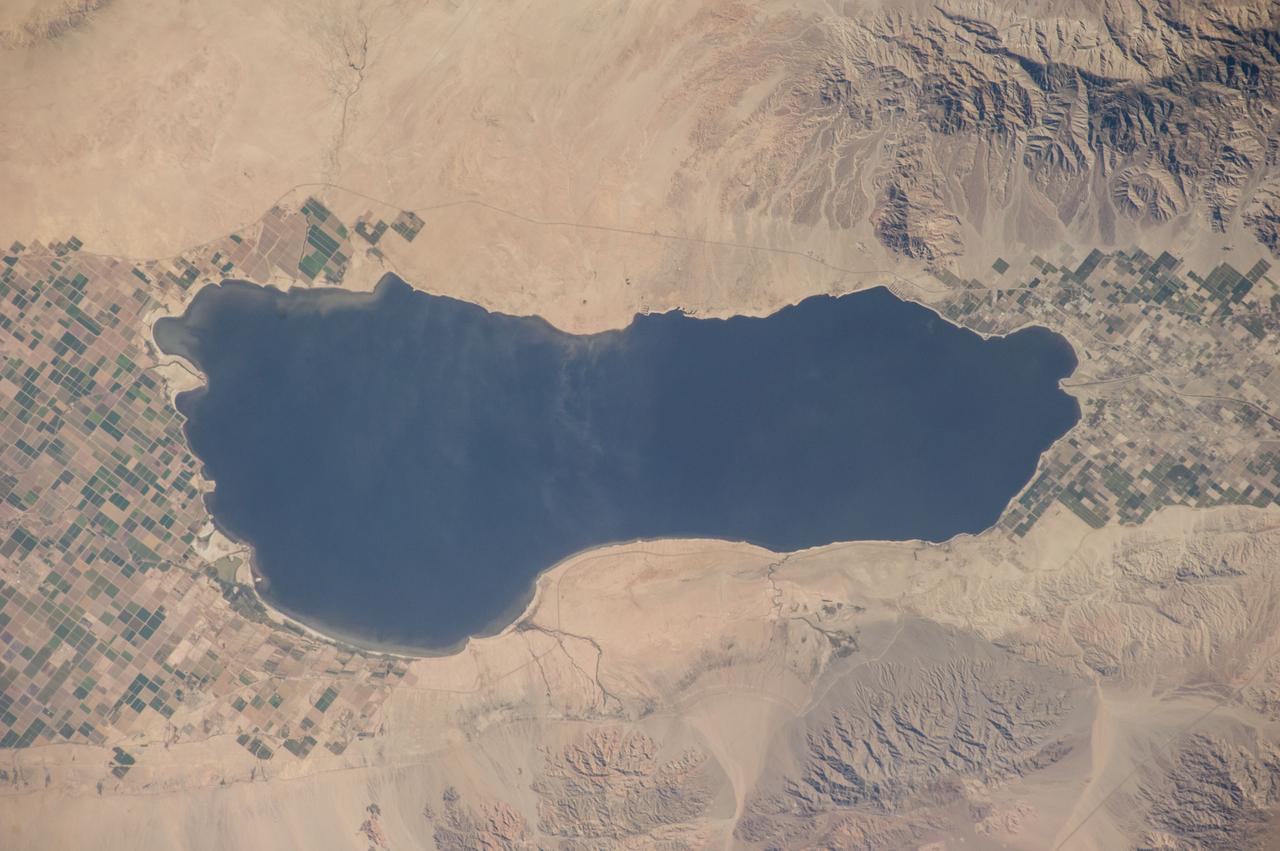
ISS040-E-011868 (14 June 2014) --- The dark waters of the Salton Sea stand out against neighboring cultivation and desert sands in the middle of the Southern California desert,…
Inspect NASA record
ISS040-E-011868 (14 June 2014) --- The dark waters of the Salton Sea stand out against neighboring cultivation and desert sands in the middle of the Southern California desert, as photographed by one of the Expedition 40 crew members aboard the Earth-orbiting International Space Station on June 14, 2014.
- Record ID
- iss040e011868
- NASA center
- JSC
- Date
- 2014-06-14
- Credit
- Steve Swanson

JSC · 2013-09-05 · iss036e039811
Earth Observation
ISS036-E-039811 (30 Aug. 2013) --- One of the Expedition 36 crew members aboard the International Space Station photographed this unusual image of what appear to be either stratocumulus…
Inspect NASA record
ISS036-E-039811 (30 Aug. 2013) --- One of the Expedition 36 crew members aboard the International Space Station photographed this unusual image of what appear to be either stratocumulus or altocumulus clouds off the coast of southern California on Aug. 30, 2013.
- Record ID
- iss036e039811
- NASA center
- JSC
- Date
- 2013-09-05
JSC · 2023-07-17 · iss069e033761
Earth Observation
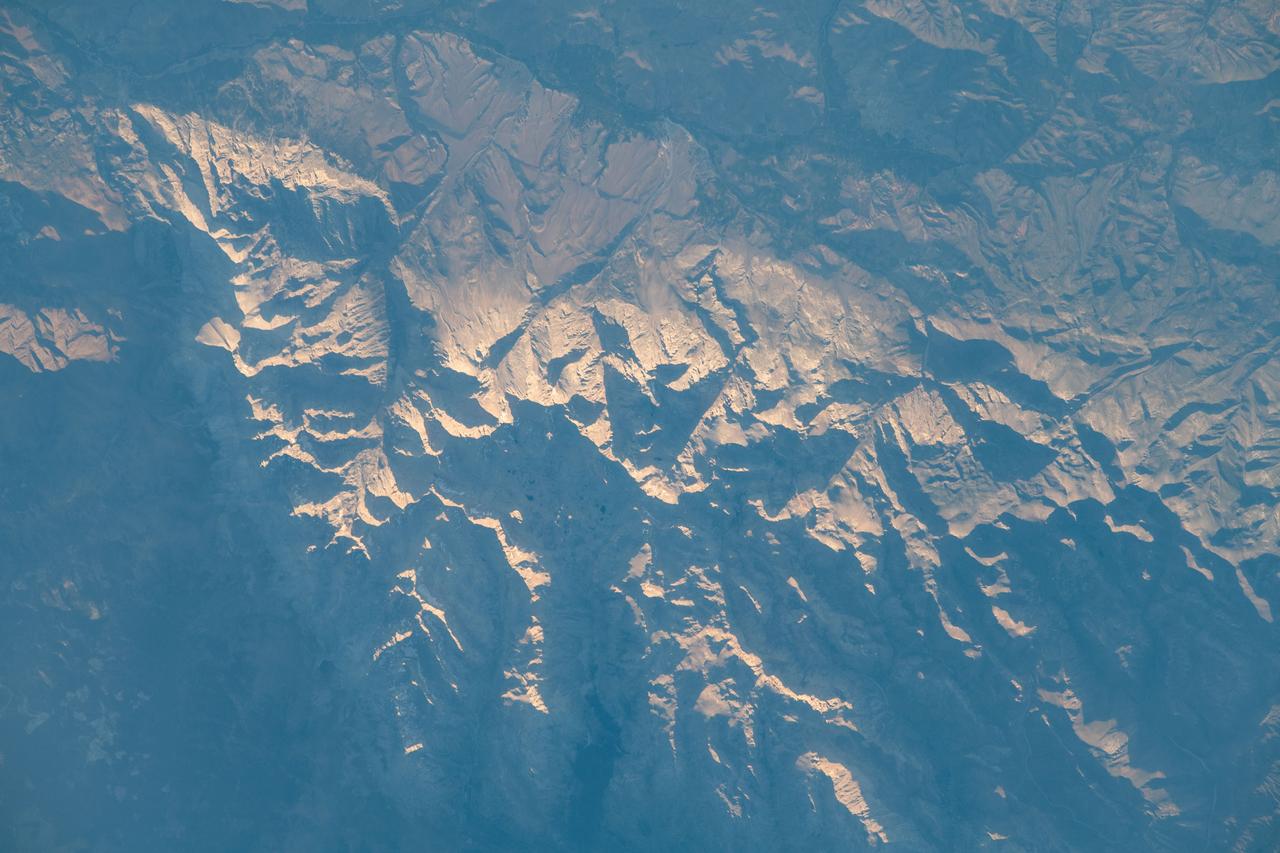
iss069e033761 (July 17, 2023) -- The Sun reflects off mountaintops as the International Space Station orbited roughly 260 miles above Turkey.
Inspect NASA record
iss069e033761 (July 17, 2023) -- The Sun reflects off mountaintops as the International Space Station orbited roughly 260 miles above Turkey.
- Record ID
- iss069e033761
- NASA center
- JSC
- Date
- 2023-07-17
- Credit
- Warren Hoburg
JSC · 2014-07-31 · iss040e083603
Earth Observation
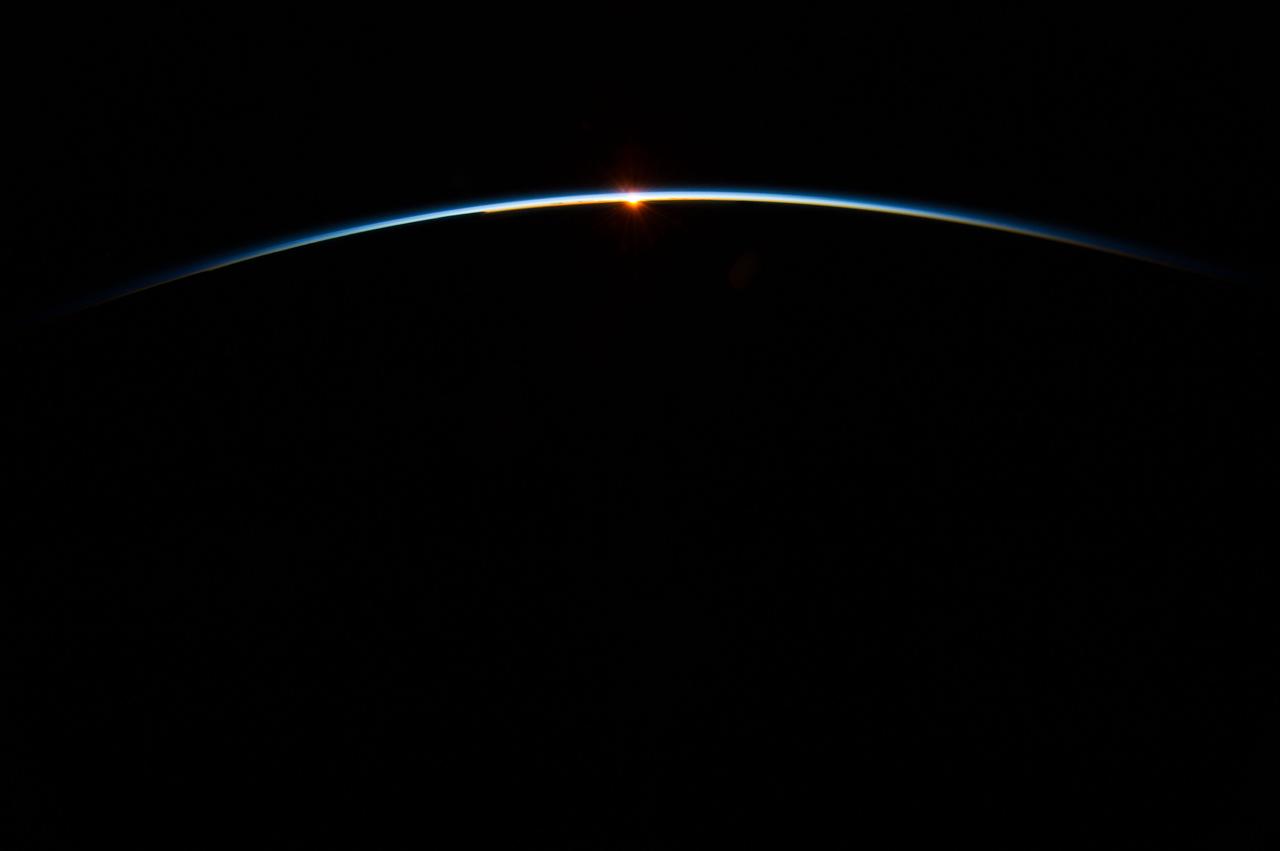
ISS040-E-083603 (31 July 2013) --- The sun, peeking through the thin line of Earth's atmosphere, is featured in this image photographed by an Expedition 40 crew member on…
Inspect NASA record
ISS040-E-083603 (31 July 2013) --- The sun, peeking through the thin line of Earth's atmosphere, is featured in this image photographed by an Expedition 40 crew member on the International Space Station. Crew members onboard the space station see, on average, sixteen sunrises and sunsets during a 24-hour orbital period.
- Record ID
- iss040e083603
- NASA center
- JSC
- Date
- 2014-07-31
- Credit
- Alex Gerst

JSC · 2009-09-09 · s128e010155
Earth Observations
S128-E-010155 (9 Sept. 2009) --- The thin line of Earth's atmosphere and the setting sun are featured in this image photographed by an STS-128 crew member on the…
Inspect NASA record
S128-E-010155 (9 Sept. 2009) --- The thin line of Earth's atmosphere and the setting sun are featured in this image photographed by an STS-128 crew member on the Earth-orbiting Space Shuttle Discovery.
- Record ID
- s128e010155
- NASA center
- JSC
- Date
- 2009-09-09
JSC · 2018-02-12 · iss054e042067
Earth Observation
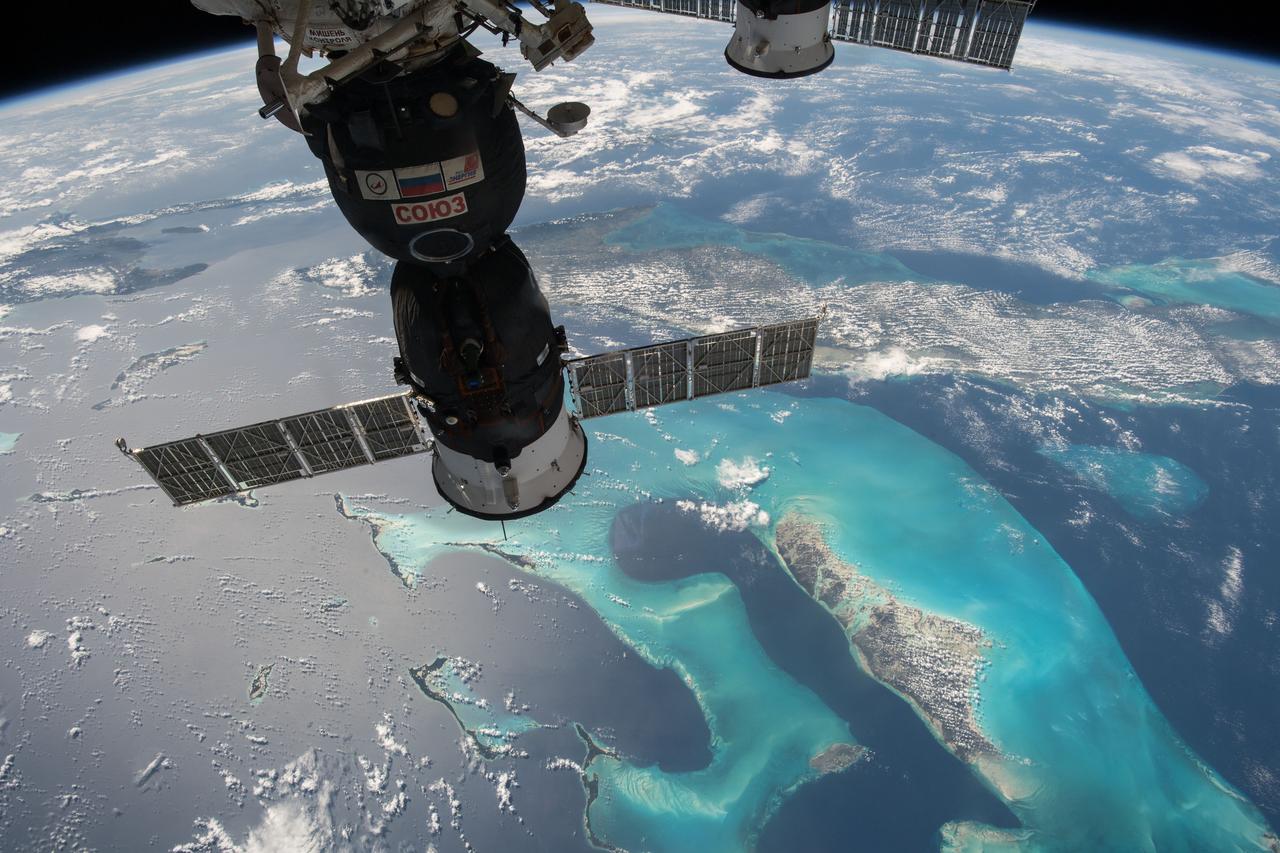
iss054e042067 (Feb, 12, 2018) --- NASA astronaut Scott Tingle captured a photo of the Bahamas from the vantage point of the International Space Station.
Inspect NASA record
iss054e042067 (Feb, 12, 2018) --- NASA astronaut Scott Tingle captured a photo of the Bahamas from the vantage point of the International Space Station.
- Record ID
- iss054e042067
- NASA center
- JSC
- Date
- 2018-02-12
- Credit
- Scott Tingle
JSC · 2020-02-21 · iss062e039313
Earth observation
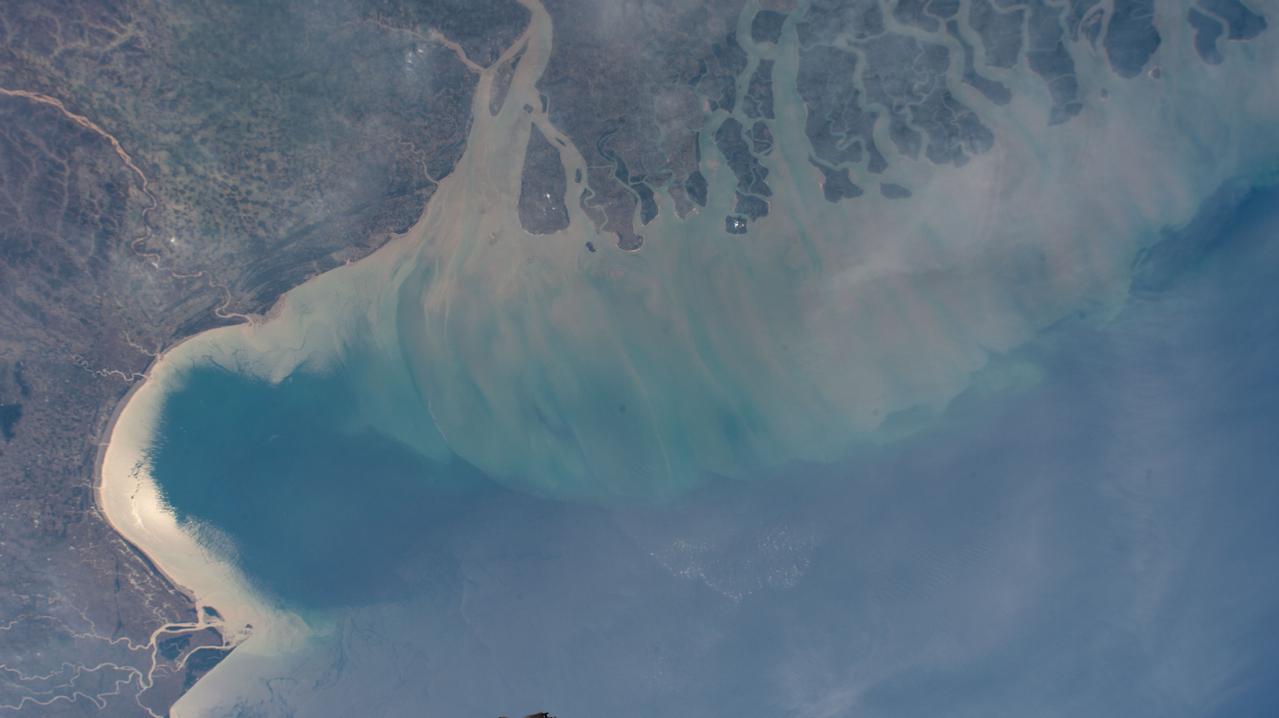
iss062e039313 (Feb. 21, 2020) --- The coasts of India and Bangladesh, pictured from the International Space Station from an altitude of 263 miles, meet at the Bay of…
Inspect NASA record
iss062e039313 (Feb. 21, 2020) --- The coasts of India and Bangladesh, pictured from the International Space Station from an altitude of 263 miles, meet at the Bay of Bengal. The area is known for its vast mangrove forests and rich variety of wildlife including monkeys, elephants and tigers.
- Record ID
- iss062e039313
- NASA center
- JSC
- Date
- 2020-02-21
JSC · 2020-08-29 · iss063e080404
Earth Observations
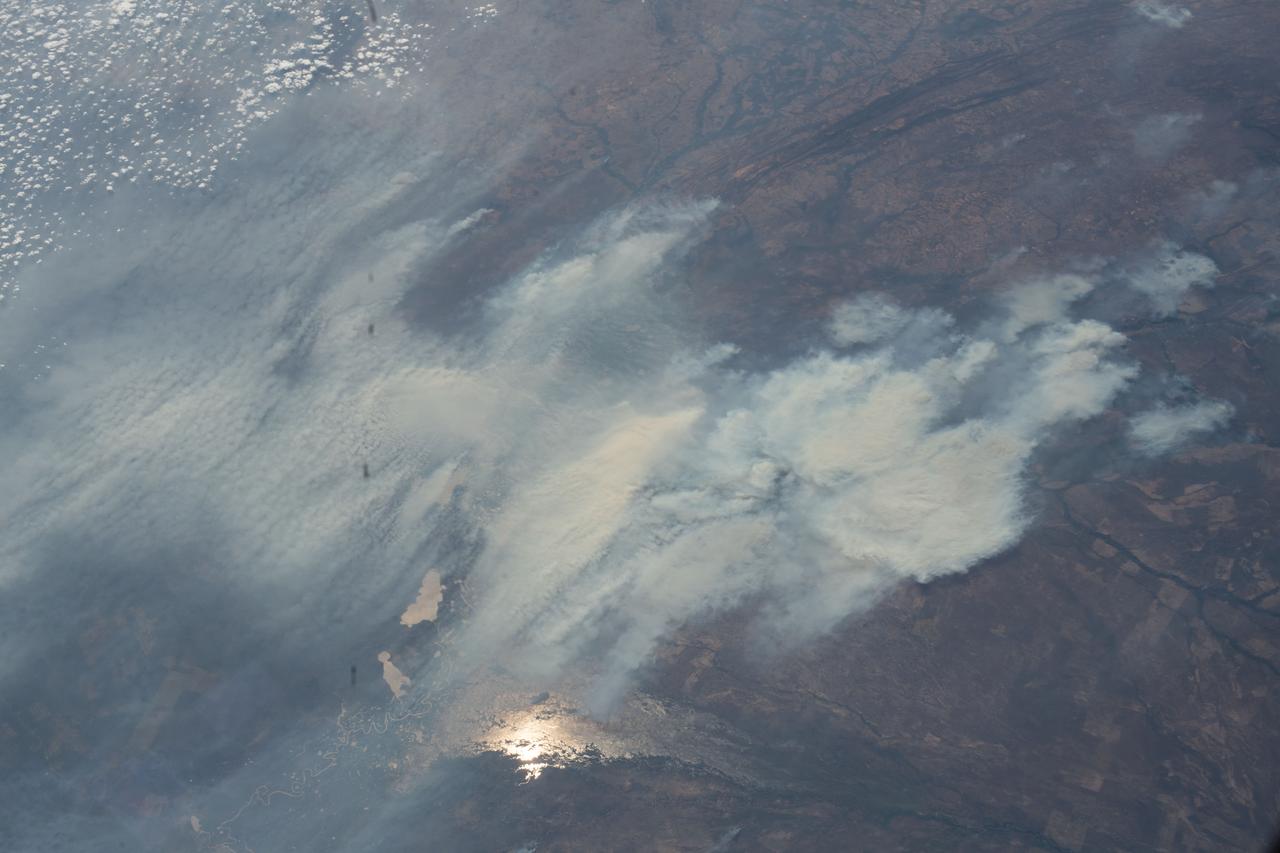
iss063e080404 (Aug. 29, 2020) --- Wildfires are pictured in the Amazon rainforest as the International Space Station orbited above the border between Bolivia and Brazil.
Inspect NASA record
iss063e080404 (Aug. 29, 2020) --- Wildfires are pictured in the Amazon rainforest as the International Space Station orbited above the border between Bolivia and Brazil.
- Record ID
- iss063e080404
- NASA center
- JSC
- Date
- 2020-08-29
- Credit
- Chris Cassidy

JSC · 2012-07-15 · iss032e007896
Earth Observation
ISS032-E-007896 (15 July 2012) --- The Expedition 32 crew onboard the International Space Station, flying an altitude of approximately 240 miles, recorded a series of images of Aurora…
Inspect NASA record
ISS032-E-007896 (15 July 2012) --- The Expedition 32 crew onboard the International Space Station, flying an altitude of approximately 240 miles, recorded a series of images of Aurora Australis, also known as the Southern Lights, on July 15. NASA astronaut Joe Acaba, flight engineer, recorded the series of images from the Tranquility node. The Canadarm2 robot arm is in the foreground.
- Record ID
- iss032e007896
- NASA center
- JSC
- Date
- 2012-07-15
JSC · 2013-07-21 · iss036e022863
Earth Observation
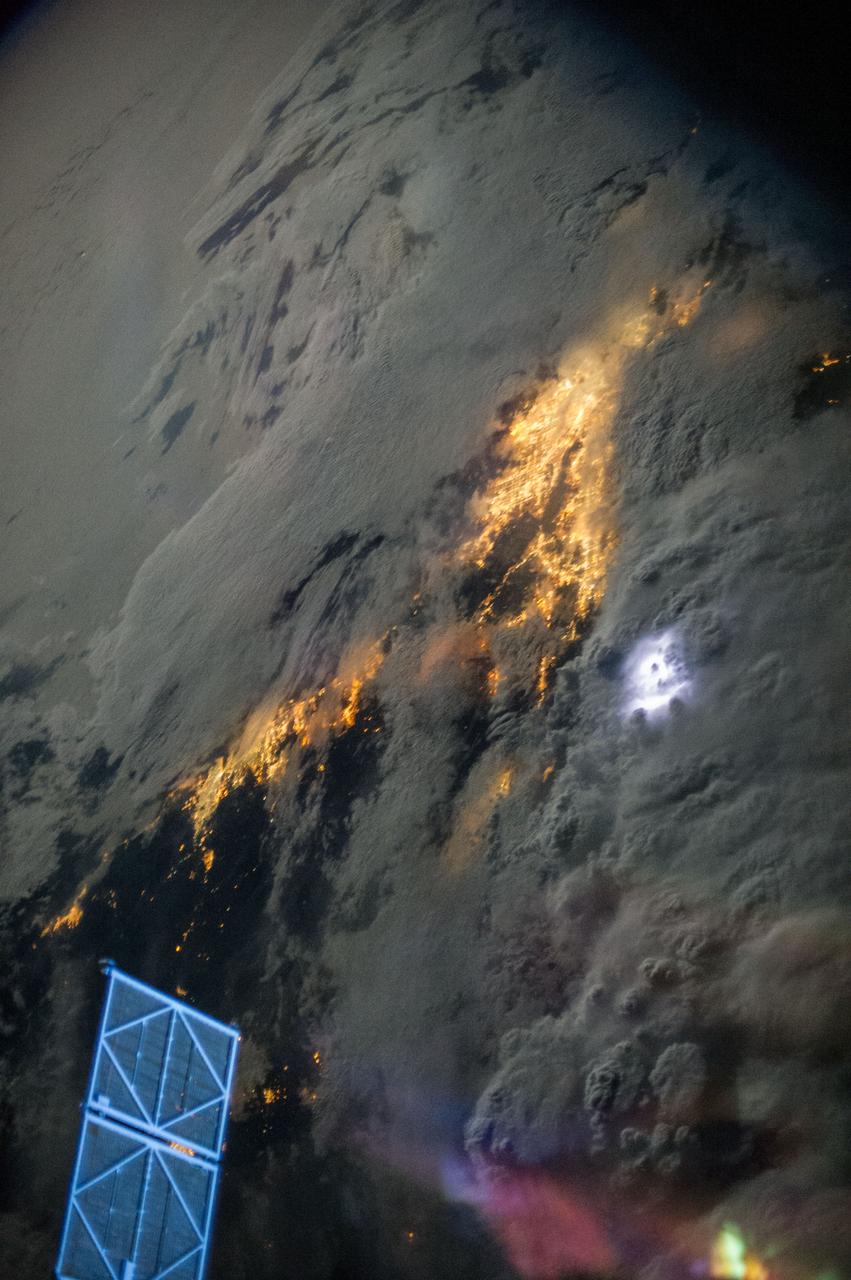
ISS036-E-022863 (21 July 2013) --- One of the crew members aboard the International Space Station photographed this night view of storm clouds over Southern California. Early morning lightning…
Inspect NASA record
ISS036-E-022863 (21 July 2013) --- One of the crew members aboard the International Space Station photographed this night view of storm clouds over Southern California. Early morning lightning can be seen as a white blotch just to the right of center. The yellow colored area, beneath the grey clouds, which almost shines because of night lights, is part of the highly populated area of Los Angeles and San Diego.
- Record ID
- iss036e022863
- NASA center
- JSC
- Date
- 2013-07-21
- Credit
- Karen Nyberg
JSC · 2020-08-14 · iss063e070632
Earth Observations
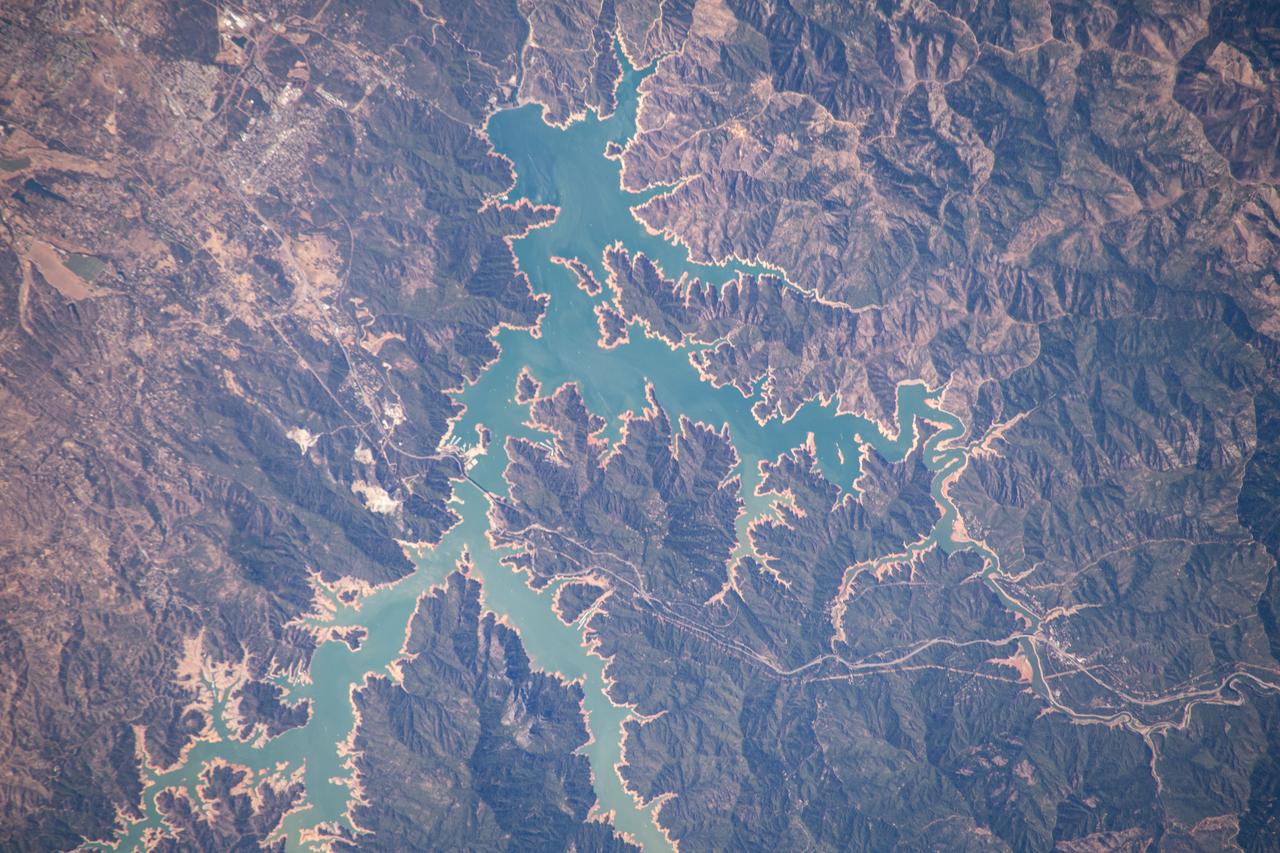
iss063e070632(Aug. 14, 2020) --- Shasta Lake, a reservoir in northern California, is pictured from the International Space Station as it orbited above the western United States.
Inspect NASA record
iss063e070632(Aug. 14, 2020) --- Shasta Lake, a reservoir in northern California, is pictured from the International Space Station as it orbited above the western United States.
- Record ID
- iss063e070632
- NASA center
- JSC
- Date
- 2020-08-14
- Credit
- Chris Cassidy

JSC · 2014-08-30 · iss040e112662
Earth Observation
ISS040E112662 (08/30/2014) ---- Cancún, Mexico. A long lens was used by astronauts aboard the International Space Station to take this image, and it highlights many natural and built…
Inspect NASA record
ISS040E112662 (08/30/2014) ---- Cancún, Mexico. A long lens was used by astronauts aboard the International Space Station to take this image, and it highlights many natural and built features. The street pattern of Mexico’s tourist mecca, Cancún, contrasts with the waterways of the marinas that open into the bay and the lagoons. Brilliant blue water over coral reefs contrast with the dark waters of inland lagoons. The reefs are the second largest reef system on Earth, and draw tourists from all over the world. The wide, well developed beach on the gulf coast (image upper right) is the result of vigorous wave energy; the white sand makes the beach easily visible from space. But wave energy is reduced along Cancún’s protected shoreline (image center) and the beaches are thin or non-existant. Fair-weather cumulus clouds are scattered across the image top left. To shoot crisp mages with long lenses, astronaut photographers must learn to brace themselves against the ISS bulkhead to prevent any slight shaking that would blur or “smear” the picture. Counterintuitively, they then need to move the camera carefully retaining the target at the same point in the viewfinder (the landscape moves across the viewfinder quickly with long lenses). This is called tracking the target and requires good coordination by the photographer—again, to prevent blurring. Shorter lenses do not require this skill because the image appears to pass more slowly across the viewfinder.
- Record ID
- iss040e112662
- NASA center
- JSC
- Date
- 2014-08-30
- Credit
- Reid Wiseman