
Update Site (from NASA)
Explore NASA’s Image and Video Library.
Suggest one object per day for the Interstellar Minds collection. We review each suggestion before adding it.
Sign in to suggest a Marvel.
Find a NASA image ID. Open a NASA record and copy its ID from the end of the details URL.
NASA image records
MSFC · 2004-01-01 · 0400391
History of Hubble Space Telescope (HST)
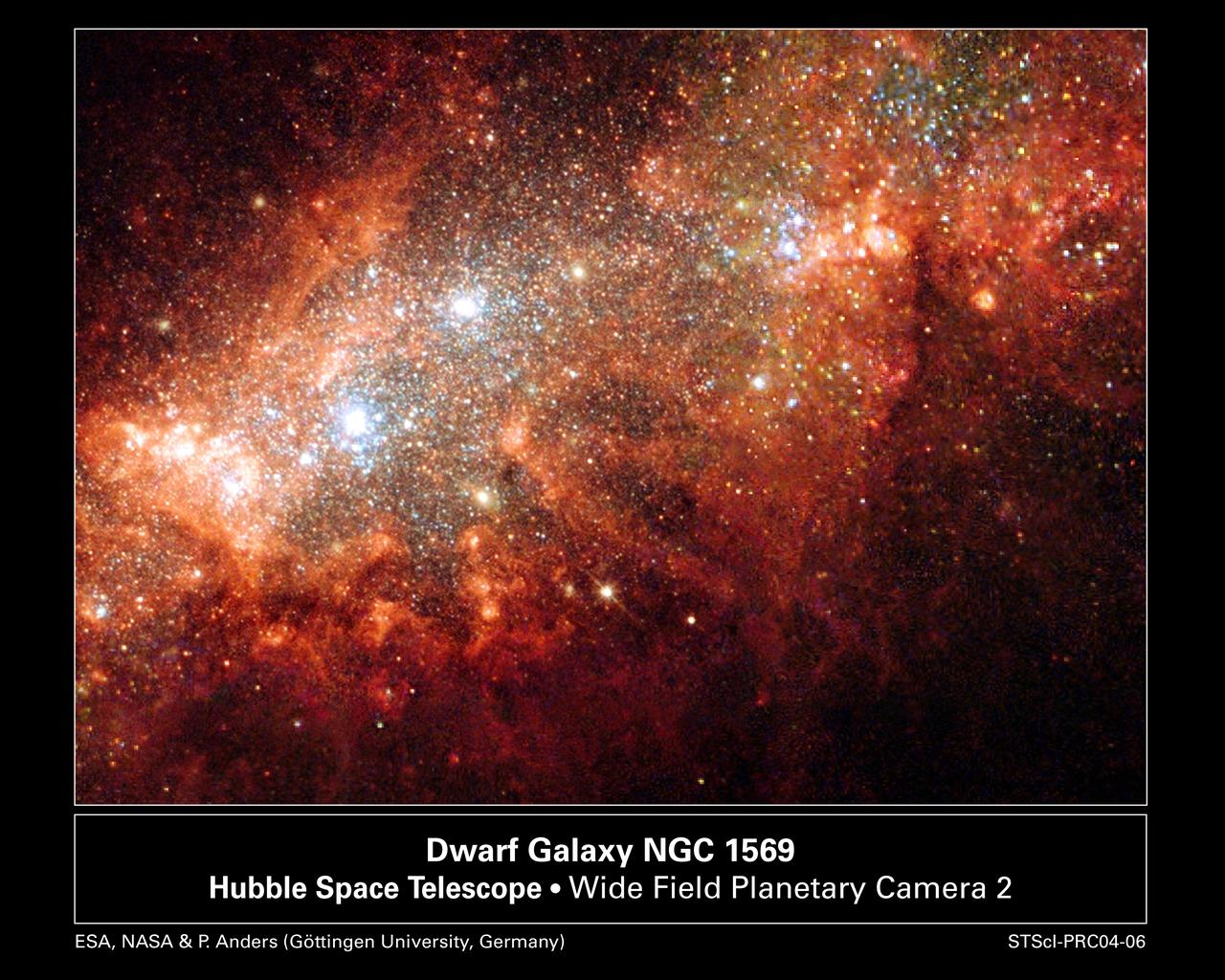
This new image taken with NASA's Hubble Space Telescope (HST) is of the nearby dwarf galaxy NGC 1569. This galaxy is a hotbed of vigorous star birth activity…
Inspect NASA record
This new image taken with NASA's Hubble Space Telescope (HST) is of the nearby dwarf galaxy NGC 1569. This galaxy is a hotbed of vigorous star birth activity which blows huge bubbles that riddle its main body. The bubble structure is sculpted by the galactic super-winds and outflows caused by a colossal input of energy from collective supernova explosions that are linked with a massive episode of star birth. The bubbles seen in this image are made of hydrogen gas that glows when hit by the fierce wind and radiation from hot young stars and is racked by supernova shocks. Its "star factories" are also manufacturing brilliant blue star clusters. NGC 1569 had a sudden onset of star birth about 25 million years ago, which subsided about the time the very earliest human ancestors appeared on Earth. The Marshall Space Flight Center had responsibility for the design, development, and construction of the HST.
- Record ID
- 0400391
- NASA center
- MSFC
- Date
- 2004-01-01
- Keywords
- NGC 1569, Hubble Space Telescope, HST
KSC · 2026-08-29 · KSC-20260829-PH-KLS01_0040
Roman Space Telescope Science Briefing
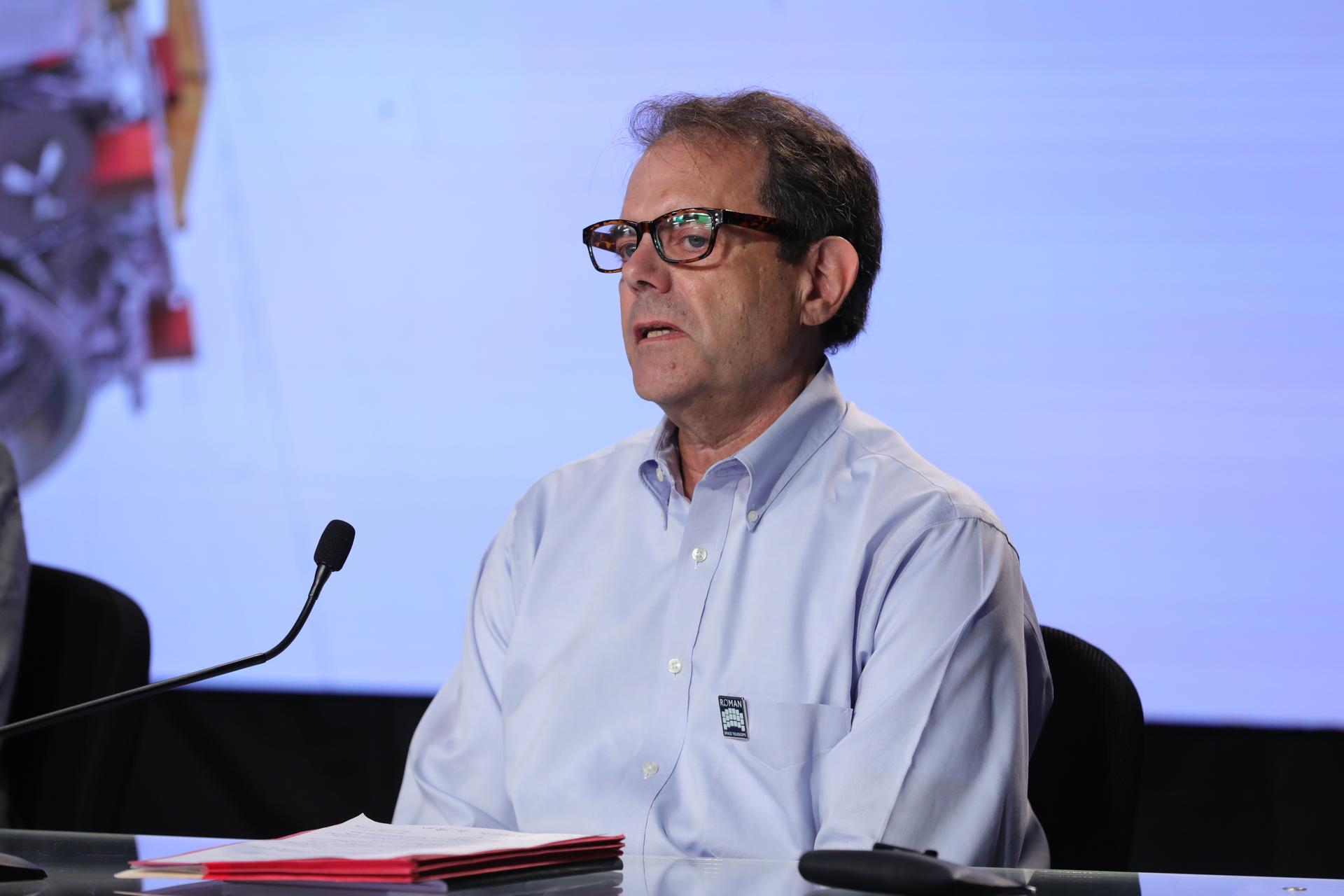
Lee Armus, Roman Science Support Center lead, Caltech/IPAC, participates in a science briefing for NASA’s Nancy Grace Roman Space Telescope inside the NASA News Center’s John Holliman Auditorium…
Inspect NASA record
Lee Armus, Roman Science Support Center lead, Caltech/IPAC, participates in a science briefing for NASA’s Nancy Grace Roman Space Telescope inside the NASA News Center’s John Holliman Auditorium at Kennedy Space Center in Florida, on Saturday, Aug. 29, 2026. Roman will investigate dark energy and dark matter, conduct a statistical census of planetary systems, and enable a broad range of additional astrophysics research. Liftoff from Launch Complex 39A at Kennedy is targeted for no earlier than Sunday, Aug. 30, 2026.
- Record ID
- KSC-20260829-PH-KLS01_0040
- NASA center
- KSC
- Date
- 2026-08-29
- Credit
- NASA/Kim Shiflett
- Keywords
- John. F. Kennedy Space Center, Kennedy, Kennedy Space Center, KSC, Spaceport, Cape Canaveral, NASA, rocket ranch, Florida, multi-user spaceport, premier spaceport, space coast
KSC · 2026-08-29 · KSC-20260829-PH-KLS01_0110
Roman Space Telescope Science Briefing
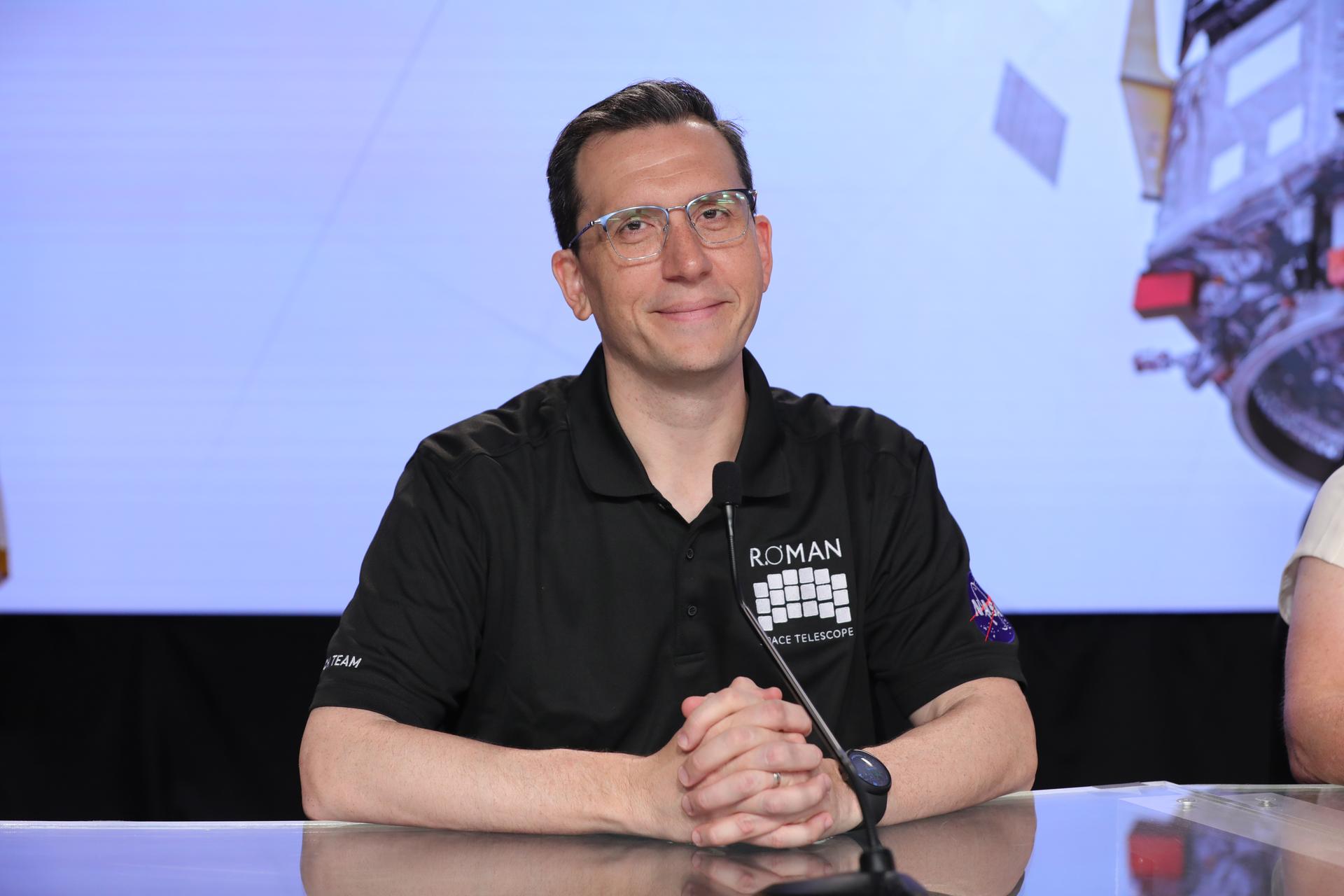
Shawn Domagal-Goldman, director, Astrophysics Division, NASA Headquarters in Washington, participates in a science briefing for NASA’s Nancy Grace Roman Space Telescope inside the NASA News Center’s John Holliman…
Inspect NASA record
Shawn Domagal-Goldman, director, Astrophysics Division, NASA Headquarters in Washington, participates in a science briefing for NASA’s Nancy Grace Roman Space Telescope inside the NASA News Center’s John Holliman Auditorium at Kennedy Space Center in Florida, on Saturday, Aug. 29, 2026. Roman will investigate dark energy and dark matter, conduct a statistical census of planetary systems, and enable a broad range of additional astrophysics research. Liftoff from Launch Complex 39A at Kennedy is targeted for no earlier than Sunday, Aug. 30, 2026.
- Record ID
- KSC-20260829-PH-KLS01_0110
- NASA center
- KSC
- Date
- 2026-08-29
- Credit
- NASA/Kim Shiflett
- Keywords
- John. F. Kennedy Space Center, Kennedy, Kennedy Space Center, KSC, Spaceport, Cape Canaveral, NASA, rocket ranch, Florida, multi-user spaceport, premier spaceport, space coast
KSC · 2026-08-29 · KSC-20260829-PH-KLS01_0098
Roman Space Telescope Science Briefing
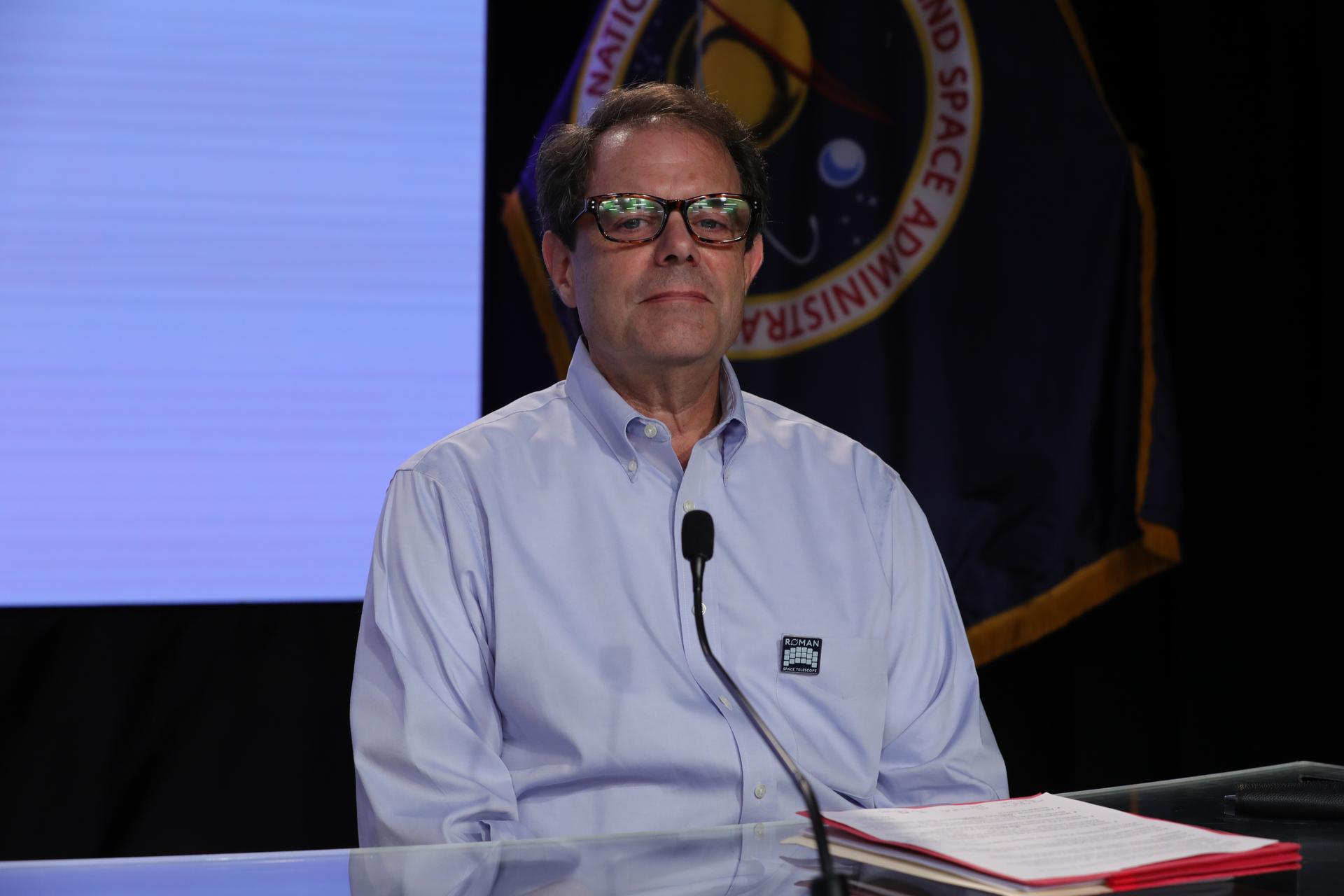
Lee Armus, Roman Science Support Center lead, Caltech/IPAC, participates in a science briefing for NASA’s Nancy Grace Roman Space Telescope inside the NASA News Center’s John Holliman Auditorium…
Inspect NASA record
Lee Armus, Roman Science Support Center lead, Caltech/IPAC, participates in a science briefing for NASA’s Nancy Grace Roman Space Telescope inside the NASA News Center’s John Holliman Auditorium at Kennedy Space Center in Florida, on Saturday, Aug. 29, 2026. Roman will investigate dark energy and dark matter, conduct a statistical census of planetary systems, and enable a broad range of additional astrophysics research. Liftoff from Launch Complex 39A at Kennedy is targeted for no earlier than Sunday, Aug. 30, 2026.
- Record ID
- KSC-20260829-PH-KLS01_0098
- NASA center
- KSC
- Date
- 2026-08-29
- Credit
- NASA/Kim Shiflett
- Keywords
- John. F. Kennedy Space Center, Kennedy, Kennedy Space Center, KSC, Spaceport, Cape Canaveral, NASA, rocket ranch, Florida, multi-user spaceport, premier spaceport, space coast
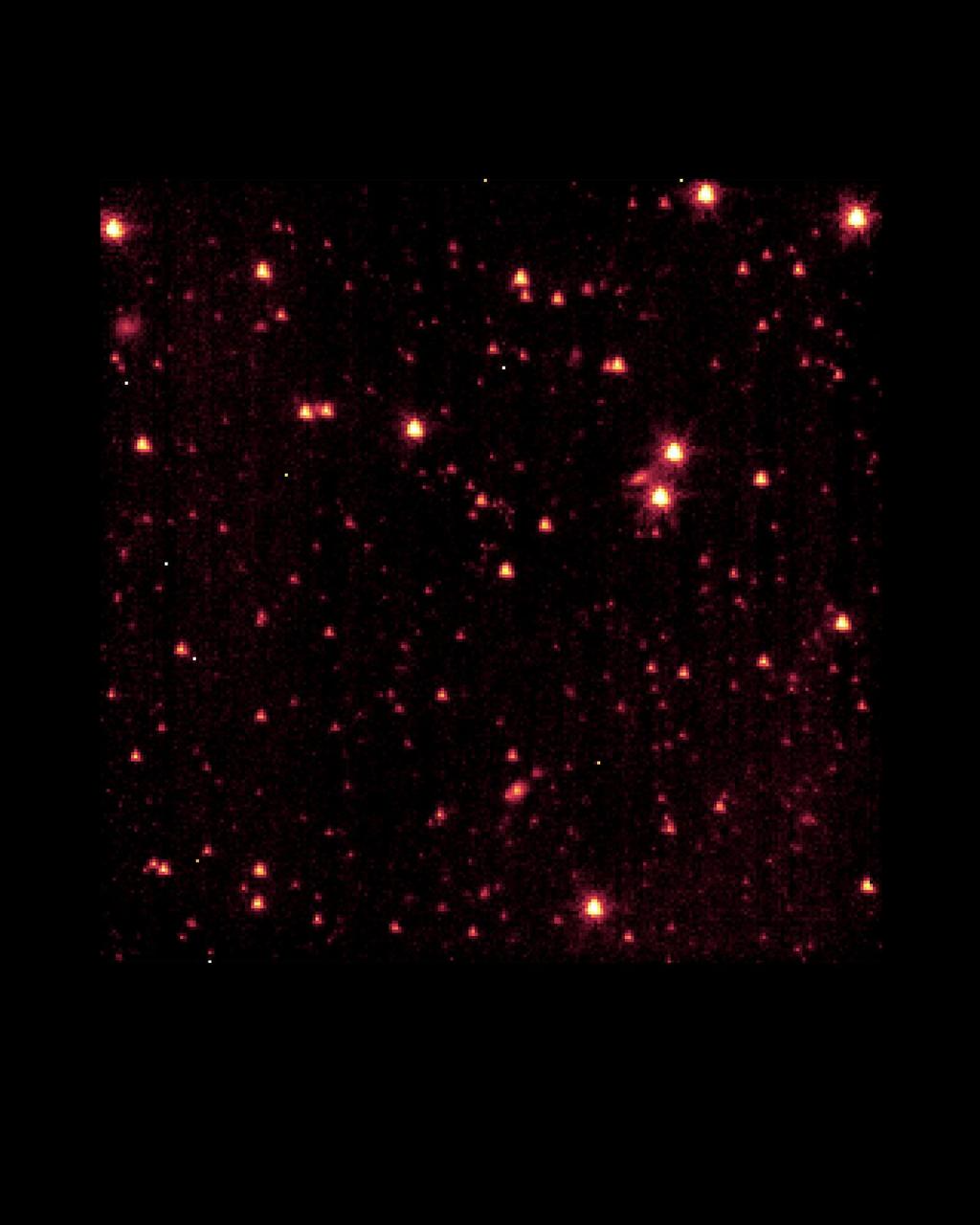
JPL · 2003-09-03 · PIA04724
SIRTF Aliveness
This engineering image derives from 100 seconds of observing time on one of the three science instruments aboard the Space InfraRed Telescope Facility (SIRTF). SIRTF was launched on…
Inspect NASA record
This engineering image derives from 100 seconds of observing time on one of the three science instruments aboard the Space InfraRed Telescope Facility (SIRTF). SIRTF was launched on August 25, and opened up its focal plane to starlight on August 30. This image was obtained as part of the instrument power-on sequence on September 1, one week after launch and a full month before the telescope is expected to reach optimal operating temperature and focus. The stars and galaxies seen in this image already attest to the observatory's great sensitivity in the infrared and to its proper operation. The Space Infrared Telescope Facility (SIRTF) telescope was renamed the Spitzer Space Telescope on December 18, 2003, after the late Dr. Lyman Spitzer, in a contest which was open to the general public. http://photojournal.jpl.nasa.gov/catalog/PIA04724
- Record ID
- PIA04724
- NASA center
- JPL
- Date
- 2003-09-03
- Credit
- NASA/JPL/Caltech
- Keywords
- Spitzer Space Telescope
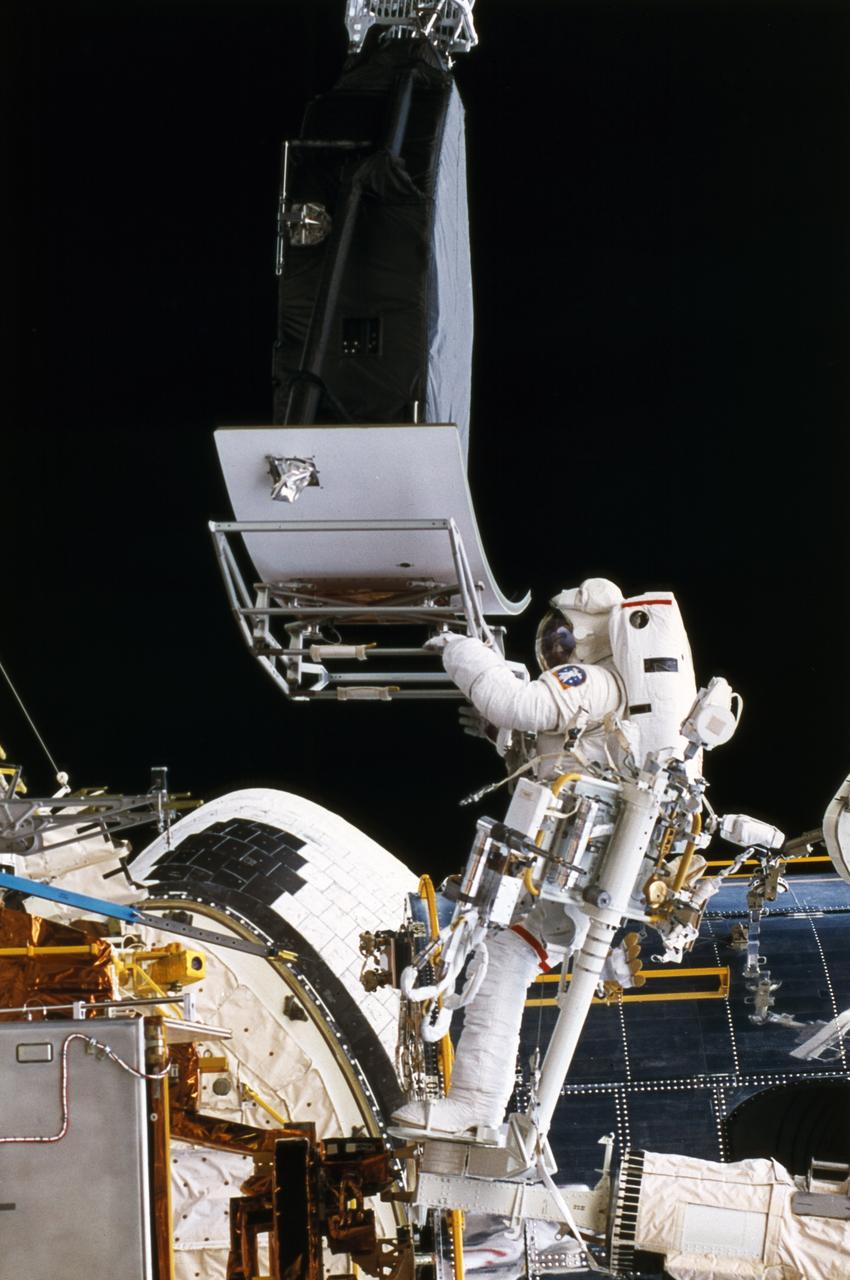
MSFC · 1993-12-01 · 9400368
History of Hubble Space Telescope (HST)
Astronaut Hoffman held the Hubble Space Telescope (HST) Wide Field/Planetary Camera-1 (WF/PC1) that was replaced by WF/PC2 in the cargo bay of the Space Shuttle orbiter Endeavour during…
Inspect NASA record
Astronaut Hoffman held the Hubble Space Telescope (HST) Wide Field/Planetary Camera-1 (WF/PC1) that was replaced by WF/PC2 in the cargo bay of the Space Shuttle orbiter Endeavour during Extravehicular Activity (EVA). The STS-61 mission was the first of the series of the HST servicing missions. Two months after its deployment in space, scientists detected a 2-micron spherical aberration in the primary mirror of the HST that affected the telescope's ability to focus faint light sources into a precise point. This imperfection was very slight, one-fiftieth of the width of a human hair. During four spacewalks, the STS-61 crew replaced the solar panel with its flexing problems; the WF/PC1 with WF/PC2, with built-in corrective optics; and the High-Speed Photometer with the Corrective Optics Space Telescope Axial Replacement (COSTAR) to correct the aberration for the remaining instruments. The purpose of the HST, the most complex and sensitive optical telescope ever made, is to study the cosmos from a low-Earth orbit for 15 years or more. The HST provides fine detail imaging, produces ultraviolet images and spectra, and detects very faint objects. The Marshall Space Flight Center had responsibility for design, development, and construction of the HST. The Perkin-Elmer Corporation, in Danbury, Cornecticut, developed the optical system and guidance sensors.
- Record ID
- 9400368
- NASA center
- MSFC
- Date
- 1993-12-01
- Keywords
- STS-61, Hubble Space Telescope, HST, Wide Field/Planetary Camera, WF/PC
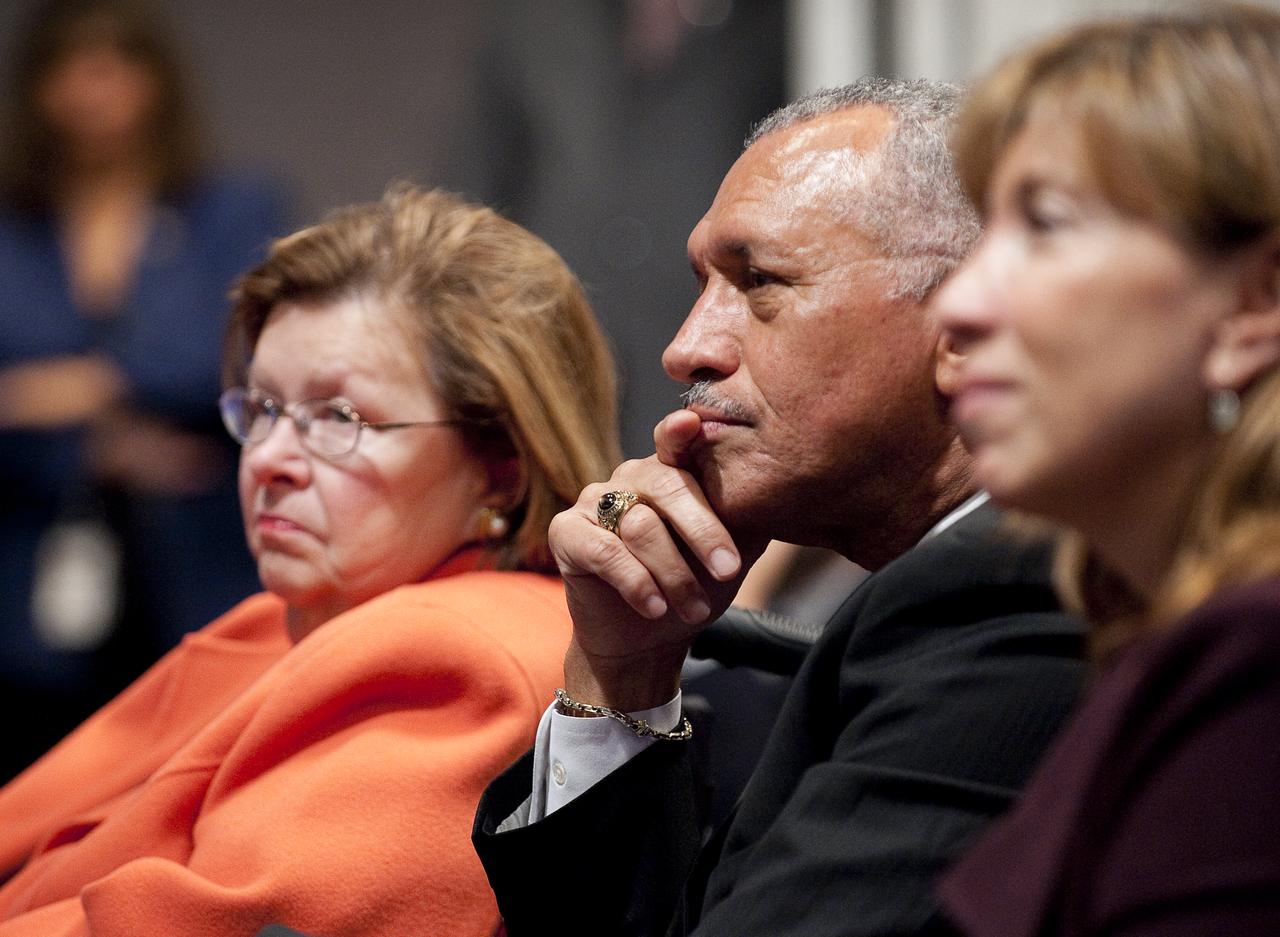
HQ · 2009-09-08 · 200909090007HQ
Upgraded Hubble Space Telescope Images
U.S. Senator Barbara A. Mikulski, D-Md., left, NASA Administrator Charles F. Bolden, center, and NASA Deputy Administrator Lori Garver listen during a press conference where NASA unveiled new…
Inspect NASA record
U.S. Senator Barbara A. Mikulski, D-Md., left, NASA Administrator Charles F. Bolden, center, and NASA Deputy Administrator Lori Garver listen during a press conference where NASA unveiled new images from the Hubble Space Telescope Wednesday, Sept. 9, 2009 at NASA Headquarters in Washington. The unveiled images were from four of the telescopes' six operating science instruments. Photo Credit: (NASA/Bill Ingalls)
- Record ID
- 200909090007HQ
- NASA center
- HQ
- Date
- 2009-09-08
- Credit
- NASA/Bill Ingalls
- Keywords
- Washington, DC, Barbara Mikulski, Charles Bolden, HST (Hubble Space Telescope), Lori Garver, NASA Headquarters, U.S. Senator
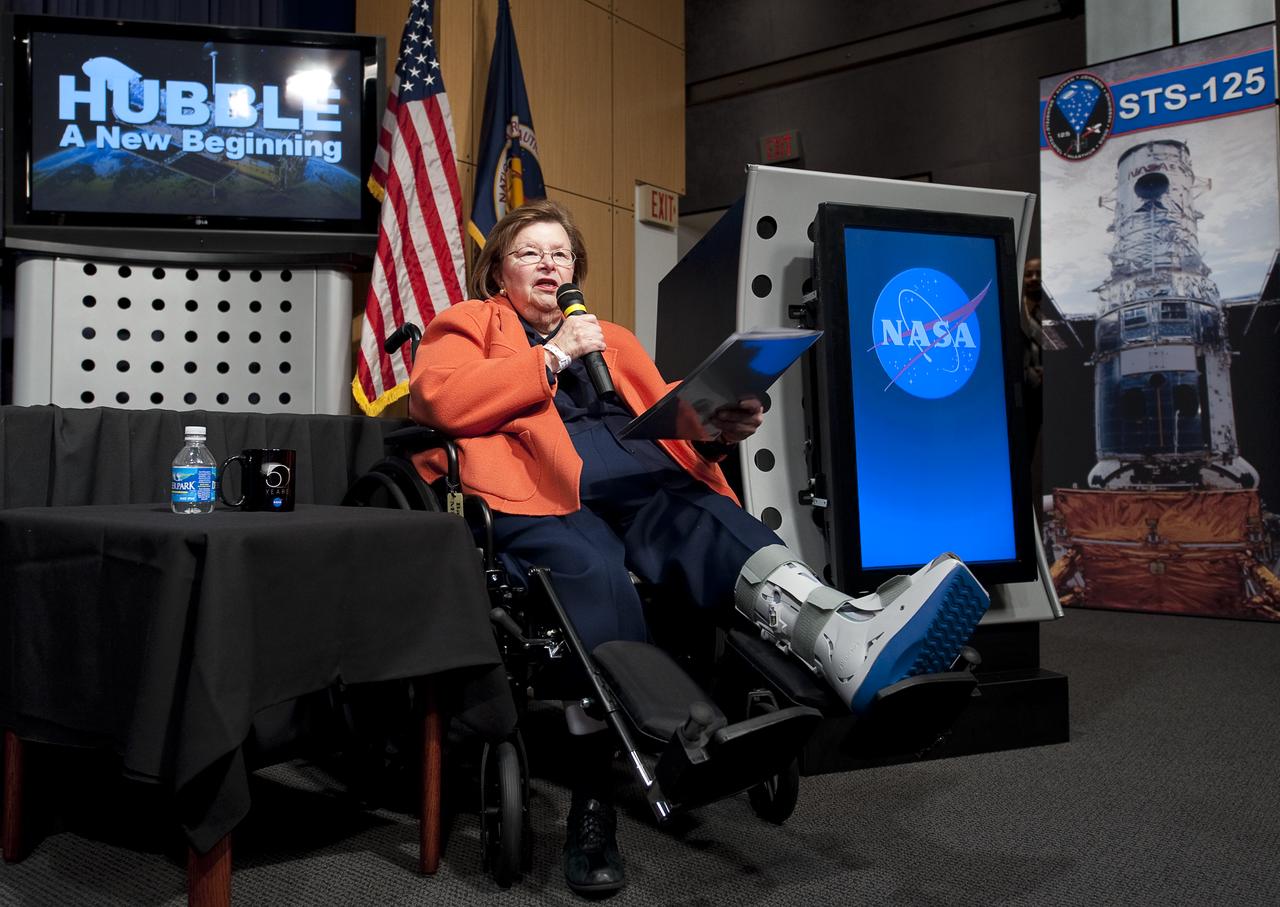
HQ · 2009-09-08 · 200909090005HQ
Upgraded Hubble Space Telescope Images
U.S. Senator Barbara A. Mikulski, D-Md. delivers her remarks during a press conference where NASA unveiled new images from the Hubble Space Telescope Wednesday, Sept. 9, 2009 at…
Inspect NASA record
U.S. Senator Barbara A. Mikulski, D-Md. delivers her remarks during a press conference where NASA unveiled new images from the Hubble Space Telescope Wednesday, Sept. 9, 2009 at NASA Headquarters in Washington. The unveiled images were from four of the telescopes' six operating science instruments. Photo Credit: (NASA/Bill Ingalls)
- Record ID
- 200909090005HQ
- NASA center
- HQ
- Date
- 2009-09-08
- Credit
- NASA/Bill Ingalls
- Keywords
- Barbara Mikulski, HST (Hubble Space Telescope), NASA Headquarters, U.S. Senator, Washington, DC

HQ · 2009-09-08 · 200909090006HQ
Upgraded Hubble Space Telescope Images
U.S. Senator Barbara A. Mikulski, D-Md. delivers her remarks during a press conference where NASA unveiled new images from the Hubble Space Telescope Wednesday, Sept. 9, 2009 at…
Inspect NASA record
U.S. Senator Barbara A. Mikulski, D-Md. delivers her remarks during a press conference where NASA unveiled new images from the Hubble Space Telescope Wednesday, Sept. 9, 2009 at NASA Headquarters in Washington. The unveiled images were from four of the telescopes' six operating science instruments. Photo Credit: (NASA/Bill Ingalls)
- Record ID
- 200909090006HQ
- NASA center
- HQ
- Date
- 2009-09-08
- Credit
- NASA/Bill Ingalls
- Keywords
- Barbara Mikulski, HST (Hubble Space Telescope), NASA Headquarters, U.S. Senator, Washington, DC
HQ · 2009-09-08 · 200909090001HQ
Upgraded Hubble Space Telescope Images
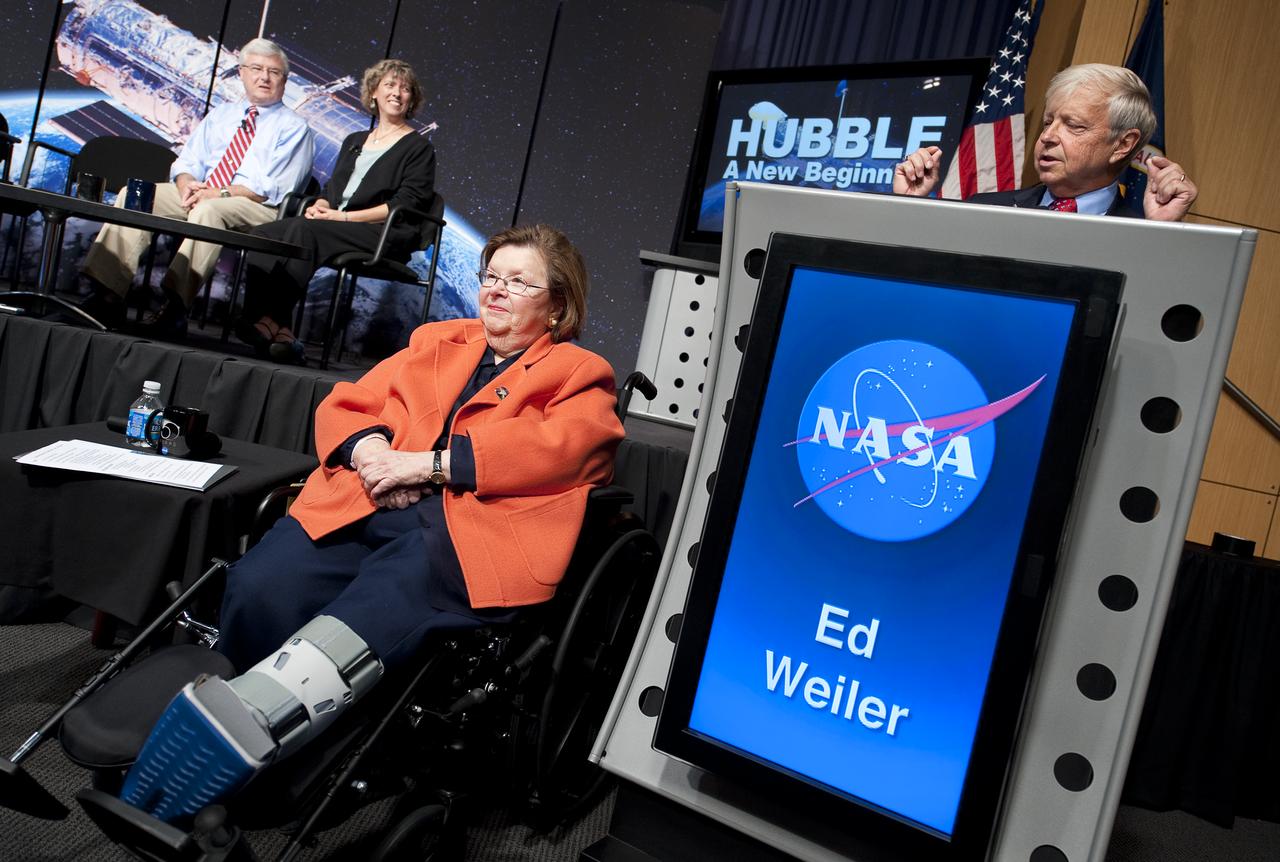
NASA Associate Administrator of the Science Mission Directorate Dr. Edward J. Weiler speaks at the podium as Sen. Barbara A. Mikulski, D-Md., left, listens during a press conference…
Inspect NASA record
NASA Associate Administrator of the Science Mission Directorate Dr. Edward J. Weiler speaks at the podium as Sen. Barbara A. Mikulski, D-Md., left, listens during a press conference where NASA unveiled new images from NASA's Hubble Space Telescope Wednesday, Sept. 9, 2009 at NASA Headquarters in Washington. The images were from four of the telescopes' six operating science instruments. Photo Credit: (NASA/Bill Ingalls)
- Record ID
- 200909090001HQ
- NASA center
- HQ
- Date
- 2009-09-08
- Credit
- NASA/Bill Ingalls
- Keywords
- Washington, DC, Barbara Mikulski, Ed Weiler, HST (Hubble Space Telescope), NASA Headquarters, U.S. Senator
MSFC · 1994-01-01 · 9408670
History of Hubble Space Telescope (HST)
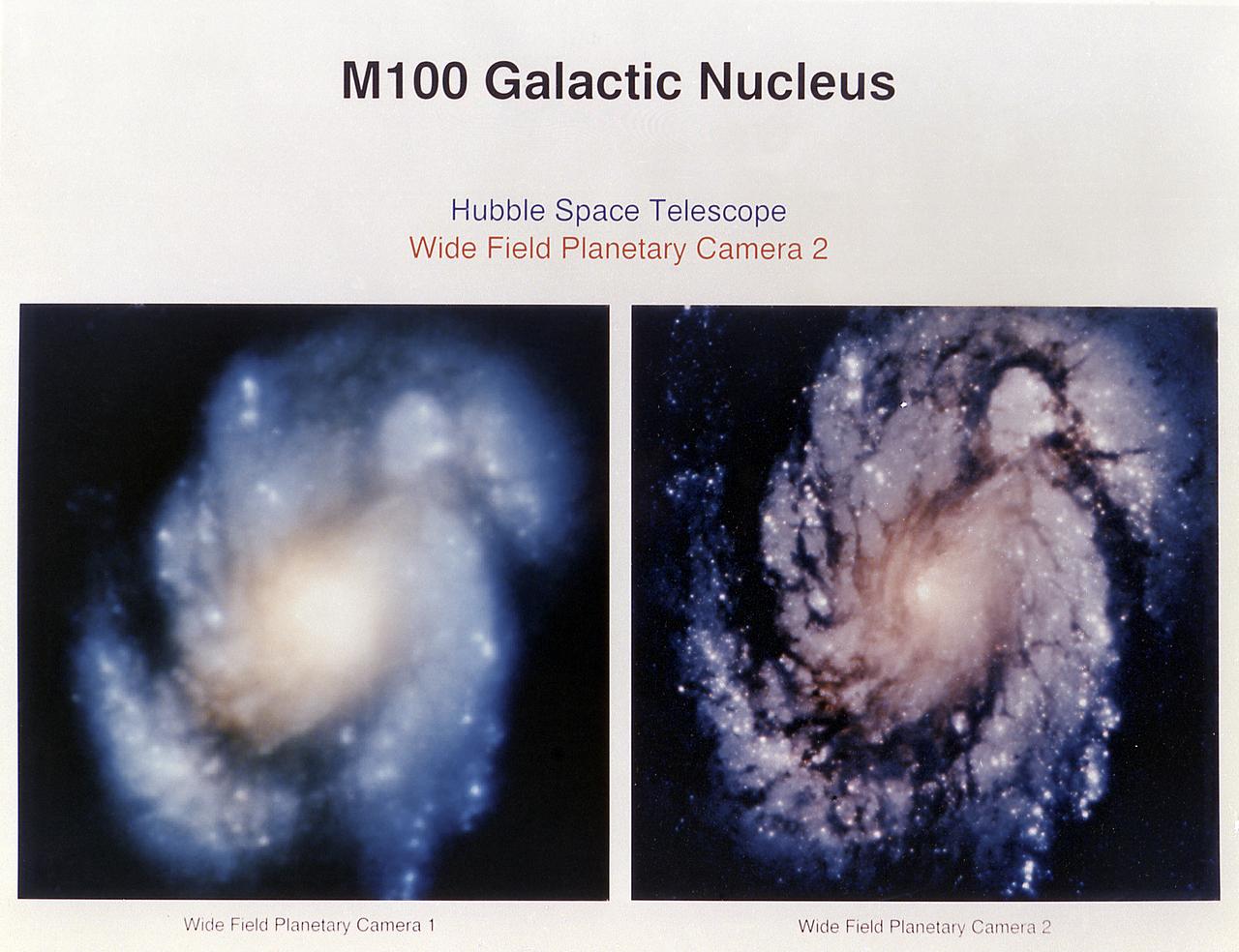
A comparison image of the M100 Galactic Nucleus, taken by the Hubble Space Telescope (HST) Wide Field Planetary Camera-1 (WF/PC1) and Wide Field Planetary Camera-2 (WF/PC2). The HST…
Inspect NASA record
A comparison image of the M100 Galactic Nucleus, taken by the Hubble Space Telescope (HST) Wide Field Planetary Camera-1 (WF/PC1) and Wide Field Planetary Camera-2 (WF/PC2). The HST was placed in a low-Earth orbit by the Space Shuttle Discovery, STS-31 mission, in April 1990. Two months after its deployment in space, scientists detected a 2-micron spherical aberration in the primary mirror of the HST that affected the telescope's ability to focus faint light sources into a precise point. This imperfection was very slight, one-fiftieth of the width of a human hair. During four spacewalks, the STS-61 crew replaced the solar panel with its flexing problems; the WF/PC1 with the WF/PC2, with built-in corrective optics; and the High-Speed Photometer with the Corrective Optics Space Telescope Axial Replacement (COSTAR), to correct the aberration for the remaining instruments. The purpose of the HST, the most complex and sensitive optical telescope ever made, is to study the cosmos from a low-Earth orbit for 15 years or more. The HST provides fine detail imaging, produces ultraviolet images and spectra, and detects very faint objects.
- Record ID
- 9408670
- NASA center
- MSFC
- Date
- 1994-01-01
- Keywords
- Hubble Space Telescope, HST, M100, Galactic Nucleus, Wide Field Planetary Camera, WF/PC
HQ · 2021-12-25 · NHQ202112250025
James Webb Space Telescope Prelaunch
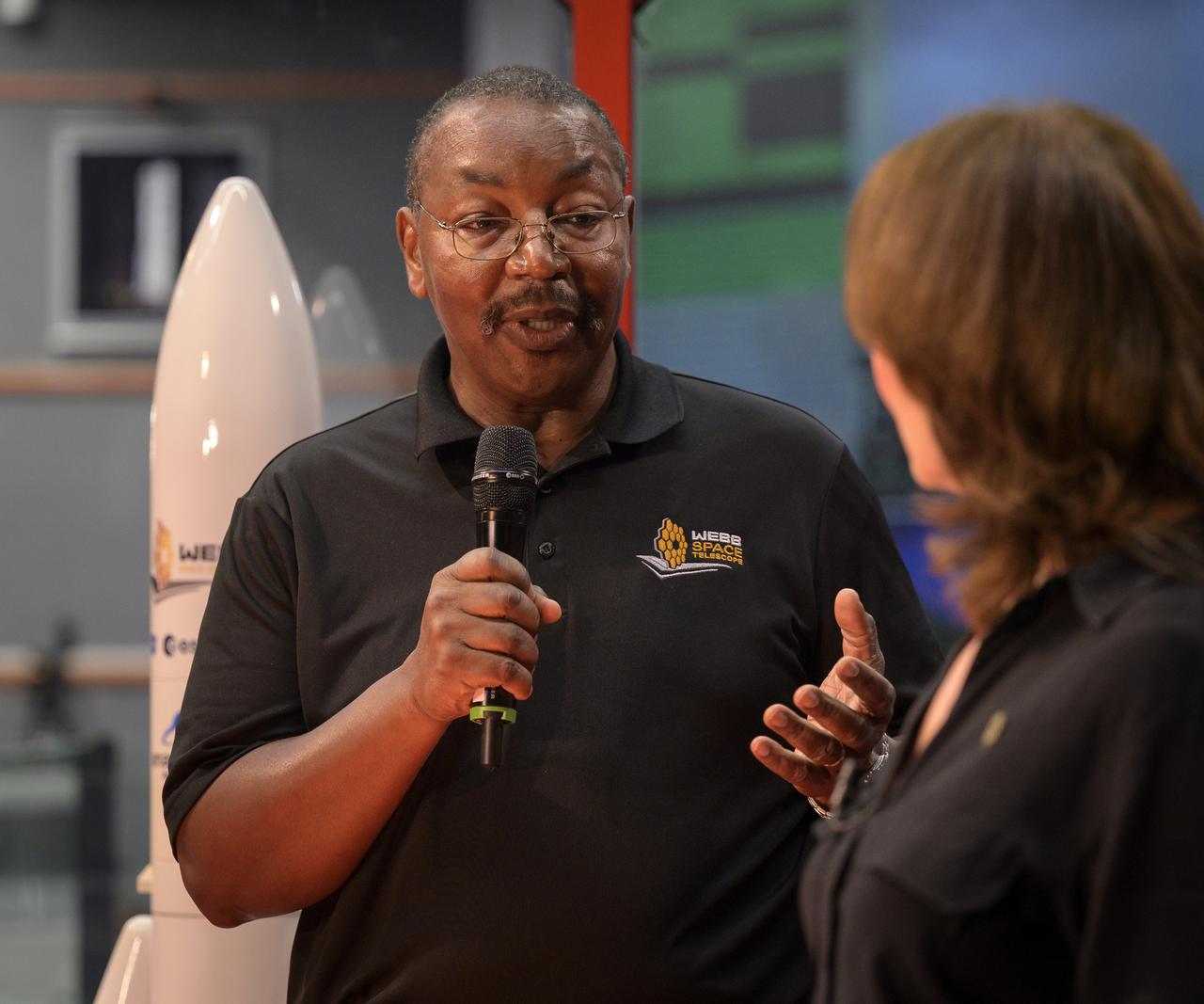
NASA Program Director for the James Webb Space Telescope Program Greg Robinson gives a brief interview on NASA television as he and the launch team monitor the countdown…
Inspect NASA record
NASA Program Director for the James Webb Space Telescope Program Greg Robinson gives a brief interview on NASA television as he and the launch team monitor the countdown of the launch of Arianespace's Ariane 5 rocket carrying NASA’s James Webb Space Telescope, Saturday, Dec. 25, 2021, in the Jupiter Center at the Guiana Space Center in Kourou, French Guiana. The James Webb Space Telescope (sometimes called JWST or Webb) is a large infrared telescope with a 21.3 foot (6.5 meter) primary mirror. The observatory will study every phase of cosmic history—from within our solar system to the most distant observable galaxies in the early universe. Photo Credit: (NASA/Bill Ingalls)
- Record ID
- NHQ202112250025
- NASA center
- HQ
- Date
- 2021-12-25
- Credit
- NASA/Bill Ingalls
- Keywords
- Ariane 5, Arianespace, Canadian Space Agency (CSA), Centre National d’Etudes Spatiales (CNES), ESA (European Space Agency), French Guiana, Greg Robinson, Guiana Space Center, James Webb Space Telescope (JWST), Jupiter Center, Kourou, NASA