
Update Site (from NASA)
Explore NASA’s Image and Video Library.
Suggest one object per day for the Interstellar Minds collection. We review each suggestion before adding it.
Sign in to suggest a Marvel.
Find a NASA image ID. Open a NASA record and copy its ID from the end of the details URL.
NASA image records
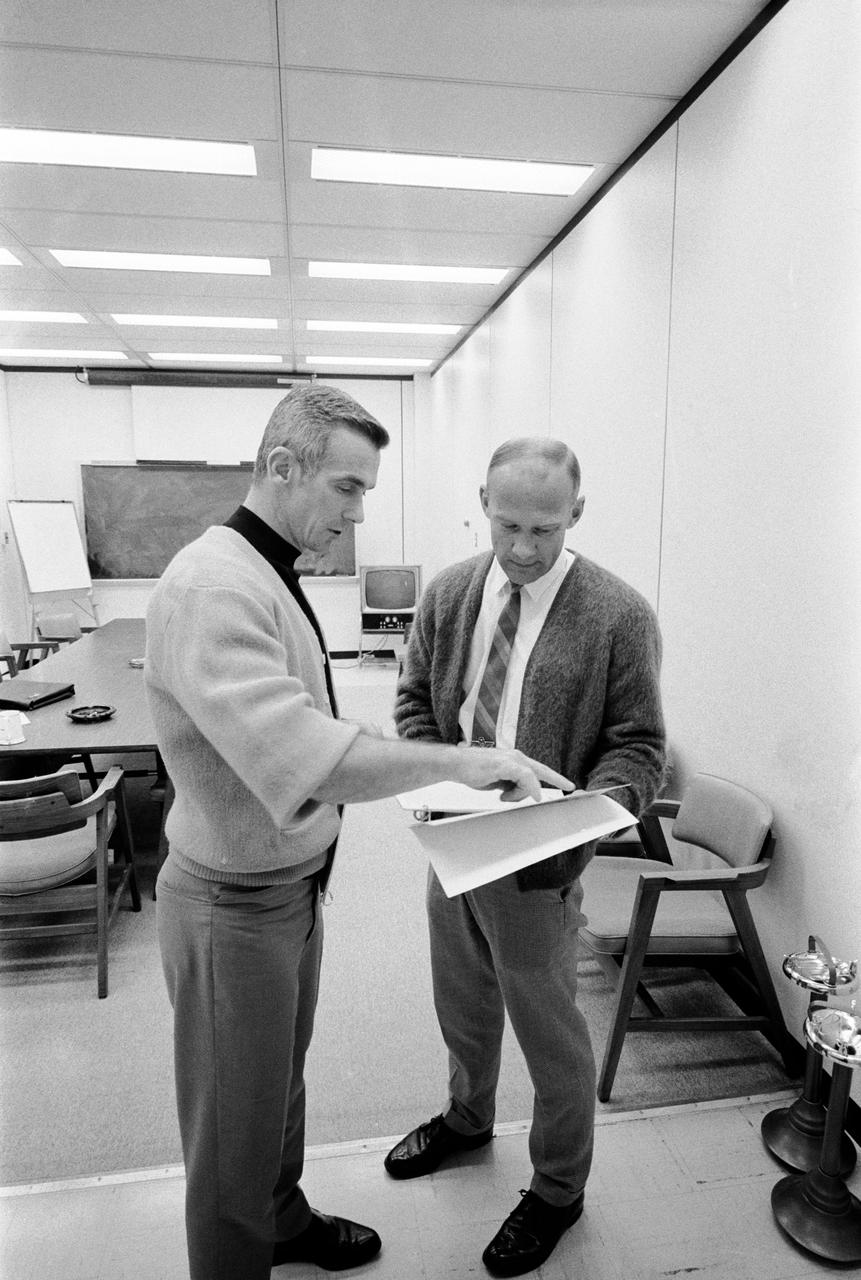
JSC · 1969-06-03 · S69-35502
APOLLO X - CREW TRAINING
S69-35502 (June 1969) --- Astronaut Eugene A. Cernan (left), lunar module pilot of the Apollo 10 lunar orbit mission, confers with astronaut Edwin E. Aldrin Jr. during an…
Inspect NASA record
S69-35502 (June 1969) --- Astronaut Eugene A. Cernan (left), lunar module pilot of the Apollo 10 lunar orbit mission, confers with astronaut Edwin E. Aldrin Jr. during an Apollo 10 postflight de-briefing session. Aldrin is the lunar module pilot of the Apollo 11 lunar landing mission.
- Record ID
- S69-35502
- NASA center
- JSC
- Date
- 1969-06-03
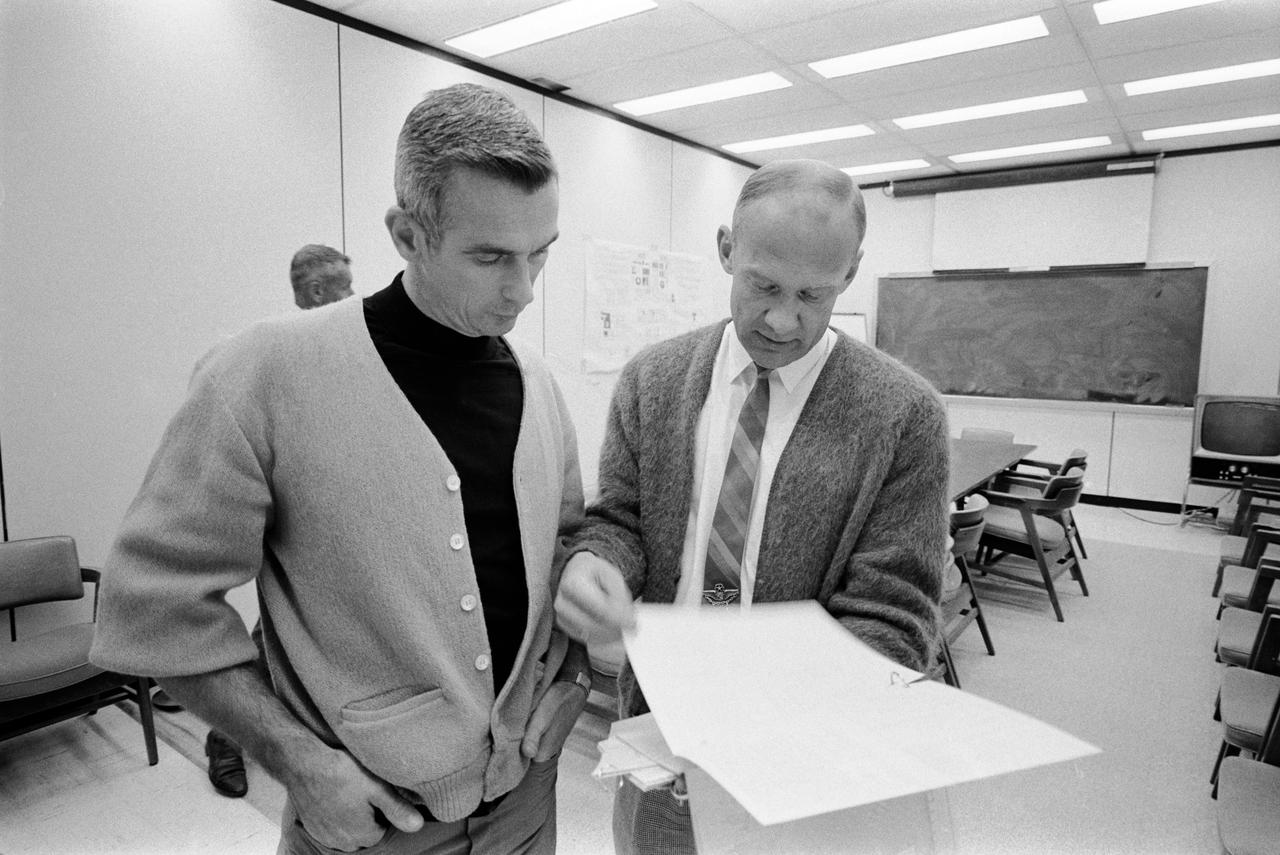
JSC · 1969-06-03 · S69-35503
APOLLO X - CREW TRAINING
S69-35503 (June 1969) --- Astronaut Eugene A. Cernan (left), lunar module pilot of the Apollo 10 lunar orbit mission, confers with astronaut Edwin E. Aldrin Jr. during an…
Inspect NASA record
S69-35503 (June 1969) --- Astronaut Eugene A. Cernan (left), lunar module pilot of the Apollo 10 lunar orbit mission, confers with astronaut Edwin E. Aldrin Jr. during an Apollo 10 postflight de-briefing session. Aldrin is the lunar module pilot of the Apollo 11 lunar landing mission.
- Record ID
- S69-35503
- NASA center
- JSC
- Date
- 1969-06-03
- Keywords
- Apollo, Apollo 10
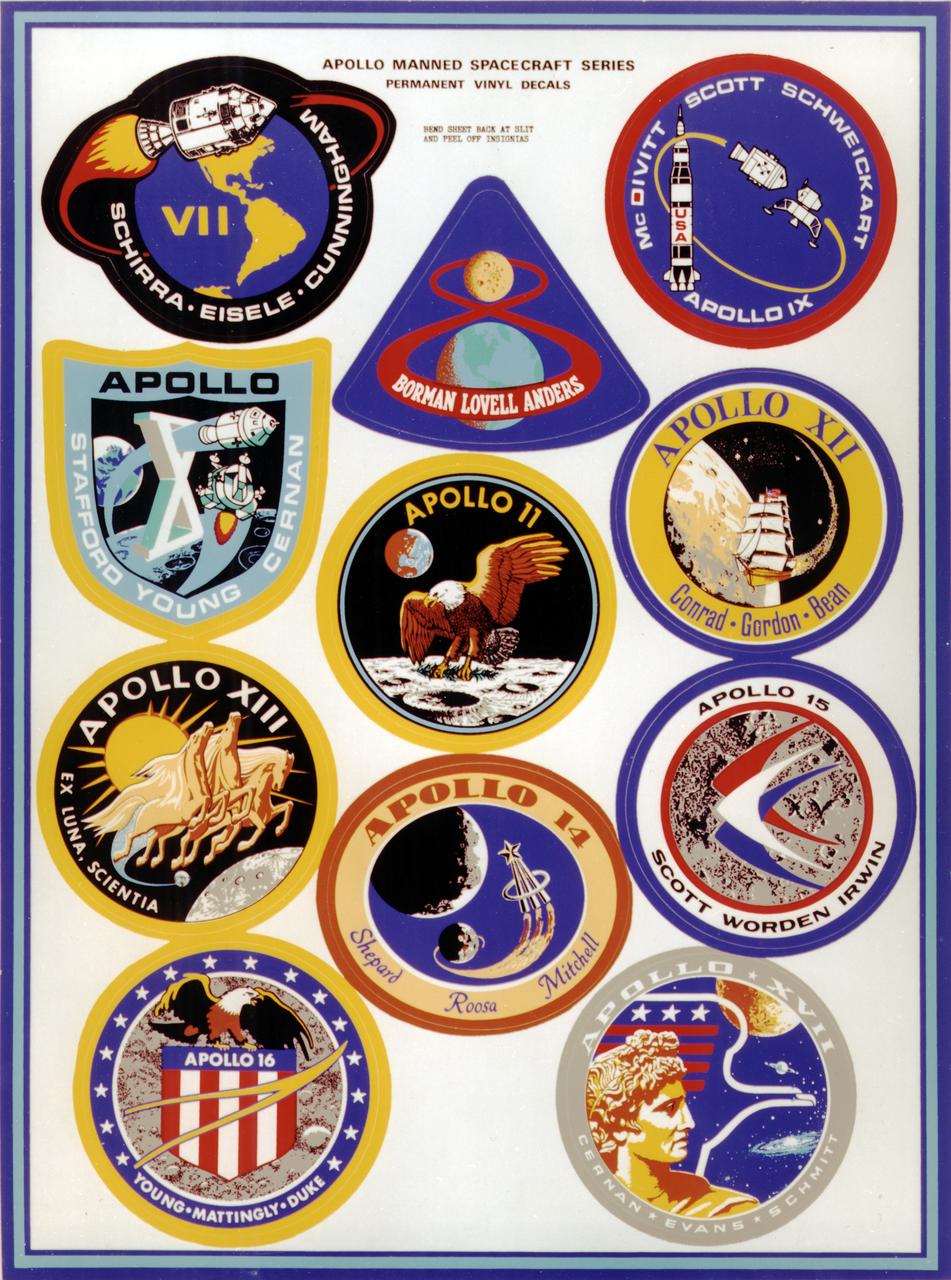
MSFC · 1979-05-01 · 7995383
Saturn Apollo Program
This montage depicts the flight crew patches for the manned Apollo 7 thru Apollo 17 missions. The Apollo 7 through 10 missions were basically manned test flights that…
Inspect NASA record
This montage depicts the flight crew patches for the manned Apollo 7 thru Apollo 17 missions. The Apollo 7 through 10 missions were basically manned test flights that paved the way for lunar landing missions. Primary objectives met included the demonstration of the Command Service Module (CSM) crew performance; crew/space vehicle/mission support facilities performance and testing during a manned CSM mission; CSM rendezvous capability; translunar injection demonstration; the first manned Apollo docking, the first Apollo Extra Vehicular Activity (EVA), performance of the first manned flight of the lunar module (LM); the CSM-LM docking in translunar trajectory, LM undocking in lunar orbit, LM staging in lunar orbit, and manned LM-CSM docking in lunar orbit. Apollo 11 through 17 were lunar landing missions with the exception of Apollo 13 which was forced to circle the moon without landing due to an onboard explosion. The craft was,however, able to return to Earth safely. Apollo 11 was the first manned lunar landing mission and performed the first lunar surface EVA. Landing site was the Sea of Tranquility. A message for mankind was delivered, the U.S. flag was planted, experiments were set up and 47 pounds of lunar surface material was collected for analysis back on Earth. Apollo 12, the 2nd manned lunar landing mission landed in the Ocean of Storms and retrieved parts of the unmanned Surveyor 3, which had landed on the Moon in April 1967. The Apollo Lunar Surface Experiments Package (ALSEP) was deployed, and 75 pounds of lunar material was gathered. Apollo 14, the 3rd lunar landing mission landed in Fra Mauro. ALSEP and other instruments were deployed, and 94 pounds of lunar materials were gathered, using a hand cart for first time to transport rocks. Apollo 15, the 4th lunar landing mission landed in the Hadley-Apennine region. With the first use of the Lunar Roving Vehicle (LRV), the crew was bale to gather 169 pounds of lunar material. Apollo 16, the 5th lunar landing mission, landed in the Descartes Highlands for the first study of highlands area. Selected surface experiments were deployed, the ultraviolet camera/spectrograph was used for first time on the Moon, and the LRV was used for second time for a collection of 213 pounds of lunar material. The Apollo program came to a close with Apollo 17, the 6th and final manned lunar landing mission that landed in the Taurus-Littrow highlands and valley area. This mission hosted the first scientist-astronaut, Schmitt, to land on the Moon. The 6th automated research station was set up, and 243 ponds of lunar material was gathered using the LRV.
- Record ID
- 7995383
- NASA center
- MSFC
- Date
- 1979-05-01
- Keywords
- Montage, Insignia, Logo, Patch, Emblem, Apollo 7, Apollo 8, Apollo 9, Apollo 10, Apollo 11, Apollo 12, Apollo 13
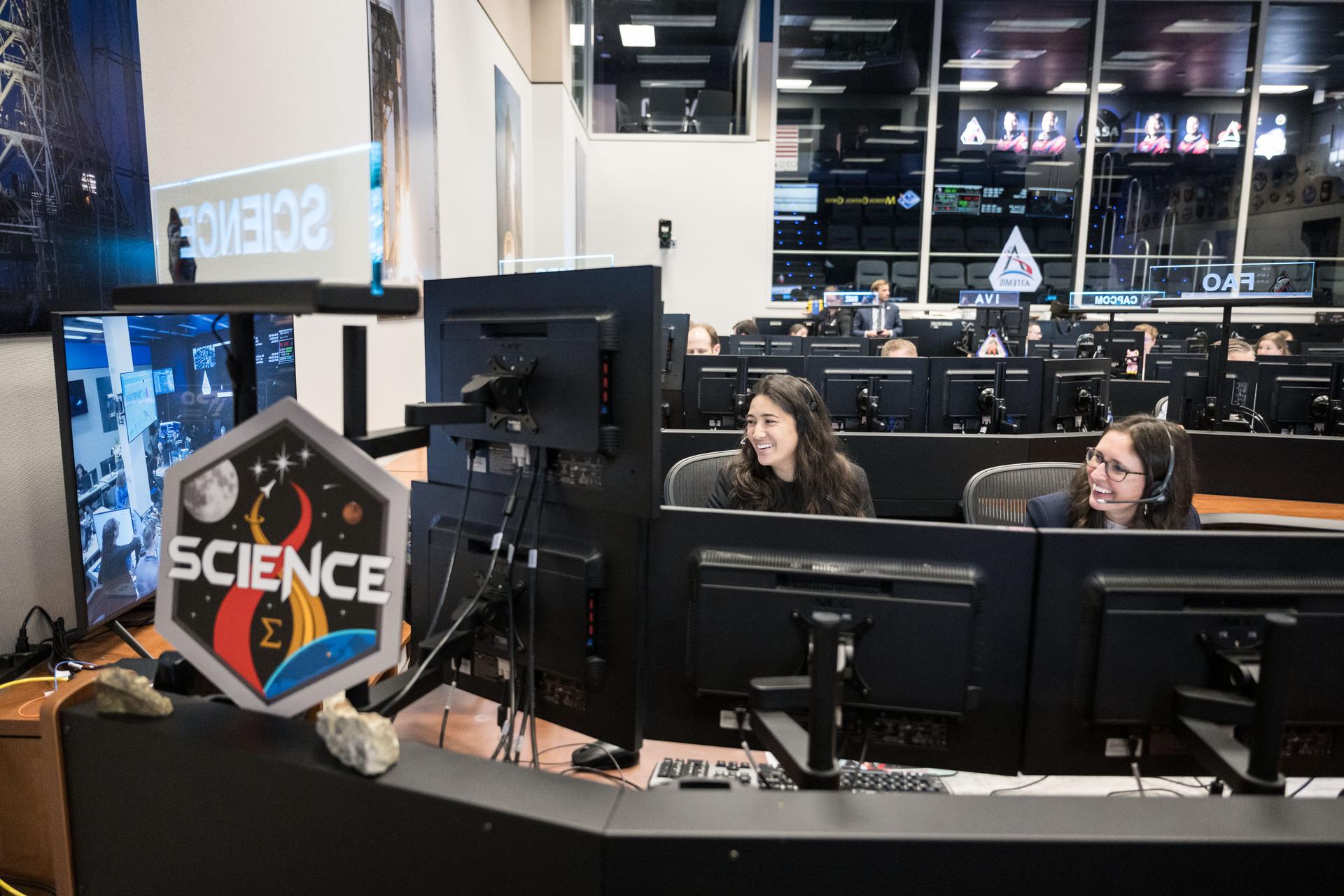
JSC · 2026-04-06 · jsc2026e020499
Artemis science officers watch lunar science team celebrating -- jsc2026e020499
Artemis science officers, from left, Angela Garcia and Kelsey Young, watch the lunar science team celebrating in the Science Evaluation Room (SER) as they hear lunar observations from…
Inspect NASA record
Artemis science officers, from left, Angela Garcia and Kelsey Young, watch the lunar science team celebrating in the Science Evaluation Room (SER) as they hear lunar observations from the Artemis II crew. The science team has spent years training the astronauts in geology and observation, both in the classroom and in the field. They also built the lunar targeting plan that, like a spacewalk plan, provides strong, detailed observation guidance, plus flexibility for the crew to make decisions based on what they’re seeing and experiencing in real time. The science team had many moments of celebration during the lunar flyby as the astronauts took pictures of the Moon and provided verbal descriptions of what they were seeing. This type of information reveals the geologic history of an area and will be critical to collect when future Artemis astronauts explore the Moon's surface. Credits: NASA/Robert Markowitz
- Record ID
- jsc2026e020499
- NASA center
- JSC
- Date
- 2026-04-06
- Credit
- ROBERT MARKOWITZ NASA-JSC
- Keywords
- Artemis, Artemis II, Lunar Science, lunar geography, lunar flyby, Science Evaluation Room, White Flight Control Room, Mission Control, Moon