
Update Site (from NASA)
Explore NASA’s Image and Video Library.
Suggest one object per day for the Interstellar Minds collection. We review each suggestion before adding it.
Sign in to suggest a Marvel.
Find a NASA image ID. Open a NASA record and copy its ID from the end of the details URL.
NASA image records
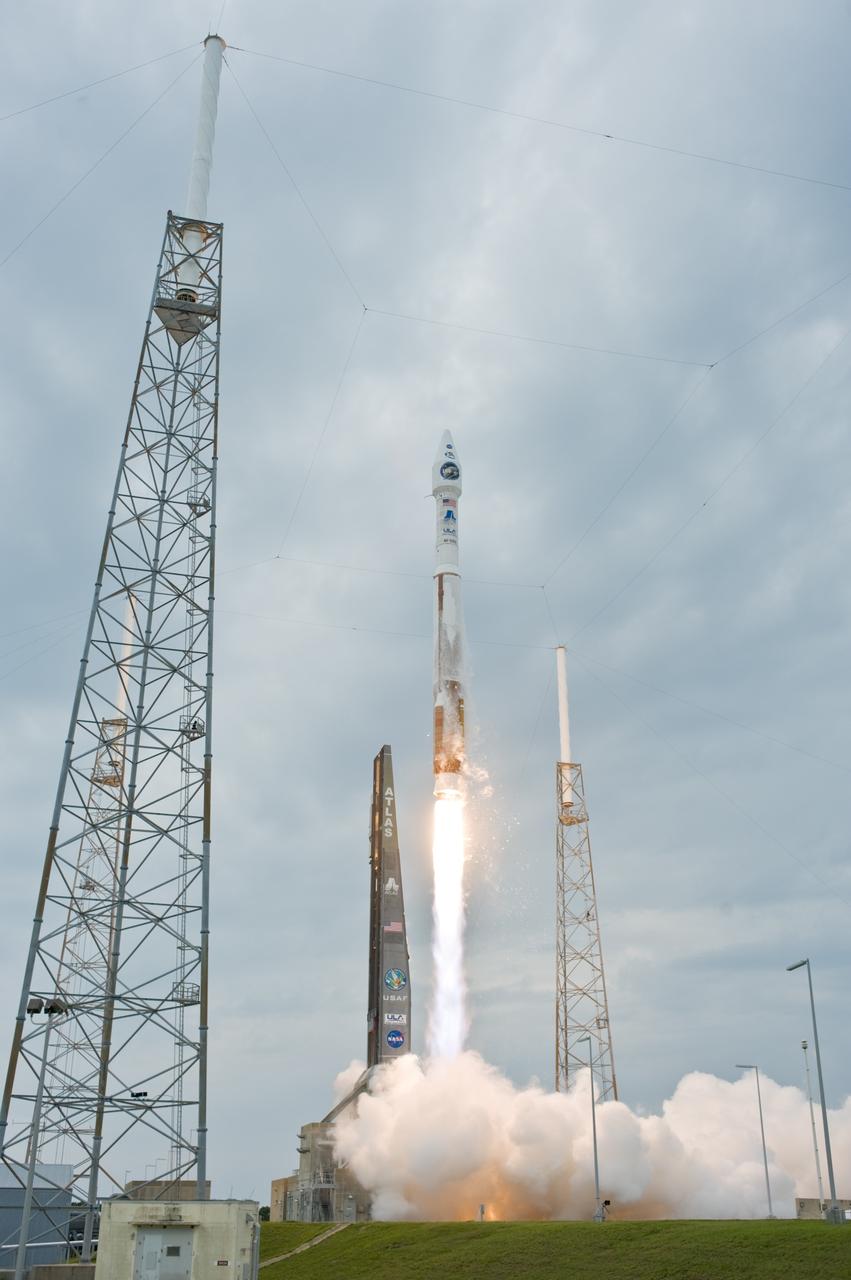
KSC · 2009-06-18 · KSC-2009-3784
KSC-2009-3784
CAPE CANAVERAL, Fla. – Smoke pours across Launch Complex 41 at Cape Canaveral Air Force Station in Florida as the Atlas V/Centaur carrying NASA's Lunar Reconnaissance Orbiter, or…
Inspect NASA record
CAPE CANAVERAL, Fla. – Smoke pours across Launch Complex 41 at Cape Canaveral Air Force Station in Florida as the Atlas V/Centaur carrying NASA's Lunar Reconnaissance Orbiter, or LRO, and NASA's Lunar Crater Observation and Sensing Satellite, known as LCROSS, roars into the sky. The towers around the pad are part of the lightning protection system. LRO and LCROSS are the first missions in NASA's plan to return humans to the moon and begin establishing a lunar outpost by 2020. The LRO also includes seven instruments that will help NASA characterize the moon's surface: DIVINER, LAMP, LEND, LOLA , CRATER, Mini-RF and LROC. Launch was on-time at 5:32 p.m. EDT. Photo credit: NASA/Tom Farrar, Kevin O'Connell
- Record ID
- KSC-2009-3784
- NASA center
- KSC
- Date
- 2009-06-18
- Keywords
- LRO, LCROSS, ELV

KSC · 2009-04-19 · KSC-2009-2802
KSC-2009-2802
CAPE CANAVERAL, Fla. –– At Astrotech Space Operations in Titusville, Fla., technicians prepare for installation of the solar array panels on the Lunar Reconnaissance Orbiter, or LRO. The…
Inspect NASA record
CAPE CANAVERAL, Fla. –– At Astrotech Space Operations in Titusville, Fla., technicians prepare for installation of the solar array panels on the Lunar Reconnaissance Orbiter, or LRO. The orbiter will carry seven instruments to provide scientists with detailed maps of the lunar surface and enhance our understanding of the moon's topography, lighting conditions, mineralogical composition and natural resources. Information gleaned from LRO will be used to select safe landing sites, determine locations for future lunar outposts and help mitigate radiation dangers to astronauts. The polar regions of the moon are the main focus of the mission because continuous access to sunlight may be possible and water ice may exist in permanently shadowed areas of the poles. Launch of LRO is targeted for June 2. Photo credit: NASA/Jim Grossmann
- Record ID
- KSC-2009-2802
- NASA center
- KSC
- Date
- 2009-04-19
- Keywords
- LRO, lunar, solar, array, ELV
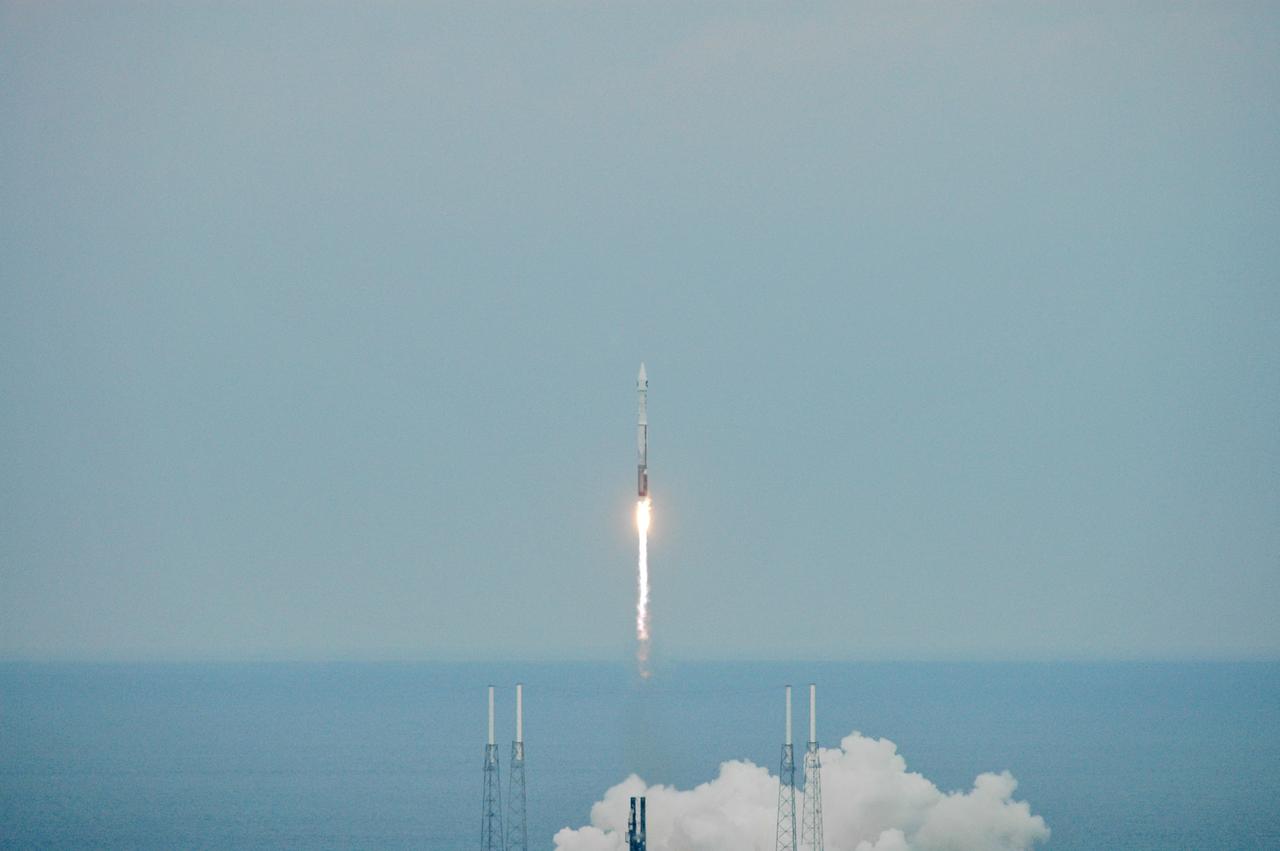
KSC · 2009-06-18 · KSC-2009-3775
KSC-2009-3775
CAPE CANAVERAL, Fla. – The Atlas V/Centaur rocket carrying NASA's Lunar Reconnaissance Orbiter, or LRO, and NASA's Lunar Crater Observation and Sensing Satellite, known as LCROSS, leaps into…
Inspect NASA record
CAPE CANAVERAL, Fla. – The Atlas V/Centaur rocket carrying NASA's Lunar Reconnaissance Orbiter, or LRO, and NASA's Lunar Crater Observation and Sensing Satellite, known as LCROSS, leaps into the sky with a tail of smoke behind as it lifts off from Launch Complex 41 at Cape Canaveral Air Force Station in Florida. Surrounding the pad below are lightning towers. LRO and LCROSS are the first missions in NASA's plan to return humans to the moon and begin establishing a lunar outpost by 2020. The LRO also includes seven instruments that will help NASA characterize the moon's surface: DIVINER, LAMP, LEND, LOLA , CRATER, Mini-RF and LROC. Launch was on-time at 5:32 p.m. EDT June 18. Photo credit: NASA/Jeffery Marino
- Record ID
- KSC-2009-3775
- NASA center
- KSC
- Date
- 2009-06-18
- Keywords
- LRO, LCROSS, ELV

KSC · 2009-06-18 · KSC-2009-3754
KSC-2009-3754
CAPE CANAVERAL, Fla. – Photographer Joel Powell, with Spaceflight Magazine, captures a closeup of NASA's Lunar Reconnaissance Orbiter, or LRO, and NASA's Lunar Crater Observation and Sensing Satellite,…
Inspect NASA record
CAPE CANAVERAL, Fla. – Photographer Joel Powell, with Spaceflight Magazine, captures a closeup of NASA's Lunar Reconnaissance Orbiter, or LRO, and NASA's Lunar Crater Observation and Sensing Satellite, known as LCROSS, atop the Atlas V/Centaur rocket on Launch Pad 41 at Cape Canaveral Air Force Station in Florida. Around the pad are the lightning towers. LRO and LCROSS are the first missions in NASA's plan to return humans to the moon and begin establishing a lunar outpost by 2020. The LRO also includes seven instruments that will help NASA characterize the moon's surface: DIVINER, LAMP, LEND, LOLA , CRATER, Mini-RF and LROC. Launch is scheduled for 5:12 p.m. EDT June 18. Photo credit: NASA/Ken Thornsley
- Record ID
- KSC-2009-3754
- NASA center
- KSC
- Date
- 2009-06-18
- Keywords
- OV-105, LP39A
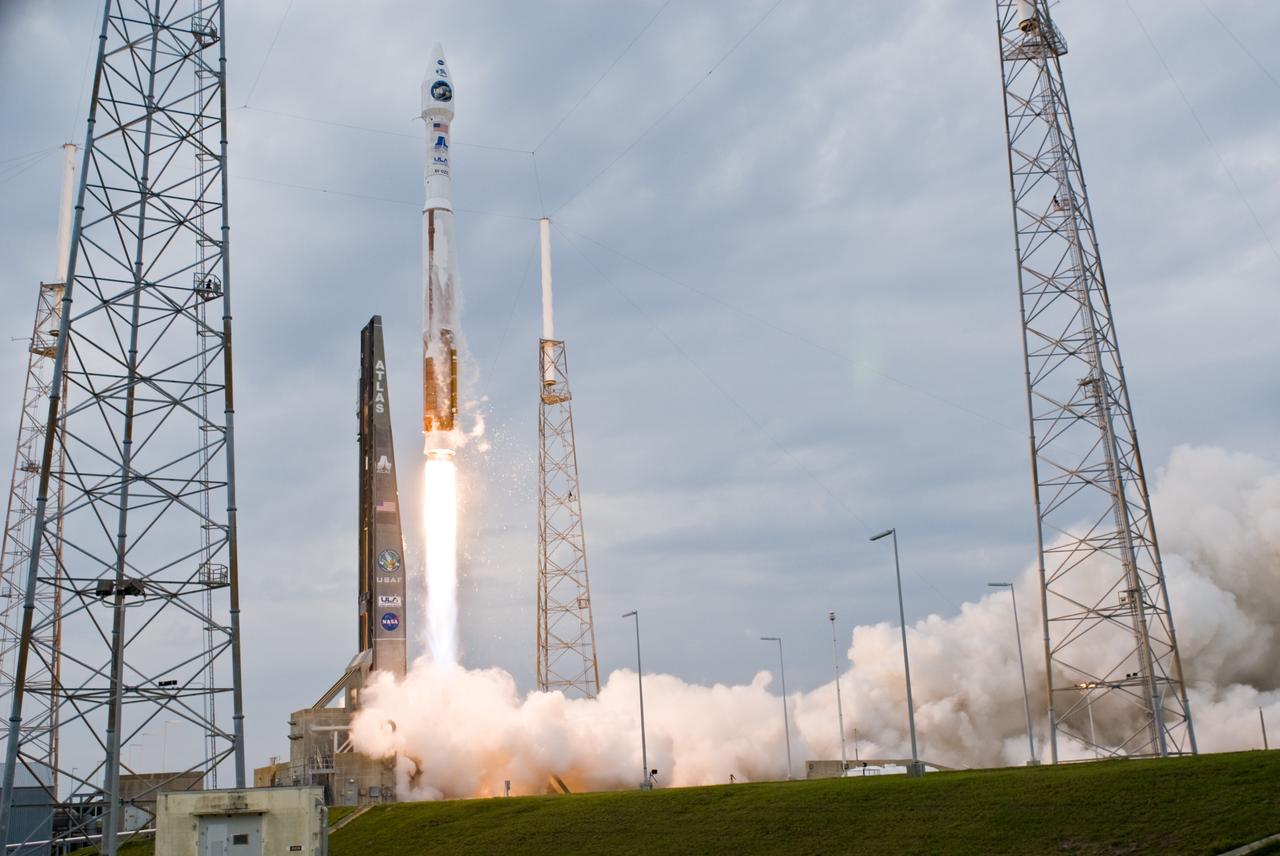
KSC · 2009-06-18 · KSC-2009-3778
KSC-2009-3778
CAPE CANAVERAL, Fla. – Smoke pours across Launch Complex 41 at Cape Canaveral Air Force Station in Florida as the Atlas V/Centaur carrying NASA's Lunar Reconnaissance Orbiter, or…
Inspect NASA record
CAPE CANAVERAL, Fla. – Smoke pours across Launch Complex 41 at Cape Canaveral Air Force Station in Florida as the Atlas V/Centaur carrying NASA's Lunar Reconnaissance Orbiter, or LRO, and NASA's Lunar Crater Observation and Sensing Satellite, known as LCROSS, roars into the sky. The towers around the pad are part of the lightning protection system. LRO and LCROSS are the first missions in NASA's plan to return humans to the moon and begin establishing a lunar outpost by 2020. The LRO also includes seven instruments that will help NASA characterize the moon's surface: DIVINER, LAMP, LEND, LOLA , CRATER, Mini-RF and LROC. Launch was on-time at 5:32 p.m. EDT. Photo credit: NASA/Tom Farrar, Kevin O'Connell
- Record ID
- KSC-2009-3778
- NASA center
- KSC
- Date
- 2009-06-18
- Keywords
- LRO, LCROSS, ELV
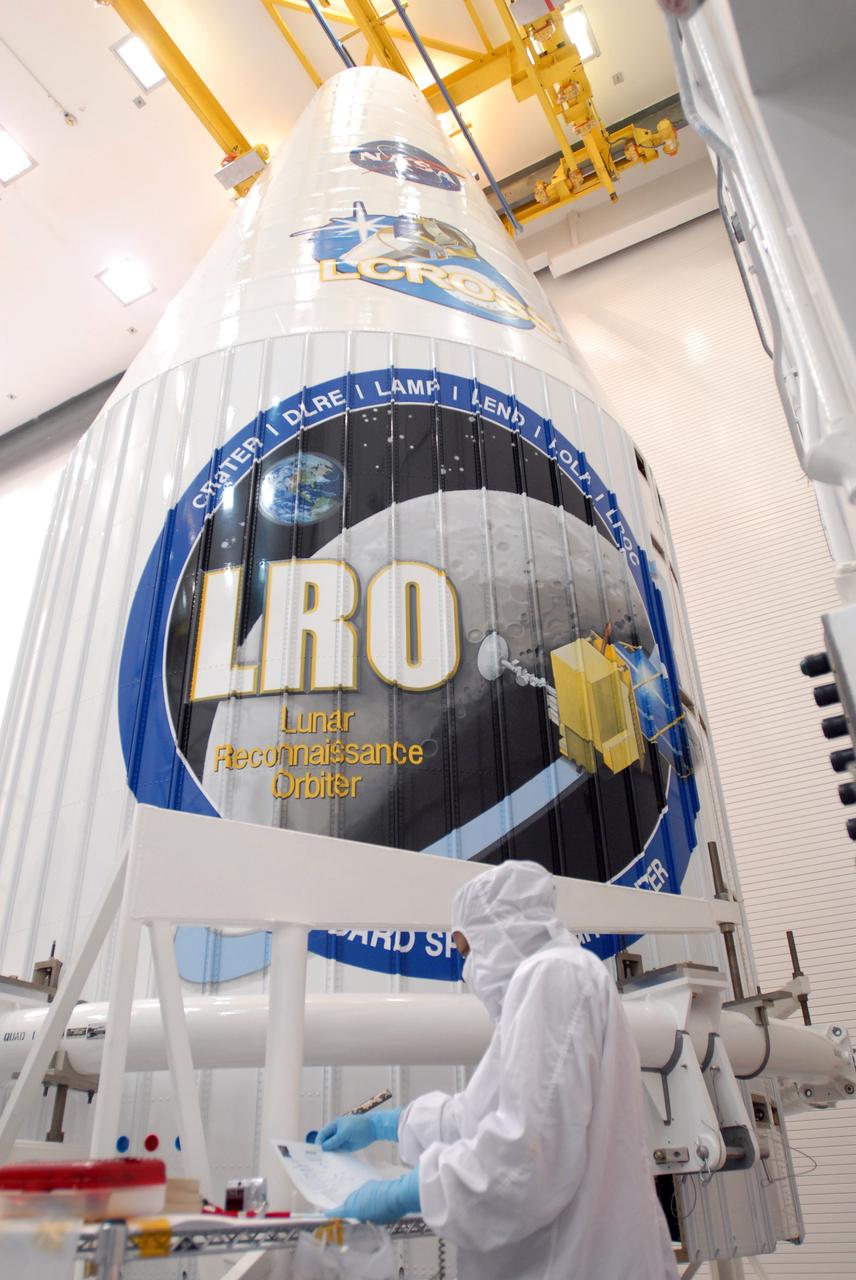
KSC · 2009-04-19 · KSC-2009-2804
KSC-2009-2804
CAPE CANAVERAL, Fla. –– At Astrotech Space Operations in Titusville, Fla., a technician prepares for the installation of the solar array panel on the Lunar Reconnaissance Orbiter, or…
Inspect NASA record
CAPE CANAVERAL, Fla. –– At Astrotech Space Operations in Titusville, Fla., a technician prepares for the installation of the solar array panel on the Lunar Reconnaissance Orbiter, or LRO. He stands in front of the fairing that will encapsulate the spacecraft at a later date. The orbiter will carry seven instruments to provide scientists with detailed maps of the lunar surface and enhance our understanding of the moon's topography, lighting conditions, mineralogical composition and natural resources. Information gleaned from LRO will be used to select safe landing sites, determine locations for future lunar outposts and help mitigate radiation dangers to astronauts. The polar regions of the moon are the main focus of the mission because continuous access to sunlight may be possible and water ice may exist in permanently shadowed areas of the poles. Launch of LRO is targeted for June 2. Photo credit: NASA/Jim Grossmann
- Record ID
- KSC-2009-2804
- NASA center
- KSC
- Date
- 2009-04-19
- Keywords
- LRO, lunar, solar, array, ELV
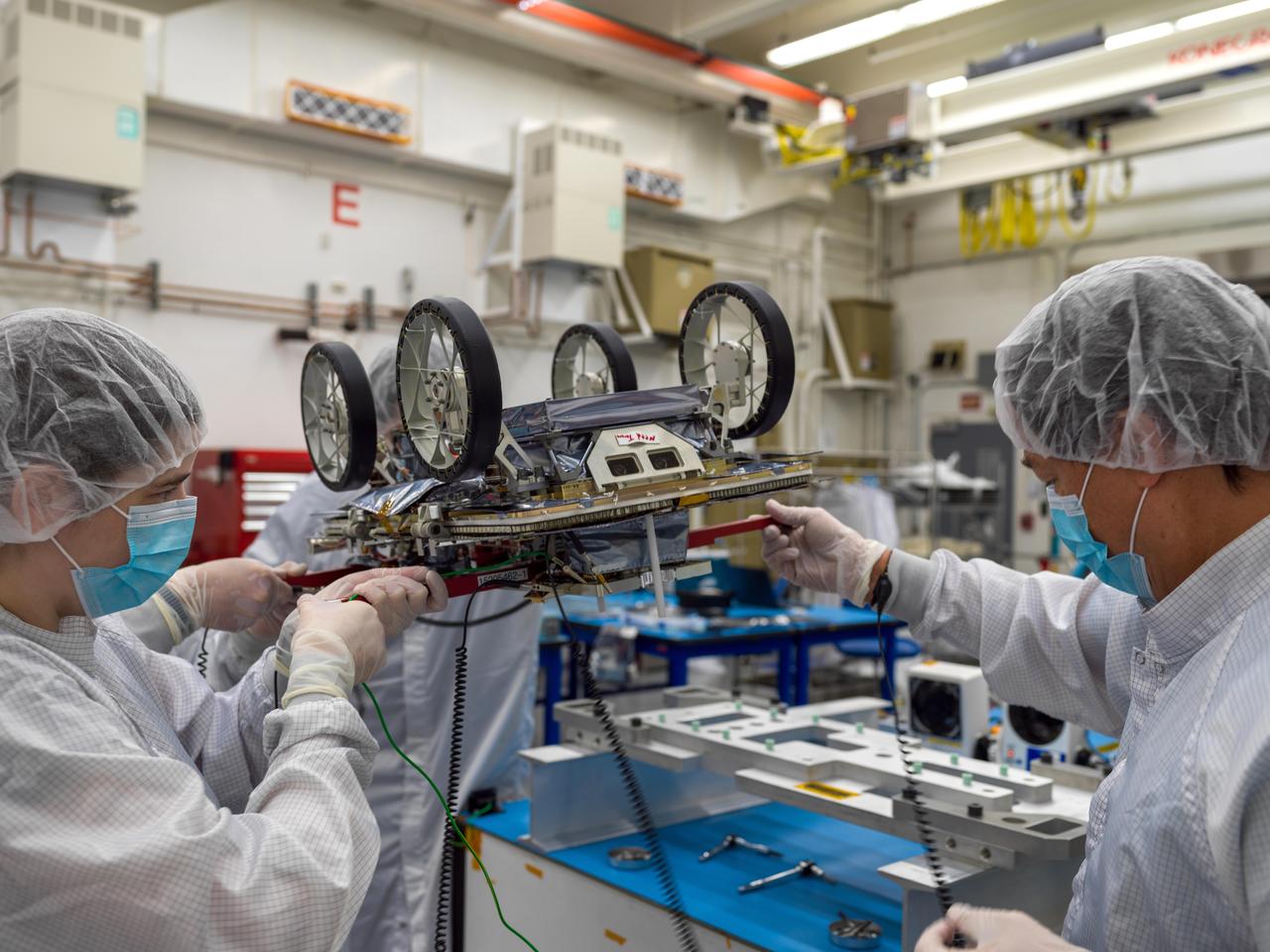
JPL · 2025-02-11 · PIA26427
Taking a CADRE Rover in Hand
One of three small lunar rovers that are part of a NASA technology demonstration called CADRE (Cooperative Autonomous Distributed Robotic Exploration) is prepared for shipping in a clean…
Inspect NASA record
One of three small lunar rovers that are part of a NASA technology demonstration called CADRE (Cooperative Autonomous Distributed Robotic Exploration) is prepared for shipping in a clean room at the agency's Jet Propulsion Laboratory in Southern California on Jan. 29, 2025. CADRE aims to prove that a group of robots can collaborate to gather data without receiving direct commands from mission controllers on Earth. Its trio of rovers will use their cameras and ground-penetrating radars to send back imagery of the lunar surface and subsurface while testing out the novel software systems that enable them to work together as a team autonomously. Before embarking on the first leg of a multistage journey to the Moon, each rover was mated to its deployer system, which will lower it via tether from an Intuitive Machines lander onto the dusty lunar surface. Engineers flipped each rover-deployer pair over and attached it to an aluminum plate for safe transit. The rovers were then sealed into protective metal-frame enclosures that were fitted snuggly into metal shipping containers and loaded onto a truck for the drive to Intuitive Machines' Houston facility. Here, members of the project's assembly, test, and launch operations team hold the upside-down rover by temporary red handles in order to move it to a table where they'll attach it to the aluminum plate. A division of Caltech in Pasadena, California, JPL manages CADRE for the Game Changing Development program within NASA's Space Technology Mission Directorate in Washington. The technology demonstration was selected under the agency's Lunar Surface Innovation Initiative, which was established to expedite the development of technologies for sustained presence on the lunar surface. CADRE will launch as a payload on the third lunar lander mission by Intuitive Machines, called IM-3, under NASA's CLPS (Commercial Lunar Payload Services) initiative, which is managed by the agency's Science Mission Directorate, also in Washington. The agency's Glenn Research Center in Cleveland and its Ames Research Center in Silicon Valley, California, both supported the project. Motiv Space Systems designed and built key hardware elements at the company's Pasadena facility. Clemson University in South Carolina contributed research in support of the project. For more about CADRE, go to: https://go.nasa.gov/cadre https://photojournal.jpl.nasa.gov/catalog/PIA26427
- Record ID
- PIA26427
- NASA center
- JPL
- Date
- 2025-02-11
- Credit
- NASA/JPL-Caltech
- Keywords
- CADRE
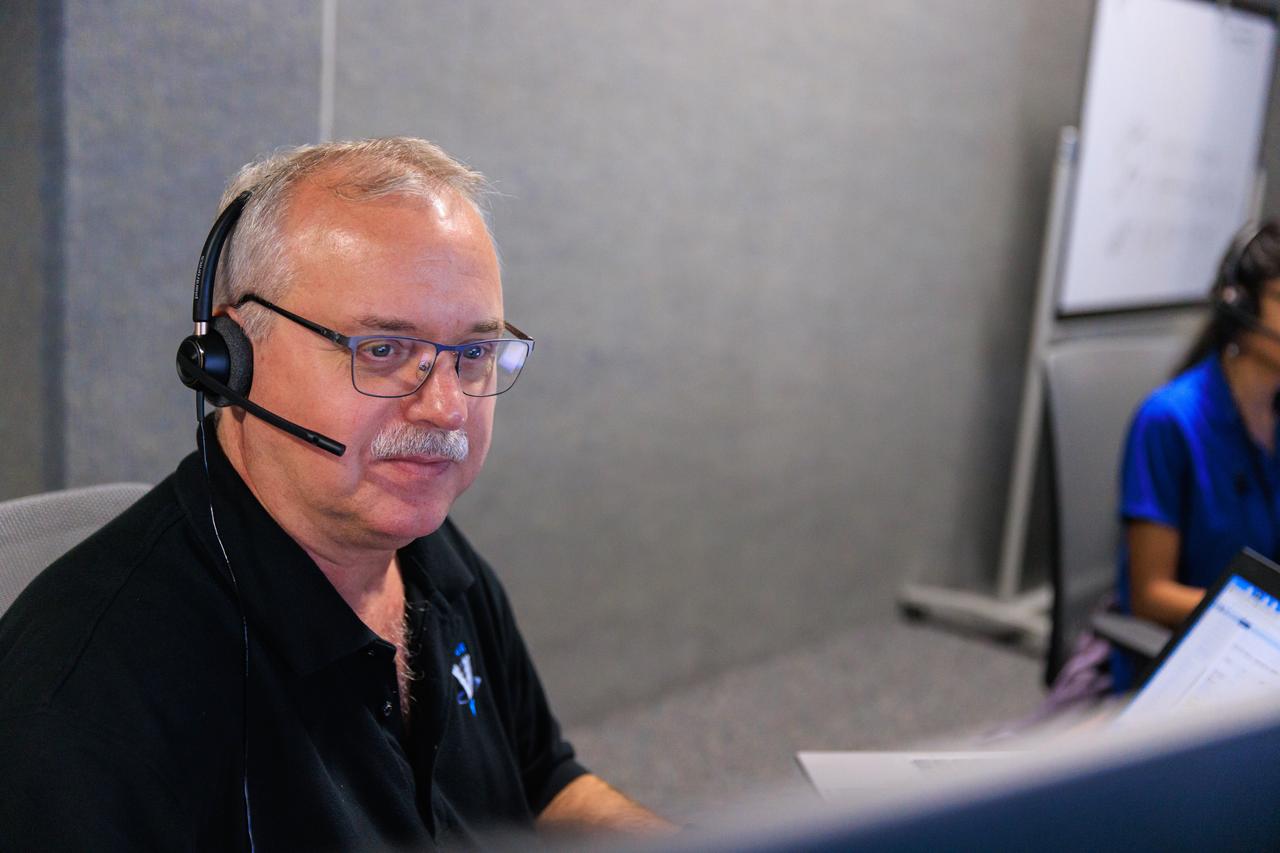
KSC · 2023-05-25 · KSC-20230525-PH-FMX01_0041
MSolo VIPER SIM Training
Mass Spectrometer Observing Lunar Operations (MSOLO) Software Engineering Lead Jim Kania participates in simulation training at NASA’s Kennedy Space Center in Florida on May 25, 2023, in preparation…
Inspect NASA record
Mass Spectrometer Observing Lunar Operations (MSOLO) Software Engineering Lead Jim Kania participates in simulation training at NASA’s Kennedy Space Center in Florida on May 25, 2023, in preparation for the agency’s Volatile Investigating Polar Exploration Rover (VIPER) mission. The purpose of the training was to get the integrated VIPER team – a mix of engineers from Kennedy and NASA’s Ames Research Center in California – accustomed to operating together during phases of the mission where the rover will be driving. MSOLO is a modified commercial off-the-shelf mass spectrometer that will help the agency analyze the chemical makeup of landing sites on the Moon and study water on the lunar surface. MSOLO, as part of VIPER, is scheduled to launch on a SpaceX Falcon Heavy rocket through NASA’s Commercial Lunar Payload Delivery Service (CLPS) initiative in late 2024, landing at the Moon’s South Pole aboard Astrobotic’s Griffin lander. Through Artemis missions, CLPS deliveries will be used to perform science experiments, test technologies, and demonstrate capabilities to help NASA explore the Moon and prepare for human deep space exploration missions.
- Record ID
- KSC-20230525-PH-FMX01_0041
- NASA center
- KSC
- Date
- 2023-05-25
- Credit
- NASA/Frank Michaux
- Keywords
- CLPS, KSC, Kennedy Space Center, MSolo, Mass Spectrometer Oberving Lunar Operations, NASA, Science, VIPER, Volatiles Investigating Polar Exploration Rover, lunar, lunar instruments, moon
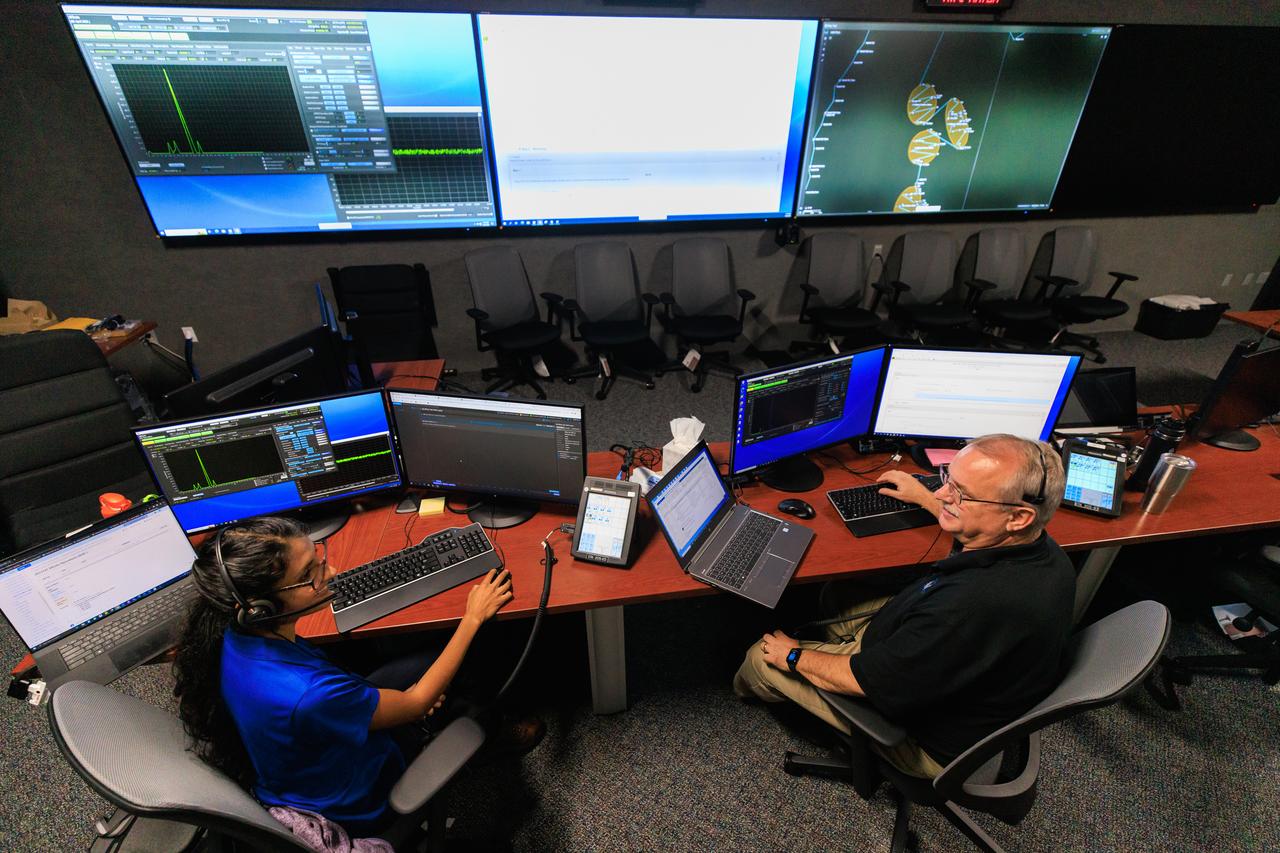
KSC · 2023-05-25 · KSC-20230525-PH-FMX01_0059
MSolo VIPER SIM Training
Pri Johnson (left), Mass Spectrometer Observing Lunar Operations (MSOLO) systems engineer, and Jim Kania, MSOLO software engineering lead, participate in simulation training at NASA’s Kennedy Space Center in…
Inspect NASA record
Pri Johnson (left), Mass Spectrometer Observing Lunar Operations (MSOLO) systems engineer, and Jim Kania, MSOLO software engineering lead, participate in simulation training at NASA’s Kennedy Space Center in Florida on May 25, 2023, in preparation for the agency’s Volatile Investigating Polar Exploration Rover (VIPER) mission. The purpose of the training was to get the integrated VIPER team – a mix of engineers from Kennedy and NASA’s Ames Research Center in California – accustomed to operating together during phases of the mission where the rover will be driving. MSOLO is a modified commercial off-the-shelf mass spectrometer that will help the agency analyze the chemical makeup of landing sites on the Moon and study water on the lunar surface. MSOLO, as part of VIPER, is scheduled to launch on a SpaceX Falcon Heavy rocket through NASA’s Commercial Lunar Payload Delivery Service (CLPS) initiative in late 2024, landing at the Moon’s South Pole aboard Astrobotic’s Griffin lander. Through Artemis missions, CLPS deliveries will be used to perform science experiments, test technologies, and demonstrate capabilities to help NASA explore the Moon and prepare for human deep space exploration missions.
- Record ID
- KSC-20230525-PH-FMX01_0059
- NASA center
- KSC
- Date
- 2023-05-25
- Credit
- NASA/Frank Michaux
- Keywords
- CLPS, KSC, Kennedy Space Center, MSolo, Mass Spectrometer Oberving Lunar Operations, NASA, Science, VIPER, Volatiles Investigating Polar Exploration Rover, lunar, lunar instruments, moon
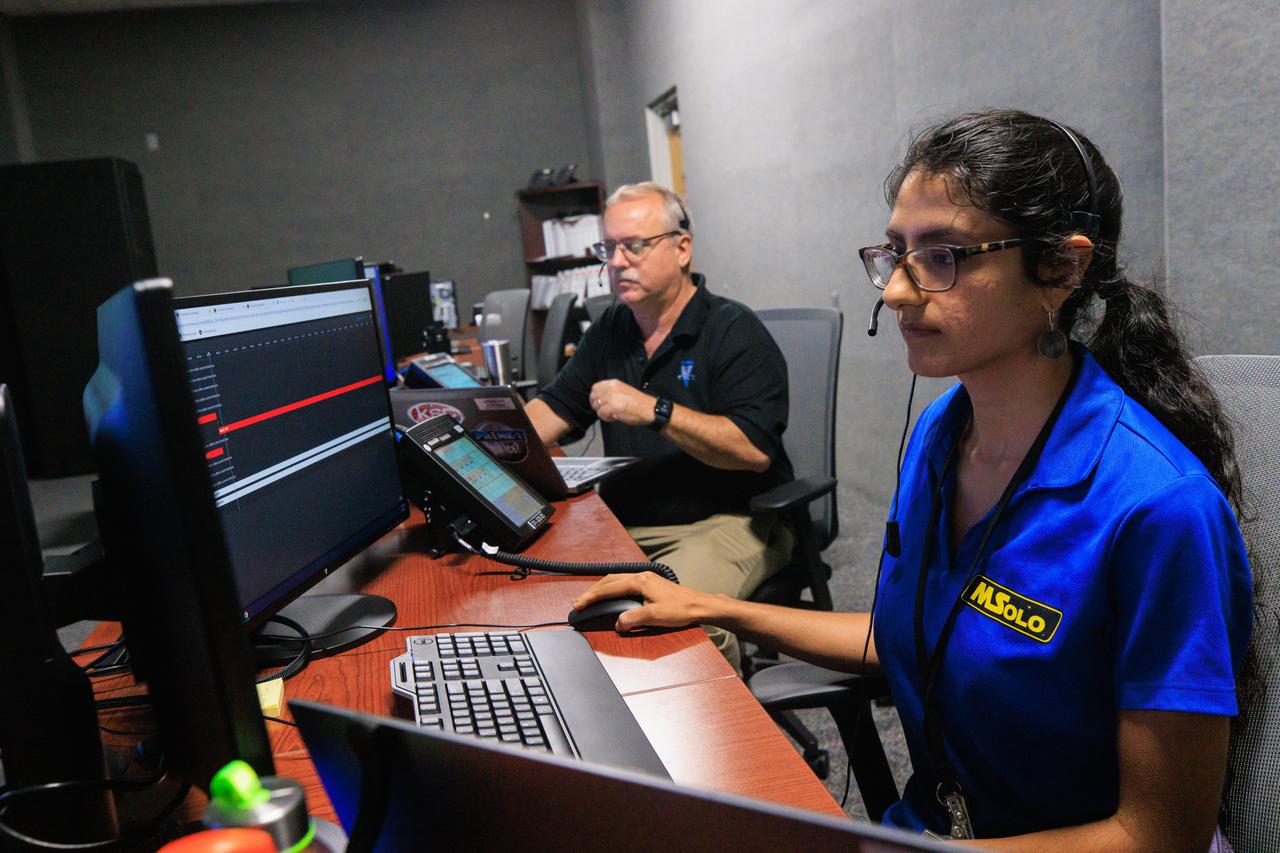
KSC · 2023-05-25 · KSC-20230525-PH-FMX01_0003
MSolo VIPER SIM Training
Jim Kania (left), Mass Spectrometer Observing Lunar Operations (MSOLO) software engineering lead, and Pri Johnson, MSOLO systems engineer, participate in simulation training at NASA’s Kennedy Space Center in…
Inspect NASA record
Jim Kania (left), Mass Spectrometer Observing Lunar Operations (MSOLO) software engineering lead, and Pri Johnson, MSOLO systems engineer, participate in simulation training at NASA’s Kennedy Space Center in Florida on May 25, 2023, in preparation for the agency’s Volatile Investigating Polar Exploration Rover (VIPER) mission. The purpose of the training was to get the integrated VIPER team – a mix of engineers from Kennedy and NASA’s Ames Research Center in California – accustomed to operating together during phases of the mission where the rover will be driving. MSOLO is a modified commercial off-the-shelf mass spectrometer that will help the agency analyze the chemical makeup of landing sites on the Moon and study water on the lunar surface. MSOLO, as part of VIPER, is scheduled to launch on a SpaceX Falcon Heavy rocket through NASA’s Commercial Lunar Payload Delivery Service (CLPS) initiative in late 2024, landing at the Moon’s South Pole aboard Astrobotic’s Griffin lander. Through Artemis missions, CLPS deliveries will be used to perform science experiments, test technologies, and demonstrate capabilities to help NASA explore the Moon and prepare for human deep space exploration missions.
- Record ID
- KSC-20230525-PH-FMX01_0003
- NASA center
- KSC
- Date
- 2023-05-25
- Credit
- NASA/Frank Michaux
- Keywords
- CLPS, KSC, Kennedy Space Center, MSolo, Mass Spectrometer Oberving Lunar Operations, NASA, Science, VIPER, Volatiles Investigating Polar Exploration Rover, lunar, lunar instruments, moon
KSC · 2023-05-25 · KSC-20230525-PH-FMX01_0091
MSolo VIPER SIM Training
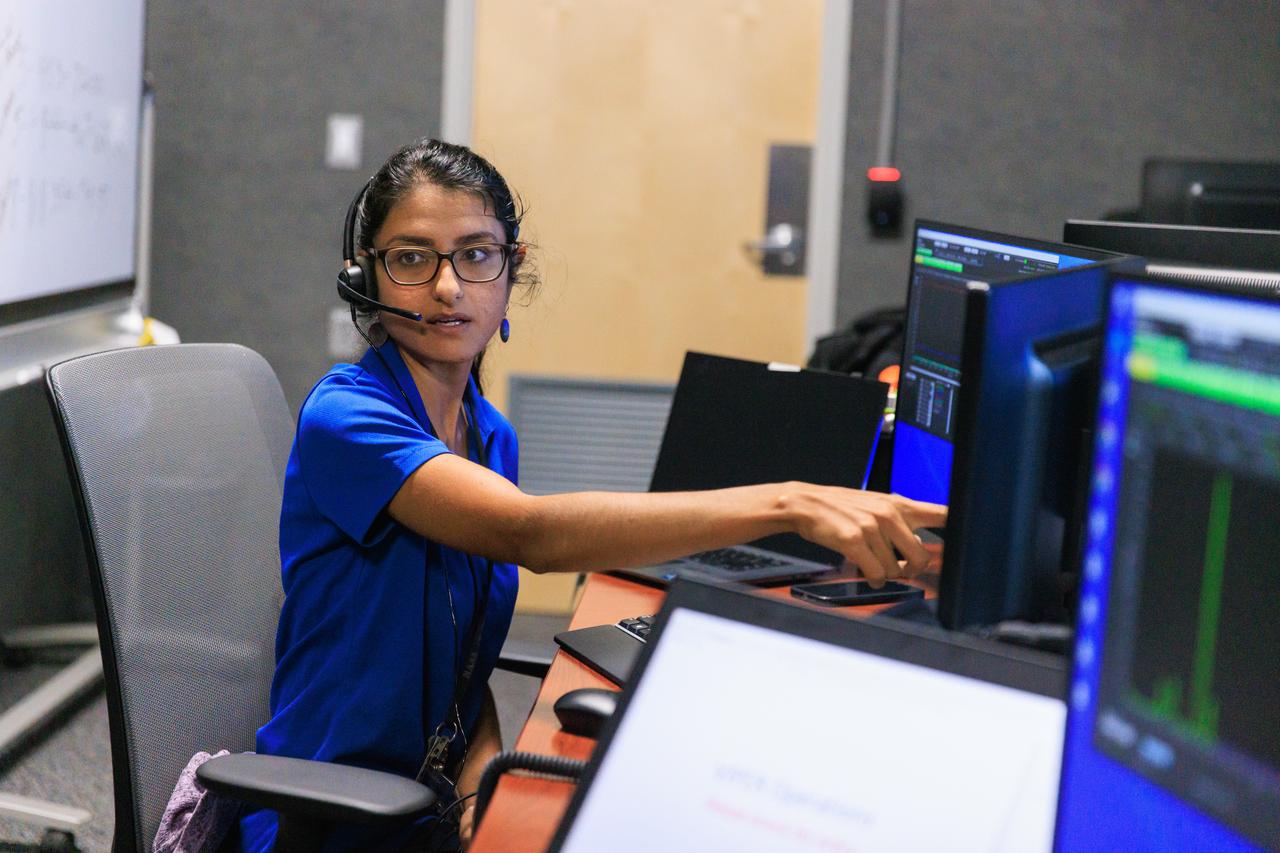
Mass Spectrometer Observing Lunar Operations (MSOLO) Systems Engineer Pri Johnson participates in simulation training at NASA’s Kennedy Space Center in Florida on May 25, 2023, in preparation for…
Inspect NASA record
Mass Spectrometer Observing Lunar Operations (MSOLO) Systems Engineer Pri Johnson participates in simulation training at NASA’s Kennedy Space Center in Florida on May 25, 2023, in preparation for the agency’s Volatile Investigating Polar Exploration Rover (VIPER) mission. The purpose of the training was to get the integrated VIPER team – a mix of engineers from Kennedy and NASA’s Ames Research Center in California – accustomed to operating together during phases of the mission where the rover will be driving. MSOLO is a modified commercial off-the-shelf mass spectrometer that will help the agency analyze the chemical makeup of landing sites on the Moon and study water on the lunar surface. MSOLO, as part of VIPER, is scheduled to launch on a SpaceX Falcon Heavy rocket through NASA’s Commercial Lunar Payload Delivery Service (CLPS) initiative in late 2024, landing at the Moon’s South Pole aboard Astrobotic’s Griffin lander. Through Artemis missions, CLPS deliveries will be used to perform science experiments, test technologies, and demonstrate capabilities to help NASA explore the Moon and prepare for human deep space exploration missions.
- Record ID
- KSC-20230525-PH-FMX01_0091
- NASA center
- KSC
- Date
- 2023-05-25
- Credit
- NASA/Frank Michaux
- Keywords
- CLPS, KSC, Kennedy Space Center, MSolo, Mass Spectrometer Oberving Lunar Operations, NASA, Science, VIPER, Volatiles Investigating Polar Exploration Rover, lunar, lunar instruments, moon
KSC · 2023-05-25 · KSC-20230525-PH-FMX01_0064
MSolo VIPER SIM Training
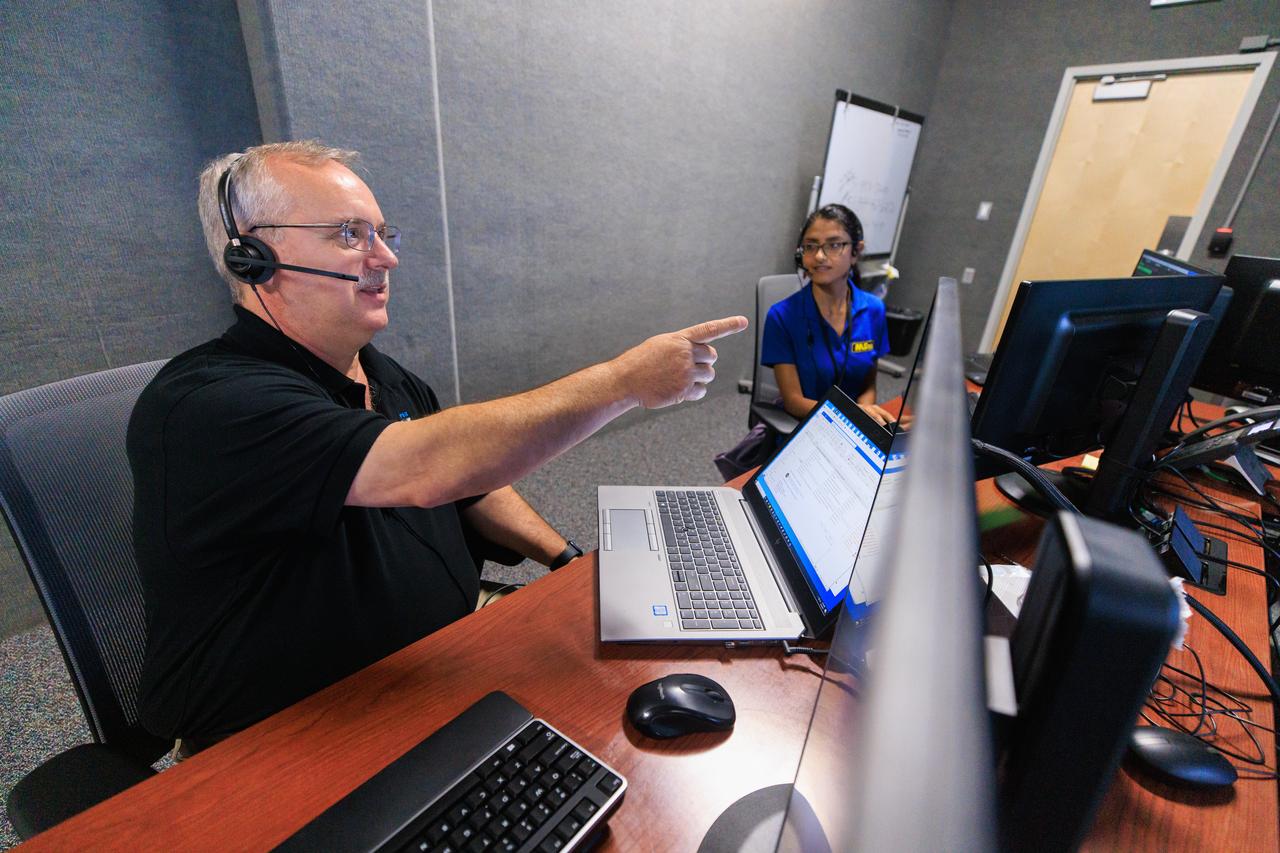
Jim Kania (left), Mass Spectrometer Observing Lunar Operations (MSOLO) software engineering lead, and Pri Johnson, MSOLO systems engineer, participate in simulation training at NASA’s Kennedy Space Center in…
Inspect NASA record
Jim Kania (left), Mass Spectrometer Observing Lunar Operations (MSOLO) software engineering lead, and Pri Johnson, MSOLO systems engineer, participate in simulation training at NASA’s Kennedy Space Center in Florida on May 25, 2023, in preparation for the agency’s Volatile Investigating Polar Exploration Rover (VIPER) mission. The purpose of the training was to get the integrated VIPER team – a mix of engineers from Kennedy and NASA’s Ames Research Center in California – accustomed to operating together during phases of the mission where the rover will be driving. MSOLO is a modified commercial off-the-shelf mass spectrometer that will help the agency analyze the chemical makeup of landing sites on the Moon and study water on the lunar surface. MSOLO, as part of VIPER, is scheduled to launch on a SpaceX Falcon Heavy rocket through NASA’s Commercial Lunar Payload Delivery Service (CLPS) initiative in late 2024, landing at the Moon’s South Pole aboard Astrobotic’s Griffin lander. Through Artemis missions, CLPS deliveries will be used to perform science experiments, test technologies, and demonstrate capabilities to help NASA explore the Moon and prepare for human deep space exploration missions.
- Record ID
- KSC-20230525-PH-FMX01_0064
- NASA center
- KSC
- Date
- 2023-05-25
- Credit
- NASA/Frank Michaux
- Keywords
- CLPS, KSC, Kennedy Space Center, MSolo, Mass Spectrometer Oberving Lunar Operations, NASA, Science, VIPER, Volatiles Investigating Polar Exploration Rover, lunar, lunar instruments, moon