
Update Site (from NASA)
Explore NASA’s Image and Video Library.
Suggest one object per day for the Interstellar Minds collection. We review each suggestion before adding it.
Sign in to suggest a Marvel.
Find a NASA image ID. Open a NASA record and copy its ID from the end of the details URL.
NASA image records
KSC · 2009-05-14 · KSC-2009-3149
KSC-2009-3149
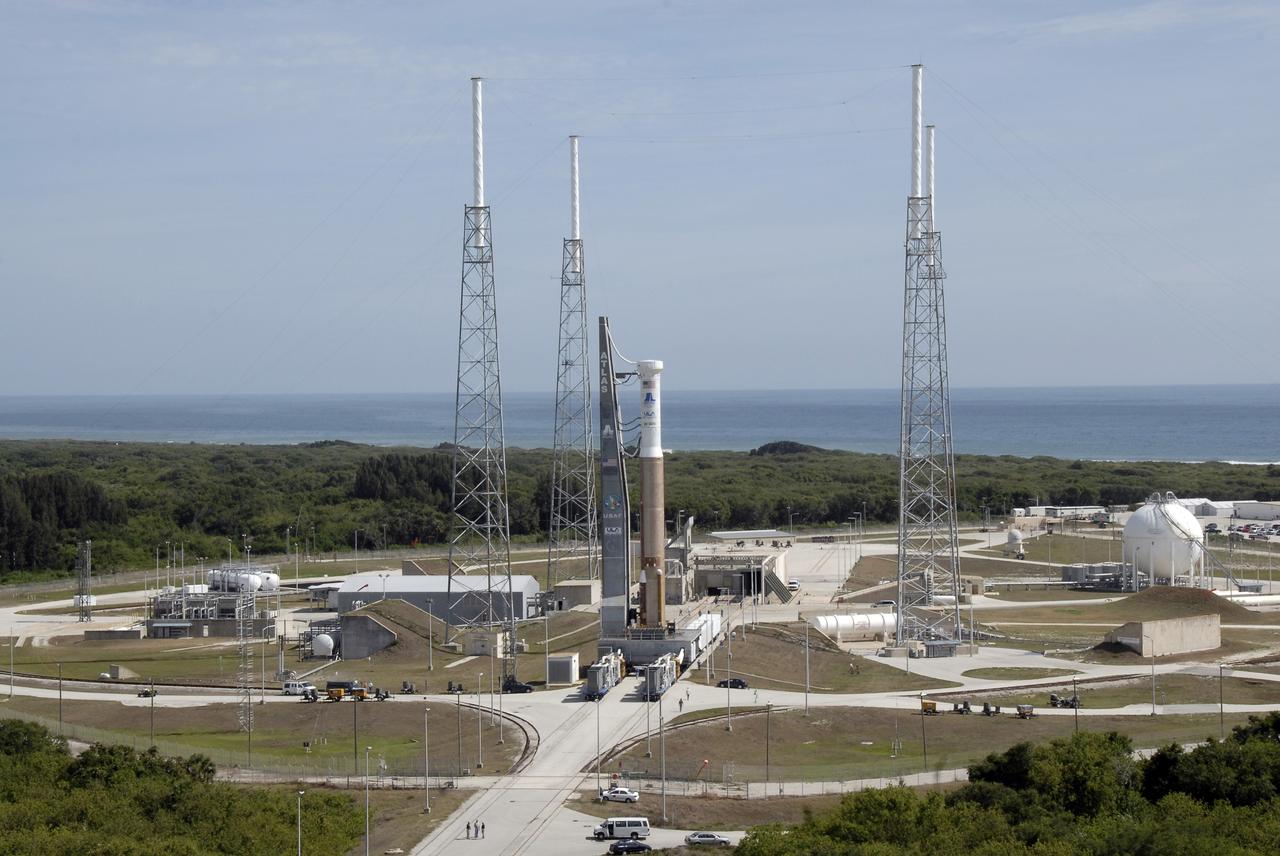
CAPE CANAVERAL, Fla. – The Atlas V/Centaur arrives on Launch Complex-41 at Cape Canaveral Air Force Station in Florida. Lightning towers surround the pad for protection against possible…
Inspect NASA record
CAPE CANAVERAL, Fla. – The Atlas V/Centaur arrives on Launch Complex-41 at Cape Canaveral Air Force Station in Florida. Lightning towers surround the pad for protection against possible lightning strikes. The Atlas was rolled to the launch pad from the Vertical Integration Facility in preparation for the wet dress rehearsal, or countdown test, which means being fully loaded with propellants including liquid hydrogen, liquid oxygen and RP-1 fuel. The launch vehicle will be rolled off the pad and returned to the VIF on May 16. The Atlas V/Centaur is the launch vehicle for NASA's Lunar Reconnaissance Orbiter, or LRO, and NASA's Lunar CRater Observation and Sensing Satellite, known as LCROSS. They will be mated with the Atlas in late May. LCROSS and LRO are the first missions in NASA's plan to return humans to the moon and begin establishing a lunar outpost by 2020. Launch is scheduled for no earlier than June 17. Photo credit: NASA/Kim Shiflett
- Record ID
- KSC-2009-3149
- NASA center
- KSC
- Date
- 2009-05-14
- Keywords
- LRO, LCROSS, Atlas V, Centaur, CCAFS, LC-41
KSC · 2009-06-18 · KSC-2009-3770
KSC-2009-3770
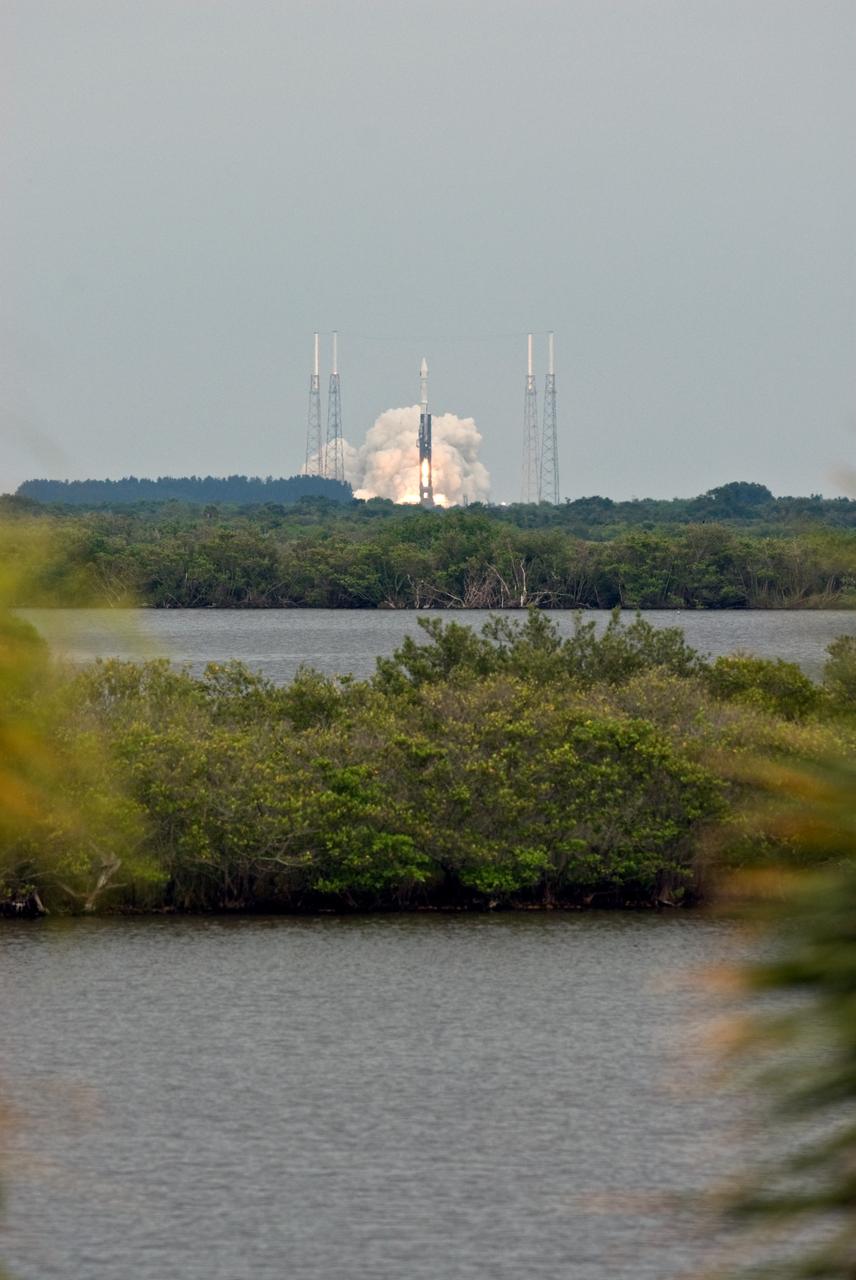
CAPE CANAVERAL, Fla. – Viewed across the Indian River Lagoon, the Atlas V/Centaur rocket carrying NASA's Lunar Reconnaissance Orbiter, or LRO, and NASA's Lunar Crater Observation and Sensing…
Inspect NASA record
CAPE CANAVERAL, Fla. – Viewed across the Indian River Lagoon, the Atlas V/Centaur rocket carrying NASA's Lunar Reconnaissance Orbiter, or LRO, and NASA's Lunar Crater Observation and Sensing Satellite, known as LCROSS, lifts off from Launch Complex 41 at Cape Canaveral Air Force Station in Florida. Surrounding the pad are lightning towers. LRO and LCROSS are the first missions in NASA's plan to return humans to the moon and begin establishing a lunar outpost by 2020. The LRO also includes seven instruments that will help NASA characterize the moon's surface: DIVINER, LAMP, LEND, LOLA , CRATER, Mini-RF and LROC. Launch was on-time at 5:32 p.m. EDT June 18. Photo credit: NASA/Tony Gray
- Record ID
- KSC-2009-3770
- NASA center
- KSC
- Date
- 2009-06-18
- Keywords
- LRO, LCROSS, ELV
KSC · 2009-05-14 · KSC-2009-3147
KSC-2009-3147
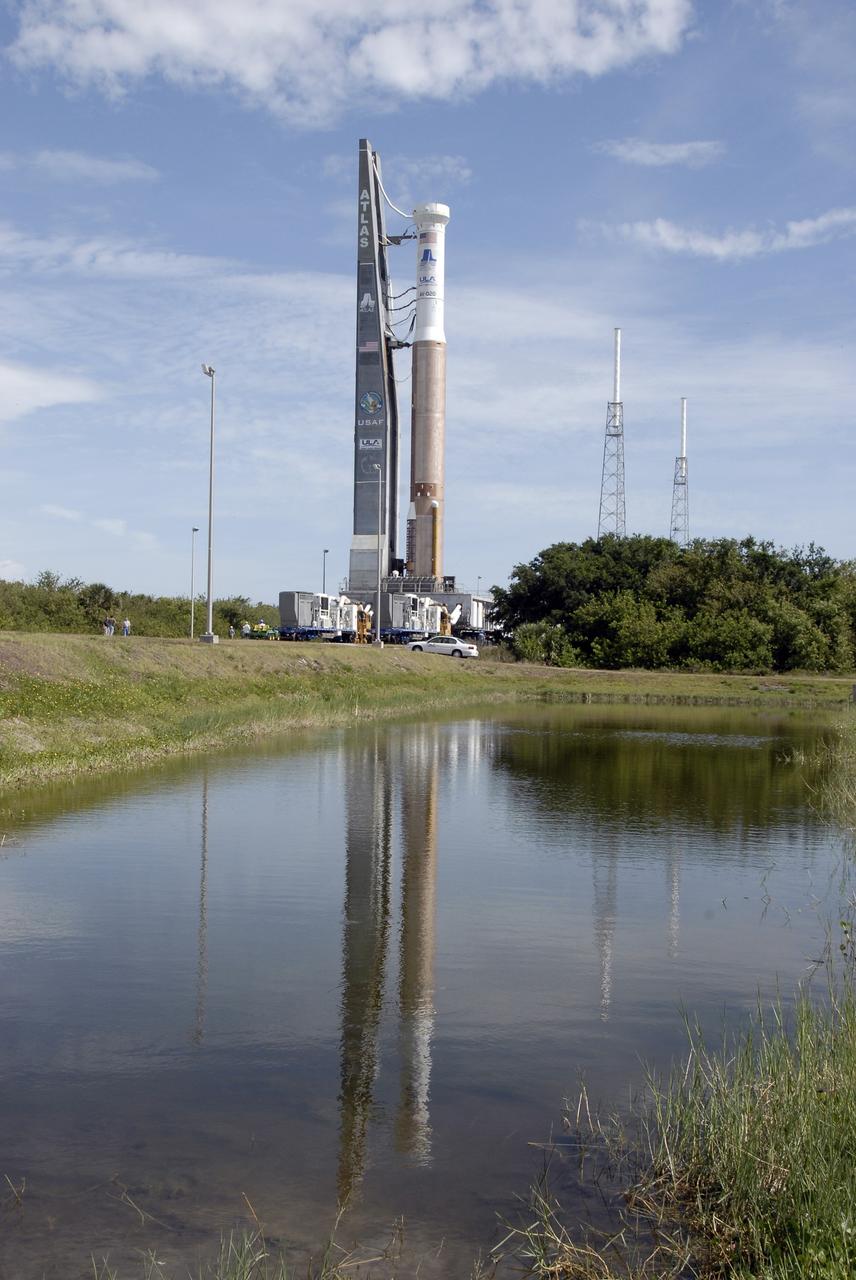
CAPE CANAVERAL, Fla. – The Atlas V/Centaur nears Launch Complex-41 at Cape Canaveral Air Force Station in Florida. At right in the background are two of the four…
Inspect NASA record
CAPE CANAVERAL, Fla. – The Atlas V/Centaur nears Launch Complex-41 at Cape Canaveral Air Force Station in Florida. At right in the background are two of the four lightning towers that surround the pad for protection against possible lightning strikes. The Atlas was rolled to the launch pad from the Vertical Integration Facility in preparation for the wet dress rehearsal, or countdown test, which means being fully loaded with propellants including liquid hydrogen, liquid oxygen and RP-1 fuel. The launch vehicle will be rolled off the pad and returned to the VIF on May 16. The Atlas V/Centaur is the launch vehicle for NASA's Lunar Reconnaissance Orbiter, or LRO, and NASA's Lunar CRater Observation and Sensing Satellite, known as LCROSS. They will be mated with the Atlas in late May. LCROSS and LRO are the first missions in NASA's plan to return humans to the moon and begin establishing a lunar outpost by 2020. Launch is scheduled for no earlier than June 17. Photo credit: NASA/Kim Shiflett
- Record ID
- KSC-2009-3147
- NASA center
- KSC
- Date
- 2009-05-14
- Keywords
- LRO, LCROSS, Atlas V, Centaur, CCAFS, LC-41
KSC · 2011-07-25 · KSC-2011-5962
KSC-2011-5962
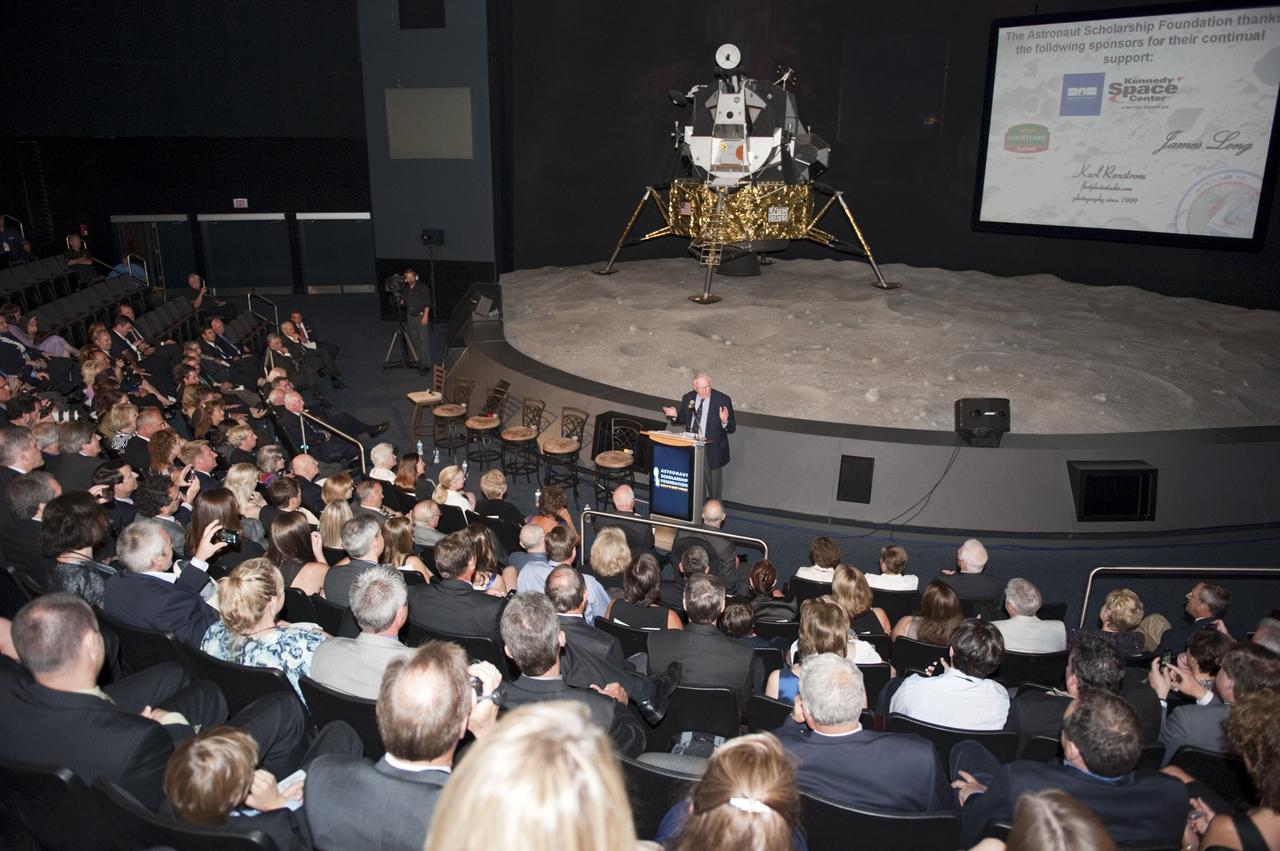
CAPE CANAVERAL, Fla. -- The Apollo/Saturn V Center at NASA's Kennedy Space Center in Florida hosted a celebration on the 40th anniversary of NASA's Apollo 15 mission. Apollo…
Inspect NASA record
CAPE CANAVERAL, Fla. -- The Apollo/Saturn V Center at NASA's Kennedy Space Center in Florida hosted a celebration on the 40th anniversary of NASA's Apollo 15 mission. Apollo 15 Commander Dave Scott and Command Module Pilot Al Worden and an elite gathering of Apollo-era astronauts were on hand for the event and panel discussion. Here, Apollo 11 Commander Neil Armstrong speaks to the invited guests. In the background is a model of the Lunar Module, part of the lander portion of the Apollo spacecraft. Worden circled the moon while Scott and the late Jim Irwin, the Lunar Module commander, made history when they became the first humans to drive a vehicle on the surface of the moon. They also provided extensive descriptions and photographic documentation of geologic features in the vicinity of the Hadley Rille landing site during their three days on the lunar surface. Photo credit: NASA/Kim Shiflett
- Record ID
- KSC-2011-5962
- NASA center
- KSC
- Date
- 2011-07-25
- Keywords
- apollo 15, 40th anniversary
KSC · 2009-04-19 · KSC-2009-2807
KSC-2009-2807
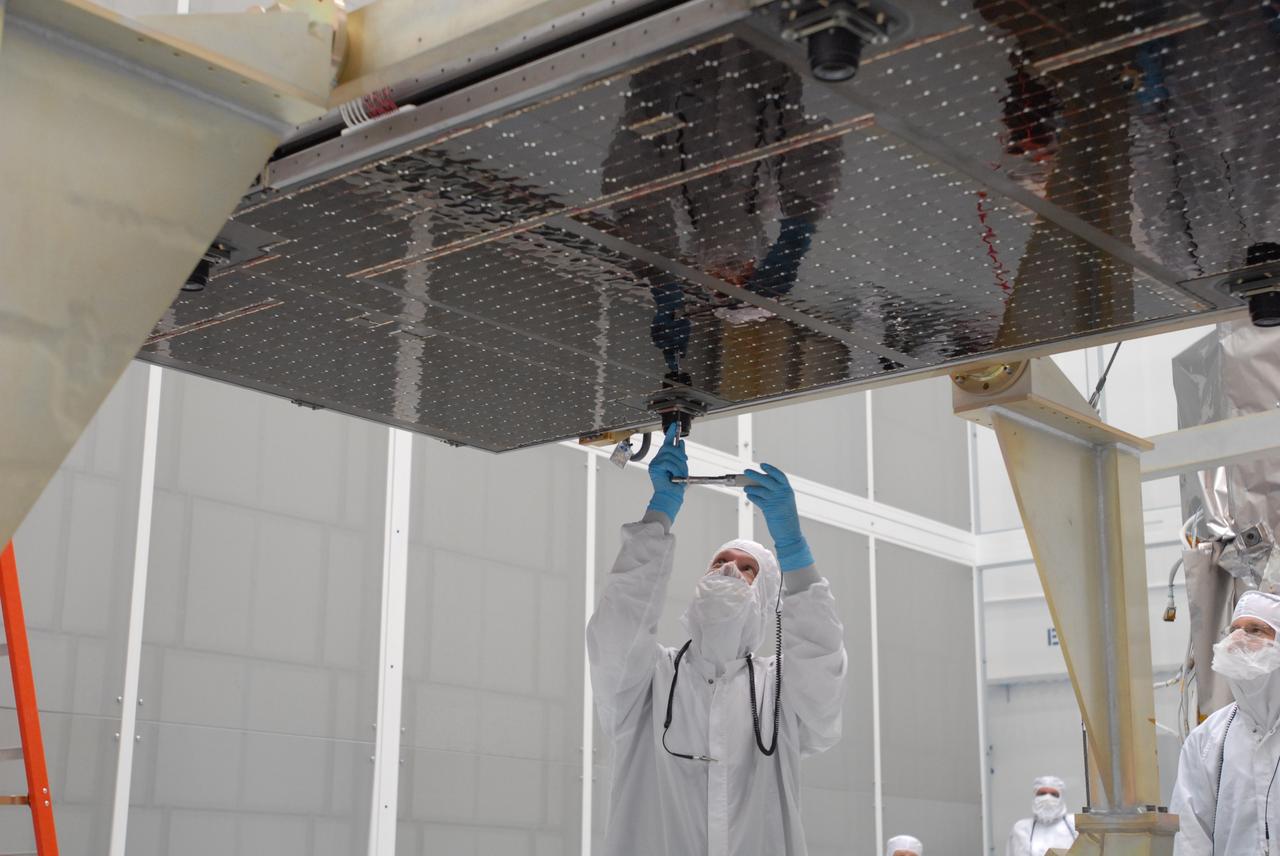
CAPE CANAVERAL, Fla. –– At Astrotech Space Operations in Titusville, Fla., technicians prepare the solar array panel for installation on the Lunar Reconnaissance Orbiter, or LRO. The orbiter…
Inspect NASA record
CAPE CANAVERAL, Fla. –– At Astrotech Space Operations in Titusville, Fla., technicians prepare the solar array panel for installation on the Lunar Reconnaissance Orbiter, or LRO. The orbiter will carry seven instruments to provide scientists with detailed maps of the lunar surface and enhance our understanding of the moon's topography, lighting conditions, mineralogical composition and natural resources. Information gleaned from LRO will be used to select safe landing sites, determine locations for future lunar outposts and help mitigate radiation dangers to astronauts. The polar regions of the moon are the main focus of the mission because continuous access to sunlight may be possible and water ice may exist in permanently shadowed areas of the poles. Launch of LRO is targeted for June 2. Photo credit: NASA/Jim Grossmann
- Record ID
- KSC-2009-2807
- NASA center
- KSC
- Date
- 2009-04-19
- Keywords
- LRO, lunar, solar, array, ELV
KSC · 2009-04-19 · KSC-2009-2801
KSC-2009-2801
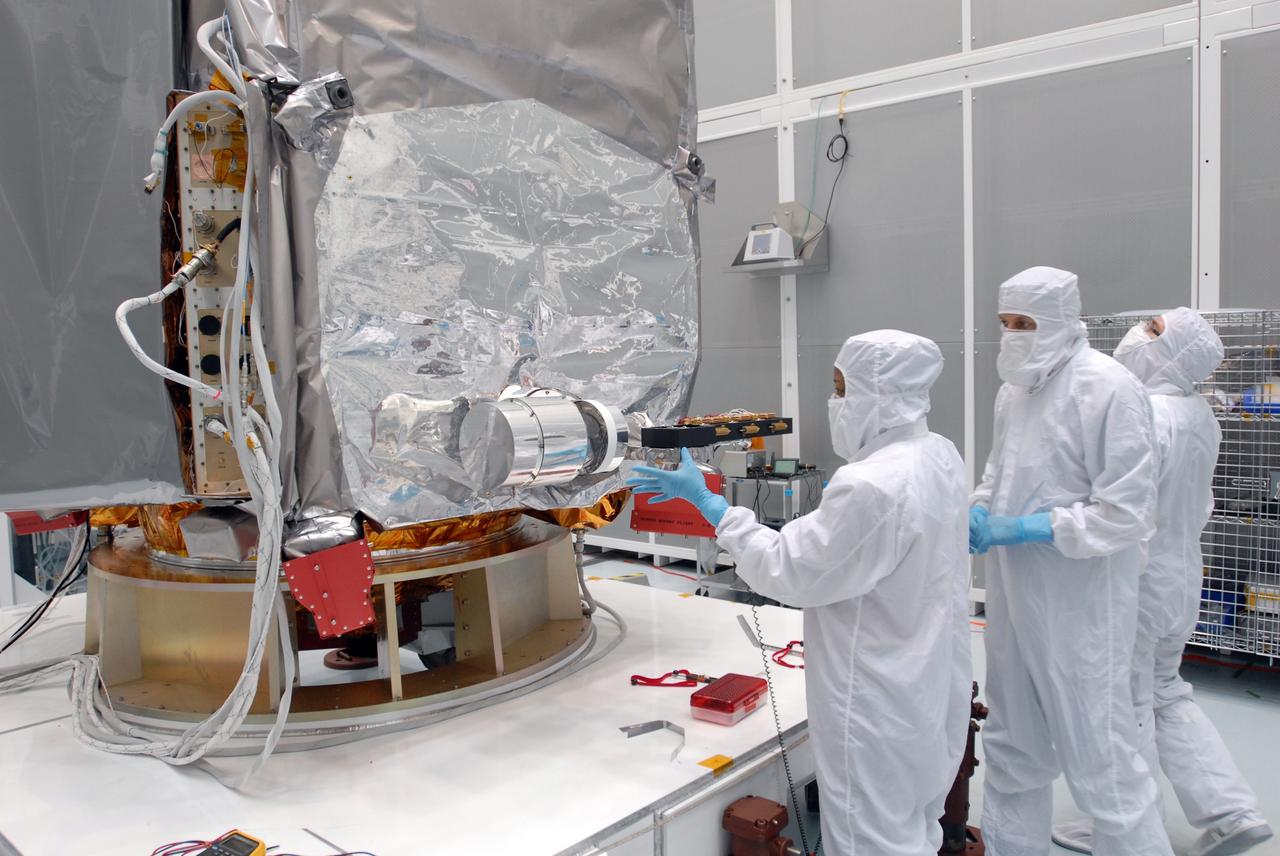
CAPE CANAVERAL, Fla. –– At Astrotech Space Operations in Titusville, Fla., technicians prepare the Lunar Reconnaissance Orbiter, or LRO, for installation of the solar array panels. The orbiter…
Inspect NASA record
CAPE CANAVERAL, Fla. –– At Astrotech Space Operations in Titusville, Fla., technicians prepare the Lunar Reconnaissance Orbiter, or LRO, for installation of the solar array panels. The orbiter will carry seven instruments to provide scientists with detailed maps of the lunar surface and enhance our understanding of the moon's topography, lighting conditions, mineralogical composition and natural resources. Information gleaned from LRO will be used to select safe landing sites, determine locations for future lunar outposts and help mitigate radiation dangers to astronauts. The polar regions of the moon are the main focus of the mission because continuous access to sunlight may be possible and water ice may exist in permanently shadowed areas of the poles. Launch of LRO is targeted for June 2. Photo credit: NASA/Jim Grossmann
- Record ID
- KSC-2009-2801
- NASA center
- KSC
- Date
- 2009-04-19
- Keywords
- LRO, lunar, solar, array, ELV
KSC · 2009-06-18 · KSC-2009-3768
KSC-2009-3768
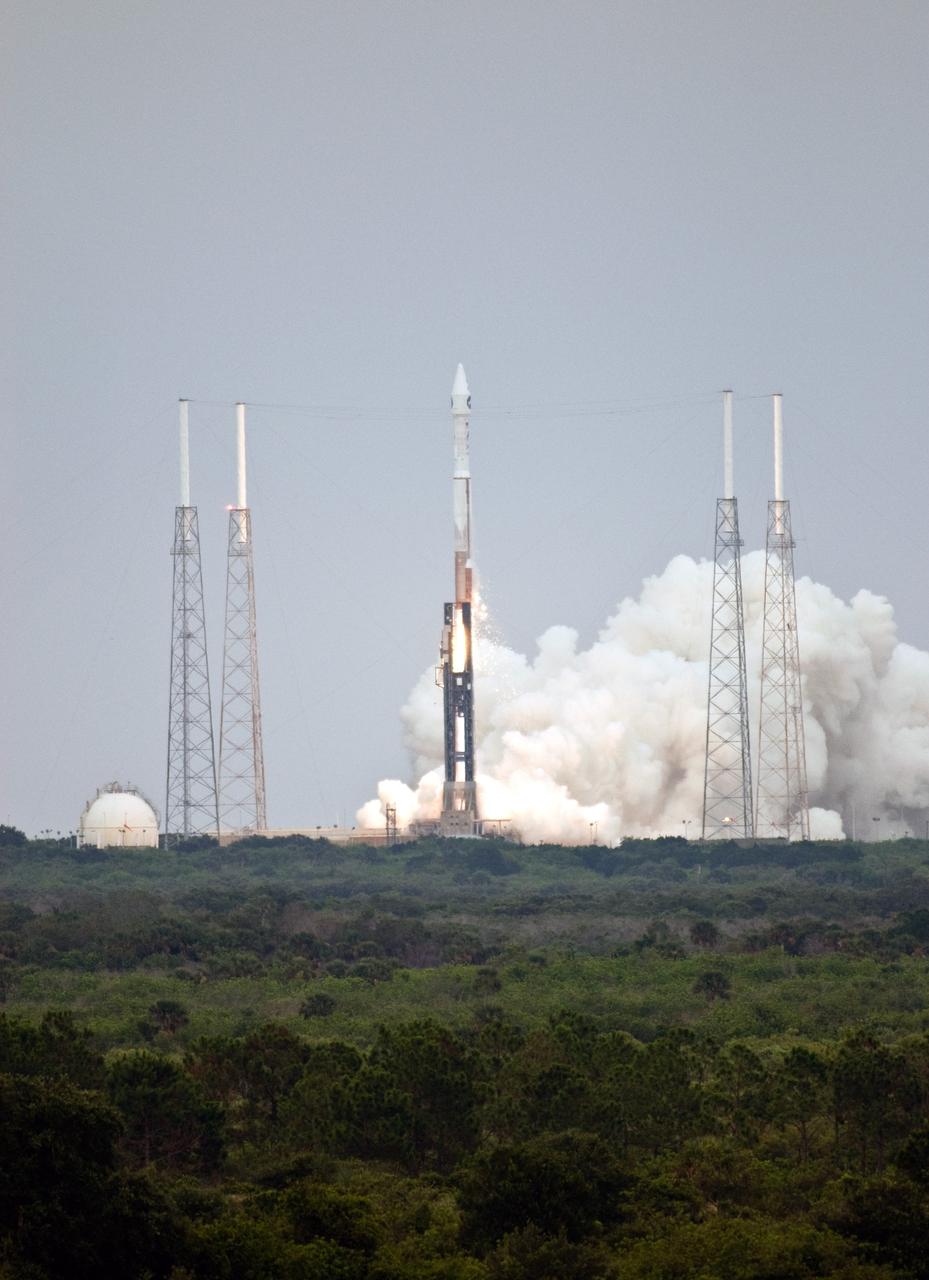
CAPE CANAVERAL, Fla. – Smoke and steam roll across the launch pad as NASA's Lunar Reconnaissance Orbiter, or LRO, and NASA's Lunar Crater Observation and Sensing Satellite, known…
Inspect NASA record
CAPE CANAVERAL, Fla. – Smoke and steam roll across the launch pad as NASA's Lunar Reconnaissance Orbiter, or LRO, and NASA's Lunar Crater Observation and Sensing Satellite, known as LCROSS, lifts off atop the Atlas V/Centaur rocket from Launch Complex 41 at Cape Canaveral Air Force Station in Florida. Surrounding the pad are lightning towers. LRO and LCROSS are the first missions in NASA's plan to return humans to the moon and begin establishing a lunar outpost by 2020. The LRO also includes seven instruments that will help NASA characterize the moon's surface: DIVINER, LAMP, LEND, LOLA , CRATER, Mini-RF and LROC. Launch was on-time at 5:32 p.m. EDT June 18. Photo credit: NASA/Kim Shiflett
- Record ID
- KSC-2009-3768
- NASA center
- KSC
- Date
- 2009-06-18
- Keywords
- LRO, LCROSS, ELV
KSC · 1969-07-16 · KSC-69PC-413
KSC-69PC-413
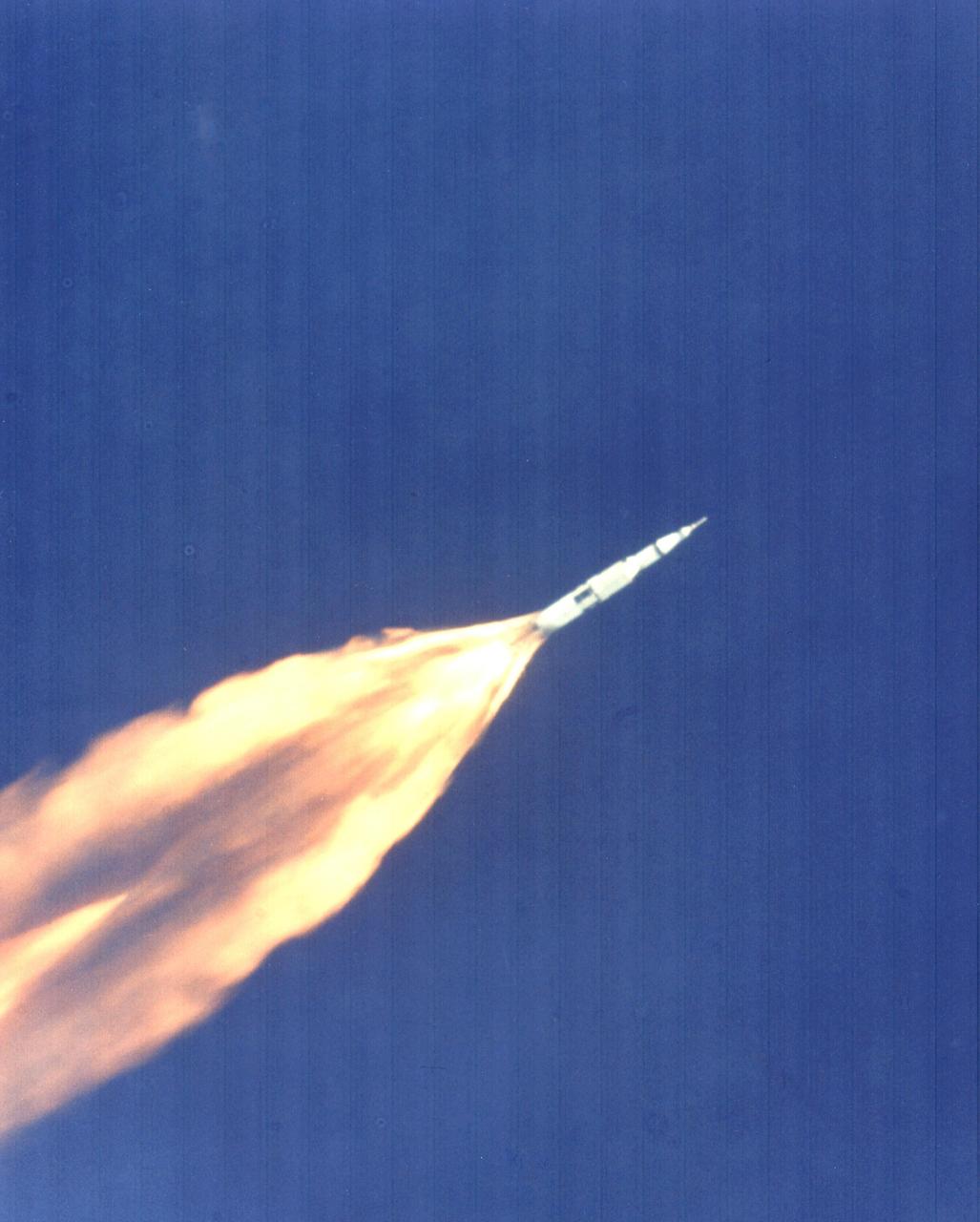
KENNEDY SPACE CENTER, FLA. - The Apollo 11 Saturn V space vehicle climbs toward orbit after liftoff from Pad 39A at 9:32 a.m. EDT. In two-and-a-half minutes of…
Inspect NASA record
KENNEDY SPACE CENTER, FLA. - The Apollo 11 Saturn V space vehicle climbs toward orbit after liftoff from Pad 39A at 9:32 a.m. EDT. In two-and-a-half minutes of powered flight, the S-IC booster lifts the vehicle to an altitude of about 39 miles approximately 55 miles downrange. This photo was taken with a 70-mm telescopic camera mounted in an Air force EC-135N plane. Onboard are astronauts Neil A. Armstrong, Michael Collins and Edwin E. Aldrin Jr. During the planned eight-day mission, Armstrong and Aldrin will descend in a Lunar Module (LM) to the Moon's surface while Collins orbits overhead in the Command Module. The two astronauts are to spend 22 hours on the Moon, including two-and-one-half hours outside the LM. They will gather samples of lunar material and will deploy scientific experiments that will transmit data about the lunar environment. They will rejoin Collins in the Command Module for the return trip to Earth.
- Record ID
- KSC-69PC-413
- NASA center
- KSC
- Date
- 1969-07-16
KSC · 2009-04-19 · KSC-2009-2813
KSC-2009-2813
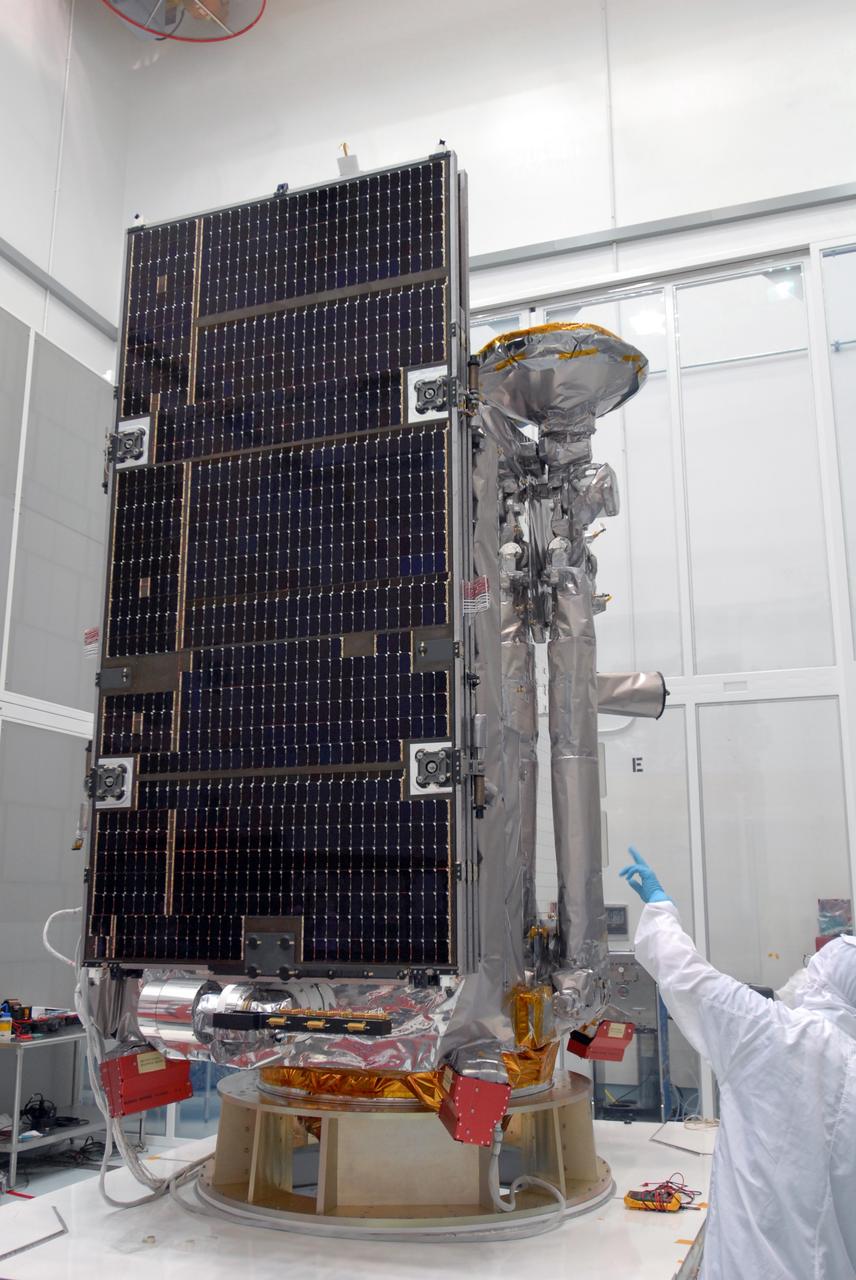
CAPE CANAVERAL, Fla. –– At Astrotech Space Operations in Titusville, Fla., a technician checks the installation of a solar array panel on the Lunar Reconnaissance Orbiter, or LRO.…
Inspect NASA record
CAPE CANAVERAL, Fla. –– At Astrotech Space Operations in Titusville, Fla., a technician checks the installation of a solar array panel on the Lunar Reconnaissance Orbiter, or LRO. The orbiter will carry seven instruments to provide scientists with detailed maps of the lunar surface and enhance our understanding of the moon's topography, lighting conditions, mineralogical composition and natural resources. Information gleaned from LRO will be used to select safe landing sites, determine locations for future lunar outposts and help mitigate radiation dangers to astronauts. The polar regions of the moon are the main focus of the mission because continuous access to sunlight may be possible and water ice may exist in permanently shadowed areas of the poles. Launch of LRO is targeted for June 2. Photo credit: NASA/Jim Grossmann
- Record ID
- KSC-2009-2813
- NASA center
- KSC
- Date
- 2009-04-19
- Keywords
- LRO, lunar, solar, array, ELV
JSC · 1971-09-30 · S72-50438
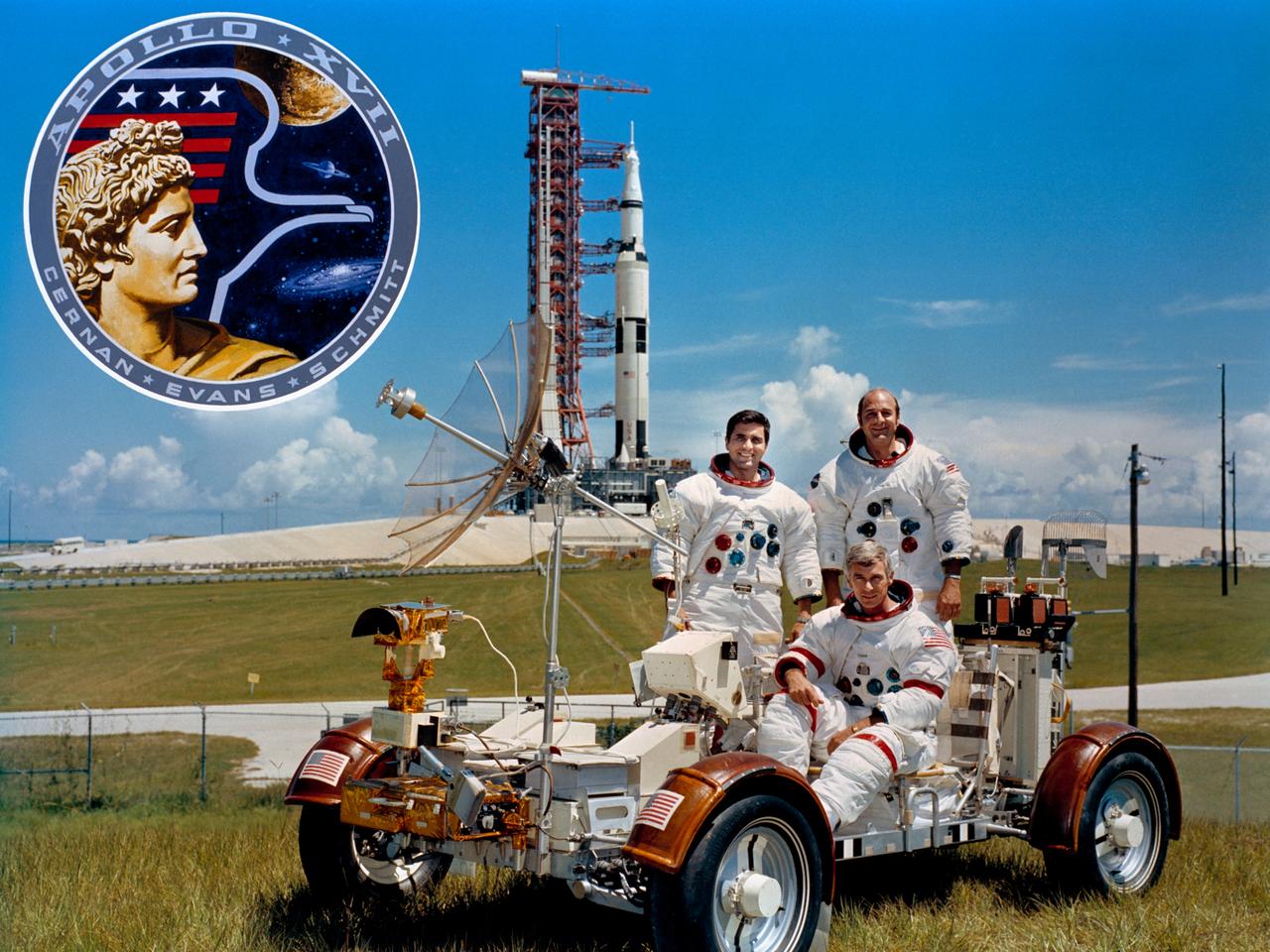
Apollo 17 prime crew portrait
S72-50438 (September 1972) --- These three astronauts are the prime crew members of the Apollo 17 lunar landing mission. They are Eugene A. Cernan (seated), commander; Ronald E.…
Inspect NASA record
S72-50438 (September 1972) --- These three astronauts are the prime crew members of the Apollo 17 lunar landing mission. They are Eugene A. Cernan (seated), commander; Ronald E. Evans (standing on right), command module pilot; and Harrison H. Schmitt, lunar module pilot. They are photographed with a Lunar Roving Vehicle (LRV) trainer. Cernan and Schmitt will use an LRV during their exploration of the Taurus-Littrow landing site. The Apollo 17 Saturn V space vehicle is in the background. This picture was taken at Pad A, Launch Complex 39, Kennedy Space Center (KSC), Florida. The Apollo 17 insignia is in the photo insert at upper left. The insignia, designed by artist Robert T. McCall in collaboration with the crewmen, is dominated by the image of Apollo, the Greek sun god.
- Record ID
- S72-50438
- NASA center
- JSC
- Date
- 1971-09-30
- Keywords
- APOLLO 17 FLIGHT, APOLLO PROJECT, ASTRONAUTS, PORTRAIT
MSFC · 1969-03-30 · 8903695
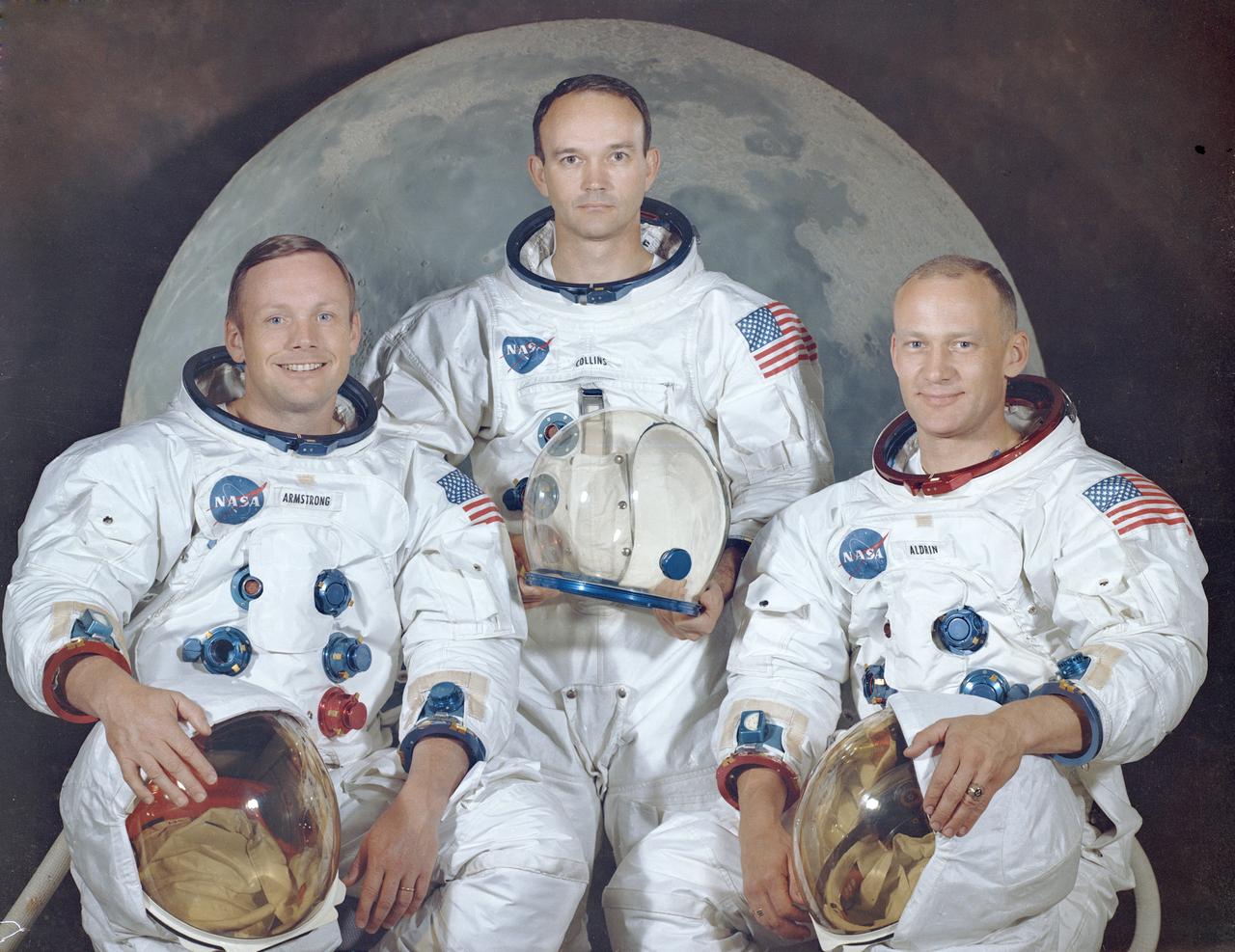
Saturn Apollo Program
This is the official crew portrait of the Apollo 11 astronauts. Pictured from left to right are: Neil A. Armstrong, Commander; Michael Collins, Module Pilot; Edwin E. "Buzz"…
Inspect NASA record
This is the official crew portrait of the Apollo 11 astronauts. Pictured from left to right are: Neil A. Armstrong, Commander; Michael Collins, Module Pilot; Edwin E. "Buzz" Aldrin, Lunar Module Pilot. Apollo 11 was the first marned lunar landing mission that placed the first humans on the surface of the moon and returned them back to Earth. Astronaut Armstrong became the first man on the lunar surface, and astronaut Aldrin became the second. Astronaut Collins piloted the Command Module in a parking orbit around the Moon. Launched aboard the Saturn V launch vehicle (SA-506), the three astronauts began their journey to the moon with liftoff from launch complex 39A at the Kennedy Space Center at 8:32 am CDT, July 16, 1969.
- Record ID
- 8903695
- NASA center
- MSFC
- Date
- 1969-03-30
- Keywords
- Apollo 11, Crew Portrait, Armstrong, Collins, Aldrin
KSC · 2009-06-17 · KSC-2009-3750
KSC-2009-3750
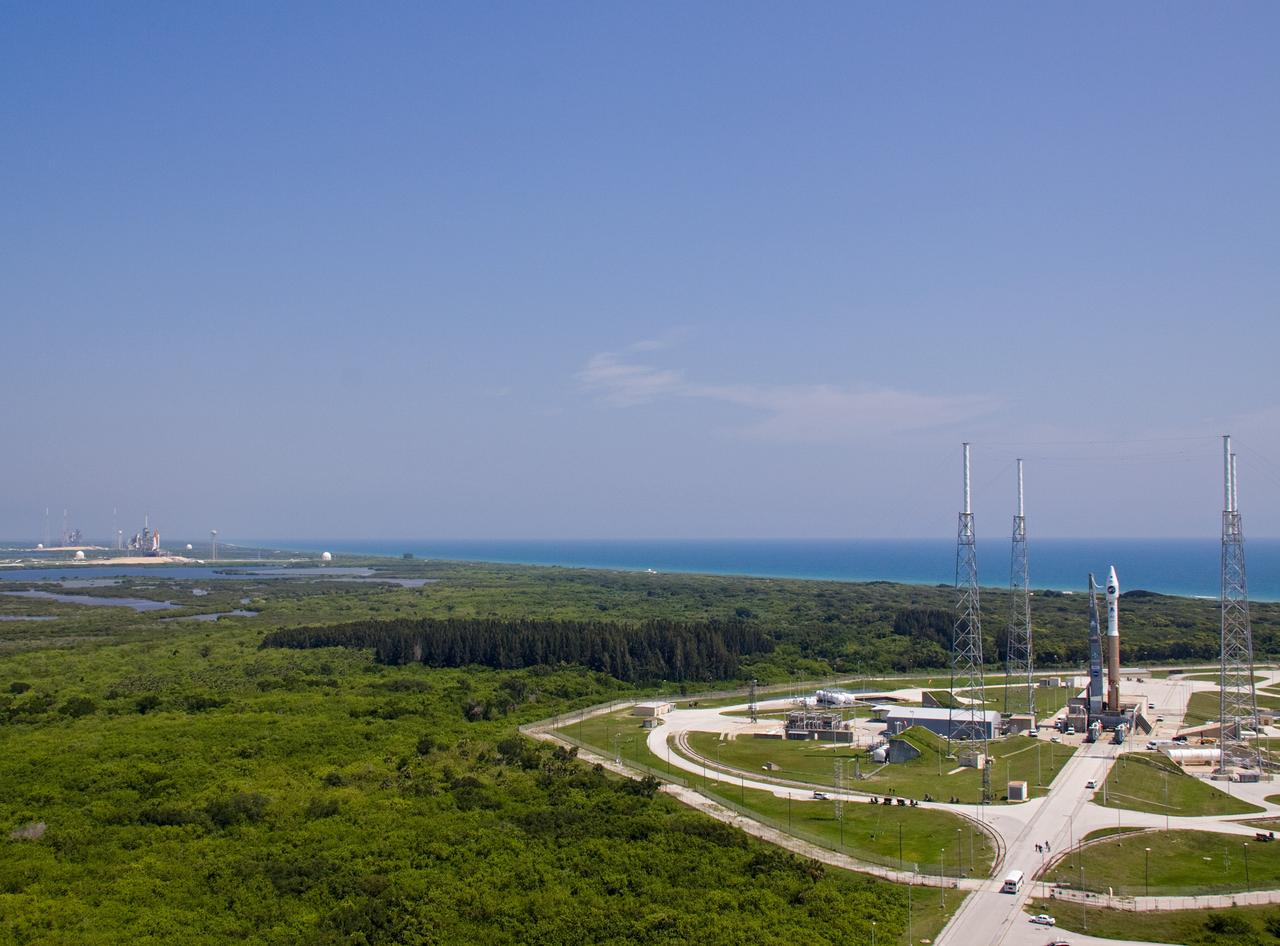
CAPE CANAVERAL, Fla. – A wide view captures both Launch Complex-41 on Cape Canaveral Air Force Station at right and Launch Pad 39A at NASA's Kennedy Space Center…
Inspect NASA record
CAPE CANAVERAL, Fla. – A wide view captures both Launch Complex-41 on Cape Canaveral Air Force Station at right and Launch Pad 39A at NASA's Kennedy Space Center in Florida at left. Space shuttle Endeavour is still on the pad after launch was officially scrubbed at 1:55 a.m. this morning when a gaseous hydrogen leak occurred at the Ground Umbilical Carrier Plate. NASA's Lunar Reconnaissance Orbiter, or LRO, and NASA's Lunar Crater Observation and Sensing Satellite, known as LCROSS, are on Complex 41 waiting for launch on the Atlas V/Centaur rocket. LRO and LCROSS are the first missions in NASA's plan to return humans to the moon and begin establishing a lunar outpost by 2020. The LRO also includes seven instruments that will help NASA characterize the moon's surface: DIVINER, LAMP, LEND, LOLA, CRATER, Mini-RF and LROC. Launch is scheduled for 5:22 p.m. EDT June 18 . Photo credit: NASA/Jack Pfaller
- Record ID
- KSC-2009-3750
- NASA center
- KSC
- Date
- 2009-06-17
- Keywords
- LRO, LCROSS, CCAFS, ELV