
Update Site (from NASA)
Explore NASA’s Image and Video Library.
Suggest one object per day for the Interstellar Minds collection. We review each suggestion before adding it.
Sign in to suggest a Marvel.
Find a NASA image ID. Open a NASA record and copy its ID from the end of the details URL.
NASA image records
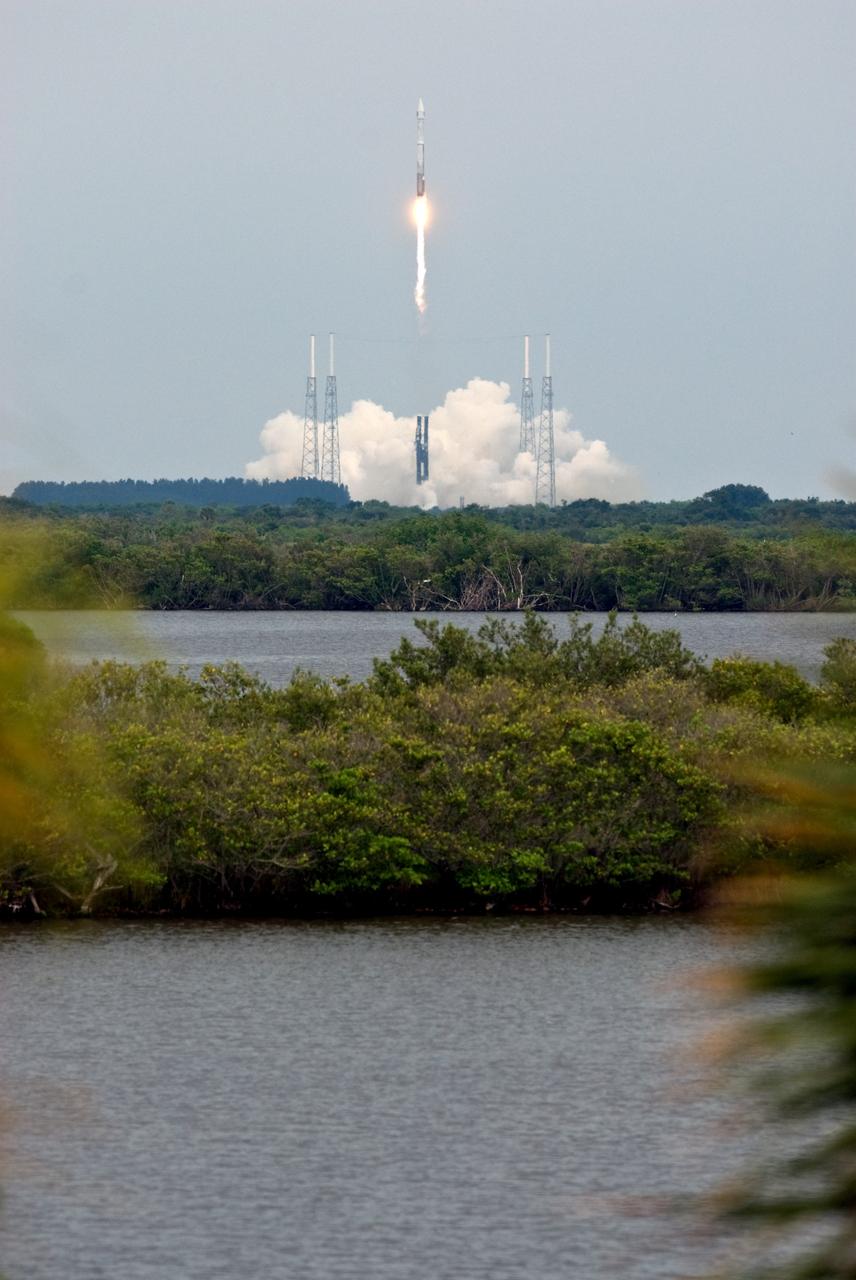
KSC · 2009-06-18 · KSC-2009-3772
KSC-2009-3772
CAPE CANAVERAL, Fla. – Viewed across the Indian River Lagoon, the Atlas V/Centaur rocket carrying NASA's Lunar Reconnaissance Orbiter, or LRO, and NASA's Lunar Crater Observation and Sensing…
Inspect NASA record
CAPE CANAVERAL, Fla. – Viewed across the Indian River Lagoon, the Atlas V/Centaur rocket carrying NASA's Lunar Reconnaissance Orbiter, or LRO, and NASA's Lunar Crater Observation and Sensing Satellite, known as LCROSS, trails a tail of smoke as it roars into the sky after launch from Launch Complex 41 at Cape Canaveral Air Force Station in Florida. Surrounding the pad are lightning towers. LRO and LCROSS are the first missions in NASA's plan to return humans to the moon and begin establishing a lunar outpost by 2020. The LRO also includes seven instruments that will help NASA characterize the moon's surface: DIVINER, LAMP, LEND, LOLA , CRATER, Mini-RF and LROC. Launch was on-time at 5:32 p.m. EDT June 18. Photo credit: NASA/Tony Gray
- Record ID
- KSC-2009-3772
- NASA center
- KSC
- Date
- 2009-06-18
- Keywords
- LRO, LCROSS, ELV
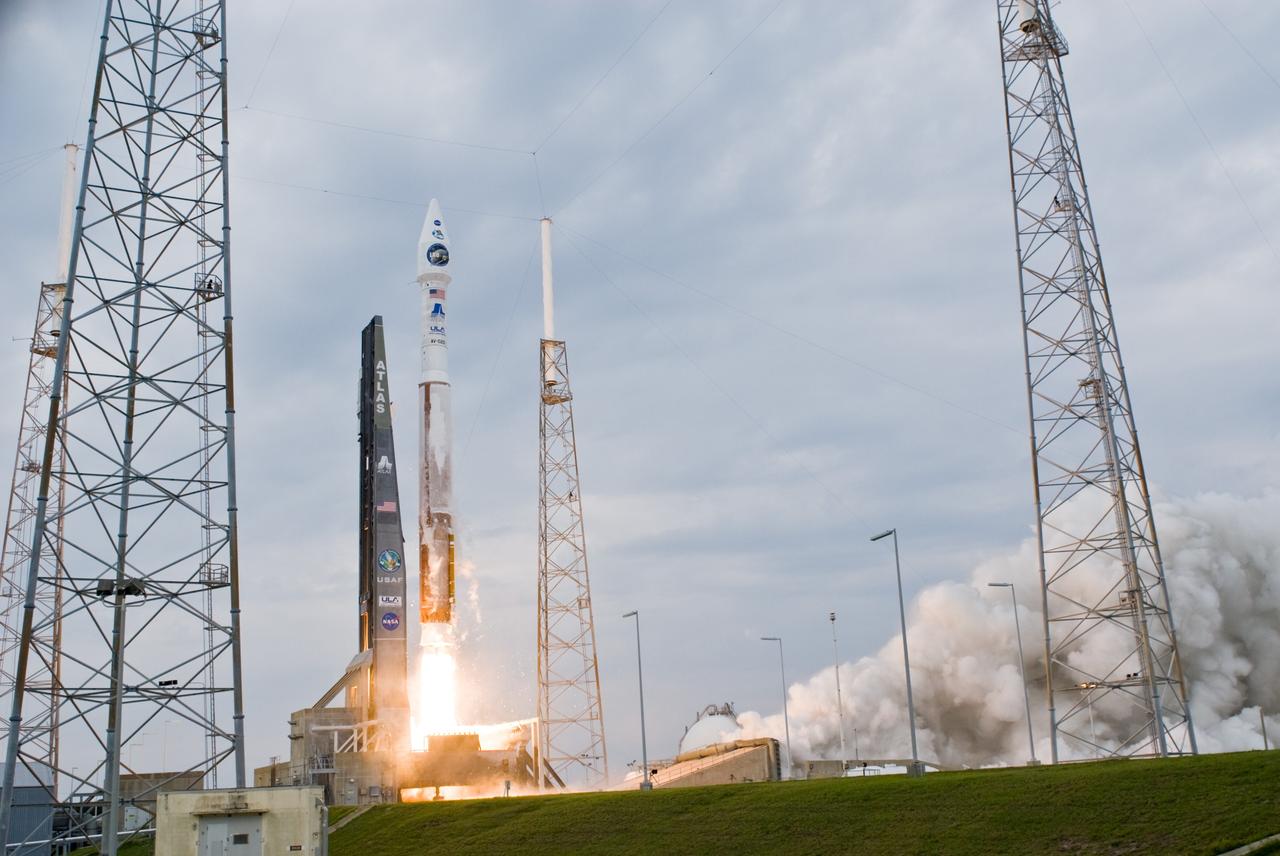
KSC · 2009-06-18 · KSC-2009-3777
KSC-2009-3777
CAPE CANAVERAL, Fla. – Fire and smoke signal the liftoff of the Atlas V/Centaur carrying NASA's Lunar Reconnaissance Orbiter, or LRO, and NASA's Lunar Crater Observation and Sensing…
Inspect NASA record
CAPE CANAVERAL, Fla. – Fire and smoke signal the liftoff of the Atlas V/Centaur carrying NASA's Lunar Reconnaissance Orbiter, or LRO, and NASA's Lunar Crater Observation and Sensing Satellite, known as LCROSS, toward orbit around the moon. Launch from Launch Complex 41 at Cape Canaveral Air Force Station in Florida was on-time at 5:32 p.m. EDT. The towers around the pad are part of the lightning protection system. LRO and LCROSS are the first missions in NASA's plan to return humans to the moon and begin establishing a lunar outpost by 2020. The LRO also includes seven instruments that will help NASA characterize the moon's surface: DIVINER, LAMP, LEND, LOLA , CRATER, Mini-RF and LROC. Photo credit: NASA/Tom Farrar, Kevin O'Connell
- Record ID
- KSC-2009-3777
- NASA center
- KSC
- Date
- 2009-06-18
- Keywords
- LRO, LCROSS, ELV
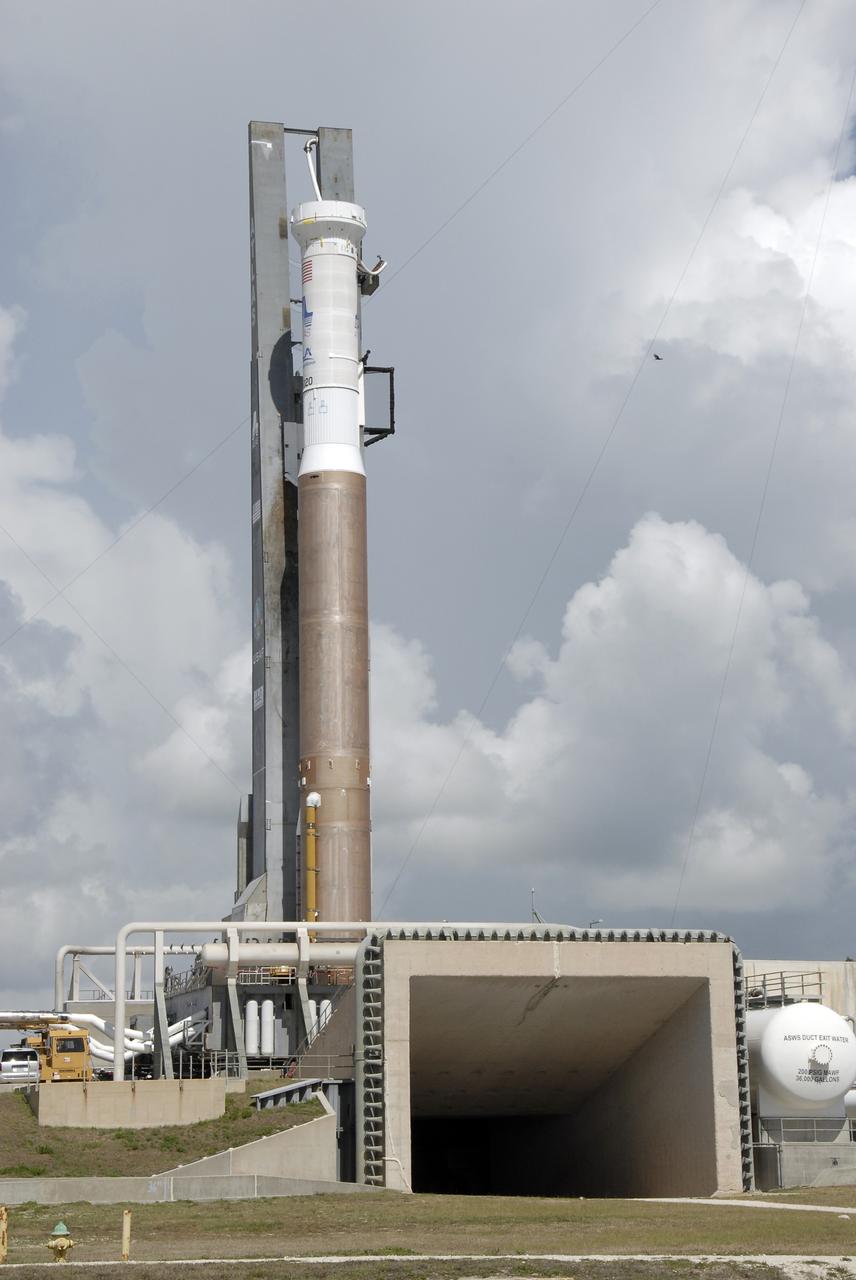
KSC · 2009-05-14 · KSC-2009-3152
KSC-2009-3152
CAPE CANAVERAL, Fla. – The Atlas V/Centaur arrives on Launch Complex-41 at Cape Canaveral Air Force Station in Florida. The Atlas was rolled to the launch pad from…
Inspect NASA record
CAPE CANAVERAL, Fla. – The Atlas V/Centaur arrives on Launch Complex-41 at Cape Canaveral Air Force Station in Florida. The Atlas was rolled to the launch pad from the Vertical Integration Facility in preparation for the wet dress rehearsal, or countdown test, which means being fully loaded with propellants including liquid hydrogen, liquid oxygen and RP-1 fuel. The launch vehicle will be rolled off the pad and returned to the VIF on May 16. The Atlas V/Centaur is the launch vehicle for NASA's Lunar Reconnaissance Orbiter, or LRO, and NASA's Lunar CRater Observation and Sensing Satellite, known as LCROSS. They will be mated with the Atlas in late May. LCROSS and LRO are the first missions in NASA's plan to return humans to the moon and begin establishing a lunar outpost by 2020. Launch is scheduled for no earlier than June 17. Photo credit: NASA/Kim Shiflett
- Record ID
- KSC-2009-3152
- NASA center
- KSC
- Date
- 2009-05-14
- Keywords
- LRO, LCROSS, Atlas V, Centaur, CCAFS, LC-41
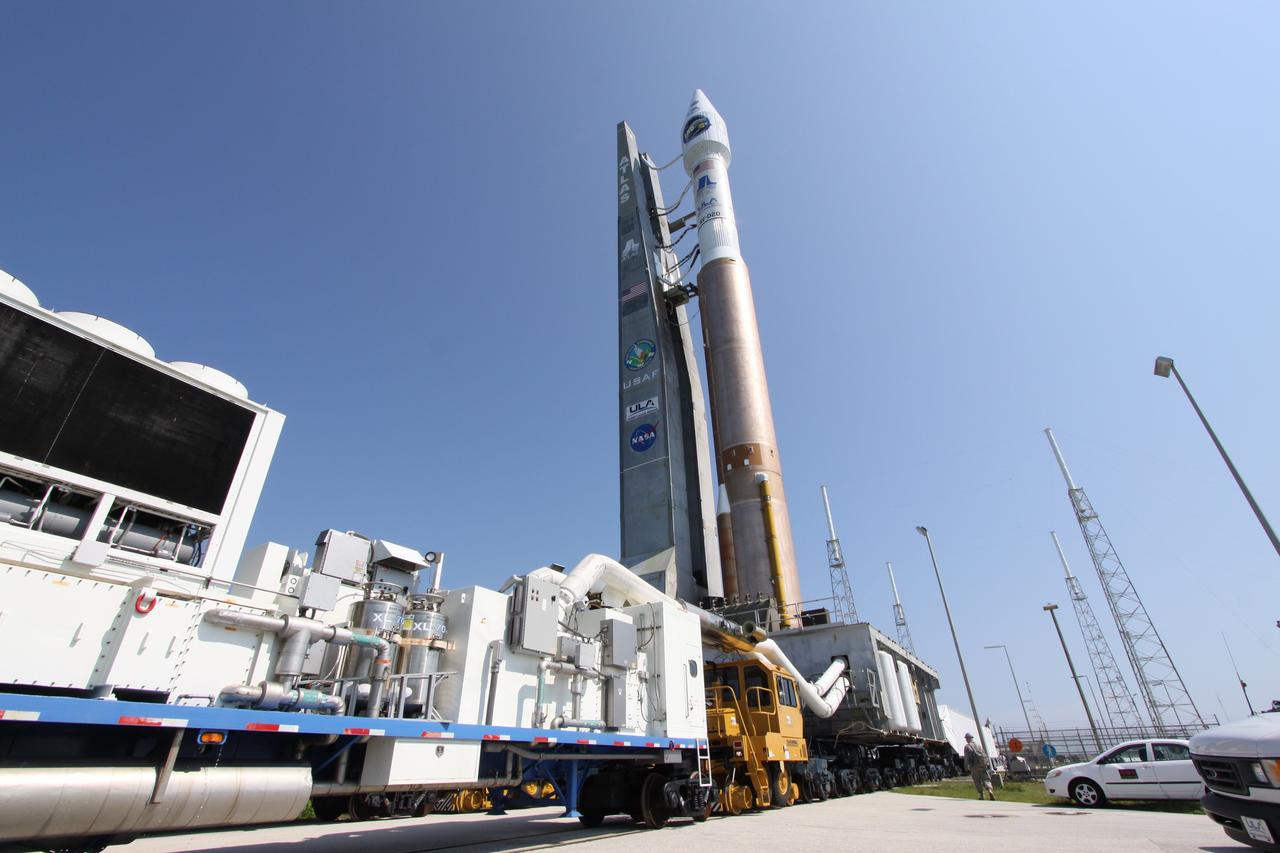
KSC · 2009-06-17 · KSC-2009-3745
KSC-2009-3745
CAPE CANAVERAL, Fla. – On Launch Complex-41 on Cape Canaveral Air Force Station in Florida, the Atlas V/Centaur rocket with NASA's Lunar Reconnaissance Orbiter, or LRO, and NASA's…
Inspect NASA record
CAPE CANAVERAL, Fla. – On Launch Complex-41 on Cape Canaveral Air Force Station in Florida, the Atlas V/Centaur rocket with NASA's Lunar Reconnaissance Orbiter, or LRO, and NASA's Lunar Crater Observation and Sensing Satellite, known as LCROSS, on top roll out to the launch pad. At right are the protective lightning towers that surround the pad. LRO and LCROSS are the first missions in NASA's plan to return humans to the moon and begin establishing a lunar outpost by 2020. The LRO also includes seven instruments that will help NASA characterize the moon's surface: DIVINER, LAMP, LEND, LOLA, CRATER, Mini-RF and LROC. Launch is scheduled for 5:22 p.m. EDT June 18 . Photo credit: NASA/Jack Pfaller
- Record ID
- KSC-2009-3745
- NASA center
- KSC
- Date
- 2009-06-17
- Keywords
- LRO, LCROSS, CCAFS, ELV
MSFC · 1969-07-20 · 6900960
Saturn Apollo Program
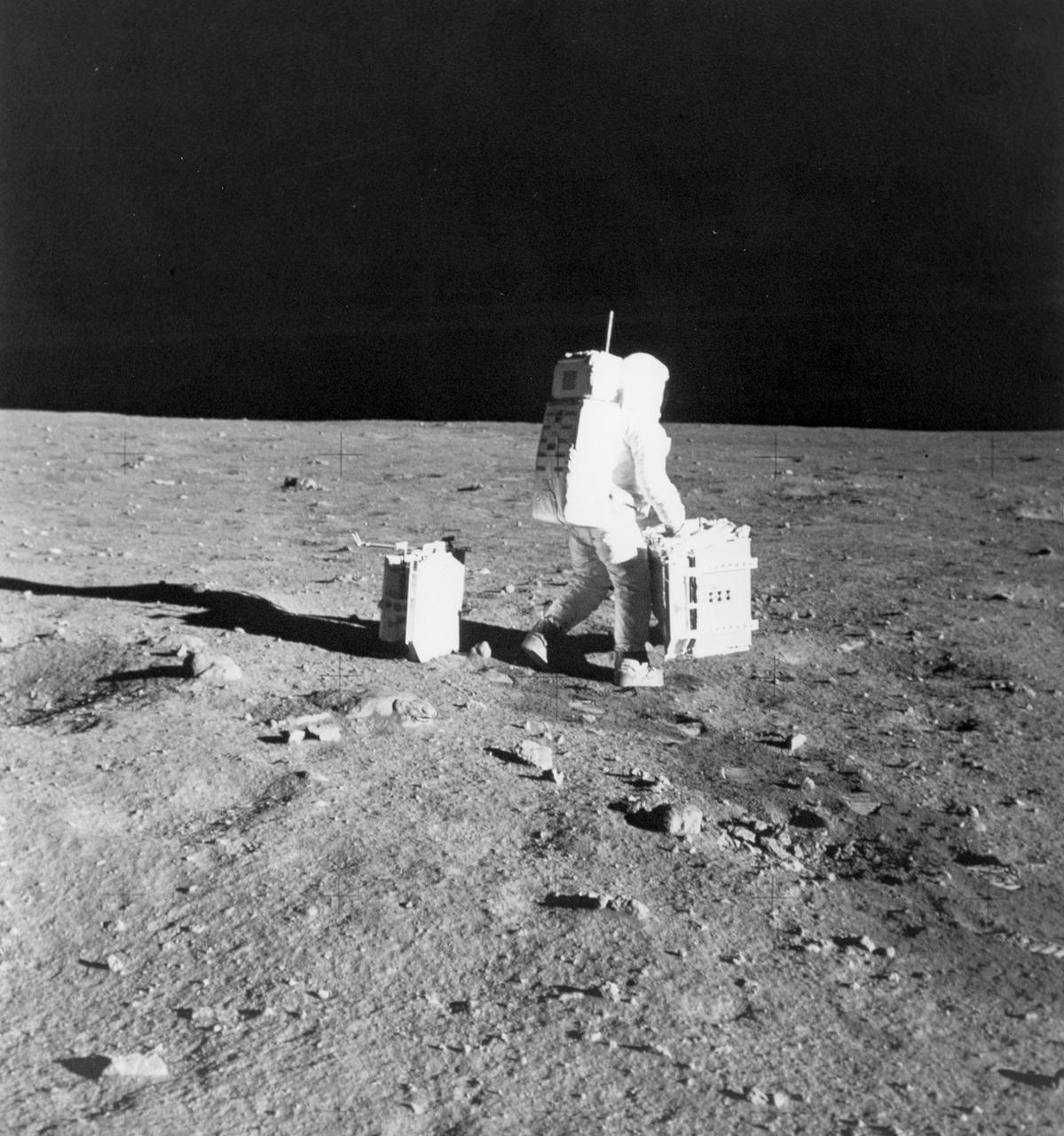
The first manned lunar landing mission, Apollo 11, launched from the Kennedy Space Center (KSC) in Florida via the Marshall Space Flight Center (MSFC) developed Saturn V launch…
Inspect NASA record
The first manned lunar landing mission, Apollo 11, launched from the Kennedy Space Center (KSC) in Florida via the Marshall Space Flight Center (MSFC) developed Saturn V launch vehicle on July 16, 1969 and safely returned to Earth on July 24, 1969. Aboard the space craft were astronauts Neil A. Armstrong, commander; Michael Collins, Command Module (CM) pilot; and Edwin E. (Buzz) Aldrin Jr., Lunar Module (LM) pilot. The CM, piloted by Michael Collins, remained in a parking orbit around the Moon, while the LM, named “Eagle’’, carrying astronauts Armstrong and Aldrin, landed on the Moon in the Sea of Tranquility. During 2½ hours of surface exploration, the crew set up experiments, collected 47 pounds of lunar surface material for analysis back on Earth, planted the U.S Flag, and left a message for all mankind. In this photograph, Aldrin is deploying the Early Apollo Scientific Experiment Package.
- Record ID
- 6900960
- NASA center
- MSFC
- Date
- 1969-07-20
- Keywords
- Apollo 11, Moon, Aldrin, Lunar Surface, Early Apollo Scientific Experiment Package
KSC · 2009-04-19 · KSC-2009-2810
KSC-2009-2810
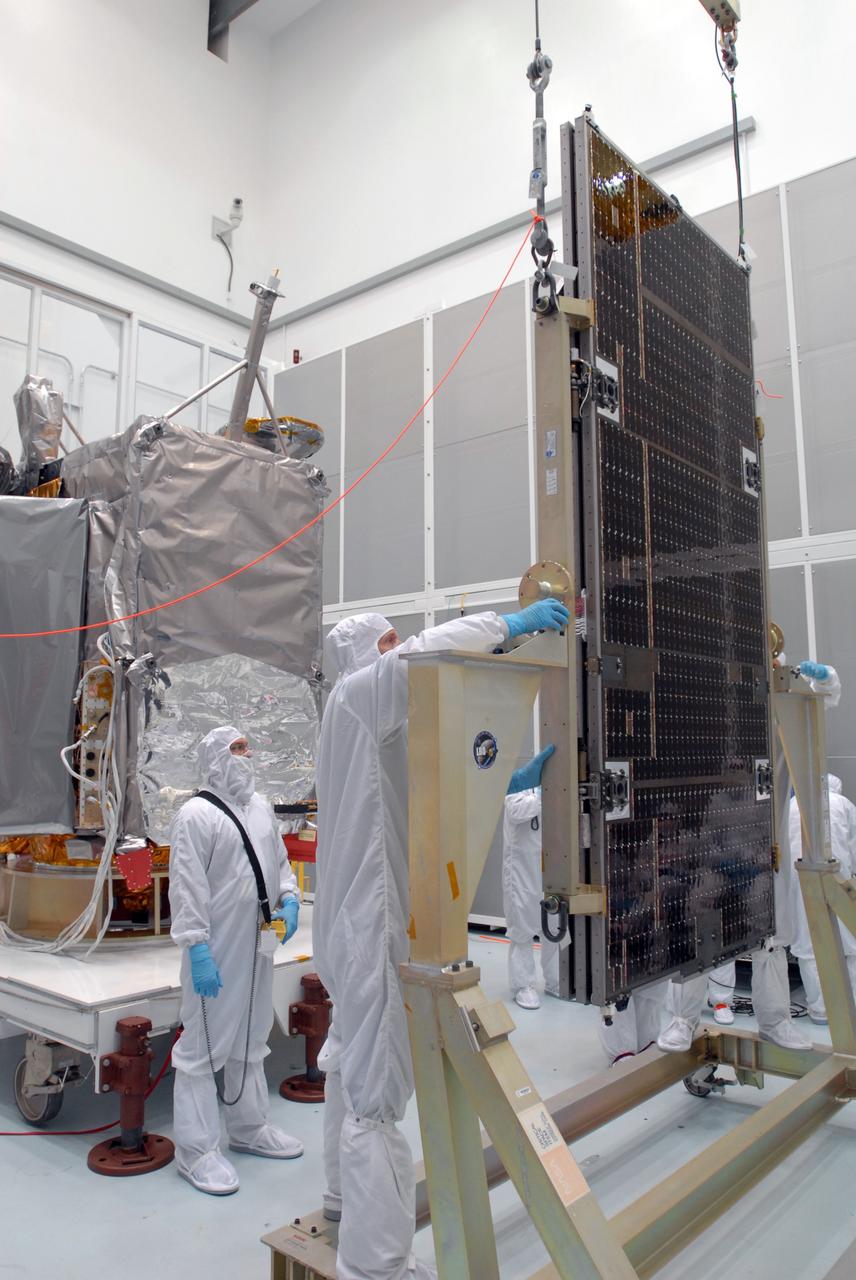
CAPE CANAVERAL, Fla. –– At Astrotech Space Operations in Titusville, Fla., technicians prepare the solar array panel for installation on the Lunar Reconnaissance Orbiter, or LRO, at left.…
Inspect NASA record
CAPE CANAVERAL, Fla. –– At Astrotech Space Operations in Titusville, Fla., technicians prepare the solar array panel for installation on the Lunar Reconnaissance Orbiter, or LRO, at left. The orbiter will carry seven instruments to provide scientists with detailed maps of the lunar surface and enhance our understanding of the moon's topography, lighting conditions, mineralogical composition and natural resources. Information gleaned from LRO will be used to select safe landing sites, determine locations for future lunar outposts and help mitigate radiation dangers to astronauts. The polar regions of the moon are the main focus of the mission because continuous access to sunlight may be possible and water ice may exist in permanently shadowed areas of the poles. Launch of LRO is targeted for June 2. Photo credit: NASA/Jim Grossmann
- Record ID
- KSC-2009-2810
- NASA center
- KSC
- Date
- 2009-04-19
- Keywords
- LRO, lunar, solar, array, ELV

KSC · 2009-05-15 · KSC-2009-3176
KSC-2009-3176
CAPE CANAVERAL, Fla. – Near Launch Complex-41 on Cape Canaveral Air Force Station in Florida, a scrub jay keeps watch of activity. On the pad, the Atlas V/Centaur…
Inspect NASA record
CAPE CANAVERAL, Fla. – Near Launch Complex-41 on Cape Canaveral Air Force Station in Florida, a scrub jay keeps watch of activity. On the pad, the Atlas V/Centaur is undergoing a wet dress rehearsal, or countdown test. The Atlas V is being fully loaded with propellants including liquid hydrogen, liquid oxygen and RP-1 fuel. Following the rehearsal, the launch vehicle will be rolled off the pad and returned to the Vertical Integration Facility on May 16. The Atlas V/Centaur is the launch vehicle for NASA's Lunar Reconnaissance Orbiter, or LRO, and NASA's Lunar CRater Observation and Sensing Satellite, known as LCROSS. They will be mated with the Atlas in late May. LCROSS and LRO are the first missions in NASA's plan to return humans to the moon and begin establishing a lunar outpost by 2020. Launch is scheduled for no earlier than June 17. Photo credit: NASA/Dimitri Gerondidakis
- Record ID
- KSC-2009-3176
- NASA center
- KSC
- Date
- 2009-05-15
- Keywords
- LRO, LCROSS, Atlas V, Centaur, CCAFS, LC-41
LRC · 1965-11-17 · LRC-1965-B701_P-08378
Astronaut Roger Chaffee at Lunar Lander Research Facility
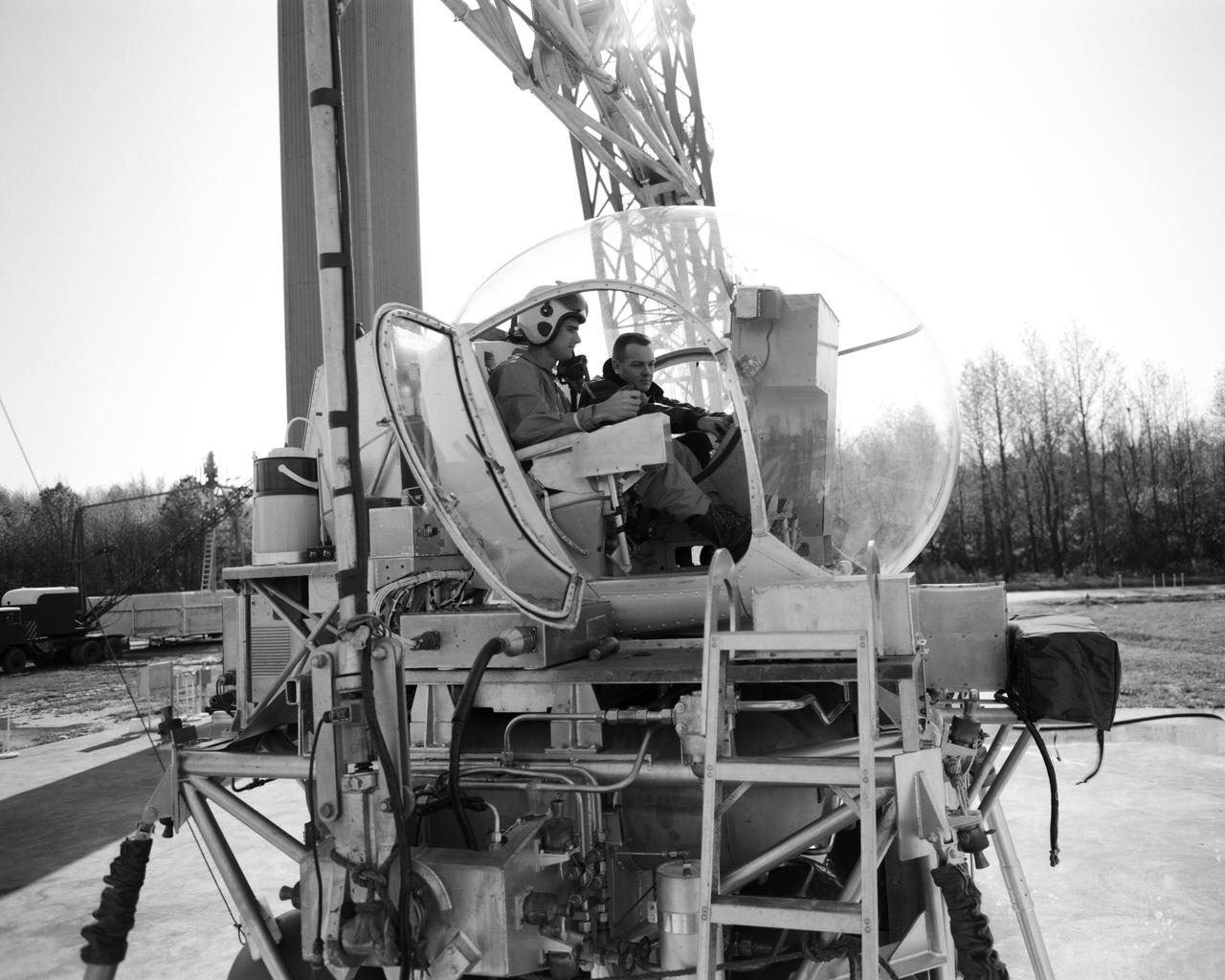
Lunar Landing Simulator: Astronaut Roger B. Chaffee (left) receives instruction from Maxwell W. Goode, a scientist at NASA s Langley Research Center. Goode is explaining the operation of…
Inspect NASA record
Lunar Landing Simulator: Astronaut Roger B. Chaffee (left) receives instruction from Maxwell W. Goode, a scientist at NASA s Langley Research Center. Goode is explaining the operation of the Lunar Landing Simulator at the Lunar Landing Research Facility. Chaffee was one of the third group of astronauts selected by NASA in October 1963. In addition to participating in the overall training program, he was also tasked with working on flight control communications systems, instrumentation systems, and attitude and translation control systems in the Apollo Branch of the Astronaut office. On March 21, 1966, he was selected as one of the pilots for the AS-204 mission, the first 3-man Apollo flight. Lieutenant Commander Chaffee died on January 27, 1967, in the Apollo spacecraft flash fire during a launch pad test at Kennedy Space Center, Florida.
- Record ID
- LRC-1965-B701_P-08378
- NASA center
- LRC
- Date
- 1965-11-17
- Credit
- NASA
- Keywords
- LRC, LARC, NASA LANGLEY, LRC-1965-B701_P-08378, GANTRY, APOLLO, 1297, CHAFFEE, LUNAR LANDING FACILITY, center, 50th, anniversary
KSC · 2009-04-19 · KSC-2009-2809
KSC-2009-2809
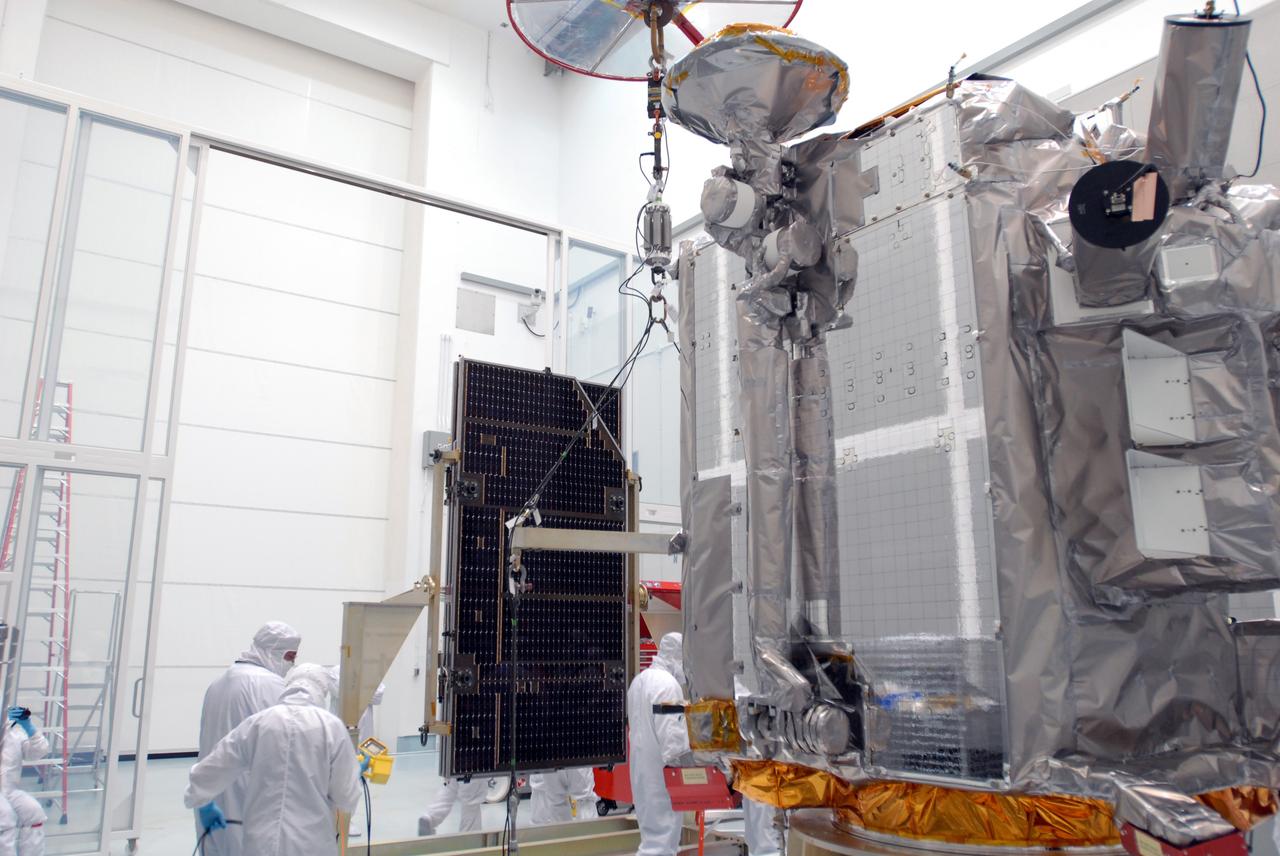
CAPE CANAVERAL, Fla. –– At Astrotech Space Operations in Titusville, Fla., technicians prepare the solar array panel for installation on the Lunar Reconnaissance Orbiter, or LRO. The orbiter…
Inspect NASA record
CAPE CANAVERAL, Fla. –– At Astrotech Space Operations in Titusville, Fla., technicians prepare the solar array panel for installation on the Lunar Reconnaissance Orbiter, or LRO. The orbiter will carry seven instruments to provide scientists with detailed maps of the lunar surface and enhance our understanding of the moon's topography, lighting conditions, mineralogical composition and natural resources. Information gleaned from LRO will be used to select safe landing sites, determine locations for future lunar outposts and help mitigate radiation dangers to astronauts. The polar regions of the moon are the main focus of the mission because continuous access to sunlight may be possible and water ice may exist in permanently shadowed areas of the poles. Launch of LRO is targeted for June 2. Photo credit: NASA/Jim Grossmann
- Record ID
- KSC-2009-2809
- NASA center
- KSC
- Date
- 2009-04-19
- Keywords
- LRO, lunar, solar, array, ELV
KSC · 2009-02-21 · KSC-2009-1762
KSC-2009-1762
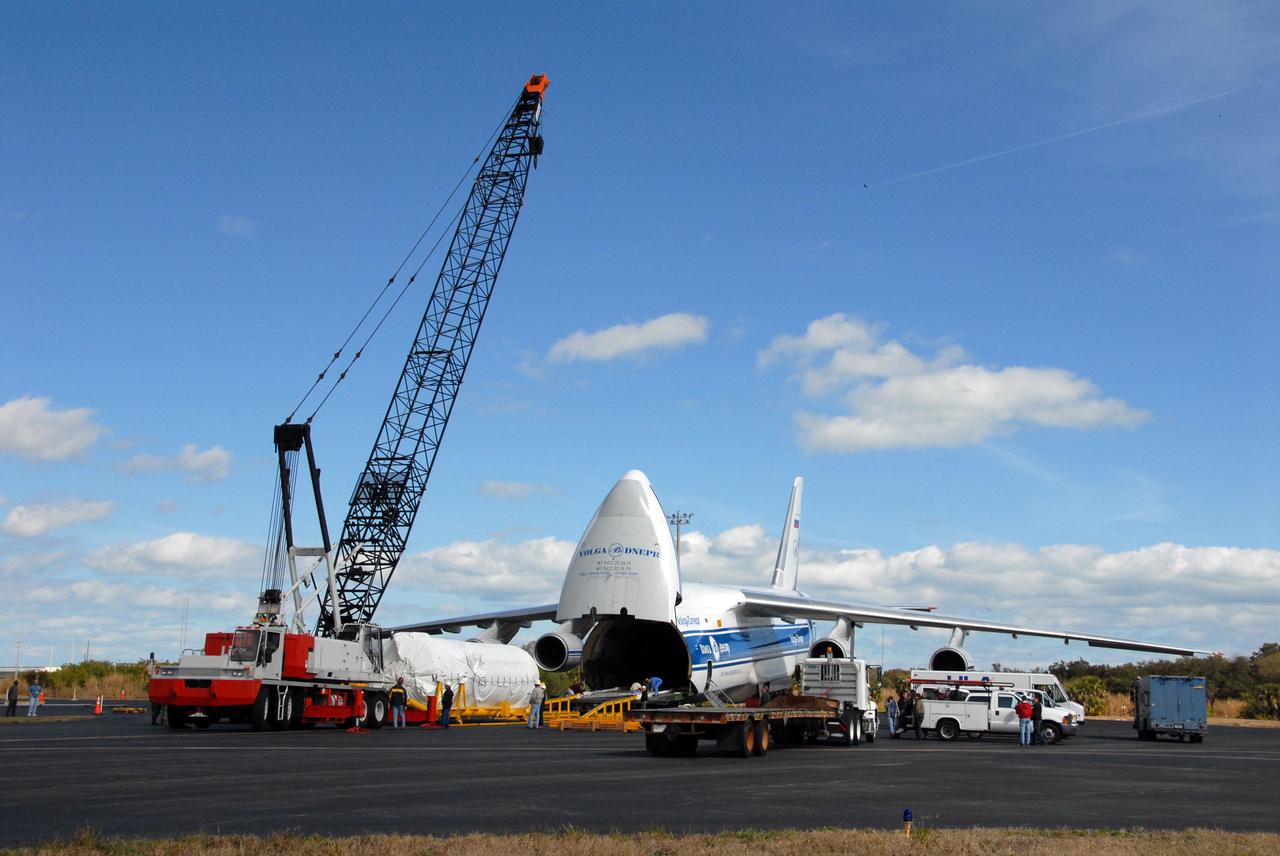
CAPE CANAVERAL, Fla. – – On Cape Canaveral Air Force Station's skid strip in Florida, the crane at left will lift the Centaur stage of the Atlas V…
Inspect NASA record
CAPE CANAVERAL, Fla. – – On Cape Canaveral Air Force Station's skid strip in Florida, the crane at left will lift the Centaur stage of the Atlas V rocket below it to place it on the flatbed truck at right. The Centaur arrived at CCAFS aboard the Russian AH-124-100 aircraft. The Centaur will be transported to the Astrotech facility in Titusville, Fla. The Atlas V will launch NASA's Lunar Reconnaissance Orbiter, or LRO, and NASA's Lunar CRater Observation and Sensing Satellite, known as LCROSS. The two spacecraft will be integrated with the Atlas V and tested for final flight worthiness. Launch is scheduled for the spring. LCROSS and LRO are the first missions in NASA's plan to return humans to the moon and begin establishing a lunar outpost by 2020. Photo credit: NASA/Cory Huston
- Record ID
- KSC-2009-1762
- NASA center
- KSC
- Date
- 2009-02-21
- Keywords
- moon mission, LRO, LCROSS,
JSC · 1972-04-23 · as16-117-18728
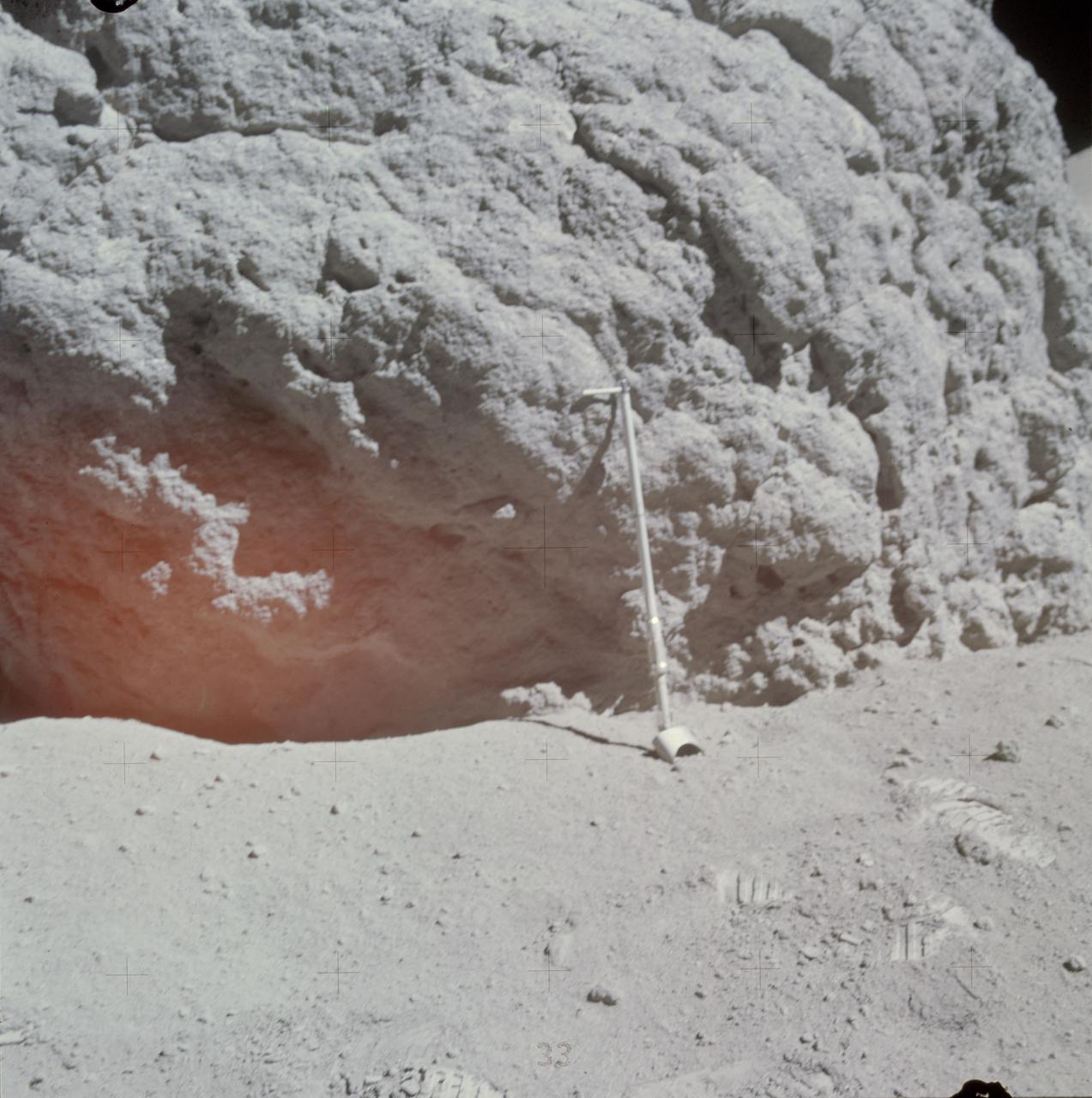
View of "Shadow Rock" taken during third extravehicular activity
AS16-117-18728 (23 April 1972) --- Astronaut Charles M. Duke Jr., lunar module pilot, exposed this view of the huge "Shadow Rock" with his 70mm Hasselblad camera during the…
Inspect NASA record
AS16-117-18728 (23 April 1972) --- Astronaut Charles M. Duke Jr., lunar module pilot, exposed this view of the huge "Shadow Rock" with his 70mm Hasselblad camera during the mission's third and final extravehicular activity (EVA), on April 23, 1972. This particular stop was referenced as Station 13. The scoop, a geological hand tool, leans against the rock and helps to give an idea of the size. Station 13 is a little southeast of North Ray Crater at the Descartes area. While astronauts John W. Young, commander; and Duke descended in the Apollo 16 Lunar Module (LM) "Orion" to explore the Descartes highlands landing site on the moon, astronaut Thomas K. Mattingly II, command module pilot, remained with the Command and Service Modules (CSM) "Casper" in lunar orbit.
- Record ID
- as16-117-18728
- NASA center
- JSC
- Date
- 1972-04-23
- Keywords
- APOLLO 16 FLIGHT, APOLLO PROJECT, EXTRAVEHICULAR ACTIVITY, LUNAR ROCKS, LUNAR SOIL, LUNAR SURFACE, TOOLS
JSC · 1969-08-06 · S69-40958
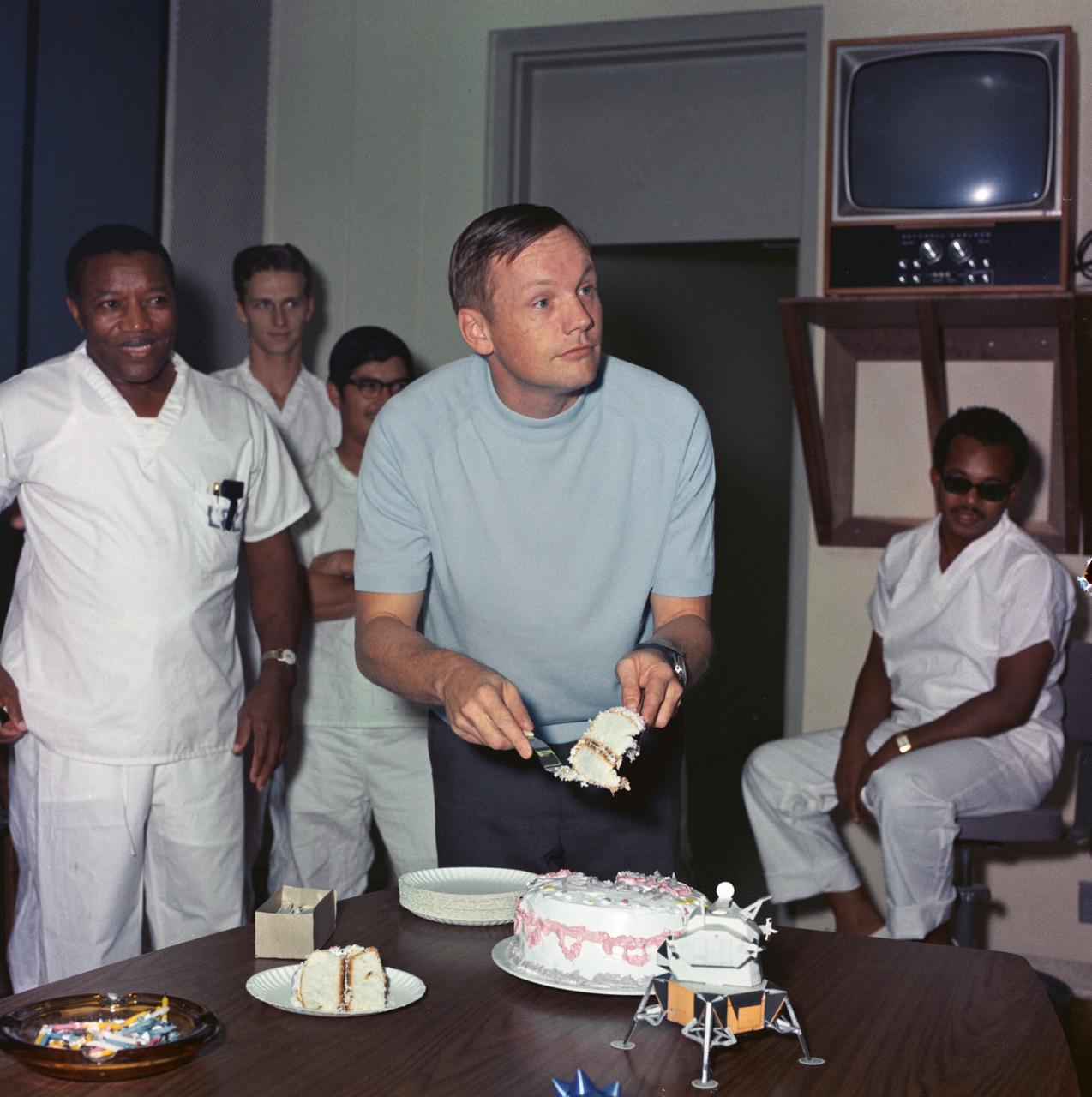
BIRTHDAY - ASTRONAUT NEIL A. ARMSTRONG
S69-40958 (5 August 1969) --- Astronaut Neil A. Armstrong, commander of the historic Apollo 11 lunar landing mission, and the first man to set foot on the Moon,…
Inspect NASA record
S69-40958 (5 August 1969) --- Astronaut Neil A. Armstrong, commander of the historic Apollo 11 lunar landing mission, and the first man to set foot on the Moon, cuts his birthday cake as he celebrated his 39th birthday. The crew still confined to the Crew Reception Area (CRA) of the Manned Spacecraft Center's (MSC) Lunar Receiving Laboratory (LRL). Armstrong was born on August 5, 1930, in Wapakoneta, Ohio. The cake was described as "standard two-layer, plain vanilla" on which was placed 39 candles. Eighteen of the persons quarantined with Armstrong assembled and sang happy birthday; and a champagne toast was offered. CRA support personnel are in the background. Astronauts Armstrong; Michael Collins, command module pilot; and Edwin E. Aldrin Jr., lunar module pilot, will be released from quarantine on August 11, 1969.
- Record ID
- S69-40958
- NASA center
- JSC
- Date
- 1969-08-06
- Credit
- 1996-98 AccuSoft Inc., All right