
Update Site (from NASA)
Explore NASA’s Image and Video Library.
Suggest one object per day for the Interstellar Minds collection. We review each suggestion before adding it.
Sign in to suggest a Marvel.
Find a NASA image ID. Open a NASA record and copy its ID from the end of the details URL.
NASA image records

JPL · 2017-06-16 · PIA21707
Mars Rover Opportunity's View of 'Orion Crater' (Enhanced Color)
NASA's Opportunity Mars rover passed near this small, relatively fresh crater in April 2017, during the 45th anniversary of the Apollo 16 mission to the moon. The rover…
Inspect NASA record
NASA's Opportunity Mars rover passed near this small, relatively fresh crater in April 2017, during the 45th anniversary of the Apollo 16 mission to the moon. The rover team chose to call it "Orion Crater," after the Apollo 16 lunar module. The rover's Panoramic Camera (Pancam) recorded this view, presented in enhanced color to make differences in surface materials more easily visible. The crater's diameter is about 90 feet (27 meters). From the small amount of erosion or filling that Orion Crater has experienced, its age is estimated at no more than 10 million years. It lies on the western rim of Endeavour Crater. For comparison, Endeavor is about 14 miles (22 kilometers) in diameter and more than 3.6 billion years old. This view combines multiple images taken through three different Pancam filters. The selected filters admit light centered on wavelengths of 753 nanometers (near-infrared), 535 nanometers (green) and 432 nanometers (violet). The component images were taken on April 26, 2017, during the 4,712th Martian day, or sol, of Opportunity's work on Mars. Apollo 16 astronauts John Young and Charles Duke flew in the Orion lunar module to and from the first human landing in the lunar highlands while Ken Mattingly orbited the moon in the command module, Casper. On the moon, Young and Duke investigated Plum Crater, which is approximately the same size as Mars' Orion Crater. https://photojournal.jpl.nasa.gov/catalog/PIA21707
- Record ID
- PIA21707
- NASA center
- JPL
- Date
- 2017-06-16
- Credit
- NASA/JPL-Caltech/Cornell Univ./Arizona State Univ.
- Keywords
- Mars Exploration Rover (MER), Mars, Opportunity

JPL · 2017-06-16 · PIA21708
Mars Rover Opportunity's View of 'Orion Crater'
NASA's Opportunity Mars rover passed near this small, relatively fresh crater in April 2017, during the 45th anniversary of the Apollo 16 mission to the moon. The rover…
Inspect NASA record
NASA's Opportunity Mars rover passed near this small, relatively fresh crater in April 2017, during the 45th anniversary of the Apollo 16 mission to the moon. The rover team chose to call it "Orion Crater," after the Apollo 16 lunar module. The rover's Panoramic Camera (Pancam) recorded this view. The crater's diameter is about 90 feet (27 meters). From the small amount of erosion or filling that Orion Crater has experienced, its age is estimated at no more than 10 million years. It lies on the western rim of Endeavour Crater. For comparison, Endeavor is about 14 miles (22 kilometers) in diameter and more than 3.6 billion years old. This view combines multiple images taken through three different Pancam filters. The selected filters admit light centered on wavelengths of 753 nanometers (near-infrared), 535 nanometers (green) and 432 nanometers (violet). The three color bands are combined here to show approximately true color. The component images were taken on April 26, 2017, during the 4,712th Martian day, or sol, of Opportunity's work on Mars. Apollo 16 astronauts John Young and Charles Duke flew in the Orion lunar module to and from the first human landing in the lunar highlands while Ken Mattingly orbited the moon in the command module, Casper. On the moon, Young and Duke investigated Plum Crater, which is approximately the same size as Mars' Orion Crater. https://photojournal.jpl.nasa.gov/catalog/PIA21708
- Record ID
- PIA21708
- NASA center
- JPL
- Date
- 2017-06-16
- Credit
- NASA/JPL-Caltech/Cornell Univ./Arizona State Univ.
- Keywords
- Mars Exploration Rover (MER), Mars, Opportunity
ARC · 1990-12-08 · ARC-1990-A91-2015
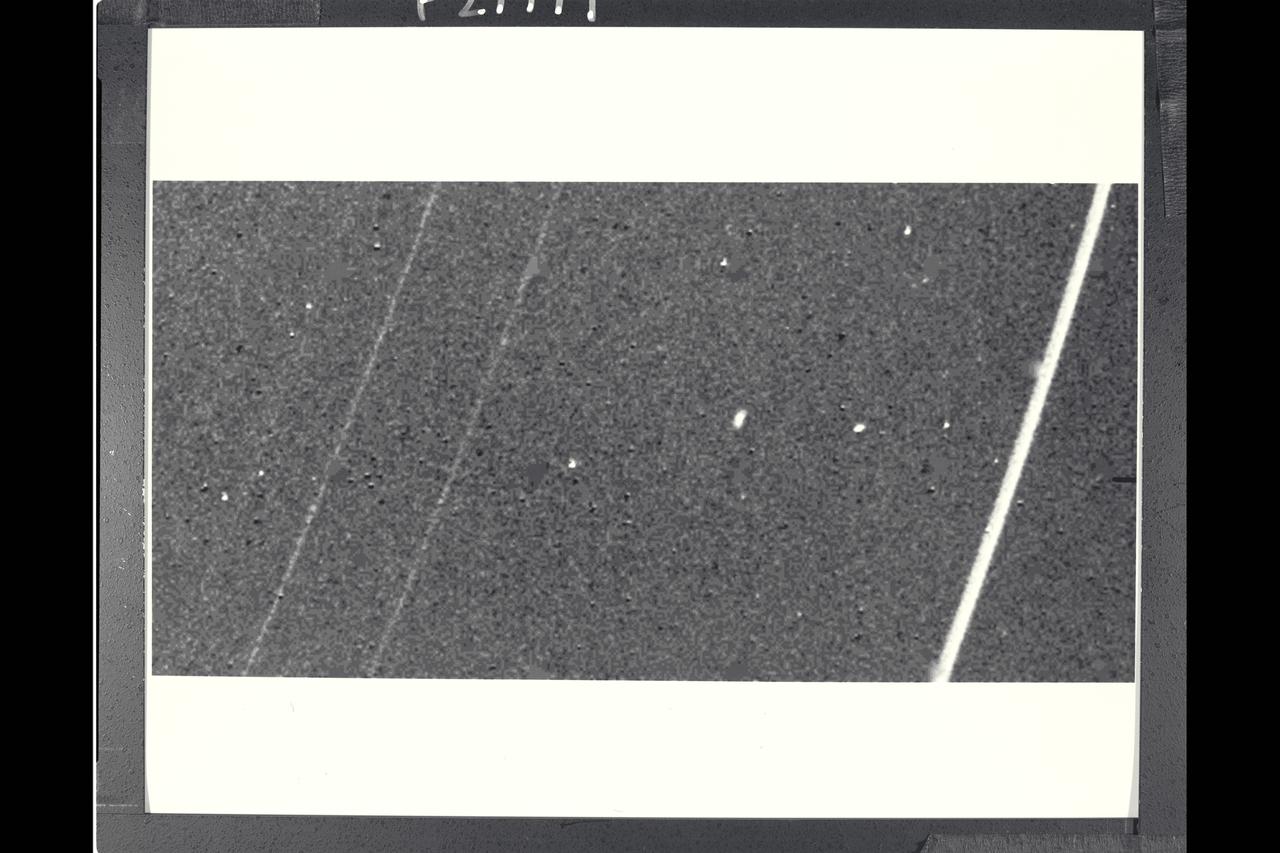
ARC-1990-A91-2015
This image of the crescent moon was obtained by the Galileo Solid-State Imaging System, taken at 5 am PST as the spacecraft neared Earth. The image was taken…
Inspect NASA record
This image of the crescent moon was obtained by the Galileo Solid-State Imaging System, taken at 5 am PST as the spacecraft neared Earth. The image was taken through a green filter and shows the western part of the lunar near side. The smallest features visible are 8 km (5 mi) in size. Major features visible include the dark plains of Mare Imbrium in the upper part of the image, the bright crater Copernicus (100 km, 60 miles in diameter) in the centeral part, and the heavily cratered lunar highlands in the bottom of the image. The landing sides of the Apollo 12,14 and 15 missions lie within the central part of the image. Samples returned from these sites will be used to calibrate this and accompanying images taken in different colors, which will extend the knowledge of the spectral and compositional properties of the near side of the moon, seen from Earth, to the lunar far side.
- Record ID
- ARC-1990-A91-2015
- NASA center
- ARC
- Date
- 1990-12-08
- Credit
- JPL
- Keywords
- Galileo
KSC · 2009-06-18 · KSC-2009-3789
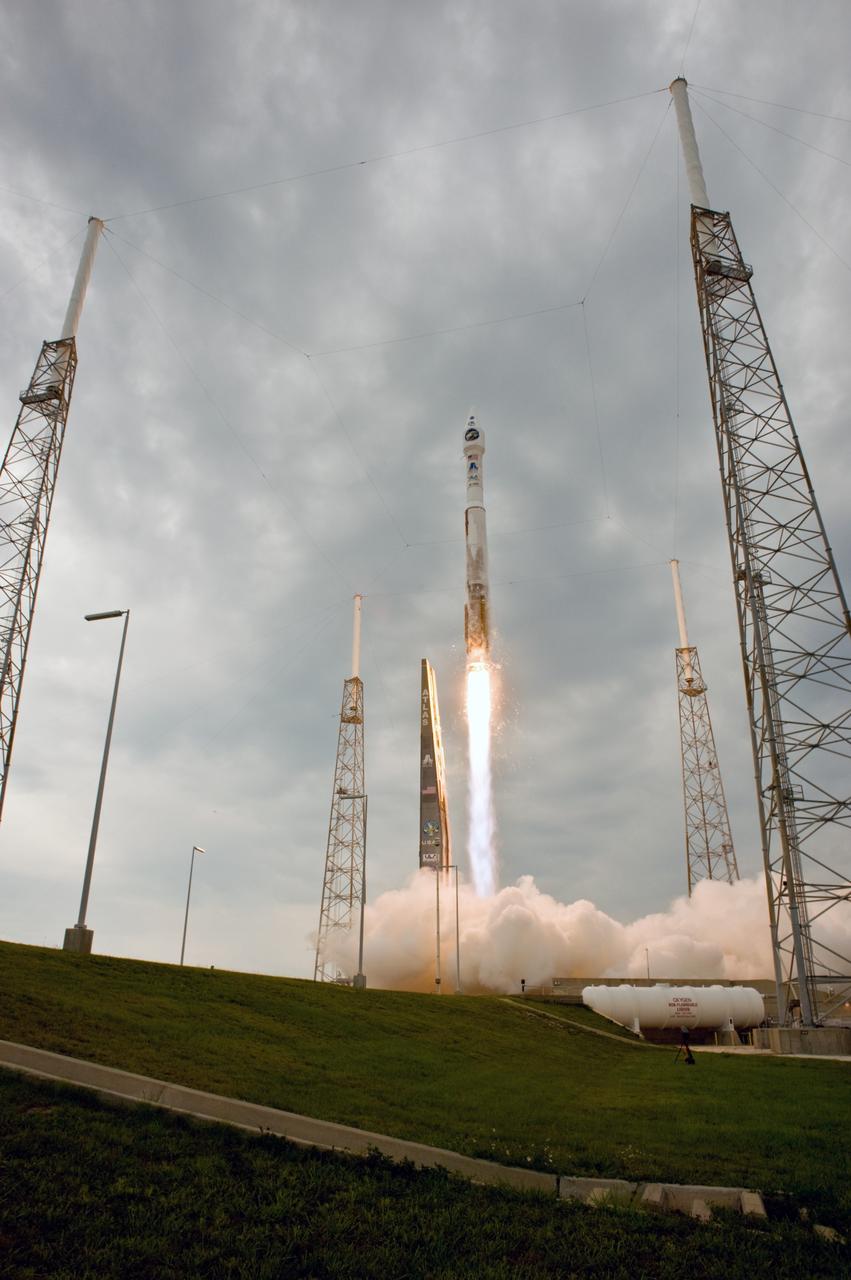
KSC-2009-3789
CAPE CANAVERAL, Fla. – Trailing a column of fire, the Atlas V/Centaur carrying NASA's Lunar Reconnaissance Orbiter, or LRO, and NASA's Lunar Crater Observation and Sensing Satellite, known…
Inspect NASA record
CAPE CANAVERAL, Fla. – Trailing a column of fire, the Atlas V/Centaur carrying NASA's Lunar Reconnaissance Orbiter, or LRO, and NASA's Lunar Crater Observation and Sensing Satellite, known as LCROSS, races above the lightning tower at left on Launch Complex 41 at Cape Canaveral Air Force Station in Florida. The surrounding towers are part of the lightning protection system. LRO and LCROSS are the first missions in NASA's plan to return humans to the moon and begin establishing a lunar outpost by 2020. The LRO also includes seven instruments that will help NASA characterize the moon's surface: DIVINER, LAMP, LEND, LOLA , CRATER, Mini-RF and LROC. Launch was on-time at 5:32 p.m. EDT. Photo credit: NASA/Sandra Joseph, Tony Gray
- Record ID
- KSC-2009-3789
- NASA center
- KSC
- Date
- 2009-06-18
- Keywords
- LRO, LCROSS, ELV
KSC · 2009-06-17 · KSC-2009-3741
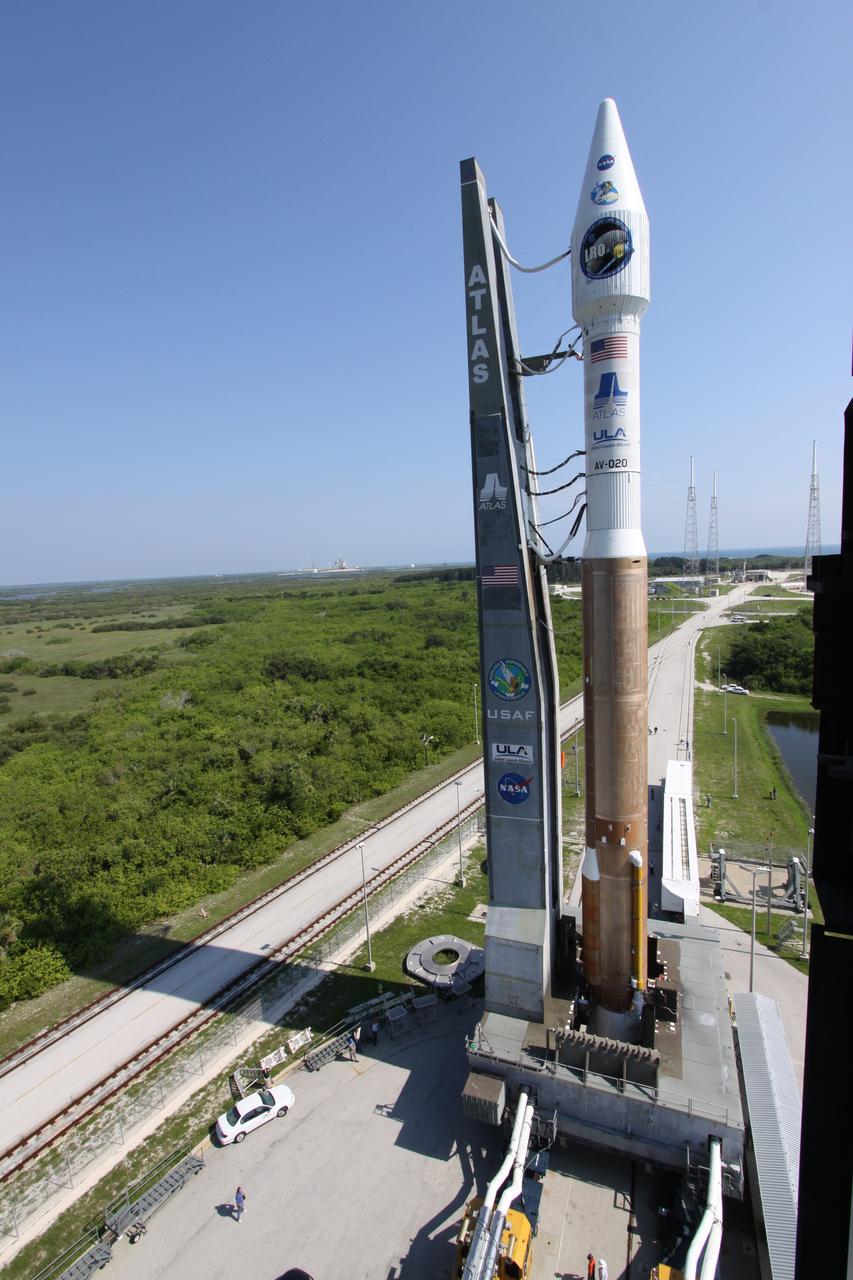
KSC-2009-3741
CAPE CANAVERAL, Fla. – On Launch Complex-41 on Cape Canaveral Air Force Station in Florida, NASA's Lunar Reconnaissance Orbiter, or LRO, and NASA's Lunar Crater Observation and Sensing…
Inspect NASA record
CAPE CANAVERAL, Fla. – On Launch Complex-41 on Cape Canaveral Air Force Station in Florida, NASA's Lunar Reconnaissance Orbiter, or LRO, and NASA's Lunar Crater Observation and Sensing Satellite, known as LCROSS, are attached to the gantry at left as they roll out to the launch pad. They are atop their launch vehicle, the Atlas V/Centaur rocket. LRO and LCROSS are the first missions in NASA's plan to return humans to the moon and begin establishing a lunar outpost by 2020. The LRO also includes seven instruments that will help NASA characterize the moon's surface: DIVINER, LAMP, LEND, LOLA, CRATER, Mini-RF and LROC. Launch is scheduled for 5:22 p.m. EDT June 18 . Photo credit: NASA/Jack Pfaller
- Record ID
- KSC-2009-3741
- NASA center
- KSC
- Date
- 2009-06-17
- Keywords
- LRO, LCROSS, CCAFS, ELV
KSC · 2009-05-15 · KSC-2009-3175
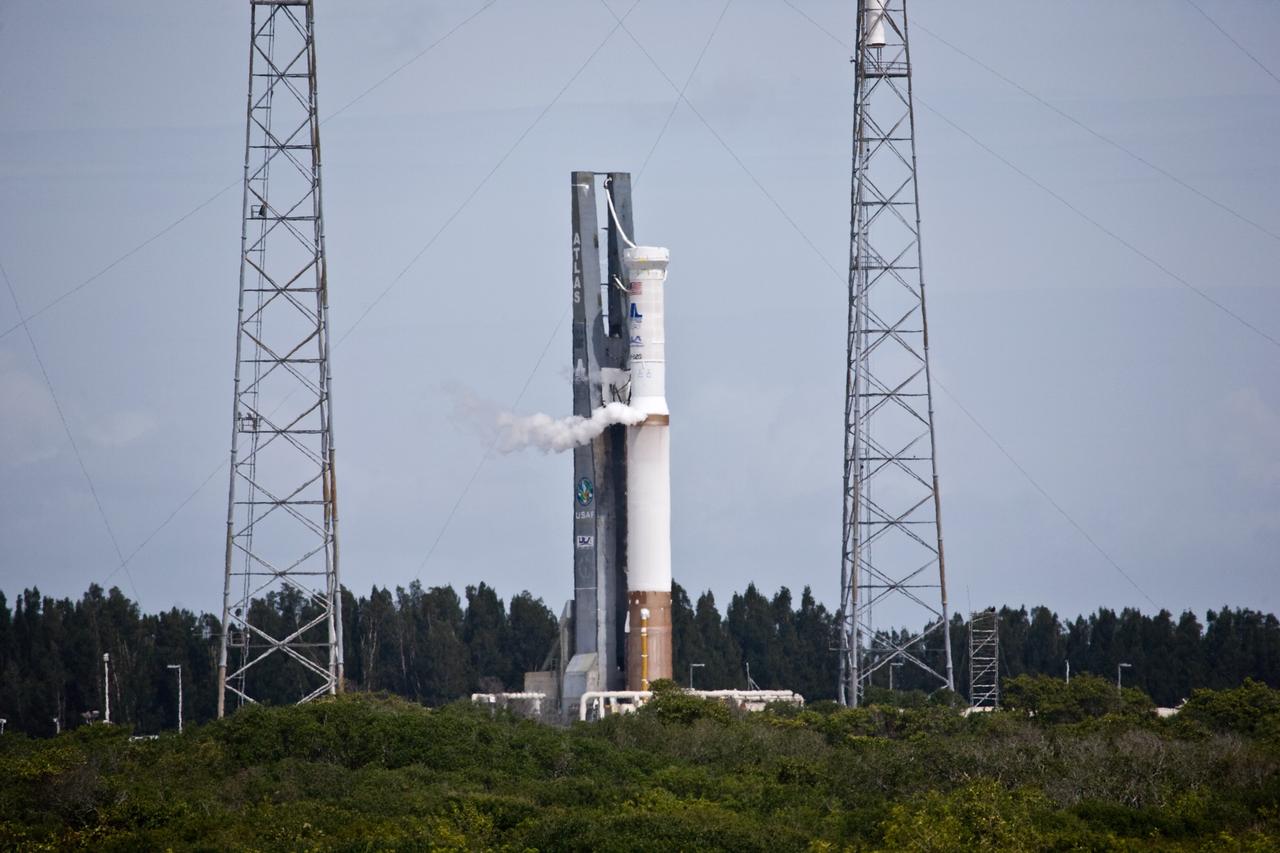
KSC-2009-3175
CAPE CANAVERAL, Fla. – At Launch Complex-41 on Cape Canaveral Air Force Station in Florida, the Atlas V/Centaur is undergoing a wet dress rehearsal, or countdown test. The…
Inspect NASA record
CAPE CANAVERAL, Fla. – At Launch Complex-41 on Cape Canaveral Air Force Station in Florida, the Atlas V/Centaur is undergoing a wet dress rehearsal, or countdown test. The Atlas V is being fully loaded with propellants including liquid hydrogen, liquid oxygen and RP-1 fuel. Surrounding the vehicle are four lightning towers. Following the rehearsal, the launch vehicle will be rolled off the pad and returned to the Vertical Integration Facility on May 16. The Atlas V/Centaur is the launch vehicle for NASA's Lunar Reconnaissance Orbiter, or LRO, and NASA's Lunar CRater Observation and Sensing Satellite, known as LCROSS. They will be mated with the Atlas in late May. LCROSS and LRO are the first missions in NASA's plan to return humans to the moon and begin establishing a lunar outpost by 2020. Launch is scheduled for no earlier than June 17. Photo credit: NASA/Dimitri Gerondidakis
- Record ID
- KSC-2009-3175
- NASA center
- KSC
- Date
- 2009-05-15
- Keywords
- LRO, LCROSS, Atlas V, Centaur, CCAFS, LC-41
KSC · 2009-06-18 · KSC-2009-3774
KSC-2009-3774
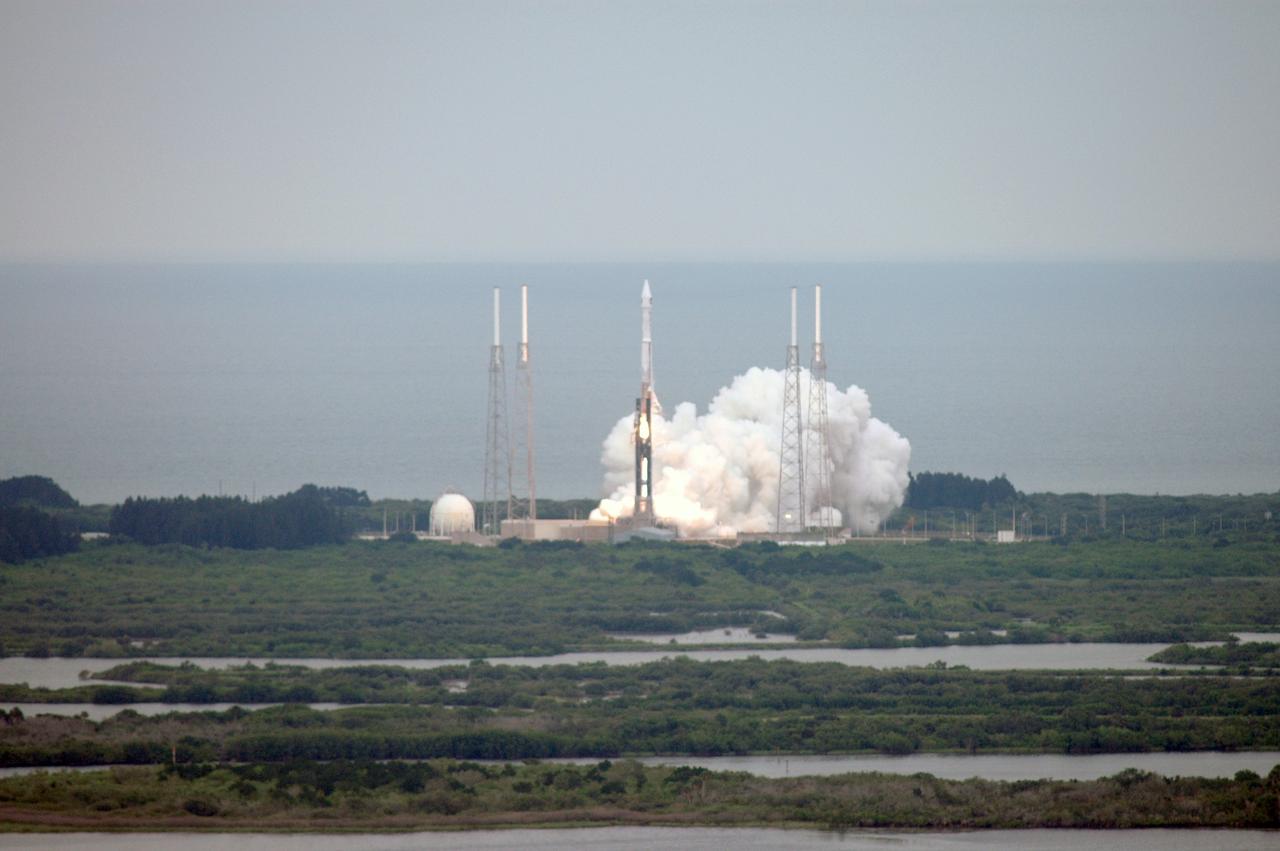
CAPE CANAVERAL, Fla. – On Launch Complex 41 at Cape Canaveral Air Force Station in Florida, bursts of smoke and steam signal liftoff for the Atlas V/Centaur rocket…
Inspect NASA record
CAPE CANAVERAL, Fla. – On Launch Complex 41 at Cape Canaveral Air Force Station in Florida, bursts of smoke and steam signal liftoff for the Atlas V/Centaur rocket carrying NASA's Lunar Reconnaissance Orbiter, or LRO, and NASA's Lunar Crater Observation and Sensing Satellite, known as LCROSS, toward space. Surrounding the pad are lightning towers. LRO and LCROSS are the first missions in NASA's plan to return humans to the moon and begin establishing a lunar outpost by 2020. The LRO also includes seven instruments that will help NASA characterize the moon's surface: DIVINER, LAMP, LEND, LOLA , CRATER, Mini-RF and LROC. Launch was on-time at 5:32 p.m. EDT June 18. Photo credit: NASA/Jeffery Marino
- Record ID
- KSC-2009-3774
- NASA center
- KSC
- Date
- 2009-06-18
- Keywords
- LRO, LCROSS, ELV
KSC · 1969-07-16 · KSC-69PC-391
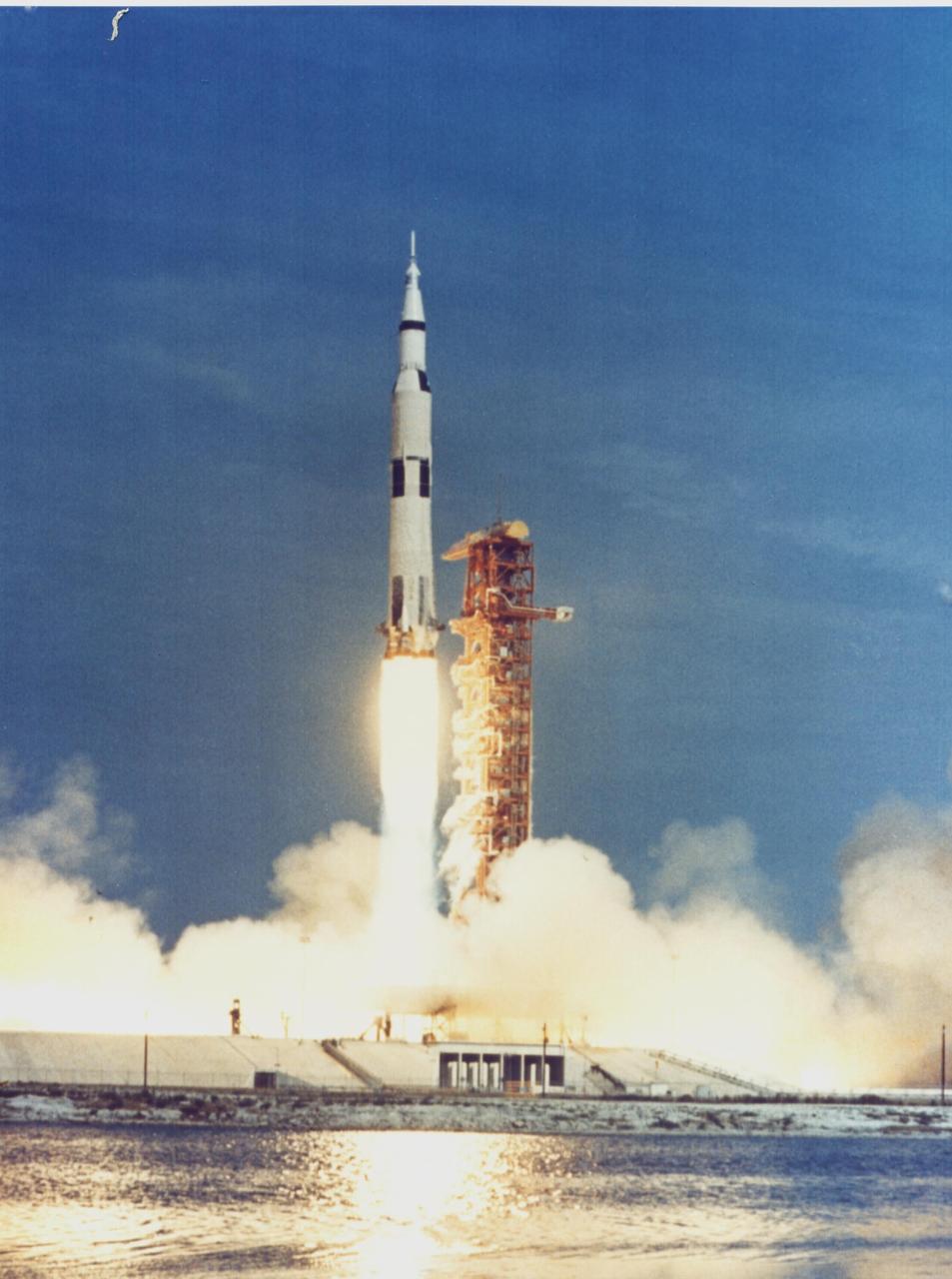
KSC-69PC-391
KENNEDY SPACE CENTER, FLA. - The Apollo 11 Saturn V space vehicle rises past the launch tower as it lifts off with astronauts Neil A. Armstrong, Michael Collins…
Inspect NASA record
KENNEDY SPACE CENTER, FLA. - The Apollo 11 Saturn V space vehicle rises past the launch tower as it lifts off with astronauts Neil A. Armstrong, Michael Collins and Edwin E. Aldrin Jr. at 9:32 a.m. EDT July 16, 1969, from KSC's Launch Complex 39A. During the planned eight-day mission, Armstrong and Aldrin will descend in a Lunar Module (LM) to the Moon's surface while Collins orbits overhead in the Command Module. The two astronauts are to spend 22 hours on the Moon, including two-and-one-half hours outside the LM. They will gather samples of lunar material and will deploy scientific experiments that will transmit data about the lunar environment. They will rejoin Collins in the Command Module for the return trip to Earth.
- Record ID
- KSC-69PC-391
- NASA center
- KSC
- Date
- 1969-07-16
KSC · 2009-06-18 · KSC-2009-3752
KSC-2009-3752
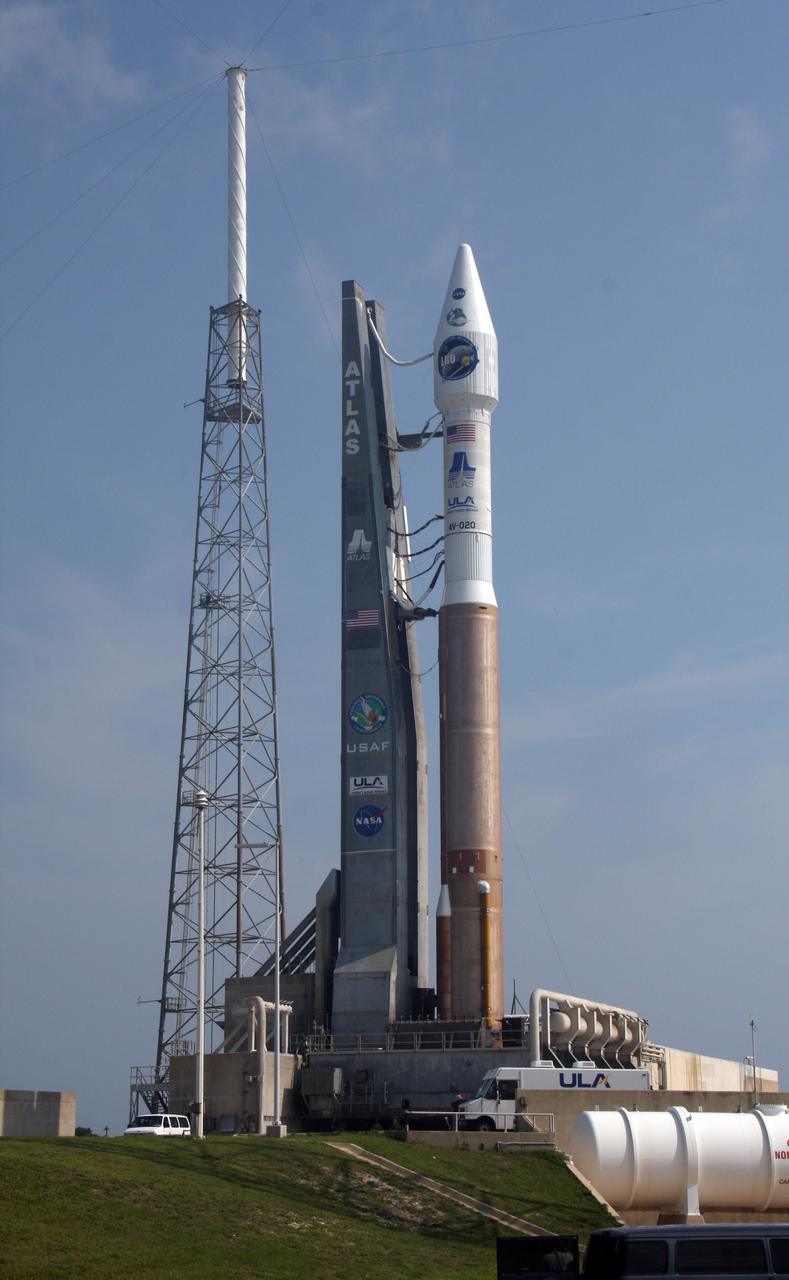
CAPE CANAVERAL, Fla. – NASA's Lunar Reconnaissance Orbiter, or LRO, and NASA's Lunar Crater Observation and Sensing Satellite, known as LCROSS, stand ready for liftoff on an Atlas…
Inspect NASA record
CAPE CANAVERAL, Fla. – NASA's Lunar Reconnaissance Orbiter, or LRO, and NASA's Lunar Crater Observation and Sensing Satellite, known as LCROSS, stand ready for liftoff on an Atlas V/Centaur rocket from Launch Pad 41 at Cape Canaveral Air Force Station in Florida. At left is one of the lightning towers that surround the pad. LRO and LCROSS are the first missions in NASA's plan to return humans to the moon and begin establishing a lunar outpost by 2020. The LRO also includes seven instruments that will help NASA characterize the moon's surface: DIVINER, LAMP, LEND, LOLA , CRATER, Mini-RF and LROC. Launch is scheduled for 5:12 p.m. EDT June 18. Photo credit: NASA/Ken Thornsley
- Record ID
- KSC-2009-3752
- NASA center
- KSC
- Date
- 2009-06-18
- Keywords
- OV-105, LP39A