
Update Site (from NASA)
Explore NASA’s Image and Video Library.
Suggest one object per day for the Interstellar Minds collection. We review each suggestion before adding it.
Sign in to suggest a Marvel.
Find a NASA image ID. Open a NASA record and copy its ID from the end of the details URL.
NASA image records
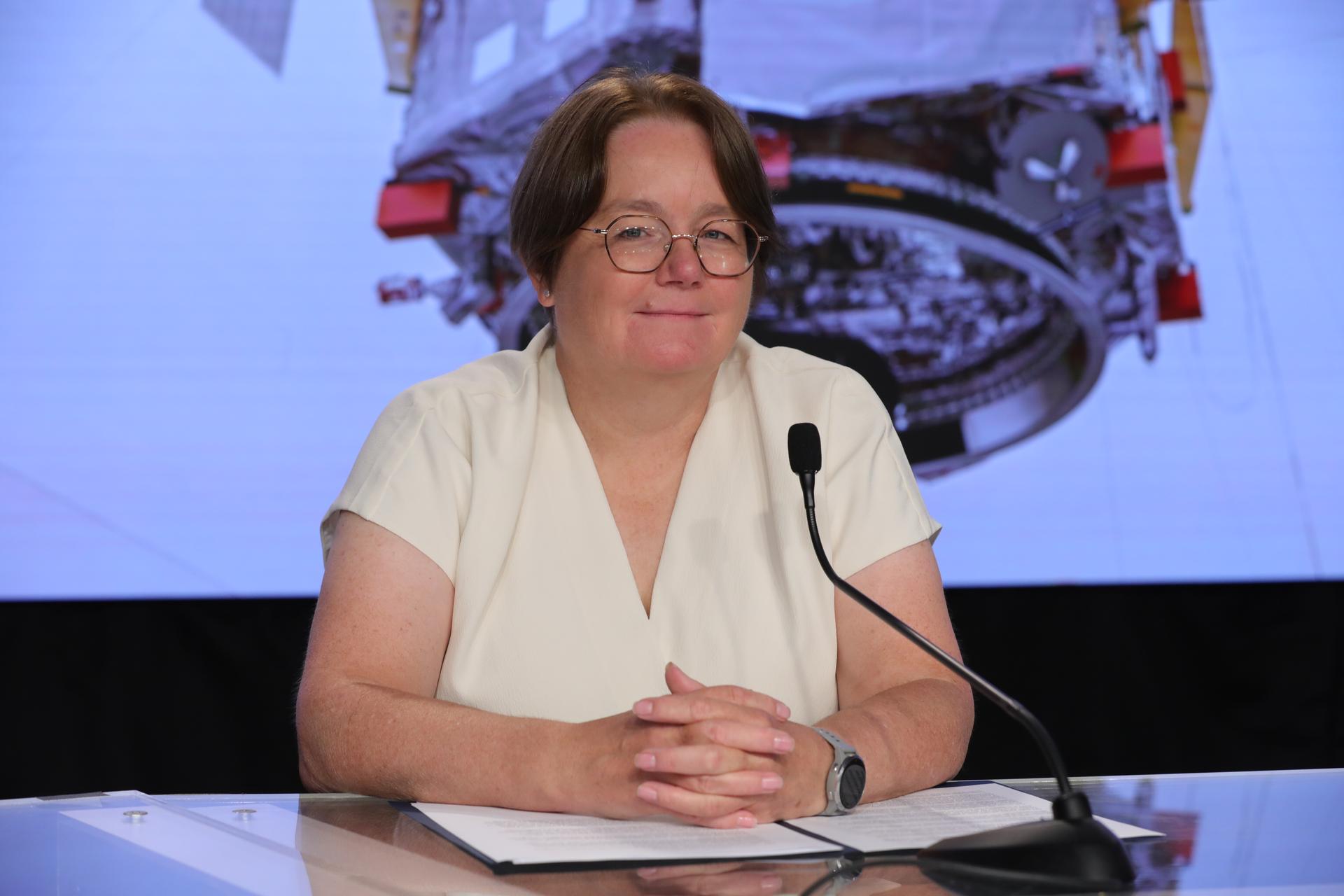
KSC · 2026-08-29 · KSC-20260829-PH-KLS01_0105
Roman Space Telescope Science Briefing
Julie McEnery, Roman telescope senior project scientist, NASA’s Goddard Space Flight Center in Greenbelt, Maryland, participates in a science briefing for NASA’s Nancy Grace Roman Space Telescope inside…
Inspect NASA record
Julie McEnery, Roman telescope senior project scientist, NASA’s Goddard Space Flight Center in Greenbelt, Maryland, participates in a science briefing for NASA’s Nancy Grace Roman Space Telescope inside the NASA News Center’s John Holliman Auditorium at Kennedy Space Center in Florida, on Saturday, Aug. 29, 2026. Roman will investigate dark energy and dark matter, conduct a statistical census of planetary systems, and enable a broad range of additional astrophysics research. Liftoff from Launch Complex 39A at Kennedy is targeted for no earlier than Sunday, Aug. 30, 2026.
- Record ID
- KSC-20260829-PH-KLS01_0105
- NASA center
- KSC
- Date
- 2026-08-29
- Credit
- NASA/Kim Shiflett
- Keywords
- John. F. Kennedy Space Center, Kennedy, Kennedy Space Center, KSC, Spaceport, Cape Canaveral, NASA, rocket ranch, Florida, multi-user spaceport, premier spaceport, space coast

KSC · 2026-08-29 · KSC-20260829-PH-KLS01_0080
Roman Space Telescope Science Briefing
Kristen McQuinn, Roman Science Operations Center lead, Space Telescope Science Institute, participates in a science briefing for NASA’s Nancy Grace Roman Space Telescope inside the NASA News Center’s…
Inspect NASA record
Kristen McQuinn, Roman Science Operations Center lead, Space Telescope Science Institute, participates in a science briefing for NASA’s Nancy Grace Roman Space Telescope inside the NASA News Center’s John Holliman Auditorium at Kennedy Space Center in Florida, on Saturday, Aug. 29, 2026. Roman will investigate dark energy and dark matter, conduct a statistical census of planetary systems, and enable a broad range of additional astrophysics research. Liftoff from Launch Complex 39A at Kennedy is targeted for no earlier than Sunday, Aug. 30, 2026.
- Record ID
- KSC-20260829-PH-KLS01_0080
- NASA center
- KSC
- Date
- 2026-08-29
- Credit
- NASA/Kim Shiflett
- Keywords
- John. F. Kennedy Space Center, Kennedy, Kennedy Space Center, KSC, Spaceport, Cape Canaveral, NASA, rocket ranch, Florida, multi-user spaceport, premier spaceport, space coast
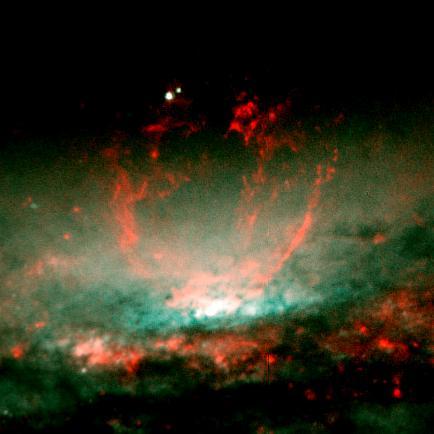
JPL · 1999-12-02 · PIA04208
Galaxy NGC 3079
A lumpy bubble of hot gas rises from a cauldron of glowing matter in a distant galaxy, as seen by NASA Hubble Space Telescope.
Inspect NASA record
A lumpy bubble of hot gas rises from a cauldron of glowing matter in a distant galaxy, as seen by NASA Hubble Space Telescope.
- Record ID
- PIA04208
- NASA center
- JPL
- Date
- 1999-12-02
- Credit
- NASA/Space Telescope Science Institute
- Keywords
- Galaxy NGC 3079, Hubble Space Telescope
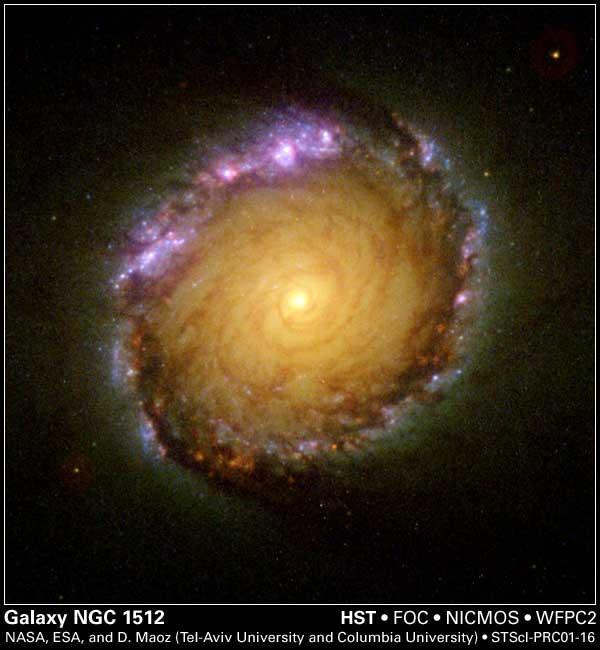
JPL · 1999-12-01 · PIA04219
Galaxy NGC 1512
A rainbow of colors is captured in the center of a magnificent barred spiral galaxy, as witnessed by the three cameras of NASA Hubble Space Telescope.
Inspect NASA record
A rainbow of colors is captured in the center of a magnificent barred spiral galaxy, as witnessed by the three cameras of NASA Hubble Space Telescope.
- Record ID
- PIA04219
- NASA center
- JPL
- Date
- 1999-12-01
- Credit
- NASA/Space Telescope Science Institute
- Keywords
- Galaxy NGC 1512, Hubble Space Telescope
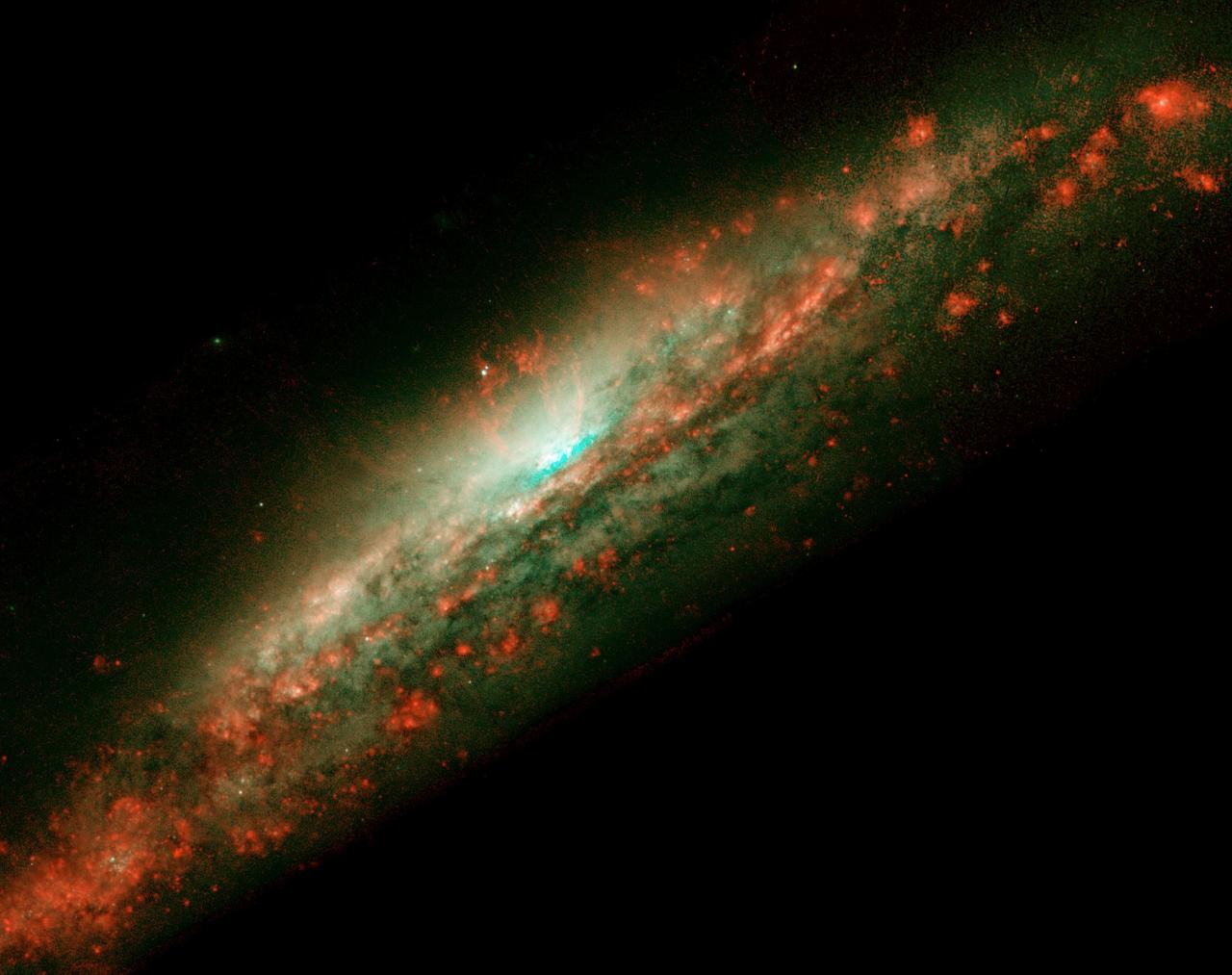
JPL · 1999-12-02 · PIA04209
Galaxy NGC 3079
A lumpy bubble of hot gas rises from a cauldron of glowing matter in a distant galaxy, as seen by NASA Hubble Space Telescope.
Inspect NASA record
A lumpy bubble of hot gas rises from a cauldron of glowing matter in a distant galaxy, as seen by NASA Hubble Space Telescope.
- Record ID
- PIA04209
- NASA center
- JPL
- Date
- 1999-12-02
- Credit
- NASA/Space Telescope Science Institute
- Keywords
- Galaxy NGC 3079, Hubble Space Telescope
MSFC · 1990-04-25 · 9012885
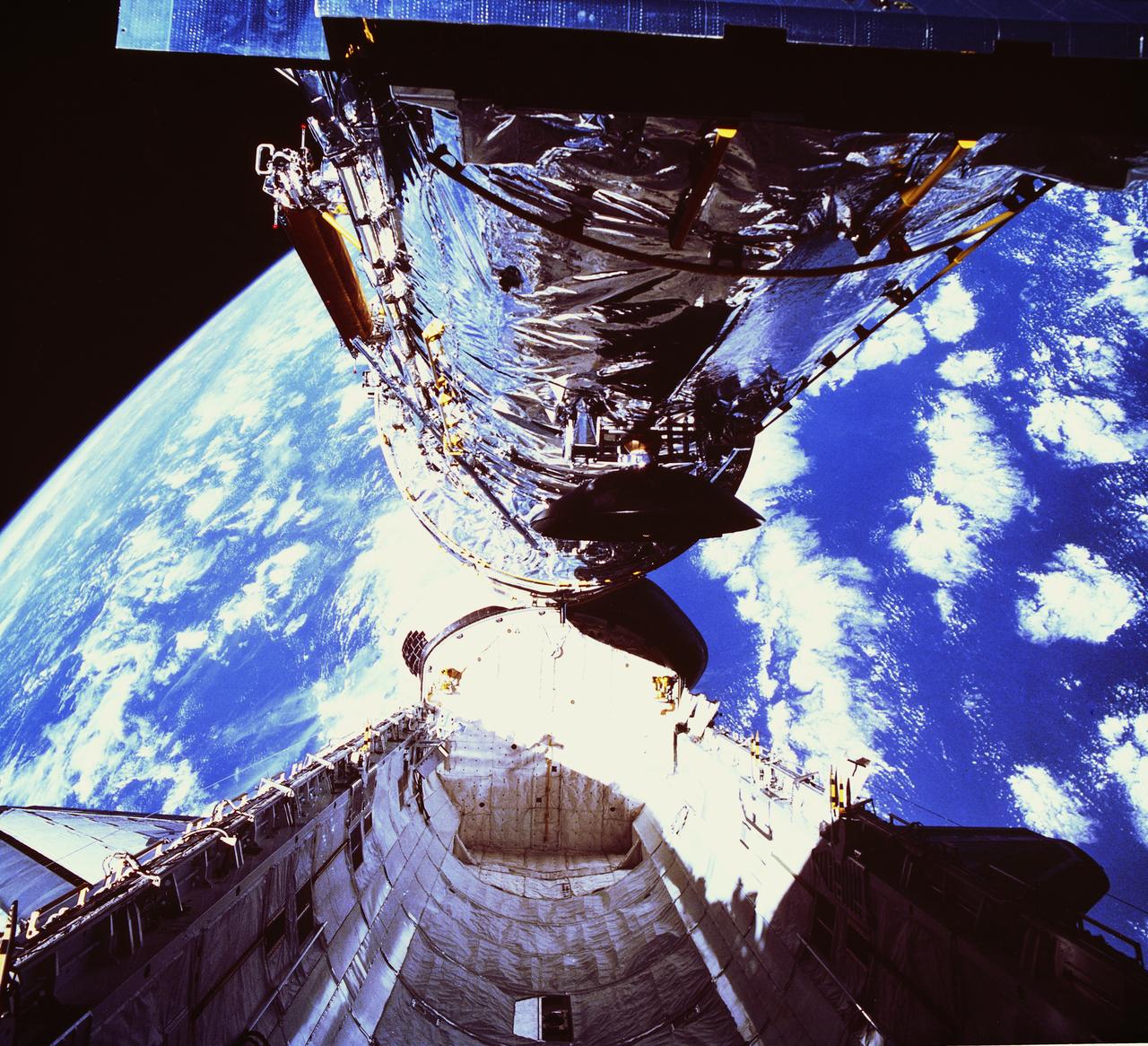
History of Hubble Space Telescope (HST)
In this photograph, the Hubble Space Telescope (HST) is clearing the cargo bay during its deployment on April 25, 1990. The photograph was taken by the IMAX Cargo…
Inspect NASA record
In this photograph, the Hubble Space Telescope (HST) is clearing the cargo bay during its deployment on April 25, 1990. The photograph was taken by the IMAX Cargo Bay Camera (ICBC) mounted in a container on the port side of the Space Shuttle orbiter Discovery STS-31 mission. The purpose of the HST, the most complex and sensitive optical telescope ever made, is to study the cosmos from a low-Earth orbit for 15 years or more. The HST provides fine detail imaging, produces ultraviolet images and spectra, and detects very faint objects. Two months after its deployment in space, scientists detected a 2-micron spherical aberration in the primary mirror of the HST that affected the telescope's ability to focus faint light sources into a precise point. This imperfection was very slight, one-fiftieth of the width of a human hair. A scheduled Space servicing mission (STS-61) in 1993 permitted scientists to correct the problem. During four space walks, new instruments were installed into the HST that had optical corrections. A total of four HST servicing missions have taken place since its deployment: STS-61 in December 1993, STS-82 in February 1997, STS-103 in December 1999, and STS-109 in March 2002. The Marshall Space Flight Center had responsibility for design, development, and construction of the HST. The Perkin-Elmer Corporation, in Danbury, Cornecticut, developed the optical system and guidance sensors.
- Record ID
- 9012885
- NASA center
- MSFC
- Date
- 1990-04-25
- Keywords
- STS-31, Hubble Space Telescope, HST
HQ · 2022-01-08 · NHQ202201080025
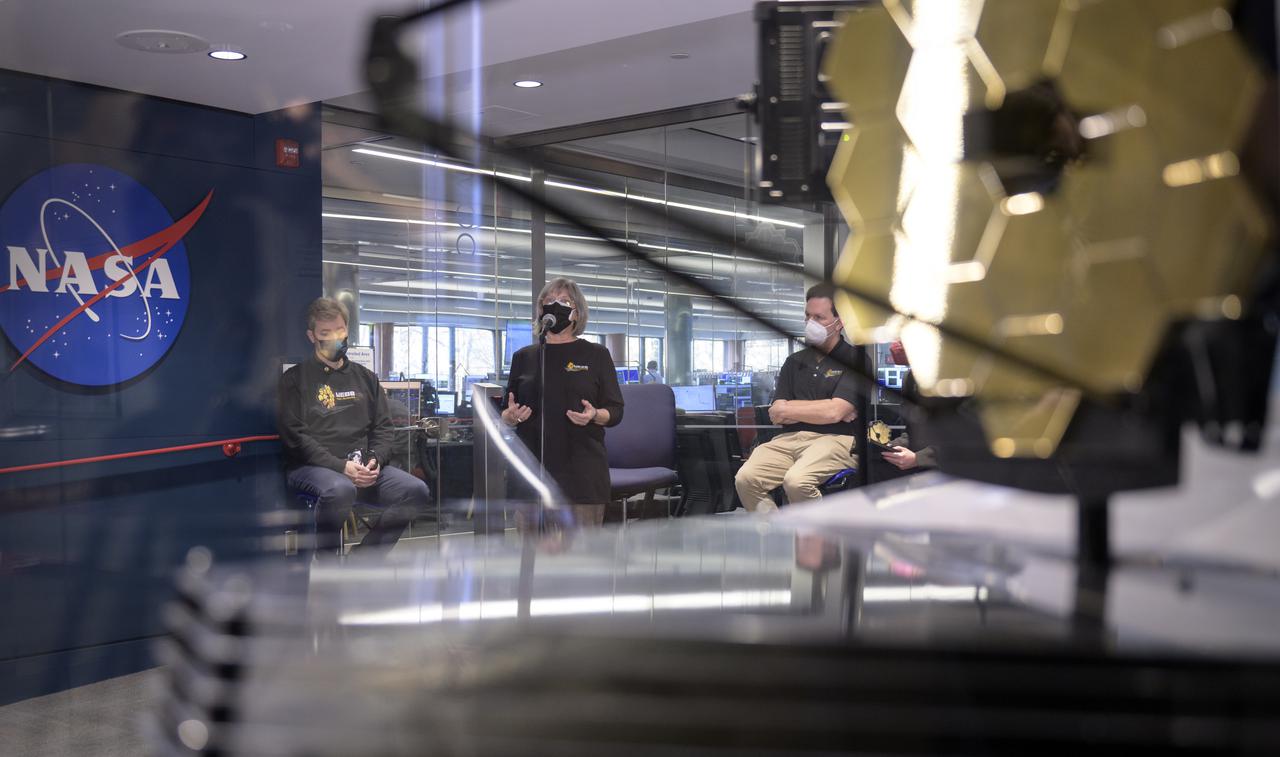
James Webb Space Telescope Briefing
Vice President for Science, Space Telescope Science Institute, Heidi Hammel answers questions from the media during a briefing following the successful deployment of NASA’s James Webb Space Telescope…
Inspect NASA record
Vice President for Science, Space Telescope Science Institute, Heidi Hammel answers questions from the media during a briefing following the successful deployment of NASA’s James Webb Space Telescope primary mirror, Saturday, Jan. 8, 2022, from the Webb Space Telescope Mission Operations Center at the Space Telescope Science Institute in Baltimore. With Webb’s 21.3-foot (6.5-meter) primary mirror fully deployed, the infrared observatory has completed its unprecedented process of unfolding in space to prepare for science operations. The observatory will study every phase of cosmic history—from within our solar system to the most distant observable galaxies in the early universe. Photo Credit: (NASA/Bill Ingalls)
- Record ID
- NHQ202201080025
- NASA center
- HQ
- Date
- 2022-01-08
- Credit
- NASA/Bill Ingalls
- Keywords
- Baltimore, Canadian Space Agency (CSA), ESA (European Space Agency), Heidi Hammel, James Webb Space Telescope (JWST), John Durning, Lee Feinberg, Maryland, NASA, Northrop Grumman, Space Telescope Science Institute (STScI)
MSFC · 1981-01-01 · 8113711
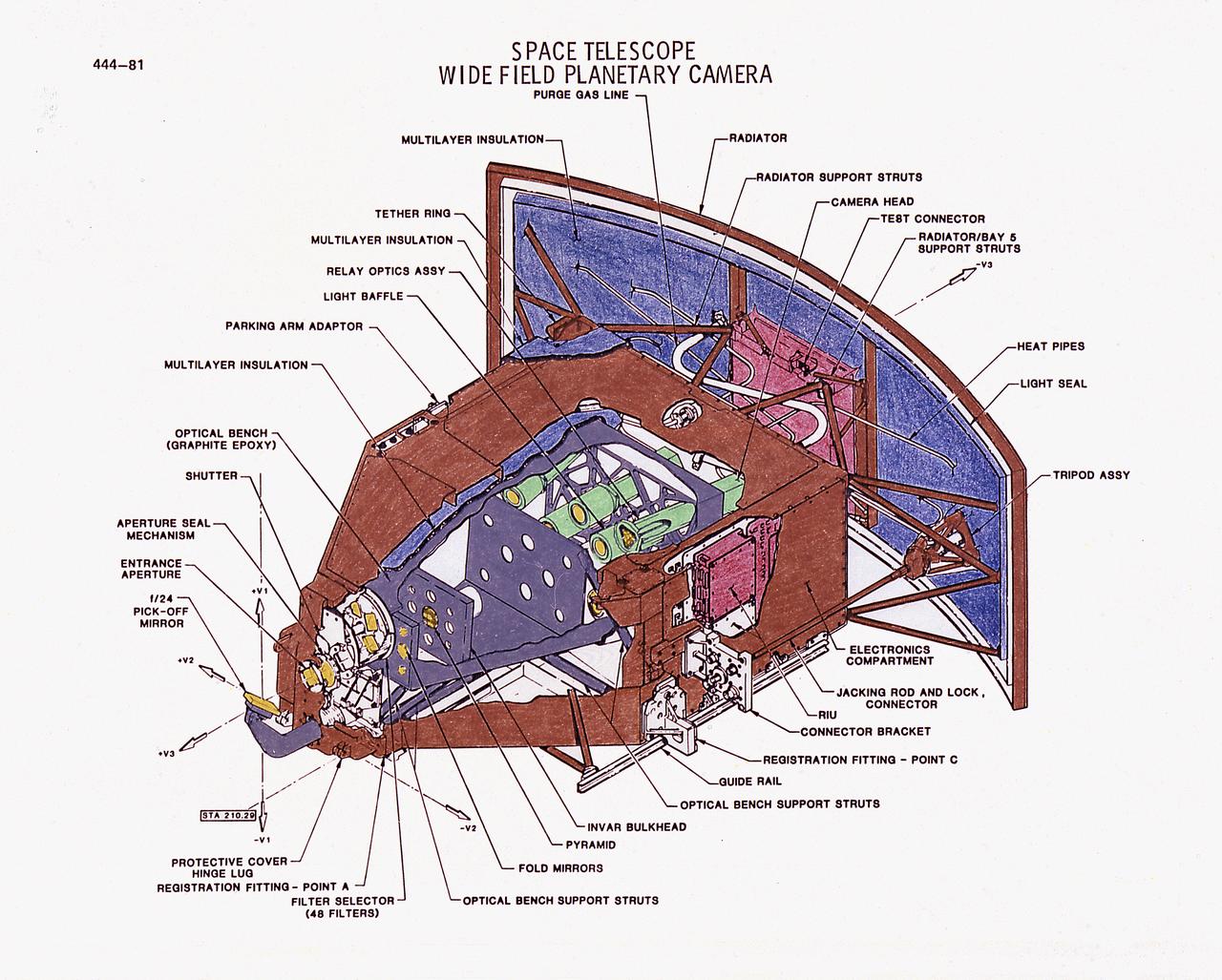
History of Hubble Space Telescope (HST)
This illustration is a diagram of the Hubble Space Telescope's (HST's), Wide Field Planetary Camera (WF/PC), one of the five Scientific Instruments. The WF/PC uses a four-sided pyramid…
Inspect NASA record
This illustration is a diagram of the Hubble Space Telescope's (HST's), Wide Field Planetary Camera (WF/PC), one of the five Scientific Instruments. The WF/PC uses a four-sided pyramid mirror to split a light image into quarters. It then focuses each quadrant onto one of two sets of four sensors. The sensors are charge-coupled detectors and function as the electronic equivalent of extremely sensitive photographic plates. The WF/PC operates in two modes. The Wide-Field mode that will view 7.2-arcmin sections of the sky, and the Planetary mode that will look at narrower fields of view, such as planets or areas within other galaxies. The purpose of the HST, the most complex and sensitive optical telescope ever made, is to study the cosmos from a low-Earth orbit. By placing the telescope in space, astronomers are able to collect data that is free of the Earth's atmosphere. The HST detects objects 25 times fainter than the dimmest objects seen from Earth and provides astronomers with an observable universe 250 times larger than visible from ground-based telescopes, perhaps as far away as 14 billion light-years. The HST views galaxies, stars, planets, comets, possibly other solar systems, and even unusual phenomena such as quasars, with 10 times the clarity of ground-based telescopes. The HST was deployed from the Space Shuttle Discovery (STS-31 mission) into Earth orbit in April 1990. The Marshall Space Flight Center had responsibility for design, development, and construction of the HST. The Perkin-Elmer Corporation, in Danbury, Cornecticut, developed the optical system and guidance sensors.
- Record ID
- 8113711
- NASA center
- MSFC
- Date
- 1981-01-01
- Keywords
- Hubble Space Telescope, Wide Field Planetary Camera, WF/PC

JPL · 1999-12-10 · PIA04216
Ant Nebula
This image from NASA Hubble Space Telescope image of a celestial object called the Ant Nebula may shed new light on the future demise of our Sun.
Inspect NASA record
This image from NASA Hubble Space Telescope image of a celestial object called the Ant Nebula may shed new light on the future demise of our Sun.
- Record ID
- PIA04216
- NASA center
- JPL
- Date
- 1999-12-10
- Credit
- NASA/Space Telescope Science Institute
- Keywords
- Ant nebula, Hubble Space Telescope
HQ · 2022-01-08 · NHQ202201080015
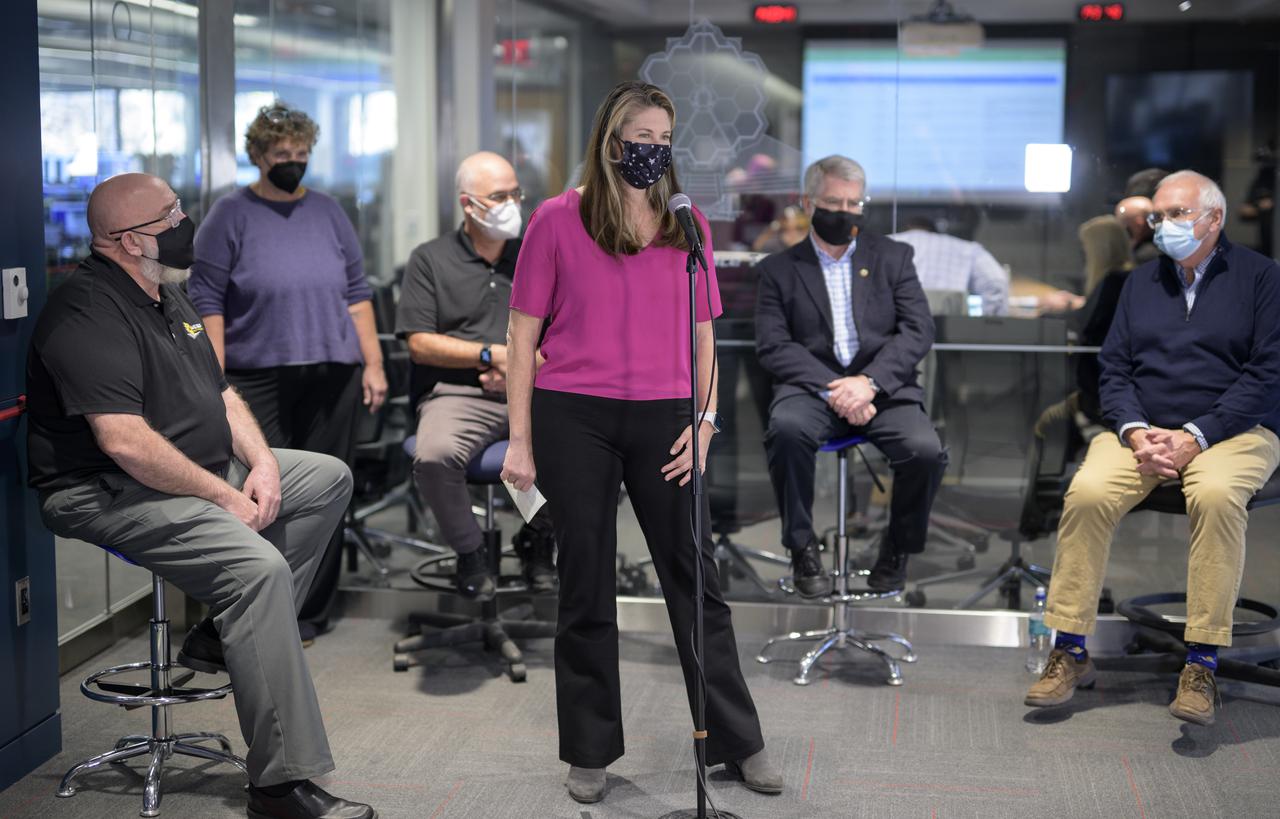
James Webb Space Telescope Briefing
NASA Public Affairs Officer Karen Fox, center, moderates a briefing following the successful deployment of NASA’s James Webb Space Telescope primary mirror, Saturday, Jan. 8, 2022, from the…
Inspect NASA record
NASA Public Affairs Officer Karen Fox, center, moderates a briefing following the successful deployment of NASA’s James Webb Space Telescope primary mirror, Saturday, Jan. 8, 2022, from the Webb Space Telescope Mission Operations Center at the Space Telescope Science Institute in Baltimore. With Webb’s 21.3-foot (6.5-meter) primary mirror fully deployed, the infrared observatory has completed its unprecedented process of unfolding in space to prepare for science operations. The observatory will study every phase of cosmic history—from within our solar system to the most distant observable galaxies in the early universe. Photo Credit: (NASA/Bill Ingalls)
- Record ID
- NHQ202201080015
- NASA center
- HQ
- Date
- 2022-01-08
- Credit
- NASA/Bill Ingalls
- Keywords
- Baltimore, Bill Ochs, Canadian Space Agency (CSA), ESA (European Space Agency), James Webb Space Telescope (JWST), Karen Fox, Maryland, Mike Menzel, NASA, Northrop Grumman, Scott Willoughby, Space Telescope Science Institute (STScI)
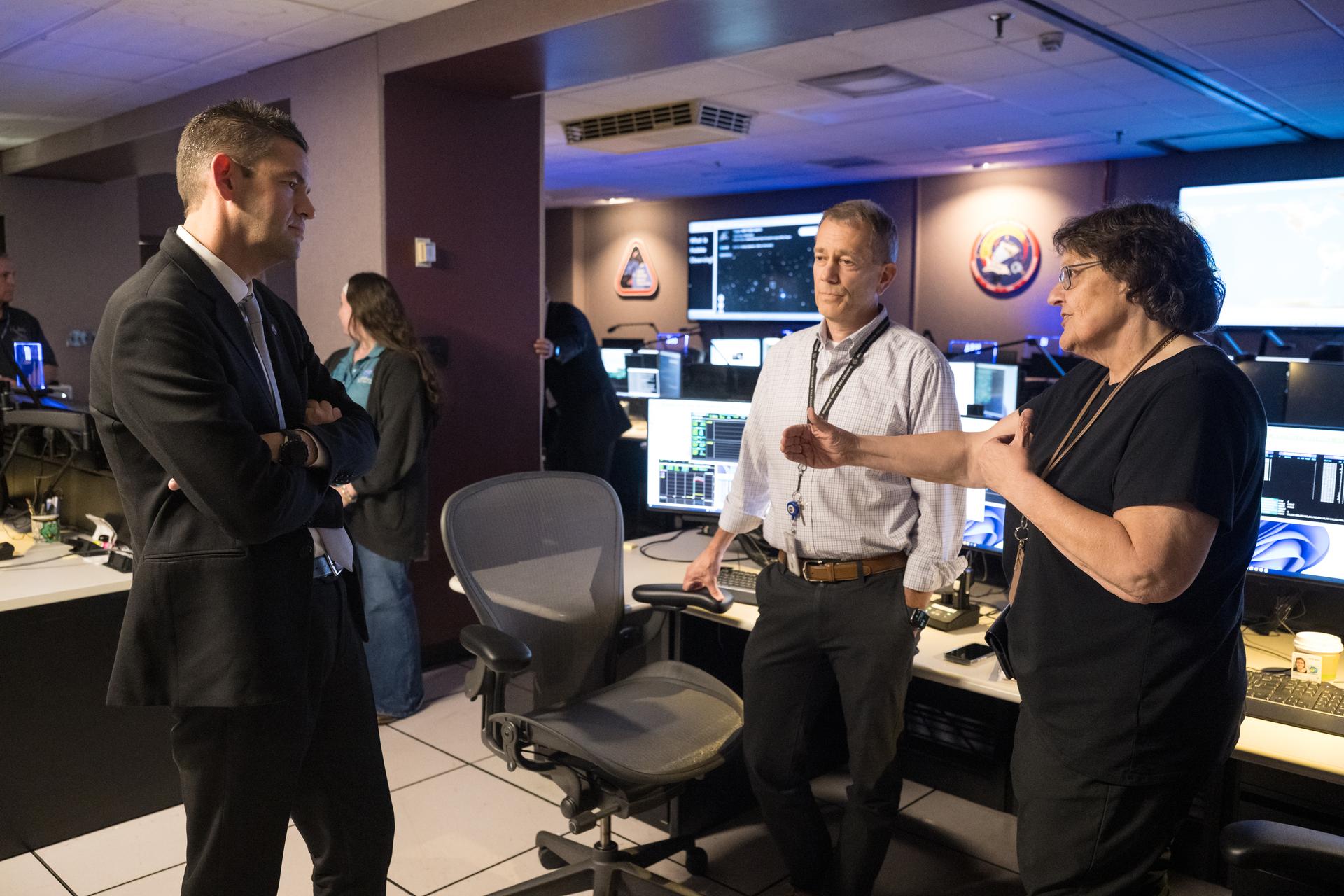
HQ · 2026-09-01 · NHQ202609010028
Nancy Grace Roman Space Telescope Celebration
NASA Administrator Jared Isaacman speaks with employees in the Space Telescope Operations Control Center during an event held to celebrate the launch of the Nancy Grace Roman Space…
Inspect NASA record
NASA Administrator Jared Isaacman speaks with employees in the Space Telescope Operations Control Center during an event held to celebrate the launch of the Nancy Grace Roman Space Telescope, Tuesday, Sept. 1, 2026, at NASA’s Goddard Space Flight Center in Greenbelt, Maryland. Photo Credit: (NASA/Aubrey Gemignani)
- Record ID
- NHQ202609010028
- NASA center
- HQ
- Date
- 2026-09-01
- Credit
- NASA/Aubrey Gemignani
- Keywords
- Goddard Space Flight Center (GSFC), Greenbelt, Jamie Dunn, Jared Isaacman, Maryland, NASA Administrator, Nancy Grace Roman Space Telescope, Space Telescope Operations Control Center

GSFC · 2019-02-08 · scetransport
NASA's James Webb Space Telescope
To keep Webb’s spacecraft element and its sensitive instruments contaminant free, technicians and engineers enclose it in a protective clamshell that serves as a mobile clean room while…
Inspect NASA record
To keep Webb’s spacecraft element and its sensitive instruments contaminant free, technicians and engineers enclose it in a protective clamshell that serves as a mobile clean room while in transport. Credits: NASA's Goddard Space Flight Center/Chris Gunn more info: https://www.nasa.gov/feature/goddard/2019/nasa-s-webb-is-sound-after-completing-critical-milestones
- Record ID
- scetransport
- NASA center
- GSFC
- Date
- 2019-02-08
- Credit
- Chris Gunn
- Keywords
- JWST, James Webb Space Telescope