
Update Site (from NASA)
Explore NASA’s Image and Video Library.
Suggest one object per day for the Interstellar Minds collection. We review each suggestion before adding it.
Sign in to suggest a Marvel.
Find a NASA image ID. Open a NASA record and copy its ID from the end of the details URL.
NASA image records
MSFC · 1969-02-12 · 6974223
Saturn Apollo Program
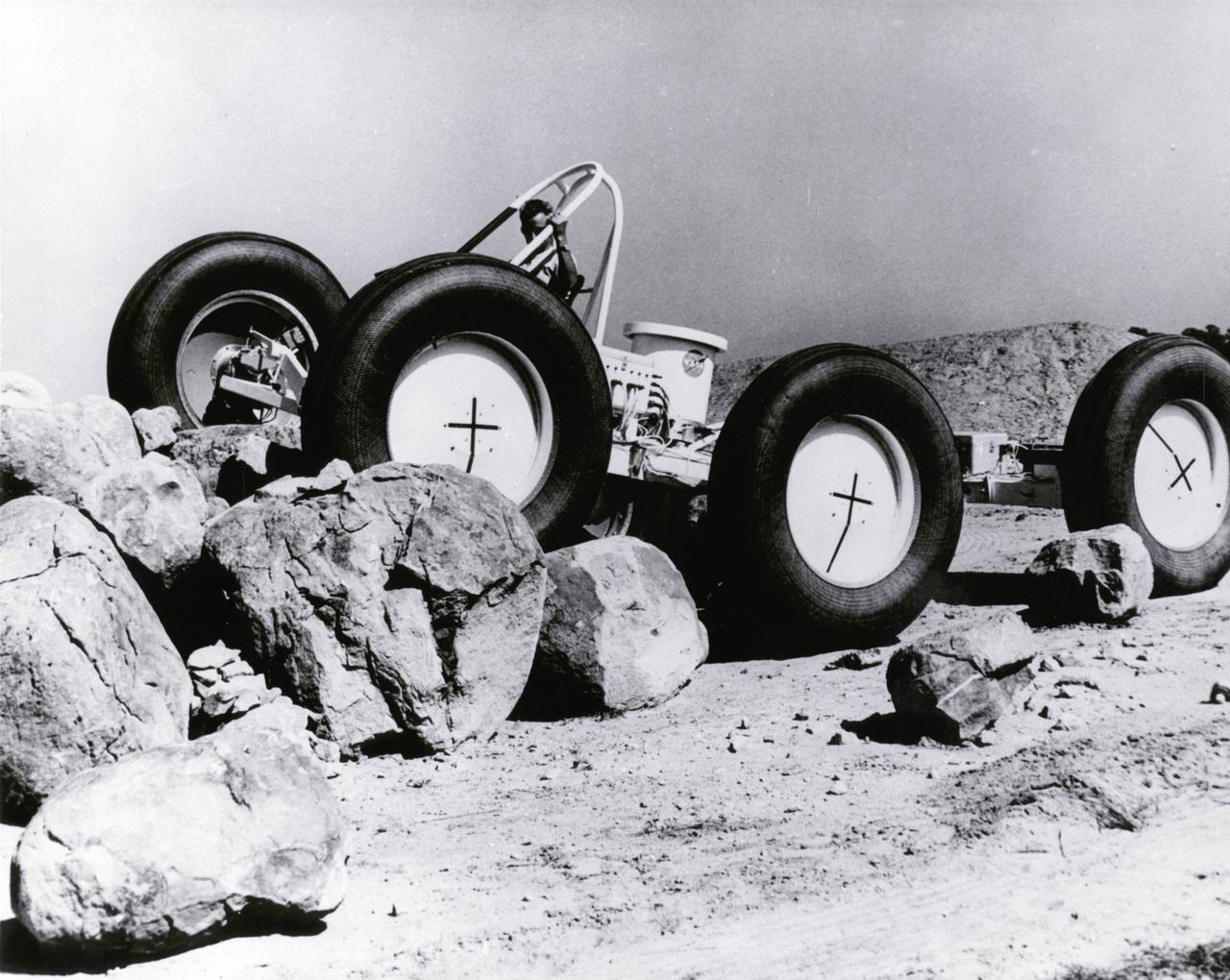
A test engineer drove a Mobility Test Article (MTA) of a possible future Lunar Roving Vehicle (LRV) over rocks during tests in Arizona. The machine was built by…
Inspect NASA record
A test engineer drove a Mobility Test Article (MTA) of a possible future Lunar Roving Vehicle (LRV) over rocks during tests in Arizona. The machine was built by General Motors for NASA’s Marshall Space Flight Center (MSFC). Under the direction of MSFC, the LRV was designed to allow Apollo astronauts a greater range of mobility during lunar exploration missions.
- Record ID
- 6974223
- NASA center
- MSFC
- Date
- 1969-02-12
- Keywords
- Lunar Roving Vehicle, LRV, Mobile Test Article, MTA, General Motors

JSC · 1972-12-13 · S72-55169
PLAQUE - APOLLO 17
S72-55169 (14 Dec. 1972) --- A photographic replica of the plaque which the Apollo 17 astronauts left behind at the Taurus-Littrow landing site. Apollo 17 is the final…
Inspect NASA record
S72-55169 (14 Dec. 1972) --- A photographic replica of the plaque which the Apollo 17 astronauts left behind at the Taurus-Littrow landing site. Apollo 17 is the final lunar landing mission in NASA's Apollo program. The commemorative plaque was unveiled at the close of the third extravehicular activity (EVA). The plaque is made of stainless steel measuring nine by seven and five-eighths inches, and one-sixteenth inch thick. It is attached to the ladder on the landing gear strut on the descent stage of Apollo 17 Lunar Module (LM) "Challenger".
- Record ID
- S72-55169
- NASA center
- JSC
- Date
- 1972-12-13
JSC · 1969-07-25 · S69-40025
Mission Control Center (MCC) - Celebration - Conclusion - Apollo XI Mission - MSC
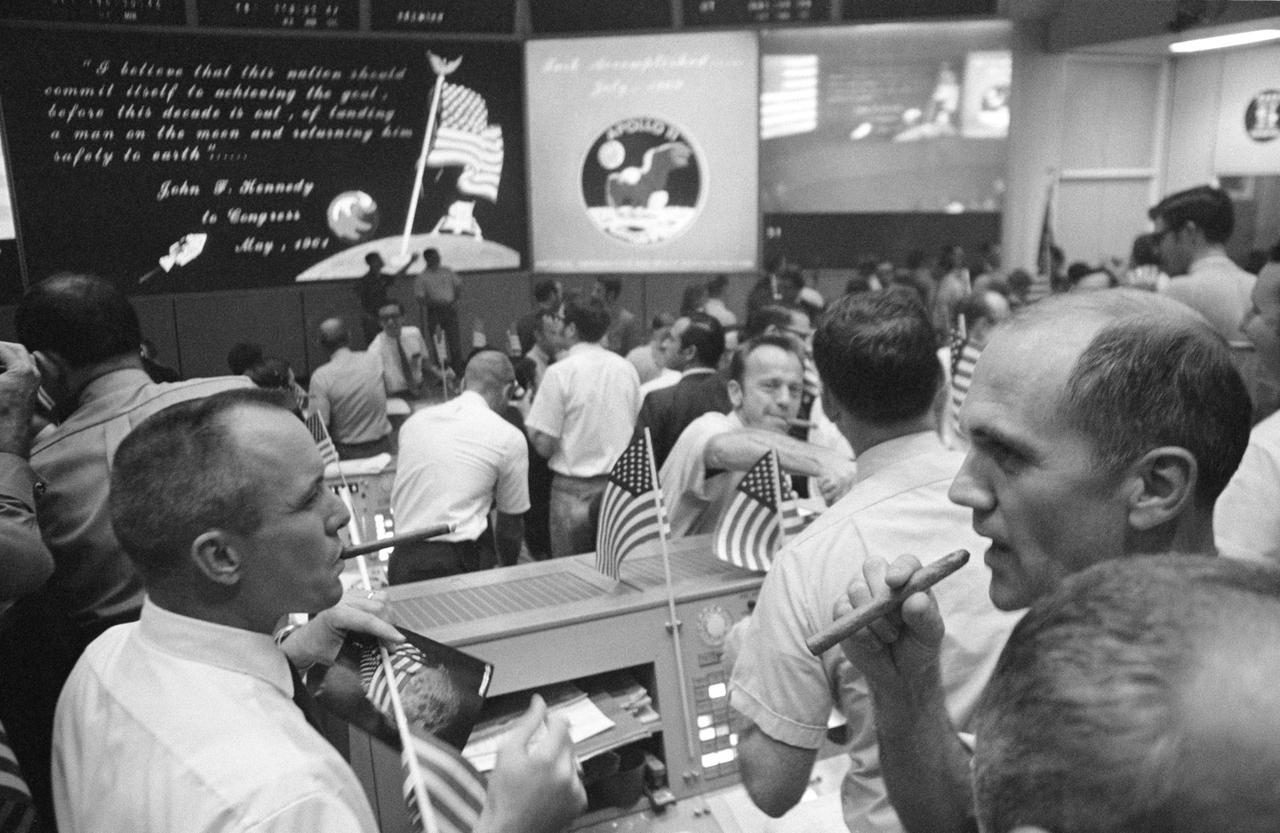
S69-40025 (24 July 1969) --- Overall view of the Mission Operations Control Room (MOCR) in the Mission Control Center (MCC), Building 30, Manned Spacecraft Center (MSC), showing the…
Inspect NASA record
S69-40025 (24 July 1969) --- Overall view of the Mission Operations Control Room (MOCR) in the Mission Control Center (MCC), Building 30, Manned Spacecraft Center (MSC), showing the flight controllers celebrating the successful conclusion of the Apollo 11 lunar landing mission.
- Record ID
- S69-40025
- NASA center
- JSC
- Date
- 1969-07-25
- Credit
- 1996-98 AccuSoft Inc., All right
JSC · 1968-12-25 · S68-56007
Mission Control Center (MCC) - Apollo 8
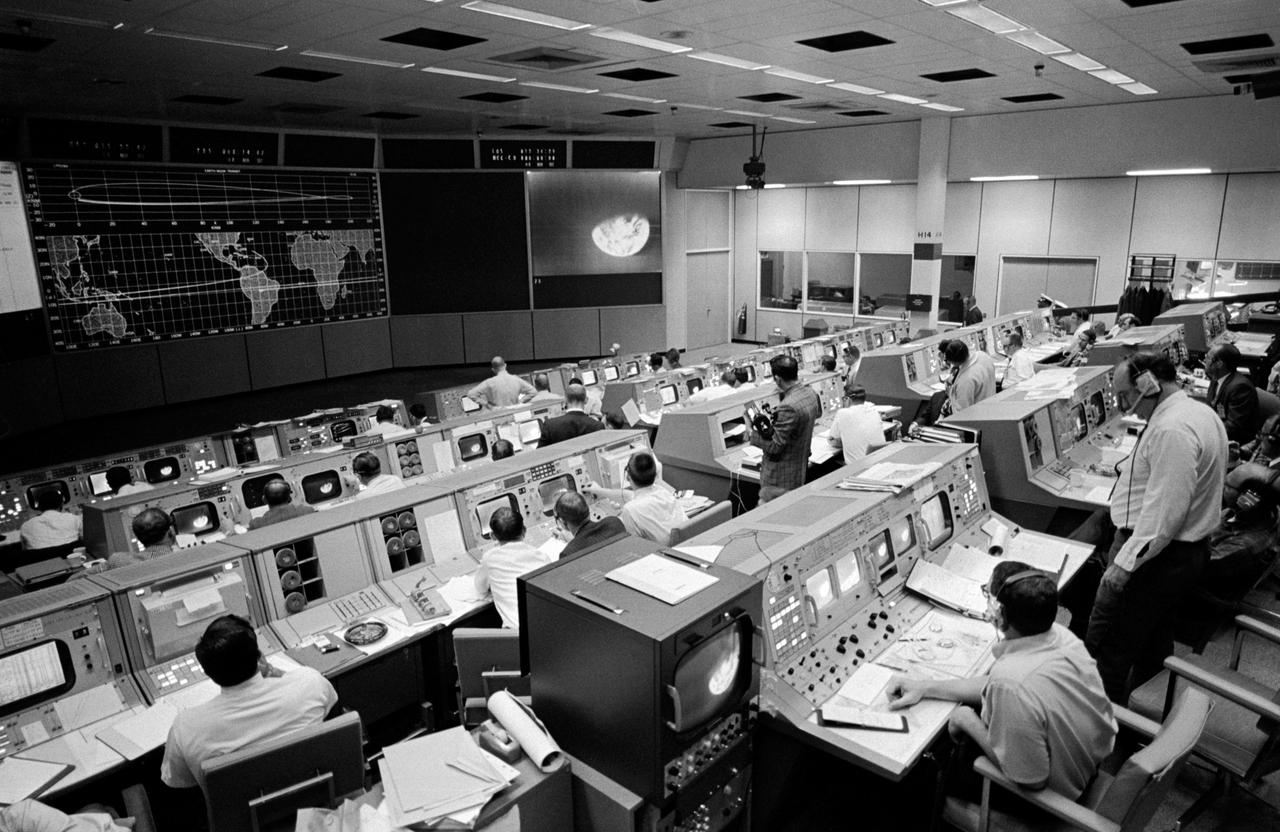
S68-56007 (23 Dec. 1968) --- Overall view of the Mission Operations Control Room in the Mission Control Center, Building 30, on the third day of the Apollo 8…
Inspect NASA record
S68-56007 (23 Dec. 1968) --- Overall view of the Mission Operations Control Room in the Mission Control Center, Building 30, on the third day of the Apollo 8 lunar orbit mission. Seen on the television monitor is a picture of Earth which was telecast from the Apollo 8 spacecraft 176,000 miles away.
- Record ID
- S68-56007
- NASA center
- JSC
- Date
- 1968-12-25
- Keywords
- APOLLO 8 FLIGHT, FLIGHT CONTROL

JSC · 1969-07-25 · s69-40022
View of Mission Control Center celebrating conclusion of Apollo 11 mission
S69-40022 (24 July 1969) --- Overall view of the Mission Operations Control Room (MOCR) in the Mission Control Center (MCC), Building 30, Manned Spacecraft Center (MSC), showing the…
Inspect NASA record
S69-40022 (24 July 1969) --- Overall view of the Mission Operations Control Room (MOCR) in the Mission Control Center (MCC), Building 30, Manned Spacecraft Center (MSC), showing the flight controllers celebrating the successful conclusion of the Apollo 11 lunar landing mission.
- Record ID
- s69-40022
- NASA center
- JSC
- Date
- 1969-07-25
JSC · 1969-07-25 · S69-40023
MISSION CONTROL CENTER (MCC) - CELEBRATION - CONCLUSION - APOLLO 11 MISSION - MSC
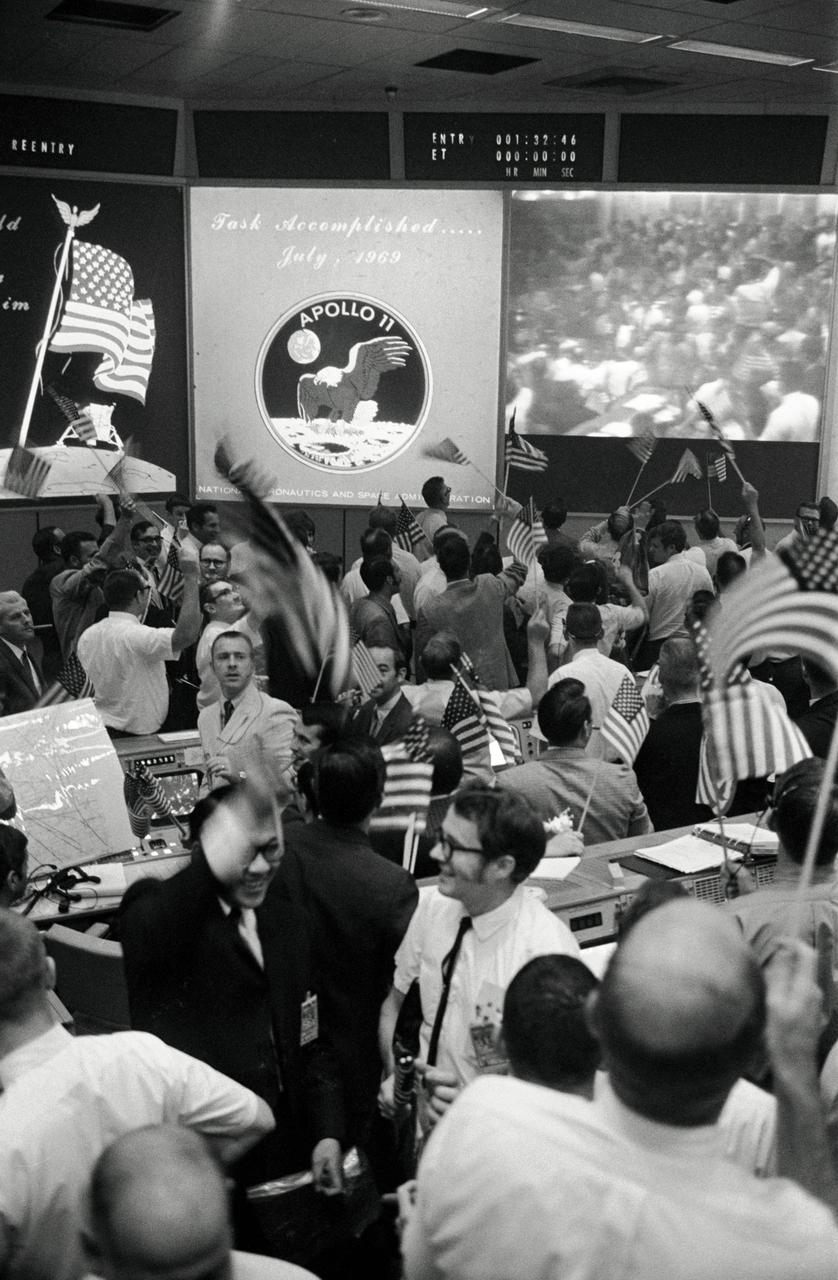
S69-40023 (24 July 1969) --- Overall view of the Mission Operations Control Room (MOCR) in the Mission Control Center (MCC), Building 30, Manned Spacecraft Center (MSC), showing the…
Inspect NASA record
S69-40023 (24 July 1969) --- Overall view of the Mission Operations Control Room (MOCR) in the Mission Control Center (MCC), Building 30, Manned Spacecraft Center (MSC), showing the flight controllers celebrating the successful conclusion of the Apollo 11 lunar landing mission.
- Record ID
- S69-40023
- NASA center
- JSC
- Date
- 1969-07-25
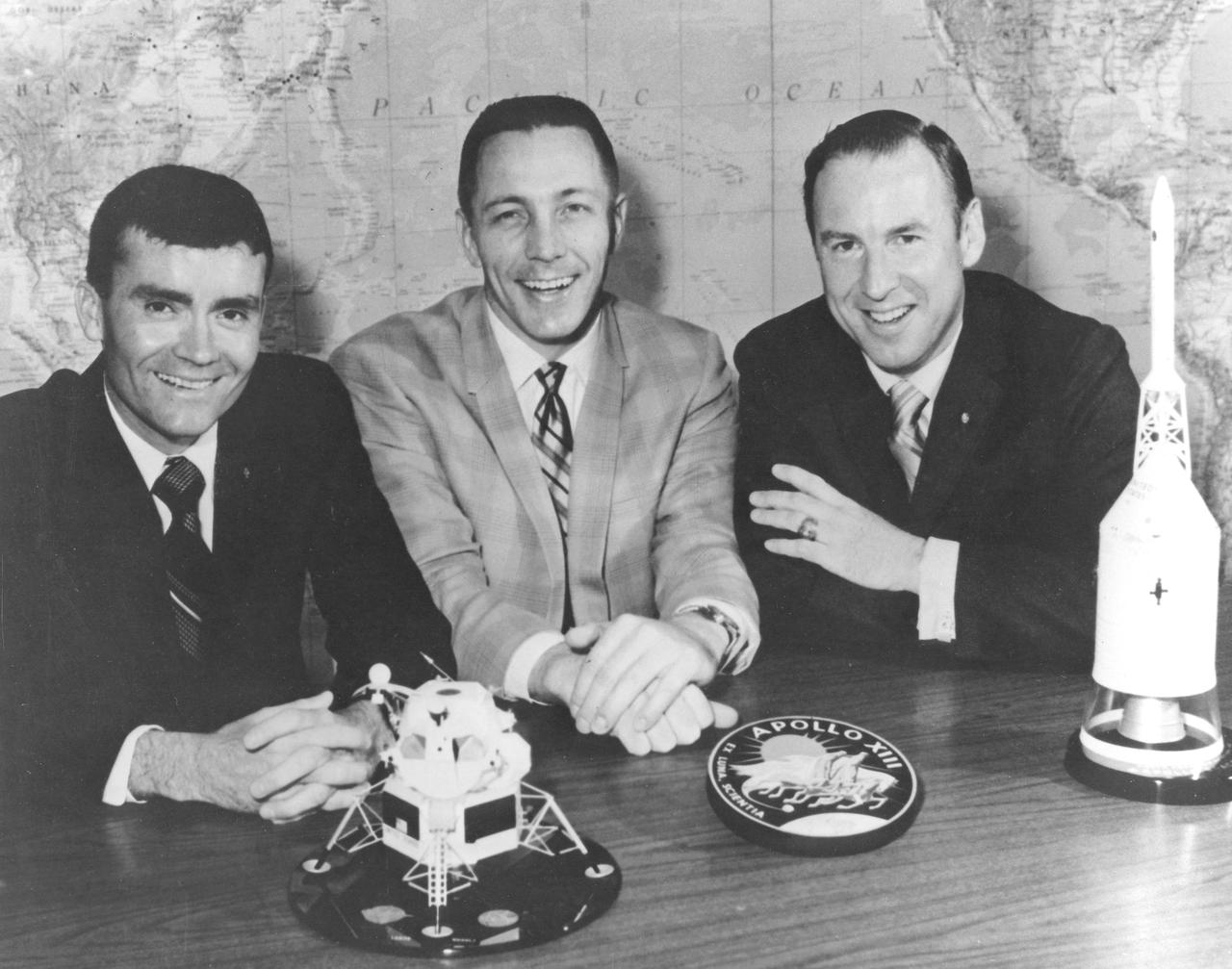
MSFC · 1970-01-01 · 7008012
Saturn Apollo Program
Apollo 13 astronauts Fred Haise, John Swigert, and James Lovell are pictured during the press conference after their ill-fated mission. The Apollo 13 mission (the third lunar landing…
Inspect NASA record
Apollo 13 astronauts Fred Haise, John Swigert, and James Lovell are pictured during the press conference after their ill-fated mission. The Apollo 13 mission (the third lunar landing mission) was aborted after 56 hours of flight, 205,000 miles from Earth, when an oxygen tank in the service module exploded.
- Record ID
- 7008012
- NASA center
- MSFC
- Date
- 1970-01-01
- Keywords
- Apollo 13, Haise, Swigert, Lovell
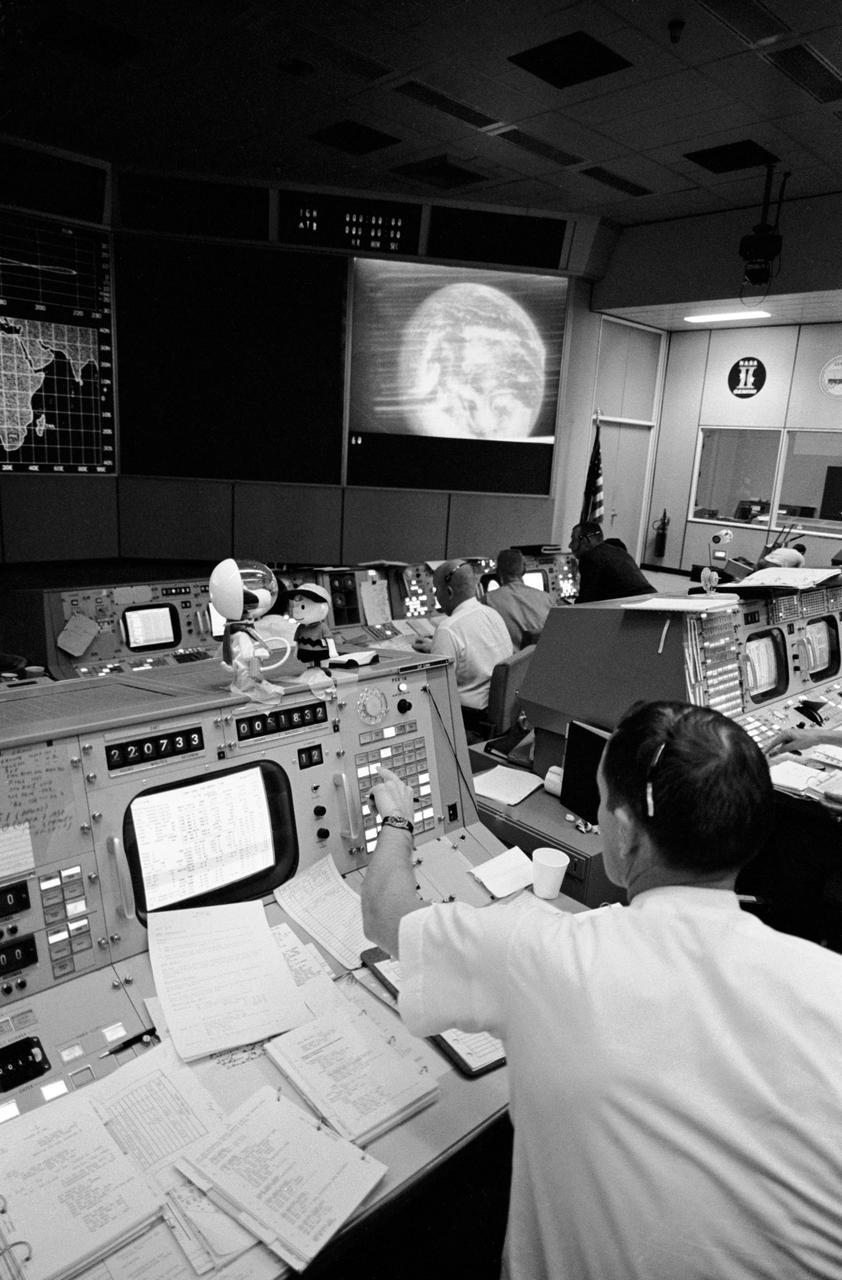
JSC · 1969-05-19 · S69-34040
APOLLO X - DUKE, MICHAEL B., DR. - MSC
S69-34040 (18 May 1969) --- Partial view of activity in the Mission Operations Control Room in the Mission Control Center, Building 30, on the first day of the…
Inspect NASA record
S69-34040 (18 May 1969) --- Partial view of activity in the Mission Operations Control Room in the Mission Control Center, Building 30, on the first day of the Apollo 10 lunar orbit mission. The television monitor shows a picture of Earth made during the second telecast from the Apollo 10's color TV camera.
- Record ID
- S69-34040
- NASA center
- JSC
- Date
- 1969-05-19
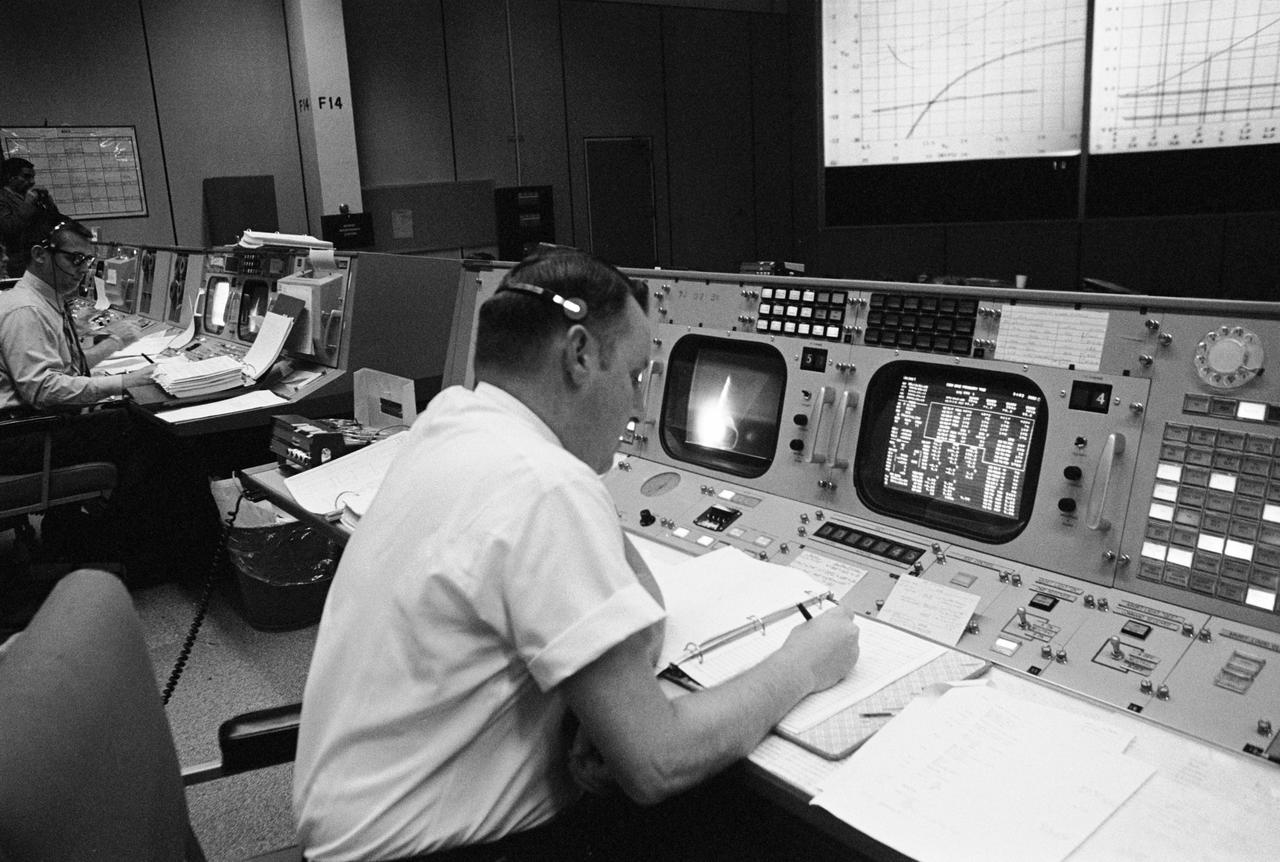
JSC · 1968-12-21 · S68-55742
Clifford Charlesworth seated at his console in Mission Control Room
S68-55742 (21 Dec. 1968) --- Clifford E. Charlesworth, Apollo 8 "Green Team" flight director, is seated at his console in the Mission Operations Control Room in the Mission…
Inspect NASA record
S68-55742 (21 Dec. 1968) --- Clifford E. Charlesworth, Apollo 8 "Green Team" flight director, is seated at his console in the Mission Operations Control Room in the Mission Control Center, Building 30, during the launch of the Apollo 8 (Spacecraft 103/Saturn 503) manned lunar orbit space mission.
- Record ID
- S68-55742
- NASA center
- JSC
- Date
- 1968-12-21
- Keywords
- APOLLO 8, APOLLO PROJECT, CONSOLES, FLIGHT CONTROL, GROUND BASED CONTROL, INTEGRATED MISSION CONTROL CENTER, JOHNSON SPACE CENTER, PERSONNEL
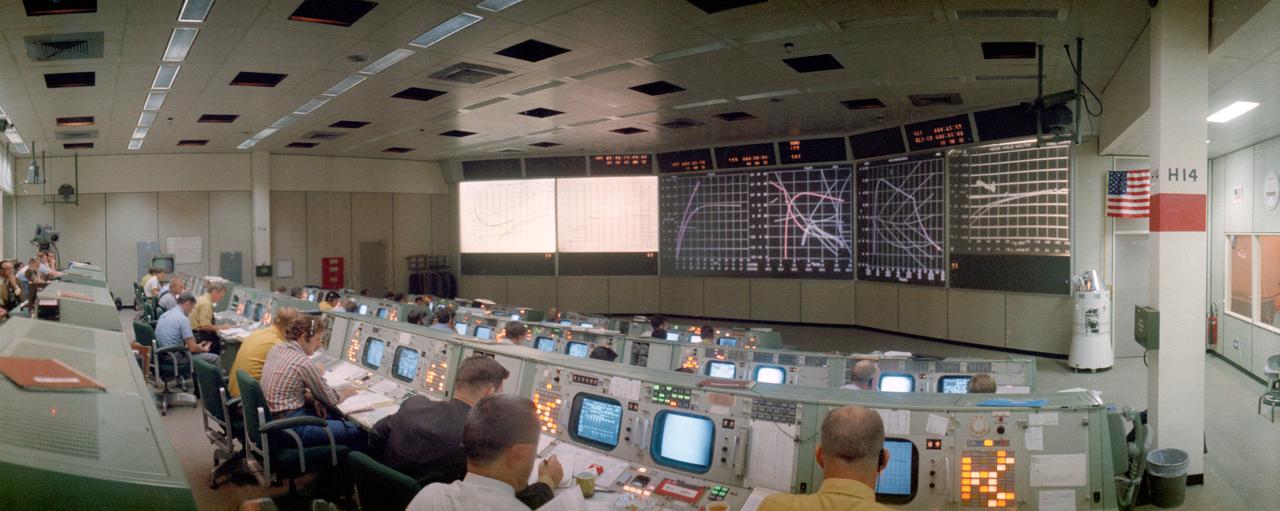
JSC · 1971-07-26 · S71-41357
Mission Control Center (MCC) - Apollo 15 Launch - MSC
S71-41357 (26 July 1971) --- An overall, wide-angle lens view of activity in the Mission Operations Control Room in the Mission Control Center minutes after the launch of…
Inspect NASA record
S71-41357 (26 July 1971) --- An overall, wide-angle lens view of activity in the Mission Operations Control Room in the Mission Control Center minutes after the launch of the Apollo 15 lunar landing mission. Ground elapsed time was 45 minutes and 42 seconds when this photograph was taken.
- Record ID
- S71-41357
- NASA center
- JSC
- Date
- 1971-07-26
- Keywords
- FLIGHT CONTROL, GROUND BASED CONTROL, LAUNCHING, MISSION CONTROL CENTER
JPL · 2025-08-26 · PIA26596
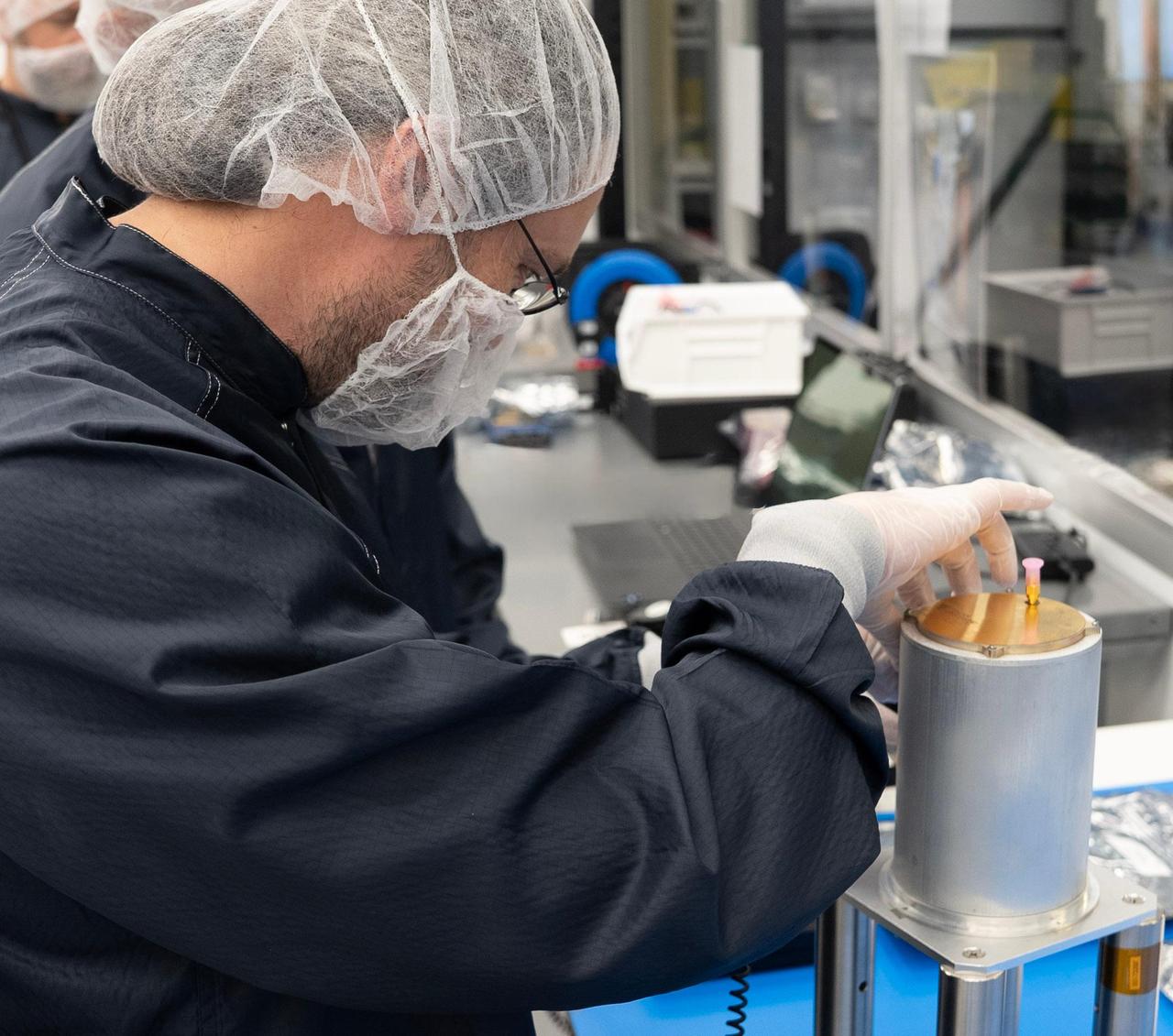
JPL's User Terminal Payload Delivered to Firefly
Engineer Emmanuel Decrossas of NASA's Jet Propulsion Laboratory in Southern California makes an adjustment to an antenna's connector, part of a NASA telecommunications payload called User Terminal, at…
Inspect NASA record
Engineer Emmanuel Decrossas of NASA's Jet Propulsion Laboratory in Southern California makes an adjustment to an antenna's connector, part of a NASA telecommunications payload called User Terminal, at Firefly Aerospace's facility in Cedar Park, Texas, in August 2025. Figure A (https://photojournal.jpl.nasa.gov/figures/PIA26596_figA.jpg) shows members of the team from JPL and NASA (dark blue) and Firefly (white) with the User Terminal antenna, radio, and other components on the bench behind them. Managed by JPL, the User Terminal will test a new, low-cost lunar communications system that future missions to the Moon's far side could use to transfer data to and from Earth via lunar relay satellite. The User Terminal payload will be installed atop Firefly's Blue Ghost Mission 2 lunar lander, which is slated to launch to the Moon's far side in 2026 under NASA's CLPS (Commercial Lunar Payload Services) initiative. NASA's Apollo missions brought large and powerful telecommunications systems to the lunar near-side surface to communicate directly with Earth. But spacecraft on the far side will not have that option because only the near side of the Moon is visible to Earth. Sending messages between the Moon and Earth via a relay orbiter enables communication with the lunar far side and improves it at the Moon's poles. The User Terminal will for the first time test such a setup for NASA by using a compact, lightweight software defined radio, antenna, and related hardware to communicate with a satellite that Blue Ghost Mission 2 is delivering to lunar orbit: ESA's (the European Space Agency's) Lunar Pathfinder. The User Terminal radio and antenna installed on the Blue Ghost lander will be used to commission Lunar Pathfinder, sending test data back and forth. After the lander ceases operations as planned at the end of a single lunar day (about 14 Earth days), a separate User Terminal radio and antenna installed on LuSEE-Night – another payload on the lander – will send LuSEE-Night's data to Lunar Pathfinder, which will relay the information to a commercial network of ground stations on Earth. LuSEE-Night is a radio telescope that expected to operate for at least 1½ years; it is a joint effort by NASA, the U.S. Department of Energy, and University of California, Berkeley's Space Sciences Laboratory. Additionally, User Terminal will be able to communicate with another satellite that's being delivered to lunar orbit by Blue Ghost Mission 2: Firefly's own Elytra Dark orbital vehicle. The hardware on the lander is only part of the User Terminal project, which was also designed to implement a new S-band two-way protocol, or standard, for short-range space communications between entities on the lunar surface (such as rovers and landers) and lunar orbiters, enabling reliable data transfer between them. The standard is a new version of a space communications protocol called Proximity-1 that was initially developed more than two decades ago for use at Mars by an international standard body called the Consultative Committee for Space Data Systems (CCSDS), of which NASA is a member agency. The User Terminal team made recommendations to CCSDS on the development of the new lunar S-band standard, which was specified in 2024. The new standard will enable lunar orbiters and surface spacecraft from various entities – NASA and other civil space agencies as well as industry and academia – to communicate with each other, a concept known as interoperability. At Mars, NASA rovers communicate with various Red Planet orbiters using the Ultra-High Frequency (UHF) radio band version of the Proximity-1 standard. On the Moon's far side, use of UHF is reserved for radio astronomy science; so a new lunar standard was needed using a different frequency range, S-band, as were more efficient modulation and coding schemes to better fit the available frequency spectrum specified by the new standard. User Terminal is funded by NASA's Exploration Science Strategy and Integration Office, part of the agency's Science Mission Directorate, which manages the CLPS initiative. JPL manages the project and supported development of the new S-band radio standard and the payload in coordination with Vulcan Wireless in Carlsbad, California, which built the radio. Caltech in Pasadena manages JPL for NASA. https://photojournal.jpl.nasa.gov/catalog/PIA26596
- Record ID
- PIA26596
- NASA center
- JPL
- Date
- 2025-08-26
- Credit
- Firefly Aerospace
- Keywords
- Blue Ghost Mission 2, User Terminal

KSC · 2021-03-26 · KSC-20210326-PH-ILW01_0015
MSolo Connectivity Test
Kevin Smith, software team and science team liaison for NASA’s Mass Spectrometer observing lunar operations (MSolo), takes part in a joint simulation of the Peregrine One Mission on…
Inspect NASA record
Kevin Smith, software team and science team liaison for NASA’s Mass Spectrometer observing lunar operations (MSolo), takes part in a joint simulation of the Peregrine One Mission on March 26, 2021, at NASA’s Kennedy Space Center in Florida, where MSolo connected from inside the Neil Armstrong Operations and Checkout Building to Astrobotic’s mission control facility in Pittsburgh, Pennsylvania. MSolo is a commercial off-the-shelf mass spectrometer modified to work in space and it will help analyze the chemical makeup of landing sites on the Moon, as well as study water on the lunar surface. This was the first mission round of simulations for Peregrine Mission One to develop and refine procedures between Astrobotic’s Peregrine Lander and MSolo. Later, there will be other simulations with multiple instruments. Peregrine Mission One will be one of NASA’s first Commercial Lunar Payload Delivery Service (CLPS) missions where under the Artemis program, commercial deliveries beginning in 2021 will perform science experiments, test technologies and demonstrate capabilities to help NASA explore the Moon and prepare for human missions.
- Record ID
- KSC-20210326-PH-ILW01_0015
- NASA center
- KSC
- Date
- 2021-03-26
- Credit
- NASA/Isaac Watson
- Keywords
- Connectivity Test, KSC, Kennedy Space Center, MSolo, NASA, Operations and Control Building