
Update Site (from NASA)
Explore NASA’s Image and Video Library.
Suggest one object per day for the Interstellar Minds collection. We review each suggestion before adding it.
Sign in to suggest a Marvel.
Find a NASA image ID. Open a NASA record and copy its ID from the end of the details URL.
NASA image records
KSC · 2020-09-25 · KSC-20200925-PH-GEB02_0014
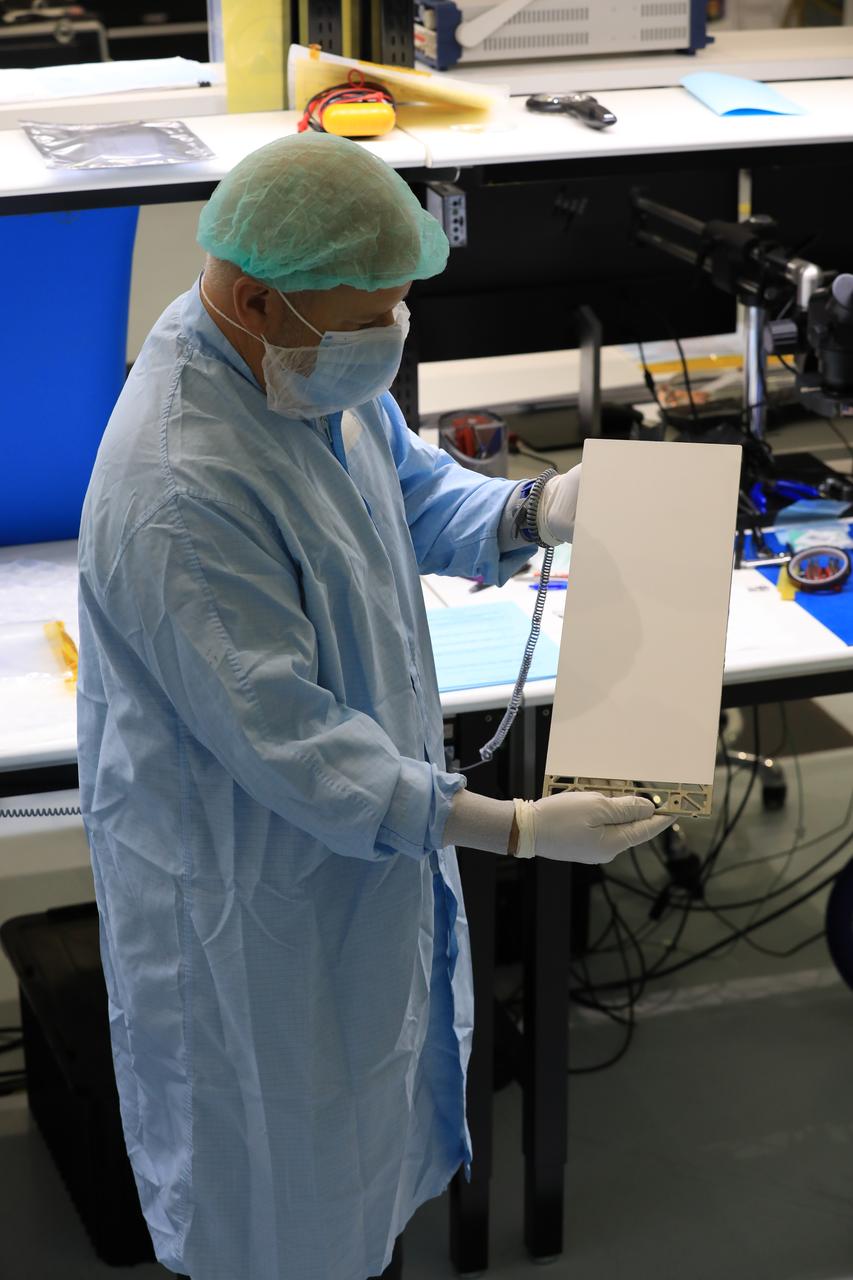
MSolo Radiator Work
Engineers and technicians at NASA’s Kennedy Space Center in Florida prepare to install the radiator for the Mass Spectrometer Observing Lunar Operations (MSolo) instrument inside the Space Station…
Inspect NASA record
Engineers and technicians at NASA’s Kennedy Space Center in Florida prepare to install the radiator for the Mass Spectrometer Observing Lunar Operations (MSolo) instrument inside the Space Station Processing Facility on Sept. 25, 2020. MSolo will help analyze the chemical makeup of landing sites on the Moon, as well as study water on the lunar surface. The radiator will help keep the instrument’s temperature stable in the extreme heat and cold it will encounter. MSolo instruments are scheduled to launch on multiple robotic missions as part of NASA’s Commercial Lunar Payload Services (CLPS), with the first of these missions exploring Lacus Mortis, a large crater on the near side of the Moon, beginning in 2021. MSolo also will be one of three instruments on the agency’s water-hunting Volatiles Investigating Polar Exploration Rover, VIPER, scheduled to launch to the Moon’s South Pole in late 2023.
- Record ID
- KSC-20200925-PH-GEB02_0014
- NASA center
- KSC
- Date
- 2020-09-25
- Credit
- NASA/Glenn Benson
- Keywords
- NASA, Kennedy Space Center, KSC, Space Station Processing Facility, SSPF, space exploration, science, lunar instruments, Mass Spectrometer Observing Lunar Operations, MSOLO, Commercial Lunar Payload Services, CLPS

KSC · 2022-02-14 · KSC-20220214-PH-KLS01_0021
MSolo EMI Testing
Nate Cain, an electronics engineer with the Advanced Engineering Development Branch at NASA’s Kennedy Space Center in Florida, prepares to conduct electromagnetic interference (EMI) testing for the agency’s…
Inspect NASA record
Nate Cain, an electronics engineer with the Advanced Engineering Development Branch at NASA’s Kennedy Space Center in Florida, prepares to conduct electromagnetic interference (EMI) testing for the agency’s Mass Spectrometer Observing Lunar Operations (MSolo) instrument inside the EMI Laboratory on Feb. 14, 2022. These tests will verify that MSolo can control the emissions it will produce during its missions and meets EMI susceptibility requirements as part of its preparation to operate in the lunar environment. The third MSolo to go through EMI testing, this is an engineering development unit representative of the flight unit manifested to fly to the Moon’s South Pole as a payload on the agency’s Volatiles Investigating Polar Exploration Rover (VIPER) in 2023. Researchers and engineers are preparing MSolo instruments to launch on four robotic missions as part of NASA’s Commercial Lunar Payload Services (CLPS) – the first of which is slated for later this year. MSolo will help analyze the chemical makeup of landing sites on the Moon, with the later missions also studying water on the lunar surface.
- Record ID
- KSC-20220214-PH-KLS01_0021
- NASA center
- KSC
- Date
- 2022-02-14
- Credit
- NASA/Kim Shiflett
- Keywords
- CLPS, EMI, Electromagnetic interference testing, KSC, Kennedy Space Center, MSolo, Mass Spectrometer Observing Lunar Operations, Moon, NASA, VIPER, Volatiles Investigating Polar Exploration Rover, lunar
MSFC · 1969-07-15 · 6900555
Saturn Apollo Program
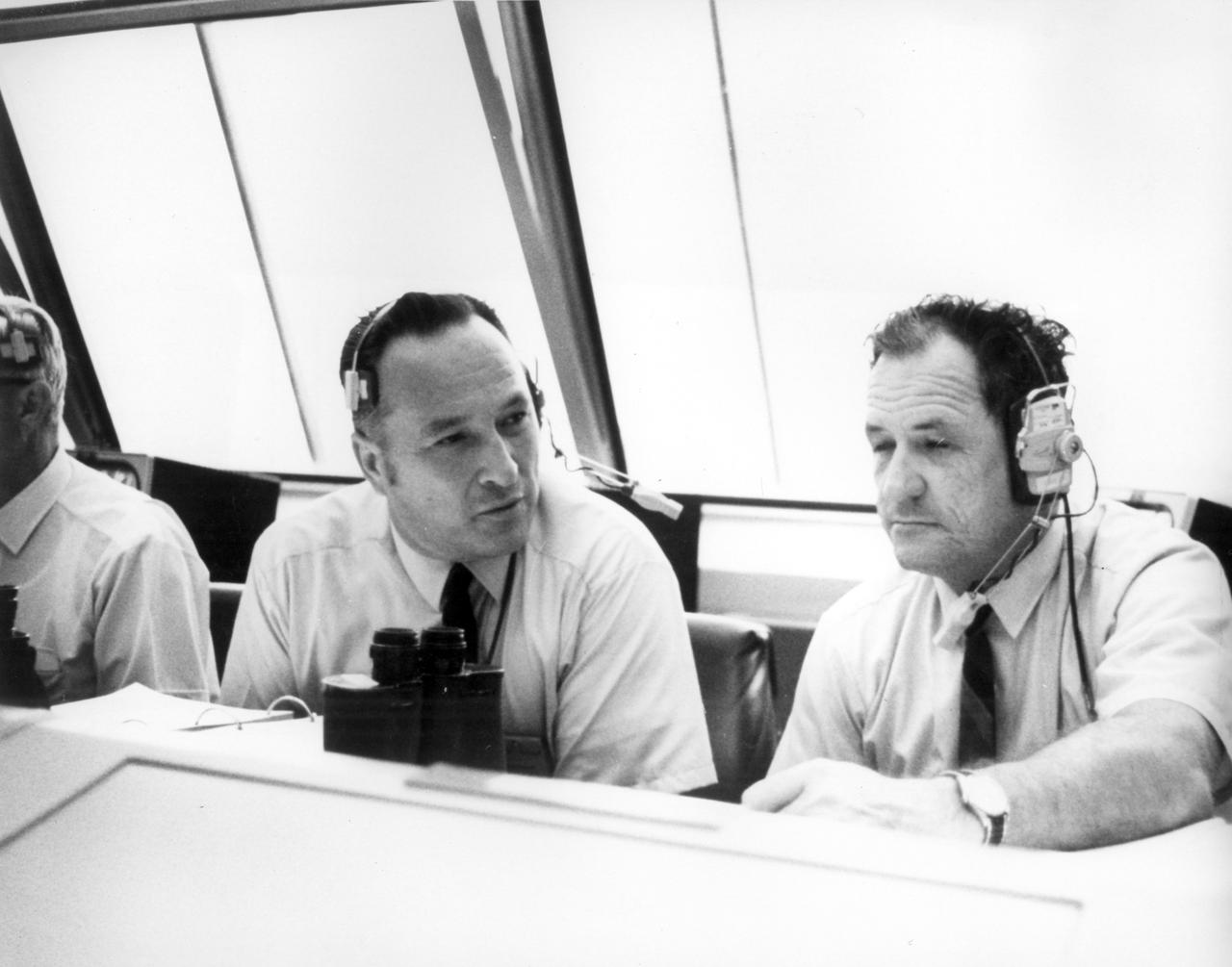
Lee B. James (left), manager of the Saturn Program at the Marshall Space flight Center (MSFC), talks with Isom Pigell in the firing room 1 of the Kennedy…
Inspect NASA record
Lee B. James (left), manager of the Saturn Program at the Marshall Space flight Center (MSFC), talks with Isom Pigell in the firing room 1 of the Kennedy Space Center (KSC) control center during the countdown demonstration test for the Apollo 11 mission. The Apollo 11 mission, the first lunar landing mission, launched from the KSC in Florida via the MSFC developed Saturn V launch vehicle on July 16, 1969 and safely returned to Earth on July 24, 1969. Aboard the space craft were astronauts Neil A. Armstrong, commander; Michael Collins, Command Module (CM) pilot; and Edwin E. (Buzz) Aldrin Jr., Lunar Module (LM) pilot. The CM, “Columbia”, piloted by Collins, remained in a parking orbit around the Moon while the LM, “Eagle’’, carrying astronauts Armstrong and Aldrin, landed on the Moon. On July 20, 1969, Armstrong was the first human to ever stand on the lunar surface, followed by Aldrin. During 2½ hours of surface exploration, the crew collected 47 pounds of lunar surface material for analysis back on Earth. With the success of Apollo 11, the national objective to land men on the Moon and return them safely to Earth had been accomplished.
- Record ID
- 6900555
- NASA center
- MSFC
- Date
- 1969-07-15
- Keywords
- Apollo 11, Moon, Firing Room 1, Control Center, KSC, Countdown Demonstration Test, James, Pigell
JPL · 2023-12-13 · PIA26161
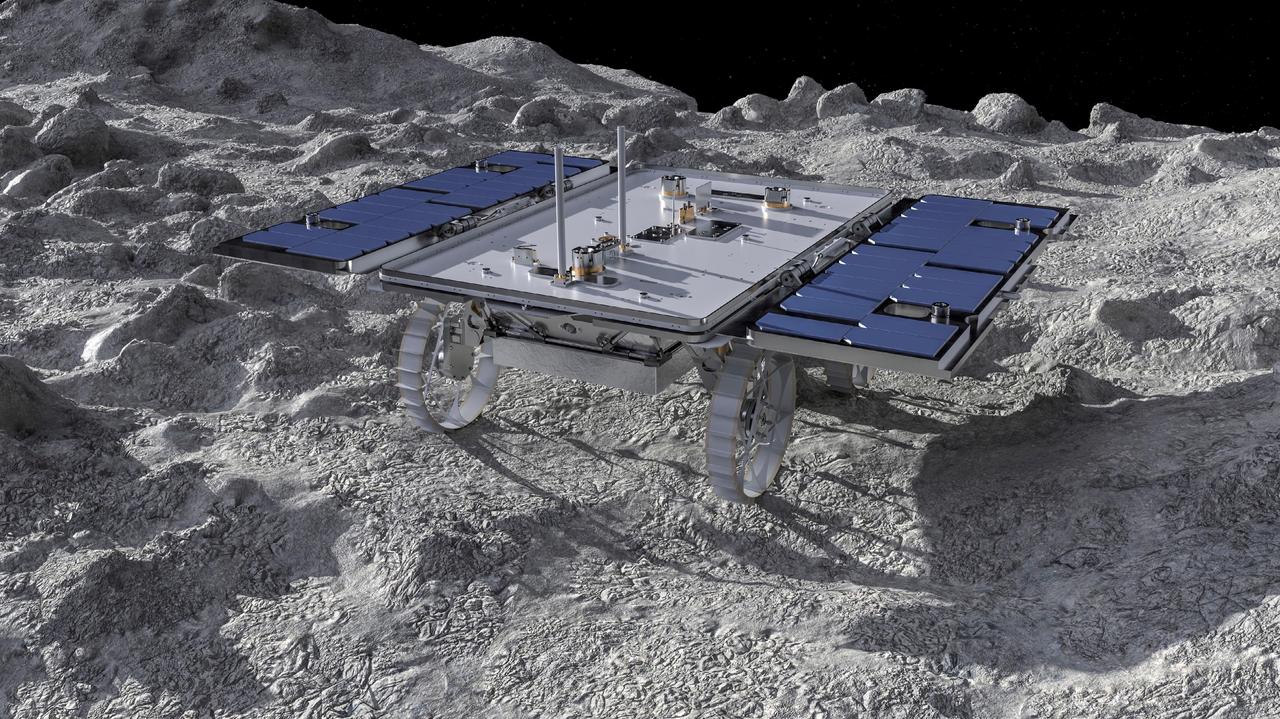
CADRE Rover on the Moon (Artist's Concept)
This artist's concept depicts a small rover – part of NASA's CADRE (Cooperative Autonomous Distributed Robotic Exploration) technology demonstration headed for the Moon – on the lunar surface.…
Inspect NASA record
This artist's concept depicts a small rover – part of NASA's CADRE (Cooperative Autonomous Distributed Robotic Exploration) technology demonstration headed for the Moon – on the lunar surface. Motiv Space Systems in Pasadena, California, created the rendering and is collaborating with NASA's Jet Propulsion Laboratory on critical rover and mobility functions. Slated to arrive aboard a lunar lander in 2024 under NASA's CLPS (Commercial Lunar Payload Services) initiative, CADRE is designed to demonstrate that multiple robots can cooperate and explore together autonomously – without direct input from human mission controllers. A trio of the miniature solar-powered rovers, each about the size of a carry-on suitcase, will explore the Moon as a team, communicating via radio with each other and a base station aboard a lunar lander. By taking simultaneous measurements from multiple locations, CADRE will also demonstrate how multirobot missions can record data impossible for a single robot to achieve – a tantalizing prospect for future missions. Motiv contributed subsystems and hardware elements for three of four CADRE systems, including designing and building the mobility system and rover chassis, the base station, the rover deployers, and the motor controller boards. The company also procured and tested the actuators with the flight motor controller boards. https://photojournal.jpl.nasa.gov/catalog/PIA26161
- Record ID
- PIA26161
- NASA center
- JPL
- Date
- 2023-12-13
- Credit
- Motiv Space Systems
- Keywords
- Cooperative Autonomous Distributed Robotic Exploration (CADRE)
MSFC · 1969-07-15 · 6900623
Saturn Apollo Program
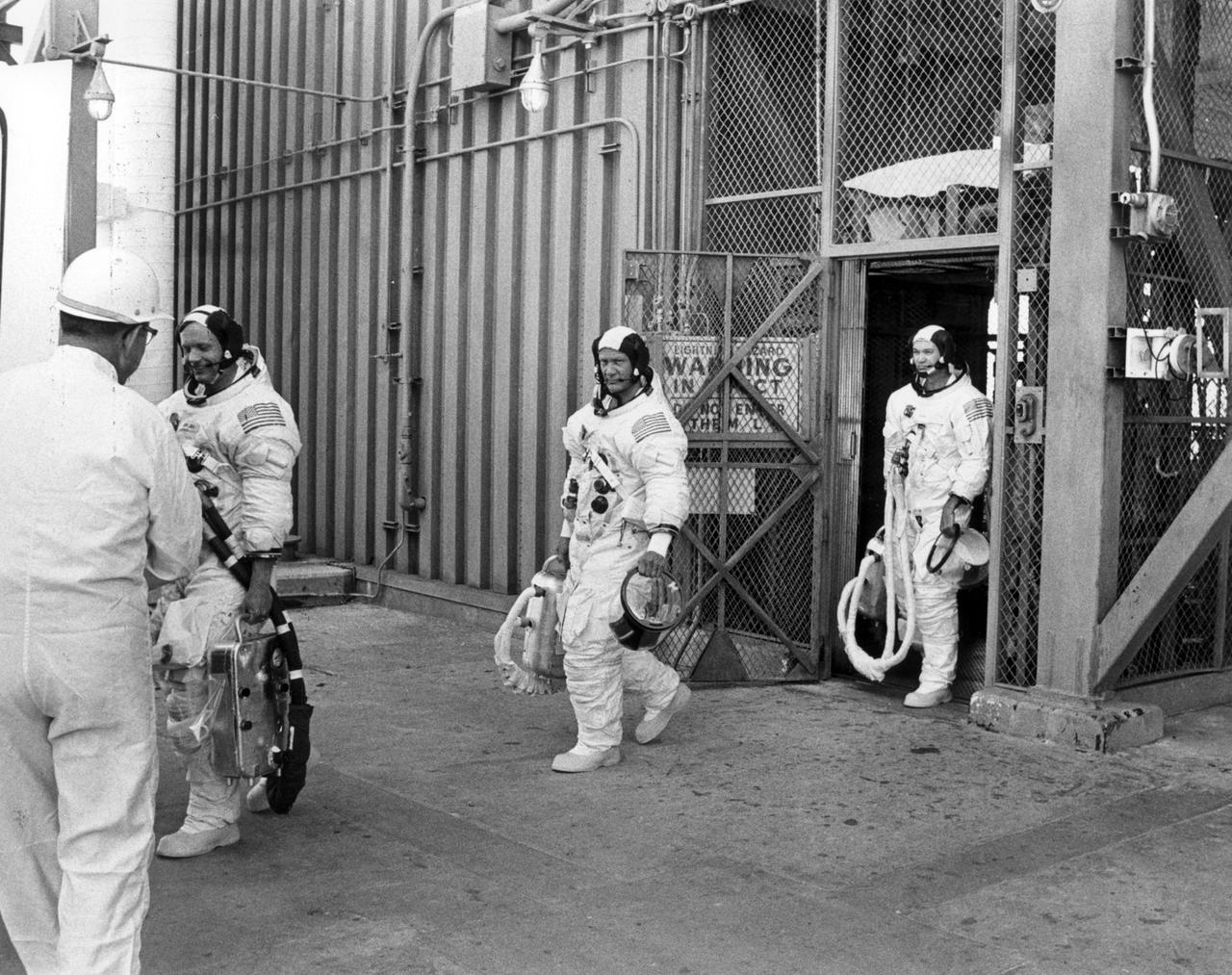
Apollo 11 crew members (left to right) Neil Armstrong, Edwin Aldrin, and Michael Collins, wearing space suits, leave the elevator after descending from the top of the launch…
Inspect NASA record
Apollo 11 crew members (left to right) Neil Armstrong, Edwin Aldrin, and Michael Collins, wearing space suits, leave the elevator after descending from the top of the launch tower. The three had just completed participation in the countdown demonstration test for the upcoming Apollo 11 mission. The Apollo 11 mission, the first lunar landing mission, launched from the Kennedy Space Center (KSC) in Florida via the Marshall Space Flight Center (MSFC) developed Saturn V launch vehicle on July 16, 1969 and safely returned to Earth on July 24, 1969. Aboard the space craft were astronauts Neil A. Armstrong, commander; Michael Collins, Command Module (CM) pilot; and Edwin E. (Buzz) Aldrin Jr., Lunar Module (LM) pilot. The CM, “Columbia”, piloted by Collins, remained in a parking orbit around the Moon while the LM, “Eagle’’, carrying astronauts Armstrong and Aldrin, landed on the Moon. On July 20, 1969, Armstrong was the first human to ever stand on the lunar surface, followed by Aldrin. During 2½ hours of surface exploration, the crew collected 47 pounds of lunar surface material for analysis back on Earth. With the success of Apollo 11, the national objective to land men on the Moon and return them safely to Earth had been accomplished.
- Record ID
- 6900623
- NASA center
- MSFC
- Date
- 1969-07-15
- Keywords
- Apollo 11, Moon, Armstrong, Aldrin, Collins, Countdown Demonstration Test
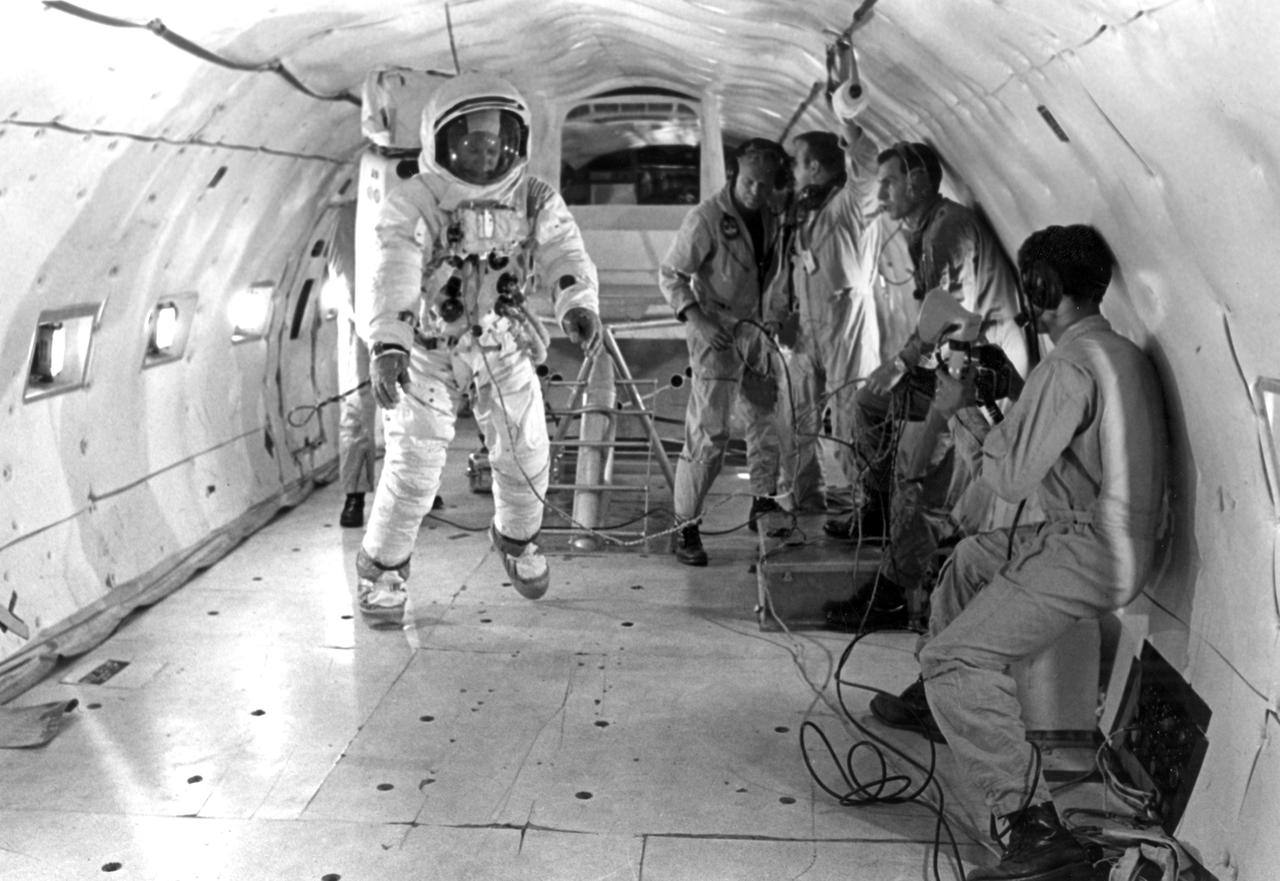
MSFC · 1969-07-09 · 6900619
Saturn Apollo Program
In preparation of the nation’s first lunar landing mission, Apollo 11 crew members underwent training to practice activities they would be performing during the mission. In this photograph,…
Inspect NASA record
In preparation of the nation’s first lunar landing mission, Apollo 11 crew members underwent training to practice activities they would be performing during the mission. In this photograph, astronaut Edwin E. Aldrin, donned in his space suit, gets in more time under weightless conditions aboard a KC-135 aircraft from the Wright-Patterson Air Force Base. The Apollo 11 mission launched from the Kennedy Space Center (KSC) in Florida via the Marshall Space Flight Center (MSFC) developed Saturn V launch vehicle on July 16, 1969 and safely returned to Earth on July 24, 1969. Aboard the space craft were astronauts Neil A. Armstrong, commander; Michael Collins, Command Module (CM) pilot; and Edwin E. (Buzz) Aldrin Jr., Lunar Module (LM) pilot. The CM, “Columbia”, piloted by Collins, remained in a parking orbit around the Moon while the LM, “Eagle’’, carrying astronauts Armstrong and Aldrin, landed on the Moon. On July 20, 1969, Armstrong was the first human to ever stand on the lunar surface, followed by Aldrin. During 2½ hours of surface exploration, the crew collected 47 pounds of lunar surface material for analysis back on Earth. With the success of Apollo 11, the national objective to land men on the Moon and return them safely to Earth had been accomplished.
- Record ID
- 6900619
- NASA center
- MSFC
- Date
- 1969-07-09
- Keywords
- Apollo 11, Moon, Aldrin, Training
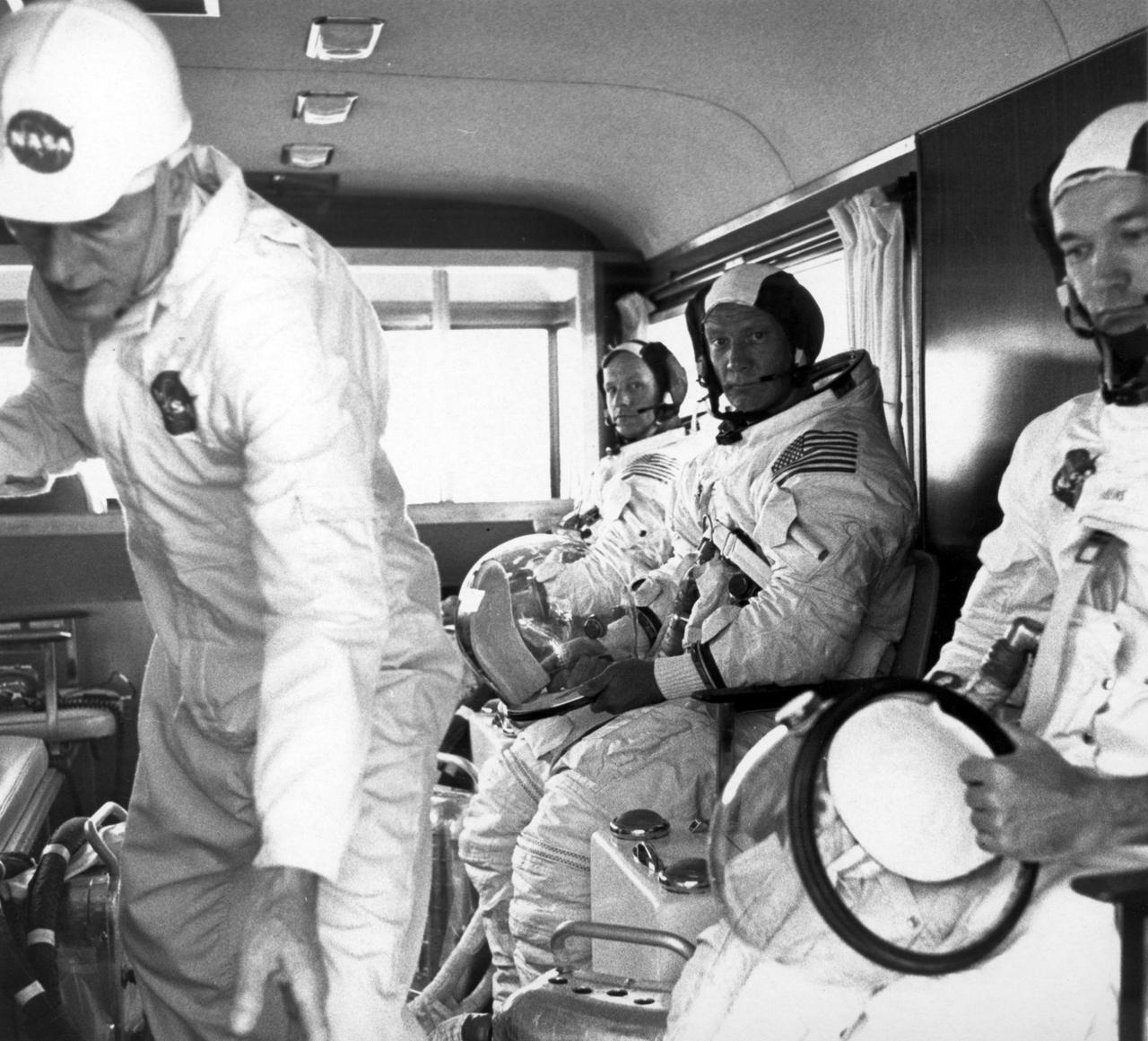
MSFC · 1969-07-15 · 6900622
Saturn Apollo Program
Apollo 11 crew members (rear to front) Neil Armstrong, Edwin Aldrin, and Michael Collins, wearing space suits, ride the van to the launch pad to participate in the…
Inspect NASA record
Apollo 11 crew members (rear to front) Neil Armstrong, Edwin Aldrin, and Michael Collins, wearing space suits, ride the van to the launch pad to participate in the countdown demonstration test for the upcoming Apollo 11 mission. The Apollo 11 mission, the first lunar landing mission, launched from the Kennedy Space Center (KSC) in Florida via the Marshall Space Flight Center (MSFC) developed Saturn V launch vehicle on July 16, 1969 and safely returned to Earth on July 24, 1969. Aboard the space craft were astronauts Neil A. Armstrong, commander; Michael Collins, Command Module (CM) pilot; and Edwin E. (Buzz) Aldrin Jr., Lunar Module (LM) pilot. The CM, “Columbia”, piloted by Collins, remained in a parking orbit around the Moon while the LM, “Eagle’’, carrying astronauts Armstrong and Aldrin, landed on the Moon. On July 20, 1969, Armstrong was the first human to ever stand on the lunar surface, followed by Aldrin. During 2½ hours of surface exploration, the crew collected 47 pounds of lunar surface material for analysis back on Earth. With the success of Apollo 11, the national objective to land men on the Moon and return them safely to Earth had been accomplished.
- Record ID
- 6900622
- NASA center
- MSFC
- Date
- 1969-07-15
- Keywords
- Apollo 11, Moon, Armstrong, Aldrin, Collins, Countdown Demonstration Test
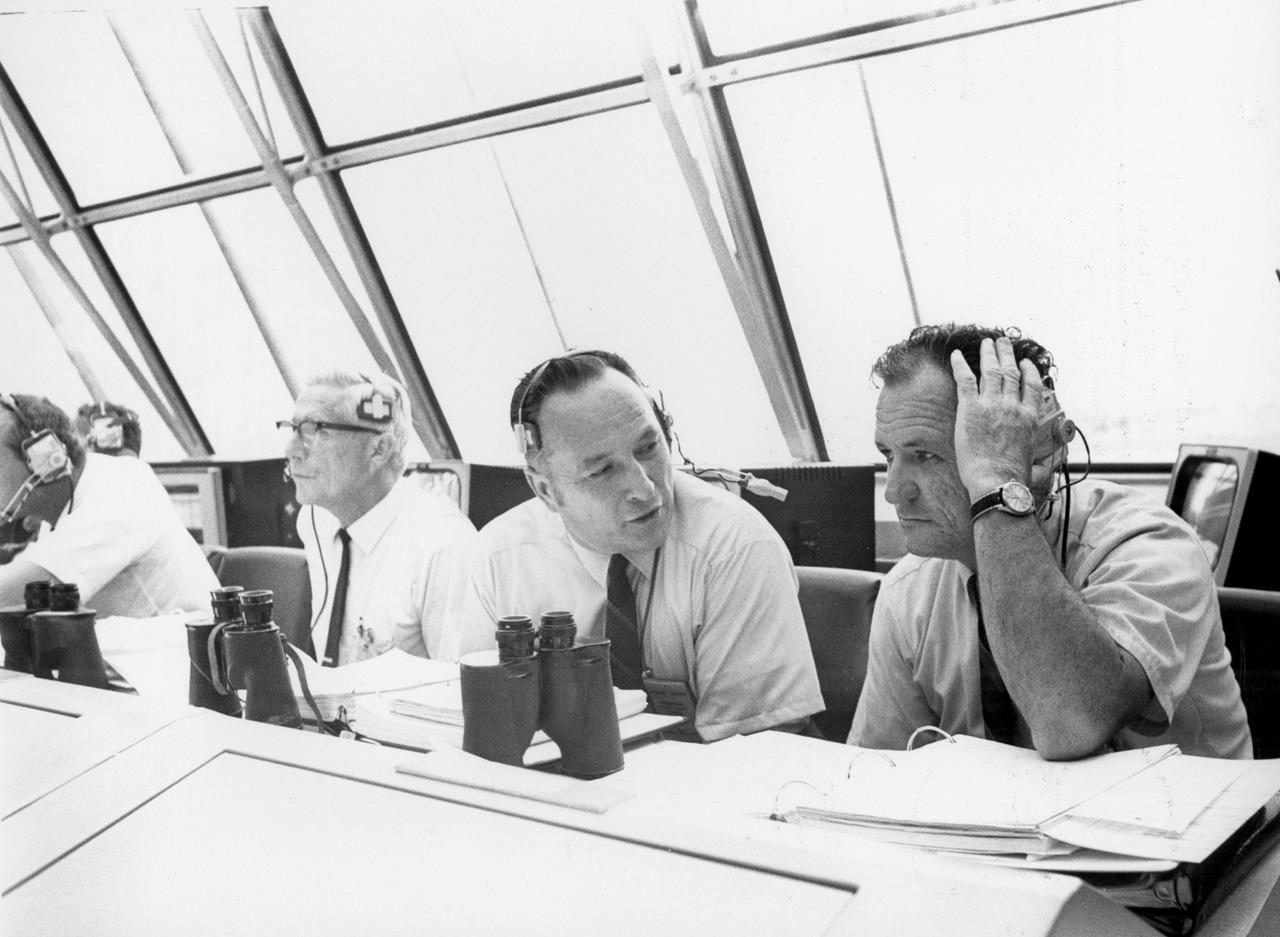
MSFC · 1969-07-15 · 6900554
Saturn Apollo Program
Lee B. James (left), manager of the Saturn Program at the Marshall Space flight Center (MSFC), talks with Isom Pigell in the firing room 1 of the Kennedy…
Inspect NASA record
Lee B. James (left), manager of the Saturn Program at the Marshall Space flight Center (MSFC), talks with Isom Pigell in the firing room 1 of the Kennedy Space Center (KSC) control center during the countdown demonstration test for the Apollo 11 mission. At left is Dr. Hans C. Gruen of KSC. The Apollo 11 mission, the first lunar landing mission, launched from the KSC in Florida via the MSFC developed Saturn V launch vehicle on July 16, 1969 and safely returned to Earth on July 24, 1969. Aboard the space craft were astronauts Neil A. Armstrong, commander; Michael Collins, Command Module (CM) pilot; and Edwin E. (Buzz) Aldrin Jr., Lunar Module (LM) pilot. The CM, “Columbia”, piloted by Collins, remained in a parking orbit around the Moon while the LM, “Eagle’’, carrying astronauts Armstrong and Aldrin, landed on the Moon. On July 20, 1969, Armstrong was the first human to ever stand on the lunar surface, followed by Aldrin. During 2½ hours of surface exploration, the crew collected 47 pounds of lunar surface material for analysis back on Earth. With the success of Apollo 11, the national objective to land men on the Moon and return them safely to Earth had been accomplished.
- Record ID
- 6900554
- NASA center
- MSFC
- Date
- 1969-07-15
- Keywords
- Apollo 11, Moon, Firing Room 1, Control Center, KSC, Countdown Demonstration Test, James, Pigell, Gruen
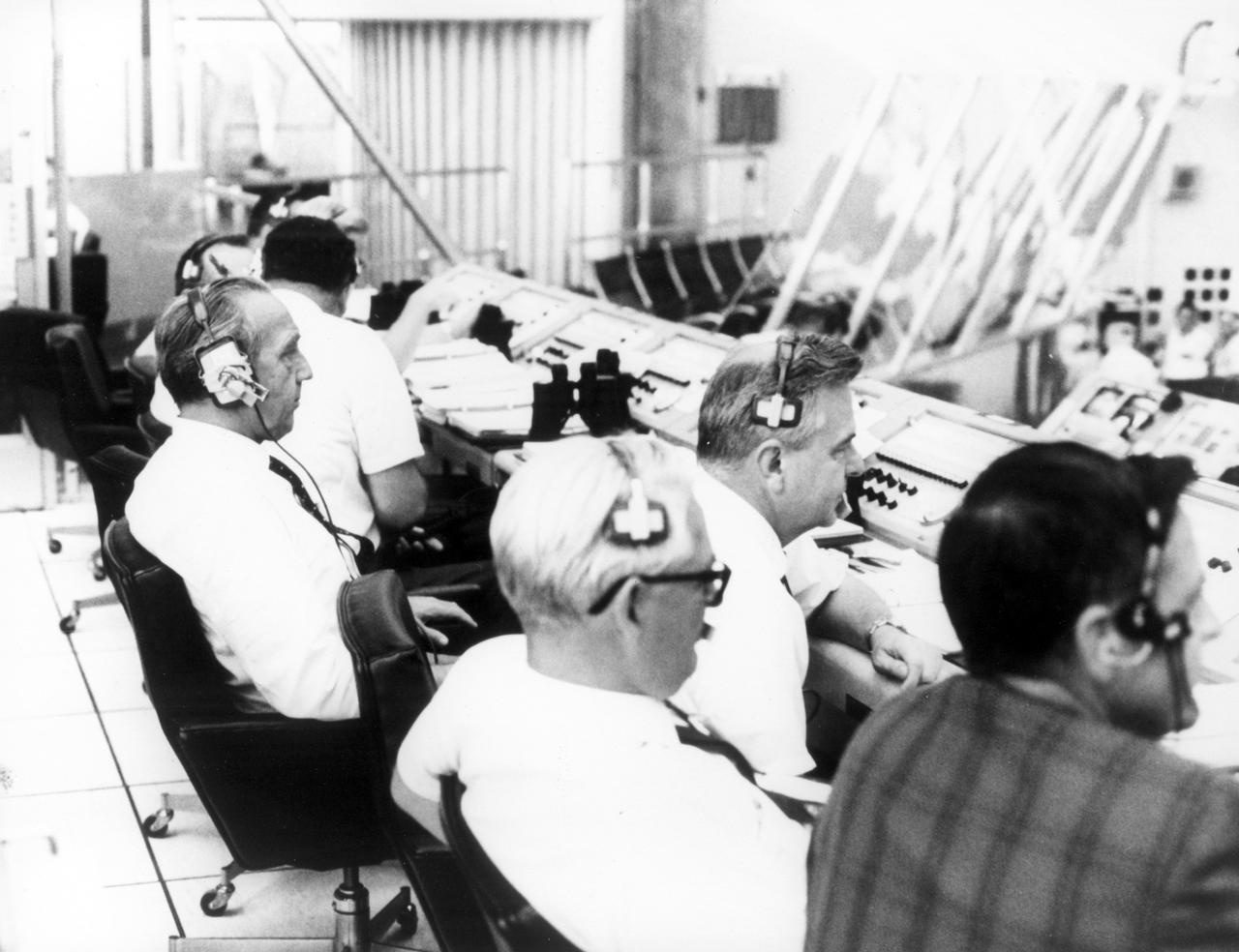
MSFC · 1969-07-15 · 6900564
Saturn Apollo Program
Dr. Kurt Debus, director of the Kennedy Space Flight Center (KSC), participated in the countdown demonstration test for the Apollo 11 mission in firing room 1 of the…
Inspect NASA record
Dr. Kurt Debus, director of the Kennedy Space Flight Center (KSC), participated in the countdown demonstration test for the Apollo 11 mission in firing room 1 of the KSC control center. The Apollo 11 mission, the first lunar landing mission, launched from KSC in Florida via the Marshall Space Flight Center (MSFC) developed Saturn V launch vehicle on July 16, 1969 and safely returned to Earth on July 24, 1969. Aboard the space craft were astronauts Neil A. Armstrong, commander; Michael Collins, Command Module (CM) pilot; and Edwin E. (Buzz) Aldrin Jr., Lunar Module (LM) pilot. The CM, “Columbia”, piloted by Collins, remained in a parking orbit around the Moon while the LM, “Eagle’’, carrying astronauts Armstrong and Aldrin, landed on the Moon. On July 20, 1969, Armstrong was the first human to ever stand on the lunar surface, followed by Aldrin. During 2½ hours of surface exploration, the crew collected 47 pounds of lunar surface material for analysis back on Earth. With the success of Apollo 11, the national objective to land men on the Moon and return them safely to Earth had been accomplished.
- Record ID
- 6900564
- NASA center
- MSFC
- Date
- 1969-07-15
- Keywords
- Apollo 11, Moon, Debus, Firing Room 1, Control Center, KSC, Countdown Demonstration Test
MSFC · 1967-01-09 · 6749737
Saturn Apollo Program
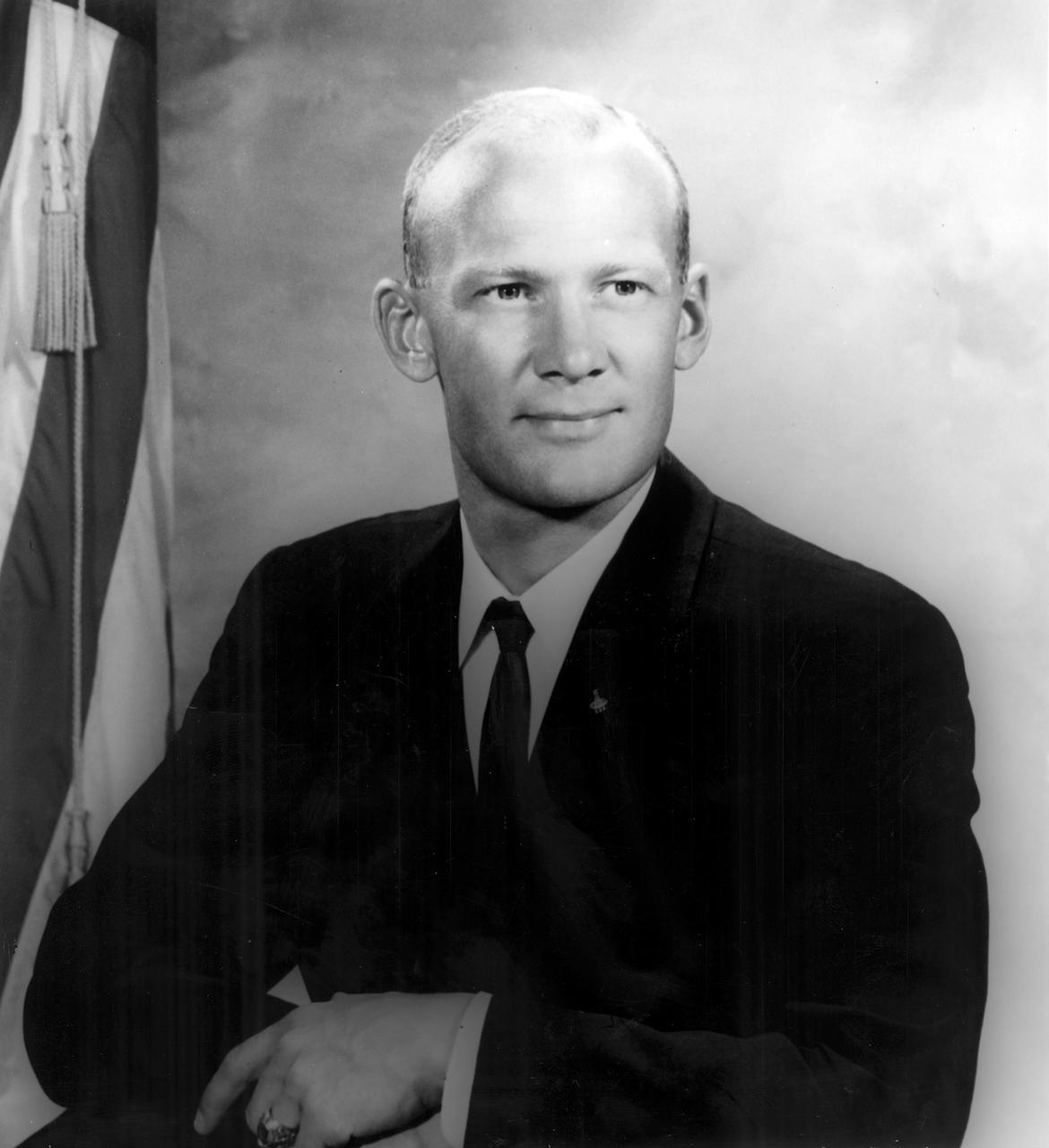
This is the official NASA portrait of astronaut Edwin E. (Buzz) Aldrin. Prior to joining NASA, Aldrin flew 66 combat missions in F-86s while on duty in Korea.…
Inspect NASA record
This is the official NASA portrait of astronaut Edwin E. (Buzz) Aldrin. Prior to joining NASA, Aldrin flew 66 combat missions in F-86s while on duty in Korea. At Nellis Air Force Base, Nevada, he served as an aerial gunnery instructor. Following his assignment as aide to the dean of faculty at the Air Force Academy, Aldrin flew F-100s as a flight commander at Bitburg, Germany. Aldrin was one of the third group of astronauts named by NASA in October 1963 and has logged 289 hours and 53 minutes in space, of which, 7 hours and 52 minutes were spent in Extra Vehicular Activity (EVA). On November 11, 1966, he launched into space aboard the Gemini 12 spacecraft on a 4-day flight, which brought the Gemini program to a successful close. During that mission, Aldrin established a new record for EVA, spending 5-1/2 hours outside the spacecraft. July 16-24, 1969, Aldrin served as lunar module pilot for Apollo 11, the first manned lunar landing mission. Aldrin followed Neil Armstrong onto the lunar surface on July 20, 1969, completing a 2-hour and 15 minute lunar EVA. Aldrin resigned from NASA in July 1971.
- Record ID
- 6749737
- NASA center
- MSFC
- Date
- 1967-01-09
- Keywords
- Aldrin, Official Portrait
JSC · 2022-07-14 · Gateway-Set-1-IAC7-4k-BG_11
Gateway-Set-1-IAC7-4k-BG_11
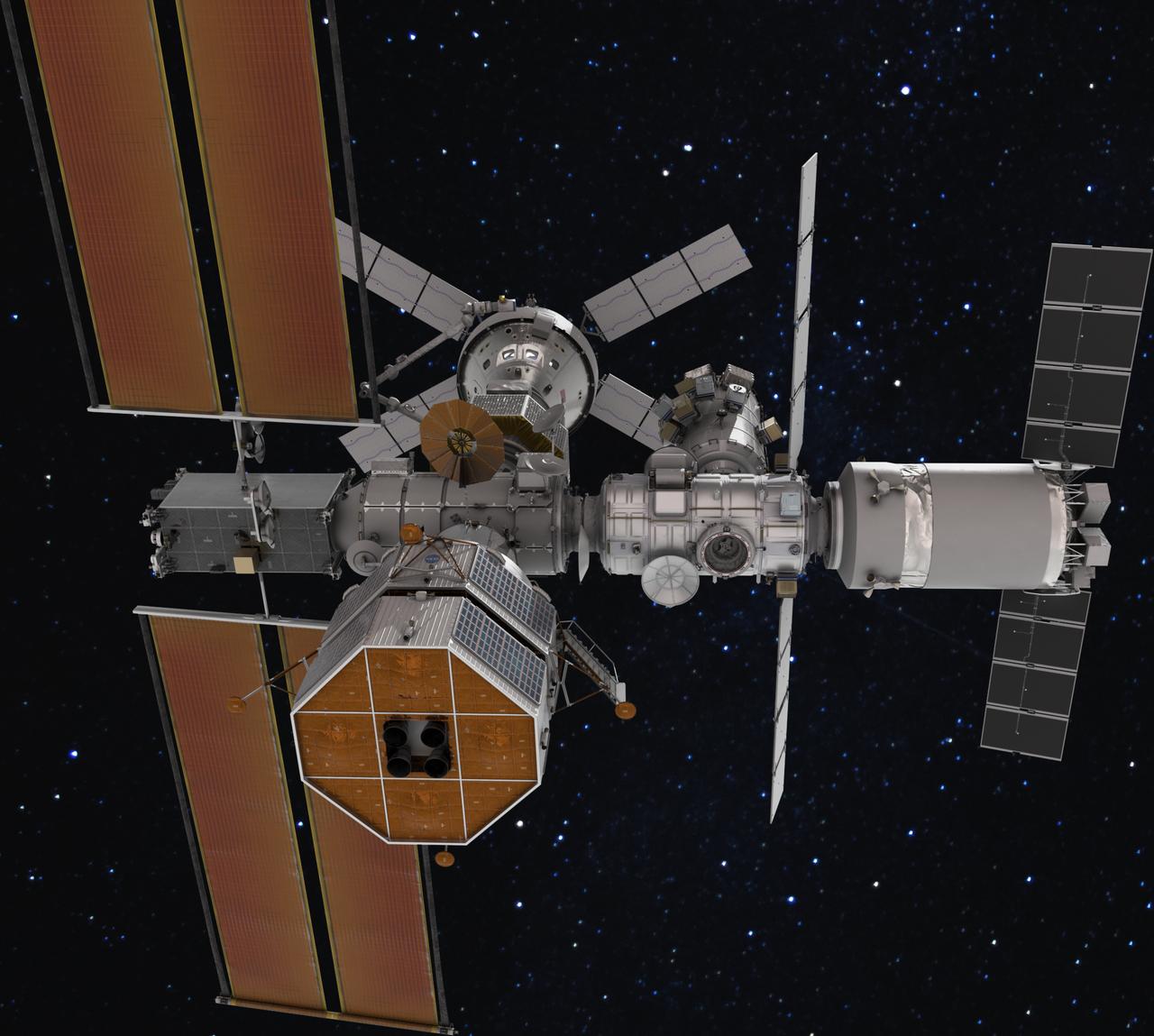
The Gateway space station will be humanity's first space station in lunar orbit as a vital component of the Artemis missions to return humans to the Moon for…
Inspect NASA record
The Gateway space station will be humanity's first space station in lunar orbit as a vital component of the Artemis missions to return humans to the Moon for scientific discovery and chart a path for humans to Mars.
- Record ID
- Gateway-Set-1-IAC7-4k-BG_11
- NASA center
- JSC
- Date
- 2022-07-14
- Keywords
- Gateway, Artemis, space station, Moon
JSC · 2022-12-03 · art001e001999
Flight Day 19: Orion Approaches the Moon
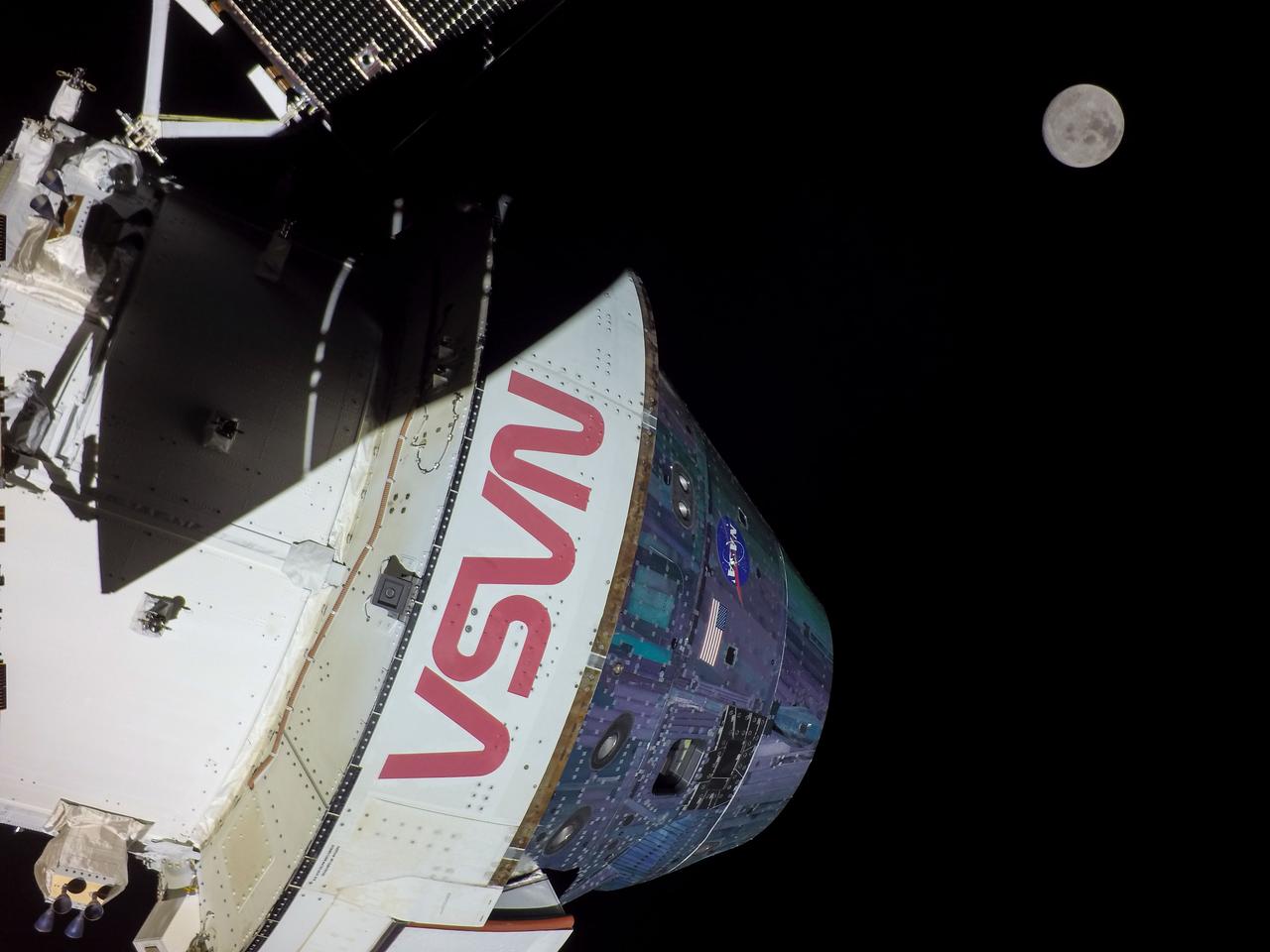
art001e001999 (Dec. 4, 2022) On the 19th day of the Artemis I mission, the Moon grows larger in frame as Orion prepares for the return powered flyby on…
Inspect NASA record
art001e001999 (Dec. 4, 2022) On the 19th day of the Artemis I mission, the Moon grows larger in frame as Orion prepares for the return powered flyby on Dec. 5, when it will pass approximately 79 miles above the lunar surface.
- Record ID
- art001e001999
- NASA center
- JSC
- Date
- 2022-12-03
- Keywords
- Artemis I resource reel, Artemis, Artemis I, Moon, Orion