
Update Site (from NASA)
Explore NASA’s Image and Video Library.
Suggest one object per day for the Interstellar Minds collection. We review each suggestion before adding it.
Sign in to suggest a Marvel.
Find a NASA image ID. Open a NASA record and copy its ID from the end of the details URL.
NASA image records
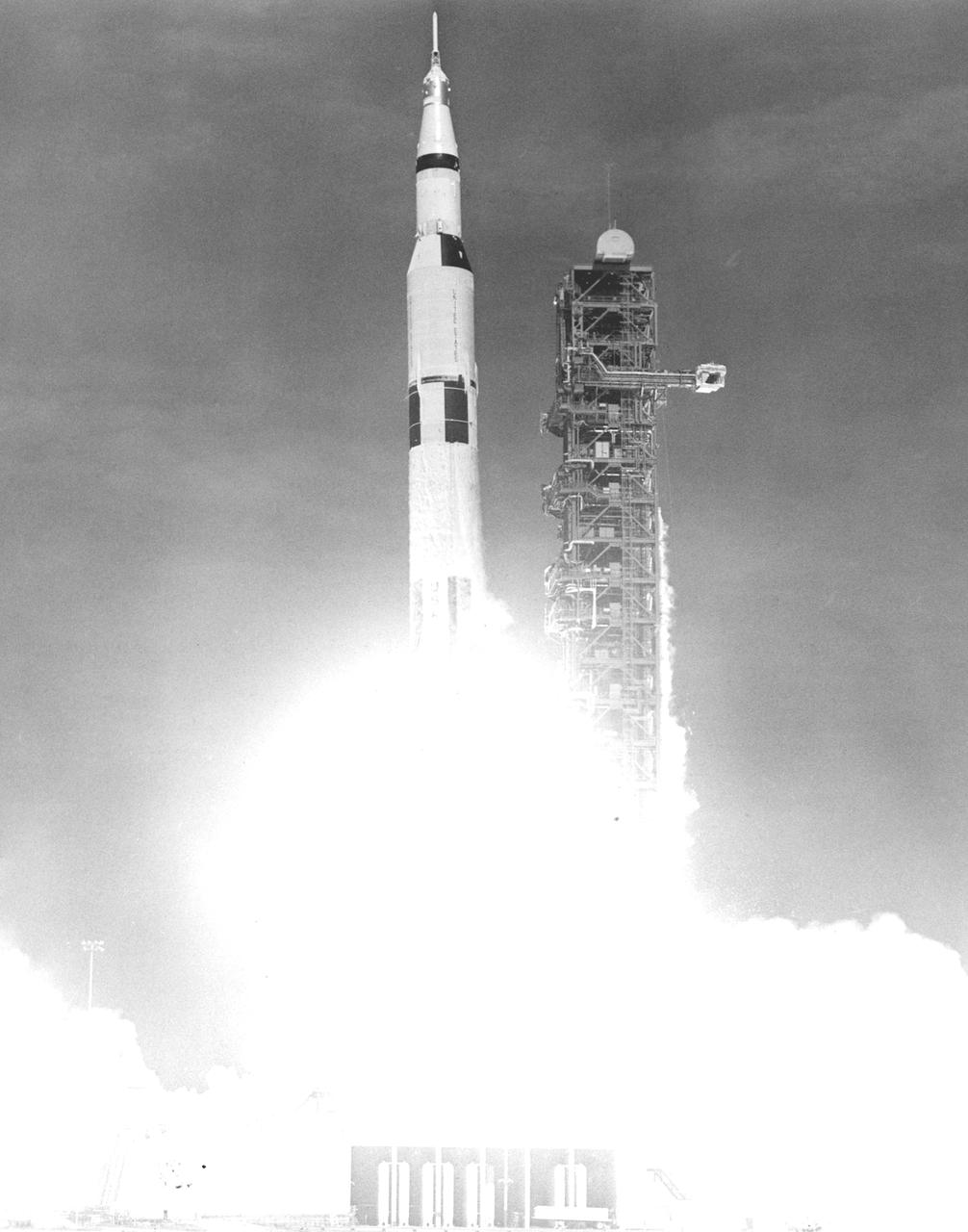
MSFC · 1969-07-16 · 6900540
Saturn Apollo Program
The Apollo 11 mission, the first manned lunar mission, launched from the Kennedy Space Center, Florida via the Saturn V launch vehicle on July 16, 1969 and safely…
Inspect NASA record
The Apollo 11 mission, the first manned lunar mission, launched from the Kennedy Space Center, Florida via the Saturn V launch vehicle on July 16, 1969 and safely returned to Earth on July 24, 1969. The Saturn V vehicle produced a holocaust of flames as it rose from its pad at Launch complex 39. The 363 foot tall, 6,400,000 pound rocket hurled the spacecraft into Earth parking orbit and then placed it on the trajectory to the moon for man’s first lunar landing. The Saturn V was developed by the Marshall Space Flight Center (MSFC) under the direction of Dr. Wernher von Braun. Aboard the spacecraft were astronauts Neil A. Armstrong, commander; Michael Collins, Command Module pilot; and Edwin E. Aldrin Jr., Lunar Module pilot. With the success of Apollo 11, the national objective to land men on the Moon and return them safely to Earth had been accomplished.
- Record ID
- 6900540
- NASA center
- MSFC
- Date
- 1969-07-16
- Keywords
- Apollo 11, Saturn V, Launch

KSC · 2014-11-03 · KSC-2014-4372
KSC-2014-4372
CAPE CANAVERAL, Fla. - Greg C. Shavers, Lander Technology director at Marshall Space Flight Center in Alabama, speaks to members of the media during an event to announce…
Inspect NASA record
CAPE CANAVERAL, Fla. - Greg C. Shavers, Lander Technology director at Marshall Space Flight Center in Alabama, speaks to members of the media during an event to announce the agency's Lunar Cargo Transportation and Landing by Soft Touchdown, or Lunar CATALYST, initiative and introduced one of the partners, Moon Express Inc. of Moffett Field, California. The event took place at Kennedy's automated landing and hazard avoidance technology, or ALHAT, hazard field at the north end of the Shuttle Landing Facility. Moon Express is developing a lander with capabilities that will enable delivery of payloads to the surface of the moon, as well as new science and exploration missions of interest to NASA and scientific and academic communities. Moon Express will base its activities at Kennedy and utilize the Morpheus ALHAT field and a hangar nearby for CATALYST testing. The Advanced Exploration Systems Division of NASA's Human Exploration and Operations Mission Directorate manages Lunar CATALYST. Photo credit: NASA/Ben Smegelsky
- Record ID
- KSC-2014-4372
- NASA center
- KSC
- Date
- 2014-11-03
- Keywords
- Moon Express, ALHAT, CATALYST
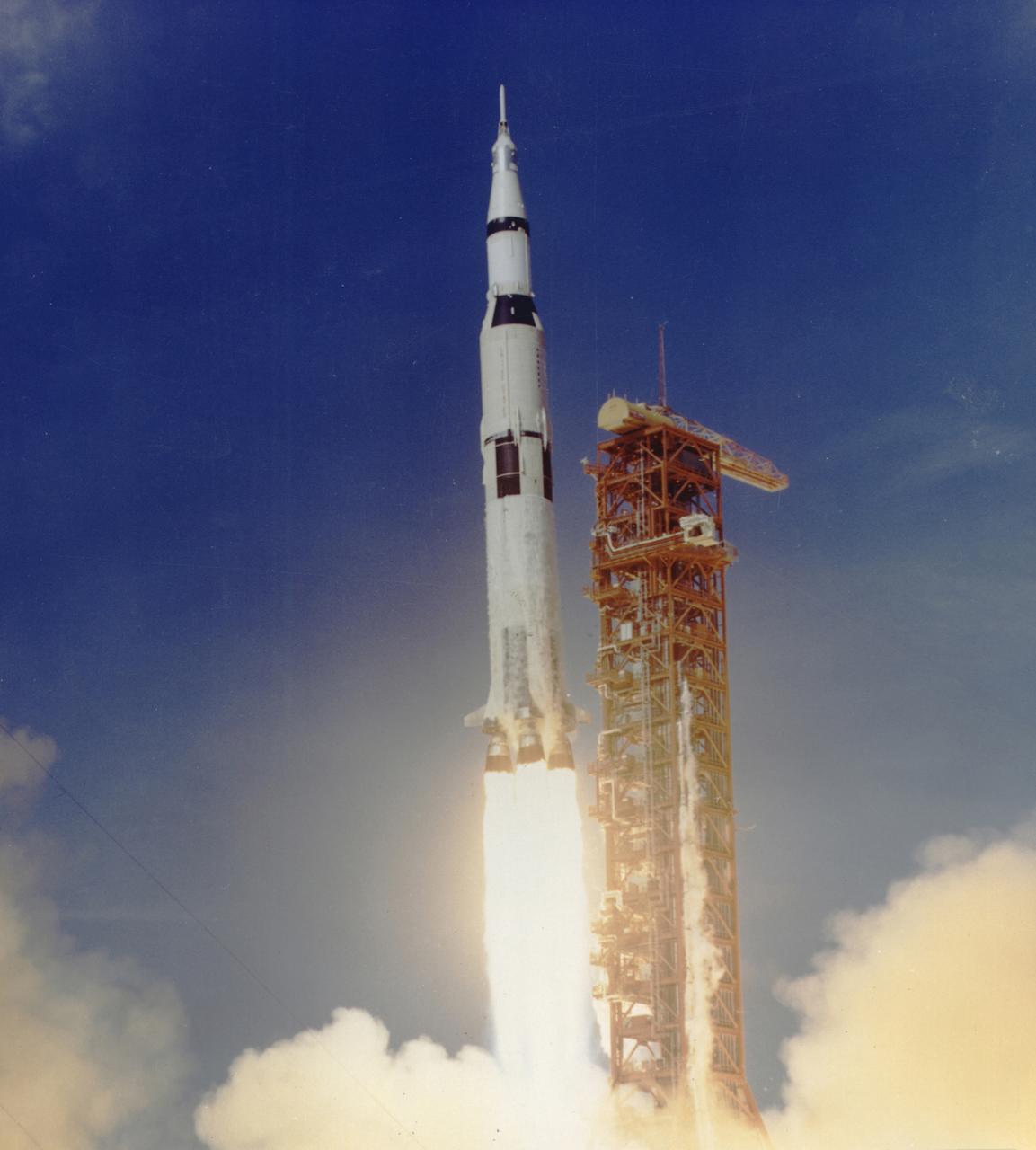
MSFC · 1969-07-16 · 6901000
Saturn Apollo Program
The Apollo 11 mission, the first manned lunar mission, launched from the Kennedy Space Center, Florida via the Marshall Space Flight Center (MSFC) developed Saturn V launch vehicle…
Inspect NASA record
The Apollo 11 mission, the first manned lunar mission, launched from the Kennedy Space Center, Florida via the Marshall Space Flight Center (MSFC) developed Saturn V launch vehicle on July 16, 1969 and safely returned to Earth on July 24, 1969. The Saturn V vehicle produced a holocaust of flames as it rose from its pad at Launch complex 39. The 363 foot tall, 6,400,000 pound rocket hurled the spacecraft into Earth parking orbit and then placed it on the trajectory to the moon for man’s first lunar landing. Aboard the space craft were astronauts Neil A. Armstrong, commander; Michael Collins, Command Module pilot; and Edwin E. Aldrin Jr., Lunar Module pilot. With the success of Apollo 11, the national objective to land men on the Moon and return them safely to Earth had been accomplished.
- Record ID
- 6901000
- NASA center
- MSFC
- Date
- 1969-07-16
- Keywords
- Apollo 11, Saturn V, Launch
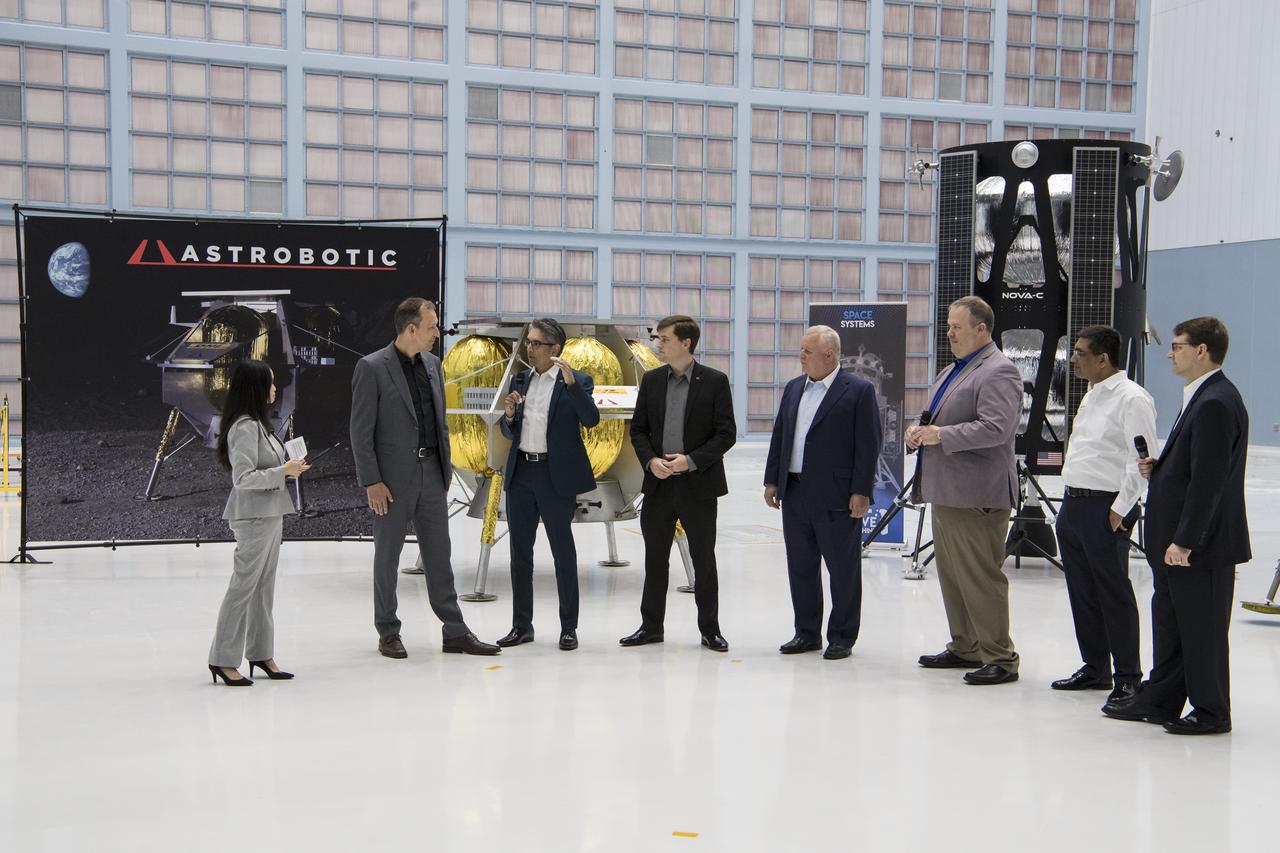
HQ · 2019-05-31 · NHQ201905310013
Commercial Lunar Payload Services Announcement
Astrobotic Mission Director, Sharad Bhaskaran , third from left, speaks about their lunar lander with, from left to right, NASA Press Officer, Felicia Chou; NASA Associate Administrator, Science…
Inspect NASA record
Astrobotic Mission Director, Sharad Bhaskaran , third from left, speaks about their lunar lander with, from left to right, NASA Press Officer, Felicia Chou; NASA Associate Administrator, Science Mission Directorate, Thomas Zurbuchen; Astrobotic CEO, John Thornton; Chairman of the Board of Intuitive Machines, Kam Ghaffarian; VP of Research and Development of Intuitive Machines, Tim Crain; President and CEO of OrbitBeyond, Siba Padhi; and Chief Science Officer, OrbitBeyond, Jon Morse, Friday, May 31, 2019, at Goddard Space Flight Center in Md. Astrobotic, Intuitive Machines, and OrbitBeyond have been selected to provide the first lunar landers for the Artemis program's lunar surface exploration. Photo credit: (NASA/Aubrey Gemignani)
- Record ID
- NHQ201905310013
- NASA center
- HQ
- Date
- 2019-05-31
- Credit
- NASA/Aubrey Gemignani
- Keywords
- Commercial Lunar Payload Services (CLPS), Felicia Chou, Goddard Space Flight Center, Greenbelt, John Thornton, Jon Morse, Kam Ghaffarian, MD, Sharad Bhaskaran, Siba Padhi, Thomas Zurbuchen, Tim Crain

KSC · 2014-11-03 · KSC-314D-0485_0019
Moon Express Media Event
Bob Richards, co-founder and chief executive officer of Moon Express Inc., of Moffett Field, California, speaks to the media during an event to announce the company's selection to…
Inspect NASA record
Bob Richards, co-founder and chief executive officer of Moon Express Inc., of Moffett Field, California, speaks to the media during an event to announce the company's selection to use Kennedy Space Center's facilities as part of NASA's Lunar Cargo Transportation and Landing by Soft Touchdown, or Lunar CATALYST, initiative. The event took place at Kennedy's automated landing and hazard avoidance technology, or ALHAT, hazard field at the north end of the Shuttle Landing Facility. Moon Express is developing a lander with capabilities that will enable delivery of payloads to the surface of the moon, as well as new science and exploration missions of interest to NASA and scientific and academic communities. Moon Express will base its activities at Kennedy and utilize the Morpheus ALHAT field and a hangar nearby for CATALYST testing. The Advanced Exploration Systems Division of NASA's Human Exploration and Operations Mission Directorate manages Lunar CATALYST.
- Record ID
- KSC-314D-0485_0019
- NASA center
- KSC
- Date
- 2014-11-03
- Keywords
- KSC-2014-4373
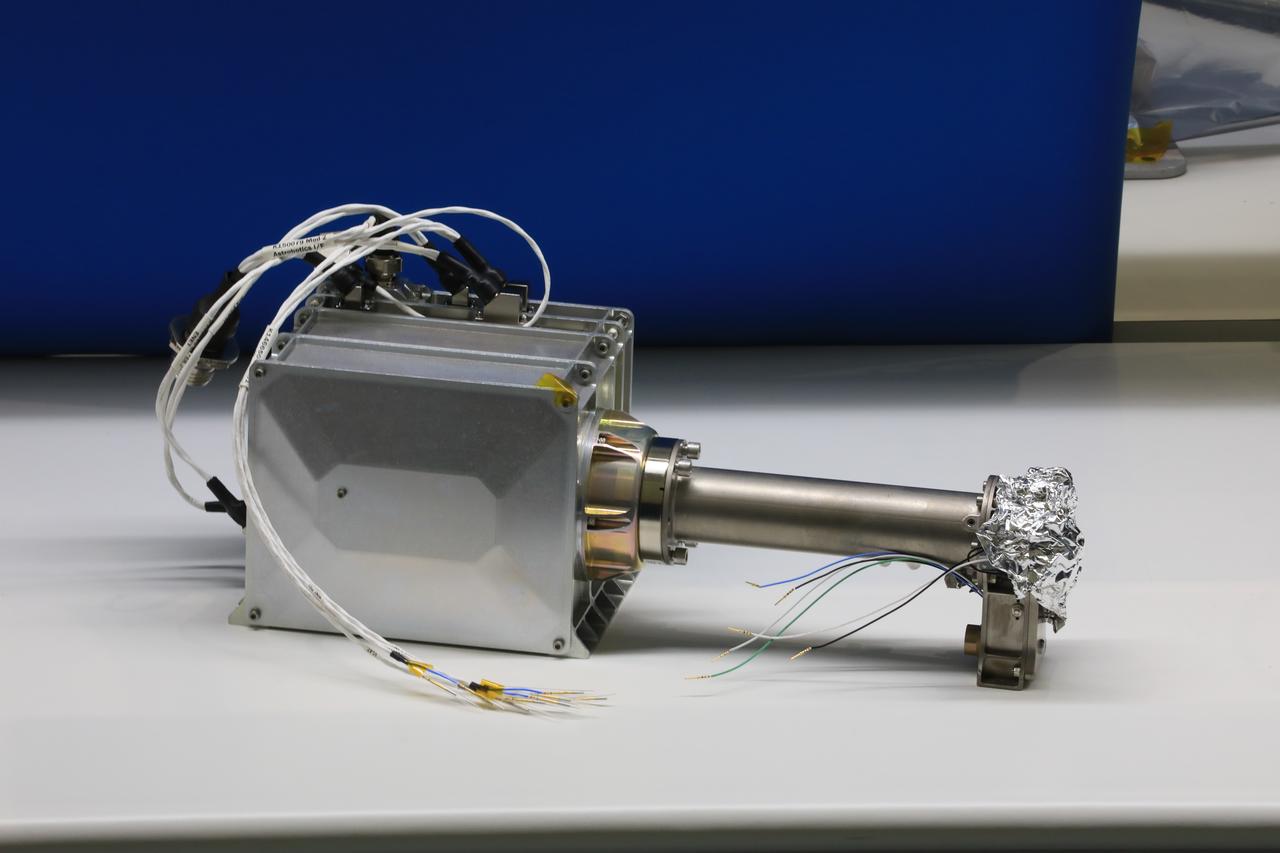
KSC · 2020-09-25 · KSC-20200925-PH-GEB01_0045
MSolo Instrument Work
Engineers and technicians at NASA’s Kennedy Space Center in Florida are preparing the Mass Spectrometer observing lunar operations (MSolo) for launch inside the Space Station Processing Facility at…
Inspect NASA record
Engineers and technicians at NASA’s Kennedy Space Center in Florida are preparing the Mass Spectrometer observing lunar operations (MSolo) for launch inside the Space Station Processing Facility at NASA’s Kennedy Space Center in Florida on Sept. 25, 2020. MSolo is a commercial off-the-shelf mass spectrometer modified to work in space and it will help analyze the chemical makeup of landing sites on the Moon, as well as study water on the lunar surface. MSolo hardware is a payload for a robotic mission to the Moon as part of the Commercial Lunar Payload Services (CLPS) launching to exploring Lacus Mortis, a large crater on the near side of the Moon in 2021. A future mission will send a mobile robot named the Volatiles Investigating Polar Exploration Rover (VIPER) to the Moon to prospect for water. VIPER will have several instruments that will allow it to detect and sample water including MSolo, the Neutron Spectrometer System, the Near Infrared Volatiles Spectrometer System and The Regolith and Ice Drill for Exploring New Terrain (TRIDENT).
- Record ID
- KSC-20200925-PH-GEB01_0045
- NASA center
- KSC
- Date
- 2020-09-25
- Credit
- NASA/Glenn Benson
- Keywords
- NASA, Kennedy Space Center, KSC, Space Station Processing Facility, SSPF, space exploration, science, lunar instruments, Mass Spectrometer Observing Lunar Operations, MSOLO, Commercial Lunar Payload Services, CLPS
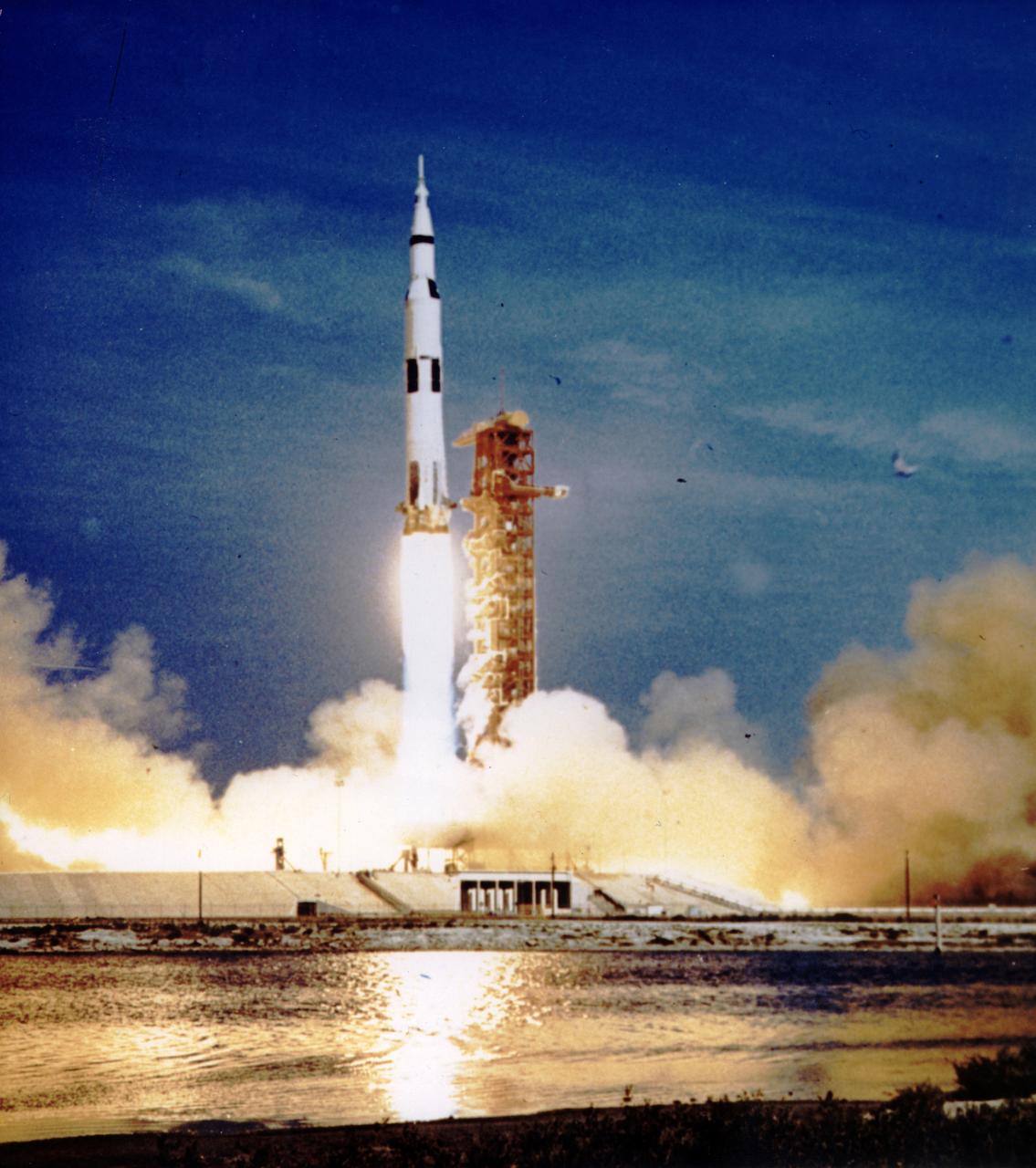
MSFC · 1969-07-16 · 8909250
Saturn Apollo Program
The Apollo 11 mission, the first manned lunar mission, launched from the Kennedy Space Center, Florida via the Marshall Space Flight Center (MSFC) developed Saturn V launch vehicle…
Inspect NASA record
The Apollo 11 mission, the first manned lunar mission, launched from the Kennedy Space Center, Florida via the Marshall Space Flight Center (MSFC) developed Saturn V launch vehicle on July 16, 1969 and safely returned to Earth on July 24, 1969. The Saturn V vehicle produced a holocaust of flames as it rose from its pad at Launch complex 39. The 363 foot tall, 6,400,000 pound rocket hurled the spacecraft into Earth parking orbit and then placed it on the trajectory to the moon for man’s first lunar landing. Aboard the space craft were astronauts Neil A. Armstrong, commander; Michael Collins, Command Module pilot; and Edwin E. Aldrin Jr., Lunar Module pilot. With the success of Apollo 11, the national objective to land men on the Moon and return them safely to Earth had been accomplished.
- Record ID
- 8909250
- NASA center
- MSFC
- Date
- 1969-07-16
- Keywords
- Apollo 11, Saturn V, Launch
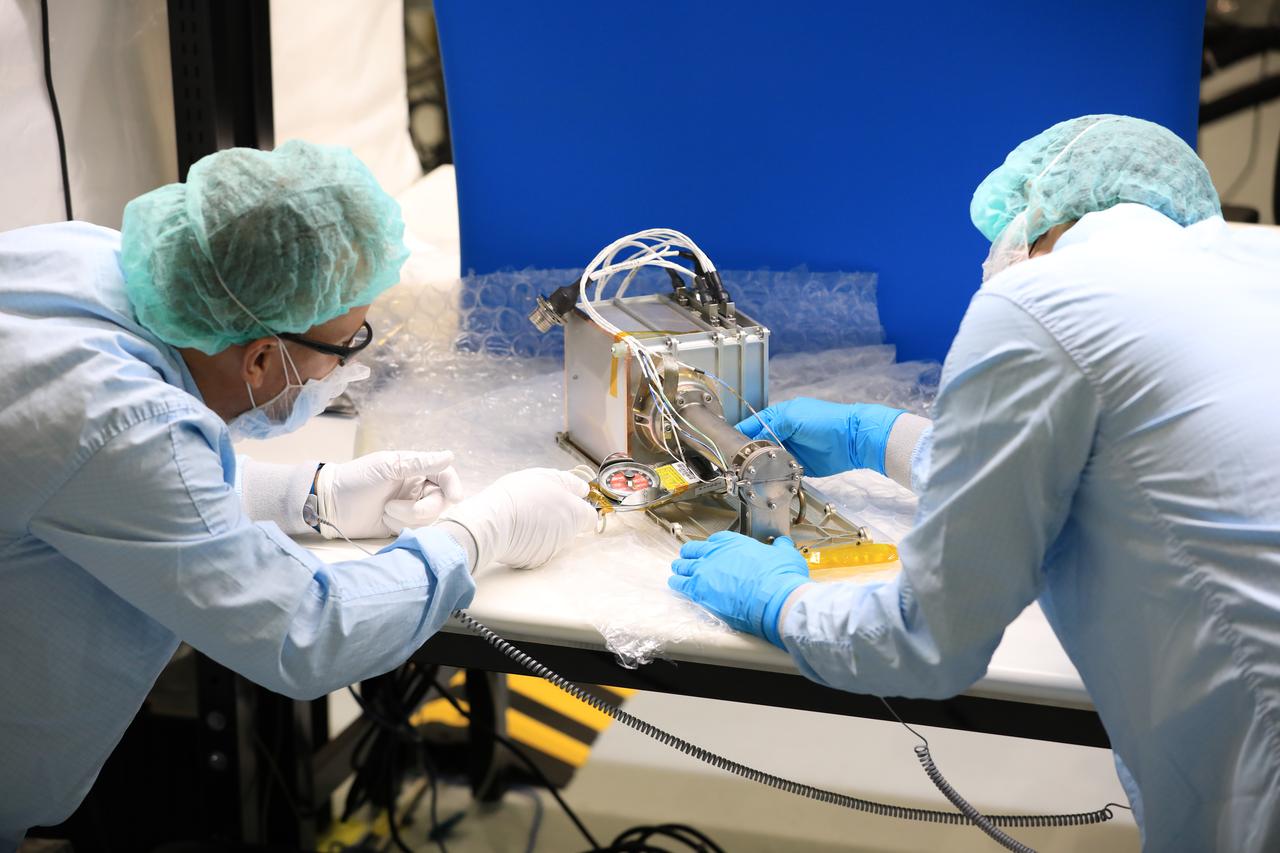
KSC · 2020-09-25 · KSC-20200925-PH-GEB02_0117
MSolo Radiator Work
Engineers and technicians at NASA’s Kennedy Space Center in Florida install the radiator for the Mass Spectrometer Observing Lunar Operations (MSolo) instrument inside the Space Station Processing Facility…
Inspect NASA record
Engineers and technicians at NASA’s Kennedy Space Center in Florida install the radiator for the Mass Spectrometer Observing Lunar Operations (MSolo) instrument inside the Space Station Processing Facility on Sept. 25, 2020. MSolo will help analyze the chemical makeup of landing sites on the Moon, as well as study water on the lunar surface. The radiator will help keep the instrument’s temperature stable in the extreme heat and cold it will encounter. MSolo instruments are scheduled to launch on multiple robotic missions as part of NASA’s Commercial Lunar Payload Services (CLPS), with the first of these missions exploring Lacus Mortis, a large crater on the near side of the Moon, beginning in 2021. MSolo also will be one of three instruments on the agency’s water-hunting Volatiles Investigating Polar Exploration Rover, VIPER, scheduled to launch to the Moon’s South Pole in late 2023.
- Record ID
- KSC-20200925-PH-GEB02_0117
- NASA center
- KSC
- Date
- 2020-09-25
- Credit
- NASA/Glenn Benson
- Keywords
- NASA, Kennedy Space Center, KSC, Space Station Processing Facility, SSPF, space exploration, science, lunar instruments, Mass Spectrometer Observing Lunar Operations, MSOLO, Commercial Lunar Payload Services, CLPS
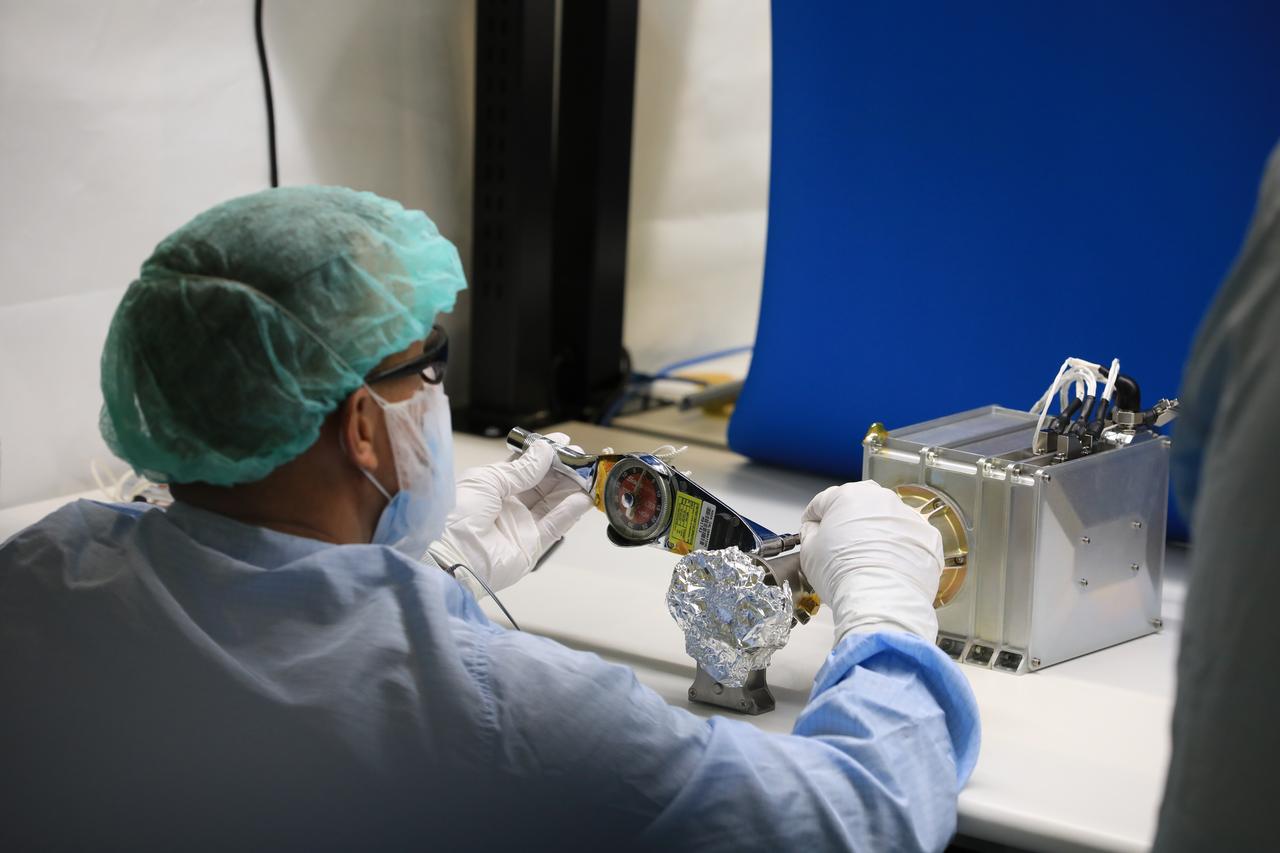
KSC · 2020-09-25 · KSC-20200925-PH-GEB01_0059
MSolo Instrument Work
Engineers and technicians at NASA’s Kennedy Space Center in Florida work with instruments for Mass Spectrometer observing lunar operations (MSolo) inside the Space Station Processing on Sept. 25,…
Inspect NASA record
Engineers and technicians at NASA’s Kennedy Space Center in Florida work with instruments for Mass Spectrometer observing lunar operations (MSolo) inside the Space Station Processing on Sept. 25, 2020. MSolo is a commercial off-the-shelf mass spectrometer modified to work in space and it will help analyze the chemical makeup of landing sites on the Moon, as well as study water on the lunar surface. This work is preparing MSolo hardware for a robotic mission as part of the Commercial Lunar Payload Services (CLPS) launching to exploring Lacus Mortis, a large crater on the near side of the Moon in 2021. A future mission will send a mobile robot named the Volatiles Investigating Polar Exploration Rover (VIPER) to the Moon to prospect for water. VIPER will have several instruments that will allow it to detect and sample water including MSolo, the Neutron Spectrometer System, the Near Infrared Volatiles Spectrometer System and The Regolith and Ice Drill for Exploring New Terrain (TRIDENT).
- Record ID
- KSC-20200925-PH-GEB01_0059
- NASA center
- KSC
- Date
- 2020-09-25
- Credit
- NASA/Glenn Benson
- Keywords
- NASA, Kennedy Space Center, KSC, Space Station Processing Facility, SSPF, space exploration, science, lunar instruments, Mass Spectrometer Observing Lunar Operations, MSOLO, Commercial Lunar Payload Services, CLPS
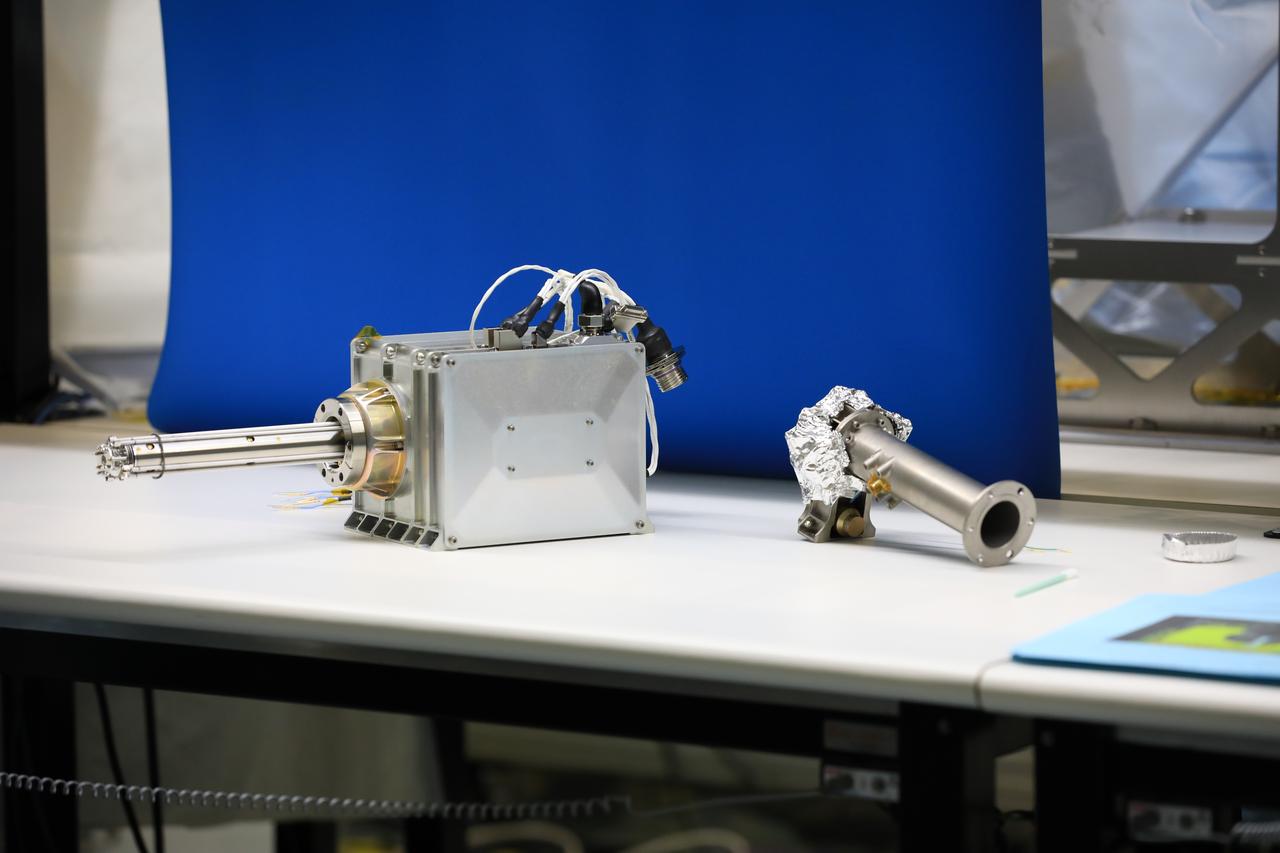
KSC · 2020-09-25 · KSC-20200925-PH-GEB01_0004
MSolo Instrument Work
Instruments for the Mass Spectrometer observing lunar operations (MSolo) are in view inside the Space Station Processing Facility at NASA’s Kennedy Space Center in Florida on Sept. 25,…
Inspect NASA record
Instruments for the Mass Spectrometer observing lunar operations (MSolo) are in view inside the Space Station Processing Facility at NASA’s Kennedy Space Center in Florida on Sept. 25, 2020. MSolo is a commercial off-the-shelf mass spectrometer modified to work in space and it will help analyze the chemical makeup of landing sites on the Moon, as well as study water on the lunar surface. This work is preparing MSolo hardware for a robotic mission as part of the Commercial Lunar Payload Services (CLPS) launching to exploring Lacus Mortis, a large crater on the near side of the Moon in 2021. A future mission will send a mobile robot named the Volatiles Investigating Polar Exploration Rover (VIPER) to the Moon to prospect for water. VIPER will have several instruments that will allow it to detect and sample water including MSolo, the Neutron Spectrometer System, the Near Infrared Volatiles Spectrometer System and The Regolith and Ice Drill for Exploring New Terrain (TRIDENT).
- Record ID
- KSC-20200925-PH-GEB01_0004
- NASA center
- KSC
- Date
- 2020-09-25
- Credit
- NASA/Glenn Benson
- Keywords
- NASA, Kennedy Space Center, KSC, Space Station Processing Facility, SSPF, space exploration, science, lunar instruments, Mass Spectrometer Observing Lunar Operations, MSOLO, Commercial Lunar Payload Services, CLPS
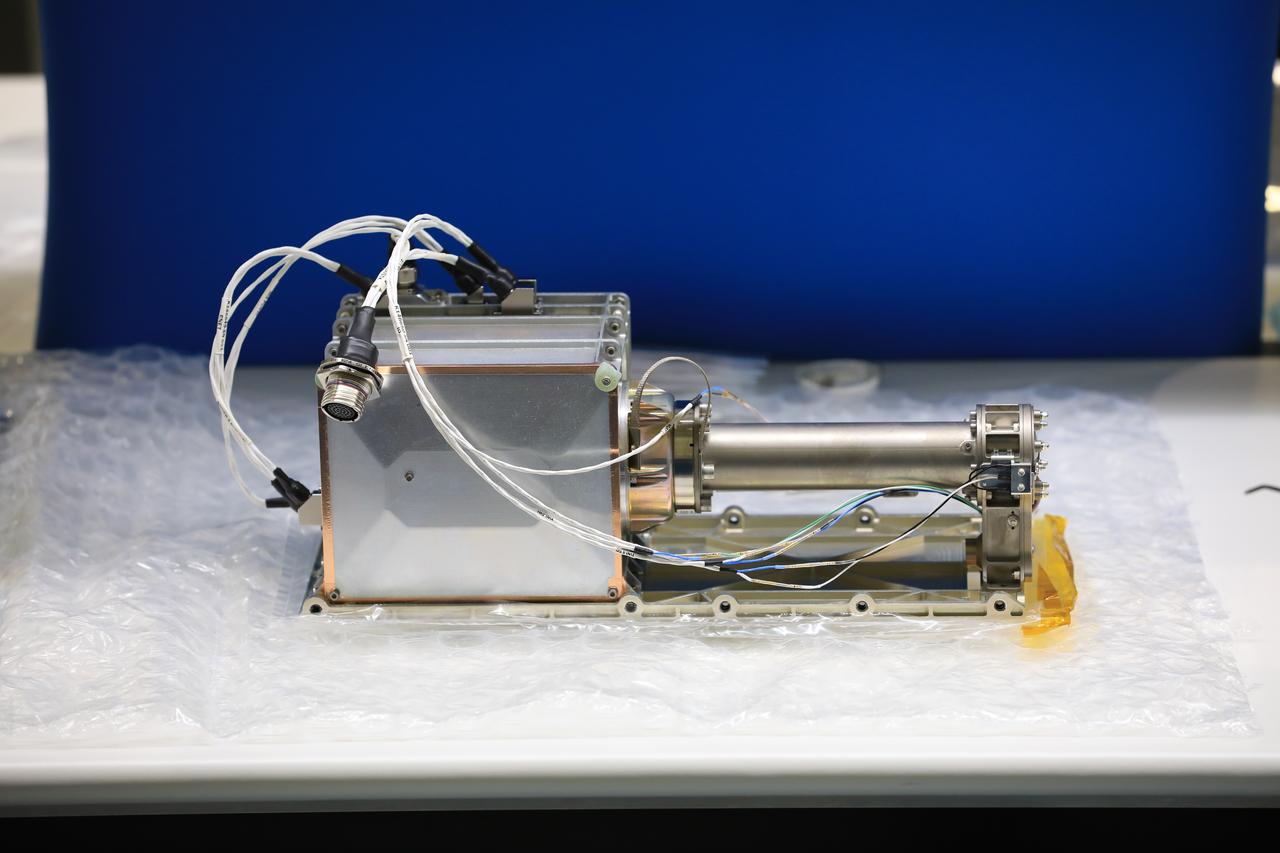
KSC · 2020-09-25 · KSC-20200925-PH-GEB02_0090
MSolo Radiator Work
The Mass Spectrometer Observing Lunar Operations (MSolo) instrument is photographed inside the Space Station Processing Facility at NASA’s Kennedy Space Center in Florida following installation of its radiator…
Inspect NASA record
The Mass Spectrometer Observing Lunar Operations (MSolo) instrument is photographed inside the Space Station Processing Facility at NASA’s Kennedy Space Center in Florida following installation of its radiator on Sept. 25, 2020. MSolo will help analyze the chemical makeup of landing sites on the Moon, as well as study water on the lunar surface. The radiator will help keep the instrument’s temperature stable in the extreme heat and cold it will encounter. MSolo instruments are scheduled to launch on multiple robotic missions as part of NASA’s Commercial Lunar Payload Services (CLPS), with the first of these missions exploring Lacus Mortis, a large crater on the near side of the Moon, beginning in 2021. MSolo also will be one of three instruments on the agency’s water-hunting Volatiles Investigating Polar Exploration Rover, VIPER, scheduled to launch to the Moon’s South Pole in late 2023.
- Record ID
- KSC-20200925-PH-GEB02_0090
- NASA center
- KSC
- Date
- 2020-09-25
- Credit
- NASA/Glenn Benson
- Keywords
- NASA, Kennedy Space Center, KSC, Space Station Processing Facility, SSPF, space exploration, science, lunar instruments, Mass Spectrometer Observing Lunar Operations, MSOLO, Commercial Lunar Payload Services, CLPS
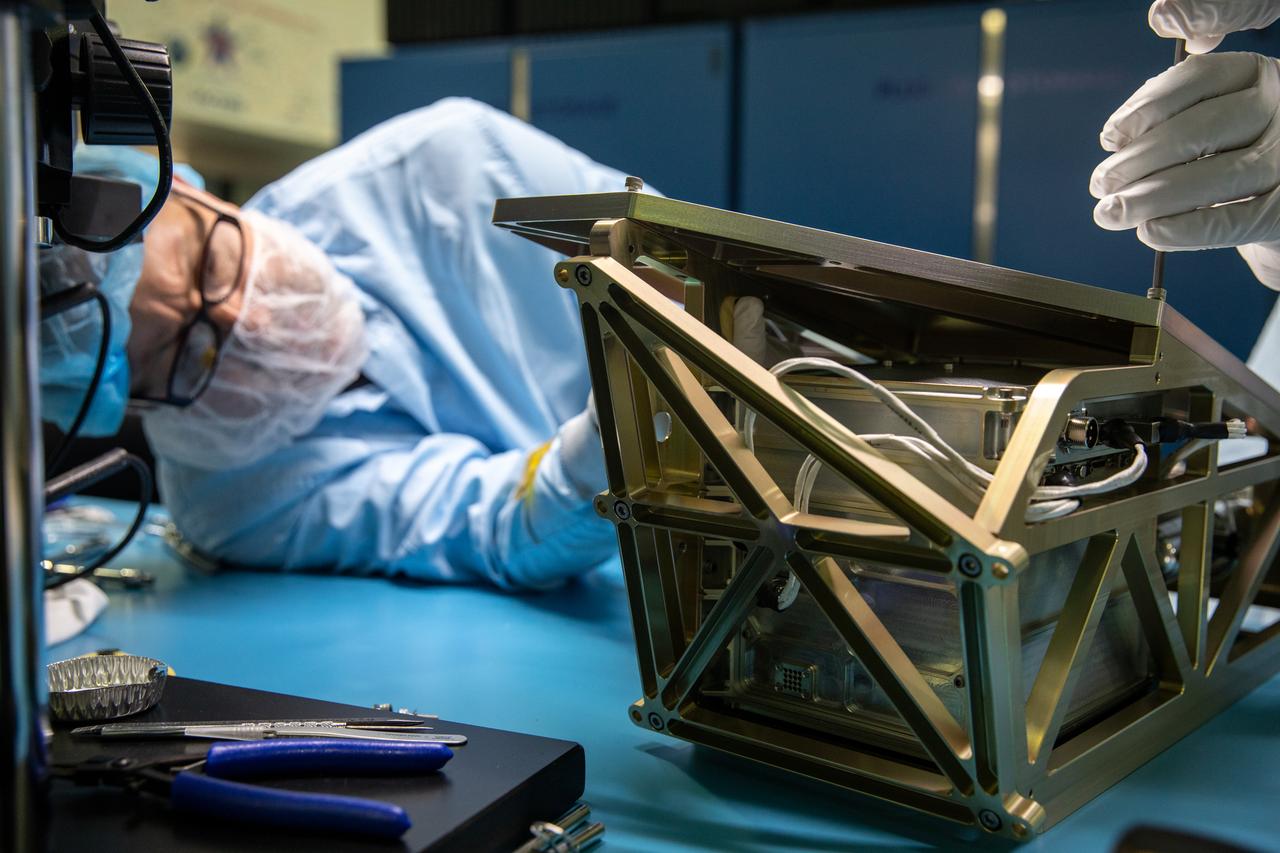
KSC · 2022-06-14 · KSC-20220614-PH-KLS01_0160
Install Flight Instrument on Radiator for MSolo
Inside the Space Station Processing Facility at NASA’s Kennedy Space Center in Florida, an engineer installs the Mass Spectrometer observing lunar operations (MSolo) onto its radiator bracket on…
Inspect NASA record
Inside the Space Station Processing Facility at NASA’s Kennedy Space Center in Florida, an engineer installs the Mass Spectrometer observing lunar operations (MSolo) onto its radiator bracket on June 14, 2022. Having successfully completed its thermal vacuum testing, the unit will undergo vibration testing later this month. This spectrometer is part of the PRIME-1 (Polar Resources Ice Mining Experiment-1) payload suite, slated to launch to the Moon in 2023 with Intuitive Machines. MSolo is a commercial off-the-shelf mass spectrometer modified to work in space and it will help analyze the chemical makeup of landing sites on the Moon, as well as study water on the lunar surface. MSolo is manifested to fly on four of the agency’s Commercial Lunar Payload Delivery Service missions where under Artemis, commercial deliveries beginning in 2023 will perform science experiments, test technologies, and demonstrate capabilities to help NASA explore the Moon and prepare for human missions.
- Record ID
- KSC-20220614-PH-KLS01_0160
- NASA center
- KSC
- Date
- 2022-06-14
- Credit
- NASA/Kim Shiflett
- Keywords
- CLPS, IM-2, Moon to Mars, Msolo, NASA Tech, PRIME-1